The Top 10 Tips for Solving Crossword Puzzles Faster and More Efficiently
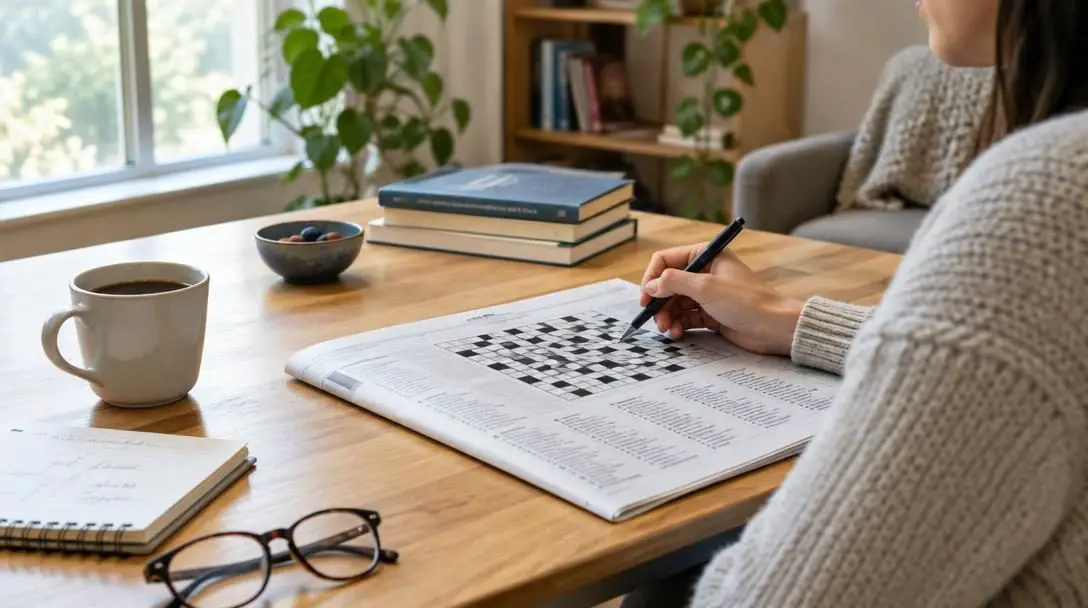
Crossword puzzles remain one of the most enduring and widely enjoyed pastimes in the world. They offer an engaging way to unwind while giving your brain a focused mental workout. Yet for many casual solvers and newcomers, sitting down with a fresh grid can swiftly shift from a relaxing diversion into an exercise in deep frustration. It is remarkably easy to get stuck on obscure clue wording, stare helplessly at blank boxes, or watch the minutes disappear while an unfinished puzzle sits abandoned.
Working through a crossword quickly and smoothly does not require you to possess an encyclopedic memory packed with esoteric trivia. Instead, genuine solving speed and efficiency stem from consistent habits, disciplined observation, and an organized approach to the grid. By learning how to decode the mechanics of word intersections and steering clear of common solving bottlenecks, you can dramatically accelerate your completion times and enjoy the process far more.
Key takeaways
- Crossword speed relies far more on strategic navigation of letter intersections than on encyclopedic trivia knowledge.
- Establishing quick anchors by hunting down the easiest clues creates the letter groundwork needed to crack tougher crossing entries.
- Switching from a pencil to a pen builds solving confidence, prevents messy smudging, and eliminates the time lost to constant erasing.
- Stepping away for brief breaks clears mental fatigue and often helps you instantly recognize answers that previously seemed impossible.
Understanding how the crossword grid functions
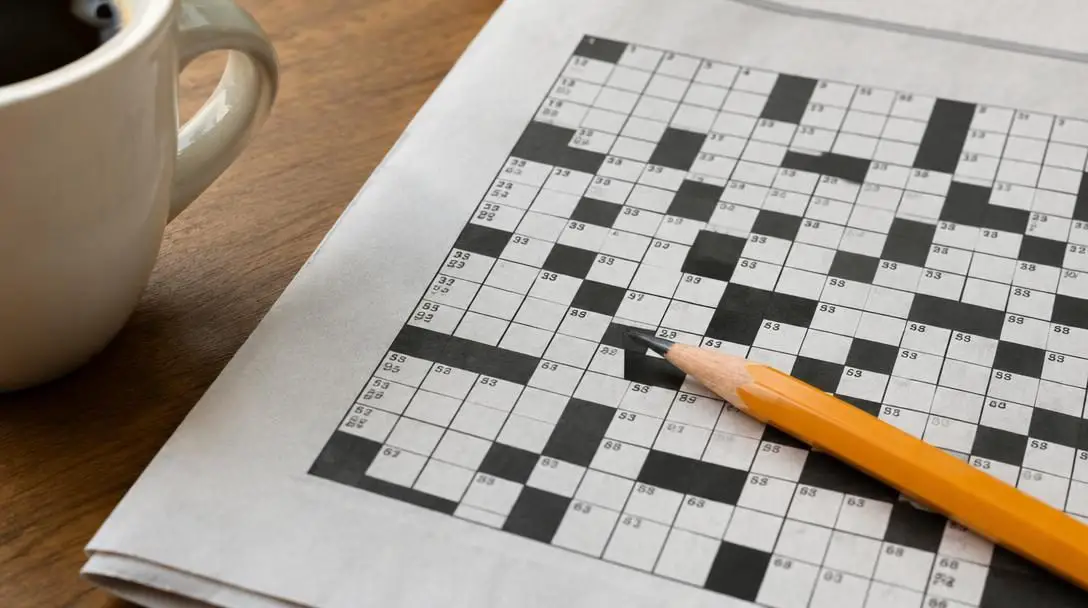
To solve a puzzle with speed, you must first recognize the underlying architecture of the board. A standard crossword is an interconnected word game built around a grid of black and white squares. Your central task is to enter letters into the white squares, forming complete words or phrases governed by a numbered clue roster. Across clues run horizontally from left to right, while Down clues run vertically from top to bottom.
The defining feature of this structure is the letter intersection. Every single white box on the board belongs to two separate entries: one Across word and one Down word. Because every letter you write down influences both directions simultaneously, solving a crossword is fundamentally a non-linear exercise. Solvers who try to answer clues in strict numerical sequence—starting at 1-Across and attempting to solve down the list—strip away the board's greatest built-in advantage. Recognizing the grid as a collaborative web of hints lets you use easy, confirmed letters in one direction to decipher difficult clues in the other.
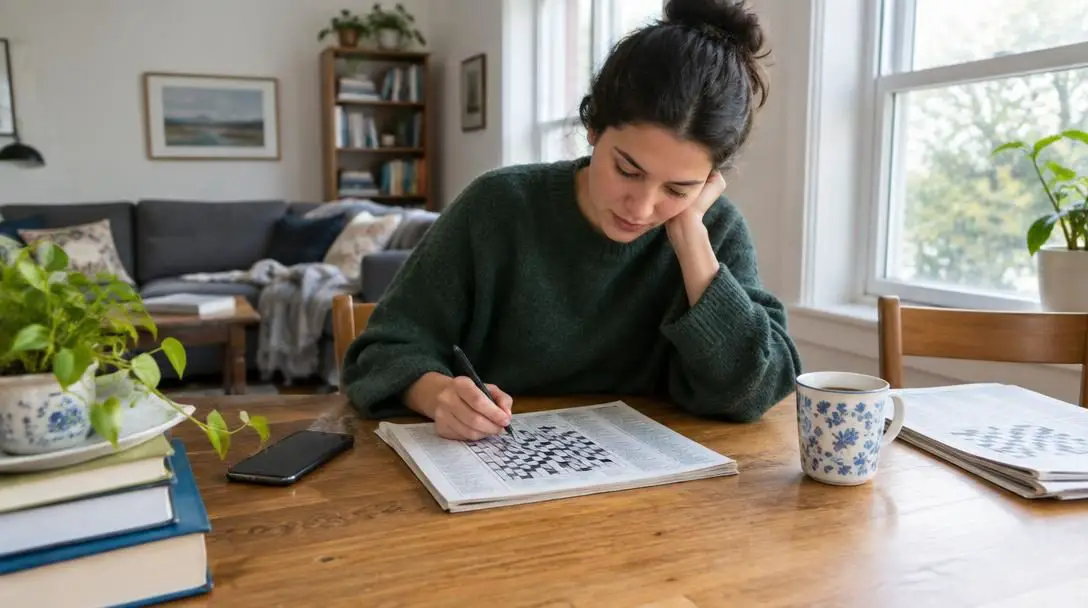
Working through a crossword efficiently does not require an encyclopedic memory; speed and momentum come down to strategic habits and careful observation across the grid.
The top 10 strategies at a glance
| Strategy | Primary Benefit | When to Apply |
|---|---|---|
| Start with easy clues | Builds initial letter footholds and early momentum | Opening scan of the puzzle |
| Look for theme answers | Unlocks large chunks of the grid simultaneously | Early to middle phase of solving |
| Use context clues | Enables high-probability educated guesses | When tackling unfamiliar terms |
| Fill in common letters | Reveals word structures in partial entries | When an entry has one or two blanks left |
| Use online resources sparingly | Develops independent problem-solving skills | Only as a last-resort learning tool |
| Take breaks | Resets mental fatigue and clears cognitive blind spots | Whenever progress stalls completely |
| Keep a pen handy | Eliminates erasing delays and encourages clean input | Throughout the entire solve |
| Practice regularly | Trains the brain to spot recurring crossword conventions | Daily or weekly puzzle routines |
| Expand your vocabulary | Broadens recognition of synonyms and wordplay | Ongoing reading outside of puzzles |
| Have fun | Prevents burnout and keeps frustration low | Every session, regardless of difficulty |
Core techniques for solving crosswords faster
Applying deliberate tactics turns a chaotic solving session into an organized, efficient workflow. These ten core strategies address the most frequent roadblocks solvers encounter, providing clear ways to navigate grids of any difficulty.
Start with the easy clues
Never waste valuable time wrestling with difficult, ambiguous clues right after opening a puzzle. Instead, conduct an initial scan across the entire clue roster to identify the answers you know instantly. These simple wins often take the form of fill-in-the-blank clues, common abbreviations, or direct definitions. By filling in these entries right away, you populate the board with reliable letter anchors that offer immediate footholds across multiple quadrants.
Look for theme answers
Most modern crosswords are built around an underlying conceptual theme. This theme is typically showcased in the longest entries on the board or suggested directly by the puzzle's title. When you identify the theme early, you crack open the structural logic of the grid. Recognizing whether the constructor is using puns, hidden words, or sound swaps provides clues that instantly make several long answers far easier to decipher.
Use context clues
When an unfamiliar or elusive clue leaves you stumped, do not evaluate it in total isolation. Examine the crossing spaces, the clue's grammatical tense, and the surrounding vocabulary. Crossword clues are carefully calibrated: plural clues always yield plural answers, and past-tense clues always require past-tense verbs. Combining these structural rules with partial letters from intersecting words allows you to make an educated guess that moves the puzzle forward.
Fill in common letters
The English language relies heavily on a small group of high-frequency letters, with E, T, and A appearing far more frequently than letters like Q, X, or Z. If you find yourself looking at a partially filled entry that is missing only an internal vowel or a common consonant, mentally test these high-frequency letters. Slotting a common letter into the gap will frequently trigger pattern recognition and bring the complete word into sharp focus.
Use online resources sparingly
When progress halts, pulling up a search engine or an online puzzle solver can be an enticing shortcut. However, relying on outside aids robs your brain of the challenge needed to strengthen your solving muscles. If you look up answers at the first sign of difficulty, you bypass the cognitive process that builds lasting intuition. Restrict external help to post-puzzle review sessions so that your independent problem-solving skills continue to improve.
Take breaks
Staring at the same black and white grid for long stretches inevitably produces mental fatigue and tunnel vision. If you find yourself reading the exact same clue multiple times without generating new ideas, put the puzzle aside and step away. Even a short break resets your focus. When you return with fresh eyes, your brain will frequently perceive word patterns and alternate meanings that you completely overlooked before.
Keep a pen handy
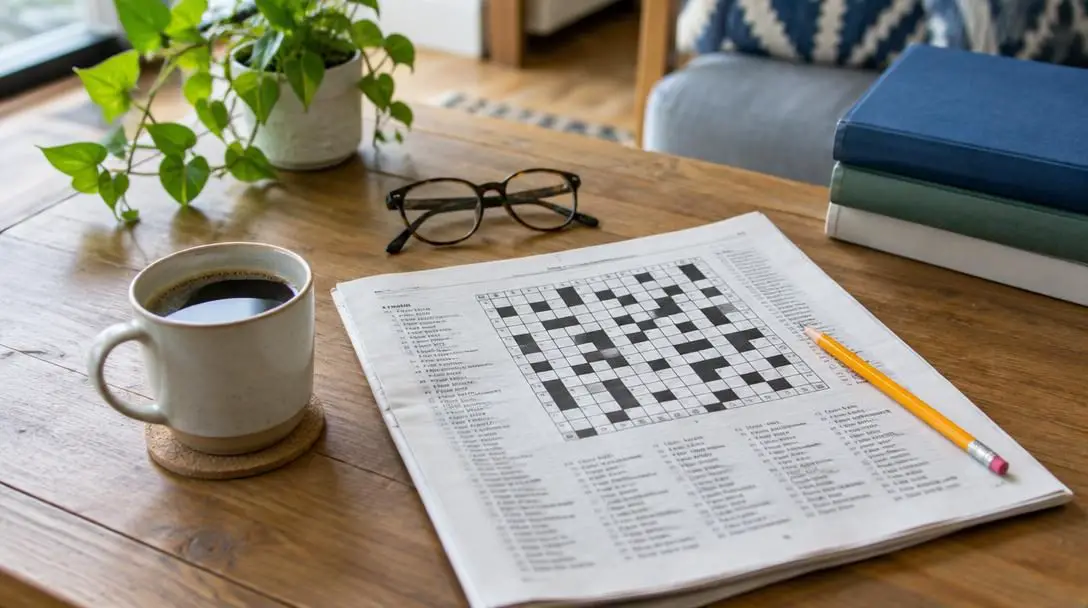
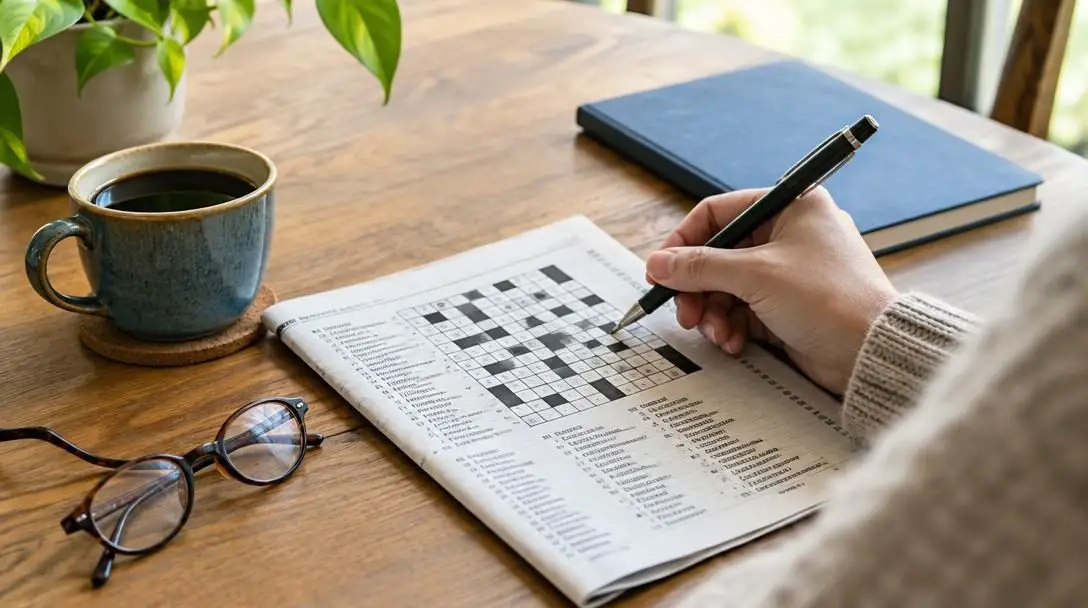
While beginners frequently reach for a pencil out of fear of making mistakes, seasoned solvers almost universally favor a pen. Writing in ink prevents pencil smudges, eliminates dull points, and removes the physical time sink of constantly rubbing out letters. Using a pen forces you to commit to your answers cleanly, which naturally cultivates greater focus, deliberate thinking, and faster physical momentum across the page.
Practice regularly
Solving crosswords is a practical skill that sharpens through frequent repetition. Constructors rely on specific tropes, recurring short words, and clever clueing styles that become second nature once you encounter them repeatedly. Making a daily puzzle part of your regular schedule trains your mind to parse misdirection, decode abbreviations, and recognize word lengths almost automatically.
Expand your vocabulary
A broad and varied vocabulary translates directly into faster solving times. Crosswords frequently draw upon synonyms, literary references, foreign loanwords, and archaic expressions that casual speakers rarely use in everyday conversation. Solvers who regularly read non-fiction, classic literature, and diverse news publications steadily amass the linguistic versatility needed to tackle late-week puzzles with confidence.
Have fun
A crossword puzzle is fundamentally an entertaining mental game, not a high-stakes exam. Putting excessive pressure on yourself to finish within a rigid timeframe can quickly turn an enjoyable leisure activity into a frustrating chore. Maintaining a relaxed, playful attitude keeps stress low and guards against burnout. If an individual grid proves too difficult on a given day, simply accept the challenge, review the answers, and move on to the next puzzle.
A step-by-step routine for tackling any grid
Executing your solve with a structured sequence helps you maintain steady progress from the moment you scan the clues to the moment the final letter is set. You can optimize your speed by organizing your solving sessions into six clear steps.
- Scan the clue list for immediate wins: Read through the entire clue sheet without pausing to deliberate over hard entries. Fill in all direct trivia facts, definitions, and fill-in-the-blank entries that you know without hesitation.
- Inspect the puzzle theme: Review the title and longest grid entries to deduce the constructor's central conceit. Understanding the theme gives you a framework for unlocking the most complex entries on the board.
- Work outward from your intersections: Shift your attention directly to the clues that cross through the words you have already entered. Use the letters already placed on the board to narrow down potential solutions.
- Test high-frequency letters in stubborn gaps: When you encounter an entry missing one or two letters, mentally test common letters such as E, A, or T to see if an obvious word pattern emerges across both the Across and Down lanes.
- Step away when momentum stalls: If you find yourself stuck in a single quadrant, stop working. Step away for a brief interlude to let your subconscious mind untangle the wordplay.
- Commit your answers cleanly: Return to the puzzle with your pen, confirm your crossing entries, and write in your final answers with clean, decisive strokes.
Common traps that slow solvers down
Speed is often lost not because a solver lacks knowledge, but because unproductive habits waste time and create unnecessary obstacles on the grid. Avoiding these common errors will immediately improve your solving pace:
- Fixating on a single clue: Burning multiple minutes attempting to crack a single obstinate answer drains mental energy and halts momentum. If an answer does not come quickly, skip it and approach it later via crossings.
- Defaulting to online searches: Reaching for search engines turns the puzzle into clerical data entry rather than an active exercise in logic, halting your development as an independent solver.
- Treating the puzzle as a test: Approaching the board with severe performance anxiety creates hesitation and makes you second-guess answers you already know.
- Ignoring intersecting letters: Trying to decipher clues based purely on their written descriptions without checking crossing letters ignores the primary structural aid built into the board.
- Relying on constant erasing: Using a pencil and repeatedly rubbing out tentative letters slows your physical solving pace and leaves behind messy, difficult-to-read grids.
Navigating difficulty levels and expanding knowledge
As your speed increases, it is important to understand how puzzle publishers design their challenges. In most major syndicated puzzle outlets, difficulty fluctuates on a deliberate schedule throughout the week. Monday puzzles typically feature straightforward definitions, accessible vocabulary, and minimal wordplay. As the week progresses through Tuesday, Wednesday, and Thursday, clues lean more heavily on clever puns, misdirection, and conceptual themes.
Friday and Saturday puzzles generally dispense with standard themes altogether, offering wide-open grids that feature longer, conversational phrases and obscure trivia. Sunday puzzles usually match the mid-week difficulty of a Wednesday or Thursday, but on a significantly larger grid. Calibrating your expectations to the day of the week helps you pace yourself and prevents unnecessary frustration when encountering intricate clueing.
Pairing this tactical awareness with a steady reading habit outside the puzzle world produces substantial long-term gains. When you read diverse magazines, historical non-fiction, and narrative literature, you regularly encounter the precise synonyms, geographical names, and idioms that constructors rely on to fill out their boards. Combining consistent reading with a daily solving habit naturally expands your solving range.
Frequently asked questions
Why is solving with a pen better than using a pencil?
Experienced solvers generally prefer a pen because ink writes smoothly and quickly without leaving smudges, dulling points, or creating physical delays. Using a pen discourages constant erasing, prompting more deliberate thinking and keeping your solving momentum moving forward.
What should I do first when starting a new crossword?
Always begin by scanning through the clue list to find the easiest, most obvious answers, such as fill-in-the-blank clues or simple definitions. Filling in these quick wins establishes vital letter anchors across the grid that make harder crossing clues much easier to solve.
How do crossword puzzle difficulty levels change over the week?
Most major puzzle publishers follow a weekly curve that starts with simpler, straightforward grids on Monday and gradually increases in complexity, misdirection, and word obscurity toward Friday and Saturday. Sunday puzzles are typically larger grids with mid-week difficulty.
How can I guess an answer when I don't know the trivia clue?
Take advantage of context clues and intersecting letters. Check the grammatical tense and number of the clue, as plural clues always require plural answers and past tense yields past tense. Combining that rule with crossing letters often lets you deduce the entry without knowing the underlying trivia.
Does taking a break actually help solve a crossword faster?
Yes. Staring at an unsolved section for too long leads to mental fatigue and fixation on incorrect interpretations of a clue. Stepping away for a short period clears mental clutter, allowing your brain to return to the grid with a refreshed perspective that quickly spots overlooked answers.
The bottom line
Becoming a faster and more efficient crossword solver does not require innate genius or an encyclopedic mastery of obscure facts. Success on the grid is primarily a matter of method. By relying on structural intersections, securing easy footholds first, and using the high-frequency patterns of the English language to your advantage, you can eliminate hesitation and work through tough grids with confidence.
Treat every puzzle as an engaging mental exercise rather than a test of perfection. With consistent daily practice, a willingness to set the pencil aside in favor of a pen, and an eye for how themes and clues interlock, your speed and accuracy will naturally climb. Over time, you will find yourself navigating even the most challenging grids smoothly, quickly, and with deep satisfaction.