
Top 5 Laboratory Safety Rules Every MSBTE Polytechnic Student Must Know
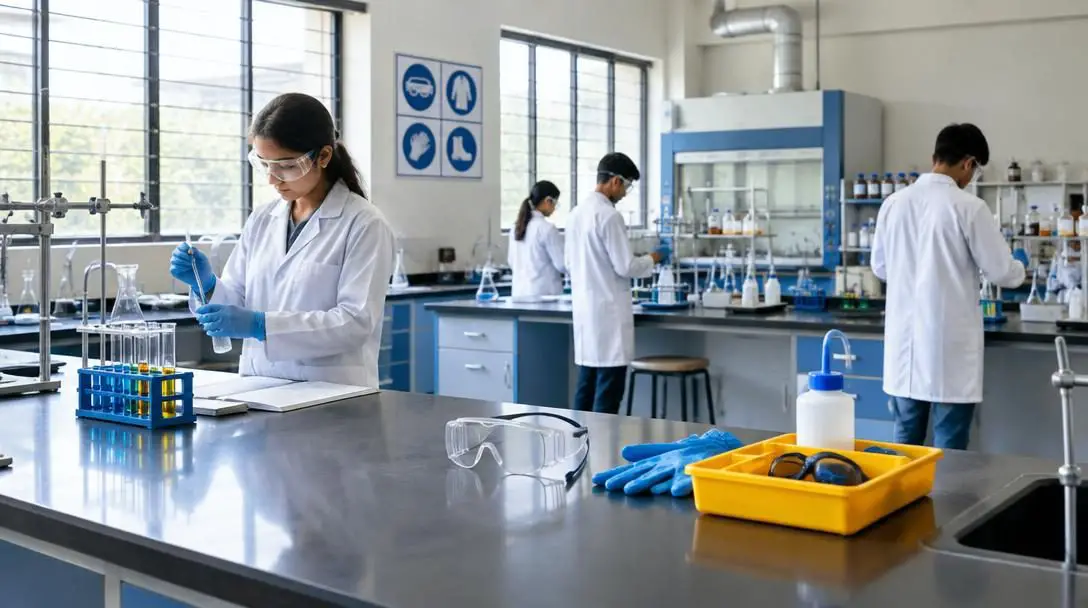
Practical laboratory experiments form the operational heart of technical education across Maharashtra. For students enrolled in polytechnic diploma programs under the Maharashtra State Board of Technical Education (MSBTE), laboratories are the dynamic testing grounds where classroom formulas, engineering diagrams, and theoretical models transform into tangible real-world demonstrations. Whether testing the tensile strength of materials, mixing active reagents, or analyzing electrical circuits, students develop the practical competencies necessary to succeed in modern industry.
However, practical training spaces carry inherent operational hazards. Academic laboratories house hazardous chemicals, pressurized apparatus, thermal devices, and heavy machinery that can trigger severe injuries if treated with carelessness or complacency. Developing a rigorous safety habit is not simply an institutional requirement; it is a fundamental professional discipline that preserves experimental accuracy, safeguards individual health, and protects everyone working inside the laboratory facility.
Key takeaways
- Certified personal protective equipment acts as an indispensable physical barrier against thermal, mechanical, and chemical hazards.
- Reviewing Material Safety Data Sheets and container warning labels prior to an experiment prevents catastrophic mixing mistakes.
- Standard laboratory sink drains must never be used for chemical disposal unless an instructor provides direct, explicit authorization.
- Unsupervised laboratory work is strictly prohibited to ensure immediate assistance during accidental spills, fires, or medical emergencies.
The Essential Role of Laboratory Work in MSBTE Technical Curricula
The academic framework defined by the Maharashtra State Board of Technical Education emphasizes applied engineering and hands-on skill acquisition. Students across diverse technical disciplines—including civil engineering, mechanical engineering, electrical engineering, chemical engineering, and applied sciences—spend extensive hours working directly with physical tooling and chemical compounds. These academic workspaces are specifically designed to replicate the challenging environments found in industrial manufacturing units, testing facilities, and processing plants.
Because polytechnic coursework prioritizes real-world manipulation over passive observation, the margin for error is significantly narrower than in lecture halls. A miscalculated reagent volume, an overlooked valve, an unanchored glass vessel, or a fleeting moment of inattention can result in hazardous fumes, flash fires, or toxic chemical splashes. Consequently, MSBTE enforces stringent laboratory safety protocols to cultivate a safe learning environment where students can experiment confidently without endangering faculty, technicians, or peers.
A rigorous laboratory safety protocol transforms academic training facilities into secure, high-precision industrial testing spaces.
Five Fundamental Laboratory Safety Rules Every Polytechnic Student Must Master
To establish a consistent, risk-mitigated working environment, polytechnic institutions mandate five core safety rules. These foundational guidelines govern everything from personal attire and chemical analysis to waste handling, hygiene, and emergency group dynamics.
| Safety Rule | Primary Focus | Key Risk Addressed | Essential Requirement |
|---|---|---|---|
| Appropriate PPE | Personal Body Protection | Splashes, flying debris, thermal burns | Approved coat, splash goggles, fitted gloves, closed shoes |
| Understand Properties | Chemical & Material Literacy | Unexpected reactions, toxic exposure | Consulting MSDS documentation and hazard warning labels |
| Handle Materials with Care | Procedural Precision | Violent boiling, toxic vapors, spill damage | Slow mixing techniques and designated waste carboys |
| Clean & Organized Space | Workspace Maintenance | Tripping hazards, cross-contamination | Clear pathways, immediate cleanup, uncluttered benches |
| Never Work Alone | Supervision & Teamwork | Delayed emergency response, solo accidents | Dual-student presence and continuous faculty oversight |
1. Wear Appropriate Personal Protective Equipment (PPE)
Personal Protective Equipment represents the frontline physical barrier between a student's body and hazardous laboratory conditions. Certified PPE must be put on before crossing into the laboratory workspace, shielding the user from unexpected splashes, shattering glassware, radiant heat, and mechanical pinches.
MSBTE standards require students to maintain and utilize four critical pieces of personal gear:
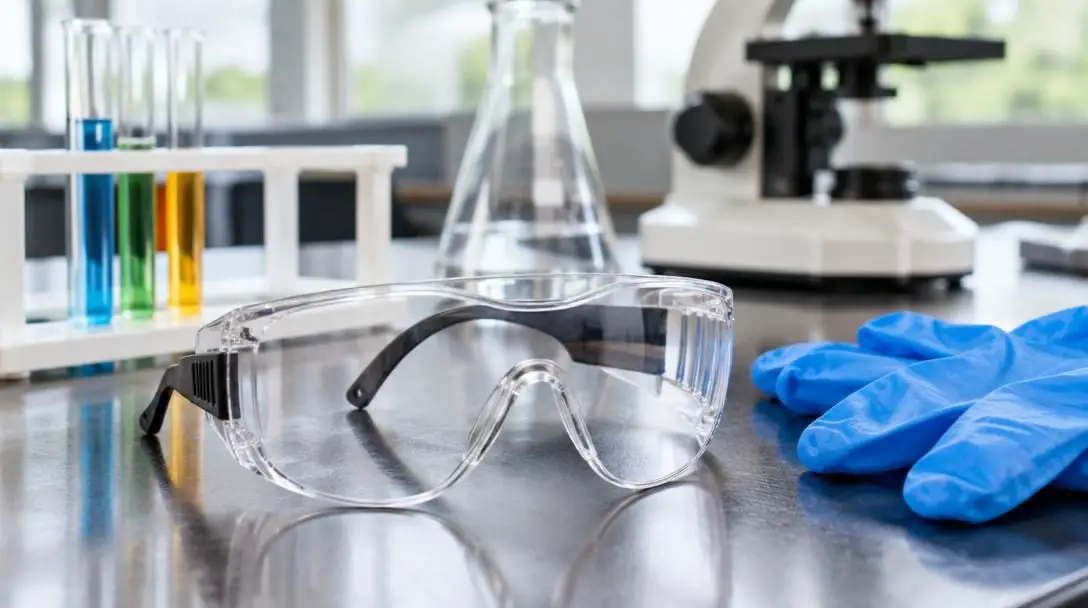
- Lab Coat: A full-length, buttoned laboratory coat prevents corrosive liquids, dye reagents, and reactive powders from contacting personal garments and exposed skin.
- Safety Goggles: Impact-resistant, chemical-splash goggles provide complete optical shielding against flying fragments and airborne mists. Standard prescription spectacles do not provide lateral splash containment and cannot substitute for safety goggles.
- Protective Gloves: Impermeable, chemically resistant gloves create an essential barrier against corrosive reagents, hot glassware, and contaminated apparatus.
- Appropriate Clothing: Practical clothing should include full-length trousers and sturdy, fully covered, flat-soled shoes to minimize skin exposure against spills and dropped glassware.
2. Understand the Properties of Chemicals and Materials
Working with chemical compounds without researching their specific behavioral profiles invites critical danger. Every laboratory substance displays unique thermodynamic and chemical properties, such as high flammability, water reactivity, volatility, or acute toxicity. MSBTE students are expected to familiarize themselves with these characteristics before measuring or mixing reagents.
Polytechnic students should utilize three primary resources to verify material parameters:
- Material Safety Data Sheets (MSDS): The MSDS provides complete technical documentation regarding flashpoints, boiling points, exposure limits, reactivity hazards, and mandatory first-aid interventions.
- Chemical Container Labels: Factory labels display universal hazard pictograms, concentration ratings, and direct handling warnings that must be reviewed twice before dispensing.
- Instructor Consultation: Whenever documentation is missing, obscured, or conceptually unclear, students must halt work immediately and consult their laboratory instructor.
3. Handle Chemicals with Care
Precise handling procedures prevent the uncontrolled release of toxic vapors, runaway exothermic reactions, and surface contamination. When working with acids, bases, volatile solvents, or solid reagents, polytechnic students must practice steady, deliberate manual techniques.
Careful chemical handling requires following exact lab manual instructions, using stable pouring angles, and adding concentrated acids into water slowly rather than adding water to acid. Crucially, hazardous chemicals must never be poured into standard municipal sink drains. Unauthorized drain disposal corrodes plumbing infrastructure and releases harmful pollutants into the municipal water system. Students must deposit spent residues into dedicated, clearly marked chemical waste receptacles.
4. Keep the Lab Clean and Organized
A cluttered bench surface increases the risk of accidental chemical spills, broken glassware, and obscured container labels. Cleanliness and physical organization are core operational necessities that keep experimental setups stable, observable, and precise.
Students must clean non-hazardous liquid drips immediately using designated bench wipes, discard solid paper waste into proper trash receptacles, and return reagent bottles to central dispensing stations immediately after use. Furthermore, aisles, corridors, and emergency hardware pathways must remain completely unobstructed by stools, school backpacks, or trailing electrical cords.
5. Never Work Alone
Direct peer support and faculty supervision are indispensable safeguards in engineering and science laboratories. Under no circumstances should an MSBTE student conduct unauthorized experiments, operate machinery, or manipulate hazardous reagents without a peer or qualified supervisor present.
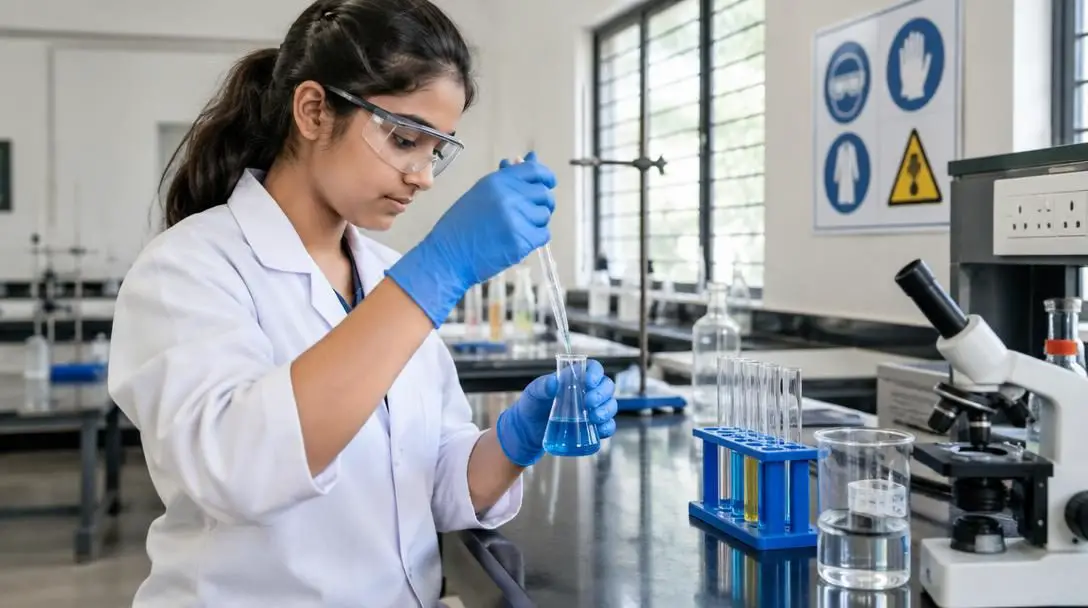
Working in pairs ensures that technical mistakes—such as loose tube clamps or incorrect voltage settings—are caught before apparatus is powered or heated. In the event of an unexpected incident, a laboratory partner can shut down master valves, summon faculty assistance, or guide an injured student to emergency fixtures. Every student must know the precise location of the laboratory eyewash station, safety shower, and fire extinguisher before commencing work.
Step-by-Step Guide for Conducting a Safe Practical Session
Polytechnic students can establish a disciplined, mistake-free experimental workflow by executing laboratory sessions through eight structured procedural steps:
- Pre-Lab Preparation: Read through the experimental manual prior to class, review the associated MSDS entries for all required compounds, and clarify procedural ambiguities with the faculty instructor.
- PPE Inspection: Put on your buttoned lab coat, adjust chemical-splash goggles securely, inspect protective gloves for pinholes or tears, and confirm that your footwear covers your feet completely.
- Workspace Setup: Store personal bags and coats in external cubbies, clean the assigned lab bench, and inspect all glassware for microscopic cracks or structural chips.
- Emergency Check: Verify unobstructed routes toward the room exit, locate the emergency eyewash station, identify the overhead safety shower, and check the proximity of fire extinguishers.
- Experimental Execution: Measure, mix, heat, or wire components strictly according to the approved laboratory manual, maintaining a low conversational volume to hear instructor guidance clearly.
- Waste Management: Segregate chemical, solid, and biological residues, depositing each spent material directly into its designated collection carboy or hazardous waste bin.
- Post-Lab Cleanup: Wash non-disposable glassware, wipe down the working surface, shut off gas burner valves, disconnect electrical equipment, and return tools to storage cabinets.
- Hand Washing and Exit: Peel off gloves and remove your lab coat carefully to prevent skin contact with surface residues, wash your hands thoroughly using soap and warm water, and exit the facility.
Common Laboratory Safety Mistakes to Avoid
Rushing through assignments or assuming familiarity with hazardous tasks can lead to serious errors. MSBTE students should be alert to these common procedural mistakes:
- Skipping Eye Protection: Removing safety goggles because they feel warm or lightly fogged leaves the eyes entirely exposed to sudden thermal splashes, volatile vapors, or glass shards.
- Assuming Material Hazards: Treating unknown liquids or powders as harmless without reading container labels or MSDS sheets risks violent chemical burns and hazardous vapor inhalation.
- Improper Chemical Disposal: Discarding leftover reagents into standard sink drains out of convenience damages plumbing fixtures and introduces severe environmental toxins into wastewater.
- Cluttering Bench Surfaces: Allowing textbooks, extra glassware, and personal items to crowd the workspace greatly increases the chance of overturning hot beakers or reagent vessels.
- Conducting Unauthorized Experiments: Altering reagent ratios, skipping dilution steps, or mixing unassigned substances without explicit faculty approval can cause uncontrolled exothermic reactions.
- Entering the Lab Unsupervised: Attempting to finish an assignment inside an empty laboratory eliminates the safety buffer provided by faculty oversight and peer assistance.
Translating Laboratory Discipline into Industrial Engineering Careers
The safety practices enforced by polytechnic institutions across Maharashtra are directly aligned with modern industrial operating standards. Whether transitioning into chemical processing plants, construction sites, automotive design centers, or electronics assembly lines, employers place immense value on occupational safety and compliance.
Adhering to personal protective equipment standards, understanding chemical hazard documentation, managing waste responsibly, and maintaining clean workspaces are professional baseline behaviors. By mastering these habits during their diploma coursework, MSBTE students develop the technical vigilance and procedural integrity expected of world-class engineers.
Frequently asked questions
Can prescription eyeglasses replace safety goggles in the laboratory?
No. Standard prescription eyeglasses lack lateral splash shields and are not built to withstand high-velocity mechanical impacts. Students requiring corrective vision must wear certified chemical-splash safety goggles directly over their prescription glasses.
What should I do first if a chemical splashes on my skin or eyes?
Alert your partner and instructor immediately, then move directly to the eyewash station or emergency shower. Flush the affected area with clean water continuously for at least fifteen minutes while medical help is arranged.
Where can MSBTE students find Material Safety Data Sheets (MSDS)?
MSDS documentation is typically maintained in designated safety binders located in the laboratory preparation room, stored near chemical dispensing stations, or made accessible through departmental digital portals.
Why is pouring chemicals down regular sink drains prohibited?
Laboratory sinks connect to standard drainage infrastructure. Chemical disposal can corrode piping, produce toxic reactions within plumbing traps, and introduce hazardous environmental pollutants into municipal wastewater treatment facilities.
Is it permissible to complete an experiment alone if the equipment is low-risk?
No. MSBTE rules strictly prohibit working alone in any laboratory facility, regardless of the perceived simplicity of the task, because unforeseen medical emergencies, slips, or equipment failures require immediate assistance.
The bottom line
Laboratory safety within MSBTE polytechnic programs is a vital professional discipline that underpins technical excellence. By consistently wearing certified personal protective equipment, studying material properties, handling reagents with care, keeping workspaces immaculate, and working in coordinated teams, students protect their personal health while establishing the rigorous workplace habits required for successful engineering careers.





