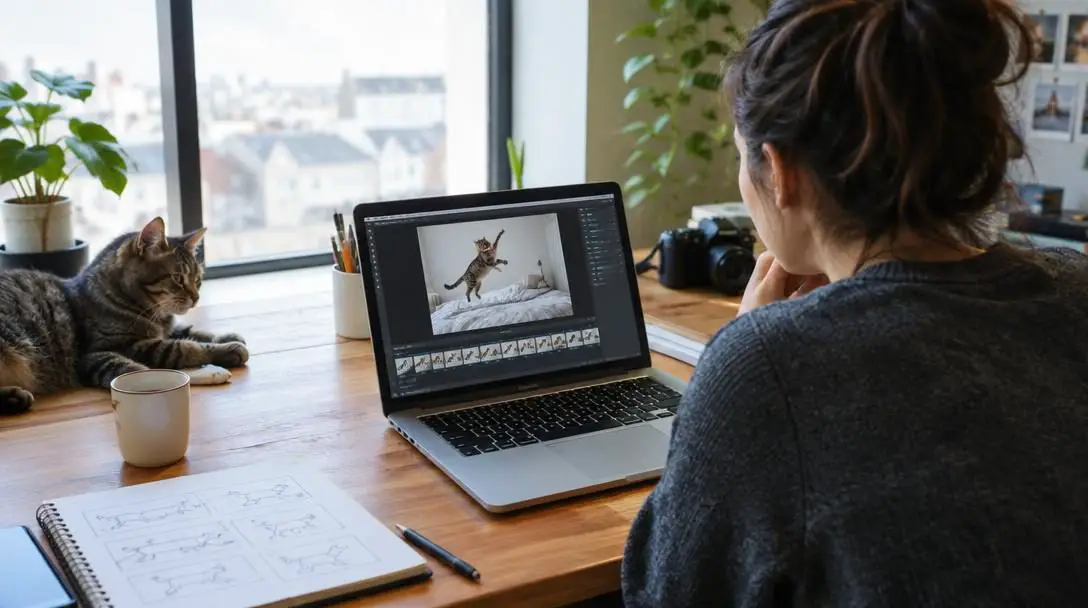
Why Are Gifs So Popular?

On June 15, 1987, computer scientist Stephen Earl Wilhite and the team at CompuServe released the Graphics Interchange Format, fundamentally reshaping how human beings communicate across digital screens. Decades later, despite fierce debates over whether the acronym should be pronounced with a soft sound like Jif peanut butter or with a traditional hard sound, these bite-sized visual loops remain an indispensable fixture of modern online culture.
Whether celebrating an upcoming weekend happy hour with coworkers, cheering when a favorite sports team clinches a playoff berth, or sending a quick reaction to an unexpected news headline, there is almost certainly an animation tailored for the exact occasion. By packing vibrant emotional energy into lightweight files, looping animations bridge social divides and provide an expressive visual language that plain text simply cannot replicate.
Key takeaways
- CompuServe introduced the Graphics Interchange Format in 1987 to transmit compressed, multi-frame moving visuals over slow dial-up network connections.
- Visual loops eliminate the emotional ambiguity and perceived passive-aggression common to one-word text messages and static checkmark or thumbs-up emojis.
- Autonomous looping and silent playback make animations far easier to consume on mobile hardware than traditional video clips that require sound and external apps.
- Major tech corporations like Google and Facebook acquired discovery engines like Tenor and GIPHY to monetize conversational search results with sponsored brand placements.
- Careful consideration of workplace norms, emotional sensitivity, and screen legibility helps prevent social misunderstandings when sharing visual reactions.
The historical origins and technical evolution of looping graphics
To grasp why these dynamic graphics remain so dominant, it is necessary to examine the technological landscape of the late 1980s. When CompuServe launched the format on June 15, 1987 under the technical direction of Stephen Earl Wilhite, the consumer internet was in its infancy. Connection speeds were remarkably slow, dial-up telephone infrastructure was standard, and transmitting rich media across early network terminals posed immense technical hurdles. Engineers urgently required a format capable of displaying colorful imagery efficiently without overwhelming narrow bandwidth thresholds.
The innovation solved these early networking roadblocks by utilizing efficient compression algorithms that kept file sizes remarkably compact. Over time, support for multi-image data streams allowed creators to bundle multiple sequential frames into a single file, producing continuous motion that played automatically without relying on external video software. During the dial-up era, downloading an animation was often a slow, line-by-line ordeal, yet it served as the web's only accessible method for viewing dynamic motion inside a browser.
As modern internet infrastructure transitioned to high-speed broadband and cellular networks, rival web animation tools came and went, but Wilhite's format persevered. The emergence of social networking feeds, desktop chat programs, and smartphone keyboards transformed what was once a decorative website novelty into a foundational pillar of human dialogue.
Bridging the emotional void left by plain digital text
Written digital communication suffers from an inherent handicap: plain characters typed into a screen convey virtually zero physiological emotion. Typing a simple confirmation like "okay" frequently causes the recipient to assume the sender is irritated, indifferent, or sarcastic, even when the sender drafted the message with genuine warmth and enthusiasm. Modern behavioral science indicates that people routinely perceive abrupt, one-word messages as passive-aggressive, with similar negative assumptions often projected onto basic symbols like the standard checkmark or thumbs-up emojis.
Sending a moving visual of an enthusiastic character nodding vigorously or declaring agreement resolves that ambiguity instantly. The inclusion of human movement—such as a subtle eyebrow raise, an energetic dance step, or an exaggerated gesture—provides conversational nuance that text alone cannot provide. These animated sequences introduce crucial nonverbal signals back into digital exchanges, demonstrating that the sender has taken the time to consider the recipient's feelings and emotional state.
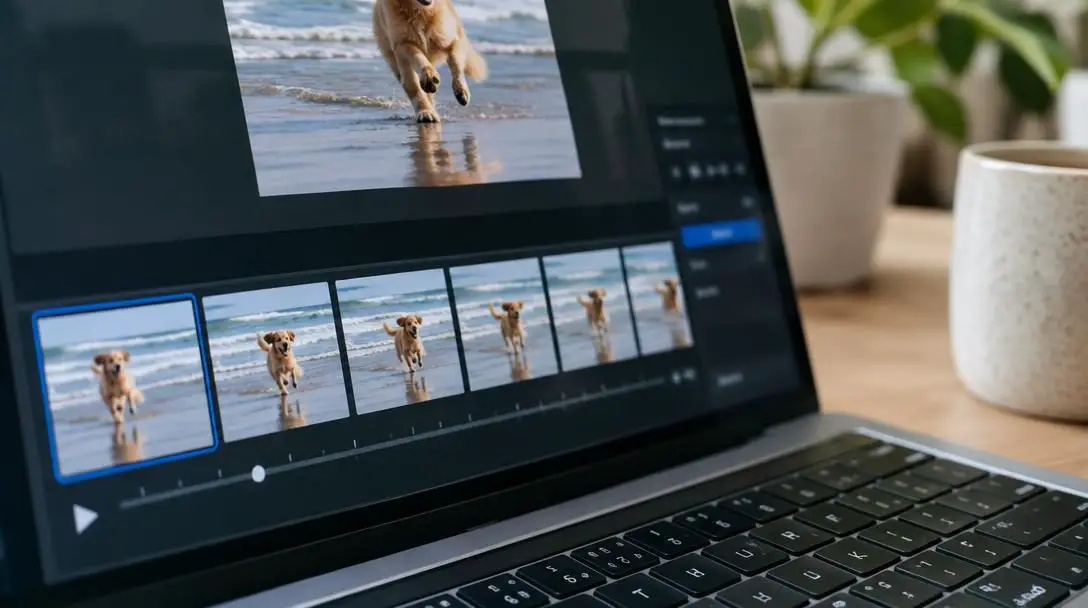
By packing vibrant visual energy into lightweight files, looping animations bridge social divides and provide an expressive language that plain text cannot replicate.
Universal expression: a visual match for every state of mind
Human interaction depends heavily on facial expressions, vocal inflections, and physical posturing. When remote digital channels strip those cues away, visual clips act as an essential emotional surrogate. Regardless of what an individual experiences in a given moment, an animation exists to represent that exact psychological reality.
Content featuring people laughing generates the highest engagement across digital networks. In many situations, typing "lol" fails to communicate the true intensity of someone's amusement; an animation of a person collapsing into uncontrollable laughter captures the physical feeling of stomach pain and joy far more effectively. From complete apathy and deep sorrow to victorious celebration, looping clips allow users to express complex sentiments that remain difficult to articulate through words alone.
Snackable convenience: zero-friction consumption on modern networks
While sharing a standard video file can also communicate a reaction, videos introduce immediate conversational friction. Video clips often require opening an external playback application, waiting through buffering sequences, and toggling audio controls that may disrupt quiet environments like classrooms or offices. In contrast, looping graphics run automatically, remain completely silent by default, and consume minimal device resources.
The efficiency of modern compression has reached the point where creative enthusiasts have condensed entire feature films, such as the movie Shrek, into individual micro-sized animated files. Because animations load almost instantaneously over contemporary cellular networks, they can easily replace text altogether without creating delays. This zero-friction accessibility is what elevated the format from a slow dial-up curiosity into an everyday conversational necessity.
Comparing modern digital communication mediums
Different communication methods balance visual expressiveness, loading speeds, and recipient effort in distinct ways. Evaluating these formats illustrates why lightweight looping animations continue to occupy a unique and practical niche across modern communication software.
| Format | Emotional Nuance | Loading Demand | Playback Friction | Audio Dependency |
|---|---|---|---|---|
| Plain Text | Minimal; prone to ambiguity | Lowest bandwidth footprint | None; immediate reading | None |
| Static Emojis | Moderate; occasionally misinterpreted | Negligible file overhead | None; renders inline | None |
| Animated Loops | High; captures body language and tone | Very low on modern networks | Zero; autonomous looping | Completely silent by default |
| Full Video Clips | Very high; full audiovisual context | High bandwidth and storage | High; requires play action | Often requires active sound |
How looping media works under the hood
The ubiquity of looping graphics is driven by an underlying architecture that pairs original file structures with advanced digital distribution systems:
- Sequential frame storage: The underlying file format packages multiple raster image frames in a single stream. Internal delay markers govern the precise duration of each frame, generating seamless, perpetual motion without requiring user engagement or separate player controls.
- Native keyboard integration: Rather than forcing users to manually download and save graphics from independent websites, modern operating systems and messaging tools embed visual search interfaces directly into typing fields.
- Algorithmic sentiment indexing: Specialized discovery databases analyze and catalog millions of animations using extensive metadata. Clips are indexed under hundreds of overlapping tags covering characters, bodily actions, famous quotes, and subtle emotional states, allowing a search for a broad feeling like excitement to surface pinpoint matches in milliseconds.
The commercial engine: corporate monetization behind visual discovery
Beyond the social and psychological reasons behind visual sharing, substantial commercial interests fuel the trend. Major technology conglomerates have recognized the immense attention economy value locked inside peer-to-peer visual communication. Google acquired the search platform Tenor, while Facebook pursued the acquisition of GIPHY, embedding these searchable visual engines into the foundation of global social networks.
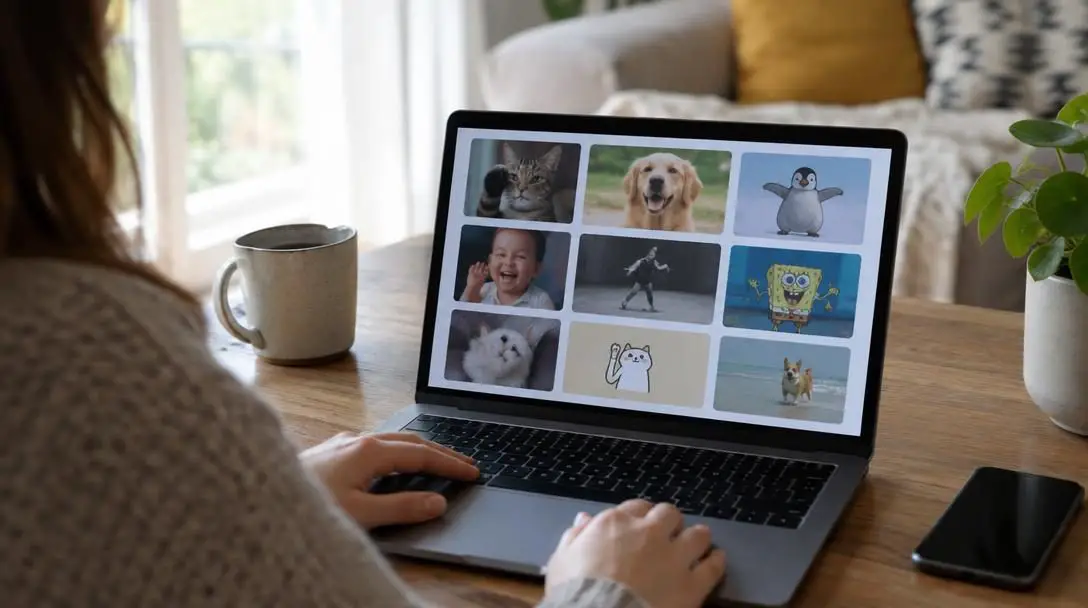
These centralized discovery platforms offer commercial enterprises unprecedented access to casual user discussions. Global corporations like McDonald's and Walmart pay to ensure their promotional animations appear at the top of search result listings for popular conversational queries. While everyday chat participants rarely share branded advertisements without reason, high-ranking placement guarantees significant brand visibility, seamlessly blending corporate products into everyday digital dialogue.
Step-by-step guide to choosing and sending the right visual loop
Selecting an animation that hits the right emotional tone requires mindful consideration of both your recipient and the conversational context. Following a methodical process ensures your visual message lands as intended.
- Identify the core emotion: Determine the exact sentiment you wish to convey. Pinpoint whether your reaction represents genuine enthusiasm, sarcastic disbelief, comforting empathy, or shared fatigue before opening the search window.
- Search using specific actions or quotes: Avoid typing broad, generic nouns into the search bar. Instead, type expressive dialogue snippets, physical reactions, or well-known cultural references to retrieve more accurate clips.
- Preview the entire animation cycle: Always observe the animation through at least one full loop before hitting send. A clip that begins with a pleasant expression may conclude with an aggressive, distracting, or off-color punchline.
- Assess the conversational environment: Match the visual tone to the social setting. Irreverent pop-culture jokes that thrive in private group chats with close friends may be perceived as unprofessional inside formal corporate workplace channels.
- Send as an enhancement rather than a distraction: Treat visual loops as an accent mark designed to clarify your intent, ensuring that moving graphics do not drown out important practical details in fast-moving discussions.
Common mistakes that disrupt visual communication
Although looping media can enrich casual digital discussions, improper usage can cause frustration, communicative confusion, or interpersonal tension. Avoiding common communication errors preserves clarity across social and professional channels:
- Misjudging professional boundaries: Dropping chaotic, absurd, or irreverent visual memes into serious workplace discussions can undermine the gravity of important projects or cause colleagues to question your professionalism.
- Flooding conversational threads: Posting rapid-fire streams of moving graphics clutters screens and forces other participants to scroll excessively to locate essential text updates.
- Displaying insensitivity during serious moments: Responding with dramatic, lighthearted visual humor when someone shares somber, delicate, or distressing news can appear deeply dismissive and emotionally tone-deaf.
- Selecting chaotic or illegible visuals: Clips that rely on frantic strobe editing, shaky camera work, or microscopic background details are nearly impossible to decipher on compact mobile screens.
- Relying on obscure pop-culture references: Many animated loops depend entirely on familiarity with specific cult television programs or movies. If your conversational partner does not know the source material, the intended comedic nuance will fall flat.
The future of animated loops in modern communication
As digital platforms continue to change, short looping media is evolving to accommodate new hardware environments, data constraints, and accessibility standards. Modern web engineering increasingly uses streamlined video containers and modern compression codecs behind the scenes to deliver crisper color fidelity and higher frame rates without consuming additional bandwidth.
Simultaneously, interface developers are prioritizing accessibility by introducing motion-reduction toggles and visible pause controls across chat applications, ensuring that users sensitive to constant on-screen movement can browse comfortably. As visual communication expands from desktop monitors and smartphones into wearable displays, augmented reality glasses, and smart home surfaces, bite-sized looping visuals will continue to serve as humanity's preferred emotional shorthand.
Frequently asked questions
When was the Graphics Interchange Format originally created?
The format was officially released on June 15, 1987, by computer scientist Stephen Earl Wilhite and his team at the online service provider CompuServe.
What is the correct pronunciation of the format?
Creator Stephen Earl Wilhite explicitly stated that it should be pronounced with a soft sound like Jif peanut butter, though millions of speakers worldwide prefer to pronounce it with a hard initial consonant.
Why did CompuServe develop the format in the 1980s?
It was engineered to transmit visual images across slow, bandwidth-constrained dial-up internet connections using compression techniques that kept file sizes small while supporting multi-frame animation.
Why do major technology corporations buy animated image search engines?
Companies like Google and Facebook acquired search services like Tenor and GIPHY to capture user search intent and allow corporate advertisers, such as McDonald's and Walmart, to pay for prominent placement in mobile keyboards.
Can entire feature-length movies really be compressed into a single loop?
Yes, internet creators have famously compressed entire feature films, including the animated movie Shrek, into tiny looping files that can be viewed directly inside standard web browsers.
The bottom line
From its dial-up origins in 1987 to its status as a cornerstone of modern digital language, the looping graphic has endured because it solves a universal human challenge: the emotional sterility of plain text. By providing immediate, snackable, and nuanced emotional context without the friction of traditional video, these animated snippets allow us to laugh, sympathize, and connect across digital divides. As technology continues to evolve across new devices and platforms, our reliance on visual loops to say what words cannot will remain an enduring part of digital life.