Why Catwoman is More Than Just a Femme Fatale
While comic books were originally a heavily male-dominated industry, there have been plenty of popular female characters throughout the years. One of the first that comes to mind for any comic book fan is Selina Kyle, also known as Catwoman. Introduced in the very first issue of the Batman comic book, Catwoman has been a staple of the franchise ever since. Across decades of publication, she has grown far beyond the simplistic tropes that originally defined women in mid-twentieth-century pulp and superhero fiction. Rather than remaining an incidental obstacle or a decorative prize, she evolved into a compelling narrative force of her own.
Along the way, multiple on-screen adaptations have brought Catwoman to life with varying types of demeanors, ranging from campy villainy to antiheroic vigilance. Through these appearances on television and film, Catwoman has been seen as a villain in some instances, as well as a hero. No matter how you categorize her, she remains one of the most complex figures in comic book lore. She is vastly more than just a femme fatale used as a setpiece for Batman's adventures; she has become an enduring, universally recognized individual character in her own right.
Key takeaways
- Catwoman was introduced in the very first issue of the Batman comic book and evolved from a conventional foil into a fully realized protagonist.
- Unlike typical Gotham rogues motivated by mass terror or malice, Selina Kyle acts out of necessity and personal survival without intending to kill or incite wanton destruction.
- Her fierce self-reliance stands in stark contrast to Bruce Wayne, who had an extensive support system to fall back on after tragedy struck.
- Selina exhibits profound empathy and compassion, once accepting the blame for 230 deaths to shield her friend and protege Holly Robinson.
Major on-screen portrayals across film and television
Over the decades, Catwoman has transitioned from the illustrated page into live-action media, with celebrated performers offering distinct takes on her demeanor and motivations. Whether presented as an outright adversary, a conflicted romantic counterpart, or a street-level survivor, each adaptation has highlighted a different angle of Selina Kyle's multidimensional persona.
Julie Newmar
- Format: Television
- Production: Original television series
- Performance style: Distinct presence and style on the small screen
Julie Newmar brought Selina Kyle into live-action prominence in the original television series. Her performance established the character's sophisticated wit, acrobatic agility, and theatrical flair, providing television audiences with an indelible interpretation that helped anchor the feline burglar as an essential figure in Batman media.
Eartha Kitt
- Format: Television
- Production: Original television series
- Performance style: Distinct style and charismatic presence
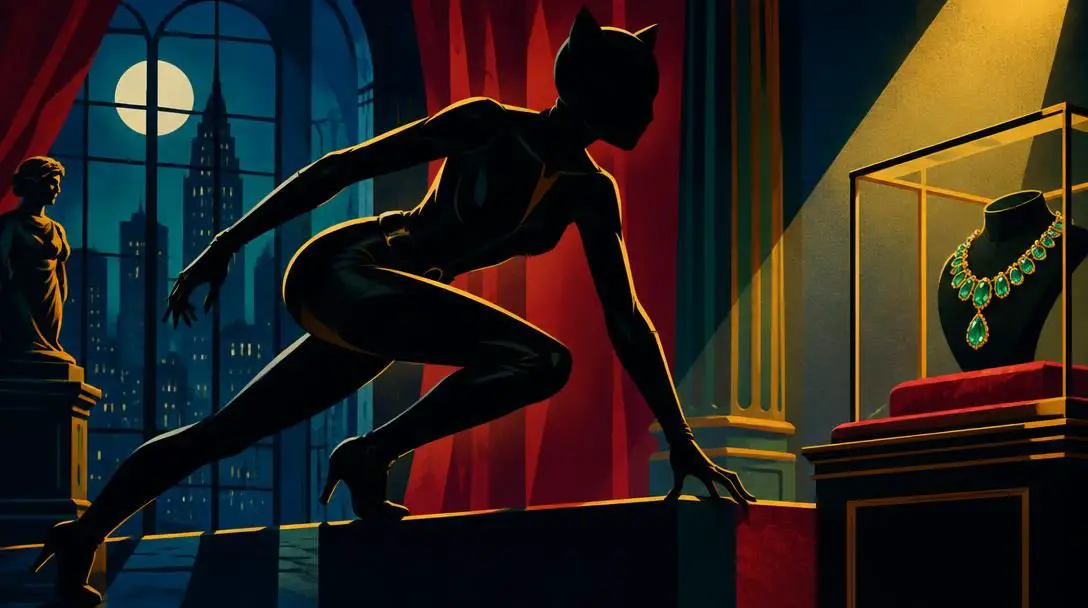
Stepping into the role in the original television series, Eartha Kitt brought a distinct presence and unforgettable vocal cadence to Catwoman. Kitt's portrayal delivered a poised, commanding energy that broke barriers and highlighted the character's sharp intellect, effortless authority, and regal demeanor on the small screen.
Michelle Pfeiffer
- Format: Film
- Production: Big-screen adaptation
- Performance style: Distinct facet of the character persona
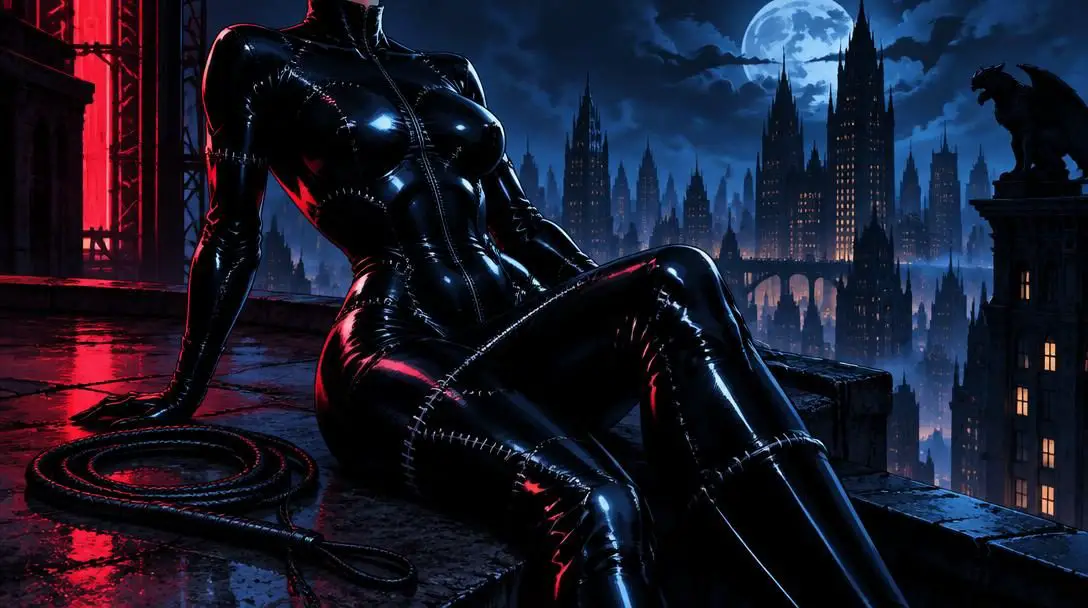
Michelle Pfeiffer took on the mantle on the big screen, exploring a profoundly different facet of Selina Kyle's identity. Pfeiffer's depiction balanced fractured vulnerability with ferocious empowerment, presenting a woman who reclaimed her agency through an unforgettable cinematic performance.
Halle Berry
- Format: Film
- Production: Big-screen adaptation
- Performance style: Distinct facet of the character persona
Halle Berry stepped into the starring role on the big screen, bringing a distinct athletic interpretation to the character. Her performance offered another cinematic variation on the cat-themed persona, emphasizing movement, physical agility, and a unique stylistic direction for the franchise on film.
Anne Hathaway
- Format: Film
- Production: Big-screen adaptation
- Performance style: Distinct facet of the character persona
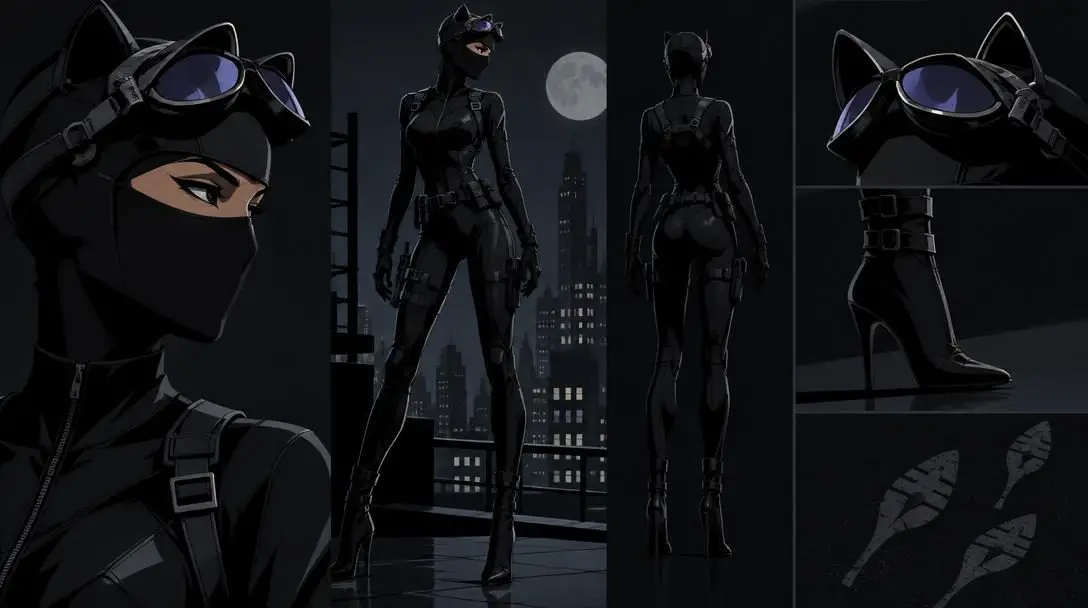
Anne Hathaway portrayed the character on the big screen by channeling a grounded, razor-sharp operative whose burglary was fueled by social disparity and pragmatic necessity. Her performance brought out the character's cunning intellect, strategic resourcefulness, and morally ambiguous loyalties in modern cinema.
At a glance: Comparing key Catwoman screen appearances
The transition of Catwoman across different production formats illustrates how adaptable her core traits remain regardless of medium or era.
| Actor | Production Platform | Medium | Character Portrayal Focus |
|---|---|---|---|
| Julie Newmar | Original television series | Small screen | Distinct presence and classic stylistic demeanor |
| Eartha Kitt | Original television series | Small screen | Distinct style, poise, and commanding presence |
| Michelle Pfeiffer | Big-screen adaptation | Feature film | Exploration of an intense, distinct persona facet |
| Halle Berry | Big-screen adaptation | Feature film | Distinct facet showcasing movement and physicality |
| Anne Hathaway | Big-screen adaptation | Feature film | Pragmatic street survival and shifting allegiances |
The good side: Ethics beyond black and white
From the outside looking in, Catwoman can appear to be one of the "bad guys" in the Batman universe. After all, she is an expert burglar and tends to fight off Batman whenever he tries to foil her heists. However, Selina Kyle has proven to be someone who is not motivated by evil. She does not intentionally try to hurt anyone, and she certainly never sets out to kill anyone like many of the other Batman villains. Because of this, Batman was always able to see the good in Catwoman.
She is an individual who acts on pure necessity rather than malicious or destructive instincts.
Creator Bob Kane noted that this elusive, ambiguous quality was intentional, stating that Selina was someone who was hard to understand fully, just like a cat, though his original phrasing reflected the chauvinistic attitudes of his era. Once Catwoman is developed more throughout the series, we see that there is a deep sense of fairness and restraint in her character. Unlike typical rogues whose ambitions involve mass terror, financial tyranny, or megalomania, Selina operates under clear personal boundaries. Her crimes focus on high-stakes theft rather than public harm, creating a sharp contrast with the genuine malice threatening Gotham City.
Relatable origins and enduring motivation
The early iterations of Catwoman focused primarily on her role as a femme fatale and a romantic interest for Batman. This dynamic remained the constant for the first couple of decades of her history, but the framework eventually changed during the 1980s. It was during that decade that Catwoman was established as someone with a backstory that was much deeper, granting her genuine narrative depth.
Writer Frank Miller wrote Catwoman as someone who worked as a lady of the night that became a burglar after seeing Batman, though that specific element was soon scrapped. Catwoman's backstory has been changed several times depending on the generation and the specific Batman series she is part of, yet several underlying constants remain. Catwoman is often depicted with a background in which she was orphaned, abused, and left out in the streets.
This survival narrative serves as the main inspiration as to why she is a burglar. Catwoman has used her athletic prowess as a way to make ends meet, stealing high-valued jewels and money without inciting chaos like the Joker. She steals to survive in an environment that provided her no safety net, making her motivations understandable to readers who recognize the harsh realities of neglect and desperation.
Uncompromising independence
Though Catwoman is not a model citizen, there is one certainty: she is as independent as anyone you will meet. This trait becomes especially clear when comparing her path to that of Bruce Wayne. Even though Batman was also orphaned as a child, he still had an extensive support system around him that helped position him into being perhaps the most powerful person in Gotham City.
Catwoman, on the other hand, did not get that kind of support as she grew up. There was no Alfred or Lucius in her corner, so she relied entirely on herself to make ends meet. That type of self-reliance, even when expressed through illegal acts, has endeared the character to audiences for generations. Batman breaks the rules constantly by operating as a vigilante, and society idolizes him for his unilateral actions. Why shouldn't Catwoman get a break when she is simply trying to keep herself alive?
Many people who grew up without a personal support system admire the fierce independence Selina Kyle demonstrates across her adaptations. Furthermore, Catwoman tends to avoid allying herself with criminal factions around Gotham City, or even staying allied with Batman for too long. She prizes her autonomy and consistently keeps it intact.
Caring and compassion
There are many Batman villains who simply do not have a soul or a fiber of well-meaning in their bodies. When examining figures like the Joker, one sees an antagonist who desires nothing more than chaos and hurting as many people as possible. The exact opposite is true for Catwoman. Across many stories, she has shown herself to be perhaps the most compassionate and caring person in the entire Batman universe.
One of the most prominent examples of her selfless nature comes from Batman Volume 3, in an incident where Catwoman admitted to killing more than 230 people after an orphanage burned down. It was later revealed that she did not commit the crime at all. Instead, she took the blame entirely to protect Holly Robinson, her friend and protege who would later end up becoming the next Catwoman. Selina was willing to bear the condemnation of the world and endure maximum legal peril simply to shield someone she cared about. While she may be hardened by street life and immensely talented as an operative, she is fundamentally distinct from the dangerous, cold-blooded criminals Gotham City's authorities assume her to be.
How her character dynamic works in Gotham
Catwoman serves a unique functional role in the broader ecosystem of Gotham City storytelling. Understanding how her presence operates narrative-wise reveals why she cannot simply be categorized as a hero or a villain:
- Testing Batman's rigid moral code: Batman views the law and morality through strict principles, whereas Catwoman operates out of pragmatic necessity. Their interactions force the narrative to question whether stealing from the corrupt to survive is truly equivalent to violent crime.
- Balancing urban chaos: Unlike villains who aim to burn the city down, Catwoman thrives in the shadows of a functioning city. She often defends those living on Gotham's margins, acting as an informal line of protection for communities the police and masked heroes overlook.
- Operating without institutional backing: Heroes often rely on fortunes, laboratories, or official police connections, while major crime bosses control vast networks. Catwoman works on street-level ingenuity, demonstrating how a solo operator survives through pure skill and situational awareness.
Practical steps to analyzing Catwoman stories
To fully appreciate the depth of Selina Kyle beyond surface-level tropes when reading comic runs or watching screen adaptations, readers and viewers can follow this structured approach:
- Identify the era and medium: Determine whether the piece belongs to the early decades of romance-focused storytelling, the post-1980s revamps, or modern standalone runs. Context clarifies the depiction of her background.
- Examine her motivation for theft: Look closely at why she is pursuing a target. Consider whether she is stealing to acquire essential resources, recover something personal, or keep items out of the hands of violent operators.
- Track her personal allegiances: Observe how long she coordinates with others. Selina rarely embeds herself in formal organizations, so noting when she decides to disengage from Batman or villain alliances highlights her independence.
- Look for protective instincts: Watch how she responds to vulnerable characters, particularly younger figures or individuals surviving on the streets, such as Holly Robinson. Her willingness to sacrifice her own safety for others reveals her underlying empathy.
Common mistakes when interpreting Catwoman
Audiences and creators alike sometimes fall into simplistic interpretations that flatten the nuances of Selina Kyle. Recognizing these frequent misreadings helps preserve the character's depth:
- Reducing her to an accessory for Batman: Assuming her sole narrative purpose is to provide flirtatious banter or a temporary romantic distraction ignores her personal arcs, her independent motivations, and her standalone publications.
- Equating her with violent villains: Classifying Catwoman alongside figures like the Joker overlooks her fundamental refusal to cause wanton destruction or murder innocent individuals.
- Ignoring the impact of her upbringing: Attributing her criminal acts to greed rather than her background as an abused, orphaned survivor overlooks the systemic hardship that shaped her necessity-based ethics.
- Assuming she has a conventional support system: Comparing her choices directly to Batman's without recognizing that he had figures like Alfred and Lucius, while she had no one, leads to a skewed judgment of her life decisions.
What to consider next
As the portrayal of female comic characters continues to progress, evaluating Catwoman offers important insights into how popular culture handles complex, gray morality. Moving forward, readers and analysts should consider:
- How future cinematic interpretations will balance her classic burglary skills with modern understandings of social disparity and autonomy.
- Whether future comic arcs will maintain her status as an independent agent or attempt to absorb her permanently into formal hero or villain factions.
- The ongoing relevance of her protective relationships, especially how her willingness to mentor and cover for figures like Holly Robinson shapes the legacy of the mantle.
- How the contrast between Bruce Wayne's inherited wealth and Selina Kyle's street-level survival continues to resonate with audiences navigating real-world inequities.
Frequently asked questions
When did Catwoman first appear in comic books?
Catwoman made her debut in the very first issue of the Batman comic book, establishing herself from the outset as a primary recurring presence in Gotham City.
Why did Catwoman admit to killing 230 people in Batman Volume 3?
In Batman Volume 3, Catwoman falsely confessed to the deaths caused by an orphanage fire to protect Holly Robinson, her friend and protege who would later take on the Catwoman mantle.
How does Catwoman's upbringing differ from Batman's?
While Bruce Wayne had an extensive support system including figures like Alfred and Lucius after losing his parents, Selina Kyle was orphaned, abused, and left on the streets with no safety net, forcing her to rely entirely on herself.
Is Catwoman considered a true villain in Batman lore?
No, Catwoman is not motivated by evil or widespread destruction. Unlike rogues who seek mass casualties or chaos, she avoids intentional violence, operating under personal boundaries and necessity-driven theft.
Who wrote the 1980s backstory revamp for Catwoman?
Writer Frank Miller penned an influential 1980s origin where Selina worked as a lady of the night before becoming a burglar after seeing Batman, though aspects of that backstory were later modified.
The bottom line
Catwoman endures because she represents a relatable, multifaceted survival response to an uncompromising world. Far from being a one-dimensional trope or a passive romantic interest, she stands as a testament to independence, personal ethics, and profound resilience within comic lore. Through decades of reinvention on the page and across the screen, Selina Kyle demonstrates that heroism and villainy are rarely absolute, carving out a space where autonomy, survival, and fierce compassion define true character strength.