
10 Resources for Learning New Skills and Advancing Your Career

The contemporary professional landscape evolves at a rapid pace, propelled by continuous technological disruption, changing operational models, and swift industry transformations. Because modern workplace expectations change so quickly, the expertise and competencies acquired during formal schooling can easily become outdated. To secure promotions, maintain competitiveness, or pivot into new fields, working professionals must approach skill acquisition as a permanent, ongoing pursuit rather than a one-time milestone.
Historically, continuing education demanded significant investments of time and money, requiring individuals to attend evening classes at nearby colleges, participate in rigid corporate seminars, or work through dense textbooks on their own. The expansion of digital platforms has democratized this process, allowing anyone with an active internet connection to master modern capabilities on their own terms. Today, accessible resources cater to virtually every professional objective, schedule, and economic circumstance.
Key takeaways
- Digital education platforms allow professionals to master modern workplace skills flexibly without leaving their existing jobs.
- Learning resources operate across diverse pedagogical formats, including academic courses, creative workshops, browser-based coding consoles, and gamified apps.
- Consistent application, such as building real-world projects, ensures that theoretical lessons translate into practical workplace capability.
- Documenting earned credentials and updating resumes helps professionals showcase their growth directly to current and prospective employers.
Comparing top online educational platforms
Because different platforms prioritize distinct subject areas, instructional models, and credentialing structures, selecting the right resource depends on your specific career goals. The table below outlines how several leading platforms compare in their core subjects, learning formats, and accessibility models.
| Platform | Core focus areas | Instructional format | Pricing model |
|---|---|---|---|
| Coursera | Business, computer science, data science | University-led video lectures and graded assignments | Free audits with paid certificates |
| LinkedIn Learning | Business, creative, and technical subjects | Professional video tutorials | Monthly subscription with free trial |
| Udemy | Broad marketplace (marketing, photography, personal growth) | On-demand video lessons by independent instructors | Per-course purchases with frequent sales |
| Skillshare | Creative arts (illustration, writing, filmmaking) | Project-centered, bite-sized lessons | Subscription marketplace |
| Codecademy | Computer programming and web development | Interactive in-browser code editor with instant feedback | Freemium hands-on practice |
| HubSpot Academy | Inbound marketing, sales enablement, customer service | Video lessons paired with certification tests | Free courses and credentials |
The top 10 resources for professional skill-building
Whether you want to build foundational knowledge, obtain a verifiable credential, or refine specialized technical competencies, these ten platforms offer robust pathways for professional development.
Coursera

- Primary focus: Academic curriculum in business, computer science, and data science
- Affiliations: Global colleges and established university partners
- Cost model: Free course auditing with optional fees for formal certificates
Coursera brings the rigor of higher education directly to independent learners through structured partnerships with world-class academic institutions. Students can choose from a broad catalog of offerings spanning business administration, artificial intelligence, computer programming, and data analytics. The platform mirrors the traditional college experience by integrating structured syllabi, weekly reading lists, video lectures from university professors, and peer-reviewed assignments.
While many courses allow students to audit lectures and read materials at no charge, learners who require tangible verification of their accomplishments can pay for an official course certificate. This balanced approach makes Coursera a prime destination for professionals seeking academic depth and structured educational rigor without the full commitment of an on-campus degree program.
LinkedIn Learning

- Former identity: Lynda.com
- Content library: Thousands of on-demand professional video tutorials
- Access model: Monthly subscription preceded by a one-month free trial
Formerly known as Lynda.com, LinkedIn Learning is designed explicitly around the needs of the modern workforce. Its expansive library includes thousands of concise video tutorials covering technical proficiencies like software programming, creative crafts like graphic design, and essential interpersonal leadership skills. Because the lessons are broken into digestible segments, working professionals can easily consume instructional material during commutes or lunch breaks.
The platform provides a one-month trial period, allowing prospective users to evaluate the catalog and test whether the instructional delivery aligns with their preferred pace. Once subscribed, learners can explore diverse career paths and immediately add completed courses to their LinkedIn professional profiles.
Udemy

- Platform structure: Open educational marketplace
- Subject coverage: Photography, business marketing, personal development, and software
- Pricing model: Pay-per-course with regular promotional discounts
Udemy operates as an expansive open marketplace where individual subject-matter experts, practitioners, and educators publish their own instructional programs. This open structure produces an exceptionally diverse catalog covering everything from niche programming libraries and enterprise marketing workflows to digital photography and personal efficiency routines. Because instructors can upload new modules quickly, the platform frequently features tutorials on cutting-edge software tools long before they appear in traditional textbooks.
Rather than charging a recurring subscription fee, Udemy sells courses individually. Prices vary across instructors, but the platform routinely hosts seasonal sales and steep promotional discounts. This transactional structure is ideal for professionals who want targeted instruction on a single, specific topic without committing to ongoing monthly fees.
Skillshare

- Core focus: Creative disciplines including illustration, writing, and filmmaking
- Educational philosophy: Hands-on, project-based assignments
- Target audience: Creative professionals and independent makers
Skillshare functions similarly to an educational marketplace but directs its catalog heavily toward the creative arts. Its curriculum is packed with courses on graphic illustration, creative and commercial writing, video production, animation, and filmmaking. The platform distinguishes itself through its emphasis on experiential work: instead of passively watching hours of theoretical lectures, students are encouraged to complete small, tangible projects alongside each lesson.

Instructors break down complex creative workflows into brief, accessible segments. Students can upload their finished illustrations, short films, or writing drafts to dedicated class galleries, where they receive constructive critiques from peers and instructors. This makes Skillshare an outstanding platform for assembling a tangible portfolio of work.
Khan Academy

- Cost structure: Completely free for all learners
- Foundational subjects: Mathematics, science, and economics
- Pacing format: Self-paced, mastery-oriented modular practice
Khan Academy was originally established to help primary and secondary students master difficult mathematical principles, but it has expanded into a comprehensive educational platform covering physics, chemistry, biology, economics, and history. Every resource on the site is entirely free, supported by philanthropic funding rather than subscription paywalls or course fees.
Although widely utilized by younger students, Khan Academy serves as an invaluable resource for working adults who need to refresh foundational knowledge. If your career requires a firmer grasp of statistical analysis, microeconomics, or algebra, the platform's modular exercises and step-by-step video explanations allow you to build core analytical competence at your own pace without embarrassment.
Codecademy
- Domain: Dedicated computer programming education
- Supported technologies: Languages including HTML, CSS, and JavaScript
- Interface: In-browser interactive console with real-time feedback
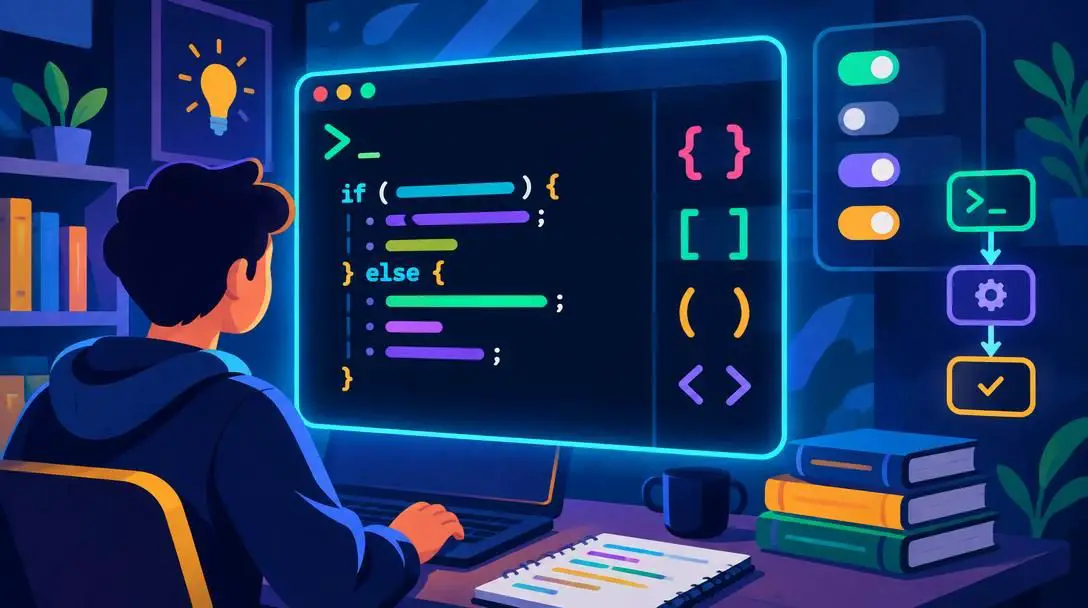
Codecademy strips away the intimidation factor often associated with learning to code. Unlike traditional computer science courses that require complex local development environments, Codecademy features an integrated in-browser editor. Learners read a short explanation of a programming concept, receive a specific prompt, and type real code directly into the terminal window.
The platform inspects your code instantaneously, providing immediate error messages and automated hints if your solution falters. By focusing on essential web technologies like HTML, CSS, and JavaScript, Codecademy enables beginners to build working web pages and scripts within their very first study sessions, fostering confidence through direct, hands-on iteration.
Duolingo

- Subject matter: Foreign language acquisition
- Mechanics: Gamified lessons, point scoring, and daily streaks
- Pacing: Short, bite-sized daily exercises
Duolingo transforms the challenging endeavor of foreign language learning into an engaging daily routine through clever gamification. Users progress through interconnected skill trees, earning experience points, unlocking achievements, and maintaining daily practice streaks. Lessons are split into tiny, interactive drills that test vocabulary recognition, listening comprehension, sentence construction, and pronunciation.
Because individual modules take only a few minutes to finish, users can easily practice during brief moments of downtime throughout the day. This frequent, low-friction repetition helps reinforce foreign grammar and vocabulary patterns far more reliably than irregular, multi-hour study marathons.
HubSpot Academy

- Curriculum: Inbound marketing, sales enablement, and customer service
- Cost: Free access to all coursework and certification exams
- Credentialing: Verifiable industry-recognized digital certifications
HubSpot Academy provides high-caliber, practical business education focused on digital inbound marketing, modern sales methodologies, and customer support strategies. Produced by industry practitioners, the courses emphasize real-world commercial tactics, covering search engine optimization, content strategy, email marketing funnels, and customer retention systems.
All instructional materials and final examinations are free of charge. Upon passing a course's concluding assessment, students receive an official digital certification badge that can be embedded directly into resumes and online profiles. These credentials carry substantial weight in corporate sales and marketing departments, offering immediate career value.
Acquiring a new professional skill serves as the foundation, but actively demonstrating and applying that knowledge is what truly drives career mobility.
TED Talks
- Format: Concise expert lectures and presentations
- Topic range: Emerging technology, hard sciences, and global social issues
- Primary benefit: Broadening conceptual awareness and observing master communicators
TED Talks provide access to concise, highly polished presentations delivered by leading scientists, researchers, technologists, and societal innovators. While not a conventional instructional course, these lectures expose professionals to emerging industry trends, revolutionary scientific theories, and innovative leadership philosophies from across the globe.

In addition to broadening your general awareness of multidisciplinary ideas, watching TED Talks offers an exceptional masterclass in executive communication. Professionals can analyze how seasoned speakers introduce complex technical concepts, weave persuasive narratives, and captivate diverse audiences—skills that are indispensable when pitching ideas or leading corporate teams.
GitHub Learning Lab
- Target audience: Software engineers and technical collaborators
- Core subjects: Git version control and collaborative GitHub workflows
- Learning methodology: Scenario-driven practice within real code repositories
GitHub Learning Lab bridges the divide between theoretical programming knowledge and professional software engineering practices. Version control is a non-negotiable prerequisite for modern development teams, and this platform guides learners through realistic project repositories using automated bots that review pull requests, branch merges, and issue tracking.
By simulating authentic collaborative team environments, learners gain practical familiarity with the exact tools and commands used by enterprise engineering departments. This hands-on, scenario-based model equips aspiring developers with the confidence to contribute effectively to open-source initiatives and commercial codebases alike.
Understanding modern online learning models
Recognizing the educational philosophy behind an online platform helps you select the medium that best fits your personal study style. Digital learning generally falls into five main categories:
- Open marketplace models: Platforms like Udemy and Skillshare allow independent instructors to publish courses directly. This model delivers immense topic diversity and rapid curriculum updates, though production styles and teaching quality vary between creators.
- Institutional partnerships: Services like Coursera work in tandem with accredited universities and global technology firms, offering structured syllabi, formal academic oversight, and verifiable certificates.
- Interactive terminal environments: Tools such as Codecademy and GitHub Learning Lab embed live command lines and editors directly into the browser, reinforcing technical retention through real-time code execution and automated validation.
- Gamified applications: Services like Duolingo leverage behavioral game mechanics, streaks, and micro-rewards to encourage daily habits and steady long-term retention.
- Freemium and open-access portals: Platforms like Khan Academy, HubSpot Academy, and TED Talks provide open access to instructional libraries, supported through corporate funding, non-profit foundations, or commercial software ecosystems.
A step-by-step framework for mastering new skills
Merely signing up for educational platforms does not guarantee career advancement. To convert online training into genuine career mobility, follow this structured five-step learning process:
- Identify the precise skill gap: Avoid vague aspirations such as "learning to code" or "understanding business." Review current job descriptions within your industry to pinpoint the exact competencies employers demand, such as JavaScript DOM manipulation, inbound funnel architecture, or advanced statistical modeling.
- Select the appropriate educational medium: Match your learning objective to the platform engineered for it. Use Skillshare for hands-on visual arts, Coursera for rigorous academic foundations, or HubSpot Academy for commercial sales credentials.
- Establish a sustainable study rhythm: Protect dedicated blocks of time on your weekly calendar exclusively for focused study. Devoting thirty uninterrupted minutes three times a week builds far more durable neural connections than an exhausting four-hour session once a month.
- Construct real-world projects: Move beyond passive video viewing by applying concepts immediately. Build a functional website from scratch, draft an actionable marketing campaign, or write an original script. Real-world application cements abstract lessons into tangible ability.
- Document and broadcast your progress: Keep an active record of completed modules, projects, and certifications. Integrate your new credentials into your resume, publish case studies to your portfolio, and update your LinkedIn profile to ensure prospective employers recognize your growing capabilities.
Common self-directed learning traps to avoid
Independent learners frequently encounter preventable obstacles that sap momentum and stall progress. Be vigilant against these widespread pitfalls:
- Passive video consumption: Watching an instructor write code or assemble a graphic design layout produces an illusion of competence. True mastery occurs only when you shut the video and execute the process independently without instructional assistance.
- Overcommitting across multiple subjects: Enrolling in four unrelated courses simultaneously inevitably leads to cognitive overload and abandoned coursework. Maintain strict focus on a single discipline until you attain functional proficiency.
- Hoarding educational content: Purchasing discounted courses or bookmarking hundreds of lectures without completing them generates false productivity. Commit to finishing your current resource before spending money or attention on additional courses.
- Bypassing core fundamentals: Rushing directly into complex, advanced specializations without understanding the basics leads to confusion and frustration. Strengthening foundational concepts on Khan Academy or basic coding modules makes advanced study far smoother.
- Irregular study schedules: Taking prolonged breaks between study sessions causes rapid knowledge decay, forcing you to waste valuable time re-learning old material. Modest, daily consistency preserves forward momentum.
Translating new capabilities into professional advancement
Once you have acquired a new skill, the next objective is leveraging it to accelerate your career trajectory. Begin within your current role: look for opportunities to implement what you have learned to optimize existing workflows. If you finished an inbound marketing track on HubSpot Academy, present an optimization plan for your team's lead nurturing campaigns. If you mastered Git and command-line workflows via GitHub Learning Lab, offer to streamline version management for department assets. Demonstrating immediate initiative displays immense value to leadership.
When seeking new roles or career pivots, present clear, tangible proof of your abilities. Certifications from recognized providers like Coursera and HubSpot validate your dedication to professional development, while well-documented portfolios built from Skillshare or Codecademy projects prove you can deliver real-world outcomes. Continuous learning is no longer an optional resume booster—it is the engine of sustainable career longevity.
Frequently asked questions
Are free online courses respected by hiring managers?
Yes, employers value candidates who take the initiative to learn independently. While an accredited certificate from platforms like Coursera or HubSpot Academy carries formal recognition, hiring managers are often most impressed by tangible projects and portfolios that prove you can apply those lessons to solve real business challenges.
How much time should I dedicate to online learning each week?
Consistency matters far more than total hours. Allocating thirty to forty-five minutes three to five days per week produces far better retention and prevents burnout compared to marathon study sessions over the weekend. A predictable, modest schedule is easiest to sustain alongside full-time employment.
What is the difference between Udemy and Coursera?
Coursera partners with accredited universities and major corporate institutions to offer structured, academic courses that follow traditional collegiate syllabi, often with formal grading and certificates. Udemy is an open marketplace where independent experts teach courses on an individual basis, allowing for a wider, more eclectic range of practical topics and individual course pricing.
Can I learn to code effectively using only browser-based platforms?
Platforms like Codecademy provide an outstanding starting point for beginners by removing the technical barriers of local development setup and offering instant syntax feedback. However, once you understand core coding logic, you should transition to building independent projects locally and using developer tools like GitHub Learning Lab to master real-world workflows.
Do I need to pay for verified certificates to advance my career?
Not necessarily. While verified certificates on platforms like Coursera provide documented proof of completion that can bolster a resume, the tangible work you produce—such as code repositories, design portfolios, and case studies—often provides stronger proof of your competence to prospective employers.
The bottom line
The pace of the modern economy makes continuous professional development mandatory for sustained career success. Thankfully, the barriers to world-class education have never been lower. By identifying your skill gaps, picking the right platform, maintaining a disciplined study routine, and demonstrating your abilities through concrete projects, you can direct your own professional growth and unlock exciting new career horizons.