5 Against-the-Odds Military Victories
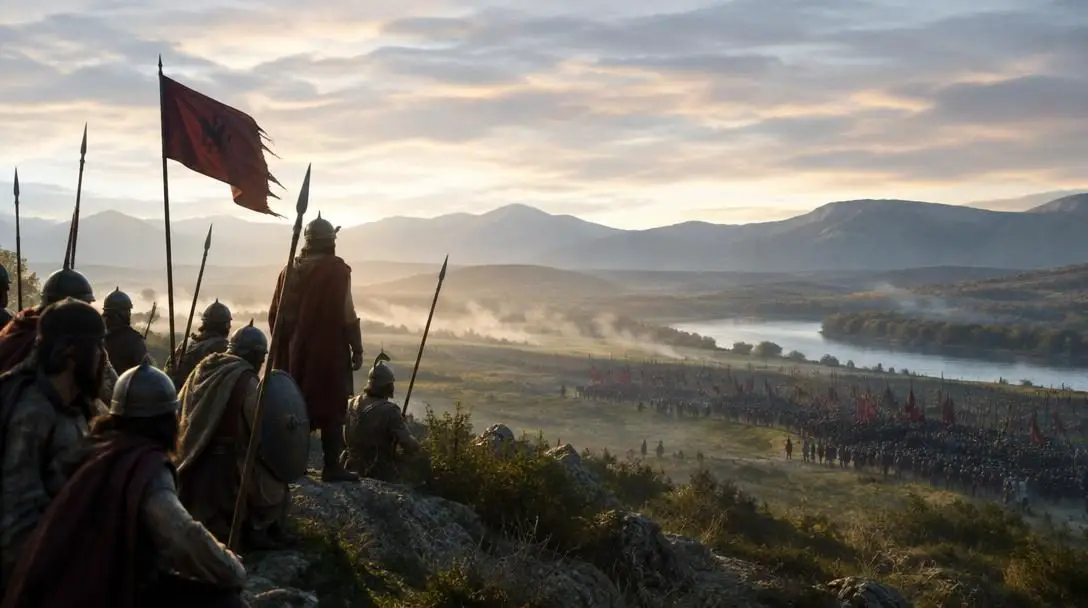
The timeless narrative of David and Goliath endures because it speaks to a universal truth: sheer size and perceived dominance do not guarantee an easy triumph. Throughout world history, dark horses have repeatedly emerged from seemingly impossible circumstances to achieve total victory on the battlefield. Regardless of an empire's vast treasury, massive troop counts, or global renown, no military engagement is ever an automatic certainty.
Extraordinary military victories regularly shatter conventional assumptions regarding military dominance and battlefield preparation. When colossal advantages dissolve under pressure, smaller, resourceful forces can outmaneuver opposing giants through superior positioning, unexpected tactics, and unbreakable resolve.
Key takeaways
- Superior troop counts, immense wealth, and international prestige never guarantee a military victory.
- Exploiting restricted terrain neutralizes numerical advantages by funneling massive armies into constrained killing zones.
- Doctrinal mismatches and sudden surprise strikes can quickly shatter an overconfident enemy's command and control.
- Resilient defensive endurance and decentralized leadership allow smaller forces to inflict disproportionate casualties over time.
At a glance: Five historic underdog clashes
When comparing these extraordinary engagements, the decisive factor was rarely raw force. Instead, victory hinged on mobility, tactical deception, defensive geography, and operational cohesion.
| Battle | Underdog Force | Favored Power | Key Tactical Factor |
|---|---|---|---|
| Battle of Carrhae | Parthians | Roman Republic (Crassus) | Mobile cavalry and dynamic horse archery |
| Battle of Vítkov Hill | Hussite peasants (12,000) | Holy Roman Empire crusaders (50,000–100,000) | Elevated vineyard cliff and improvised pointed sticks |
| Great Siege of Malta | Maltese garrison (8,500) | Ottoman Empire (roughly 45,000) | Fortified endurance and relentless cannon-fire |
| Battle of Okehazama | Oda Nobunaga | Imagawa Yoshimoto (10-to-1 advantage) | Sleight of hand and surprise flanking ambush |
| Battle of Jena-Auerstedt | French Empire (Napoleon & Davout) | Kingdom of Prussia and Saxony | Decentralized command and high operational confidence |
Five monumental military reversals
Examining pivotal turning points across ancient deserts, medieval hilltops, island fortresses, feudal valleys, and nineteenth-century plains illustrates how massive numerical superiority can collapse under pressure.
Battle of Carrhae
- Underdog: Parthians (soldiers from northeastern Iran)
- Favored Commander: Marcus Licinius Crassus
- Deciding Factor: Cavalry mobility against traditional infantry
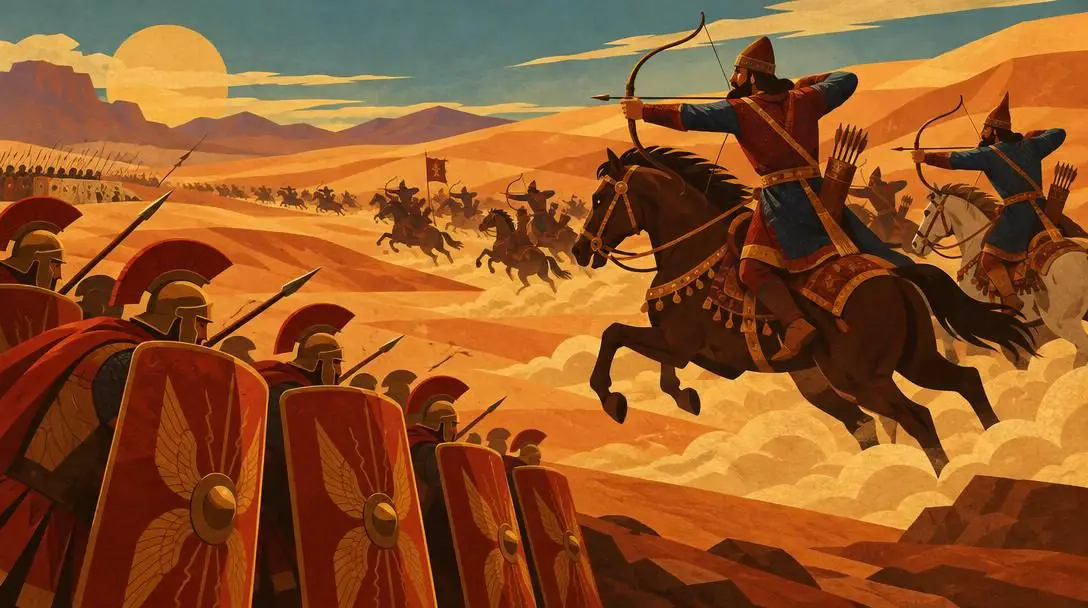
The Battle of Carrhae stands as one of the most stunning military reversals of antiquity. Marcus Licinius Crassus entered the campaign with immense prestige, having previously crushed the revolt of Spartacus. Exceptionally wealthy and widely detested, Crassus sought to cement his military reputation against the Parthians, whose forces originated from northeastern Iran.
Despite being vastly outnumbered by the Roman legions, the Parthians fielded an army centered around horses. This reliance on swift, mobile cavalry created an operational dynamic that was completely foreign to the infantry-dominated battlefields the Romans routinely navigated. Rather than meeting Roman heavy infantry head-on in traditional close-quarters combat, the Parthians ran circles around Crassus's rigid formations. The encounter ended in a monumental disaster for Crassus, though the defeated Roman Empire demonstrated its adaptability by studying the loss and incorporating Parthian tactical methods into its own military apparatus.
Battle of Vítkov Hill
- Underdog Force: 12,000 Hussite peasants
- Opposing Force: 50,000 to 100,000 crusaders
- Underdog Leader: John Zizka
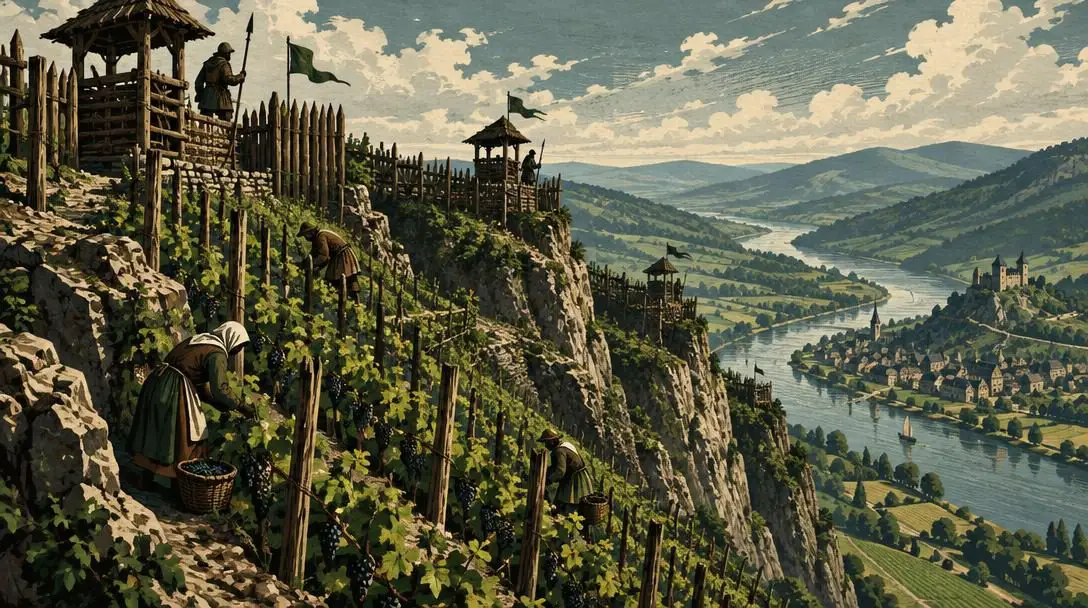
Centuries later during the Middle Ages, the Battle of Vítkov Hill produced an equally shocking upset outside the gates of Prague. A massive army of between 50,000 and 100,000 crusaders, assembled under the authority of the Holy Roman Empire, marched to crush a modest force of just 12,000 Hussite peasants. On paper, the disparity in numbers, equipment, and professional training appeared insurmountable.

Hussite commander John Zizka nullified these odds through brilliant defensive positioning. Zizka placed his ranks upon Vítkov Hill at a vineyard that featured a steep, precipitous cliff on one side. When the crusader ranks advanced into this confined space, the Hussites utilized everyday items and simple tools, including pointed sticks, to mount a fierce defense. They pushed more than 300 crusaders over the cliff edge to their deaths. This sudden, gruesome reversal triggered mass panic and an uncontrolled retreat among the crusaders, cementing the engagement as an enduring masterclass in terrain defense.
Great Siege of Malta
- Garrison Size: 8,500 defenders
- Invading Force: Roughly 45,000 Ottoman troops
- Defender Leader: Jean De Valette
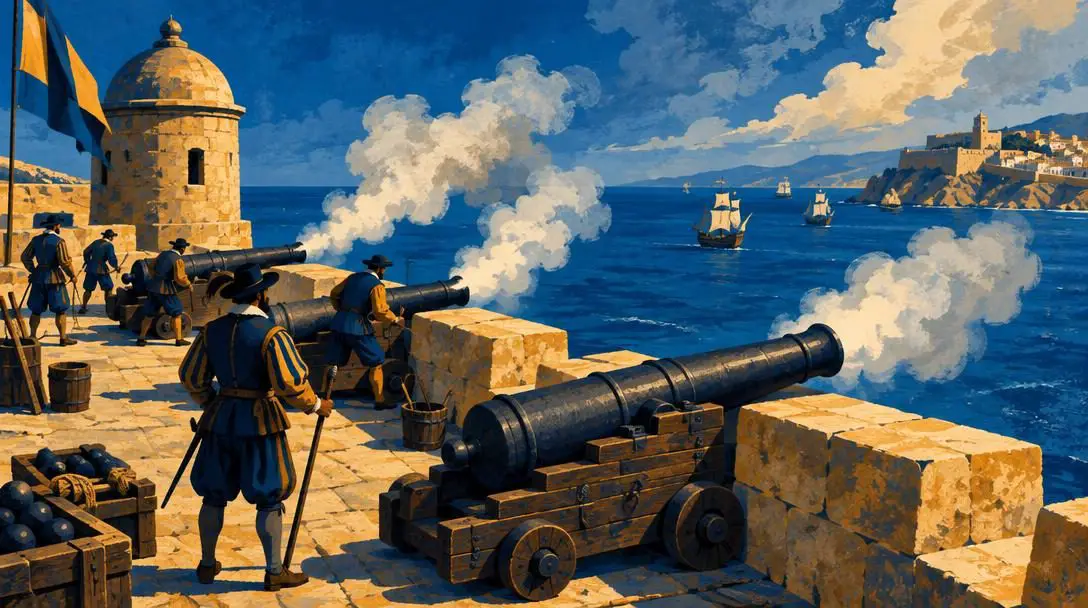
The Great Siege of Malta demonstrated how defensive grit and fortifications could hold off an imperial superpower. The Ottoman Empire deployed roughly 45,000 troops to capture the tiny island nation, which was defended by a garrison of only 8,500 troops led by Jean De Valette. Facing an onslaught designed to quickly overpower the island, De Valette organized an uncompromising resistance.
The defenders relied on a potent mixture of strategic leadership, unyielding willpower, and concentrated, relentless cannon-fire. By absorbing continuous assaults and inflicting devastating losses on the Ottoman ranks, Malta held firm against the odds. The defense reverberated across Europe for generations, eventually prompting the French philosopher Voltaire to write that nothing is so well known as the Siege of Malta.
Battle of Okehazama
- Underdog Commander: Oda Nobunaga
- Challenger: Imagawa Yoshimoto
- Numerical Ratio: Disadvantage of 10 to 1
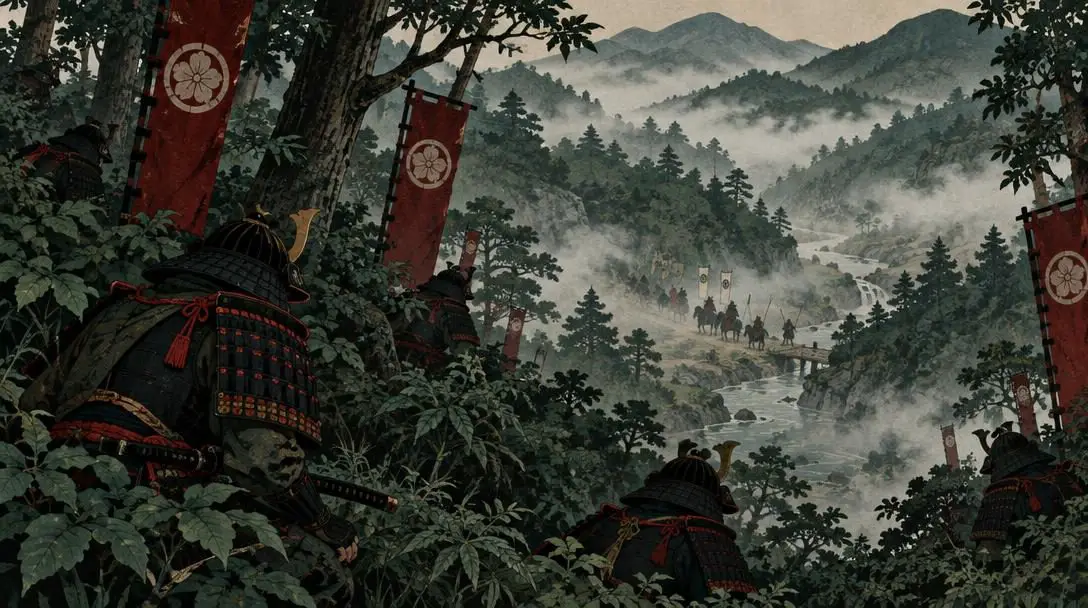
In feudal Japan during the era of the hereditary leaders known as the Shogunates, local warlord Oda Nobunaga faced an existential threat at the Battle of Okehazama. Challenged by Imagawa Yoshimoto, Nobunaga found his forces staring down a staggering 10-to-1 numerical deficit. A conventional engagement in the open field would have ensured his complete destruction.
Rather than awaiting defeat, Nobunaga orchestrated an ingenious plan rooted in sleight of hand and deception. After discovering that Imagawa's troops had dropped their guard, discarded their weapons, and were actively celebrating earlier victories, Nobunaga acted swiftly. His soldiers advanced in complete secrecy, flanked the enemy encampment, and launched a sudden, devastating surprise strike. The celebration dissolved into chaos, Imagawa's massive force was routed, and Nobunaga transformed a desperate defensive stance into a historic triumph.
Battle of Jena-Auerstedt
- French Leadership: Napoleon and Marshal Louis Nicolas Davout
- Opponents: Combined armies of Prussia and Saxony
- Strategic Outcome: French occupation of the Kingdom of Prussia
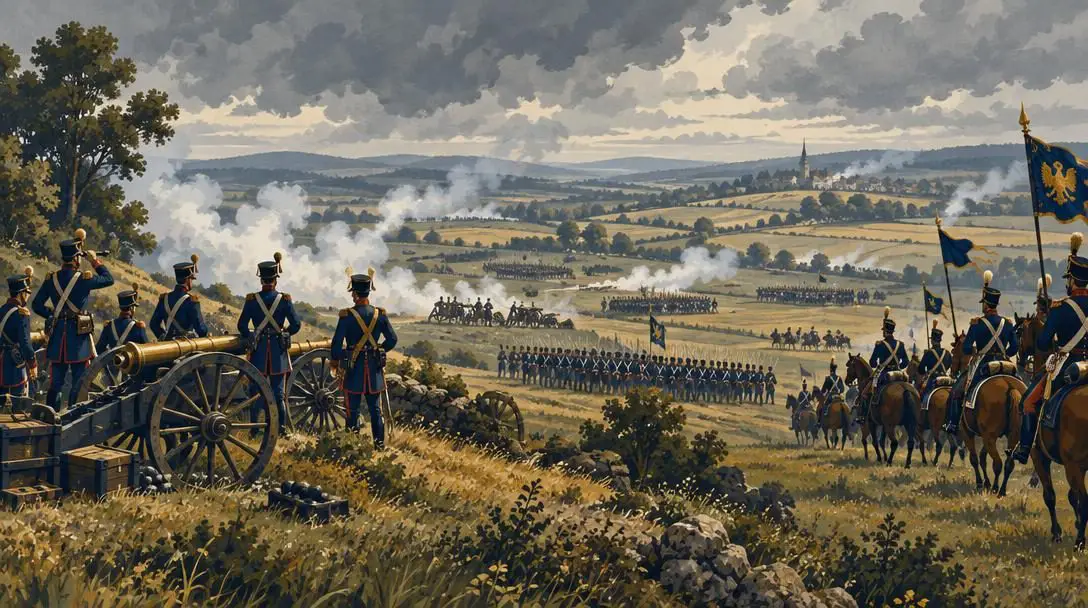
The twin clashes of the Battle of Jena-Auerstedt highlighted the supremacy of command coordination and self-assurance over rigid traditionalism. Emperor Napoleon entered the campaign against the allied forces of Prussia and Saxony facing significant logistical and operational demands. However, the French emperor was anything but under-confident.
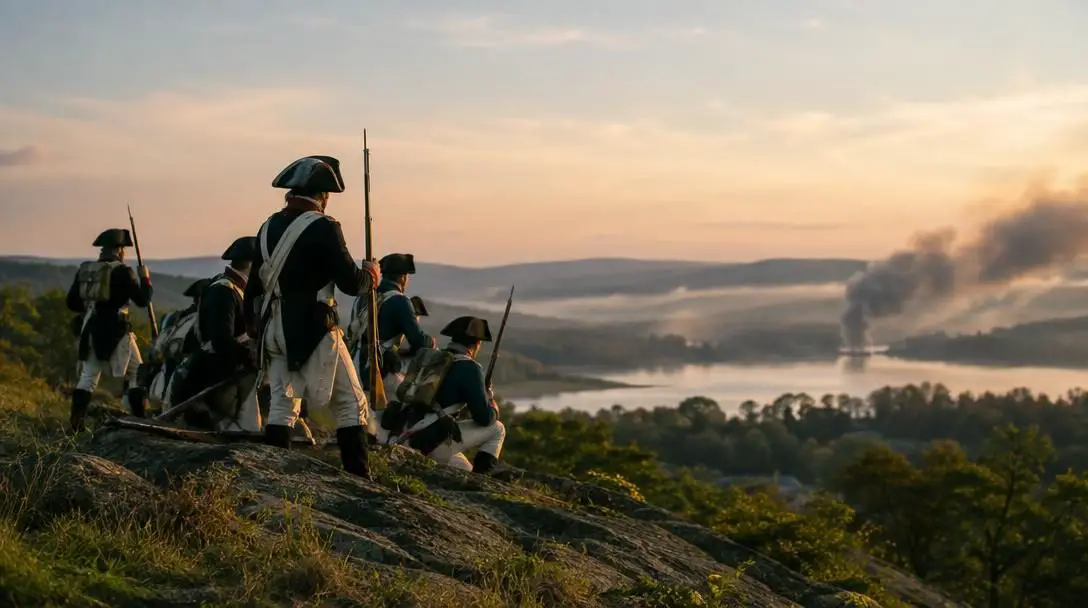
Supported by the tactical brilliance of his corps commander, Marshal Louis Nicolas Davout, Napoleon directed his outnumbered troops in a masterful performance. Davout's isolated wing bore the brunt of the main Prussian army, managing to hold and shatter superior enemy forces through disciplined coordination. The French inflicted catastrophic losses while sustaining only a mere fraction of the casualties suffered by their opponents. This victory shattered the military reputation of Prussia, resulted in the French Empire's occupation of the Kingdom of Prussia, and remains widely heralded as Napoleon's most impressive triumph.
Victory rarely stems from sheer chance; specific operational principles allow smaller forces to neutralize and reverse an opponent's massive natural advantages.
How asymmetric victories work on the battlefield
When an outmatched force triumphs over a larger adversary, the outcome is virtually never an accident. A review of these engagements reveals five recurring strategic principles that neutralize numerical superiority:
- Terrain exploitation: Large armies require broad terrain to bring their full strength to bear. When a defender controls the geography, as John Zizka did by anchoring his peasants along the cliff edge of a Vítkov Hill vineyard, the battlefield narrows so that only a tiny fraction of the superior force can fight at one time.
- Doctrinal mismatches: Armies trained strictly for one style of fighting become brittle when confronted with unfamiliar methods. Marcus Licinius Crassus expected infantry combat at Carrhae, but the Parthians broke traditional doctrines by relying on rapid, elusive horse archery.
- Disruption of command awareness: Massive armies suffer from cumbersome communication and delayed reaction times. Oda Nobunaga recognized that Imagawa's celebrating, unarmed soldiers were blind to threats, allowing a sudden strike to decapitate their leadership.
- Defensive endurance and sustained firepower: Superpowers depend on rapid operational victories to maintain momentum. During the Great Siege of Malta, Jean De Valette maximized the defensive firepower of heavy cannon-fire to degrade 45,000 Ottoman soldiers until their offensive capacity broke.
- Decentralized command execution: Cohesion between commanders allows a smaller force to act faster than a cumbersome adversary. The operational trust between Napoleon and Marshal Louis Nicolas Davout allowed Davout to defeat the primary Prussian army independently at Auerstedt.
Tactical steps for confronting overwhelming odds
Whether analyzing ancient history or modern strategic crises, confronting a larger, better-funded opponent requires structured execution. These steps reflect the core methods historically utilized by underdogs to overturn steep deficits:
- Evaluate the opponent's operational habits: Identify where an enemy's size causes bureaucratic sluggishness, overconfidence, or rigid doctrine.
- Dictate the operational environment: Select an engagement zone that physically prevents the larger opponent from deploying its entire force at the same time.
- Secure natural choke points or strong fortifications: Establish positions behind cliffs, vineyard slopes, or fortified stone battlements that act as defensive force multipliers.
- Deploy asymmetric tools and mobility: Introduce non-traditional tactics—such as dynamic horse cavalry or improvised pointed sticks—that challenge standard operating expectations.
- Monitor adversary readiness for lapses in vigilance: Continuously scout the opposing force to locate moments of vulnerability, such as disorganized encampments or premature celebrations.
- Mask movements using deception and concealment: Employ sleight of hand, diversionary maneuvers, and concealed approaches to hide tactical intent until the moment of engagement.
- Execute decisive, localized counter-strikes: Strike aggressively at vulnerable flanks or high-value command units rather than absorbing passive punishment in an open slugfest.
- Maximize defensive firepower: Concentrate available heavy firepower, such as coordinated cannon-fire, to inflict severe attrition from secure defensive positions.
- Empower trusted subordinate leaders: Allow autonomous commanders to make independent decisions when battlefield distance disrupts central communication.
- Maintain unwavering organizational resolve: Cultivate intense willpower and mental endurance to prevent panic during extended, high-attrition engagements.
Fatal blunders that handed underdogs the advantage
Overwhelming advantages frequently breed complacency. The following common errors have consistently allowed smaller forces to dismantle larger opponents:
- Equating wealth and troop counts with guaranteed success: Believing that superior resources or celebrated commanders like Crassus eliminate the risk of defeat.
- Expecting the enemy to conform to familiar doctrines: Assuming an adversary will fight using traditional infantry engagements rather than mobile cavalry or non-traditional tools.
- Neglecting basic reconnaissance and geographic hazards: Advancing forces without securing flanks against steep terrain, cliffs, or hidden vineyard gullies.
- Prematurely celebrating partial victories: Allowing soldiers to drop their weapons, celebrate early triumphs, and discard defensive vigilance in an unsecured zone.
- Underestimating the tenacity of cornered defenders: Misjudging the defensive resolve of an isolated garrison, such as Jean De Valette's defenders on Malta.
- Engaging in predictable, head-on assaults: Funneling troops directly into prepared choke points where defensive firepower can inflict massive casualties.
- Rigid central control: Refusing to grant field commanders the tactical freedom needed to respond to sudden, chaotic developments.
Questions for further strategic study
The study of these five remarkable victories raises critical strategic questions for historians and tacticians seeking a deeper understanding of military history:
- How do military institutions adapt their doctrines after experiencing catastrophic defeats against unconventional tactics, just as Rome learned from the Parthians after Carrhae?
- What role do defensive fortifications and specialized weaponry play in balancing massive numerical disparities across different historical periods?
- How did the leadership styles of figures like John Zizka, Jean De Valette, Oda Nobunaga, and Louis Nicolas Davout inspire forces to resist panic under extreme conditions?
- In what ways do logistical constraints undermine large expeditionary forces when confronted by stubborn resistance from small island nations or entrenched cities?
- How do the tactical principles of flanking, concealment, and terrain exploitation translate into strategic doctrines studied in modern military academies?
Frequently asked questions
How did the Parthians defeat the Romans at Carrhae?
The Parthians relied heavily on mobile cavalry and horse archers, introducing an open, highly fluid style of warfare that Marcus Licinius Crassus and his infantry-centric legions were not equipped to handle.
What weapon did the Hussite peasants use at Vítkov Hill?
Led by John Zizka, the Hussite peasants used simple everyday tools, including pointed sticks, to push over 300 crusaders over the side of a steep cliff, sparking a chaotic retreat.
Why did Voltaire praise the Great Siege of Malta?
Voltaire noted that nothing was as well known as the Siege of Malta because an underdog garrison of just 8,500 troops under Jean De Valette successfully resisted roughly 45,000 Ottoman troops using strategic willpower and cannon-fire.
How did Oda Nobunaga defeat a force ten times larger at Okehazama?
Nobunaga utilized sleight of hand and concealment to secretly flank Imagawa Yoshimoto's camp while the opposing soldiers had dropped their weapons and were celebrating their prior gains, launching a devastating surprise strike.
What made Napoleon and Davout's victory at Jena-Auerstedt so decisive?
Napoleon and Marshal Louis Nicolas Davout outmaneuvered the combined armies of Prussia and Saxony, inflicting massive casualties while suffering only a fraction of their losses, which directly precipitated the French occupation of the Kingdom of Prussia.
The bottom line
History repeatedly demonstrates that the favored power is never invincible. Whether through the innovative horse archery of the Parthians, the rugged vineyard defenses of John Zizka's Hussites, the relentless fortress artillery of Malta, the stealth ambush of Oda Nobunaga, or the tactical brilliance of Napoleon and Davout, underdogs triumph when they dictate the terms of engagement. When strategy, terrain, and resolve align, numerical superiority ceases to guarantee victory.