5 Bands Who Overdid It With The Fog Machine
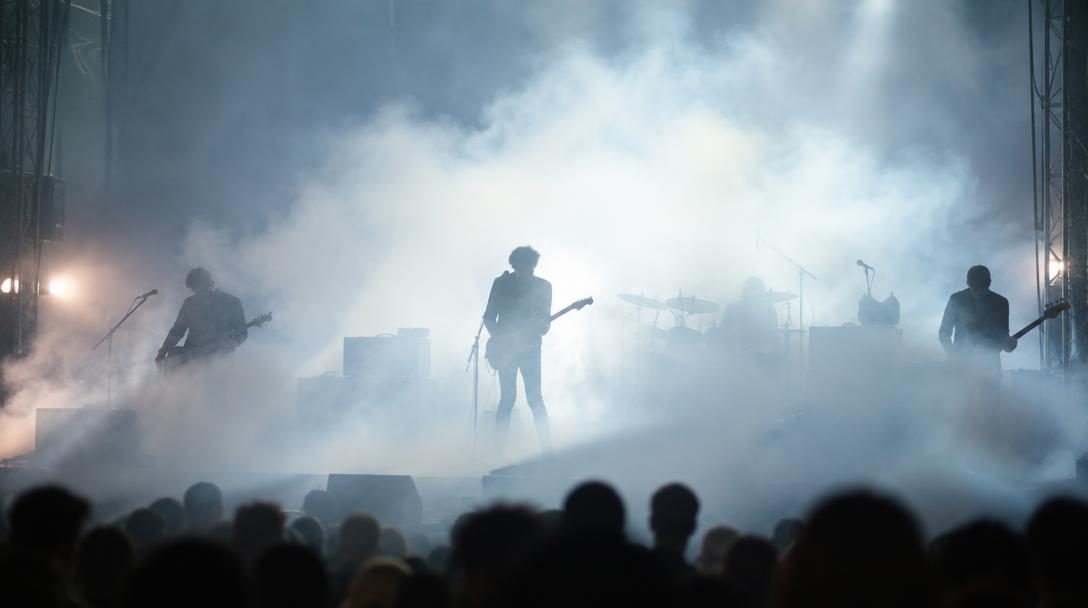
Attending a live concert is far more than simply hearing music played at loud volumes; it is an all-encompassing sensory experience designed to transport audiences away from everyday life. While towering speaker stacks, custom stage architectures, and complex lighting designs establish the physical environment, theatrical stage fog remains one of the most transformative tools in modern performance production. By diffusing illumination and draping the platform in rolling clouds of mist, atmospheric effects can instantly establish a dreamlike or menacing mood that lingers in the memories of concertgoers long after the final encore.
Yet, the line between an evocative theatrical accent and an overwhelming sensory disaster is notoriously thin. Over the decades, artists across heavy metal, progressive rock, and modern country music have pushed fog effects to their absolute limits. While heavy haze has occasionally cemented legendary album visuals and iconic arena aesthetics, it has just as frequently caused comic onstage mishaps, equipment clashes, and serious long-term medical complications for the performers standing directly in the line of fire.
Key takeaways
- Stage atmospheric effects range from dense, ground-hugging fog clouds to subtle hazes designed to turn hidden lighting beams into three-dimensional color shafts.
- Excessive smoke machines have triggered onstage blunders, including country singer Luke Bryan being kicked in the head while trying to move a heavy unit during a 2021 concert.
- Decades of inhaling stage mist took a permanent toll on Jethro Tull frontman Ian Anderson, who was diagnosed with chronic obstructive pulmonary disease in 2020.
- Rock legends like Black Sabbath and Led Zeppelin relied heavily on fog machines and dry ice to define their menacing visual identities and 1970s arena shows.
- Modern atmospheric management requires precise fluid selection, proper ventilation, and DMX automation to safeguard performer health and stage safety.
At a glance: Five artists transformed by stage fog
| Artist | Primary Genre | Signature Fog Moment | Impact or Consequence |
|---|---|---|---|
| Black Sabbath | Heavy metal | Self-titled debut album photoshoot and live concerts | Established an unsettling visual aesthetic after switching from morning dry ice |
| Luke Bryan | Country | 2015 blast surprise and 2021 Phoenix concert mishap | Reported vocal dryness and suffered an accidental kick to the head moving gear |
| Pink Floyd | Psychedelic rock | David Gilmour's dense, cloud-draped live performances | Created a signature ethereal stage presence alongside ambient audience clouds |
| Led Zeppelin | Hard rock / Blues rock | 1970s arena tours mixing fog machines and dry ice | Stages were so saturated that musicians' lower bodies were entirely invisible |
| Jethro Tull | Progressive rock | Over 50 years of continuous stage haze exposure | Frontman Ian Anderson developed chronic obstructive pulmonary disease (COPD) |
Iconic acts with legendary fog machine histories
From the dawn of arena rock in the late 1960s to modern stadium tours, visual effects crews have regularly pushed smoke generators past sensible operational boundaries. The following five musical acts illustrate how theatrical fog can create indelible artistic imagery, prompt slapstick physical comedy, or inflict lasting physical damage on legendary musicians.
Black Sabbath

- Genre: Heavy metal
- Notable vocalists: Ozzy Osbourne, Ronnie James Dio
- Key fog milestone: Self-titled debut album cover art
Heavy metal pioneers Black Sabbath helped codify the darker, heavier aesthetic of hard rock throughout the late twentieth century, working under the vocal leadership of icons like Ozzy Osbourne and Ronnie James Dio. Throughout their touring history, the band made frequent use of theatrical fog generators to match the doomy, ominous tone of their music, flooding stages with dense mists that complemented their crushing guitar riffs.
However, the group's most enduring atmospheric achievement occurred off the concert stage. While preparing the iconic visual packaging for their smash hit self-titled debut album, the production team sought to generate an eerie, unsettling mist to frame the mysterious figure on the cover. The crew initially attempted to rely on natural morning moisture combined with dry ice during the early hours of the day. When that technique failed to produce the desired supernatural density, they turned to a mechanical fog machine, which supplied the exact swirling layer of artificial smoke needed to cement the album's historic, genre-defining look.
Luke Bryan

- Genre: Modern country
- Documented incidents: 2015 stage blast; 2021 Phoenix stage collision
- Performer feedback: Severe throat and vocal irritation
While massive clouds of smoke are traditionally associated with heavy metal and psychedelic rock, modern country superstar Luke Bryan has encountered his share of technical turbulence with stage effects. Country productions in modern arenas routinely feature arena-sized pyrotechnics and visual fog, but Bryan's proximity to the output nozzles has repeatedly placed him in awkward situations during live broadcasts and touring dates.
In 2015, an unexpected blast caught the singer completely off guard when an automated fog machine triggered directly beneath him while he was singing, forcing him to briefly pause the song before laughing away the shock. A far more chaotic episode unfolded during a 2021 concert in Phoenix. Frustrated by a fog machine that was pumping out far too much vapor, Bryan attempted to manually drag the bulky piece of hardware out of his performance zone. During the resulting confusion on the crowded floor, he was accidentally kicked in the head. The physical toll of the effect has also affected his voice, leading Bryan to blunt assessment: "So smoke machines dry my s*** out."
Pink Floyd
- Genre: Psychedelic rock
- Current active lineup: David Gilmour, Nick Mason
- Visual signature: Vast cloud blankets supporting laser and lighting rigs
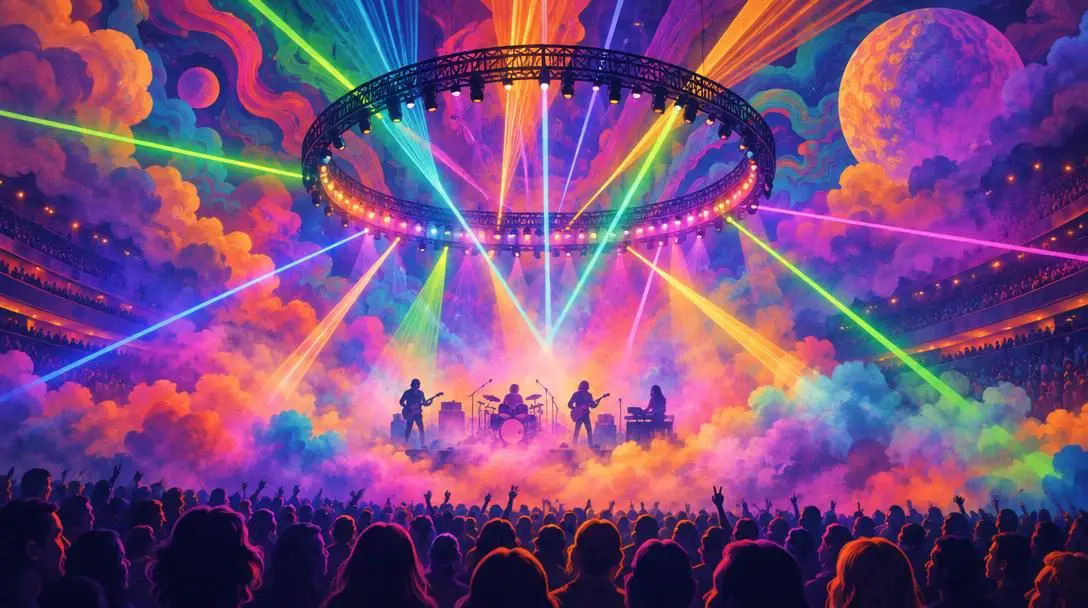
Widely celebrated as one of the most influential psychedelic rock ensembles in musical history, Pink Floyd revolutionized the scale of live audio and visual staging. Even as the lineup shifted over multiple decades—today consisting of guitarist David Gilmour and drummer Nick Mason—the band's fundamental commitment to overwhelming visual immersion remained unbroken across every era of their touring career.
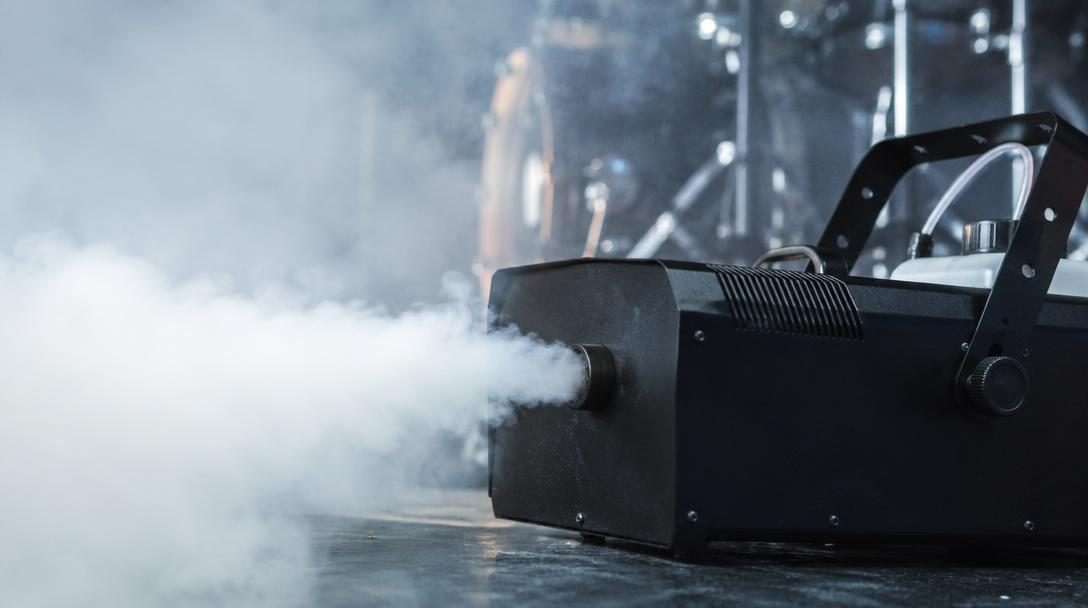
David Gilmour has demonstrated an enduring artistic passion for dense theatrical smoke, routinely taking the stage while completely enveloped in deep, undulating blankets of mist. These rolling vapors allowed Gilmour's legendary guitar solos to ring out from within what seemed like an ethereal dreamscape, catching the band's massive circular lighting rigs and laser projections. Seasoned concertgoers have long remarked that Pink Floyd shows often featured two distinct varieties of cloud: the theatrical white mist generated by the band's staging crew, and a pungent, ambient haze drifting up from the audience.
Led Zeppelin
- Musical style: Powerful, bluesy, heavy arena rock
- Era: 1970s arena circuit
- Stage characteristic: Complete concealment of lower limbs and stage floor
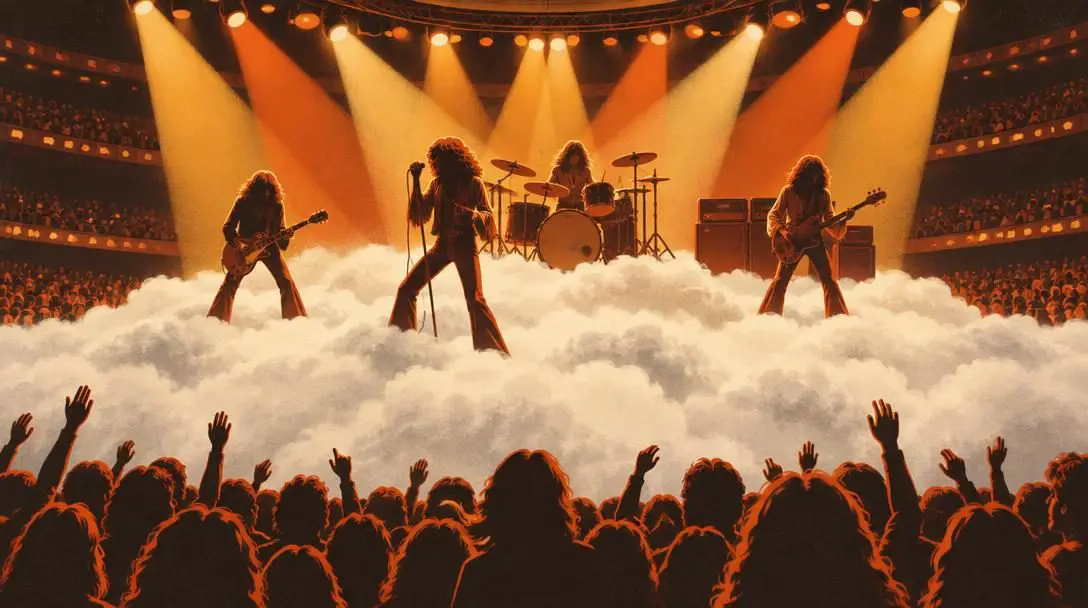
The sonic identity of Led Zeppelin has universally been defined by critics and fans as powerful, bluesy, and thunderous, yet the adjective "hazy" applies equally well to both their sound and their staging. Anyone lucky enough to attend the group's legendary arena dates throughout the 1970s encountered an environment saturated by theatrical fog, creating a sensory experience that felt metaphorically and literally obscured.
During their prime touring years, Zeppelin's production staff paired high-volume fog machines with massive quantities of dry ice. The resulting mixture blanketed the stage floor so thoroughly that the lower halves of the musicians' bodies vanished entirely from the audience's line of sight. While losing visual contact with the performers' feet may have frustrated traditionalists, this swirling sea of white vapor defined the visual vocabulary of 1970s arena rock and transformed Robert Plant and Jimmy Page into larger-than-life figures floating across an ocean of mist.
When theatrical smoke transitions from an atmospheric backdrop into an overwhelming cloud, it can quickly transform a triumphant arena show into a hazardous obstacle course.
Jethro Tull

- Genre: Progressive rock
- Active since: 1967
- Core member: Ian Anderson (frontman, vocalist, flutist)
- Medical diagnosis: Chronic obstructive pulmonary disease (COPD)
Formed in 1967 and driven across more than five decades by frontman, flutist, and vocalist Ian Anderson, progressive rock institution Jethro Tull stands as a cautionary example of the biological toll heavy theatrical effects can take on a touring artist. For over fifty years, Anderson spent several nights a week on stages blanketed by artificial atmospheric compounds, performing physically exhausting vocal and flute parts while surrounded by heavy vapor.
In a candid 2020 interview, Anderson disclosed that he had been diagnosed with chronic obstructive pulmonary disease (COPD), a progressive lung condition that restricts airflow. He placed the blame for his lung condition on decades of inhaling chemical smoke: "I’ve spent 50 years of my life onstage among those wretched things that I call smoke machines. Today, they’re politely referred to as hazers, as if they’re somehow innocent and not damaging to your lungs. I really do believe that’s a very significant part of the problem I have." Anderson's diagnosis has prompted renewed scrutiny throughout the touring industry regarding the health consequences of long-term occupational vapor exposure.
The science behind stage fog and theatrical haze
To grasp why stage effects can provoke both awe and physical irritation, it is helpful to explore the underlying mechanical systems that create them. The entertainment production industry broadly categorizes atmospheric hardware into two distinct operational tools: fog machines and hazers.
Traditional fog generators operate by pumping a chemical mixture, colloquially termed "fog juice," through an internal heat exchanger. This formulation consists of purified water blended with chemical compounds such as glycols or pharmaceutical-grade glycerin. Once the liquid contacts the scorching core of the heat exchanger, it instantly vaporizes into an expanding gas. As this pressurized vapor is expelled into the cooler surrounding room air, it rapidly condenses into billions of microscopic liquid droplets suspended in the atmosphere, creating a thick, opaque white visual barrier. Because hot vapor naturally rises toward the venue ceiling, crews aiming for a rolling, ground-level blanket must force the vapor through a mechanical chiller unit or chill the air with solid carbon dioxide (dry ice) to keep the cloud resting on the floorboards.
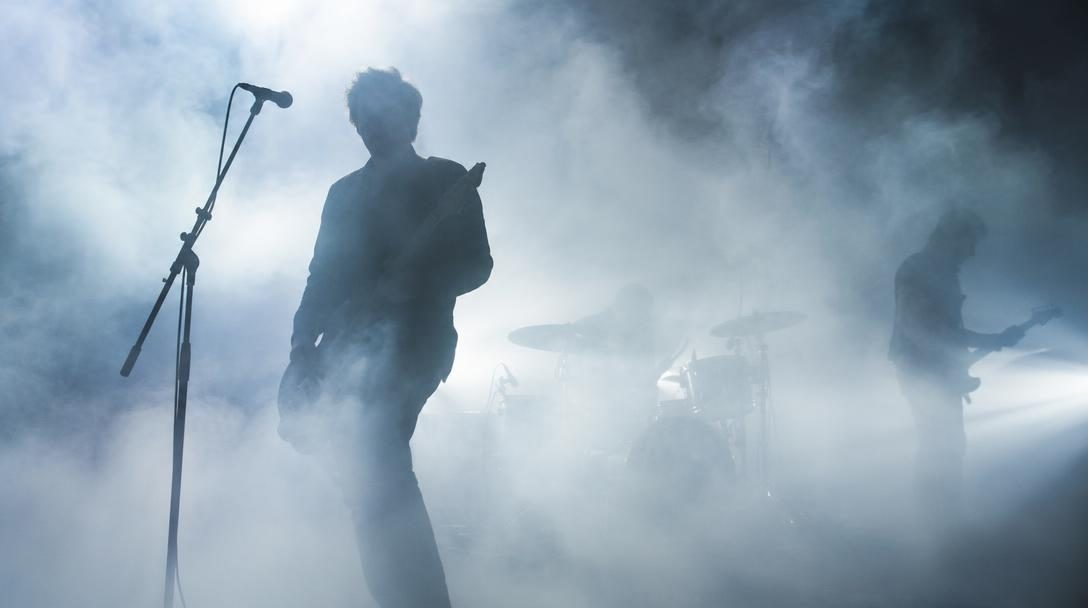
Hazers, conversely, are engineered for subtlety rather than sudden opacity. Instead of launching high-density white clouds that obscure musicians, a hazer releases an uninterrupted, microscopic mist that disperses evenly throughout the entire venue. In an optically clean, dust-free auditorium, light beams from spotlights and moving lasers remain invisible until they hit a hard backdrop or the floor. By keeping microscopic droplets suspended evenly in the air, a hazer reflects and refracts the lighting, converting flat lighting into three-dimensional beams and vivid cones of color without clouding the performers on stage.
How to deploy concert atmospherics safely
The incidents suffered by touring veterans like Luke Bryan and Ian Anderson highlight why careful operational planning is non-negotiable when deploying artificial smoke. Crew chiefs, lighting designers, and venue technicians should implement these five practical steps to protect performer safety and venue integrity:
- Evaluate the space and venue ventilation: Walk the room prior to load-in to locate heating, ventilation, and air conditioning (HVAC) returns, ceiling extraction fans, and emergency exit routes. Confirm that fresh air circulation is sufficient to prevent excessive vapor buildup from collecting around the performance platform.
- Select the correct fluid formulation: Always purchase fluid compounds engineered specifically for the machine's operating temperature and heating core. Utilizing improper glycol or glycerin mixtures can cause incomplete vaporization, resulting in chemical spatters, unpleasant odors, and lingering throat irritation.
- Map equipment placement carefully: Position atmospheric units far outside primary walking paths and monitor wedges. Clearly demarcate safety boundaries with high-visibility gaffer tape so performers do not stumble over warm hardware, stand directly above live output nozzles, or kick machines during high-energy routines.
- Test fire alarms and smoke sensors: The suspended microscopic droplets produced by fog and haze generators can trigger optical smoke detectors. Coordinate directly with facility managers and local fire safety personnel to isolate optical sensors in the performance hall during the show while maintaining active thermal safety systems.
- Control output intervals: Rather than continuously flooding the room with manual blasts, connect atmospheric machines directly to a DMX lighting console. Pre-programming short, controlled vapor bursts aligned with key musical moments prevents dangerous buildup while maintaining dramatic lighting accents.
Common production mistakes that ruin stage atmosphere
Even seasoned production crews occasionally mishandle atmospheric equipment, resulting in compromised stage acoustics, disrupted performances, or unsafe footing. Avoiding these common mistakes helps ensure a smooth, professional production:
- Over-saturating the stage: Discharging excessive vapor into an enclosed club or theater creates a blinding white wall. When musicians cannot read setlists, see their pedalboards, or locate the front edge of the stage, the probability of falls and equipment damage escalates dramatically.
- Neglecting vocalist health and comfort: Inhaling concentrated vapor causes dryness and irritation across the vocal folds. Setting heavy discharge nozzles adjacent to primary vocal microphones can derail a singer's pitch, range, and physical comfort within minutes.
- Placing machines too close to performers: Fog generator nozzles reach elevated temperatures during operation, and the freshly discharged vapor is hot and concentrated. Placing hardware where artists step can cause startling burns, disorientation, or collisions.
- Creating slippery floor surfaces: When glycol or glycerin droplets settle onto unheated wooden or vinyl stages, they leave behind an oily, slick residue. Failing to dry the performance area between acts creates hazardous conditions for musicians wearing smooth-soled footwear.
- Failing to monitor residual buildup: In venues with limited overhead extraction, atmospheric haze accumulates continuously over the course of a multi-hour concert. Without manual adjustments, late-set performances can suffer from washed-out lighting and coughing audiences.
The future of concert atmospherics and performer health
As the music industry pays greater attention to long-term touring wellness, the mechanical and chemical technologies that power stage visuals are undergoing critical changes. The health struggles voiced by veteran vocalists have prompted chemical manufacturers to design alternative, ultra-pure water-based fluid formulas. These advanced fluids are engineered to vaporize cleanly without producing the lingering oily residues and airborne throat irritation historically linked to heavy glycol exposure, offering vocalists a less abrasive onstage environment.
Simultaneously, the integration of intelligent venue sensors and digital automation has elevated how atmospheric effects are triggered. Modern touring productions increasingly rely on automated DMX platforms tied to optical density monitors distributed throughout the venue. Rather than relying on guesswork, these systems measure ambient air opacity in real time, automatically pulsing fine haze only when lighting beams begin to fade. This precision ensures that visual effects remain vibrant, dramatic, and safe, without turning a performance space into an impenetrable cloud.
Frequently asked questions
What is the difference between a fog machine and a stage hazer?
A fog machine vaporizes a glycol or glycerin fluid mixture to produce thick, dense, opaque white clouds intended to roll across the floor or obscure the stage. A hazer generates a subtle, nearly invisible continuous mist designed to hang evenly in the air and catch lighting beams and lasers without hiding performers.
Can stage fog cause long-term health problems for musicians?
Yes. Prolonged occupational exposure to vaporized stage fluids can cause chronic respiratory irritation and dryness. Notably, Jethro Tull frontman Ian Anderson announced in 2020 that he had developed chronic obstructive pulmonary disease (COPD), which he attributed to breathing stage smoke over a fifty-year touring career.
Why did Luke Bryan have an onstage accident involving a fog machine?
During a 2021 concert in Phoenix, Luke Bryan attempted to physically drag an overactive fog machine out of his way because it was producing excessive output. In the ensuing commotion on stage, he was accidentally kicked in the head.
How did Black Sabbath use a fog machine for their debut album?
While shooting the cover art for their self-titled debut album, the production team initially tried using natural morning mist and dry ice to create an eerie, unsettling backdrop. When that failed, they deployed a mechanical fog machine to generate the necessary atmospheric layer.
Why does stage fog make the floor slippery?
Many fog fluids contain glycols or glycerin mixed with purified water. When the hot vapor cools and settles onto cold vinyl or wooden stage surfaces, it can condense back into a slick, oily residue that poses a slipping hazard for moving musicians and crew members.
Do stage fog machines trigger indoor fire alarms?
Yes. Fog and haze machines emit microscopic suspended droplets that scatter light inside optical smoke detectors, which can trigger a building's fire alarm. Production teams must coordinate with venue safety staff to isolate optical sensors during performances while keeping thermal fire systems active.
The bottom line
Theatrical smoke remains an indispensable element of live concert visual design, transforming empty wooden platforms into dynamic, color-drenched landscapes. Yet as the experiences of legendary rock icons and modern country stars demonstrate, more is not always better. When equipment malfunctions, fluids irritate delicate vocal tissues, or excessive vapor blinds the performers, the magic of the visual effect quickly vanishes. By respecting the chemical mechanics of stage fog, selecting gentle formulations, and employing automated digital controls, modern concert productions can deliver mesmerizing visual artistry without compromising the health or safety of the musicians on stage.