
5 Best Concert Venues In The World
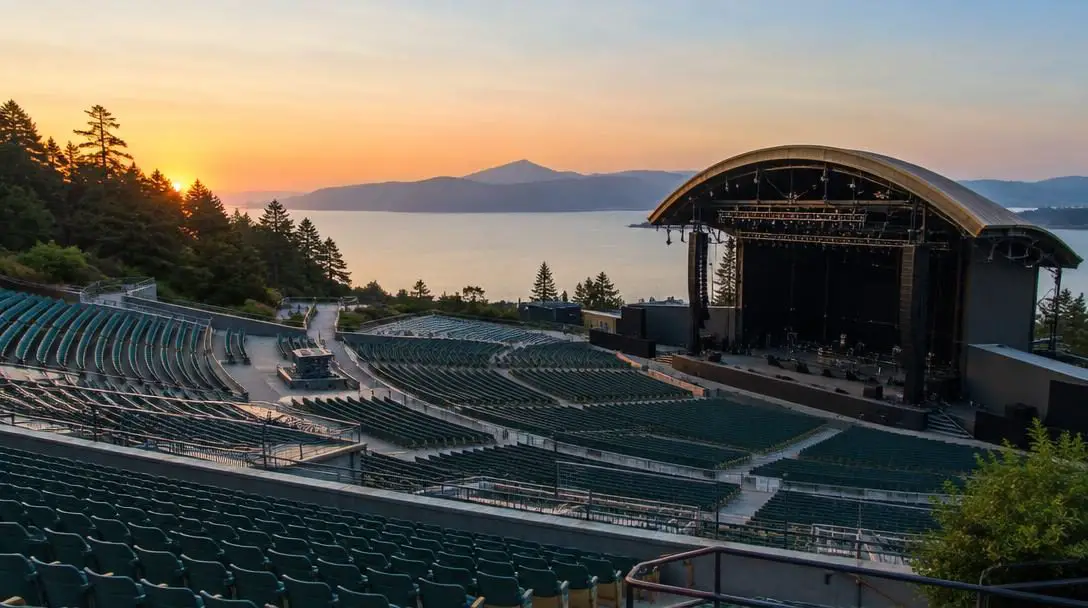
Modern live music is frequently staged in multi-purpose sporting facilities, ranging from cavernous indoor basketball and hockey arenas to open-air football stadiums. While these massive municipal structures are engineered to accommodate tens of thousands of cheering fans and offer vast floor space, their vast concrete surfaces and cavernous layouts often present severe acoustic challenges. Concertgoers routinely struggle with muddled bass, harsh slapback echoes, and inconsistent sonic coverage from one seating tier to the next.
In contrast, the world's premier music destinations treat acoustic performance as an art form in itself. Whether sculpted out of ancient geological formations or designed with classical architectural precision, these dedicated spaces provide an elevated listening experience and a cultural prestige that conventional athletic facilities cannot match. Across decades of touring history, five legendary destinations—the Sydney Opera House, Red Rocks Park and Amphitheatre, the Hollywood Bowl, Dalhalla, and Carnegie Hall—have earned enduring acclaim as the pinnacle of global performance venues.
Key takeaways
- Dedicated music venues outperform sports arenas by using tailored architectural geometry and natural materials that prevent acoustic distortion.
- Iconic performance spaces range from ancient geological features in Colorado and Sweden to historic urban landmarks in New York, Los Angeles, and Sydney.
- Open-air settings like Dalhalla and Red Rocks leverage rock formations to reflect sound, whereas indoor halls like Carnegie Hall rely on unadorned structural resonance.
- Attending shows at historic or natural sites requires special logistical planning for climate conditions, steep terrain, and limited seasonal operating windows.
At a glance: The world's premier concert destinations
While athletic venues prioritize crowd capacity and open sightlines for ball games, the world's top concert spaces are defined by their acoustic signatures, unique topographies, and storied histories. The following comparison highlights the core attributes of these five world-renowned destinations.
| Venue | Location | Opened | Structural Style | Signature Acoustic Feature |
|---|---|---|---|---|
| Sydney Opera House | Sydney, Australia | 1973 | Modern expressionist landmark | Engineered internal reflection chambers |
| Red Rocks Park and Amphitheatre | Morrison, Colorado, USA | Open-air natural site | Natural sandstone amphitheatre | Sandstone cliff acoustic focus and buffering |
| Hollywood Bowl | Los Angeles, California, USA | 1922 | Hillside outdoor amphitheatre | Curved proscenium acoustic shell |
| Dalhalla | Rättvik, Sweden | 1995 | Subterranean quarry theatre | Limestone rock face natural resonance basin |
| Carnegie Hall | Manhattan, New York, USA | 1891 | Italian Renaissance historic hall | Traditional shoe-box layout without deadening fabrics |
Five legendary venues shaping live music history
Each of the top concert destinations in the world pairs remarkable structural character with decades of cultural milestones. Touring artists actively seek them out, knowing that their performances will be framed by peerless sonic fidelity and historic resonance.
Sydney Opera House

- Location: Bennelong Point in Sydney, Australia
- Year opened: 1973
- Resident companies: Sydney Symphony Orchestra, Australian Ballet
- Notable performers: Sting, Bob Dylan, Prince
Overlooking the picturesque waters of Sydney Harbour, the Sydney Opera House at Bennelong Point stands as one of the most recognizable and uniquely built architectural masterworks of the modern era. Conceived as a multi-venue performing arts centre and completed in 1973, its iconic exterior shells house meticulously engineered performance chambers that control internal reverberation. The facility is celebrated worldwide as the distinguished home of the Sydney Symphony Orchestra and the Australian Ballet. Beyond its classical foundations, the hall has welcomed legendary contemporary soloists including Prince, Bob Dylan, and Sting, each taking advantage of its pristine interior sound engineering and world-famous coastal backdrop.
Red Rocks Park and Amphitheatre
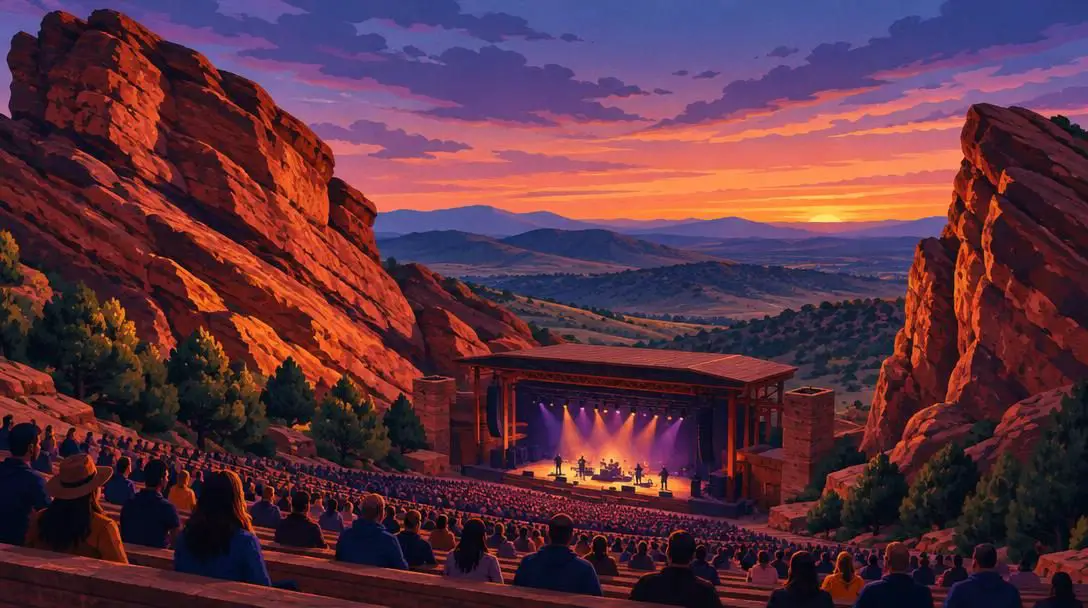
- Location: Morrison, Colorado, United States
- Setting: Natural sandstone geological formation
- Historic acts: The Beatles, Jimi Hendrix, U2, Rush
- Notable local artist: John Denver
Situated in the elevated foothills of Morrison, Colorado, Red Rocks Park and Amphitheatre—widely known simply as Red Rocks—is celebrated as one of the most remarkable outdoor performance destinations in the world. The open-air amphitheatre is flanked by colossal sandstone formations that form a natural acoustic enclosure, naturally channeling sound toward the rising spectator benches while buffering wind and outside interference. Over decades of musical history, the stage has hosted unforgettable sets by rock royalty such as The Beatles, Jimi Hendrix, Rush, and U2, alongside celebrated performances by Colorado native John Denver. Performers and audiences routinely describe the harmony of geological beauty and acoustic power as the gold standard for live outdoor music.
Hollywood Bowl
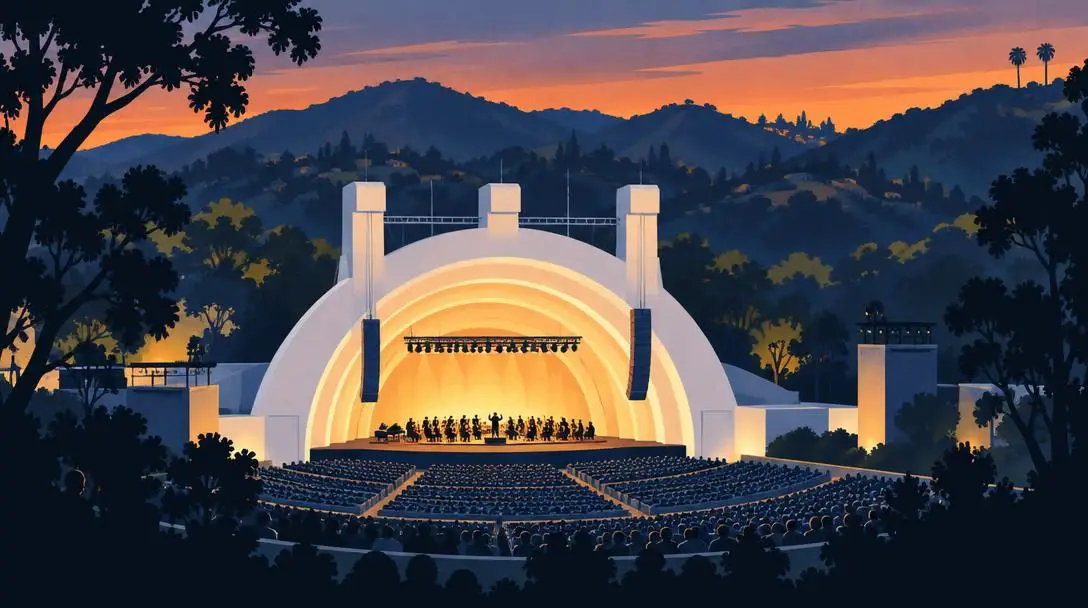
- Location: Hollywood Hills, Los Angeles, California, United States
- Year opened: 1922
- Major updates: Early 2000s modernization
- Recognition: Rolling Stone top ten live music venue (2018)
Nestled into the Hollywood Hills, the Hollywood Bowl has served as a cultural fixture of Southern California since its opening in 1922. The amphitheatre is renowned for its distinctive, curved acoustic shell, which was carefully redesigned during extensive renovations in the early 2000s to modernize technical production capabilities while preserving its historic visual identity. Formally recognized in 2018 when Rolling Stone placed it among the world's top ten live music venues, the Bowl has hosted generations of iconic acts including The Beatles, Elton John, The Doors, The Supremes, and The Jackson 5. It is equally famous for presenting major theatrical musicals featuring all-star casts, including acclaimed runs of Rent, Mamma Mia, Les Misérables, and Westside Story.
Dalhalla
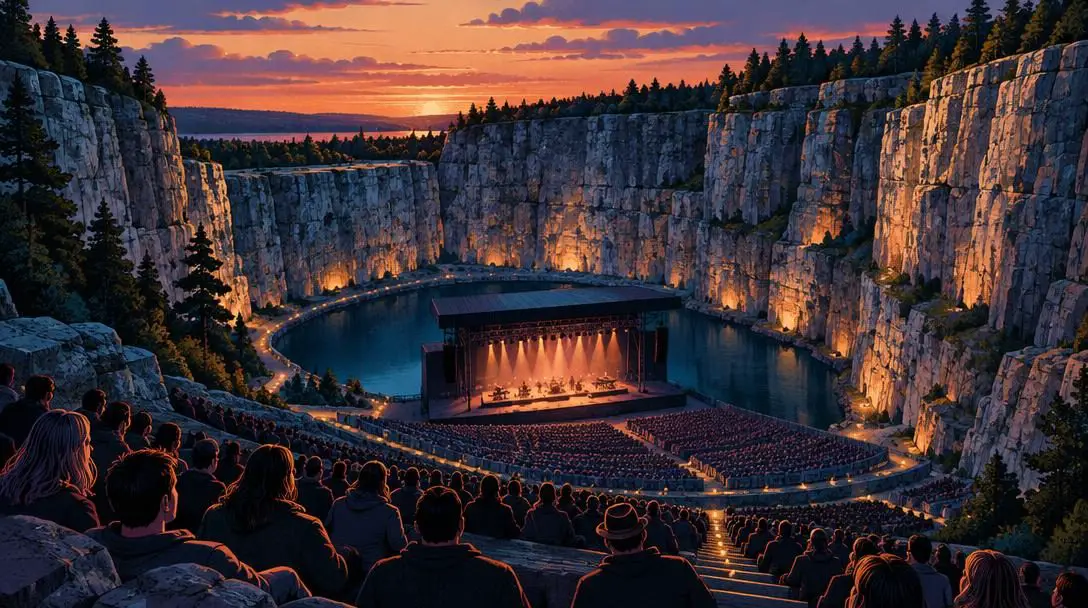
- Location: Near Rättvik, Sweden
- Year opened: 1995
- Depth: 200 feet below sea level
- Audience capacity: Approximately 4,000 spectators
Sweden's Dalhalla offers one of the most unusual concert environments on earth. Located near the town of Rättvik, this open-air theatre was carved into the sheer rock of an inactive limestone quarry and sits 200 feet below sea level. Opened in 1995, the arena seats roughly 4,000 spectators and stages an exclusive schedule of approximately 30 events per year, operating solely during the Nordic summer. The high limestone quarry walls produce an acoustic basin that enriches dynamic vocal passages and symphonic clarity, drawing an eclectic roster of stars including Bjork, Iggy Pop, Arcade Fire, and Sting to perform across opera, jazz, and modern popular music.
Carnegie Hall
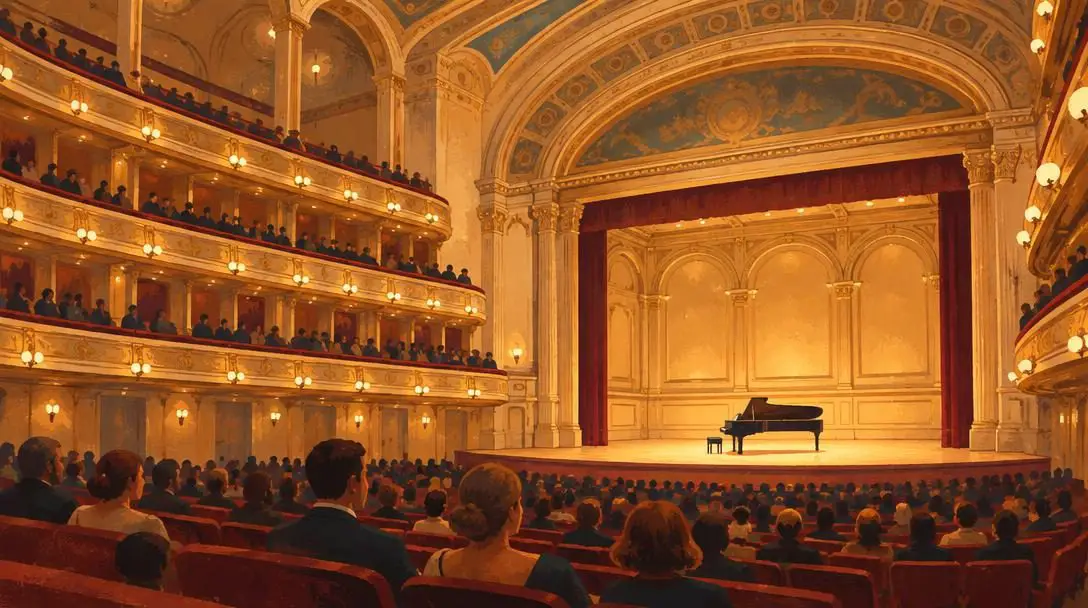
- Location: Manhattan, New York, United States
- Architect: William Burnet Tuthill
- Year opened: 1891
- Historic status: US National Historic Landmark
Standing at the corner of 57th Street and Seventh Avenue in Manhattan, Carnegie Hall remains the standard by which all classical and acoustic music halls are judged. Built by industrialist Andrew Carnegie and designed by architect William Burnet Tuthill in the Italian Renaissance style, the venue opened its doors in 1891. It holds dual recognition on the US National Register of Historic Places and the roster of US National Historic Landmarks. Tuthill famously avoided heavy sound-absorbing drapes and structural breaks, relying instead on smooth surfaces and a classic shoe-box layout to carry delicate orchestral textures. Carnegie Hall has hosted legendary residencies and concerts by the Boston Symphony Orchestra, the Philadelphia Symphonic Orchestra, Billie Holiday, Judy Garland, Nina Simone, The Beatles, and Led Zeppelin.
A dedicated concert venue treats acoustic resonance not as an afterthought of seating capacity, but as the central instrument of the performance.
Acoustic engineering: How natural formations and architecture sculpt sound
The clear distinction between a mundane sporting arena and an elite concert venue lies in how physical boundaries interact with sound waves. In typical indoor sports arenas, vast flat surfaces of poured concrete and structural metal reflect acoustic energy erratically, creating standing waves, bass build-up, and unintelligible vocals. World-class music spaces counteract these flaws through distinct acoustic strategies.
- Natural geological reflection: Outdoor spaces like Red Rocks and Dalhalla utilize the sheer density of native stone to channel sound. At Dalhalla, the high quarry walls form a natural sonic amphitheatre that confines acoustic energy without generating flutter echo. At Red Rocks, the sloping sandstone monoliths direct outgoing frequencies straight through the audience gallery.
- Proscenium and shell projection: The Hollywood Bowl's signature banded shell serves as an acoustic amplifier, focusing acoustic energy from the stage outwards across ascending bench seating in the open air of the Hollywood Hills.
- Unbroken traditional resonance: William Burnet Tuthill's design for Carnegie Hall utilizes Italian Renaissance plasterwork and structural proportions that allow natural reverberation to sustain instrumental decay without relying on artificial amplification.
- Engineered interior chambers: Modern masterworks like the Sydney Opera House use complex, geometrically sculpted wood and plaster interior baffles to balance orchestral frequencies between the stage, pit, and multi-tiered galleries.
How to plan an unforgettable visit to a world-class venue
Attending a performance at an internationally renowned concert hall or outdoor amphitheatre requires more detailed preparation than buying a ticket at a local sports arena. Because these venues feature distinctive physical settings and strict operational guidelines, following a systematic planning process ensures a smooth concert experience.
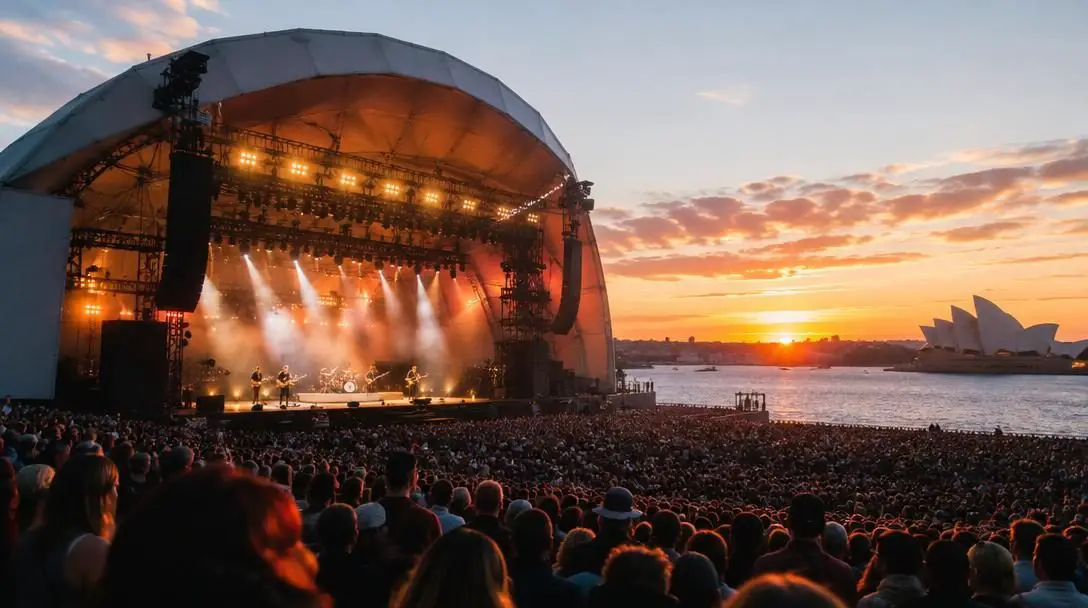
- Study the specific seating and site configuration: Intimate open-air venues like Dalhalla accommodate around 4,000 guests, offering close proximity to the performance, while large natural amphitheatres feature steep tiers. Review sightlines and physical incline before booking.
- Account for seasonal and environmental variables: Northern venues such as Dalhalla operate their roughly 30 events solely during the summer season. For outdoor destinations like Morrison, Colorado, or the Hollywood Hills, check anticipated temperature shifts and weather conditions.
- Match the event to the venue's historical heritage: Decide whether you want to experience the venue's resident classical heritage—such as the Sydney Symphony Orchestra at the Sydney Opera House or an orchestral gala at Carnegie Hall—or an amplified rock performance or staged musical.
- Arrive early to tour the physical grounds: Top-tier venues are historic landmarks in their own right. Allot extra time before showtime to admire the views along Sydney Harbour, explore the sandstone monoliths in Morrison, or view the Italian Renaissance details of Carnegie Hall.
- Map transit and pedestrian access routes in advance: Navigating the descent into Dalhalla's former quarry 200 feet below sea level or the winding hill routes of Los Angeles demands careful planning around local shuttle services, designated trails, and parking restrictions.
Common pitfalls when attending performances at historic and open-air venues
Visiting a bucket-list music destination can be disrupted by simple oversights. Avoiding these frequent travel and ticketing mistakes will keep your trip focused on the music.
- Expecting sports-arena climate control: Attendees often fail to prepare for the open elements at Red Rocks or the Hollywood Bowl, where mountain drafts or coastal fog can drastically alter how cool the evening feels.
- Overlooking dress codes and venue etiquette: While rock and pop shows at outdoor amphitheatres welcome casual attire, classical symphonies, ballets, or gala evenings at Carnegie Hall or the Sydney Opera House may maintain traditional audience decorum.
- Underestimating physical terrain and altitude: Red Rocks sits high in the Colorado foothills, where elevated altitude combined with hundreds of steep stone stairs can challenge unprepared visitors. Dalhalla similarly requires traversing distinct quarry paths.
- Ignoring historic preservation limits: Venues listed on the US National Register of Historic Places, such as Carnegie Hall, prioritize structural preservation over modern arena conveniences like sprawling concession concourses.
- Missing brief seasonal ticket windows: Dalhalla's compressed calendar of roughly 30 summer shows means performance tickets and nearby regional accommodations sell out many months in advance.
What to evaluate before finalizing your concert travel
Before purchasing tickets and booking flights, evaluate how your music selection aligns with the venue's physical atmosphere. A performance by a historic orchestral ensemble like the Philadelphia Symphonic Orchestra or the Boston Symphony Orchestra at Carnegie Hall offers a completely different auditory and cultural encounter than a contemporary rock set under the stars at Red Rocks.
Geographic setting also plays a massive role in your overall trip. Choosing Carnegie Hall places you in the heart of urban Manhattan, surrounded by world-renowned dining and transit networks. Conversely, traveling to Dalhalla near Rättvik, Sweden, or Red Rocks in Morrison, Colorado, immerses you in rustic, scenic natural landscapes where vehicle rentals and rural lodging must be arranged well in advance.
Finally, consider the legacy of the artists who established the venue's reputation. Whether walking the halls graced by Billie Holiday, Judy Garland, and Nina Simone, or sitting in the open air where The Beatles, Jimi Hendrix, Elton John, The Supremes, and Led Zeppelin played historic sets, being in these spaces connects you directly to the living history of global music.
Frequently asked questions
Why do dedicated concert halls sound better than modern sports arenas?
Sports arenas are built with wide concrete surfaces and massive open volumes to hold athletic games and large crowds, causing severe echoes and muffled sound. Dedicated concert halls and natural amphitheatres use tailored architectural geometries, natural stone, or acoustic baffles that reflect sound cleanly to every seat.
When is the best time of year to see a show at Dalhalla?
Dalhalla operates exclusively during the summer months due to the northern Swedish climate. It hosts approximately 30 events per year during this limited window, spanning opera, jazz, and contemporary music.
Which historic rock acts have performed at both Carnegie Hall and Red Rocks?
Both legendary institutions have hosted top-tier musical acts over the decades. Notably, The Beatles performed historic concerts at both Carnegie Hall in New York and Red Rocks Amphitheatre in Colorado during the 1960s.
What architectural style is Carnegie Hall designed in?
Carnegie Hall was designed by architect William Burnet Tuthill in the Italian Renaissance style. The hall features smooth acoustic surfaces and a classic shoe-box configuration that preserves natural reverberation.
What theatrical productions have been staged at the Hollywood Bowl?
In addition to rock and pop concerts, the Hollywood Bowl stages major theatrical musicals with all-star casts, including historic productions of Rent, Mamma Mia, Westside Story, and Les Misérables.
The bottom line
Experiencing live music in a space engineered purely for sonic beauty is a transformative experience. From the soaring sail-like shells of the Sydney Opera House to the subterranean depths of Dalhalla and the historic warmth of Carnegie Hall, these five world-class venues demonstrate how architectural ingenuity and natural geology elevate live performance into an unforgettable art form.