5 Mysterious Murder Cases Left Unsolved
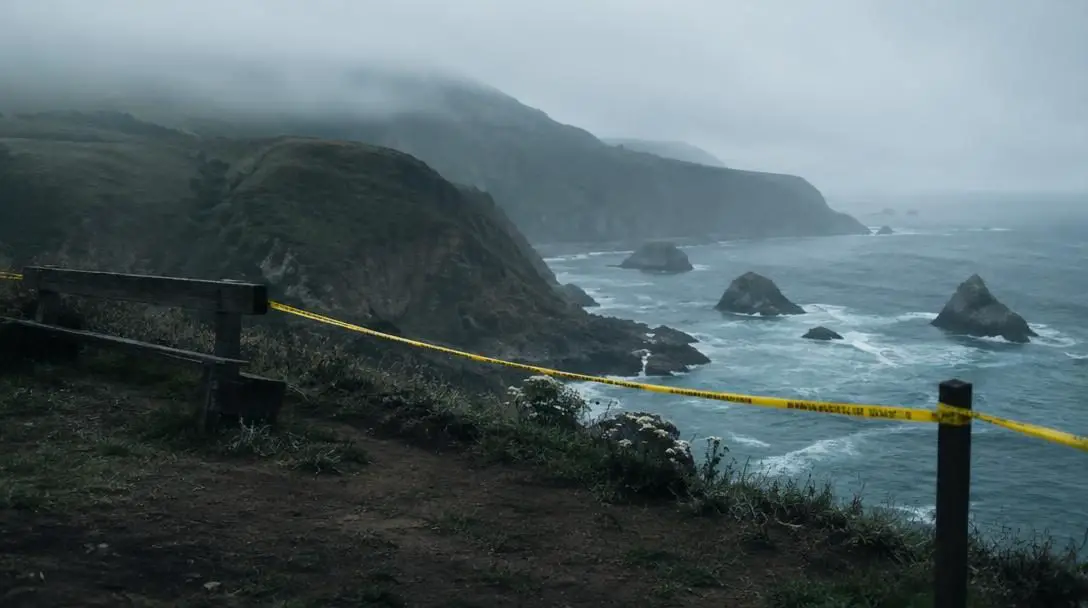
Modern homicide investigations move with swift precision. In the contemporary era, investigators often establish critical leads and interview persons of interest within the first forty-eight hours of a crime, supported by rapid forensic testing, digital tracking, and extensive forensic databases. When a modern crime takes place, specialized response units quickly seal the area, document every square inch using high-resolution digital tools, and isolate fragile evidence before environmental degradation can occur.
Historically, however, criminal inquiries faced extraordinary technological and procedural hurdles. Detectives of past eras lacked blood typing advancements, chemical luminol testing, and computer networks, forcing them to rely almost exclusively on observational footwork, handwritten statements, and rudimentary evidence handling. When an offender avoided immediate apprehension, these systemic limitations caused cases to grow cold. Among the thousands of historical files preserved in international police archives, five specific homicides remain famous for their enduring mystery, defying generations of professional scrutiny and amateur investigation.
Key takeaways
- Historic homicides often stalled because investigators lacked the forensic tools and rapid communication systems standard in modern police work.
- Famous cold cases range from unidentified serial predators to isolated expedition disappearances and unverified young victims.
- A breakthrough in one area, such as the 2020 decryption of a Zodiac Killer cipher, does not automatically resolve the overarching case or expose the offender's identity.
- Disparities in private wealth and departmental funding can dramatically alter the scope and longevity of an international death investigation.
- Resolving aged mysteries requires separating documented primary source evidence from decades of accumulated public speculation.
Five Enduring Unsolved Mysteries in Crime History
Throughout the late nineteenth and twentieth centuries, several high-profile homicides captured public attention and permanently changed criminal history. Each of these five cases illustrates the distinct obstacles encountered by past law enforcement agencies, ranging from forensic limitations to extreme cross-border investigative hurdles.
| Case Name | Era & Location | Documented Victims | Primary Investigative Challenge |
|---|---|---|---|
| Jack the Ripper | 1888; London, England | At least 5 deceased | Complete lack of forensic identification tools in Victorian-era Whitechapel |
| The Zodiac Killer | Late 1960s; Southern California | At least 5 deceased; 2 survivors | Cryptic ciphers, irregular geographic movements, and elusive personal identity |
| Julie Ward | Kenya, Africa | 1 deceased | International jurisdiction and severe cross-border logistical hurdles |
| Barbara and Patricia Grimes | December 1956; Chicago, Illinois | 2 deceased | Thawing winter conditions and delayed discovery along a rural roadway |
| The Boy in the Box | February 1957; Pennsylvania | 1 deceased child | Simultaneous failure to establish the victim's name or the perpetrator's identity |
Jack the Ripper
- Active period: 1888
- Primary jurisdiction: Whitechapel district, London, England
- Documented victim count: At least five individuals
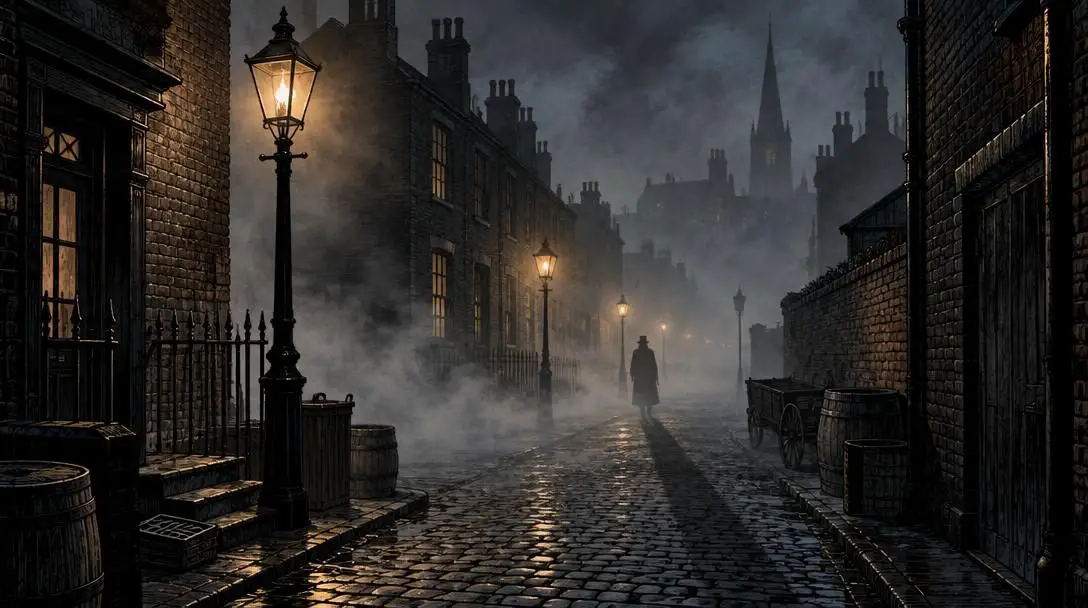
The lethal sequence of crimes credited to the moniker Jack the Ripper took place in London throughout 1888. The violence centered around the impoverished Whitechapel district, where an unidentified predator preyed upon local residents, claiming the lives of at least five victims. The crimes shocked Victorian society not only because of their calculated brutality, but also because the assailant vanished into the dense urban fog and crowded alleyways without leaving identifiable traces.
A defining characteristic of the Whitechapel killings was the precise mutilation carried out on the victims' bodies. Because of the anatomic skill required to execute these attacks in low-light environments, contemporary observers, physicians, and later researchers suggested that the killer was an intelligent individual who likely possessed professional surgical training. Despite more than a century of intensive research, hundreds of books, and dozens of named suspects, the true identity of the Whitechapel serial killer has never been proven in a court of law.
The Zodiac Killer

- Active period: Late 1960s
- Primary jurisdiction: Southern California (with potential links to Nevada)
- Documented casualty toll: At least five fatalities, two surviving victims
During the late 1960s, a serial predator known as the Zodiac Killer initiated a series of ambushes across Southern California, with investigative leads extending into neighboring Nevada. The killer targeted younger couples in secluded or quiet settings, ultimately killing at least five people. Remarkably, two injured victims survived their encounters, providing investigators with the only direct eyewitness accounts of the attacker's physical demeanor and methods.
Rather than retreating into total silence, the perpetrator embarked on a public taunting campaign against regional law enforcement. The killer mailed a succession of cryptic, hand-coded messages to major newspapers, demanding their front-page publication under explicit threats of further mass casualty events. While amateur codebreakers and professional cryptanalysts finally succeeded in deciphering one of these complex ciphers in 2020, multiple remaining codes remain unread, and the actual identity of the killer remains unconfirmed after more than half a century.
Julie Ward

- Profession: Wildlife photographer
- Incident location: Masai Mara game reserve, Kenya, Africa
- Key companion: Dr. Glen Burns
The death of British wildlife photographer Julie Ward demonstrates the acute difficulty of handling remote international homicide inquiries. Ward traveled to Kenya to document African wildlife, eventually embarking on an expedition toward the expansive Masai Mara game reserve alongside her companion, Dr. Glen Burns. When their vehicle suffered a severe mechanical breakdown in the backcountry, the expedition came to an abrupt halt. Dr. Burns elected to travel onward to Nairobi, while Ward stayed behind to rest for the evening at a nearby safari lodge.
Once the automobile was repaired, Ward drove toward a nearby campsite to retrieve gear and supplies, after which she disappeared entirely. When official foreign search efforts stalled, her father, a former hotelier of considerable personal wealth, initiated an exhaustive independent search. Spending nearly two million pounds of his own funds to mount private searches, travel to Kenya, and navigate foreign bureaucracies, he ultimately discovered his daughter's mutilated remains in the wilderness. Despite decades of persistent advocacy and substantial private investment, the individuals responsible for her death have never faced legal conviction.
Substantial private resources can sustain an international cold case for decades, yet unresolved questions often outlast even the most determined family investigations.
Barbara and Patricia Grimes

- Ages: 15 (Barbara) and 12 (Patricia)
- Date of disappearance: December 1956
- Discovery site: German Church Road in Willow Springs, Illinois
In December of 1956, the city of Chicago was gripped by the sudden disappearance of sisters Barbara and Patricia Grimes, aged fifteen and twelve. The siblings left their family residence to attend an evening screening of the Elvis Presley film Love Me Tender at a neighborhood movie theater located in Brighton Park. The sisters assured their mother they would return home before midnight. When that curfew passed without word, their mother initiated a frantic missing persons report with the local police department at approximately two o'clock in the morning.
The disappearance sparked a regional search that lasted for weeks across Cook County. In January of 1957, a passing motorist traveling along German Church Road in rural Willow Springs spotted human remains exposed on a bank where seasonal snow had begun thawing. Detectives thoroughly processed the site and interrogated several persons of interest who moved through the Brighton Park area. However, none of the questioned individuals could be tied to the scene through concrete evidence, leaving the double homicide permanently unresolved.
The Boy in the Box
- Date discovered: February 1957
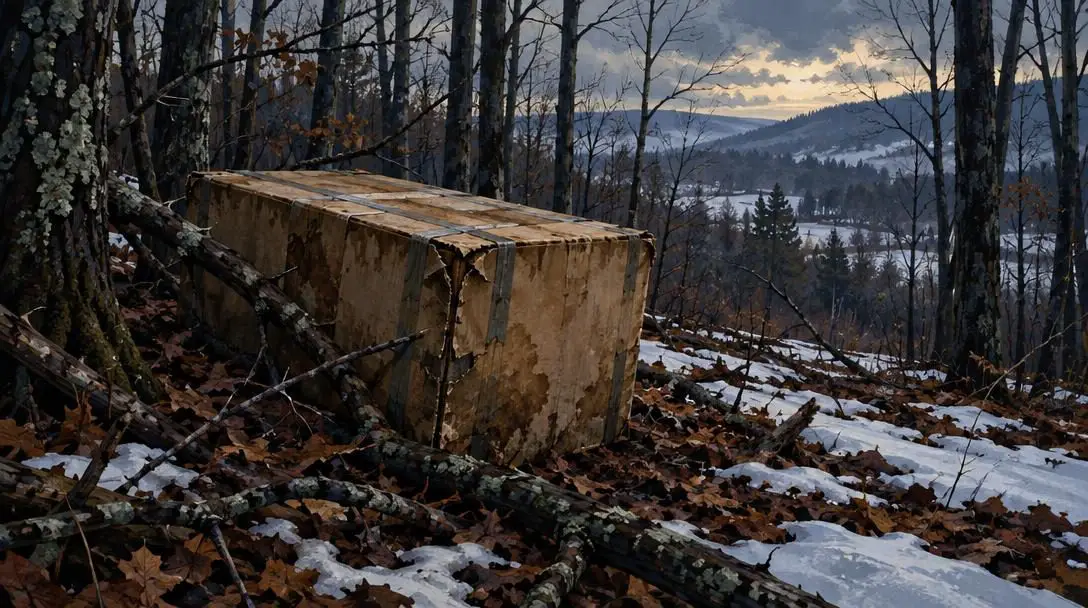
- Primary physical evidence: Weathered cardboard shipping container
- Victim condition: Severely malnourished with blunt-force trauma
In February of 1957, one of the most haunting juvenile homicides in American history came to light when the body of a young child was discovered tucked inside a large cardboard box in a wooded area. Two separate passersby noticed the unusual container discarded in the brush; however, only the second witness took the initiative to contact police authorities. When investigators arrived to examine the package, they discovered the body of a young boy carefully wrapped, but showing severe signs of prolonged neglect.
A medical evaluation of the decedent revealed complex contradictions. The boy appeared groomed, with his hair recently trimmed; yet, his body was severely malnourished and covered in extensive surgical and trauma scarring, indicating repeated physical beatings and chronic abuse prior to death. The case remains a rare investigative tragedy: over six decades have passed, yet neither the identity of the young victim nor the identity of the person who placed him in the box has ever been proven.
How Cold Case Investigations Unfold Over Time
When an active homicide investigation exhausts its initial leads, police agencies transition the file into cold case status. Rather than abandoning the inquiry, modern law enforcement entities utilize structured, multi-phase systems designed to capitalize on emerging forensic methods as time elapses.
- Initial evidence archival and cataloging: In early inquiries, detectives documented scenes via physical sketch boards, monochrome photography, and typed or handwritten witness depositions. Physical evidence gathered at the scene—ranging from discarded cardboard containers and clothing fibers to automotive parts and paper documents—is cataloged, assigned serial numbers, and placed in secure evidence repositories to prevent physical deterioration.
- Periodic cold case reassessment: Files that experience a cessation of leads are transferred to dedicated cold case squads or assigned to new investigative generations. These detectives read through archived records with fresh eyes, cross-referencing timeline entries, identifying contradictions in original witness depositions, and identifying physical artifacts that were gathered decades prior to the advent of modern testing methodologies.
- Advanced technical testing and external analysis: Preserved evidence undergoes modern scientific processing that was non-existent during the original investigation. This includes microscopic trace material extraction, chemical characterization, and digitized fingerprint database checks. In cases involving encoded messages, such as the Zodiac communications, external cryptographers and computer modeling teams are engaged to analyze historical documents for hidden ciphers.
- Case reactivation and target interviews: If advanced testing yields fresh forensic markers or corroborates an overlooked historical detail, the file is restored to active status. Detectives use the modern findings to re-interview historical persons of interest, trace familial lineages, or issue focused public appeals based on verified scientific discoveries.
Practical Steps for Researching Historical Inquiries
Amateur historians, writers, and genealogists frequently examine unresolved cases to better understand early forensic developments. To ensure historical analysis remains accurate and objective, researchers should implement disciplined archival practices.

- Prioritize primary contemporary documentation: Direct your initial research toward original materials, including coroner inquest transcripts, police dispatch logs, and verified missing person reports filed at the time of the event. Contemporary records reflect the raw facts before public folklore begins to distort the narrative.
- Build a strict chronological and geographic timeline: Chart out every confirmed physical location associated with the inquiry. Map precise coordinates, such as the theater in Brighton Park, the route to Willow Springs along German Church Road, or the layout of Whitechapel's alleys, to evaluate travel times and spatial feasibility.
- Investigate the historical chain of custody: Examine what happened to physical items recovered from the scene after the initial inquiry stalled. Determine whether clothing items, handwritten notes, or vehicles were safely preserved in climate-controlled police storage or lost due to departmental purges and floods.
- Monitor official agency classifications: Routinely cross-check municipal police boards and governmental archives to establish whether a case remains officially classified as an open homicide, an inactive file, or a closed administrative matter.
- Isolate verified facts from urban legend: Maintain two separate research files: one dedicated exclusively to physical, documented evidence (such as recovered objects, confirmed victim counts, and verified dates), and another reserved for unproven public theories, amateur claims, and posthumous confessions.
Common Mistakes When Evaluating Cold Cases
When reviewing unsolved historical crimes, amateur researchers often fall victim to common cognitive biases and procedural misinterpretations. Recognizing these errors helps maintain historical integrity when discussing old files.
- Judging historical police procedures by modern standards: Victorian-era detectives in Whitechapel and mid-century officers in Chicago operated without protective forensic suits, digital databases, or sterile evidence bags. Criticizing historical detectives for failing to collect biological evidence before such science existed creates an inaccurate picture of their efforts.
- Assuming partial breakthroughs solve the entire case: Following the 2020 decryption of a Zodiac cipher, many observers incorrectly assumed the entire case was solved. Deciphering a message does not mean the author's legal name, whereabouts, or direct link to a specific crime scene have been verified.
- Neglecting crucial timeline benchmarks: Small chronological windows dictate whether a scenario was physically possible. In the Grimes sisters disappearance, overlooking the two-hour span between their missed midnight curfew and their mother's 2:00 AM police call can produce faulty theories regarding their final movements.
- Confusing investigative interviews with criminal guilt: Police officers routinely interview dozens of persons of interest to establish alibis, check local movements, and rule out false leads. Treating every individual questioned by police as a viable killer distorts the historical record.
- Accepting behavioral theories as physical evidence: Assertions that Jack the Ripper was a trained surgeon represent an observational hypothesis based on anatomical cuts, not an established biographical fact. Treating such theories as verified truths derails sound research.
Critical Considerations for Historic Investigations
Evaluating the long-term prospects of resolving aged homicide files requires understanding three fundamental real-world constraints that impact cold case squads across the globe.
The first primary constraint is the physical survival of material evidence. Nineteenth-century cases such as the Whitechapel killings and mid-twentieth-century disappearances frequently suffer from degraded, misplaced, or chemically depleted physical records. When organic trace evidence, crime scene garments, and biological items are destroyed by moisture, improper storage, or administrative discarding, modern forensic scientists have nothing left to test. In these instances, investigators remain entirely restricted to century-old written logs, which rarely provide the definitive proof required to identify a perpetrator.
The second factor centers on the profound divide between public municipal funding and private resources. The Julie Ward investigation proves how an influx of private capital—amounting to nearly two million pounds expended by her father—can fund international travel, hire independent forensic specialists, and sustain an inquiry for decades. In contrast, the vast majority of unresolved homicides must compete for the modest, overburdened budgets of local police departments, where detectives must balance historical files against a continuous influx of modern, active crimes.
Finally, researchers must recognize the unique challenge of victim identification versus perpetrator identification. In inquiries such as the Zodiac Killer or Jack the Ripper investigations, the identities of the deceased victims were confirmed quickly, leaving detectives to focus entirely on unmasking the unknown perpetrator. Conversely, in the case of the Boy in the Box, authorities faced a double mystery: they lacked the name of the perpetrator, but they were also entirely unable to establish the legal identity of the victim. When the victim's name remains unrecorded, establishing family trees, identifying associates, and narrowing potential motives becomes nearly impossible.
Frequently asked questions
Why do historical murder cases often remain unsolved?
Historic homicides frequently stalled because investigators lacked the forensic technology available today, such as blood testing, chemical illumination, and computer databases. In addition, decades of storage can result in degraded or missing physical evidence, leaving detectives with only written paper files to evaluate.
Was the Zodiac Killer ever officially identified?
No. While an international team of amateur codebreakers successfully deciphered one of the Zodiac's complex cryptograms in 2020, the killer's true identity has never been confirmed by law enforcement, and several other ciphers remain unsolved.
How much money did Julie Ward's father spend on her case?
Julie Ward's father, a former hotelier with significant personal wealth, spent nearly two million pounds of his own money to finance private searches, travel to Kenya, Africa, and locate his daughter's mutilated remains.
What film did Barbara and Patricia Grimes go to see before they vanished?
The sisters traveled to a theater in Brighton Park in December of 1956 to attend a screening of the Elvis Presley film Love Me Tender, promising to return home before midnight.
Why is the Boy in the Box case considered uniquely difficult?
The case is exceptionally challenging because both the identity of the young victim and the identity of his killer have eluded authorities since his discovery inside a cardboard box in February 1957, despite evidence of prior grooming and extensive physical trauma.
The bottom line
Unsolved homicides from the past serve as sobering reminders of the technological limitations that once constrained criminal justice. From the foggy streets of 1888 Whitechapel to the rural roads of 1950s Illinois, these five cases demonstrate that without swift forensic recovery and secure evidence preservation, even the most aggressive police investigations can reach an impasse. While contemporary cold case squads continue to apply modern analytical tools to aging archives, solving these historic cases ultimately depends on whether physical evidence has survived the passage of time—and whether confirmed facts can finally outshine decades of public folklore.