5 Best Movies About War

Cinema has explored armed human conflict since the earliest days of moving pictures, yet combat remains one of the most punishing and technically demanding genres for any filmmaker to undertake. Unlike quiet chamber dramas, conversational pieces, or contained character studies, war stories require tremendous physical scale, intricate historical staging, and an uncompromising dedication to visual realism. The practical sets necessary to depict contested combat zones are inherently complex and extraordinarily expensive to construct, maintain, and capture on film. Sprawling outdoor locations, genuine period uniforms, era-specific armaments, and legions of personnel place heavy burdens on everyday production logistics. Consequently, major Hollywood studios produce far fewer war pictures today than during earlier eras of industry history when battlefield combat dramas were dependable mainstays of theatrical schedules.
Even with these steep financial hurdles and severe physical obstacles, the war genre continues to produce towering artistic triumphs that command international attention. Bringing the visceral terror, psychological trauma, and acoustic sensory overload of the battlefield to theaters demands visionary directing alongside masterful work across cinematography, practical effects, editing, and sound design. When handled with rigor and creative integrity, these projects do far more than stage combat sequences; they capture the profound moral weight, claustrophobia, and personal cost borne by individuals pushed to extreme limits.
Key takeaways
- War films represent some of the most expensive and logistically intricate productions in cinema history, requiring vast resources for authentic period recreation.
- Steven Spielberg's ground-level realism in Saving Private Ryan revived widespread interest in large-scale combat epics during the late 1990s.
- Technical disciplines like sound mixing, film editing, and cinematography are fundamental to conveying the disorientation and physical danger of armed combat.
- Box office scale does not determine artistic quality, as low-budget and mid-tier films have swept major industry honors, including Best Picture and Best Director.
At a glance: 5 landmark war films compared
The greatest combat films approach warfare from markedly distinct eras, budgets, and visual perspectives. The table below outlines how these celebrated productions compare across their core technical achievements and commercial milestones.
| Film | Director | Setting / Conflict | Budget / Box Office Scope | Major Academy Award Recognition |
|---|---|---|---|---|
| Saving Private Ryan | Steven Spielberg | Allied invasion of Normandy (D-Day) | $70 million budget; close to $500M box office | 5 Oscar wins (including Best Directing, Best Cinematography) |
| Dunkirk | Christopher Nolan | Harrowing World War I military action | Well over $500M worldwide box office | 3 Oscar wins (Best Film Editing, Best Sound Editing, Best Sound Mixing) |
| Apocalypse Now | Francis Ford Coppola | Vietnam War | Over $30 million budget; strong commercial returns | 2 Oscar wins (Best Sound, Best Cinematography) |
| The Hurt Locker | Kathryn Bigelow | Specialized modern military combat | Modest box office run; immense critical acclaim | Won Best Picture; Best Director (Kathryn Bigelow) |
| Das Boot | Wolfgang Petersen | Submarine warfare aboard U-96 | Commercial success; global acclaim | Multiple Oscar nominations (including Best Director, Best Cinematography) |
The 5 definitive war film masterpieces
Each of the following titles represents a singular achievement in the combat genre, demonstrating how elite filmmakers harness specific aesthetic choices, revolutionary technical tools, and ensemble acting to capture the realities of wartime survival.
Saving Private Ryan

- Director: Steven Spielberg
- Production Budget: $70 million
- Box Office: Close to half-billion dollars
- Academy Awards: 5 wins (including Best Directing and Best Cinematography)
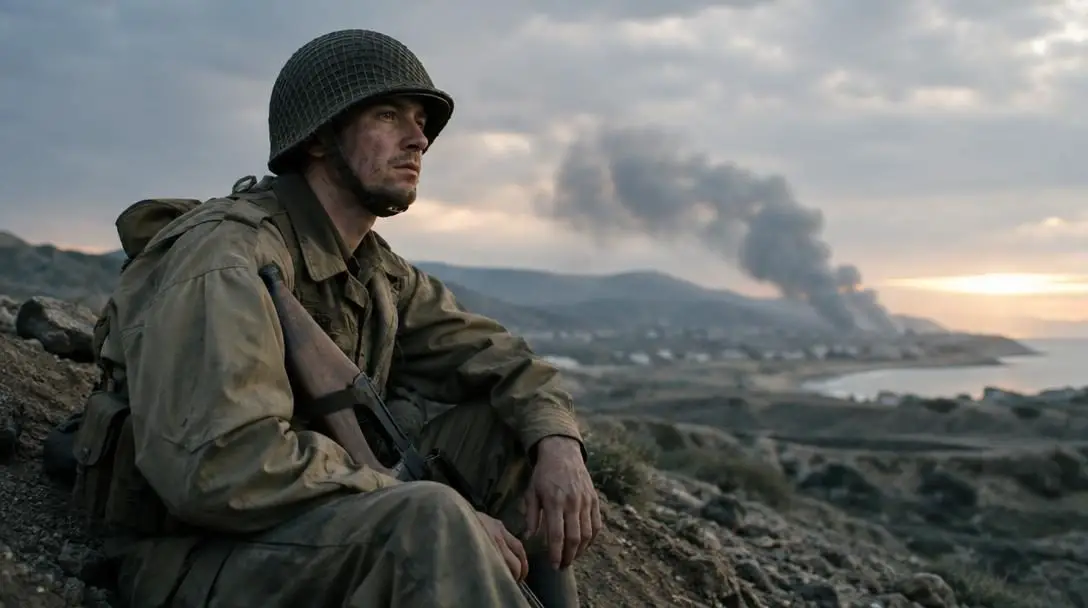
Toward the close of the 1990s, Hollywood commentators widely assumed that traditional war epics were permanently obsolete. More than a full decade had elapsed since a ground-combat drama had achieved genuine commercial dominance in mainstream theaters. Director Steven Spielberg dismantled that industry assumption by approaching the genre with unprecedented technical rigor and an unwavering commitment to brutal realism. Mounted on a $70 million production budget, the movie anchored its dramatic journey around a stellar ensemble cast featuring Tom Hanks and Matt Damon.
The production immediately staked its claim in film history with its opening sequence: an unrelenting, visceral recreation of the Allied amphibious landing on the beaches of Normandy during D-Day. Spielberg employed desaturated color timing, handheld camera maneuvers, and shutter-angle adjustments that threw moviegoers directly into the deafening sensory assault faced by infantrymen. The intense, unvarnished depiction of armed violence turned the release into an international box office powerhouse, accumulating close to a half-billion dollars in worldwide ticket sales. Alongside its financial success, it collected five Academy Awards, earning Spielberg the trophy for Best Directing alongside an honor for Best Cinematography.
Dunkirk
- Director: Christopher Nolan
- Global Box Office: Well over half-billion dollars
- Key Cast: Tom Hardy, Cillian Murphy, Harry Styles
- Academy Awards: 3 wins (Best Film Editing, Best Sound Editing, Best Sound Mixing)
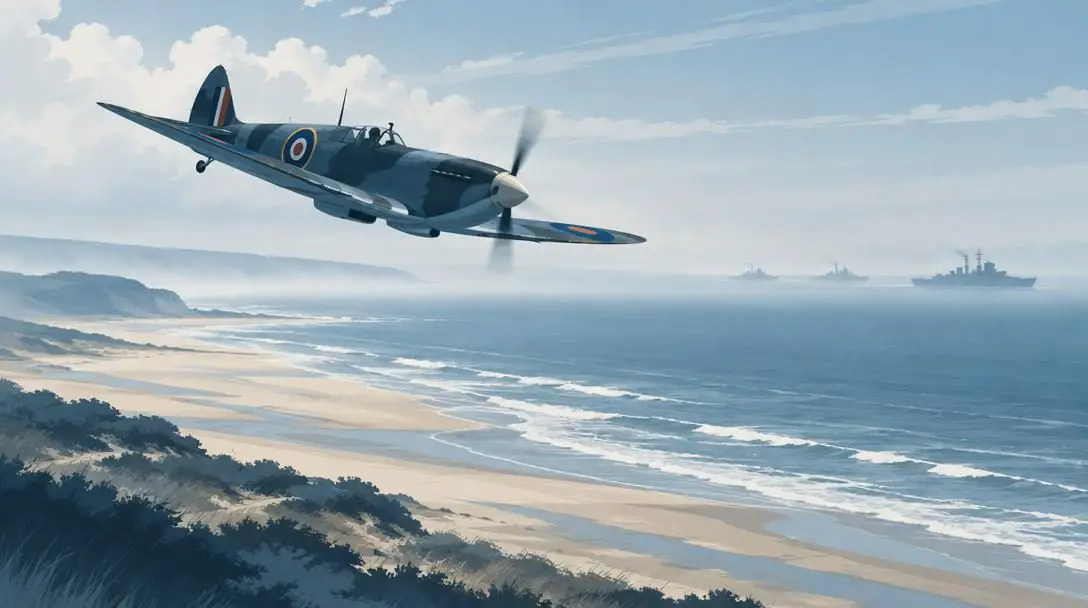
Much like Steven Spielberg reshaped cinematic grammar for his generation, director Christopher Nolan established a towering reputation in contemporary Hollywood through intellectually ambitious, large-scale spectacles such as Inception, Interstellar, and The Dark Knight. In 2017, Nolan ventured into the combat arena for the very first time with Dunkirk, crafting a taut, visually arresting narrative that thrust viewers directly into the harrowing military action of World War I. Film commentators and audiences immediately celebrated the project as the contemporary millennium's artistic peer to Saving Private Ryan.

Nolan cast a mix of established screen veterans and newer performers, assembling an ensemble that included Tom Hardy, Cillian Murphy, and pop star Harry Styles. Rather than leaning on conventional dialogue or extensive exposition, the narrative relied on ticking-clock tension, temporal cross-cutting, and colossal practical environments. Audiences responded en masse, propelling the picture to well over a half-billion dollars in worldwide ticket sales. During the subsequent awards circuit, the film dominated the technical categories, securing Academy Awards for Best Film Editing, Best Sound Editing, and Best Sound Mixing.
Translating the sensory chaos, psychological burden, and sheer intensity of combat to the silver screen requires visionary directing and flawless technical execution across camera work, editing, and sound design.
Apocalypse Now

- Director: Francis Ford Coppola
- Release Year: 1979
- Production Budget: Just over $30 million
- Source Material: Joseph Conrad's 1899 novella Heart of Darkness
Arriving in theaters in 1979, Apocalypse Now represented director Francis Ford Coppola's daring creative follow-up to his landmark achievements on the first two installments of The Godfather. Coppola used Joseph Conrad's 1899 classic literary text Heart of Darkness as an allegorical blueprint, transposing its exploration of human madness, moral decay, and imperialism into the turbulent backdrop of the Vietnam War. Undertaking a production plagued by extreme weather, logistical nightmares, and personal physical strain, Coppola produced an intoxicating, hallucinatory odyssey into the dark core of armed conflict.
Financed on a budget that rose to just over $30 million, the movie defied skeptical early forecasts by delivering strong commercial returns, grossing well into six-figure territory. It quickly entered the cultural lexicon due to its legendary, quotable dialogue and powerhouse turns from a legendary cast that featured Marlon Brando, Martin Sheen, Robert Duvall, Dennis Hopper, and Harrison Ford. Despite its monumental status in cinematic history, the film collected just two Academy Awards: Best Sound and Best Cinematography, both honoring the peerless craft that brought its nightmarish jungle landscape to life.
The Hurt Locker

- Director: Kathryn Bigelow
- Release Year: 2008
- Core Subject: Specialized modern combat operations
- Top Honors: Academy Awards for Best Picture and Best Director
With The Hurt Locker, director Kathryn Bigelow turned away from sweeping historical armies to examine the suffocating anxiety of modern asymmetric warfare. Released in 2008, the film follows an explosive ordnance disposal unit navigating bomb defusal assignments amid hostile urban streets. Rather than chasing the colossal box office returns of broad historical epics, the production pursued intimate psychological authenticity, generating near-unanimous critical praise for its depiction of professional isolation, adrenaline dependency, and quiet dread.
The film is notable for introducing mainstream audiences to performers who would subsequently become major tentpole stars in the Marvel Cinematic Universe, including Jeremy Renner, Anthony Mackie, Evangeline Lilly, and Guy Pearce, alongside contributions from veteran actors Ralph Fiennes, David Morse, and Brian Geraghty. Bigelow maintained white-knuckle suspense through docudrama camera techniques, sharp editing rhythms, and agonizingly quiet set pieces. At the 82nd Academy Awards, The Hurt Locker triumphed over lavish blockbusters, making Bigelow the first woman to win the Oscar for Best Director while the film itself took home the ultimate prize for Best Picture.
Das Boot
- Director: Wolfgang Petersen
- Setting: German submarine U-96
- Release Timing: Premiered two years after Apocalypse Now
- Key Nominations: Academy Award nods for Best Director and Best Cinematography
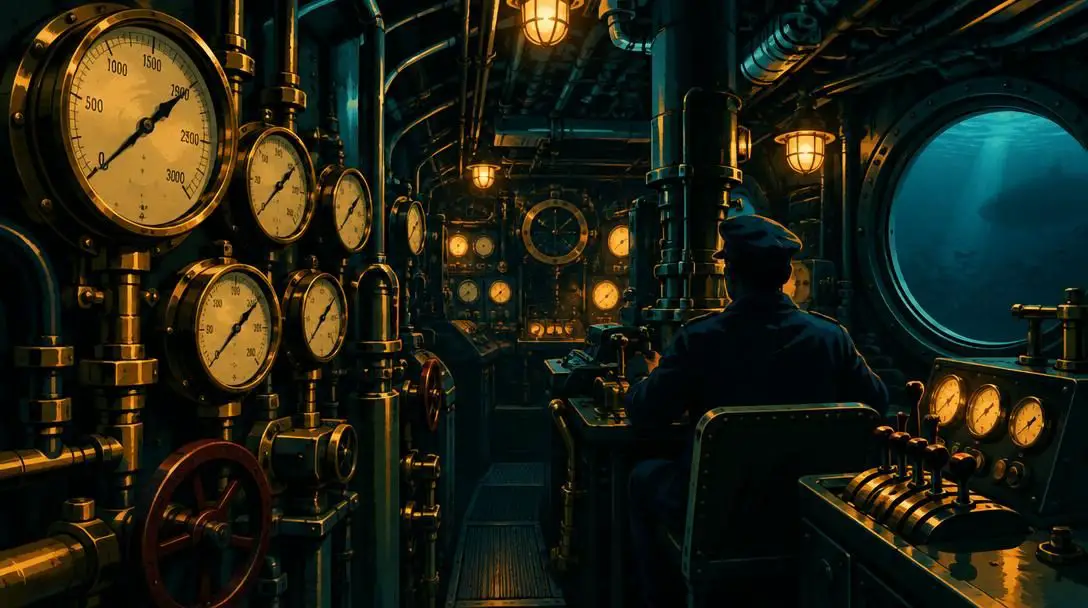
While many contemporary moviegoers assume Das Boot is the oldest entry on this list, Wolfgang Petersen's maritime masterpiece actually arrived in cinemas two years after Apocalypse Now. Before Petersen transitioned to high-profile Hollywood blockbusters like Air Force One, The Perfect Storm, and The NeverEnding Story, he helmed this harrowing German production, which critics around the globe still celebrate as his career-defining work. The story restricts its narrative scope almost entirely to the interior hull of the submarine U-96, tracing the deep psychological decay, boredom, and terror experienced by its young crew beneath the Atlantic surface.
Petersen abandoned conventional heroics to focus on mechanical peril, hydraulic leaks, screeching hull pressure, and the claustrophobic dread of depth-charge attacks. Das Boot achieved impressive box office success internationally, winning over global reviewers who admired its unflinching anti-war perspective. The film secured multiple Academy Award nominations, including prestigious citations for Best Director and Best Cinematography, a rare feat for a foreign-language combat drama centered on submarine warfare.
The anatomy of conflict: mechanics that define war cinema
Crafting a compelling combat film requires an intricate balance of technical disciplines. When these elements operate in harmony, they transform historical events into visceral cinematic experiences.
- Immersive sound design and acoustic depth: Combat is fundamentally an auditory nightmare. In films like Apocalypse Now and Dunkirk, the Oscar-winning soundscapes communicate immediate danger well before visual confirmation occurs. Sound designers manipulate mechanical groans, whizzing ricochets, engine roars, and ambient silence to keep audiences off balance.
- Cinematic perspective and camera geography: The physical position of the camera dictates viewer empathy and anxiety. Spielberg's handheld cameras in Saving Private Ryan mimic the chaotic vision of an infantry soldier, while Wolfgang Petersen's narrow lenses in Das Boot emphasize suffocating spatial confinement.
- Tension modulation and narrative pacing: Endless noise and constant combat quickly cause sensory fatigue. Accomplished directors use extended pauses, quiet waiting periods, and abrupt tempo shifts to build anticipation. Kathryn Bigelow perfected this dynamic in The Hurt Locker by drawing out the agonizingly slow mechanics of bomb defusal before executing sudden bursts of danger.
- Psychological examination of crew and squad dynamics: Beyond explosive set pieces, masterworks in this genre examine internal breakdown, fear, camaraderie, and moral ambiguity under pressure. The interactions between soldiers during long stretches of downtime supply the emotional stakes needed to make subsequent battle scenes meaningful.
How to curate an immersive war film marathon
If you want to explore the war genre systematically, structuring your viewing schedule enhances your understanding of cinematic technique and historical perspectives.
- Optimize your viewing environment: Ensure your display settings retain original aspect ratios and disable motion-smoothing features. Connect dedicated audio equipment to capture multi-layered sound design, dynamic dialogue, and low-end explosive frequencies.
- Organize screenings by historical conflict: Arrange your viewing chronologically by the military conflicts depicted. Transitioning across narratives focusing on World War I, World War II, the Vietnam War, and 21st-century modern operations reveals how warfare, armaments, and tactical doctrines transformed across generations.
- Analyze individual directorial signatures: Pay attention to the specific storytelling methods employed by each filmmaker. Compare Steven Spielberg's kinetic naturalism with Christopher Nolan's non-linear editing, Francis Ford Coppola's operatic surrealism, and Kathryn Bigelow's stripped-down documentary realism.
- Examine archival production histories: Deepen your appreciation by researching the behind-the-scenes realities of each shoot. Learning about the physical sets, logistical nightmares, and technical challenges encountered during productions like Apocalypse Now or Das Boot provides greater context for what appears on screen.
Common mistakes audiences make when evaluating war films
Interpreting a war film requires looking past surface-level spectacle. Viewers frequently fall into several analytical traps that cloud their evaluation of a production's artistic worth.
- Equating box office revenue with narrative quality: While blockbusters like Saving Private Ryan and Dunkirk generated hundreds of millions in theatrical receipts, modest commercial earners like The Hurt Locker proved that smaller projects can achieve immense artistic acclaim and capture top industry honors like Best Picture.
- Confusing pyrotechnics with genuine realism: An overabundance of explosions, fireballs, and heroic melodrama often detracts from battlefield authenticity. Tense character studies that focus on psychological exhaustion, mechanical failures, and tactical hesitation consistently offer truer representations of combat conditions.
- Overlooking vital technical contributions: Casual moviegoers often focus entirely on the lead performances. However, in war cinema, the sound editors, film editors, production designers, and camera operators build the dangerous, immersive world that the actors navigate.
- Demanding an identical tone across historical eras: A 1970s film like Apocalypse Now mirrors the disillusionment, cynicism, and formal experimentation of New Hollywood, whereas late-1990s and modern releases approach structural pacing, lighting, and performance styles with entirely different artistic priorities.
Frequently asked questions
Which war movie won the most Academy Awards on this list?
Steven Spielberg's Saving Private Ryan secured five Academy Awards following its late-1990s release, including honors for Best Directing and Best Cinematography, making it the most awarded title on this list.
Did any of these war films win the Academy Award for Best Picture?
Yes. Kathryn Bigelow's 2008 modern combat drama The Hurt Locker won Best Picture at the Academy Awards, while Bigelow also made history by earning the Oscar for Best Director.
What literary work served as the basis for Apocalypse Now?
Francis Ford Coppola adapted Apocalypse Now from Joseph Conrad's celebrated 1899 novella Heart of Darkness, shifting its underlying themes of isolation and psychological breakdown into the Vietnam War.
Why are major war movies produced less frequently today?
War films demand massive financial investments, sprawling outdoor locations, intricate practical sets, authentic period uniforms, and large numbers of on-set personnel, making them far more logistically and financially risky to mount than contained modern productions.
Which film on this list focuses on naval submarine warfare?
Wolfgang Petersen's Das Boot focuses entirely on naval submarine conflict, tracking the psychological isolation, claustrophobia, and mortal peril experienced by the crew aboard the German submarine U-96.
The bottom line
The enduring power of war cinema stems from its unique ability to fuse monumental physical spectacle with profound psychological inquiry. Whether through the thundering amphibious assault of Saving Private Ryan, the rhythmic temporal tension of Dunkirk, the hallucinatory vision of Apocalypse Now, the nerve-shredding precision of The Hurt Locker, or the suffocating depths of Das Boot, these five masterpieces transcend simple combat entertainment. By pushing the boundaries of sound design, cinematography, and dramatic pacing, these visionary directors have immortalized the harrowing realities of human conflict, establishing benchmarks in filmmaking craft that continue to inspire storytellers worldwide.