5 Largest Concerts in Florida History
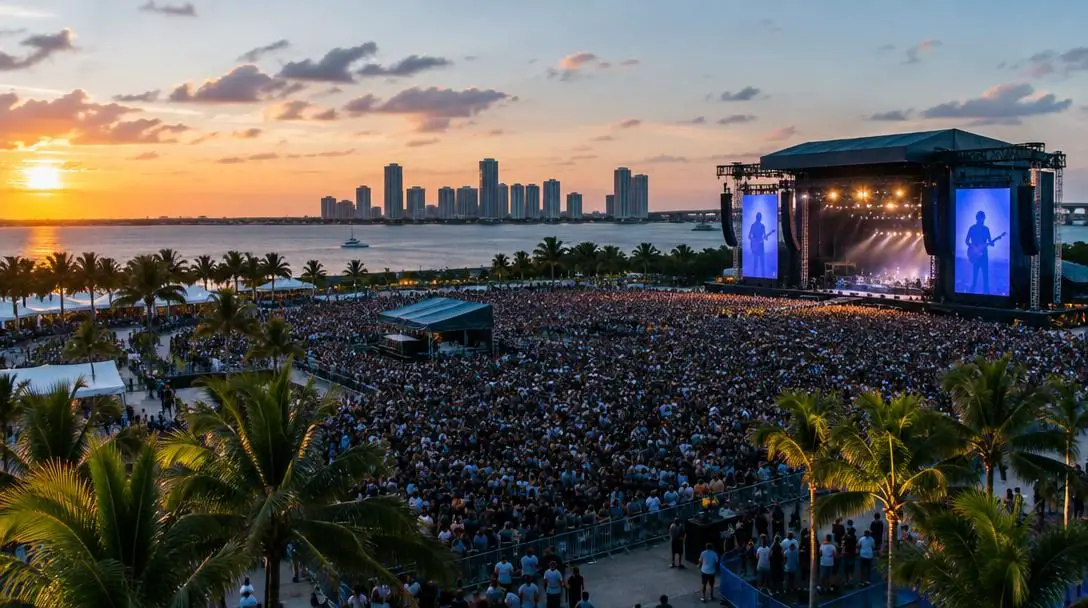
Florida presents unique challenges for massive outdoor gatherings due to its notoriously unpredictable weather patterns, intense heat, and sudden tropical downpours. Despite these meteorological hurdles, world-renowned musical acts and ambitious festival promoters have consistently turned to the Sunshine State, wagering that its vast spaces and passionate music fans would produce historic turnouts.
Over the decades, those wagers have yielded legendary milestones in live music history. From pioneering 1960s psychedelic gatherings at horse racing tracks to record-shattering modern stadium stops, five historic concerts and multi-day music festivals stand above the rest as Florida's largest audience draws.
Key takeaways
- Ultra Music Festival holds the state record for multi-day festival attendance, drawing 170,000 electronic dance music fans to downtown Miami.
- Garth Brooks established single-stadium crowd records across two Florida cities, drawing 75,500 fans in Gainesville and over 70,000 in Orlando.
- The 1968 Miami Pop Festival demonstrated the massive drawing power of rock and psychedelic music when its winter edition surged past 100,000 attendees.
- Led Zeppelin set an all-time attendance high of 57,000 fans at Tampa Stadium in 1973 before weather disrupted their 70,000-person return in 1977.
- Stage geometry and production design heavily dictate total stadium ticket capacity, explaining why identical venues hold different record totals for different acts.
At a glance: Florida's historic concert benchmarks
| Event or Headliner | Venue Location | Peak Attendance | Key Milestone or Year |
|---|---|---|---|
| Ultra Music Festival | Bayfront Park, Miami | 170,000 | Grew from 10,000 in 1999 to 170,000 at Bayfront Park |
| Miami Pop Festival | Gulfstream Park, Hallandale | 100,000+ | Second 1968 gathering featured over two dozen bands |
| Garth Brooks | Ben Hill Griffin Stadium, Gainesville | 75,500 | Record-setting sold-out university stadium performance |
| Led Zeppelin | Tampa Stadium, Tampa | 70,000 | Set 1973 single-venue record (57,000) and returned in 1977 (70,000) |
| Bad Bunny | Camping World Stadium, Orlando | 65,000 | 2022 World's Hottest Tour kickoff with 100% capacity sellout |
The 5 largest concerts and festivals in Florida history
Florida's biggest musical milestones range from genre-defining weekend festivals to high-energy stadium tours. Each of these five landmark events pushed venue infrastructure to its absolute limit.
Ultra Music Festival
- Founders: Russell Faibisch and Alex Omes
- First event: 1999 on Miami Beach (10,000 attendees)
- Peak attendance: 170,000 attendees
- Primary venue: Bayfront Park, Miami
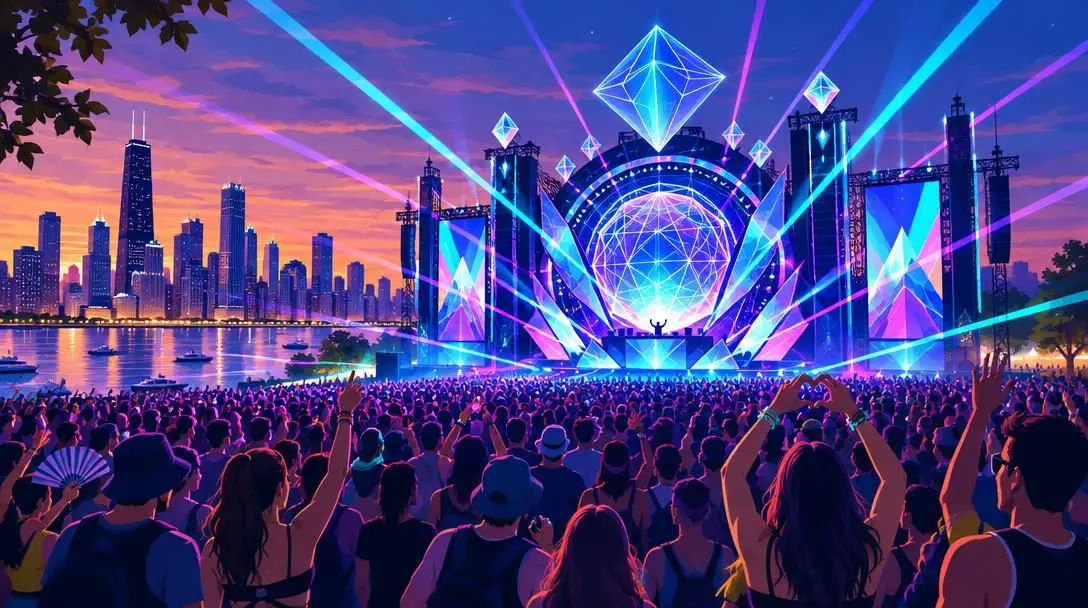
In the late 1990s, promoters Russell Faibisch and Alex Omes conceived a focused electronic dance music gathering in the Miami area. At the time, EDM remained a niche subculture far removed from modern mainstream radio dominance. The inaugural Ultra Music Festival debuted on Miami Beach in 1999, welcoming an estimated crowd of just 10,000 listeners.
As electronic music surged in global popularity, the festival relocated to downtown Miami's Bayfront Park, where its audience nearly quintupled over a five-year residency. Expanding further to handle unprecedented demand, the event shifted to Bicentennial Park, surpassing the 100,000-attendee threshold for the first time in 2011. Following its return to a modernized Bayfront Park configuration, Ultra reached a record-shattering 170,000 attendees across its weekend run, solidifying its rank as the premier electronic music gathering in Florida history.
Miami Pop Festival
- Venue: Gulfstream Park
- Original run: May 18–19, 1968 (25,000 attendees)
- Peak attendance: Over 100,000 attendees
- Notable performers: Chuck Berry, Jimi Hendrix Experience, Fleetwood Mac
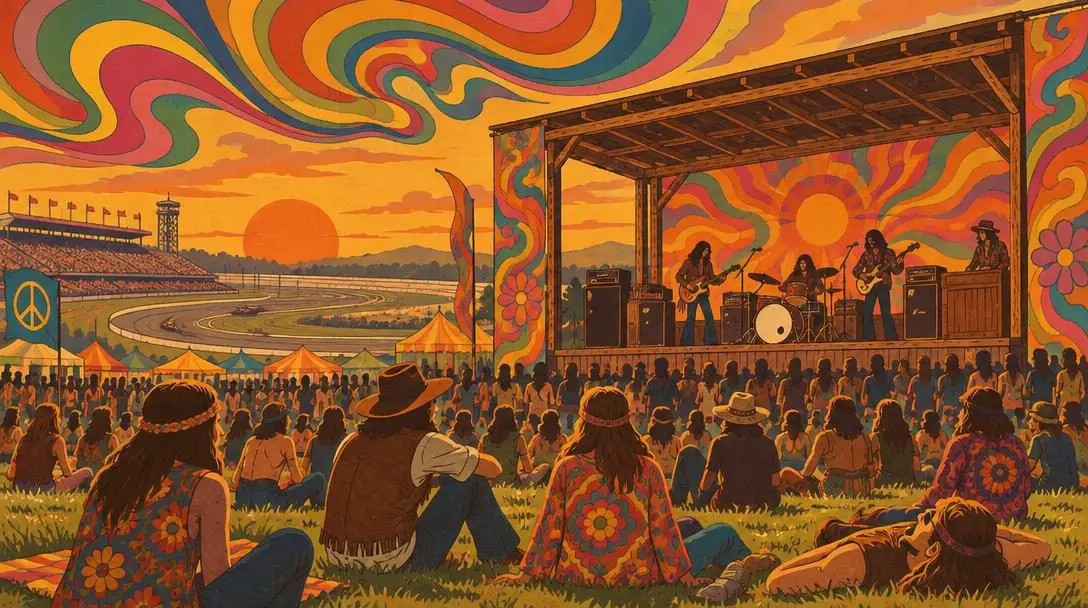
The closing years of the 1960s saw psychedelic rock capture the cultural zeitgeist, and South Florida served as an early testing ground for mass outdoor rock festivals. In May 1968, the first Miami Pop Festival assembled at Gulfstream Park, drawing 25,000 patrons behind headlining sets from the Jimi Hendrix Experience and rock pioneer Chuck Berry.
The festival's second edition, staged in late December of the same year at the same horse racing venue, expanded on an unprecedented scale. More than 100,000 people flooded Gulfstream Park to witness an ambitious bill that brought Chuck Berry back alongside roughly two dozen additional acts, including Fleetwood Mac, Marvin Gaye, Three Dog Night, and the Grateful Dead. This massive gathering demonstrated that Florida possessed the appetite and geographical capacity for mega-festivals.
Garth Brooks
- Venues: Ben Hill Griffin Stadium and Camping World Stadium
- Gainesville attendance: 75,500 attendees
- Orlando attendance: Over 70,000 attendees
- Touring era: 1990s to present stadium tours
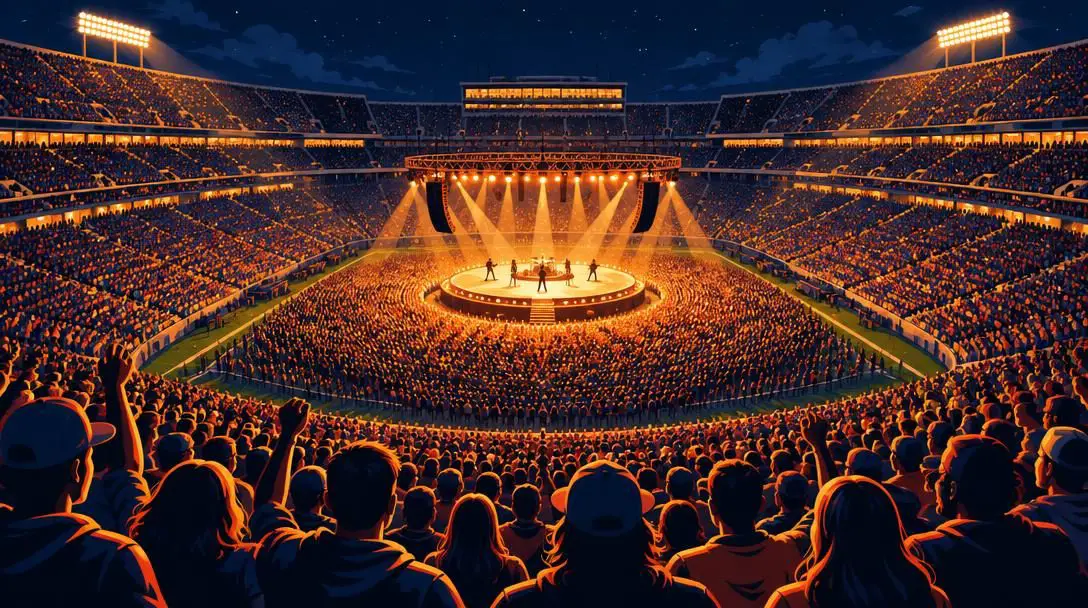
Country music icon Garth Brooks has demonstrated singular box-office power across his decades-long career, routinely selling out collegiate and professional football stadiums nationwide since the 1990s. In Florida, Brooks established attendance benchmarks across two different major sports facilities.
At Orlando's Camping World Stadium, more than 70,000 fans gathered to sing along to Brooks's catalog of hits, prompting the performer to praise the crowd's energy via social media. He pushed the record higher in Gainesville at Ben Hill Griffin Stadium—the revered home of the University of Florida Gators football team—where he packed 75,500 ticket holders into a completely sold-out facility, creating one of the largest single-ticketed music events ever documented in the state.
Led Zeppelin
- Venue: Tampa Stadium ("The Big Sombrero")
- 1973 attendance: 57,000 attendees
- 1977 attendance: 70,000 attendees
- Venue status: Demolished in 1999
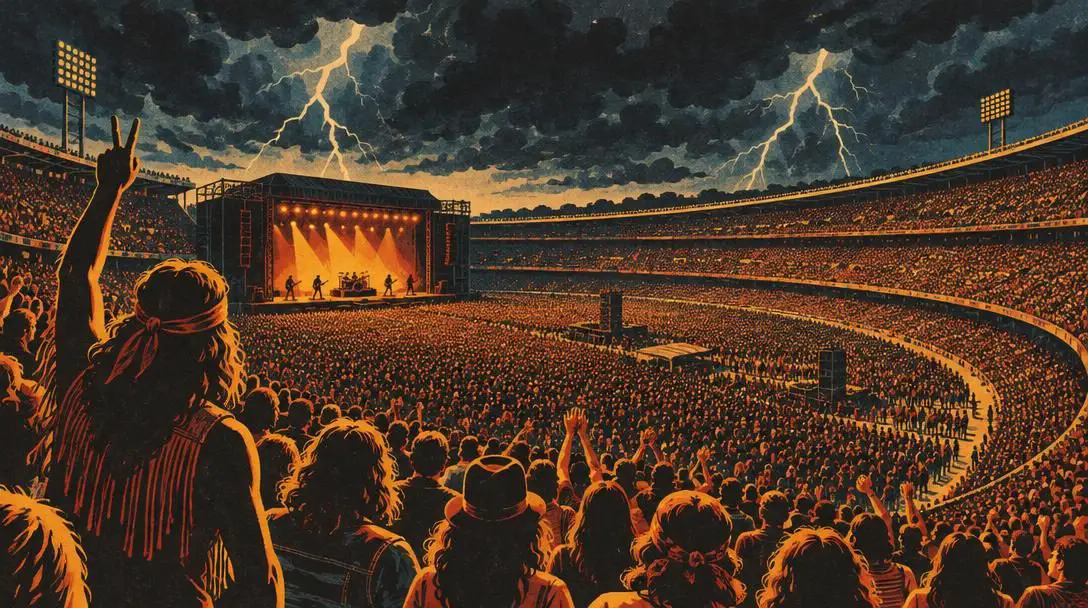
Before Raymond James Stadium was constructed with its iconic pirate ship, the NFL's Tampa Bay Buccaneers played at Tampa Stadium. Affectionately nicknamed the Big Sombrero due to its exterior curvature, the structure became a celebrated rock destination before its demolition in 1999. In 1973, English rock legends Led Zeppelin drew 57,000 fans to the stadium, setting a national benchmark as no other musical act at the time had drawn an audience of that scale to a single facility.
The quartet returned to Tampa Stadium four years later in 1977, drawing an even larger crowd of 70,000 spectators. The historic evening took a dramatic turn when violent weather forced organizers to cut the performance short after just a few songs. The abrupt cancellation triggered a riot among frustrated concertgoers, leaving a chaotic mark on the legendary stadium's concert lore.
Bad Bunny
- Venue: Camping World Stadium, Orlando
- Tour: World's Hottest Tour (2022)
- Total attendance: 65,000 attendees
- Connection to Orlando: WWE training background
Global recording artist Bad Bunny selected Camping World Stadium in Orlando as the launch point for his 2022 World's Hottest Tour. His custom stage construction utilized an end-stage stadium setup, capping the total possible ticket sales below Garth Brooks's 360-degree configuration. Despite the smaller seating footprint, Bad Bunny completely sold out the venue, filling all 65,000 available seats.
The decision to kick off the tour in Orlando was rooted in personal history. Bad Bunny spent months living in the area while preparing for his high-profile celebrity wrestling appearance at WWE's WrestleMania 37, which was hosted down Interstate 4 in Tampa. Because WWE operates its primary Performance Center in Orlando, the artist developed deep ties to Central Florida, making the city a natural choice for his record-breaking tour debut.
Florida's historic concerts reveal how raw open fields and classic football bowls transformed into modern mega-venues capable of hosting tens of thousands of fans.
Evolution of Florida's live music infrastructure
The history of massive gatherings in Florida closely mirrors both the explosive growth of the state's population and the technical evolution of the global touring industry. In 1968, holding an outdoor event for tens of thousands of music enthusiasts was an improvised, experimental undertaking. The Miami Pop Festival utilized the wide turf of Gulfstream Park because purpose-built concert amphitheatres did not exist on that scale.
During the 1970s, sports arenas and municipal stadiums began stepping into the spotlight as premier entertainment hubs. Facilities like Tampa Stadium showed how municipal football fields could host massive commercial rock tours. When older structures like the Big Sombrero were phased out and demolished in the late 1990s, modern facilities like Camping World Stadium and Ben Hill Griffin Stadium filled the void, providing the structural rigging, expanded egress, and crowd management needed for arena-sized sound systems.
By the turn of the 21st century, live music diversified into specialized downtown takeovers and international pop productions. Promoters transformed municipal green spaces like Bayfront Park into hyper-dense musical hubs, proving that Florida could host destination events that attract visitors from around the world.
Understanding stadium staging and festival ground capacities
Examining venue attendance records requires understanding the architectural mechanics behind live event capacities. A stadium's listed capacity for football games rarely matches its capacity for live concerts, which shift based on stage design, sightlines, and fire codes.
- End-stage configurations: The traditional stadium format places the main performance platform at one end zone, facing the opposite stands. While this configuration eliminates every permanent seat situated behind the stage, it opens the playing field to thousands of floor seats or standing-room general admission tickets. Bad Bunny's 65,000-capacity sellout utilized this layout.
- In-the-round configurations: In contrast, performers such as Garth Brooks often build circular or rotating stages situated in the dead center of the field. This setup activates the full 360-degree bowl, opening almost every permanent grandstand seat while retaining room for floor access. This configuration enabled Brooks to pack 75,500 fans into Ben Hill Griffin Stadium.
- Festival grounds turnstiles: Urban parks like Bayfront Park operate on square-footage density rather than assigned seating. Total figures reflect cumulative attendance across multi-day passes and single-day admissions over the entire weekend.
Practical steps for attending mega-concerts in Florida
Attending an event packed with 60,000 to over 100,000 fellow fans in Florida requires strategic planning to avoid logistical bottlenecks and health issues.
- Track the hourly weather forecast: Florida's subtropical climate is prone to sudden lightning strikes and torrential rain. Monitor forecast models closely on the day of the event to anticipate weather-related gate delays or stage holds.
- Secure transit and parking early: Traffic funnels into single-access corridors near Camping World Stadium, Ben Hill Griffin Stadium, and downtown Miami. Reserve official parking vouchers in advance or identify park-and-ride shuttle options prior to departing.
- Plan for hydration and severe heat: Prolonged exposure to high humidity drains physical endurance quickly. Review venue rules regarding factory-sealed water bottles or empty refillable containers, and locate water refill stations immediately upon entering.
- Review seat sightlines and layout: Verify whether your ticket has an obstructed view due to stage scaffolding, audio delay towers, or lighting rigs before purchasing.
- Designate an offline meeting point: Cellular network towers frequently become saturated when tens of thousands of fans transmit data simultaneously. Agree upon a visible, stationary landmark inside the facility where your group will gather if separated.
Common mistakes to avoid at large Florida venues
Navigating massive venues can quickly become frustrating if you fail to account for standard stadium protocols. Watch out for these widespread concertgoer errors:
- Arriving right before showtime: Processing 70,000 fans through metal detectors and electronic ticket turnstiles causes massive congestion. Arriving under an hour before the headliner risks missing the opening songs.
- Violating clear bag regulations: Nearly all major sports stadiums, including Ben Hill Griffin Stadium and Camping World Stadium, enforce strict clear-bag mandates. Bringing non-compliant bags forces you to return to your vehicle or forfeit your items.
- Forgetting rain ponchos: Umbrellas are banned inside most major stadiums and open-air festival grounds. Pack compact, disposable plastic ponchos inside your clear bag to stay dry during surprise downpours.
- Counting on immediate rideshare pickups: When an event ends, thousands of fans order rideshares simultaneously, triggering extreme surge pricing and multi-hour delays. Walk toward designated shuttle zones or wait out the surge in safe public spaces.
What to consider for future shows
As live entertainment touring continues to break production records, Florida venues continue to modify their operations to match artist ambitions.
Stadium facilities throughout Florida frequently upgrade their infrastructure, integrating modern cashless points of sale, digital ticketing gates, and expanded concourses to handle record crowds smoothly. At the same time, urban multi-day festivals must continually balance community noise ordinances with attendee demand, leading to occasional location shifts or site reconfigurations. Keeping these dynamics in mind helps music fans navigate Florida's largest musical spectacles safely and comfortably.
Frequently asked questions
What is the single highest-attended concert in Florida history?
For a multi-day festival, Ultra Music Festival holds the benchmark with 170,000 attendees at Bayfront Park in Miami. For a single-artist ticketed stadium show, Garth Brooks holds the record with 75,500 fans at Ben Hill Griffin Stadium in Gainesville.
Why was Led Zeppelin's 1977 Tampa concert cut short?
Led Zeppelin's return performance to Tampa Stadium in 1977 was cut short due to sudden inclement weather. After the band left the stage, the event was officially canceled, which sparked a riot among the 70,000 concertgoers in attendance.
Why did Bad Bunny have a lower attendance than Garth Brooks at Camping World Stadium?
The difference in attendance came down to stage layout. Bad Bunny used a standard end-stage production that blocked out all seating behind the stage, capping available capacity at 65,000. In contrast, Garth Brooks used an open configuration that activated seats across the entire stadium bowl, drawing over 70,000 fans.
Who performed at the historic 1968 Miami Pop Festivals?
The May 1968 edition featured the Jimi Hendrix Experience and Chuck Berry. The larger December 1968 event brought back Chuck Berry alongside roughly two dozen acts, including Fleetwood Mac, Marvin Gaye, Three Dog Night, and the Grateful Dead.
What was Tampa Stadium's nickname, and what happened to the venue?
Tampa Stadium was popularly known as "The Big Sombrero" due to its distinctive curved exterior shape. The venue hosted major concerts and served as the home field for the NFL's Tampa Bay Buccaneers before being demolished in 1999.
The bottom line
Florida's live music history demonstrates that neither unpredictable weather nor complex logistics can dampen the enthusiasm of music fans. From the early grassroots gathering of 25,000 rock fans at Gulfstream Park in 1968 to modern spectacles drawing over 75,000 spectators to college football bowls, the state has continually raised the bar for live event production. As touring productions grow larger and festival experiences expand, Florida's premier stadiums and coastal parks will continue to set historical attendance milestones for decades to come.