5 Brain-Teasing Puzzles to Challenge Your Mind Today
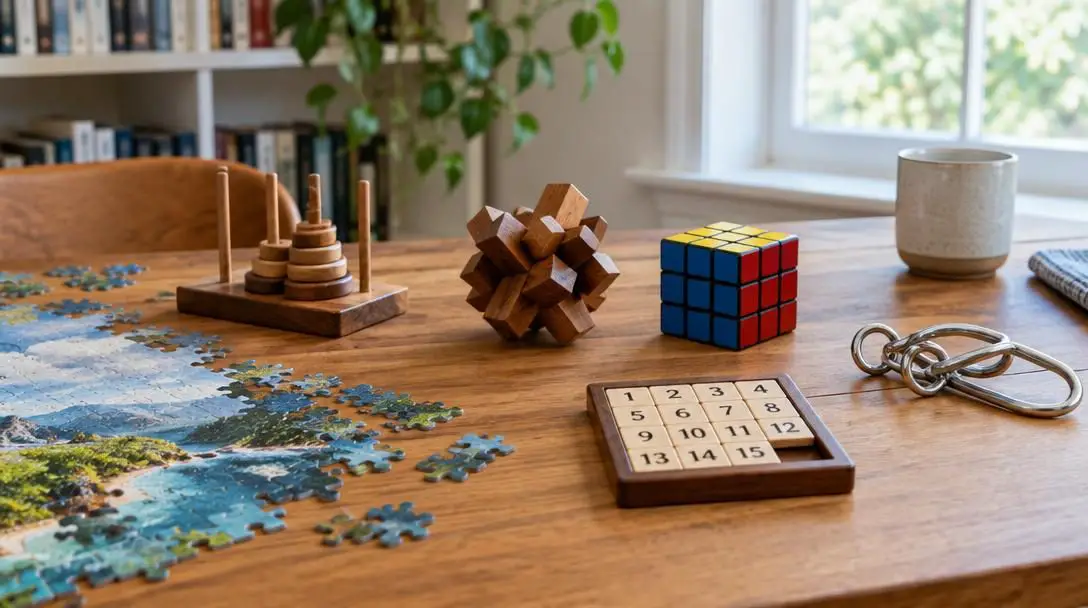
Do you feel like your brain needs a good workout? One of the best ways to challenge your mind and improve cognitive function is by solving puzzles. Puzzles come in different forms and difficulty levels, and they are an engaging way to sharpen your critical thinking and problem-solving skills. Whether you are dealing with numerical deductions, language riddles, visual assemblies, three-dimensional spatial mechanics, or coded ciphers, working through these mental challenges forces your mind to adapt, analyze patterns, and think systematically.
Engaging with structured brain teasers provides an active form of mental recreation. Rather than passively absorbing information, the solver must manipulate variables, identify constraints, and test hypotheses. Across newspapers, standalone books, physical competitions, and digital platforms, puzzles have evolved into staples of daily leisure. Exploring classic formats—such as Sudoku, crosswords, jigsaw puzzles, the Rubik's Cube, and cryptograms—reveals how each distinct format tests analytical capabilities, expands vocabulary, or develops spatial reasoning.
Key takeaways
- Puzzles transform passive mental downtime into active cognitive training by requiring solvers to test hypotheses against strict rules.
- Sudoku, crosswords, jigsaws, Rubik's Cubes, and cryptograms each target distinct mental domains, ranging from vocabulary to spatial deduction.
- Methodical solving routines, such as scanning for anchors or grouping visual borders, prevent common errors like tunnel vision and guessing.
- Pencil marks, layer algorithms, and frequency analysis provide reliable frameworks to handle complex constraints without mental overload.
Puzzles at a glance
To choose the right puzzle for your mental workout, it helps to understand the underlying mechanics and mental demands of each format. Each puzzle relies on a specific set of rules and constraints to challenge different cognitive domains.
| Puzzle | Primary Format | Core Mechanism | Key Cognitive Skill |
|---|---|---|---|
| Sudoku | 9x9 Numerical Grid | Deductive placement of digits 1 through 9 | Logic and concentration |
| Crossword | Intersecting Word Grid | Answering clues across and down | Vocabulary and language deduction |
| Jigsaw Puzzle | Interlocking 2D Pieces | Reassembling an image using tabs and blanks | Spatial reasoning and visual perception |
| Rubik's Cube | 3D Rotating Mechanism | Aligning solid colors across six faces | Spatial manipulation and algorithmic memory |
| Cryptogram | Coded Text Passage | Decoding monoalphabetic substitution ciphers | Pattern analysis and structural logic |
Five classic puzzles to challenge your mind
While their formats vary widely, the underlying appeal of these five classic puzzles remains the satisfaction of resolving disorder into order. Number puzzles, language challenges, and physical manipulatives have long been integrated into daily human life as pastimes, educational tools, and tests of mental agility.
Sudoku
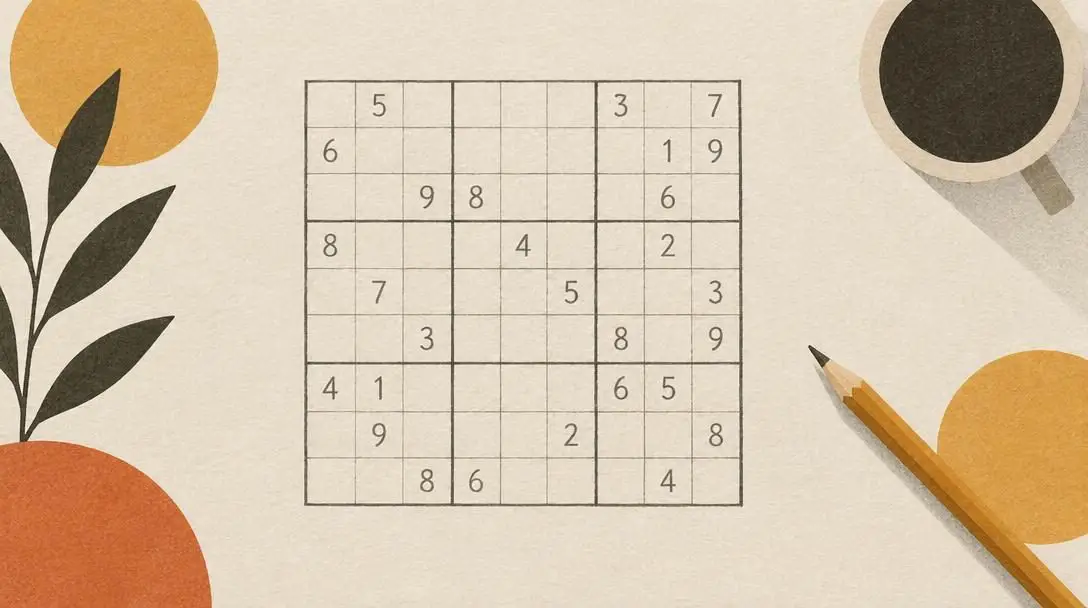
- Format: 9x9 grid divided into 3x3 subgrids
- Core Rule: Digits 1 through 9 must appear once per row, column, and box
- Skill Tested: Deductive logic and working memory
Sudoku is a logic-based number puzzle that involves filling a 9x9 grid with numbers so that each row, column, and 3x3 box contains all the digits from 1 to 9. The puzzle starts with some numbers already placed in the grid, and the goal is to fill in the remaining squares. Although it uses numerals, it requires no mathematical calculations or arithmetic. Instead, the solver uses pure deductive reasoning to eliminate impossible values for each square until only the correct number remains. Sudoku puzzles range from easy to difficult, and they can be a great way to improve your concentration and memory.
Crosswords
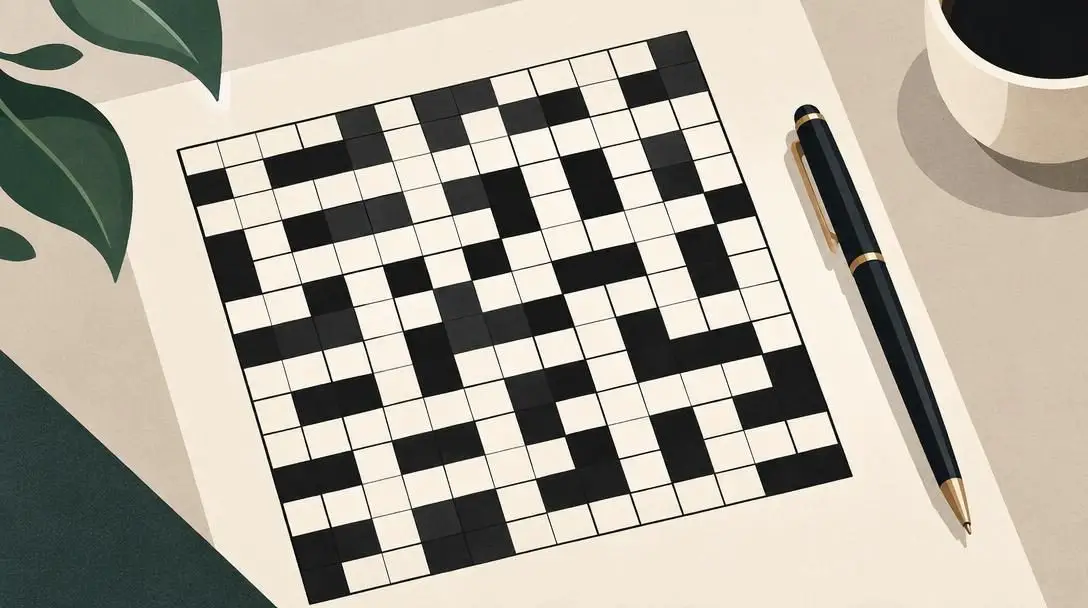
- Format: Grid of intersecting black and white squares
- Core Rule: Clue answers must intersect correctly across and down
- Skill Tested: Vocabulary retrieval and verbal reasoning
Crosswords are word puzzles that involve filling in a grid with words that intersect at certain letters. The clues for each word can be straightforward or cryptic, and the difficulty level can vary depending on the puzzle. The grid consists of black and white squares, where solvers place letters to form intersecting words oriented across and down. The intersection of words creates a supportive framework: solving one word provides confirmed letters for the intersecting words, helping you crack clues that initially seemed obscure. Crosswords are a great way to expand your vocabulary and improve your problem-solving skills.
Jigsaw puzzles
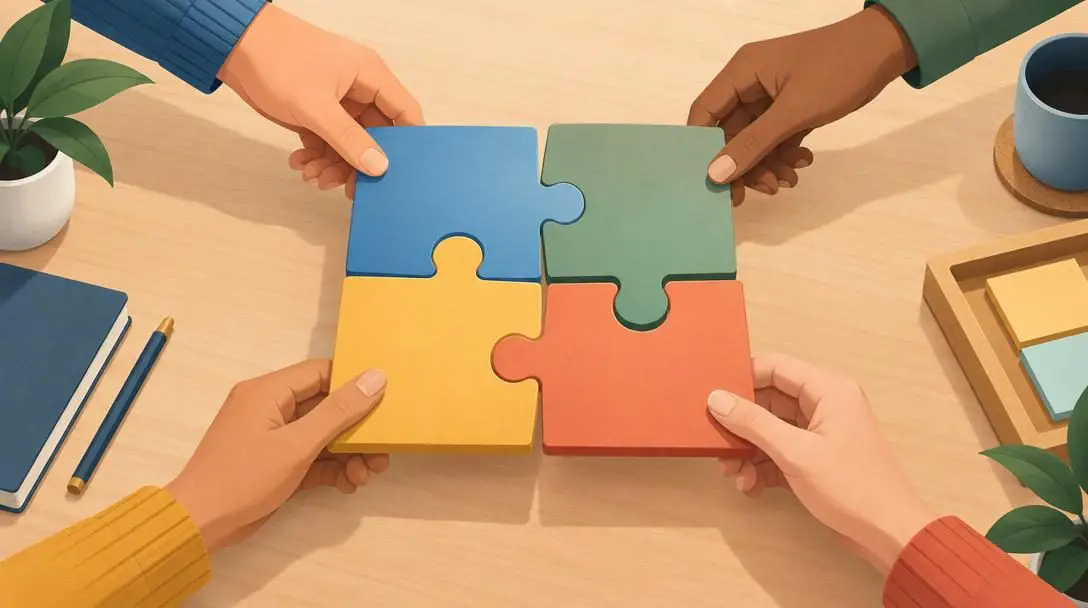
- Format: Fragmented image cut into interlocking segments
- Core Rule: Pieces must connect physically via tabs and blanks to recreate the picture
- Skill Tested: Visual perception and shape recognition
Jigsaw puzzles involve putting together a picture by fitting interlocking pieces together. The difficulty level of jigsaw puzzles can range from easy to challenging, and they can be a great way to improve your spatial reasoning and visual perception skills. A complete image is printed on a backing material and cut into numerous uniquely shaped pieces, typically with tabs and blanks that interlock. The solver must examine color transitions, lines, textures, and physical shapes to determine where each individual piece belongs relative to the whole picture.
The Rubik's Cube
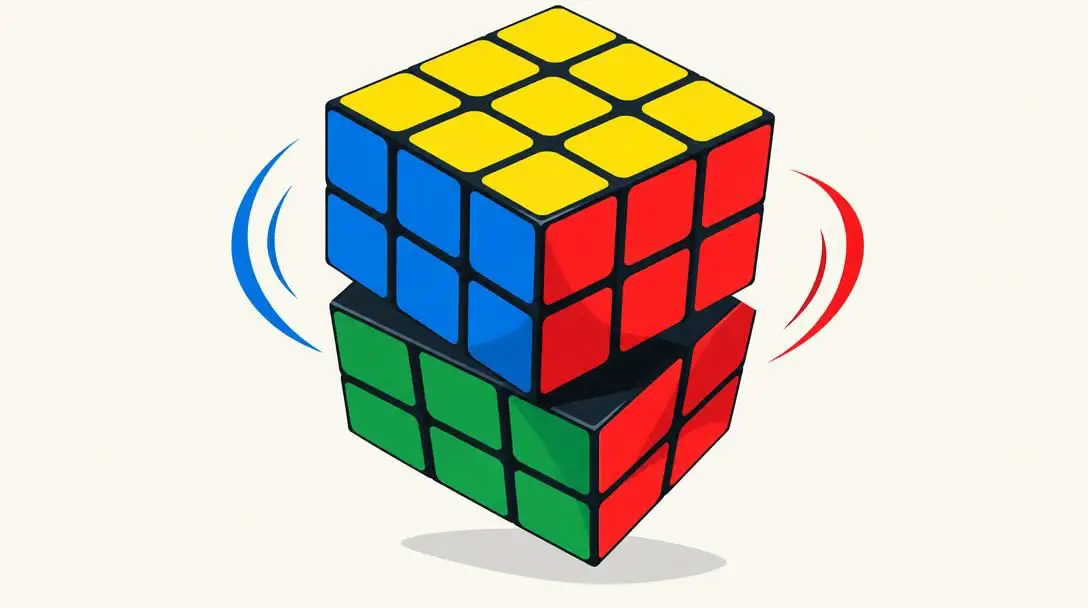
- Format: Three-dimensional geometric cube
- Core Rule: Rotate faces until each side displays a uniform color
- Skill Tested: 3D spatial reasoning and procedural execution
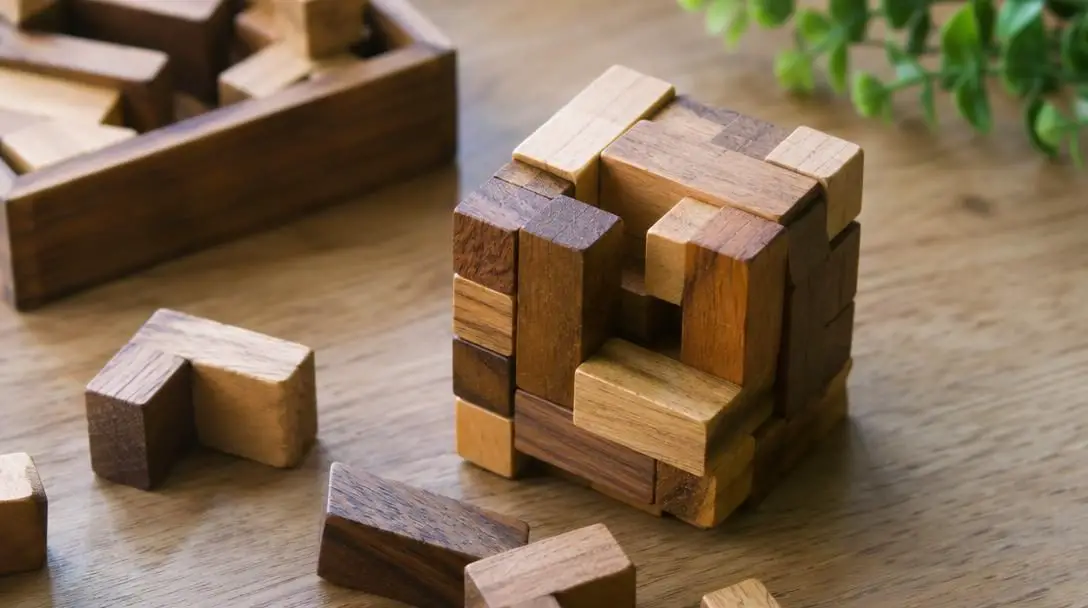
The Rubik's Cube is a 3D puzzle that involves rotating the cube's sides to align the colors on each face. The goal is to solve the cube so that each face has a single color. It consists of multiple smaller moving segments, including center pieces that define the color of each face, edge pieces with two colors, and corner pieces with three colors. Moving one side alters the alignment of multiple pieces across adjacent faces simultaneously. Rubik's Cube puzzles can be extremely challenging, but they are a great way to improve your problem-solving and spatial reasoning skills.
Cryptograms
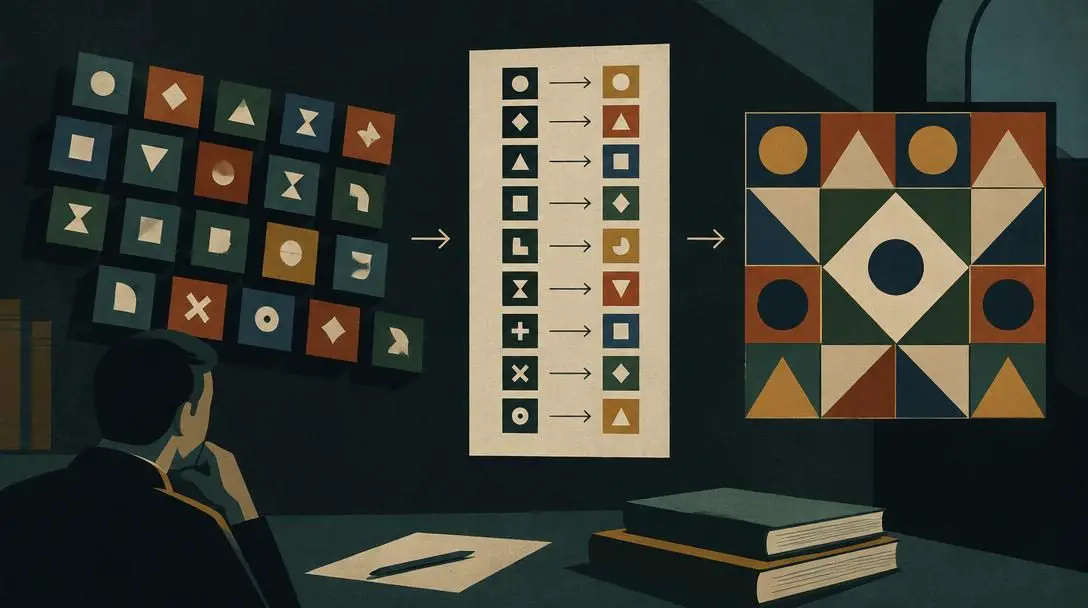
- Format: Encoded passage using substitution ciphers
- Core Rule: Each letter corresponds consistently to an alternate letter or symbol
- Skill Tested: Cryptanalysis, pattern recognition, and syntax deduction
Cryptograms are puzzles that involve decoding a message that has been encoded using a substitution cipher. In a substitution cipher, each letter in the original message is replaced by a different letter or symbol. The puzzle solver must use logic and deduction to figure out which letters have been replaced with which symbols. By analyzing single-letter words, common two-letter and three-letter word combinations, and the frequency of specific characters, solvers gradually unmask the underlying text. Cryptograms can be a great way to improve your analytical and logical reasoning skills.
Rather than passively absorbing information, the solver must manipulate variables, identify constraints, and test hypotheses.
Practical steps to approach each puzzle
Approaching a complex puzzle without a clear strategy can lead to early frustration. By breaking down the process into structured phases, you can systematically work through the obstacles presented by each format.
Sudoku solving strategy
- Scan the initial grid to identify rows, columns, or 3x3 boxes that already have a high concentration of given numbers.
- Focus on a single number from 1 to 9 and scan each row and column to identify where that digit cannot possibly go due to existing placements.
- Use pencil marks to lightly note potential candidate numbers inside empty cells when only two or three possibilities exist.
- Look for "naked singles," which are cells where only one possible number can fit after all other digits from 1 through 9 are accounted for in that row, column, and box.
- Re-evaluate the grid after every newly placed digit, as each confirmed number opens up new deductions across its intersecting row, column, and box.
Crossword solving strategy
- Read through the clue list to solve the most obvious and straightforward definitions first, establishing starting anchor letters across the grid.
- Use the crossing letters gained from your initial answers to confirm or guess neighboring words that intersect them.
- Pay attention to the grammatical tense, pluralization, or part of speech indicated by the clue, as the answer must match the exact grammatical form.
- If an answer does not seem to fit the space or the intersecting letters, temporarily leave it blank and work on a different section of the grid.
Jigsaw puzzle solving strategy
- Turn all puzzle pieces face-up on a flat, well-lit surface so that all colors and patterns are visible.
- Sort out all the edge pieces that feature a flat side and assemble the outer border of the puzzle first to establish its dimensions.
- Group the remaining internal pieces by distinct colors, strong textural patterns, or clear graphic lines shown on the reference picture.
- Assemble prominent, easily recognizable features within the image before working inward toward areas with subtle color gradations or uniform backgrounds.
Rubik's Cube solving strategy
- Examine the fixed center pieces to confirm the target color for each of the six faces of the cube.
- Solve the first layer systematically by building a cross of aligned edge pieces on one face, ensuring the secondary colors match the adjacent center pieces.
- Insert the matching corner pieces to complete the entire first layer correctly along with its surrounding color bands.
- Use specific rotational sequences to insert the middle-layer edge pieces without disrupting the completed first layer.
- Orient and permute the final layer pieces through structured algorithms until every face displays a single, uniform color.
Cryptogram solving strategy
- Scan the cipher for isolated single-letter words, which in English are almost always "A" or "I".
- Examine common short words of two or three letters, testing high-frequency candidates like "OF", "TO", "IN", "THE", and "AND".
- Check for repeated double-letter patterns within encoded words to test common doubled consonants or vowels.
- Substitute your deduced letters throughout the entire puzzle to see if partial words begin to suggest recognizable vocabulary.
- Adjust your assumptions if a substituted letter produces impossible consonant clusters or nonsensical spellings.
Common mistakes to avoid
Solvers often hit dead ends not because a puzzle is impossible, but because of common procedural errors. Being aware of these pitfalls can save time and keep your solving sessions productive.
- Guessing without evidence: In Sudoku and cryptograms, inserting a value without logical proof can create a cascade of incorrect deductions. By the time a contradiction appears, it is often very difficult to trace back to where the initial error occurred, forcing you to erase substantial progress or start over completely.
- Falling into tunnel vision: Solvers frequently get stuck staring at a single stubborn clue in a crossword, a single empty cell in Sudoku, or an incomplete patch of a jigsaw puzzle. Refusing to move on to other areas of the puzzle prevents you from gathering additional clues that would make the difficult section obvious later on.
- Forcing physical components: In physical puzzles like the Rubik's Cube and jigsaw assemblies, forcing pieces where they do not belong is a common hazard. Jigsaw pieces that appear similar may have slight millimeter variations in their tabs and blanks; jamming a piece into place can damage the puzzle and throw off the alignment of surrounding sections. Similarly, forcing the layers of a Rubik's Cube while the segments are misaligned can lock the mechanism.
- Neglecting external notations: Trying to keep multiple candidate numbers or decoded letters entirely in your head increases working memory strain. Using neat, light pencil notes ensures you do not overlook mutually exclusive constraints.
How to advance your puzzle practice
Once you are comfortable with the basic mechanics of these five puzzles, you can evaluate how to progress and keep your mind challenged over the long term. Increasing the difficulty prevents stagnation and ensures continuous cognitive benefits.
- Sudoku progressions: Move from standard puzzles with many starting numbers to advanced grids that require complex elimination patterns, where naked singles are rare and candidate chains are required.
- Crossword transitions: Graduate from straightforward definitional clues to cryptic crosswords that incorporate anagrams, wordplay, and hidden meanings embedded directly inside the clue phrasing.
- Jigsaw expansions: Challenge your visual sorting by increasing the total piece count or choosing designs with large monochromatic sections, repeating patterns, or subtle color gradations.
- Timed sessions and speedcubing: Experiment with timed sessions or competitive solving if you want to test your speed and pattern recognition under pressure. Speedcubing, for instance, focuses on optimizing movement efficiency and recognizing Rubik's Cube algorithms in fractions of a second.
Frequently asked questions
Do I need advanced mathematical skills to solve Sudoku?
No. While Sudoku uses the numbers 1 through 9, it involves no math, arithmetic, or calculation. The numbers function purely as distinct visual symbols, and the entire puzzle relies on deductive logic and elimination.
What is the most effective starting move for solving a cryptogram?
The most effective starting step is scanning the text for isolated single-letter words, which in standard English text are almost always "A" or "I". From there, analyze high-frequency two-letter and three-letter words like "OF", "TO", "IN", "THE", and "AND".
How do intersecting answers help solve difficult crossword clues?
Every crossword entry shares letters with perpendicular words. When an across clue is difficult or obscure, solving the down clues that intersect it reveals confirmed letters within the difficult word, narrowing down the potential answers.
Why should you assemble the border of a jigsaw puzzle first?
Border pieces have at least one straight edge, making them easy to identify and separate from the rest of the pile. Assembling the border first creates a defined physical boundary and sets the exact scale and dimensions for the internal pieces.
How does the Rubik's Cube challenge spatial reasoning differently than 2D puzzles?
Unlike flat puzzles where an action affects only a local area, rotating a single face of a Rubik's Cube simultaneously moves pieces across adjacent faces in three dimensions. Solvers must anticipate how a movement alters pieces out of their immediate line of sight.
The bottom line
Puzzles are a fun and effective way to challenge your mind and improve your cognitive function. Whether you prefer number puzzles like Sudoku, word puzzles like crosswords, or spatial puzzles like jigsaws and the Rubik's Cube, there is a mental workout suited to your personal interests and strengths. By employing systematic solving strategies, avoiding guesswork, and progressively increasing the difficulty, you can sharpen your memory, boost your problem-solving abilities, and enjoy the timeless satisfaction of bringing order to chaos.