
5 Common Package Tracking Issues (And How to Fix Them)

Package tracking has become an indispensable element of modern commerce, offering recipients round-the-clock visibility into the movement of their purchases. When an order leaves a warehouse, real-time tracking provides peace of mind, helps households coordinate schedules, and ensures someone is on hand to retrieve high-value goods safely. Yet as convenient as this digital window appears, transit networks are vast, intricate, and susceptible to physical and systemic disruptions.
Every shipment passes through an elaborate logistics web of automated sorting hubs, regional distribution centers, transport vehicles, and local couriers. When mechanical failures, human error, or data disconnects interrupt that chain, tracking dashboards can suddenly display confusing discrepancies, stall indefinitely, or post false delivery confirmations. Learning how tracking networks operate behind the scenes makes it easier to diagnose these setbacks and resolve them quickly.
Key takeaways
- Package tracking relies on continuous barcode scans that sync physical handling checkpoints with public-facing databases.
- Stalled or inaccurate updates frequently stem from severe weather disruptions, customs inspections, human sorting errors, or legacy carrier software.
- A premature "delivered" notification often points to early driver scans, neighborly misdeliveries, or post-drop theft rather than an untracked loss.
- Carrier customer service agents possess access to deeper internal logs that provide far more operational context than public web portals.
- When an item is permanently missing, contacting the seller or merchant is essential, as they hold the primary commercial shipping account.
How the Package Tracking Ecosystem Works Behind the Scenes
To understand why tracking information sometimes breaks down, it helps to look at the mechanics of transit monitoring. The entire framework depends on a continuous synchronization loop between physical handling, centralized databases, and the customer portal you check on a browser or phone.
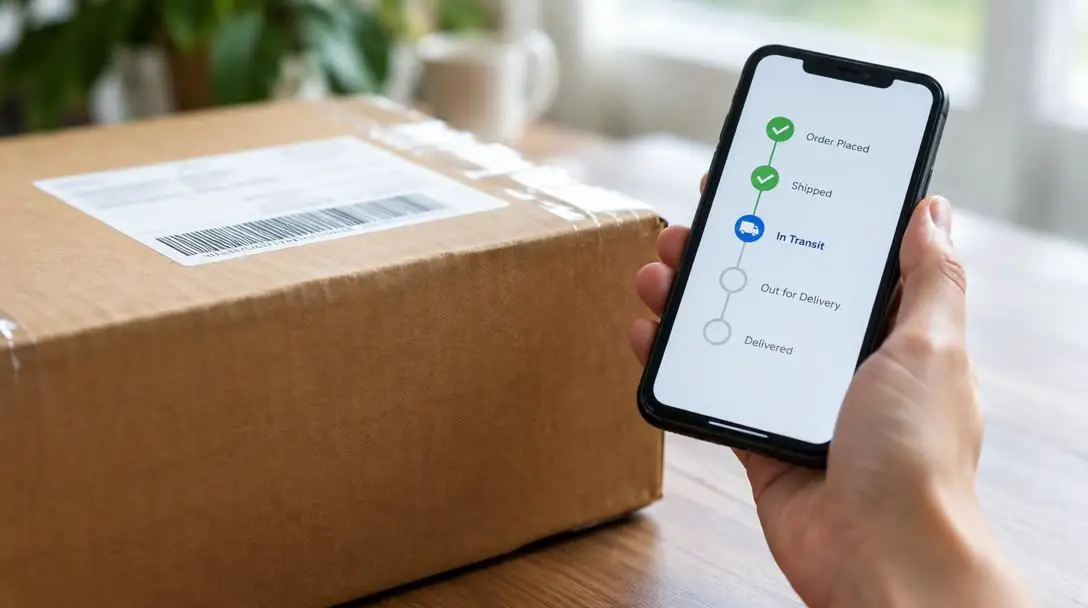
The sequence begins when a seller or warehouse fulfills an order and generates a shipping label. That label carries a unique tracking number linked to a barcode or numeric identifier. This code serves as the package's digital fingerprint for the duration of its trip. From that moment onward, the item must be physically or optically scanned at multiple transit milestones:
- Arrival and intake at an initial sorting or distribution facility
- Sorting and loading into a long-haul transport vehicle or air cargo container
- Intermediary transfers through regional hubs or customs inspection checkpoints
- Unloading and intake at a local destination depot
- Assignment to a local delivery route and final placement on an outreach vehicle
- Final scan at the customer's doorstep or mail depository
Each milestone scan sends operational telemetry directly into the carrier's core system. Public tracking tools query these databases to present a chronological timeline. When hardware malfunctions, barcodes become unreadable, or communication between regional servers experiences lag, a divergence opens up between where your package actually sits and what your screen reports.
5 Common Package Tracking Issues
Tracking anomalies generally stem from a handful of distinct logistical bottlenecks. Identifying which issue applies to your parcel is the first step toward correcting the problem.
| Tracking Issue | Primary Root Cause | Recommended Initial Action |
|---|---|---|
| Incorrect tracking information | Human data entry error or software synchronization glitch | Contact carrier support for internal log verification |
| Delayed tracking updates | Severe weather, customs clearance, or long transit intervals | Wait several days for transit to resume naturally |
| Lost packages | Conveyor belt separation, damaged label, or routing error | Request an official carrier network search |
| Delivered status without package | Premature driver scan, misdelivery, or porch theft | Check secondary entryways, then notify carrier and local depot |
| Outdated tracking technology | Legacy regional infrastructure unable to process batch data | Speak directly with a support agent using updated internal tools |
Incorrect Tracking Information
Few things are as baffling as checking a tracking portal and seeing an impossible routing history, an inaccurate scheduled arrival date, or an entry showing your shipment visiting an entirely incorrect state or municipality. Incorrect tracking information usually originates from human mistakes or software parsing errors. A hub worker might accidentally choose the wrong numeric status code on a handheld terminal, or a legacy database might misinterpret routing tags during a server handoff. In other cases, an inverted timeline appears when time stamps from differing time zones are collated out of sequence by web servers.
Delayed Updates
When you check a tracking dashboard day after day only to see an unchanging status message, you are encountering delayed tracking updates. This phenomenon does not necessarily mean your package is abandoned. It frequently occurs when shipments travel extended distances across rail or interstate corridors without intermediate sorting scans. Furthermore, external operational roadblocks—such as severe snowstorms, roadway closures, grounded flights, or strict international customs examinations—can halt movement entirely. Until the physical cargo reaches its next operational checkpoint and clears sorting, the user interface remains frozen in place.
A frozen tracking timeline does not mean a package is abandoned; it often means cargo is traveling between distant hubs where intermediate scans do not exist.
Lost Packages
While modern logistics networks boast remarkable delivery success rates, lost packages remain an unavoidable reality. A parcel is generally treated as lost when its expected delivery window has elapsed and all automated tracking activity has gone silent for an extended duration. Physical parcels can occasionally slide off automated conveyor belts into facility blind spots, or heavy cargo handling may tear or smudge the paper shipping label, leaving the package unidentifiable. Alternatively, a package might be loaded into the wrong container and misrouted to an entirely different regional network without an electronic trail.
Package Not Delivered Despite a "Delivered" Status
Among the most unsettling scenarios for any buyer is finding a "delivered" status on an online receipt while standing before an empty porch. Several distinct circumstances produce this discrepancy. A carrier's courier may mistakenly drop the parcel off at a neighboring home or an adjacent building with a similar street address. Alternatively, the package may have arrived safely only to be stolen by opportunists before you could retrieve it. Another frequent cause is a premature delivery scan: couriers under strict time constraints often scan a batch of parcels inside their delivery van while organizing upcoming stops, well before the item is physically carried to your entrance.
Outdated Tracking Technology
The shipping sector is undergoing rapid digital modernization, but technological capabilities remain uneven across carriers and geographic regions. Outdated tracking technology still lingers in smaller distribution hubs, subcontracted regional carrier fleets, and older transit depots. Legacy processing systems struggle to transmit real-time scans, suffer from frequent network disconnects, and choke under the massive data surges characteristic of holiday shopping peaks. When tracking feeds rely on obsolete architecture, public interfaces can show erratic, delayed, or missing timestamps even while the physical package moves forward on schedule.
Practical Steps to Resolve Tracking Issues
When tracking updates fail to match reality, a methodical troubleshooting approach will resolve the discrepancy much faster than waiting indefinitely.

- Verify the checkout shipping address: Review your order confirmation receipt to confirm that the recipient name, street address, suite or apartment number, and postal code were entered accurately without typographical errors.
- Conduct a thorough perimeter search: If an item is marked delivered, check side porches, back patios, garage aprons, building management desks, mailrooms, and neighboring doorways before assuming the parcel is missing.
- Allow a short buffer window for delayed updates: When a package is simply stalled between sorting checkpoints, wait two to three business days. Customs processing and weather disruptions usually resolve themselves without manual intervention once transit lines reopen.
- Contact carrier customer service for internal scans: Reach out directly to the carrier with your tracking identifier. Ask the representative to consult their internal operational database, which records raw scanner IDs, GPS coordinates, and routing notes unavailable to the public.
- Engage the local delivery annex or depot: For false delivery confirmations, call your municipal post office or local shipping terminal directly. Speaking with a local supervisor allows them to speak with the route driver to verify the drop-off location or locate packages left in delivery vehicles.
- File a formal missing mail search request: If a parcel remains completely untracked past its delivery window, have the carrier initiate a formal tracer investigation across their transit hubs.
Common Mistakes to Avoid When Tracking Shipments
Managing delayed or missing deliveries can be an aggravating experience, but hasty decisions can complicate recovery efforts. Steer clear of these frequent pitfalls:
- Panicking over a single missed update: Parcels traveling long distances across rail or interstate corridors can easily go twenty-four to forty-eight hours without a new physical scan. Filing urgent claims prematurely creates administrative confusion.
- Delaying reports on false delivery confirmations: While patience is appropriate for packages showing "in transit," waiting weeks to report a missing package marked "delivered" makes physical recovery by the local courier nearly impossible.
- Assuming the carrier is always at fault: Overlooking subtle typos in the checkout shipping form—such as a misplaced apartment number or an incorrect zip code—leads to misrouting that carriers cannot automatically detect.
- Failing to preserve transaction documentation: Deleting shipping confirmations, order emails, or customer support chat transcripts strips you of the evidence needed if an official claim or payment dispute becomes necessary.
- Disregarding alternative drop-off locations: Couriers facing inclement weather or security risks often place boxes behind planters, inside storm doors, or with building concierges without explicitly noting the substitution on the online portal.
Next Steps: Merchant Claims and Future Delivery Safeguards
When carrier-level troubleshooting fails to produce your item, you must escalate the issue to protect your financial interests. While carriers manage the physical transportation of goods, the original sender or merchant holds the contractual shipping account. Online retailers maintain established protocols for managing transit failures. Once an investigation establishes that a package is lost, damaged, or misdelivered, the merchant can file an insurance claim and issue an immediate replacement or full purchase refund.
Ensure you maintain detailed records throughout the resolution process. Keep a running log of the dates you checked tracking status, save digital screenshots of error messages or frozen timelines, and note the case numbers and names of support representatives you interact with. These records prove invaluable if you are forced to file a formal loss claim or request a transaction reversal through your banking provider.
If your delivery address suffers from recurring misdeliveries or package theft, take proactive steps for future orders. Most national carriers allow customers to redirect inbound freight to secure parcel lockers, regional retail partners, or neighborhood post offices where parcels are held behind a counter until you present identification.
Frequently asked questions
Why has my tracking status remained stuck on "in transit" for days?
A package status often pauses when cargo is moving across long-distance transit corridors, such as cross-country trucking or rail lines, where no physical checkpoints exist between hubs. Significant weather disruptions, customs inspections, and holiday volume backlogs can also temporarily stall processing without generating intermediate digital scans.
What should I do if my package is marked delivered, but it is not at my door?
First, inspect your entire property, including side doors, back patios, and building mailrooms, and check with nearby neighbors. Couriers occasionally scan packages inside their vehicles before walking them to your doorstep, so wait a few hours. If the parcel does not appear, contact the carrier and your local delivery depot immediately to check the driver's GPS scan logs.
Can customer service representatives see tracking details that I cannot see online?
Yes. Carrier customer service representatives have access to internal operational databases that record far more technical data than public-facing portals. These internal systems reveal specific facility scan locations, internal error codes, transport container assignments, and the exact GPS coordinates recorded during physical delivery scans.
Who is responsible for refunding a lost shipment: the merchant or the carrier?
The merchant or retailer is responsible for issuing your refund or replacement. Because the merchant holds the commercial shipping contract with the freight carrier, they must handle the carrier insurance claim. Once carrier investigation confirms the parcel is missing, contact the merchant directly to settle your order.
Why does my tracking history show an impossible or misspelled location?
Illogical tracking locations typically arise from human data entry errors at manual sorting stations, where an operator enters an incorrect facility code, or from system synchronization glitches between legacy hub software and public web servers. In rare instances, barcode damage causes optical scanners to misread the destination code entirely.
The Bottom Line
Modern package tracking offers remarkable visibility into the complex global movement of consumer goods, but it is not infallible. Systemic glitches, human sorting mistakes, severe weather interruptions, and courier misdeliveries can all cloud your package's digital paper trail. By understanding the scanning milestones behind your tracking screen, giving transit pauses a reasonable buffer, and acting swiftly when packages are marked delivered prematurely, you can cut through the confusion, protect your purchases, and ensure your deliveries reach their rightful destination.





