5 Countries With Best Urban Exploration Scenes
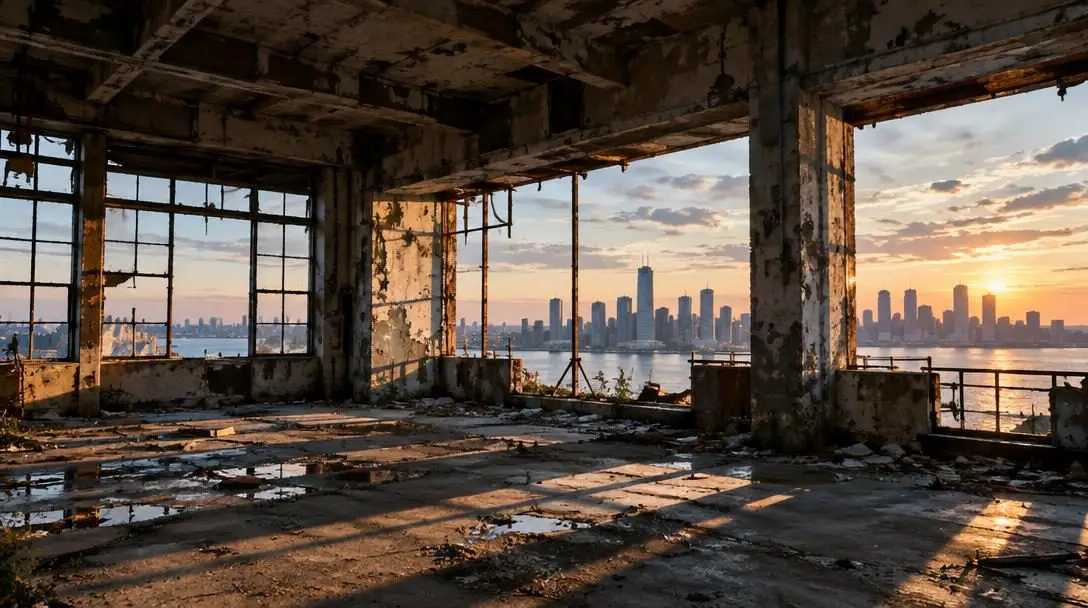
Urban exploration has evolved into one of the fastest-growing hobbies across the globe, drawing adventurous individuals into abandoned manmade structures that were left to rot over decades and centuries. Rather than seeking out conventional tourist landmarks, urban explorers set their sights on forgotten subterranean labyrinths, decommissioned industrial complexes, and bypassed transportation systems. Roaming through these physical ruins often produces an eerie yet deeply compelling atmosphere, offering tangible encounters with architectural eras and societal shifts that daily life has long since left behind.
Every country carries its own physical residue of the past, but certain nations stand out because of their unique industrial transformations, subterranean networks, and municipal preservation efforts. Whether an explorer is drawn to underground ossuaries beneath crowded capital cities, remote coastal mining ruins, or vast railway monuments undergoing careful municipal revitalization, navigating these environments requires deep historical awareness, thorough route planning, and strict adherence to local laws and personal safety protocols.
Key takeaways
- Urban exploration focuses on abandoned and repurposed structures, shifting attention away from standard tourist hubs toward bypassed history.
- Subterranean burial networks in France and Italy highlight historical municipal solutions to severe cemetery overcrowding.
- Industrial ruins like Japan's Hashima Island carry complex historical legacies, including wartime forced labor alongside coal mining heritage.
- Active and retired transit infrastructure in England and the United States demands careful monitoring of structural stability and operational hazards.
- Responsible exploration relies on legal compliance, proper safety gear, and complete respect for human remains and fragile architecture.
At a glance: premier urban exploration countries
| Country | Signature Location | Key Historical Driver | Primary Environment |
|---|---|---|---|
| France | Paris Catacombs | Cemetery overpopulation crisis | Subterranean stone tunnels and ossuaries |
| Japan | Hashima Island (Gunkanjima) | Industrial coal mining and wartime production | Island-based reinforced concrete ruins |
| England | London Underground | Rapid metropolitan transit expansion since 1863 | Subterranean rail tracks and station tunnels |
| Italy | Roman Catacombs | Cemetery land scarcity in antiquity | Multi-faith underground burial networks |
| United States | Michigan Central Station | Rail transit boom and subsequent automotive shifts | Art Deco rail terminal and architectural ruins |
Signature countries defining the global scene
The global urban exploration landscape is shaped by the physical remnants of industrial revolutions, rapid demographic booms, and changing urban planning priorities. While thousands of abandoned buildings dot the globe, five countries offer signature destinations that showcase distinct historical eras, architectural forms, and subterranean complexity.
France
- Signature site: Paris Catacombs
- Burial capacity: Remains of more than 6 million people
- Origins: Solution to cemetery overpopulation
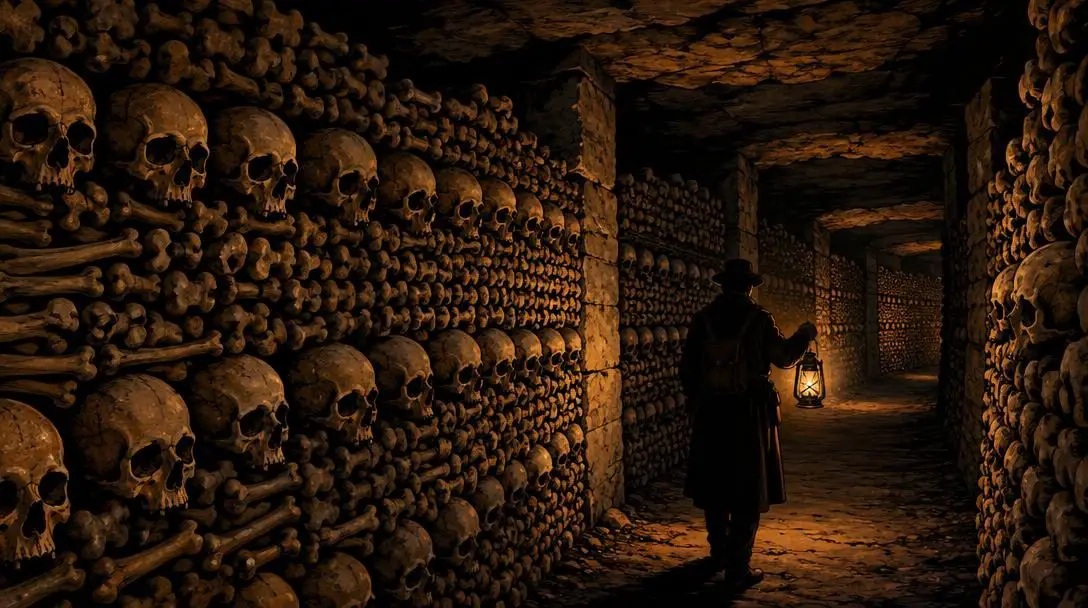
France boasts one of the most famous subterranean environments in existence: the infamous Catacombs found underneath Paris. This immense underground ossuary was developed directly in response to an overwhelming crisis in the historical city, where conventional municipal cemeteries reached catastrophic levels of overpopulation. To protect public health and manage limited municipal ground, city officials consolidated remains from overflowing burial sites into ancient limestone quarry networks.
Holding the remains of more than 6 million people, the stone corridors are stacked with arranged bones, creating an environment that feels both solemn and profoundly eerie. In modern times, the cemetery capacity crisis that created this system has long since passed, eliminating any need to line tunnels with newly interred human remains. However, the haunting underground passages remain available for those seeking to explore one of the most dramatic historical burial adaptations in the world.
Japan
- Signature site: Hashima Island (Gunkanjima)
- Geographic setting: Island off the coast of Kyūshū
- Primary industry: Undersea coal extraction
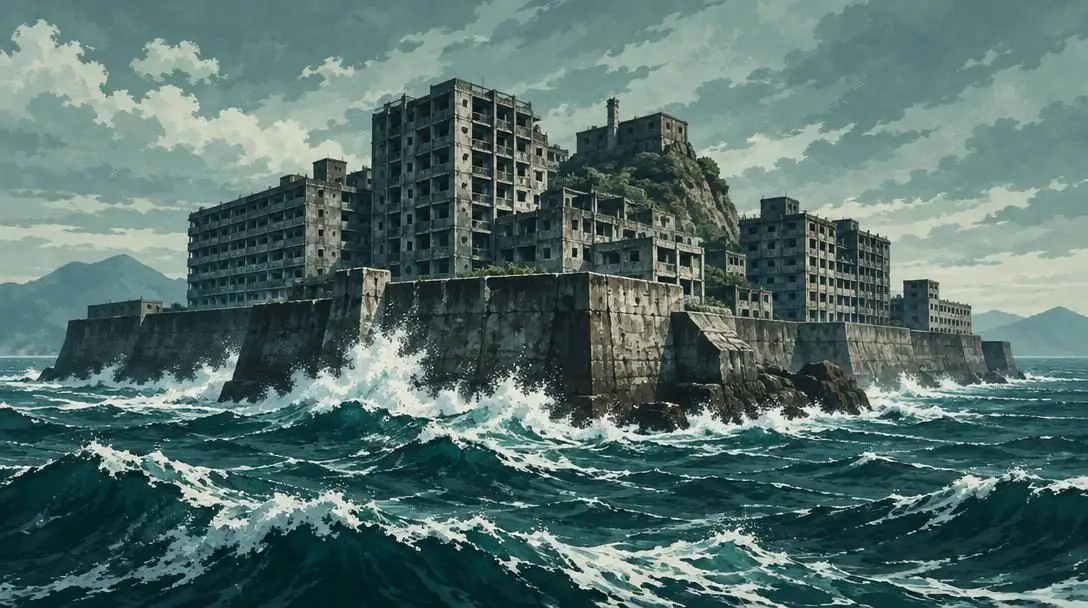
Located off the coast of Kyūshū—one of the five main islands that constitute Japan—Hashima Island, also called Gunkanjima, represents an urban explorer's dream. The small, densely packed island once operated as a vital industrial site, anchored by deep underground coal mines that fueled the nation's rapid modernization. As energy demands shifted and the coal deposits were depleted, operations ceased entirely, leaving massive sea walls and towering concrete apartment complexes completely abandoned to the elements.
The island's history is bittersweet and carries serious historical weight. Prior to and during World War II, Hashima Island was the site of cruel forced labor imposed upon people from China and the Koreas. Today, the previously abandoned tourist destination combines striking industrial architectural decay with a somber past, making it an extraordinary, thought-provoking destination for curious visitors who approach the site with historical awareness and respect.

England
- Signature site: London Underground (The Tube)
- Inaugural year: 1863
- Network scale: 250 miles of track serving over 1 million daily riders
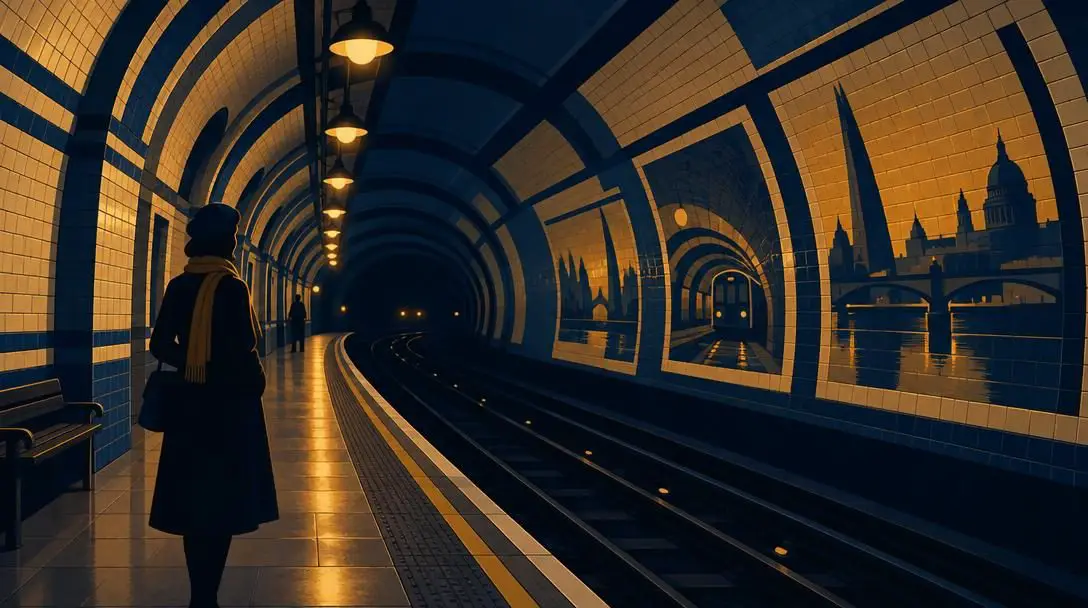
England provides remarkable access to historic transportation infrastructure nestled beneath its capital city. London stands as one of the busiest and most connected transit hubs in the world, and at the core of its movement is the London Underground, known colloquially as The Tube. First opened to passenger service in 1863, the system claims the title of the world's oldest underground railway and continues to serve over 1 million people on a daily basis across its expansive 250 miles of track.
The sheer scale of this transit network offers immense intrigue, featuring historic passages, hidden corners, and retired components that reflect more than a century and a half of engineering history. However, exploring any part of this massive infrastructure requires extreme caution and strict discipline. Portions of the Underground network are entirely off-limits due to severe safety risks, and visitors must stay completely clear of active tracks to avoid active transit operations.
Navigating physical ruins directs our attention toward places that were bypassed, forgotten, or repurposed over centuries of rapid human change.
Italy
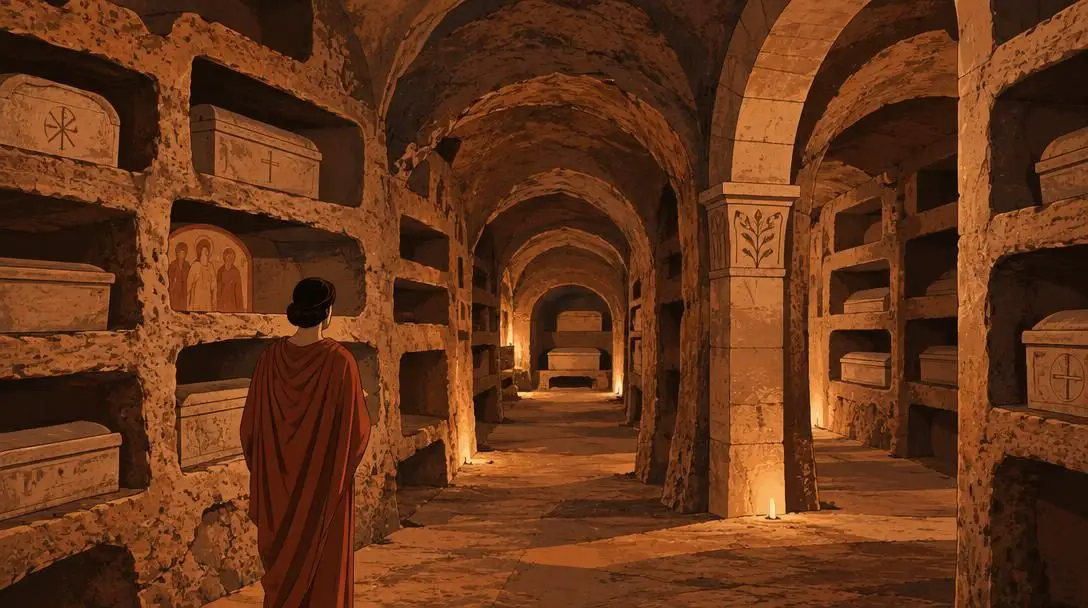
- Signature site: Roman Catacombs
- Burial makeup: Multi-faith and shared religious sections
- Historical function: Underground burial network due to land shortages
Italy offers another profound subterranean perspective through the extensive burial networks scattered beneath Rome. Much like the underground passages in Paris, the catacombs scattered throughout Rome were constructed when ancient city authorities recognized that available surface land was simply not vast enough to accommodate standard cemetery burials for the growing population. The soft volcanic rock surrounding the city allowed for the excavation of multi-tiered tunnels where thousands could be respectfully interred.
What distinguishes the Roman Catacombs is their unique religious complexity. The subterranean systems contain distinct zones dedicated to separate religious communities, alongside remarkable integrated sections where individuals of different faiths were laid to rest directly beside one another. This multi-layered layout gives intrepid explorers an eerie and historically rich window into how ancient Romans handled land shortages, mortality, and diverse cultural traditions deep underground.
United States

- Signature site: Michigan Central Station
- Location: Detroit, Michigan (The Wolverine State)
- Decommissioned: 1988
While the United States features abandoned factories, mines, and rural homesteads spanning every state, the state of Michigan stands as a preeminent hub for urban exploration. Within the Wolverine State, Detroit has established itself as the hottest destination for exploring industrial and architectural transitions. At the center of the Motor City's scene stands Michigan Central Station, a grand passenger depot that once served as the primary depot for the Michigan Central Railroad before permanently ending rail operations in 1988.
Following its closure, the building suffered severe deterioration and destruction during the early 2010s, creating dangerous environments for unauthorized visitors. Rather than allowing the monumental structure to be demolished, municipal and private initiatives stepped in to revitalize the landmark. With plans focused on redeveloping the complex for community and commercial use, the station has been stabilized to make it safe for visiting explorers. Inside, guests can marvel at the magnificent Art Deco interior detailing while still observing preserved architectural ruins from Detroit's transit zenith.

How urban exploration works
Urban exploration is not merely walking through an empty building; it is a methodical discipline that balances historical research, logistics, and on-site environmental awareness. Because sites range from active underground transit networks to centuries-old bone crypts and massive concrete islands, understanding the operational background of each environment dictates how visitors must approach them.
Explorers typically divide their preparation into several analytical phases:
- Historical context gathering: Researching why a facility was built and why it was eventually vacated—such as identifying the coal-mining origin of Hashima Island or the municipal health crises behind European catacombs—reveals the layout and original design intent of the space.
- Transit schedule monitoring: In environments tied directly to operational transit, such as the 250 miles of track within the London Underground serving over 1 million daily commuters, understanding live operations is critical to avoiding lethal situations.
- Site classification: Categorizing a destination as totally disused, officially managed, or undergoing municipal revitalization (such as Michigan Central Station's shift back into safe public use) determines accessibility, legal exposure, and required permissions.
- Environmental evaluation: Identifying hazards, including structural decay from the early 2010s in Michigan rail yards or unventilated subterranean tunnels in ancient ossuaries, prevents sudden injuries and disorientation.
Practical steps for exploring responsibly
Engaging with abandoned structures, active transit hubs, or delicate historical crypts requires structured, step-by-step preparation to ensure both personal safety and legal compliance. Following a consistent checklist helps prevent avoidable accidents and legal penalties.
- Review local legal frameworks: Examine regional property access regulations, public transit codes, and trespassing laws before arriving at the destination.
- Obtain official entry permits: Secure legitimate access passes or join authorized guided exploration groups, especially when visiting managed historical monuments like Hashima Island.
- Map transit and surface routes: Plan your navigation thoroughly around complex transport networks such as the London Tube, pinpointing off-limits areas and avoiding active railway paths.
- Verify structural and restoration statuses: Check whether ongoing municipal work—like the initiatives to make Michigan Central Station safe for visitors—has closed off or opened up specific architectural zones.
- Assemble critical safety gear: Pack dependable illumination tools for dark Parisian and Roman burial corridors, wear heavy-duty footwear for debris-strewn floors, and carry reliable communication equipment.
- Preserve all human and cultural remains: Maintain absolute non-disturbance when encountering the remains of over 6 million individuals in Paris or the multi-faith crypts in Rome.
- Leave the environment untouched: Document your journey through photography while refusing to take souvenirs, deface surfaces, or break barriers across fragile Art Deco or industrial ruins.
Common mistakes to avoid
Because urban exploration focuses on locations that were left to rot or carry intricate, painful pasts, newcomers and seasoned explorers alike can fall into dangerous or disrespectful habits. Avoiding these recurring errors ensures a safe and rewarding journey.
- Entering active transit zones: Walking onto live tracks or entering restricted shafts in busy networks like the London Underground risks fatal collisions and severe legal prosecution.
- Overlooking sensitive human history: Treating sites like Hashima Island purely as visual spectacles while ignoring the cruel wartime forced labor of Chinese and Korean workers diminishes the site's solemn reality.
- Assuming abandoned structures are stable: Failing to anticipate rot, weakened flooring, or structural destruction—such as the decay that affected Detroit's Michigan Central Station through the early 2010s—leads to catastrophic falls and structural collapses.
- Entering underground labyrinths unprepared: Venturing into complex subterranean burial tunnels without adequate navigational awareness or proper lighting can result in severe disorientation within massive stone networks.
- Ignoring official access pathways: Trespassing across private boundaries instead of using established civic access pathways undermines conservation and risks immediate arrest.
Frequently asked questions
Why were the Paris Catacombs filled with human bones?
The Paris Catacombs were created as a direct municipal solution to the severe overpopulation of the city's standard cemeteries. To solve this public health and space crisis, the remains of more than 6 million people were relocated into the subterranean limestone tunnels beneath Paris. Today, the crisis has ended, so no new burials take place in the corridors.
Can urban explorers freely walk along the tracks of the London Underground?
No. While the 250 miles of track and historic stations make the London Underground fascinating, vast sections are strictly off-limits due to severe safety risks. The system serves over 1 million people daily, and entering active trackways is extremely dangerous and strictly illegal.
What caused Hashima Island to become an abandoned ghost town?
Hashima Island was originally developed for its undersea coal mines, which played an essential role in Japan's industrial modernization. Once the coal reserves were depleted and energy markets shifted, operations stopped and residents vacated the island, leaving its concrete residential and industrial structures to rot on the coast of Kyūshū.
Is it safe to visit Michigan Central Station in Detroit?
Although the station suffered significant damage and destruction in the early 2010s that made it unsafe for explorers, the city planned for its reuse and restoration. These ongoing efforts have focused on stabilizing the historic Art Deco landmark, making it safe for visitors who want to admire its preserved ruins and architecture.
How do the Roman Catacombs differ from other underground ossuaries?
Unlike ossuaries that purely consolidate skeletal remains, the Roman Catacombs were excavated as dedicated subterranean burial grounds to address surface land shortages in antiquity. They feature distinct burial sections for different religious groups, as well as shared sectors where bodies from separate religions were buried side by side.
The bottom line
Urban exploration offers an unmatched opportunity to witness human history through the lens of abandonment, architectural ambition, and cultural transition. From the millions of interred bones within the Roman and Parisian catacombs to the towering seaside concrete ruins of Hashima Island and the Art Deco elegance of Detroit's Michigan Central Station, these destinations reveal how cities expand, decline, and reinvent themselves. By practicing thorough preparation, respecting the dignity of historical tragedies, and obeying local laws, explorers can safely experience the captivating ruins that make these five countries premier scenes for discovery.