
5 Countries With Strong, Emerging Tech Industries

For decades, the United States maintained an unquestioned position at the center of the global technological sphere. Driven by the capital networks of Silicon Valley and world-class academic institutions from coast to coast, American innovation set the standard for computing, enterprise software, and consumer electronics. However, the international landscape is undergoing a permanent structural shift. Technological innovation is no longer confined to a single country or region; instead, dynamic epicenters have emerged across Asia and the Middle East.
Today, rising international hubs are closing the gap with established Western leaders, and in several vital industries, they are setting the global pace. Propelled by strategic national mandates, high-volume hardware manufacturing, surging domestic internet adoption, and agile startup ecosystems, several nations have built formidable tech sectors. Understanding the core strengths and trajectories of these emerging technological leaders reveals how global digital power is being redistributed.
Key takeaways
- The global tech landscape has evolved into a multipolar environment where sovereign hubs in Asia and the Middle East rival traditional Western supremacy.
- Hardware powerhouses such as South Korea and Japan command critical supply chains in semiconductor production, robotics, and consumer electronics.
- Scale-driven giants China and India are leveraging vast talent pools and heavy state-backed funding to lead development in artificial intelligence and software engineering.
- Specialized hubs like Israel demonstrate that concentrated technical talent and high venture density allow smaller nations to lead global cybersecurity and enterprise research.
At a Glance: Emerging Global Tech Leaders
National innovation ecosystems differ significantly based on their capital resources, manufacturing capabilities, and governmental priorities. The following overview details how these leading international hubs compare across their central focus areas, key corporate players, and strategic initiatives.
| Country | Primary Technical Specializations | Prominent Corporations and Research Hubs | National Strategic Objectives |
|---|---|---|---|
| China | Artificial intelligence, cloud infrastructure, e-commerce, digital payments | Huawei, Alibaba, Tencent | Achieving undisputed global leadership in artificial intelligence by 2030 |
| India | Software development, entrepreneurial ventures, artificial intelligence | High-growth domestic startups and technology enterprises | Multi-billion-dollar state investments in national AI development |
| Japan | Robotics, precision engineering, automotive manufacturing, electronics | Sony, Panasonic, Sharp | Modernizing governance through a dedicated technology ministry and heavy AI funding |
| South Korea | Semiconductor fabrication, display panels, consumer appliances, 5G | Samsung, LG | Pioneering next-generation telecommunications with nationwide 5G infrastructure |
| Israel | Cybersecurity defense, threat intelligence, enterprise platforms | R&D centers for Microsoft, Google, Intel; dense startup network | Sustaining international prominence as a high-density "startup nation" |
5 Countries With Strong, Emerging Tech Industries
Each of the five nations leading this international expansion has developed a distinct set of competitive advantages. While some excel in capital-intensive physical fabrication, others capitalize on engineering talent, software iteration, or targeted national security technologies.
China
- Demographic advantage: World's largest population
- Key domestic corporations: Huawei, Alibaba, Tencent
- Primary strategic target: Global leadership in artificial intelligence by 2030
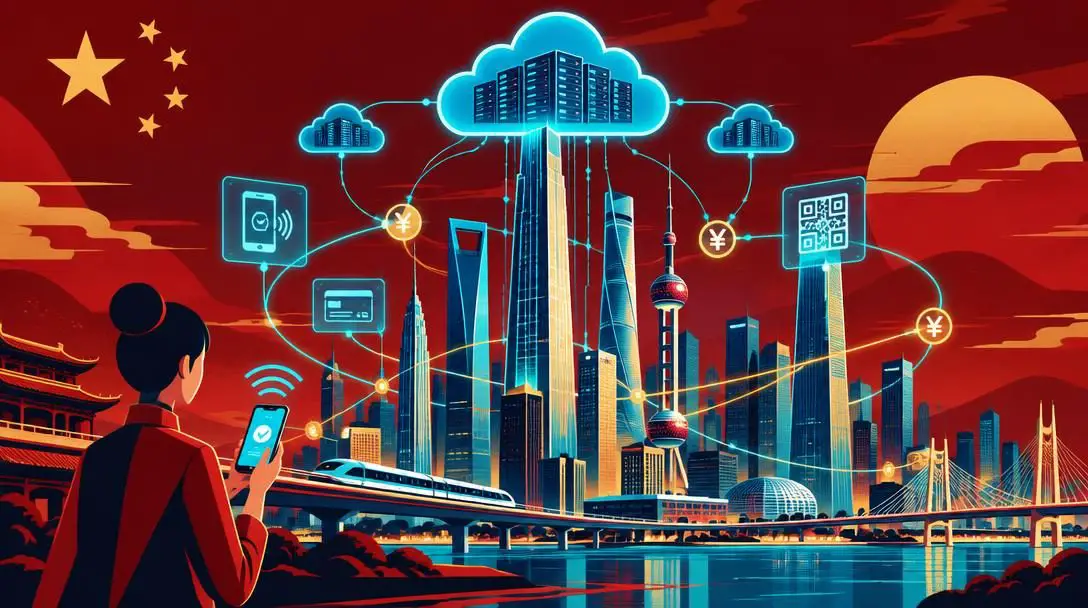
China has established itself as an undeniable powerhouse across the global technology ecosystem. Home to the world's largest population, the country provides an unparalleled domestic testing ground for consumer applications, digital payments, and e-commerce platforms. Tech conglomerates such as Huawei, Alibaba, and Tencent have developed sweeping digital networks that encompass enterprise cloud services, telecommunications infrastructure, and integrated consumer software.
Beyond consumer-facing applications, China is directing immense resources toward foundational technologies. The country is investing heavily in artificial intelligence, guided by a national strategic roadmap designed to make China the global leader in AI by 2030. The combination of centralized state planning, rapid domestic market adoption, and well-funded corporate research centers gives China extraordinary velocity in developing and deploying new technological systems.
India
- Core technical strength: Burgeoning startup ecosystem and software development
- Government funding: Billions of dollars committed to artificial intelligence
- Workforce dynamics: Rapidly expanding pool of skilled engineering talent
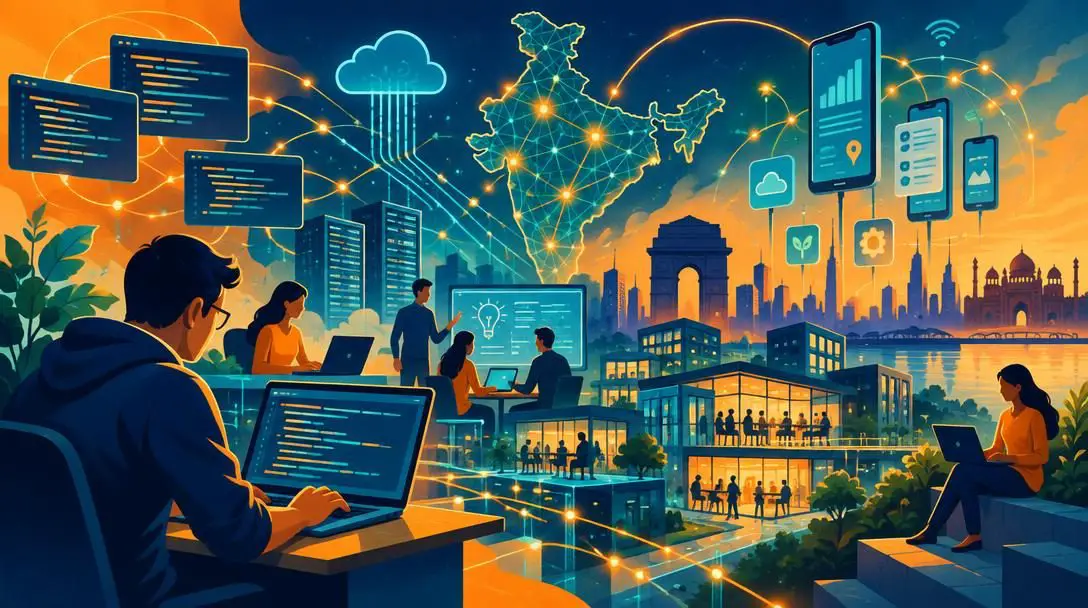
India is leveraging its vast population and accelerating economic expansion to build one of the world's most vibrant digital economies. While the nation has historically been known for technical outsourcing, it has rapidly transitioned into an essential international hub for software development and innovative entrepreneurial ventures. India's burgeoning startup scene regularly produces high-growth enterprises that address complex logistical, financial, and enterprise challenges.
Fueling this momentum is an expanding pool of engineering talent and an explosion in domestic internet access across urban and rural populations. Furthermore, the Indian government has committed billions of dollars to artificial intelligence initiatives. Supported by growing venture capital inflows and an ambitious founder community, India is staking its claim as an indispensable center for modern software engineering.

Japan
- Established specializations: Industrial robotics, automotive systems, consumer electronics
- Anchor corporations: Sony, Panasonic, Sharp
- Institutional reform: Creation of a dedicated technology ministry
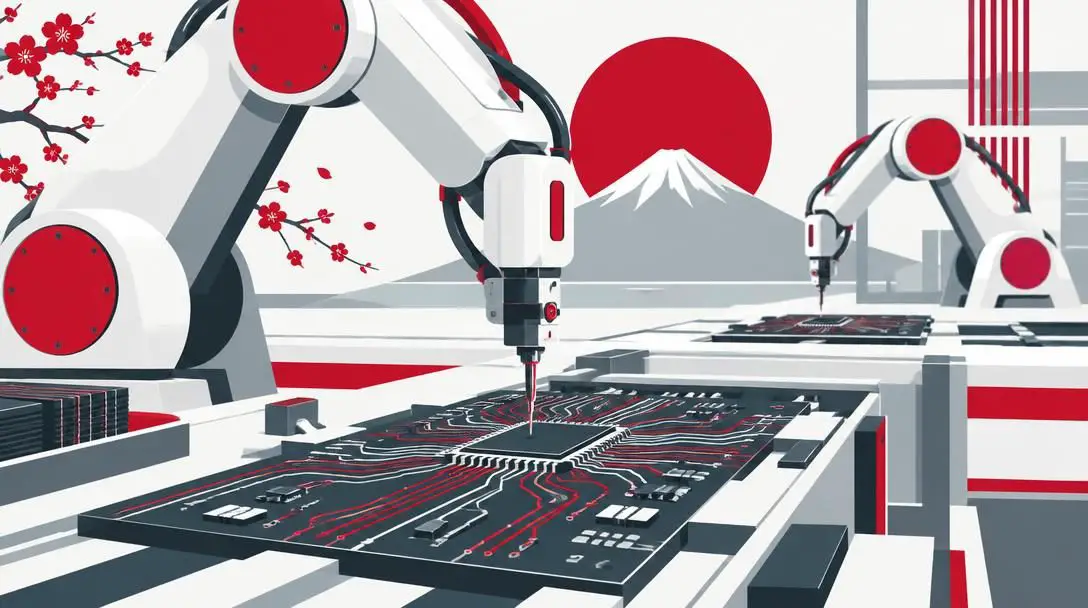
Japan has long commanded international respect for its precision engineering, high-end consumer electronics, and automotive manufacturing. Major industrial giants like Sony, Panasonic, and Sharp helped establish the modern standard for durable electronic hardware and cutting-edge display technologies. In industrial automation and robotics, Japan continues to serve as an indispensable global supplier.
To preserve its competitive footing against aggressive regional competitors, Japan has actively updated its national technological posture. The nation has poured extensive capital into artificial intelligence research and created a dedicated government ministry focused specifically on technology governance, policy, and digital transformation. This strategic realignment ensures that Japan's legacy hardware excellence is reinforced by modern software capabilities.
South Korea
- Critical supply chain dominance: Undisputed global leader in semiconductor production
- Household tech brands: Samsung, LG
- Infrastructure milestone: Targeted the world's first nationwide 5G network by 2020
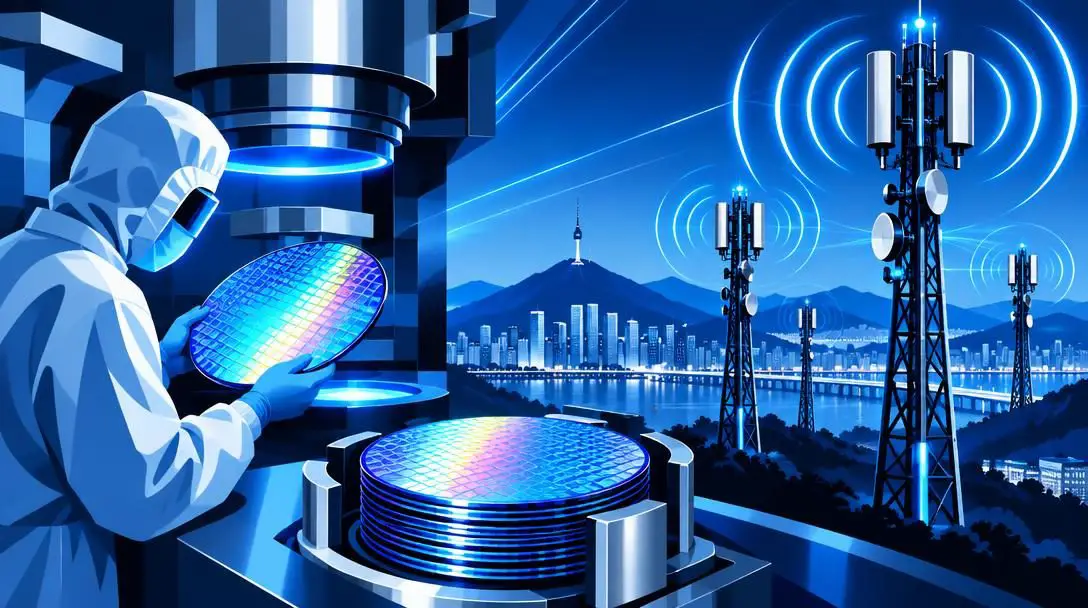
South Korea exerts an outsized influence on the global technological economy through its mastery of advanced electronics manufacturing. Industrial giants such as Samsung and LG dominate the international markets for high-definition display panels, home appliances, and consumer mobile devices. More importantly, South Korea stands as an undisputed world leader in the fabrication of semiconductors, supplying the essential silicon hardware that powers cloud computing, consumer devices, and advanced vehicles worldwide.
In addition to its silicon dominance, South Korea has prioritized next-generation telecommunications infrastructure. The country poured extensive resources into fifth-generation wireless capabilities, setting an ambitious national milestone to establish the world's first operational nationwide 5G network by 2020. This commitment to state-of-the-art telecommunications ensures high-speed connectivity for both consumer applications and industrial automation.
Israel

- Recognized moniker: The "startup nation"
- Primary core domain: Elite global cybersecurity and threat intelligence
- Multinational integration: R&D facilities for Microsoft, Google, and Intel
Despite its modest landmass and population, Israel has earned international acclaim under the title of the "startup nation." The country maintains an extraordinary density of technology startups per capita, driven by intensive technical training, an agile entrepreneurial culture, and close collaboration with academic research institutions.
Israel is internationally recognized as an elite leader in cybersecurity, producing groundbreaking threat intelligence platforms, enterprise security software, and data defense architectures. This technical density has attracted the world's largest multinational technology corporations; industry leaders including Microsoft, Google, and Intel maintain major research and development centers within Israel to capitalize on its high-caliber technical workforce.
Global technological power is no longer anchored to a single nation but distributed across specialized regional ecosystems that command distinct competitive advantages.
The Historical Decentralization of Global Innovation
The rise of these five regional powerhouses represents the culmination of a decades-long decentralization of technological capability. Following the mid-twentieth century, the United States and parts of Western Europe held a near-monopoly on advanced commercial computing, microchip design, and internet architecture. Fueled by generous research capital and elite institutional pipelines, American hubs like Silicon Valley established an overwhelming structural head start.
That paradigm shifted dramatically in the late twentieth century. Japan and South Korea rebuilt and modernized their postwar industrial infrastructure, directing state capital and engineering talent toward high-precision electronics and semiconductor manufacturing. They proved that cutting-edge technological execution could flourish outside the Western hemisphere. Decades later, the rapid economic ascendance of China and India brought hundreds of millions of new users online, creating massive domestic digital spheres that fostered home-grown software giants.

Concurrently, Israel proved that geographical size was no longer a limiting factor in the digital age. By concentrating capital and elite training into high-barrier software sectors like enterprise cybersecurity, smaller nations could develop solutions vital to global commerce. Today, technology is fundamentally multipolar, requiring organizations worldwide to navigate a distributed web of international expertise.
Five Pillars That Drive International Tech Ecosystems
The sustained success of rising tech economies relies on interconnected structural pillars that reinforce one another. A thriving tech sector requires more than capital; it depends on an intricate institutional framework that bridges public policy, corporate research, and workforce development.
- Government policy and national directives: Ambitious sovereign agendas provide long-term predictability and financial safety nets for high-risk research. Clear examples include China's strategic 2030 artificial intelligence target and Japan's dedicated technology ministry, both of which streamline policy to advance domestic priorities.
- Anchor corporations and hardware champions: Giant conglomerates act as foundational anchors for entire national economies. Powerhouses like Samsung and LG in South Korea, Sony and Panasonic in Japan, and Huawei, Alibaba, and Tencent in China maintain massive supply chains, fund basic research, and incubate technical talent.
- Dynamic startup environments: Nimble, early-stage enterprises convert theoretical research into viable consumer and business products. In India and Israel, dynamic startup corridors allow founders to iterate rapidly, launch high-growth software, and fulfill market niches that legacy institutions overlook.
- Academic and workforce pipelines: Advanced tech hubs require an uninterrupted stream of qualified specialists. Specialized universities supply the engineering talent that powers software infrastructure in India, microchip fabrication in South Korea, precision robotics in Japan, and data defenses in Israel.
- Multinational corporate integration: Attracting international corporate investment accelerates domestic growth. Israel's hosting of R&D divisions for Microsoft, Google, and Intel brings foreign venture capital, management expertise, and cross-border research standards directly into the domestic ecosystem.
How to Navigate and Enter Emerging Tech Markets
Engaging with international technological markets presents substantial opportunities for investors, founders, and corporate leaders. However, expanding into foreign jurisdictions requires a structured, deliberate strategy to navigate regional complexities successfully.
- Identify regional core competencies: Map organizational requirements directly to sovereign specializations. Businesses requiring advanced semiconductor fabrication, precision robotics, or display technology should look toward South Korea or Japan, while teams needing cybersecurity tools, enterprise software, or scalable digital platforms should focus on Israel, India, or China.
- Form strategic local partnerships: Operating independently in a new jurisdiction introduces operational friction. Partnering with established domestic firms or regional distributors mitigates regulatory bottlenecks and bridges unfamiliar market practices.
- Engage with in-country innovation hubs: Establish a direct presence within local tech incubators, venture consortiums, and university research accelerators to gain first-hand visibility into emerging commercial deals and technical talent.
- Align with national strategic priorities: Foreign governments regularly offer tax credits, research subsidies, and administrative backing to projects that support state roadmaps. Structuring initiatives to complement domestic priorities—such as 5G network integration or AI development—secures valuable institutional goodwill.
- Build cross-border compliance infrastructure: Foreign markets enforce distinct legal frameworks regarding intellectual property protection, data sovereignty, and corporate governance. Retain local legal and regulatory counsel to ensure all international operations adhere to sovereign standards.
Critical Missteps When Evaluating International Markets
Western observers and corporate decision-makers frequently misjudge foreign technology ecosystems by applying domestic assumptions to international markets. Avoiding several common mistakes is critical when evaluating foreign tech sectors:
- Treating diverse international markets as monolithic: Assuming that Asian or Middle Eastern tech sectors function identically leads to strategic failure. The state-coordinated, massive consumer platforms of China share little operational similarity with the semiconductor foundries of South Korea or the cybersecurity firms of Israel.
- Underestimating physical hardware and manufacturing: Modern software requires microprocessors, fiber optics, and industrial automation to operate. Overlooking South Korea's leadership in semiconductors or Japan's dominance in industrial robotics results in an incomplete understanding of technological leverage.
- Assuming consumer applications translate seamlessly: Consumer digital habits are deeply tied to regional payment systems and cultural preferences. Western platforms cannot simply be translated into foreign languages and expect adoption in markets dominated by entrenched ecosystems like Alibaba and Tencent.
- Discounting talent density in smaller countries: Equating technological impact solely with land area or gross domestic product causes observers to overlook high-impact hubs. Israel's outsized role in enterprise cybersecurity proves that high concentrations of technical talent outweigh geographical scale.
Future Horizons and the Artificial Intelligence Race
As these five nations advance their domestic capabilities, the balance of international technology will remain dynamic. A central focus over the coming decade will be the race for supremacy in artificial intelligence. With China actively pursuing global leadership in AI by 2030 and India committing billions of dollars in state capital toward artificial intelligence solutions, the trajectory of machine learning and algorithmic infrastructure is increasingly being directed outside the Western hemisphere.
Furthermore, hardware sovereignty will dictate software potential. As advanced computing demands higher processing power, the world's reliance on South Korea's semiconductor foundries reinforces how interconnected these sovereign ecosystems have become. Observers and executives must recognize that tomorrow's technological breakthroughs will be shaped by a truly distributed, multipolar world.
Frequently asked questions
Why is Israel referred to as the "startup nation"?
Israel earned the moniker of the "startup nation" due to its extraordinarily high concentration of technology startups per capita. Despite its small landmass and population, the country has become an elite international hub for venture creation, specialized research, and cutting-edge cybersecurity platforms.
What gives South Korea an advantage in the global hardware market?
South Korea is an undisputed world leader in semiconductor production, which provides the critical silicon components that power modern computing, consumer electronics, and automotive systems worldwide. In addition, industrial giants like Samsung and LG dominate the manufacturing of high-end display panels and consumer appliances.
How is Japan modernizing its tech sector against regional competitors?
While maintaining its historic leadership in robotics, precision engineering, and consumer electronics through companies like Sony, Panasonic, and Sharp, Japan has updated its posture by investing heavily in artificial intelligence and establishing a dedicated technology ministry to coordinate national policy and digital transformation.
What role does state policy play in China's technology sector?
Government directives in China establish clear strategic roadmaps and funding priorities, such as the official national mandate to become the world's leading power in artificial intelligence by 2030. Combined with a massive population that serves as a rapid testing ground, state backing accelerates the commercial deployment of new technologies.
How has India's technology ecosystem evolved in recent years?
India has expanded beyond traditional technical outsourcing into a major international hub for software development and high-growth startup enterprises. Supported by an expanding engineering talent base, increasing domestic internet access, and multi-billion-dollar government investments in artificial intelligence, India is developing sophisticated home-grown solutions.
The Bottom Line
The global technology landscape is no longer dominated by a single nation. China, India, Japan, South Korea, and Israel have transformed regional strengths—from high-volume microchip manufacturing and robotics to agile cybersecurity and large-scale software development—into enduring competitive advantages. Understanding the strategic ambitions, corporate champions, and institutional policies driving these five nations is essential for anyone navigating the modern digital economy.