
5 Energy-Saving Tips When Heating Your Home
In many households, heating and cooling represent the largest monthly expense after basic housing costs. When severe winter weather sets in, maintaining a cozy indoor environment demands continuous energy consumption across forced air units, baseboard heaters, radiant floors, or central boilers. Because these heating costs accumulate rapidly throughout the colder months, adopting targeted, sensible adjustments to everyday habits and structural maintenance can make a substantial dent in your utility expenses.
Every home functions as an active thermal envelope interacting with the colder air outside. Heated air naturally seeks out vulnerabilities in walls, seams, and glass, escaping toward colder areas while drawing exterior chill inward. By understanding the physical mechanics of residential heat loss alongside natural human physiology, occupants can maintain steady, comfortable living spaces without running up their power bills.
Key takeaways
- Most residential heat loss occurs directly through vulnerable windows and exterior doorways.
- South-facing windows offer valuable passive solar heat during daytime hours, even under overcast winter skies.
- Gradual cold exposure allows your body to acclimate naturally, making lower indoor temperatures feel comfortable.
- Wearing full-length pants and long-sleeved base layers indoors reduces reliance on mechanical heating.
- Fiddling with the thermostat throughout the day forces heating systems into costly, high-energy cycles.
The Mechanics of Heat Loss and Temperature Regulation
Managing winter heating expenses effectively starts with an understanding of basic thermodynamics. Heat naturally migrates from warmer environments toward colder ones until thermal equilibrium is established. When you walk past an exterior entryway or stand before a closed window and sense a brisk chill, you are experiencing thermal transfer in real time as indoor warmth escapes outward toward the freezing exterior air.
Doors and windows present the greatest vulnerabilities in any home's thermal boundary. Thin windowpanes provide minimal resistance against conduction, while perimeter gaps around door jambs and sliding sashes permit warmed air to leak outside. Counteracting this steady loss requires maximizing the natural resources available around your property. Direct daylight carries thermal radiation that easily penetrates glass, warming windowpanes and interior surfaces faster than heat can escape, provided outdoor conditions are not bitterly cold.
Alongside the structural physics of your house, human physiology heavily influences energy usage. The human body naturally adapts its baseline comfort to match prevailing conditions. Just as residents in tropical climates adapt to elevated heat and humidity, people living in cooler regions can build resilience against seasonal chill by allowing their bodies to adjust gradually to autumn and early winter temperatures.
Heat always moves toward the coldest place, making unsealed doors and thin window panes the primary pathways through which household warmth escapes.
Five Core Strategies to Save Heating Energy
Substantially lowering your seasonal heating consumption does not require expensive mechanical overhauls. Instead, focusing on physical draft control, solar gains, physiological adaptation, seasonal wardrobe choices, and steady thermostat management yields significant savings.
| Strategy | Primary Mechanism | Implementation Timing | Main Household Benefit |
|---|---|---|---|
| Seal Windows and Doors | Air draft barrier and structural sealing | Early autumn before freezing weather | Stops warm air leakage through entry points |
| Harness Solar Radiation | Passive thermal absorption through glass | Daily morning and evening window routine | Supplies free daytime room warming |
| Acclimate to the Cold | Physiological adaptation to ambient chill | Gradual exposure during seasonal transitions | Lowers baseline indoor temperature requirements |
| Dress for the Season | Personal thermal insulation via clothing layers | Daily indoor living throughout winter | Retains body heat without mechanical energy |
| Maintain Stable Thermostat Settings | Elimination of inefficient operational spikes | Continuous seasonal discipline | Prevents high-energy heater recovery cycles |
1. Seal Windows and Doors
Because the vast majority of domestic heat escapes through exterior openings, fortifying windows and doors serves as the essential cornerstone of energy conservation. Achieving an airtight barrier involves both mindful habits and basic physical repairs. Start by keeping exterior doors firmly closed, opening them only when necessary rather than lingering in open doorways.
Inspect the perimeter of every opening on a cold day by moving your hand along the trim. If you feel cool air pushing inside, warm air is actively escaping outward. Apply flexible caulk along stationary framing joints, sills, and molding cracks where structural settling has created micro-gaps. For movable components—including door bottoms, side jambs, and sliding window tracks—install durable weather-stripping to produce a firm seal upon closure. Complement these air seals by hanging heavy, thermal-lined curtains over thin or draft-prone windows to add an insulating air pocket.
2. Get the Most of Solar Energy
You do not need an array of rooftop photovoltaic panels to take advantage of solar warmth. Passive solar energy is freely available throughout the winter, providing noticeable thermal support to living areas during both bright days and moderately overcast afternoons.
Keep window shades, drapes, and blinds wide open during daylight hours along all walls that receive sun exposure. In the Northern Hemisphere, give special priority to south-facing glass, which captures the longest and most direct arc of winter sunlight. Solar rays warm the window glass and interior furnishings faster than conductive heat loss can cool them down. However, unshaded glass loses thermal energy rapidly once the sun sets. To avoid negating the day's solar gains, close heavy curtains tightly across all windows immediately at dusk to trap that captured warmth inside.
3. Acclimate Yourself to the Cold
Shielding your body from every minor drop in temperature prevents your metabolism and circulatory system from building natural resilience against winter conditions. When occupants insist on summer-like warmth indoors all winter, heating systems must work overtime to sustain an unnatural microclimate.
Begin allowing yourself to experience minor cold exposure as summer transitions into autumn and early winter. Avoid rushing to pull out heavy scarves, thick gloves, and insulated overcoats at the very first sign of crisp weather. Spend brief periods outdoors in the brisk air, giving your internal thermostat the stimulus it needs to adjust to changing conditions. By resisting the urge to run immediately indoors to sit beside a roaring heat source, you condition your body to feel comfortable at lower baseline indoor temperatures.
4. Dress for the Season
Indoor comfort is fundamentally tied to how well your clothing prevents metabolic heat from dissipating into the surrounding room. Generations past stayed warm not by heating the entirety of an indoor space to midsummer levels, but by wearing clothing designed specifically for the winter season.
Pack away lightweight summer attire, such as shorts, sleeveless tops, and thin cotton t-shirts, once winter arrives. Lounging around the house in short sleeves practically guarantees you will feel chilly unless the furnace runs continuously. Instead, make full-length pants and long-sleeved shirts your standard daily base layers inside the home. Dressing for the season indoors does not require wearing heavy parkas, gloves, or hats in the living room; simple swaps, such as choosing long sleeves over short sleeves or putting on a light sweater, dramatically increase personal warmth without touching the heating controls.
5. Don't Adjust the Temperature to Comfort
Constantly adjusting your thermostat setting up and down in response to momentary physical sensations is an inefficient and expensive approach to household climate control. Heating systems operate most efficiently when maintaining a steady target rather than cycling on and off in an attempt to hit moving baselines.
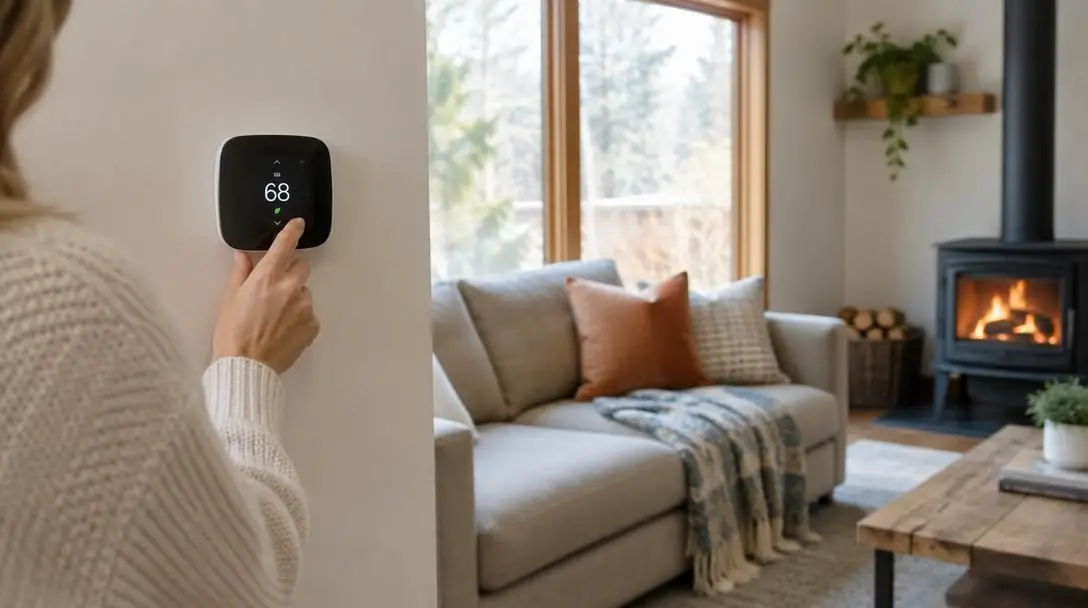
Indoor air temperatures naturally experience minor fluctuations as air currents circulate throughout rooms and hallways. Your skin is sensitive enough to notice these minor dips, but reacting by immediately pushing the thermostat higher creates significant energy waste. Raising the setpoint forces your furnace or heat pump to burn substantial fuel to reach that elevated target, only for occupants to lower the dial again once the house becomes too warm. When you feel a brief chill, follow the time-tested habits of earlier generations: put on an extra layer or engage in light physical movement rather than altering the heating controls.
Step-by-Step Implementation Guide
Putting these energy conservation measures into practice is straightforward when approached as an organized seasonal project. Follow this sequence to secure your home envelope and adjust household routines before winter peak temperatures arrive.
- Conduct a room-by-room draft audit by running your hand slowly around the perimeter of all exterior door frames, window casings, and sliding sashes on a windy, cold afternoon to pinpoint leaks.
- Apply waterproof exterior or interior caulk to stationary seams, trim joints, and sill gaps, while installing adhesive weather-stripping along the moving contact surfaces of doors and windows.
- Hang heavy, dense curtains across windows that feature thin glass panes or face prevailing winter winds, ensuring the hardware allows drapes to pull fully clear of the glass during daytime hours.
- Establish a consistent morning routine to draw curtains wide open on all sun-facing windows, welcoming passive solar radiation into the building even when the sky appears gray.
- Close all window coverings tightly as soon as twilight arrives to lock in captured daytime warmth and insulate against overnight conduction through chilled glass panes.
- Practice deliberate cold adaptation during late autumn by spending short intervals outside in brisk weather without over-bundling, gradually resetting your personal comfort expectations.
- Transition your indoor wardrobe toward seasonal staples, replacing short-sleeved shirts and lightweight shorts with long-sleeved tops, warm pants, and thermal base layers.
- Select a moderate, stable temperature setting on your thermostat and commit to keeping it unchanged, ignoring brief transient dips in ambient air temperature.
- Counteract momentary bouts of chill by pulling on an additional sweater or moving about the home rather than reaching for the thermostat dial.
Common Heating Mistakes to Avoid
Even well-intentioned homeowners frequently commit everyday heating errors that undermine efficiency and drive up monthly bills. Avoiding these common traps keeps energy consumption low throughout the cold season.
- Leaving drapes drawn all day: Keeping heavy window coverings closed during sunny hours blocks valuable passive solar energy that can warm living areas for free.
- Forgetting to close curtains at night: Leaving window treatments open after dark allows indoor heat to radiate rapidly out through thin, uninsulated glass surfaces.
- Overreacting to temporary cold snaps: Pushing the thermostat up the moment outdoor temperatures dip disrupts your body's acclimation and triggers expensive heating spikes.
- Lounging in warm-weather clothing: Expecting to relax in short sleeves throughout midwinter forces heating equipment to maintain artificially high indoor temperatures.
- Treating the thermostat like an accelerator: Setting the dial higher than your target does not heat a home faster; it merely consumes extra energy attempting to reach an unnecessary temperature.
- Overlooking perimeter gaps: Assuming that closed doors and latched windows are automatically airtight allows drafts to drain heated air continuously.
- Leaving exterior doors open: Prolonging entry and exit times while carrying groceries, unloading packages, or chatting releases pockets of heated air that must be re-warmed at significant expense.
Long-Term Maintenance and Household Habits
Once you have addressed drafty seams, established a solar curtain schedule, and adjusted your wardrobe habits, maintaining those gains requires minimal ongoing effort. Over time, materials exposed to seasonal weather cycles undergo wear and tear. Weather-stripping on exterior entryways can compress, tear, or lose adhesive backing after thousands of door closures, while caulk around window sashes can dry out or crack as framing materials expand and contract. Performing a quick perimeter inspection at the beginning of each cold season ensures that your home envelope remains completely airtight.
Equally important is observing how your household's baseline comfort shifts across the winter. After several weeks of wearing appropriate long-sleeved clothing and spending brief periods outside, family members frequently find that room temperatures that once felt chilly become comfortable. Sustaining these non-mechanical habits—layering up, closing drapes at sundown, and resisting the urge to touch the thermostat—creates a durable, cost-effective domestic routine that delivers warmth without financial strain.
Frequently asked questions
Where does most heat escape from an uninsulated home?
Most residential heat loss occurs directly through exterior doors and windows. Thin glass panes provide minimal resistance against exterior cold, while structural gaps around window sashes and door frames permit warm indoor air to escape while drawing cold outdoor drafts inside.
Can windows still provide solar warmth on overcast or cloudy winter days?
Yes. Even during gray, overcast afternoons, daylight delivers passive solar radiation that penetrates glass surfaces. Provided outdoor temperatures are not bitterly cold, daylight can warm windowpanes and interior rooms faster than conduction and minor air leakage can cool them.
Why is cranking the thermostat higher inefficient when you feel cold?
Heating systems deliver warmth at a steady rate regardless of the setpoint. Cranking the thermostat does not speed up the heating process; it simply forces the system to run longer to reach an elevated target, consuming far more energy before occupants realize the space has become overheated.
How does clothing impact indoor heating requirements?
Wearing seasonal indoor attire, such as long-sleeved shirts and full-length pants, traps metabolic body heat close to the skin. This simple personal insulation makes lower ambient room temperatures feel completely comfortable, eliminating the need to overheat the entire house.
When is the best time to open and close heavy window curtains in winter?
Open curtains wide on sun-facing windows in the morning to invite direct and ambient solar radiation into your living spaces. Close all drapes tightly right at dusk to create an insulating air barrier that prevents that captured warmth from radiating out through the cold glass overnight.
The Bottom Line
Reducing winter heating costs does not require freezing in your own living room or investing in expensive mechanical renovations. By sealing structural drafts around doors and windows, welcoming passive solar radiation during daylight hours, dressing in appropriate seasonal layers, and resisting the impulse to constantly adjust your thermostat, you can keep your home comfortably warm while keeping utility expenses firmly under control all winter long.