5 Greatest Hip Hop Music Videos Ever
During hip-hop's formative years, promotional visual treatments were among the most cost-effective marketing tools in the recording industry. Early music videos rarely required elaborate staging; performers generally rapped straight into the camera lens while stationed on neighborhood sidewalks or working in dimly lit recording booths. These unadorned clips prioritized immediate energy and lyrical delivery over technical ambition, functioning primarily as utilitarian promotional assets for radio singles.
By the mid-to-late 1990s, however, the commercial landscape underwent a seismic shift as hip-hop emerged as a dominant global force in entertainment. Video budgets expanded into multi-million-dollar investments, welcoming world-class directors and cutting-edge cinematic techniques that elevated music videos into cultural milestones. The era produced groundbreaking visual experiences that matched the sonic innovation of the records themselves, establishing creative benchmarks that continue to influence directors and recording artists across all genres today.
Key takeaways
- The mid-to-late 1990s transformed hip-hop music videos from low-budget street clips into multi-million-dollar cinematic statements.
- Visionary directors used high-concept world-building, ranging from dystopian wastelands to 1970s television parodies, to deepen the narrative impact of songs.
- Visual symbolism provided a canvas for rappers to confront complex themes such as systemic injustice, celebrity culture, and profound personal grief.
- Iconic music videos succeed through a disciplined synthesis of wardrobe, set design, musical pacing, and cultural subtext rather than sheer budgetary scale.
At a glance: Five landmark hip-hop visuals
The progression of hip-hop visual storytelling is best understood through the milestone projects that expanded the boundaries of the medium. The table below outlines five defining music videos, highlighting their release years, creative leadership, and conceptual foundations.
| Song title | Artist | Release year | Director | Visual concept |
|---|---|---|---|---|
| California Love | 2Pac ft. Dr. Dre & Roger Troutman | 1995 | Hype Williams | Post-apocalyptic desert wasteland homage |
| The Real Slim Shady | Eminem | 2000 | Not specified in source | Satirical psychiatric ward and cloned doubles |
| Sabotage | Beastie Boys | 1994 | Spike Jonze | Gritty 1970s cop drama opening sequence parody |
| Jesus Walks | Kanye West | 2004 | Not specified in source | Multi-video exploration of faith and social justice |
| Tha Crossroads | Bone Thugs-n-Harmony | 1996 | Not specified in source | Spiritual contemplation of mortality and mourning |
The five greatest hip-hop music videos
Each of the following productions represents a high-water mark in visual music storytelling. By combining distinctive aesthetics, memorable supporting casts, and thematic resonance, these landmark releases established new artistic standards for the genre.
California Love

- Lead artist: 2Pac (featuring Dr. Dre and Roger Troutman)
- Release year: 1995
- Director: Hype Williams
- Filming location: El Mirage, California
Standing as one of the defining triumphs of Tupac Shakur's career, California Love set an unprecedented standard for visual scale in rap music. Director Hype Williams anchored the production in the desert flats of El Mirage, California, drawing heavy visual inspiration from the post-apocalyptic aesthetic of the motion picture Mad Max Beyond Thunderdome. The production design abandoned conventional rap video motifs in favor of a sprawling, dystopian wasteland populated by dune buggies, towering industrial scaffolding, and eccentric desert denizens.
The performers and supporting cast fully committed to the cinematic illusion. Shakur, Dr. Dre, and Roger Troutman performed in weathered leather garments and defensive body armor, seamlessly integrating into the rugged desert setting. The visual also featured memorable character appearances from actors Chris Tucker, Clifton Powell, and Tony Cox, infusing high-octane spectacle with theatrical charisma. Widely celebrated across music publications as one of the greatest rap tracks ever recorded, the video proved that hip-hop could rival major Hollywood productions in sheer visual audacity.
The Real Slim Shady
- Lead artist: Eminem
- Album: The Marshall Mathers LP
- Release year: 2000
- Major accolades: MTV Video Music Awards for Best Video and Best Male Video
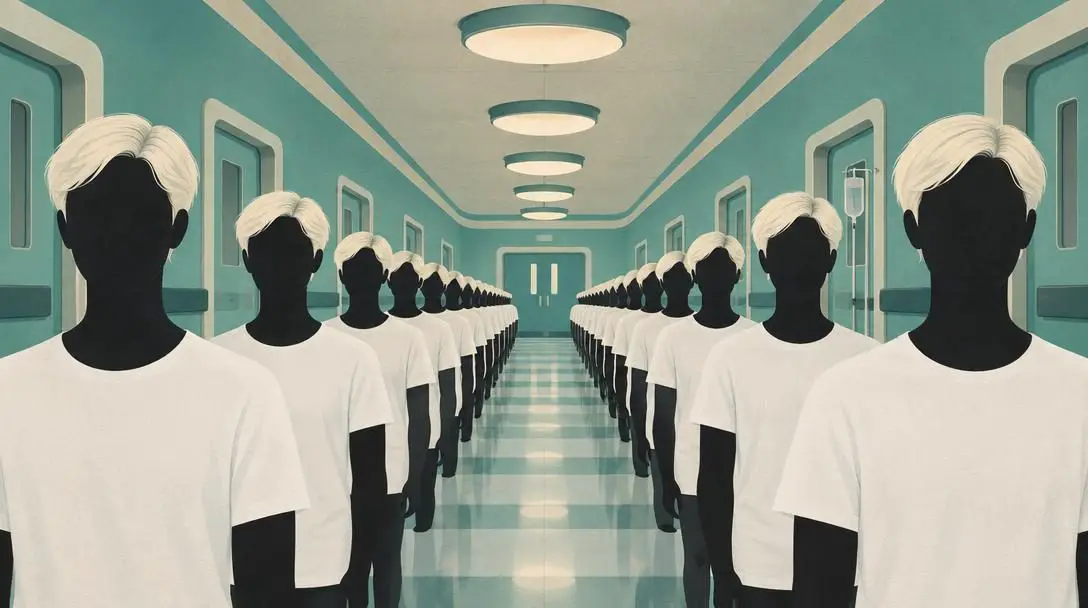
As the aggressive lead single from The Marshall Mathers LP, The Real Slim Shady demanded a promotional video that matched Eminem's razor-sharp, irreverent lyricism. The visual narrative established its satirical tone from the opening moments, depicting Eminem as a patient inside an eccentric psychiatric institution attended by comedian Kathy Griffin in the role of a nurse. This institutional framing set the stage for a series of rapid cuts across surreal suburban settings and pop-culture parodies.

The visual's most enduring sequence deployed an entire army of bleached-blonde doubles wearing matching plain white t-shirts and jeans. By marching alongside dozens of manufactured lookalikes, Eminem visually reinforced the central thesis of his hook: that true individuality cannot be mass-produced despite the entertainment industry's best efforts to replicate authenticity. The inventive treatment dominated the 2000 awards cycle, taking home top honors for both Best Video and Best Male Video at the MTV Video Music Awards.
Sabotage
- Lead artist: Beastie Boys
- Album: Ill Communication
- Release year: 1994
- Director: Spike Jonze
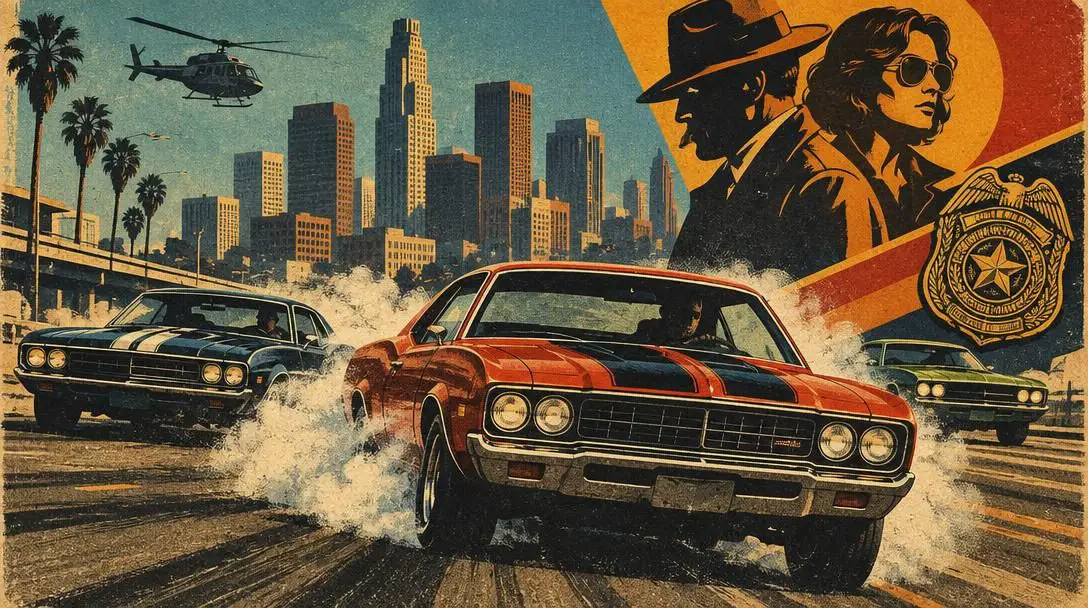
Released as the primary single from the Beastie Boys' 1994 record Ill Communication, Sabotage stands as an enduring masterpiece of kinetic filmmaking and comedic parody. Directed by Spike Jonze, the video abandoned traditional performance shots entirely, presenting itself instead as the faux opening credit sequence for an imagined 1970s television police procedural. Jonze drew direct stylistic cues from classic television series of that era, including Hawaii Five-O and Starsky and Hutch.
The members of the group enthusiastically threw themselves into fictional law-enforcement personas, sprinting through city streets, sliding across car hoods, and brandishing vintage weaponry while sporting exaggerated wigs, clip-on sunglasses, and oversized synthetic mustaches. Jonze captured the chaotic action using gritty, hand-held camera techniques and freeze-frame title cards that parodied vintage broadcast credits. Although the video was nominated across multiple categories at the 1994 MTV Video Music Awards without securing a single win, its reputation has only grown, remaining one of the most beloved homages in music video history.
Jesus Walks

- Lead artist: Kanye West
- Album: The College Dropout
- Self-funded investment: Over $1 million across additional versions
- Total distinct versions produced: Three
After establishing an elite industry profile as a producer, Kanye West launched his solo recording career with his acclaimed debut album, The College Dropout. Following earlier successful singles such as "Through the Wire" and "All Falls Down," West selected the spiritually ambitious Jesus Walks as a subsequent single. Convinced that a single standard video could not adequately encapsulate the song's spiritual and thematic depth, West personally financed two additional treatments out of his own pocket, ultimately spending more than $1 million across the alternative cuts to assemble a three-part visual statement.
The second version of the video remains the most critically recognized and culturally impactful entry in the trilogy. The narrative opens with stark imagery of incarcerated men forced to labor under conditions evoking modern-day servitude, connecting the track's lyrical yearning for divine redemption directly to two centuries of systemic racial and social justice struggles in the United States. West's massive personal financial gamble challenged industry conventions, proving that music videos could serve as profound, unapologetic platforms for sociopolitical discourse.
Tha Crossroads

- Lead artist: Bone Thugs-n-Harmony
- Active lineup: Krayzie Bone, Layzie Bone, Bizzy Bone, Wish Bone
- Release year: 1996
- Dedication: Deceased relatives and mentor Eazy-E (passed in 1995 at age 30)
In 1996, Cleveland group Bone Thugs-n-Harmony cemented their international stardom with Tha Crossroads, a poignant revision of an earlier track rewritten to mourn the passing of close family members and their influential mentor, rap pioneer Eazy-E, who died in 1995 at the age of 30. The video offered a deeply reflective exploration of mortality, grief, and spiritual salvation, creating an atmospheric world rarely seen in mainstream hip-hop during that period.
Directed with somber reverence and augmented by the swelling harmonies of a vocal choir, the narrative follows an ethereal, stoic reaper who gently guides departed souls away from earthly suffering and into the afterlife. The video boldly confronted the painful realities of premature death and street violence within urban communities, replacing standard rap braggadocio with genuine emotional vulnerability. By presenting mourning as a universal, transcendent experience, the project set a historic precedent for emotional depth in urban music videography.
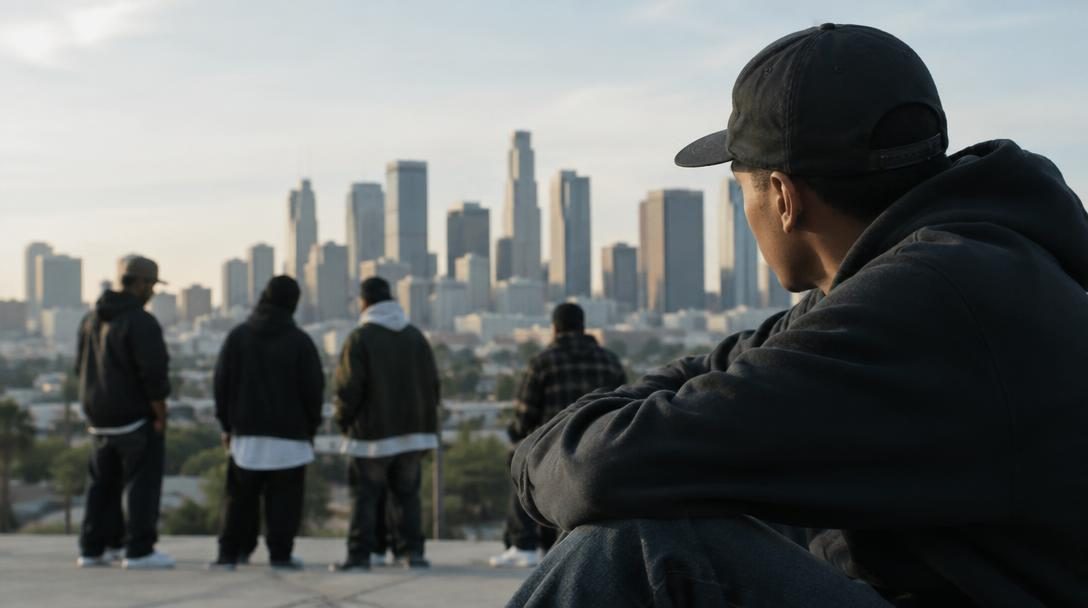
A successful music video functions not merely as an advertisement for a single, but as an artistic translation that reinforces lyrical themes through intentional cinematic choices.
How visual storytelling operates in hip-hop
The longevity of these classic releases illustrates how thoughtful cinematography, production design, and thematic clarity can elevate a recorded song into an indelible cultural moment. Rather than relying on simple performance footage, landmark videos construct elaborate narrative frameworks that interact dynamically with the music.
At the highest level of the craft, three core storytelling pillars separate ordinary promotional clips from enduring cinematic statements:
- Thematic world-building: Instead of filming in generic studio spaces, top-tier directors construct fully realized visual universes. Whether establishing a sun-bleached post-apocalyptic society or reproducing the grainy texture of 1970s television, these immersive settings anchor the listener in a tangible atmosphere that enriches the track's sonic tone.
- Satire and cultural critique: Moving images allow musicians to explore irony, critique celebrity worship, and tackle societal hypocrisies. Visual devices such as cloned doubles or exaggerated institutional backdrops communicate layered humor and social commentary that simple lyricism cannot always achieve alone.
- Emotional and spiritual symbolism: Abstract themes like divine grace, mortality, and pervasive grief are challenging to express through audio alone. Directors use evocative motifs—such as spiritual guides, choral assemblies, and chain gangs—to transform internal psychological experiences into shared visual metaphors.
A step-by-step approach to evaluating classic music videos
Analyzing the artistic merits of music videography requires looking beyond surface-level production budgets. By evaluating how technical and creative decisions reinforce the core song, viewers can gain a deeper appreciation for the director's craft.
- Identify the director's creative perspective: Begin by researching the director behind the camera and noting their unique stylistic trademarks. Observe how the expansive, widescreen grandeur of Hype Williams or the kinetic, humorous realism of Spike Jonze shapes the pacing and overall mood of the project.
- Examine the wardrobe and set construction: Look closely at the costumes, props, and physical environments chosen for the shoot. Evaluate whether wardrobe pieces—such as distressed armor, vintage police blazers, or uniform white t-shirts—function simply as fashion or serve as active instruments of world-building.
- Analyze narrative pacing alongside song structure: Map the video's editorial cuts against the underlying song architecture. Pay attention to how scene transitions, tempo shifts, and narrative crescendos correspond with the entrance of guest vocalists, verse endings, and chorus refrains.
- Deconstruct the cultural and historical subtext: Interrogate the underlying themes embedded within the imagery. Assess how the video engages with broader societal conversations, including civil rights histories, institutional critique, or public dialogues surrounding community violence.
Common production pitfalls that weaken music videos
While classic releases demonstrate the limitless potential of the medium, many contemporary music videos fail to leave a lasting cultural footprint. Studying historical masterpieces highlights several recurring mistakes that creators should avoid:
- Over-reliance on budget without a unifying vision: Massive financial investments cannot compensate for the absence of a coherent concept. Lavish sets and costly visual effects quickly become forgettable spectacles if they do not serve a specific thematic purpose.
- Conceptual disconnect from the song's audio foundation: When visual imagery clashes with the emotional or lyrical tone of the track, the viewing experience feels fractured. Visual narratives must honor and expand the atmosphere created by the record rather than compete against it.
- Reluctance to embrace creative risks: Safe, repetitive formulas—such as relying exclusively on straightforward performance shots in front of luxury vehicles or rented mansions—fade rapidly from cultural memory. Lasting legacy belongs to creators willing to stage unconventional narratives and explore unusual genres.
- Disregarding historical and social context: Creating visuals in a thematic vacuum often leads to superficial art. Videos that capture the spirit of their era do so by acknowledging the cultural, social, and political currents surrounding their audience.
Future directions for studying visual hip-hop history
For music enthusiasts and film students interested in deepening their understanding of hip-hop visual history, several productive areas of exploration exist:
- Tracing directorial filmographies: Chart how pioneering music video directors transitioned their stylistic approaches into feature films, commercial advertising, and alternative musical genres over multiple decades.
- Analyzing alternative and multi-version cuts: Study rare secondary releases and multi-video projects to observe how differing visual concepts can radically reframe the listener's interpretation of identical lyrical recordings.
- Reviewing award show voting patterns: Examine historical industry honors, such as the MTV Video Music Awards, comparing highly rewarded commercial successes against overlooked entries that later gained canonical status among audiences.
- Monitoring shifts in sensitive thematic depictions: Track how modern rap directors represent heavy emotional themes like loss, faith, and political oppression, comparing contemporary visual techniques with 1990s benchmarks.
Frequently asked questions
Why did hip-hop music videos shift to big-budget productions in the late 1990s?
During the mid-to-late 1990s, hip-hop transitioned from an underground movement into a dominant commercial force within the music industry. Record labels responded by allocating multi-million-dollar budgets to visual marketing, transforming promotional clips into cinematic events designed to capture worldwide television audiences.
Where was the music video for California Love filmed?
The music video for California Love was filmed on location in the desert flats of El Mirage, California. Director Hype Williams selected the location to create a vast, post-apocalyptic environment heavily inspired by the motion picture Mad Max Beyond Thunderdome.
Did the Beastie Boys' Sabotage video win any MTV Video Music Awards?
Although Sabotage received nominations across multiple categories at the 1994 MTV Video Music Awards, it did not take home any trophies during the ceremony. Despite the loss, it remains widely recognized as one of the greatest and most influential music videos ever created.
Why did Kanye West produce three different videos for Jesus Walks?
Deeply invested in the song's spiritual and social themes, Kanye West believed that a single visual treatment was insufficient to articulate the full scope of his vision. He spent more than $1 million out of his own pocket to fund two additional versions, resulting in three distinct visual releases.
What inspired Bone Thugs-n-Harmony to create Tha Crossroads?
Bone Thugs-n-Harmony recorded and filmed Tha Crossroads as an emotional tribute to deceased family members and their mentor, rap pioneer Eazy-E, who passed away in 1995 at the age of 30. The visual treatment reflected this grief by depicting an ethereal guide escorting departed souls into the spiritual realm.
The bottom line
The golden eras of hip-hop music videography proved that three-minute promotional clips could stand alongside feature films as genuine works of cinematic art. By embracing fearless directorial concepts, rich set design, and unflinching cultural commentary, landmark projects like California Love, The Real Slim Shady, Sabotage, Jesus Walks, and Tha Crossroads redefined how audiences experienced recorded music. These masterworks established a visual blueprint that continues to inspire modern creators, reminding us that extraordinary visual storytelling requires bold imagination, thematic commitment, and artistic conviction.