5 Greatest TV Betrayals

A well-orchestrated betrayal can elevate a television series from entertaining drama into unforgettable cultural event. Modern television storytelling relies heavily on shifts in loyalty, broken promises, and sudden turns of allegiance to push complex characters to their absolute limits and alter the course of an overarching narrative. When figures who share deep bonds of romance, family, crime, or survival turn against each other, the resulting rupture resonates far beyond an ordinary plot twist, sparking passionate audience debates that linger for years.
From ruthless mob hierarchies and cutthroat media empires to high-fantasy conflicts and intimate romantic dilemmas, these dramatic fractures redefine their respective fictional worlds. Exploring these defining moments reveals not only the emotional power of long-form television, but also the narrative architecture required to make a fictional turn of allegiance feel both utterly shocking and completely inevitable.
Key takeaways
- Iconic television betrayals rely on long-term character investment to make the eventual breach of trust profoundly impactful.
- Betrayals across prestige dramas often force characters to choose between personal affection and cold self-preservation or duty.
- Narrative betrayals succeed when they balance surprise with psychological inevitability rather than relying on unearned shock value.
- The emotional aftermath and lasting rifts of a broken alliance drive serialized storytelling into rich new directions.
Five television betrayals that redefined their series
The following comparison provides a snapshot of the most devastating betrayals across modern dramatic television, highlighting the characters involved and the core motivations driving each breach of trust.
| Television series | Betrayer | Victim | Core motivation |
|---|---|---|---|
| Game of Thrones | Jon Snow | Daenerys Targaryen | Preventing mass slaughter and protecting the realm |
| The Sopranos | Tony Soprano | Christopher Moltisanti | Eliminating a legal liability and vulnerable addict |
| Breaking Bad | Walter White | Jesse Pinkman | Punitive spite and self-preservation amid criminal collapse |
| Succession | Logan Roy, Tom Wambsgans, and Caroline Collingwood | Kendall, Roman, and Shiv Roy | Consolidating corporate control and securing personal leverage |
| Sex and the City | Carrie Bradshaw | Aidan Shaw | Unresolved romantic attachment to an ex-partner |
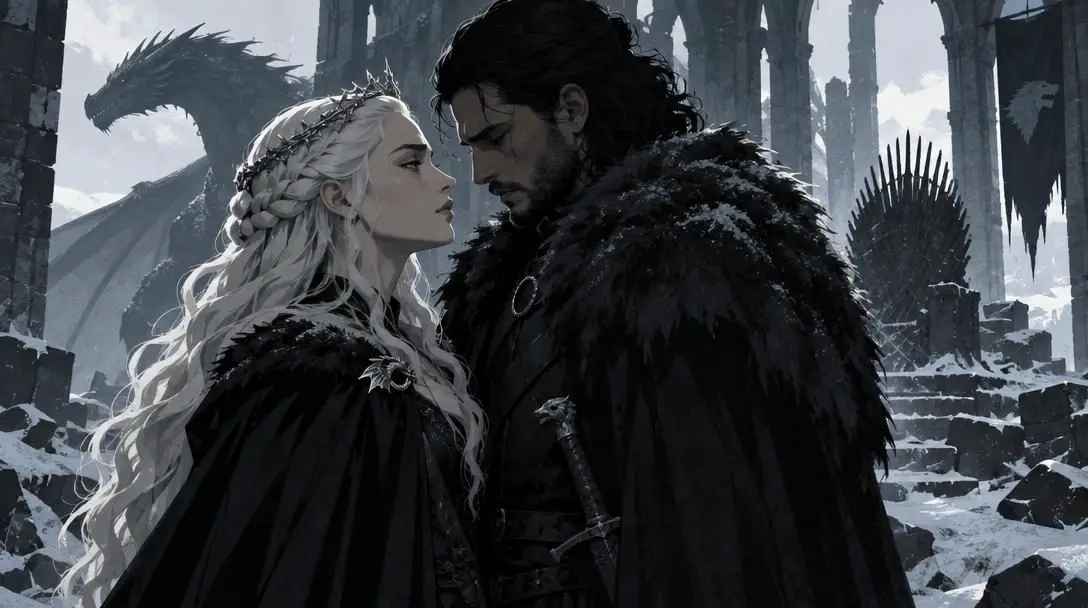
Jon Snow and Daenerys Targaryen
- Series: Game of Thrones
- Relationship: Lovers and aunt/nephew
- Method: Fatal stabbing during an embrace
In a fantasy epic riddled with backstabbing, fractured vows, and violent power struggles, narrowing down the single most painful turn is a formidable challenge. Yet the climax of the fight for the Iron Throne delivered the show's most heartbreaking betrayal when Jon Snow stabbed Daenerys Targaryen to death while the two were locked in a passionate kiss.
Throughout the series, Jon had lived by a strict moral code centered on duty, honor, and safeguarding innocent lives. Unfortunately, Daenerys left him virtually no alternative after her catastrophic assault on King's Landing. It became undeniable that she had descended into tyranny, posing an imminent lethal threat to thousands more across the realm. Faced with an agonizing dilemma between his love for his queen and his duty to protect the realm, Jon chose the greater good. By striking her down during an intimate, vulnerable embrace, Jon destroyed the woman he loved to prevent further devastation, extinguishing her dynasty before her rule could truly take hold.
Tony Soprano and Christopher Moltisanti

- Series: The Sopranos
- Relationship: Mob boss and protégé/nephew
- Method: Suffocation at a car crash scene
Christopher Moltisanti served for years as Tony Soprano's most trusted soldier, criminal protégé, and presumptive successor. Bound together by blood ties, shared violence, and mob loyalty, the two men represented the generational bridge of their criminal enterprise. However, Christopher's chronic substance abuse issues and persistent relapses placed an immense strain on their relationship, sowing dangerous seeds of paranoia within Tony's inner circle.
The breaking point arrived in sudden, brutal fashion when a wasted Christopher crashed their vehicle off-road, nearly killing them both. Surveying the wreckage and seeing his severely injured nephew struggle for breath, Tony made a cold, calculated assessment. Realizing that Christopher's drug habits made him an existential risk who might eventually flip and turn State's witness to save himself, Tony abandoned any remaining pretense of familial devotion. Taking advantage of Christopher's helplessness, Tony pinched his nephew's nostrils shut until he suffocated, permanently extinguishing the liability under the cover of accident injuries.

When loyalty is shattered, the dramatic payoff hits with immense narrative force, exposing the raw survival instincts beneath every alliance.
Walter White and Jesse Pinkman

- Series: Breaking Bad
- Relationship: Meth-cooking business partners
- Method: Surrendering an ally to violent captors
The relationship between Walter White and Jesse Pinkman evolved from an uneasy criminal partnership between a chemistry teacher and his former student into a profoundly toxic web of deceit and mutual sabotage. Across five seasons, both men repeatedly deceived, manipulated, and endangered one another as their illicit empire expanded and fractured.
The darkest threshold of their fractured alliance came when Walter allowed a neo-Nazi gang to take Jesse captive. Instead of standing beside the young partner who had weathered years of trauma by his side, Walt offered him up to ruthless criminals. The gang subsequently imprisoned Jesse in a cage, subjecting him to intense physical and psychological brutality while forcing him to cook Walt's signature blue meth as an enslaved worker. While Walt ultimately mounted a rescue in the series finale, his initial decision to surrender Jesse to such a horrific fate cemented the absolute corruption of his humanity.
The Roy Siblings and Their Parents

- Series: Succession
- Relationship: Siblings versus their father, mother, and spouse
- Method: Corporate restructuring maneuver
Loosely patterned after the real-world dynamics of modern media dynasties, the corporate arena of Succession is built upon psychological cruelty, volatile allegiances, and relentless competition. The season three finale elevated this familial warfare to tragic heights. After enduring years of calculated emotional abuse and manipulation by their patriarch, Logan Roy, the three core siblings—Kendall, Roman, and Shiv—finally put aside their lifelong rivalries to form a united front against him.
Moving together to block Logan from selling the family firm, the trio appeared poised to finally wrest control of their destiny. However, their triumph was instantly dismantled from within. Shiv's husband, Tom, tipped off Logan about the impending revolt, allowing the patriarch time to negotiate directly with the siblings' mother, Caroline Collingwood. Logan convinced Caroline to renegotiate their divorce settlement and sign over the children's veto power, immediately stripping Kendall, Roman, and Shiv of their corporate leverage and destroying their dreams of running the business in one crushing blow.
Carrie Bradshaw and Aidan Shaw

- Series: Sex and the City
- Relationship: Romantic partners
- Method: Emotional and physical infidelity
While life-and-death stakes and billion-dollar boardrooms deliver acute tension, personal betrayals of the heart can be equally devastating to viewers. In Sex and the City, the tumultuous romantic journey of Carrie Bradshaw took its most polarizing turn during her relationship with furniture designer Aidan Shaw.
To many viewers, Aidan represented the ideal romantic partner: warm, devoted, grounded, and handsome. Crucially, he was fully prepared to build a stable future with Carrie and offered the emotional security she claimed to seek. Instead of embracing that commitment, Carrie cheated on Aidan with Mr. Big, her toxic ex-boyfriend who had previously broken her own heart. The betrayal infuriated fans who felt Aidan had offered Carrie unconditional respect, only to be cast aside for a cycle of familiar emotional turmoil.

The narrative mechanics behind impactful television betrayals
Betrayal operates as one of the most potent engines in narrative television because serialized media provides the rare commodity of time. Creators can invest multiple seasons into establishing intimate bonds, allowing the audience to witness characters weathering hardship, celebrating victories, and leaning on each other. When that accumulated goodwill is broken, the dramatic impact is magnified.
A well-executed turn of allegiance accomplishes four distinct storytelling objectives:
- Generating instant conflict: It instantly transforms trusted allies into bitter antagonists, generating organic narrative momentum.
- Unmasking core character truths: Under acute pressure, a character's true priorities—whether raw survival, boundless ambition, or unyielding moral duty—override surface-level loyalty.
- Shattering narrative stagnation: A sudden break disrupts comfortable dynamics, forcing the plot out of repetitive formulas.
- Deepening viewer engagement: When audiences feel the sting of broken trust, they actively debate the morality of the characters long after an episode concludes.
How storytellers craft an earned narrative betrayal
A memorable betrayal must balance shock with psychological inevitability. If a turn occurs without warning or justification, the audience feels manipulated; if it is telegraphed too heavily, it loses its visceral sting. Authors and screenwriters generally build toward a successful turn through a disciplined sequence of events.
- Establish the initial alliance: Convince the audience of the authentic affection, dependence, or shared purpose linking the characters.
- Introduce compounding external pressure: Apply outside threats, competing obligations, or resource scarcity that strains the relationship.
- Create a zero-sum dilemma: Construct a scenario where maintaining loyalty directly compromises a character's personal survival, core goal, or moral code.
- Execute at a moment of vulnerability: Stage the actual act of betrayal when the victim feels comparatively safe, maximizing emotional impact.
- Explore the lasting aftermath: Refuse to hit an emotional reset button, letting the fracture permanently reshape the narrative environment.
Conversely, narrative betrayals fall flat when writers rely on unearned twists. Storytellers must take care to avoid common pitfalls:
- Acting out of character: Forcing a figure to turn on an ally purely to advance a plot beat, without sufficient psychological grounding.
- Ignoring the victim's emotional reality: Treating the betrayed character merely as a plot prop rather than depicting their genuine grief, anger, and adaptation.
- Rushing the timeline: Triggering a betrayal before the audience has had sufficient opportunity to value the bond being broken.
- Granting unearned forgiveness: Resolving profound rifts too quickly, which cheapens the gravity of the betrayal and erodes dramatic stakes.
Evaluating the long-term legacy of broken allegiances
When examining television's most celebrated betrayals, critics and viewers frequently evaluate how well the twists age over time. Assessing the enduring quality of a dramatic betrayal involves several key narrative criteria:
- Thematic coherence: Did the act reinforce the foundational themes of the series, such as the corrupting influence of absolute power or the trap of toxic family dynamics?
- Accountability and fallout: Did the betrayer face genuine narrative consequences for their actions, or was the turn brushed aside without repercussions?
- Character trajectory: Did the fracture permanently alter how the characters operated in subsequent chapters, or did the story regress to familiar habits?
Frequently asked questions
Why did Jon Snow betray Daenerys Targaryen in Game of Thrones?
Jon Snow killed Daenerys because she had descended into unchecked tyranny, having destroyed King's Landing with her dragon. Jon recognized that if he did not intervene, her quest for global conquest would lead to the deaths of thousands more innocent people, forcing him to choose the safety of the realm over his romantic feelings.
What motivated Tony Soprano to kill Christopher Moltisanti?
Tony suffocated Christopher following a severe car crash caused by Christopher's drug impairment. Frustrated by Christopher's chronic substance relapses and paranoid that his nephew might eventually turn State's witness to avoid prison time, Tony seized on Christopher's critical injuries to eliminate an operational liability.
How did Walter White betray Jesse Pinkman to the neo-Nazis?
During the climax of their criminal partnership, Walter allowed a gang of neo-Nazis to capture Jesse rather than protecting him. The gang subsequently kept Jesse locked in a cage and forced him into labor cooking Walter's signature blue meth under brutal conditions.
Who betrayed the Roy siblings in the season three finale of Succession?
The Roy siblings—Kendall, Roman, and Shiv—were betrayed by Shiv's husband, Tom, who alerted Logan Roy to their plan to block the sale of the family business. This heads-up enabled Logan to convince the children's mother, Caroline Collingwood, to surrender the veto rights granted in their divorce agreement.
Why was Carrie Bradshaw's betrayal of Aidan Shaw so controversial?
Fans were outraged because Aidan had shown genuine kindness, emotional safety, and an eagerness to commit to marriage. Carrie's decision to cheat on him with Mr. Big, the very ex-partner who had previously treated her with emotional carelessness, highlighted her self-destructive tendencies and broke the heart of a beloved, supportive character.
The bottom line
Television betrayals endure in the cultural memory because they hold up an unsparing mirror to human frailty, ambition, and moral compromise. Whether committed in the name of duty, corporate supremacy, criminal self-preservation, or romantic confusion, these dramatic pivots succeed because they force beloved characters to reveal who they truly are when the stakes are highest. When written with care and earned through patient character development, a devastating betrayal does not merely surprise an audience—it permanently transforms the story.