5 Highest Grossing Japanese Films
When discussions turn to the highest-grossing cinematic releases in history, international audiences almost reflexively look toward Hollywood. Major American studio tentpoles routinely claim international headlines with sprawling marketing budgets and billion-dollar global targets. Yet Japan, one of the world's most technologically sophisticated and culturally creative societies, maintains a domestic cinematic ecosystem that operates on its own unique rules. Rather than relying on live-action comic book adaptations or massive action spectacles, Japan's box office royalty belongs decisively to a single distinct medium: animation.
Far from being considered a sub-genre geared exclusively toward youth, Japanese animated productions—widely recognized as anime—function as premier cultural events capable of drawing multi-generational crowds for months at a time. The record-breaking films that define Japan's theatrical history showcase astonishing financial efficiency, high artistic prestige, and narrative breadth ranging from intimate supernatural romances to sweeping wartime allegories. Examining the five highest-earning Japanese movies reveals how animation conquered the nation's box office and established a lasting imprint across the international cinematic landscape.
Key takeaways
- Animation completely dominates Japan's all-time box office rankings, with all five highest-grossing domestic films belonging to the medium.
- Director Hayao Miyazaki and Studio Ghibli hold three of the top five positions with Spirited Away, Princess Mononoke, and Howl’s Moving Castle.
- Demon Slayer the Movie: Mugen Train sits at number one worldwide, earning over $506 million against a modest $16 million production budget.
- Japanese cinematic powerhouses achieve immense profitability through lean production costs, long theatrical lifespans, and dedicated repeat viewership.
At a glance: The five highest-earning Japanese releases
Before exploring the narrative depth and cultural impact of each entry, reviewing their financial performance provides essential context. The following table highlights the box office totals, production investments, directors, and initial release windows for Japan's five historic frontrunners.
| Film Title | Director | Release Year | Worldwide Gross (USD / JPY) | Production Budget |
|---|---|---|---|---|
| Demon Slayer the Movie: Mugen Train | Haruo Sotozaki | 2020 | $506.5 million (¥64,773,752,500) | $16 million |
| Spirited Away | Hayao Miyazaki | 2001 | $395.8 million (¥50,616,883,000) | $19.2 million |
| Your Name | Makoto Shinkai | 2016 | $380.1 million (¥48,609,088,500) | $5.8 million |
| Howl’s Moving Castle | Hayao Miyazaki | 2004 | $236 million (¥23.2 billion) | $24 million (¥2.4 billion) |
| Princess Mononoke | Hayao Miyazaki | 1997 | $169.7 million (¥21,702,084) | $23.5 million (¥2.1 billion) |
Analyzing the top five box office champions
Each of the top-ranking Japanese productions arrived at a critical turning point in cinematic history, redefining what domestic studios could achieve commercially. From contemporary franchise phenomena to timeless hand-drawn epics, these films earned their status through distinct creative visions.
Demon Slayer the Movie: Mugen Train
- Director: Haruo Sotozaki
- Worldwide Gross: $506.5 million US (¥64,773,752,500)
- Production Budget: $16 million US
- Key Award: Animation of the Year at the Japan Academy Film Prize
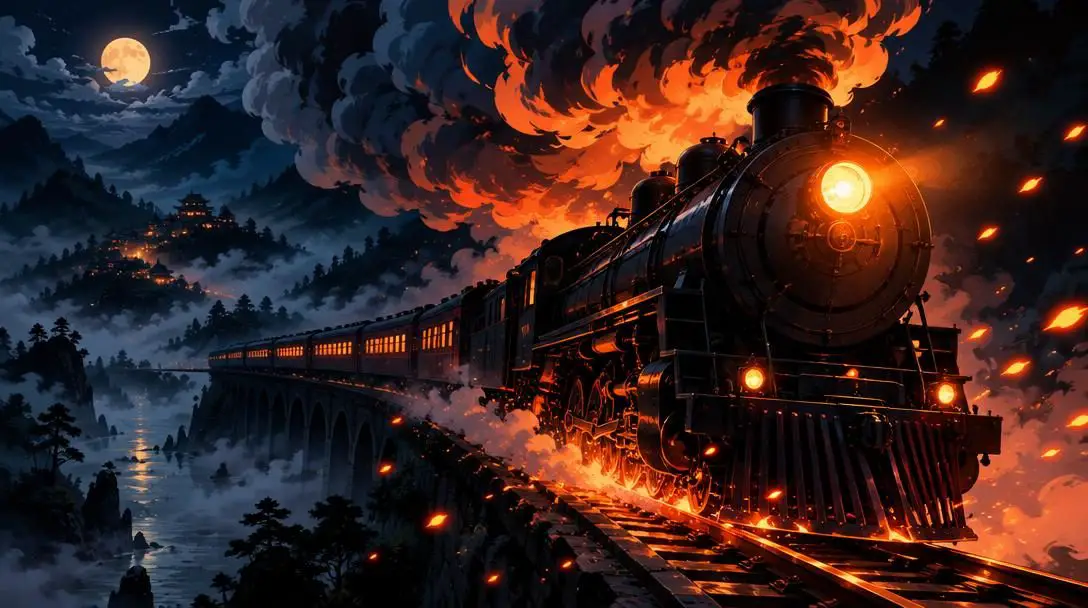
Released in late 2020 amid unprecedented global theatrical disruptions, Demon Slayer the Movie: Mugen Train shattered nearly every box office milestone in Japanese history. Directed by Haruo Sotozaki, the film functions as a direct canonical sequel to the wildly popular first season of the television anime adaptation. The story follows the Mugen Train arc from the original manga series, placing its central demon-slaying protagonists in high-stakes combat aboard an enchanted locomotive.
Unlike Western blockbuster trends where franchise installments often moderate their mature content to maximize youth attendance, Mugen Train embraced intense action and emotional gravity, earning the distinction of becoming the highest-earning mature animated film of all time. Produced with an efficient budget of $16 million, the film went on to generate ¥64,773,752,500 ($506.5 million US) across global territories, proving that seamless multimedia continuity between television broadcast and theatrical exhibition could produce historic returns.
Spirited Away

- Director: Hayao Miyazaki
- Worldwide Gross: $395.8 million US (¥50,616,883,000)
- Production Budget: $19.2 million US
- Key Award: Academy Award for Best Animated Feature
For nearly two decades, Studio Ghibli's 2001 masterwork Spirited Away stood uncontested as the pinnacle of Japanese box office achievement. Written and directed by visionary filmmaker Hayao Miyazaki, the fantasy adventure follows ten-year-old Chihiro Ogino as she enters a surreal spirit realm known as the world of Kano after her parents are transformed into pigs by the sorceress Yubaba. Chihiro must abandon her petulance, take work inside an ethereal bathhouse, and navigate a complex hierarchy of spirits to rescue her family.
Backed by a budget of $19.2 million, the movie captivated audiences worldwide, accumulating ¥50,616,883,000 ($395.8 million US). Beyond its unprecedented domestic popularity, Spirited Away cemented Japanese animation on the global artistic stage by winning the Academy Award for Best Animated Feature. It remains celebrated as a landmark achievement in hand-drawn cinema, balancing folklore, childhood vulnerability, and universal human growth.

Your Name

- Director: Makoto Shinkai
- Worldwide Gross: $380.1 million US (¥48,609,088,500)
- Production Budget: $5.8 million US
- Key Award: Best Animated Film at the 2016 Los Angeles Film Critics Association Awards
In 2016, writer and director Makoto Shinkai delivered an emotional and visual sensation with Your Name (Kimi no Na wa). The narrative chronicles the intertwined lives of two high school students: Mitsuha Miyamizu, a teenage girl living in a rural mountain shrine town, and Taki Tachibana, a young boy navigating daily life in bustling Tokyo. When the two begin mysteriously swapping bodies across disparate timelines and geographies, an intimate romantic connection develops beneath the looming threat of an impending celestial disaster.
Produced on a modest budget of just $5.8 million, Your Name became an unexpected international phenomenon, earning ¥48,609,088,500 ($380.1 million US). Shinkai’s signature photo-realistic backgrounds, poignant exploration of memory and longing, and memorable soundtrack drove massive repeat attendance throughout Asia and the West. In addition to widespread critical praise, the production received prestigious accolades, including Best Animated Film at the 2016 Los Angeles Film Critics Association Awards.
Princess Mononoke

- Director: Hayao Miyazaki
- Worldwide Gross: $169.7 million US (¥21,702,084)
- Production Budget: $23.5 million US (¥2.1 billion)
- Key Award: Picture of the Year at the 21st Japanese Academy Awards
When Studio Ghibli released Princess Mononoke in 1997, it represented an unprecedented artistic and financial gamble for director Hayao Miyazaki. With a production budget reaching ¥2.1 billion ($23.5 million US), it was among the most expensive anime productions of its era. Set in a mythical Muromachi-period Japan, the story centers on Prince Ashitaka, an exiled warrior striving to broker peace between industrialized human settlements led by Lady Eboshi and the ferocious animal gods defending the ancient forest.
Breaking nearly every established domestic box office metric upon its debut, Princess Mononoke captured ¥21,702,084 ($169.7 million US) in total theatrical receipts. Rather than presenting a conventional moral conflict between heroes and villains, the film tackled complex environmental philosophy, industrialized progress, and the costs of war. Its groundbreaking critical acclaim led to it winning Picture of the Year at the 21st Japanese Academy Awards and introduced Studio Ghibli's sophisticated thematic ambitions to wider overseas markets.
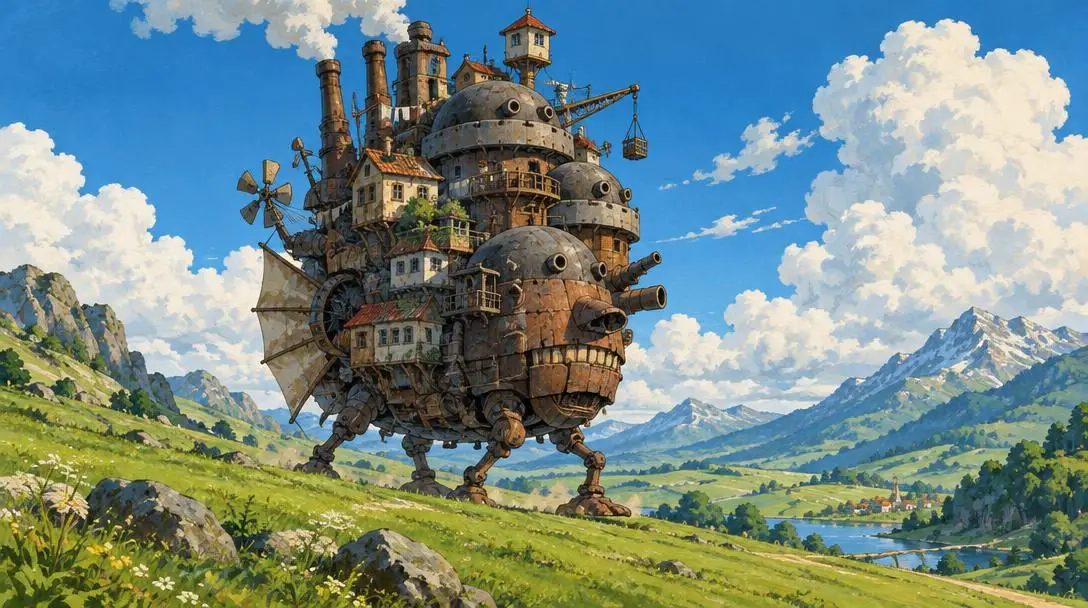
Howl’s Moving Castle
- Director: Hayao Miyazaki
- Worldwide Gross: $236 million US (¥23.2 billion)
- Production Budget: $24 million US (¥2.4 billion)
- Key Award: Nominee for Best Animated Feature at the 78th Academy Awards
Closing out the top five is another Studio Ghibli triumph directed by Hayao Miyazaki, Howl’s Moving Castle. Premiering in late 2004, the animated fantasy was produced on a budget of ¥2.4 billion ($24 million US) and generated ¥23.2 billion ($236 million US) globally. The story explores the transformation of Sophie, a quiet milliner who is cursed with old age by the Witch of the Waste and seeks shelter in the walking fortress of the enigmatic wizard Howl.
Heavily informed by Miyazaki’s opposition to international warfare, including the United States’ invasion of Iraq in 2003, the film weaves profound anti-war sentiment throughout its magical narrative. Howl’s Moving Castle met with widespread critical acclaim across international film circuits, culminating in an Academy Award nomination for Best Animated Feature at the 78th Oscars and confirming Miyazaki’s unparalleled consistency at the global box office.
Japan's box office demonstrates that animation is not merely a genre for young audiences, but a premier cinematic medium capable of addressing intricate narratives and setting worldwide financial records.
The mechanics behind Japan’s anime production and box office model
Understanding why animated releases from Japan continually outperform big-budget live-action projects requires examining the economic and cultural frameworks of the Japanese film industry. Three primary structural pillars distinguish this market from Western studio conventions.
First and foremost is exceptional budget efficiency. While Western animated features from major studios often cost between $150 million and $200 million before marketing, Japanese masterpieces achieve breathtaking visual artistry for a fraction of that expenditure. Makoto Shinkai's Your Name was created for $5.8 million, and even elaborate Studio Ghibli epics such as Howl’s Moving Castle operated around the $24 million mark. This cost discipline allows Japanese studios to achieve robust profitability without needing to match Hollywood's multi-hundred-million-dollar marketing machines.

Second, theatrical engagement in Japan is characterized by prolonged theatrical runs and repeat viewership. In many Western markets, a feature film earns the vast majority of its domestic revenue within its initial two weekends. In contrast, Japanese blockbusters frequently remain in cinemas for four to six months. Positive word-of-mouth campaigns, collectible theatrical giveaways, and intense fan loyalty encourage audiences of all ages to revisit the same production multiple times.
Finally, cross-border distribution and international award circuits provide vital secondary momentum. When prestigious bodies such as the Academy of Motion Picture Arts and Sciences or the Los Angeles Film Critics Association honor Japanese titles, international theatrical networks expand their screen counts, transforming domestic triumphs into enduring global box office successes.
Step-by-step: How to explore the landscape of Japanese cinema
For newcomers eager to delve beyond Hollywood releases and understand the artistry behind these record-breaking Japanese achievements, approaching the medium systematically ensures the most rewarding experience.
- Begin with standalone cinematic masterpieces: Start your journey with self-contained narratives like Spirited Away or Your Name. These productions require no prior familiarity with established franchises, allowing you to appreciate the complete dramatic arc and visual direction on their own terms.
- Research franchise prerequisites before watching sequels: Before viewing direct continuations like Demon Slayer the Movie: Mugen Train, ensure you watch the preceding television episodes. Having the narrative foundation of the first season provides necessary context regarding character motivations and emotional stakes.
- Compare varied directorial philosophies: Notice the distinct artistic differences between Hayao Miyazaki’s thematic focus on environmental balance in Princess Mononoke and Makoto Shinkai’s romantic, timeline-bending visual style in Your Name. Observing these variations illustrates the sheer diversity within the anime industry.
- Experiment with original and dubbed audio formats: Sample both original Japanese audio with subtitles and localized voice dubbing. Subtitled tracks preserve the native vocal cadences and original director casting, while quality dubs allow you to concentrate fully on detailed animation frames.
- Examine historical and thematic subtexts: Deepen your appreciation by researching the underlying real-world themes infused into each work, such as the overt anti-war sentiment in Howl’s Moving Castle following the 2003 Iraq invasion, or the critique of unchecked industrialization in Princess Mononoke.
Common misconceptions when approaching Japanese blockbusters
Approaching Japanese cinema solely through the lens of Western theatrical expectations often leads to false assumptions. Avoiding these common mistakes will help you evaluate these works more accurately:
- Assuming animation is intended solely for children: Japanese animated films frequently incorporate mature narratives, philosophical dilemmas, and intense emotional stakes. Demon Slayer the Movie: Mugen Train earned recognition as the highest-grossing mature animated release precisely because it resonates across adult demographics.
- Treating anime as a single monolithic genre: Animation is an artistic medium, not a specific narrative category. Princess Mononoke is an ecological historical drama, Your Name operates as a romantic fantasy, and Howl’s Moving Castle is an anti-war fairy tale. Categorizing them identically obscures their individual artistic identities.
- Skipping foundational material for franchise releases: Attempting to watch direct narrative continuations without familiarity with earlier seasons can lead to confusion regarding character roles and lore rules.
- Expecting formulaic Hollywood three-act pacing: Japanese narratives often incorporate deliberate pacing, quiet contemplative pauses, and unresolved emotional nuance alongside intense action beats, diverging from standard Hollywood formulas.
Looking ahead: The future of Japanese box office records
The continuous commercial success of Japanese animation shows no signs of slowing down. As global streaming services broaden access to Japanese television series, the potential theatrical audience for anime adaptations continues to expand across North America, Europe, Latin America, and Southeast Asia. The model established by Demon Slayer the Movie: Mugen Train—turning a seasonal television narrative into an unmissable theatrical event—has established a blueprint that future studios actively emulate.
Simultaneously, the enduring international appeal of auteur directors like Hayao Miyazaki and Makoto Shinkai demonstrates that original, standalone storytelling retains enormous box office viability. As production techniques evolve to blend traditional hand-drawn aesthetics with advanced digital compositing, Japanese studios remain uniquely positioned to deliver deeply resonant, highly profitable cinematic experiences for generations to come.
Frequently asked questions
What is the highest-grossing Japanese film of all time?
The highest-grossing Japanese film in history is Demon Slayer the Movie: Mugen Train (2020), directed by Haruo Sotozaki. It earned ¥64,773,752,500 ($506.5 million US) worldwide against an estimated production budget of $16 million US.
How many Studio Ghibli films are in the top five Japanese box office releases?
Studio Ghibli holds three of the top five positions, all written and directed by Hayao Miyazaki: Spirited Away (second), Howl’s Moving Castle (fourth), and Princess Mononoke (fifth).
Did any of these top-earning Japanese animated films win an Oscar?
Yes. Spirited Away won the Academy Award for Best Animated Feature, making history as the only film of its kind to do so. In addition, Howl’s Moving Castle received an Academy Award nomination at the 78th Oscars.
Do I need to watch the Demon Slayer television show before seeing Mugen Train?
Yes, viewing the first season of the Demon Slayer television series is strongly recommended. Mugen Train is a direct canonical continuation that bridges the narrative between the first and second television seasons.
Why are Japanese animated movie budgets so much lower than Western studio budgets?
Japanese animation studios operate with focused production teams, specialized scheduling, and lower baseline production costs compared to major Western studios. For example, Your Name was produced for $5.8 million, allowing Japanese productions to generate vast profits on relatively modest investments.
The bottom line
The commercial dominance of Japanese animation over live-action domestic cinema offers a compelling testament to the medium's cultural stature. Far from being an industry outlier, Japan's box office history reflects an audience that treats animated features as premier artistic achievements worthy of repeat theatrical visits. By pairing extraordinary budget discipline with ambitious, mature storytelling, filmmakers like Hayao Miyazaki, Makoto Shinkai, and Haruo Sotozaki have proved that thoughtful, artist-driven animation can routinely challenge global Hollywood blockbusters at the international box office.