5 Highest Grossing Movies in Chinese History
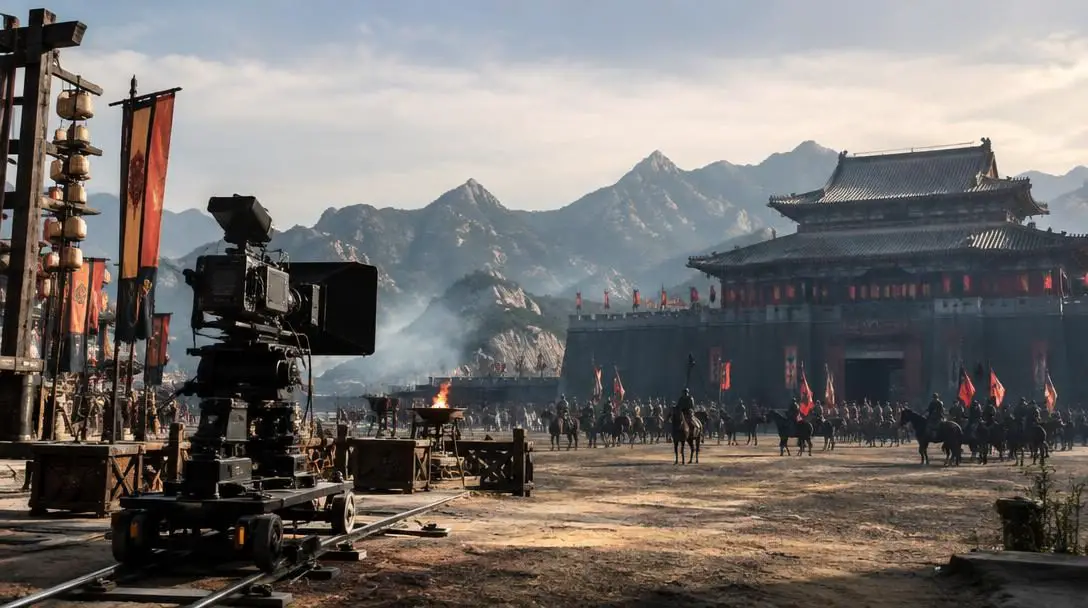
For decades, the global film business treated East Asia as secondary territory, viewing China as little more than a niche market while centering commercial strategies on Western theater chains. That dynamic shifted radically at the turn of the 21st century. Beginning in the 2000s, Chinese-made features began posting unprecedented domestic receipts, proving that home audiences possessed an enormous appetite for locally grounded stories while simultaneously finding inroads into international theatrical markets.
Although Hollywood heavyweights from the Marvel Cinematic Universe, Transformers, and Fast and Furious franchises subsequently secured massive windfalls across Chinese cinemas, imported tentpoles eventually yielded their supremacy. Today, homegrown productions occupy the very peak of the country's historical box office rankings. Spanning military thrillers, sprawling historical war dramas, high-concept science fiction, time-travel comedy, and animated folklore, these cinematic juggernauts demonstrate how local production values, creative independence, and cultural resonance transformed the Chinese box office into one of the most lucrative entertainment engines in the world.
Key takeaways
- Domestic productions occupy all five top spots in Chinese box office history, out-earning major Hollywood imports.
- The historical war drama The Battle at Lake Changjin leads the all-time ranking with $913 million in worldwide earnings.
- Record-setting releases deliver extraordinary budget-to-revenue efficiency, with films like Ne Zha and Wolf Warrior 2 returning many times their modest production costs.
- The highest-earning titles cover a wide range of genres, proving that audience enthusiasm extends well beyond a single formula or cinematic style.
The Evolution of China's Theatrical Market
The transformation of China's cinema landscape over the past two decades represents a historic realignment of global media economics. Throughout the late 20th century, Western studios paid limited attention to East Asian distribution, directing primary marketing budgets toward North American and European circuits. However, the early 2000s marked a structural turning point. Chinese theater infrastructure expanded, and domestic films demonstrated that homegrown narratives could capture massive audiences, initiating a multi-decade box office surge.
During this same transitional era, a two-way cinematic exchange emerged. Homegrown Chinese releases began finding their way into international markets, earning critical recognition and commercial footholds in Western territories. Simultaneously, foreign studios recognized the vast financial rewards awaiting them across Chinese cities. American tentpoles—most prominently installments from the Marvel Cinematic Universe, the Transformers saga, and the adrenaline-fueled Fast and Furious franchise—shattered overseas earnings records as Chinese moviegoers flocked to theaters.
Yet foreign dominance proved short-lived. Rather than remaining dependent on imported Hollywood IP, China's domestic industry rapidly scaled its own technical craft, screenwriting, and production budgets. By the late 2010s and early 2020s, locally developed projects had completely taken over the top tier of all-time box office charts. These releases did not merely compete with Western blockbusters; they outperformed them on home soil by hundreds of millions of dollars.
Homegrown Chinese releases evolved from modest domestic projects into historic phenomenons that fundamentally altered the global theatrical hierarchy.
The 5 Highest-Grossing Movies in Chinese History
The upper echelon of Chinese cinematic earnings highlights an impressive spectrum of narrative styles. Rather than relying on a uniform blockbuster template, the all-time leaderboard features a 3D animated retelling of ancient myth, a high-concept hard science fiction crisis, a deeply personal family comedy, modern mercenary combat, and a massive war epic.
| Rank | Film Title | Release Year | Production Budget | Worldwide Gross | Core Genre |
|---|---|---|---|---|---|
| 1 | The Battle at Lake Changjin | 2021 | $200 million | $913 million | Historical War Epic |
| 2 | Wolf Warrior 2 | 2017 | $30.1 million | $874 million | Military Action |
| 3 | Hi, Mom | 2021 | $59 million | $850 million | Time-Travel Comedy / Drama |
| 4 | Ne Zha | 2019 | $20 million | $742.5 million | 3D Animated Fantasy |
| 5 | The Wandering Earth | 2019 | $50 million | $700 million | Hard Science Fiction |
The Battle at Lake Changjin

- Release Year: 2021
- Worldwide Gross: $913 million
- Production Budget: $200 million
- Screenwriters: Lan Xiaolong and Huang Jianxin
Holding the undisputed title of the highest-earning film of all time in China, The Battle at Lake Changjin arrived in theaters in 2021 as a monumental cinematic undertaking. Scripted by acclaimed writers Lan Xiaolong and Huang Jianxin, the film dramatizes the real-life historical Battle of the Chosin Reservoir during the Korean War. Backed by a record-setting production budget of $200 million, the production mobilized unprecedented resources to depict the harsh winter conditions, tactical clashes, and intense sacrifices endured by soldiers during the conflict.
The feature resonated overwhelmingly with moviegoers, pulling in an astonishing $913 million worldwide. In addition to securing the all-time domestic record in China, the epic established itself as the second-highest-earning cinematic release globally for the entire year of 2021. Its sweeping scale and patriotic weight demonstrated that China's studio system was capable of mounting historical military productions on par with the largest war films ever produced.

Wolf Warrior 2

- Release Year: 2017
- Worldwide Gross: $874 million
- Production Budget: $30.1 million
- Director and Lead Star: Wu Jing
Premiering in the summer of 2017, Wolf Warrior 2 revolutionized expectations for modern Chinese action cinema. Serving as a direct narrative continuation of the 2015 action film Wolf Warrior, the sequel was an extraordinary creative vehicle for Wu Jing, who directed, co-produced, co-wrote, and starred in the central role. Wu Jing portrays Leng Feng, a skilled Chinese special operative who resists conventional military protocol and routinely refuses to play by standard rules.
The storyline drops Leng Feng into an unnamed African territory that suddenly falls under siege by violent mercenaries and Somalian pirates. Tasked with protecting civilian lives and defending himself against ruthless adversaries, the protagonist engages in non-stop, high-stakes tactical combat. Working with a modest budget of $30.1 million, the film delivered a jaw-dropping $874 million worldwide gross, maintaining the country's top box office spot for four years and proving the immense power of contemporary military heroics.
Hi, Mom

- Release Year: 2021
- Worldwide Gross: $850 million
- Production Budget: $59 million
- Director and Lead Star: Jia Ling
Landing in the third position on the all-time charts is the emotional comedy-drama Hi, Mom, released in February 2021. Written, directed by, and starring Jia Ling, the production turned a $59 million budget into an exceptional $850 million global tally. The narrative follows Jia Ling's character, Jia Xiaoling, a young woman who struggles with deep-seated feelings of inadequacy, convinced that she has never lived up to expectations or been a worthy daughter.
Following a sudden turn of events, Jia Xiaoling finds herself magically transported back to the 1980s, exactly two decades before her mother is involved in a fatal car collision. Recognizing where she is, she befriends the younger version of her mother in the past. Driven by love and regret, Jia Xiaoling works tirelessly to alter historical outcomes and arrange a happier, more prosperous life for her mother before tragedy strikes. The film's moving blend of maternal tribute and period nostalgia struck a powerful chord across generations of viewers.
Ne Zha
- Release Year: 2019
- Worldwide Gross: $742.5 million
- Production Budget: $20 million
- Format: 3D Animation
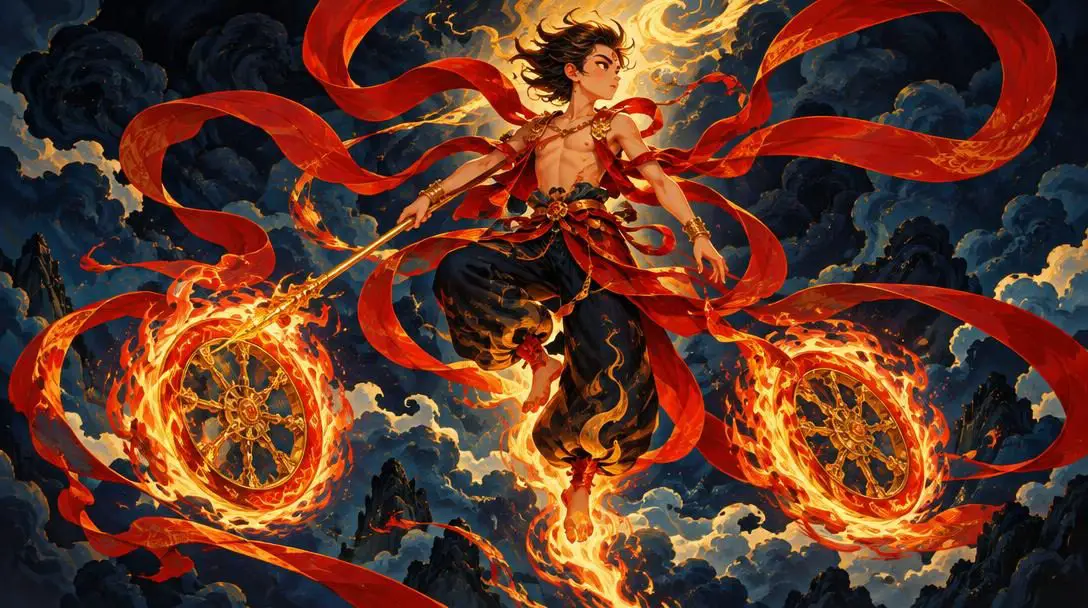
Securing fourth place in Chinese cinematic history, the 2019 fantasy phenomenon Ne Zha (also frequently rendered as Nezha) remains the only 3D animated film among the top five. Produced on a lean budget of $20 million, the animated masterwork captured $742.5 million at the box office, fundamentally redefining the commercial ceiling for domestic animation. The film reinterprets centuries of traditional Chinese folklore through cutting-edge visual effects, vibrant comedy, and kinetic fight sequences.
The plot centers on the tumultuous upbringing of Ne Zha, a youth cursed by cosmic fate. Though born with an inherently destructive and demonic nature originating from the mystical Demon Orb, Ne Zha is raised under the deliberate illusion that he was created from the benevolent Spirit Pearl. As the truth threatens to erupt, the young hero undergoes an agonizing personal conflict, choosing to defy preordained damnation and fight for his own chosen moral path.
The Wandering Earth
- Release Year: 2019
- Worldwide Gross: $700 million
- Production Budget: $50 million
- Director: Frant Gwo
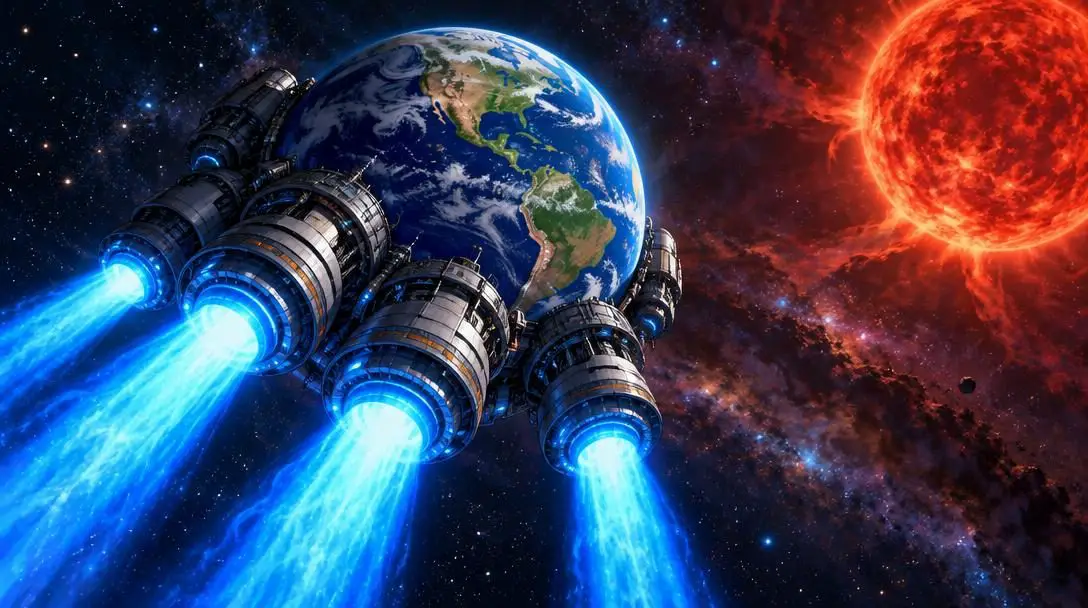
Rounding out the elite top five is The Wandering Earth, an ambitious hard science fiction spectacle directed by Frant Gwo. Released in 2019 with a $50 million production budget, the epic secured $700 million in total ticket sales, opening the floodgates for big-budget Chinese sci-fi. Set in the year 2061, the story confronts humanity with total extinction: the sun has aged prematurely, expanding toward a catastrophic red giant phase that will incinerate the Earth and all biological life upon it.

In a desperate bid for survival, a coalition of scientists and engineers builds colossal planetary thrusters across the globe to propel the entire planet out of orbit and navigate it toward a distant solar system. The massive critical and commercial reception of this high-concept survival journey launched an expanded universe, leading directly to the announcement and planned 2023 release of its follow-up, The Wandering Earth 2.
Inside the Mechanics of the Chinese Box Office Engine
The massive figures achieved by these five titles illustrate distinct structural advantages within the Chinese theatrical system. Reaching these unprecedented milestones requires a combination of strategic scheduling, high-return financial management, and universal cultural themes.
- Budget-to-Revenue Efficiency: Western franchise blockbusters routinely demand budgets of $200 million to $300 million to reach top-tier numbers. By contrast, Chinese domestic productions regularly achieve astronomical grosses on modest capital. Wolf Warrior 2 generated $874 million on a $30.1 million budget, while Ne Zha earned $742.5 million from just $20 million. Even the costliest film on the list, The Battle at Lake Changjin, made back more than four times its $200 million investment.
- Capitalizing on Holiday Release Windows: Release dates determine theatrical momentum. The arrival of Hi, Mom during the February 2021 holiday period allowed it to capture multi-generational family audiences who visit theaters together during seasonal celebrations. Similarly, Wolf Warrior 2 leveraged its mid-summer 2017 premiere to secure sustained weekly ticket sales throughout extended school and work recesses.
- Genre Diversity Over Formulaic Repetition: Hollywood's historical highs have leaned heavily on comic-book superhero adaptations. In contrast, the top five Chinese films reveal an audience ready to embrace widely different genres, ranging from animated myth to historical battlefields and heartfelt time-travel dramas.
Step-by-Step Guide to Exploring Modern Chinese Blockbusters
For cinephiles, students of international media, and general audiences eager to explore China's record-setting filmography, working through these landmark achievements in a structured manner provides valuable context for their unprecedented popularity.
- Select an Initial Title Based on Genre Affinity: Choose an entry point that reflects your personal viewing habits. Fans of high-concept disaster and outer-space survival should begin with the 2061 crisis of The Wandering Earth, while action enthusiasts will appreciate the intense pacing of Wolf Warrior 2. Viewers looking for character-driven sentimentality should start with Hi, Mom.
- Build Context Around Core Historical and Mythological Themes: Familiarizing yourself with the narrative backdrop enhances storytelling clarity. Understanding that The Battle at Lake Changjin chronicles the real-world Battle of the Chosin Reservoir during the Korean War, or that Ne Zha subverts legendary Taoist lore surrounding the Spirit Pearl and Demon Orb, helps ground character motivations.
- Watch Developing Cinematic Franchises in Chronological Order: To appreciate how modern Chinese series scale up in scope, view origin entries before sequels. Watching the original 2015 Wolf Warrior clarifies Leng Feng's journey prior to his 2017 African deployment, while watching the 2019 debut of The Wandering Earth is essential before transitioning into The Wandering Earth 2.
- Analyze the Craft Across Varying Production Scales: Compare the visual execution across different budget tiers. Observe how The Battle at Lake Changjin utilizes its $200 million war chest for vast practical and visual effects, while Ne Zha maximizes every dollar of its $20 million animation budget through dynamic choreography and innovative digital art.
Analytical Mistakes to Avoid When Evaluating Chinese Cinema
Industry observers and international commentators frequently misinterpret the drivers behind China's box office metrics. Avoiding common assumptions ensures a far more accurate assessment of the theatrical landscape.
- Assuming Western Studios Still Dictate the Market: While properties like the Marvel Cinematic Universe, Fast and Furious, and Transformers enjoyed immense receipts after the 2000s, assuming they remain the dominant force is incorrect. Homegrown productions hold every position on the all-time top five leaderboard.
- Attributing Success Solely to Market Size: Believing box office figures stem solely from population scale overlooks the decisive role of multi-talented creative leads. Directors and writers like Frant Gwo, Lan Xiaolong, and Huang Jianxin, alongside multi-hyphenates Wu Jing and Jia Ling—who wrote, directed, and starred in their record-breakers—drove audience engagement through compelling storytelling.
- Treating the Chinese Audience as Monolithic: Assuming domestic moviegoers favor only one style of movie ignores the immense diversity of the charts. A single top-five ranking includes high-intensity modern warfare, an animated mythological quest, reflective family time travel, hard sci-fi, and historical combat.
- Ignoring Budget-to-Gross Ratios: Looking exclusively at worldwide grosses without checking production expenditures paints an incomplete picture. Recognizing that Hi, Mom reached $850 million on a $59 million budget reveals profit margins that outpace many heavily funded Hollywood productions.
Frequently asked questions
What is the highest-grossing movie in Chinese box office history?
The highest-grossing film of all time in China is The Battle at Lake Changjin, released in 2021. Written by Lan Xiaolong and Huang Jianxin, the war epic earned $913 million worldwide against a $200 million production budget.
Are any animated movies ranked among the top five highest-grossing Chinese films?
Yes. The 2019 3D animated fantasy Ne Zha is ranked fourth on the all-time list, having grossed $742.5 million worldwide on a modest production budget of $20 million.
How do Hollywood blockbusters compare to the top domestic films in China?
Although American franchises such as the Marvel Cinematic Universe, Transformers, and Fast and Furious have posted massive box office figures in China since the 2000s, the top tier of all-time earnings is occupied entirely by homegrown Chinese productions.
Who directed and starred in Wolf Warrior 2?
Wu Jing directed, co-produced, co-wrote, and starred as the central character, Leng Feng, in Wolf Warrior 2. The film earned $874 million worldwide against a budget of $30.1 million.
Has The Wandering Earth expanded into an ongoing franchise?
Yes. Following the massive critical and commercial success of the 2019 original, which grossed $700 million, director Frant Gwo's hard science fiction film led to the announcement of a sequel, The Wandering Earth 2, slated for a 2023 release.
The Bottom Line
The rise of the five highest-grossing movies in Chinese cinema history highlights a definitive shift in international entertainment. By turning away from reliance on imported foreign blockbusters, domestic creators proved that ambitious, culturally resonant narratives could achieve unprecedented commercial dominance. From the technical spectacle of The Battle at Lake Changjin and The Wandering Earth to the intimate, tear-jerking comedy of Hi, Mom, Chinese cinema has established a mature, highly efficient production model capable of breaking global box office records.
Looking ahead, the expansion of proven intellectual properties—evidenced by the development and scheduled 2023 release of The Wandering Earth 2—signals an era where domestic franchises build sustainable cinematic universes. As homegrown films continue to refine their visual effects, explore diverse genres, and expand their distribution footprint into foreign markets, these five record-breaking titles stand as the blueprint for an industry that has redrawn the boundaries of global entertainment.