5 Key World War Two Battles That Were Won By Narrow Margins
Across more than five thousand distinct military engagements fought over just six years, World War II reshaped the geopolitical landscape of the modern era. Nearly eighty years after the war reached its conclusion, popular memory often assumes that the final outcomes were inevitable, dictated purely by gross industrial output, massive troop reserves, and expansive geographical alliances. In the field, however, the line separating victory from collapse was routinely razor-thin, decided by isolated tactical decisions, sheer human stamina, and the unpredictable friction of combat.
From the freezing ruins of Soviet cities to dense Pacific volcanic redoubts and contested European coastlines, entire campaigns swung on fragile operational margins. Examining these high-stakes clashes reveals how close the axis of momentum came to swinging in the opposite direction, demonstrating that strategic dominance was frequently contested down to the very last defensive stand.
Key takeaways
- Material and logistical superiority did not guarantee swift or easy victories when confronting entrenched defensive positions.
- Several of the war's most critical turning points resulted in monumental casualty figures where the victor suffered higher personnel losses than the defeated.
- Tactical battlefield successes sometimes came at ruinous operational costs, stripping combatants of specialized equipment needed for subsequent campaigns.
- Multinational coalitions and contributions from smaller participant nations routinely disrupted aggressive invasion schedules.
At a glance: Five razor-thin World War II engagements
The outcomes of these five pivotal encounters altered operational timelines across the Eastern Front, Western Europe, the Mediterranean, and the Pacific theater. While some delivered decisive strategic shifts, others exacted a punishing logistical toll that resonated through the remainder of the war.
| Battle | Key combatants | Primary location | Reported losses or casualties | Ultimate outcome |
|---|---|---|---|---|
| Battle of Stalingrad | Soviet Union vs. Axis powers (Germany, Italy) | Eastern Front (Soviet Union) | Over 1.1 million Soviet losses; over 800,000 Axis troops lost | Decisive Soviet victory |
| Battle of Normandy | Allied coalition (dozen-plus nations) vs. Axis | Northern France | Over 225,000 Allied casualties; 288,000 Axis casualties | Allied beachhead and expansion |
| Battle of Iwo Jima | United States vs. Japan | Volcano Islands (Pacific) | 27,000 U.S. casualties | U.S. secures island base |
| Battle of Crete | Greece, U.K., New Zealand, Australia vs. Germany, Italy | Crete (Mediterranean) | Heavy German aircraft losses | Tactical Axis capture |
| Battle of the Bulge | Allied forces vs. Germany | Belgium, Germany, and neighboring areas | Heavy mutual attrition | Allied defensive victory |
Five critical World War II battles decided by narrow margins
The following five confrontations stand out for how intensely the opposing forces fought and how close the fighting came to a completely different result. Spanning diverse terrains and operational doctrines, each battle highlights the intense friction of modern warfare.
Battle of Stalingrad

- Start date: August 1942
- Duration: Just over five months
- Soviet casualties: Over 1.1 million personnel lost
- Axis casualties: Over 800,000 troops lost
Beginning in August 1942, the Battle of Stalingrad became one of the bloodiest and most fiercely contested clashes in recorded history. The engagement pitted the Soviet military alone against invading Axis forces, primarily composed of German and Italian divisions. At the outset, Soviet forces found themselves substantially outnumbered, contesting an advancing enemy through a pulverized urban landscape where combat disintegrated into savage room-to-room and street-level engagements.
As the conflict dragged past the autumn months, the Soviet defense held through an unrelenting influx of reinforcements. More citizens and soldiers rallied to the defense, eventually pushing Soviet numbers past one million personnel in the theater. The human toll was catastrophic: the Soviets lost more than 1.1 million lives, while Axis casualties surpassed 800,000 troops. Despite these staggering losses, the narrow Soviet triumph permanently crippled the offensive capability of the German and Italian armies on the Eastern Front, marking a watershed moment from which the Axis forces never fully recovered.
Battle of Normandy
- Operation name: Operation Overlord
- Allied force: More than a dozen nations
- Duration: Nearly three months
- Casualties: Over 225,000 Allied; 288,000 Axis
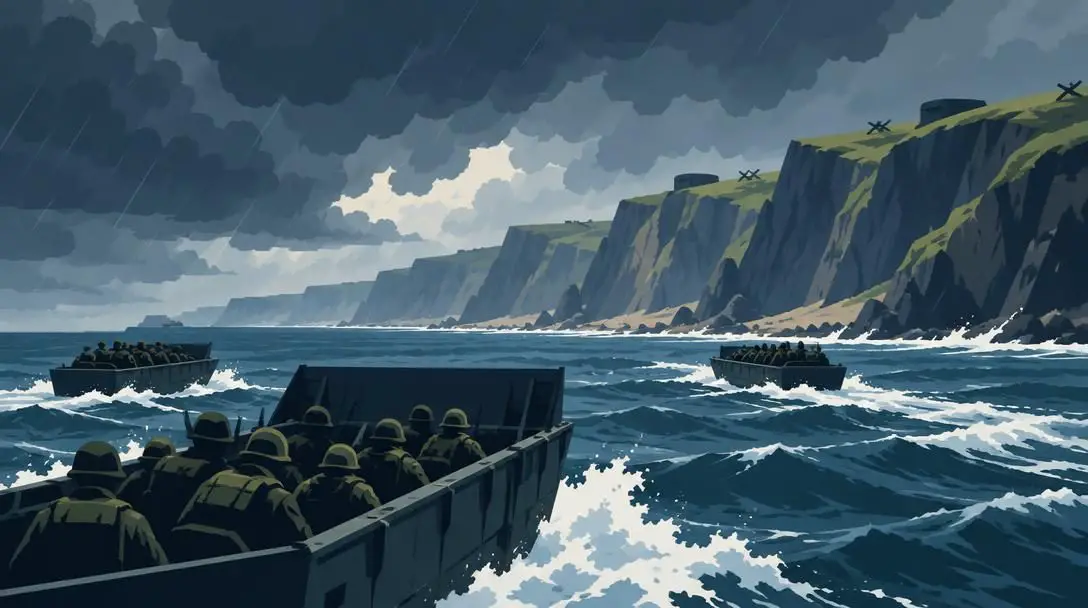
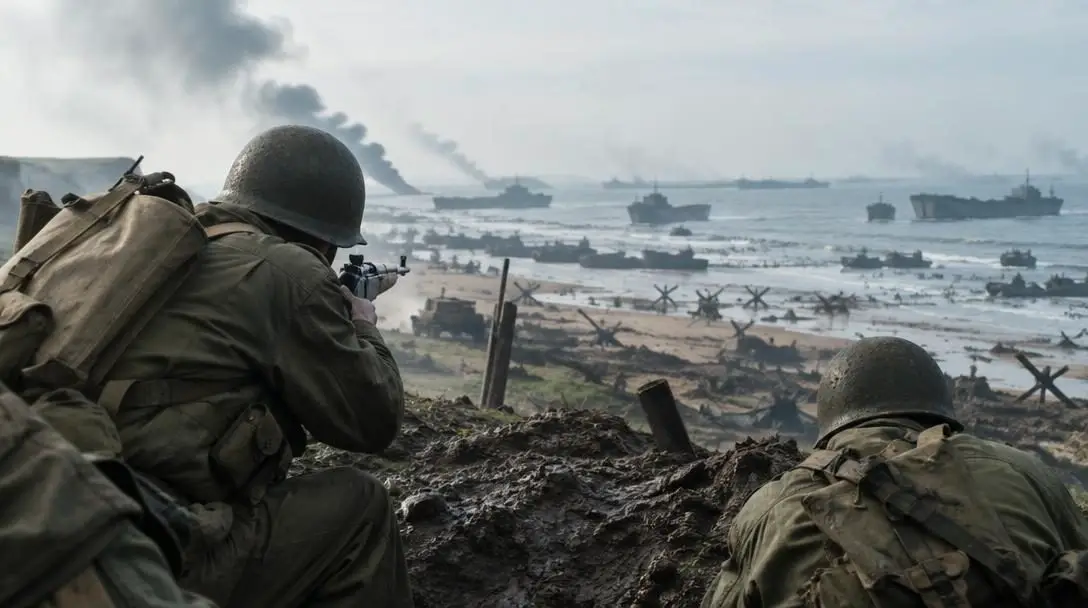
Widely recognized as one of the most daring amphibious assaults in military history, the Battle of Normandy commenced under the banner of Operation Overlord. A coalition representing more than a dozen Allied countries launched a massive combined air, naval, and land assault against the fortified Atlantic coastline of France. The initial assault experienced a rough, chaotic start, as landing craft faced punishing crossfire, treacherous obstacles, and entrenched coastal defenses that threatened to stall the invasion at the water's edge.
Securing the beachheads required surviving severe operational disruptions and localized repulses. Once a viable foothold was established, Allied forces slowly expanded inland, engaging in grueling hedgerow warfare before staging a sweeping breakout across the country. Over the course of nearly three months of sustained combat, Allied casualties climbed beyond 225,000, while Axis losses totaled roughly 288,000. The engagement proved that the margin between establishing a permanent European front and suffering a disastrous maritime repulse was remarkably slim.
Battle of Iwo Jima

- Location: Volcano Islands
- Combatants: United States vs. Japan
- Duration: More than a month
- U.S. casualties: Approximately 27,000
The struggle for the island of Iwo Jima, situated within Japan's Volcano Islands, pitted the United States Marine Corps and Navy directly against isolated Japanese defenders. On paper, American planners anticipated an efficient operation. The defenders lacked any surrounding landmass for strategic withdrawal, while the United States exercised total naval dominance and uncontested air superiority overhead, theoretically guaranteeing a successful outcome.
Instead, Japanese forces transformed the volcanic island into an intricate subterranean fortress of interconnected tunnels, concealed pillboxes, and fortified caves. This formidable defensive network negated much of the American bombardment and forced landing forces into brutal close-quarters combat. Rather than yielding quickly, the defenders prolonged the battle for more than a month. The United States ultimately achieved its objective, securing the island as an operational air base, but did so at the steep cost of roughly 27,000 casualties.
Battle of Crete

- Defending forces: Greece (roughly 11,000 soldiers), U.K., New Zealand, Australia
- Attacking forces: Germany and Italy
- Conclusion date: June 1, 1941
- Duration: Nearly two weeks
The struggle for Crete highlighted the critical defensive role played by smaller nations during the early years of the conflict. While the Greek army was not among the largest military establishments in the war, roughly 11,000 Greek soldiers fought determinedly alongside troops from the United Kingdom, New Zealand, and Australia to contest an aggressive airborne and amphibious invasion mounted by Germany and Italy.
The defenders mounted a fierce resistance that initially threw the German airborne invasion into deep disarray, punishing initial drops and threatening to repel the assault entirely. The balance swung when German reinforcements managed to secure an operational foothold on the island. The Allies resisted stubbornly for nearly two weeks, but Axis forces eventually forced an evacuation and claimed formal control of Crete on June 1, 1941. While the Axis secured a territorial prize, the victory proved exceptionally costly: the severe loss of transport and combat aircraft on Crete significantly impaired German operational capabilities in subsequent theaters.
Battle of the Bulge
- Primary theater: Belgium, Germany, and neighboring borderlands
- Timeframe: Final weeks of 1944 to first weeks of 1945
- Strategic aim: German encirclement of Allied forces
- Outcome: Allied line holds; German offensive neutralized
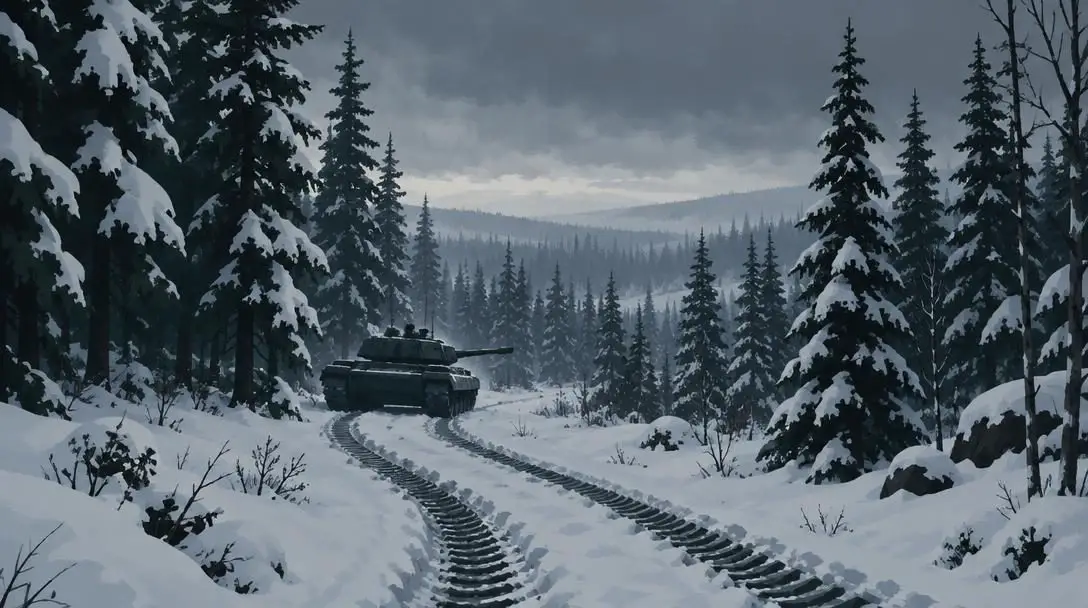
Regarded as one of the most pivotal confrontations on the Western Front, the Battle of the Bulge represented Germany's final major counteroffensive of the war. German military planners formulated an ambitious strategy designed to pierce the Allied front line, encircle major field armies, and force a negotiated settlement that could dramatically alter the trajectory of the war. Launched under cover of severe winter weather across Belgium, Germany, and surrounding borderlands, the assault caught Allied formations by surprise, creating a dangerous protrusion—or "bulge"—in the line.
What followed was an exceptionally close, evenly balanced contest fought through freezing temperatures, deep snow, and dense forest terrain. Despite widespread confusion and severed communications during the initial breakthrough, isolated Allied units mounted a determined defense at critical crossroads. Lasting from the final weeks of 1944 into the opening weeks of 1945, the Allied stand held firm until clearing skies and counterattacks blunted the German drive. By repelling the offensive, the Allies depleted Germany's remaining armored reserves and paved the way for the final push into the German homeland.
A single breakdown in communication, a sudden arrival of reinforcements, or a stubborn defensive stance altered the direction of entire campaigns.
Strategic dynamics that dictate narrow battle outcomes
Understanding why massive military clashes balance on razor-thin margins requires an analysis of core combat dynamics. Prolonged warfare rarely yields tidy, unilateral victories; instead, outcomes are forged through complex tactical frictions.
- Attrition versus replenishment: Sustained defensive success depends on the ability to absorb massive initial strikes while steadily feeding personnel into threatened sectors, as demonstrated by the Soviet mobilization throughout the five-month ordeal at Stalingrad.
- Breaching defenses versus counterattacks: Amphibious and airborne operations remain acutely vulnerable during their landing phases. If defenders fail to eradicate an initial lodgment quickly, attackers can consolidate their strength and transition into an expansive regional breakout.
- Defensive fortification versus material dominance: Overwhelming air and naval firepower can be dramatically mitigated by subterranean tunnel systems and entrenched fortifications, transforming straightforward logistical superiority into protracted, grinding combat.
- Pyrrhic victories and logistical drain: Achieving a nominal battlefield victory can result in strategic depletion if the attacking force loses specialized materiel—such as the massive loss of German aircraft over Crete—that cannot be replaced for future campaigns.
- Ambitious encirclement versus defensive resilience: High-risk counteroffensives rely entirely on maintaining swift forward momentum to encircle enemy forces; once isolated defenders slow the advance, the attacker's supply constraints quickly lead to operational collapse.
How to analyze close-run military campaigns
When researching historical campaigns to uncover why battles swung by such narrow margins, applying a systematic, step-by-step methodology produces a far more nuanced and accurate perspective.
- Examine the physical geography and terrain: Study how local topography influenced movement, visibility, and defensive capabilities, whether analyzing the volcanic ridges of Iwo Jima, the hedgerows of Normandy, or the frozen forests spanning Belgium and Germany.
- Map the complete coalition composition: Identify all participant nations rather than focusing exclusively on superpowers, paying close attention to the contributions of smaller contingents such as the roughly 11,000 Greek defenders on Crete alongside British, New Zealand, and Australian forces.
- Track comparative casualties and material losses: Compare the personnel losses and equipment attrition on both sides to evaluate the real cost of engagement, contrasting numbers like the 1.1 million Soviet losses against 800,000 Axis losses at Stalingrad.
- Break down operational timelines into distinct phases: Divide the engagement into operational segments—from initial assaults to protracted defensive holds—noting how timelines extended over weeks or months before a definitive outcome emerged.
- Assess the long-term operational consequences: Determine whether the nominal victor sustained crippling losses that impaired later operations, or whether a defensive hold successfully cleared the way for the end of the conflict.
Common analytical mistakes to avoid
Historians, students, and general readers frequently encounter several persistent analytical pitfalls when assessing closely contested battles:
- Assuming battlefield inevitability: Reading military history backward often creates the illusion that the winning side was destined to triumph from the start, obscuring how close operations like Normandy or the Battle of the Bulge came to failure.
- Overlooking smaller allied forces: Focusing solely on major combatants like the United States, Germany, or the Soviet Union leads to ignoring essential contributions from smaller nations, including the Greek divisions defending Crete.
- Equating logistical superiority with rapid success: Assuming that cut-off defenders will surrender immediately ignores how defensive tenacity, rugged terrain, and prepared networks can neutralize massive air and naval superiority, as seen on Iwo Jima.
- Confusing high casualty counts with operational defeat: A military force can suffer greater aggregate casualties than its adversary yet still achieve a decisive, war-defining strategic objective, as demonstrated by the Soviet Union at Stalingrad.
- Relying entirely on cinematic portrayals: Popular feature films often compress operational timelines, alter troop deployments, or simplify logistical realities to heighten dramatic tension, making them an unreliable substitute for rigorous military history.
Broader themes to explore next
To gain a deeper perspective on how these narrow margins altered the wider course of World War II, consider researching several interconnected operational topics:
- Specialized aircraft attrition: Investigate how the severe loss of transport and frontline combat aircraft during early operations like the Battle of Crete restricted future air mobility, troop deployment, and resupply missions later in the conflict.
- Cross-continental coordination: Examine how Allied leadership successfully balanced simultaneous, resource-intensive campaigns across Western Europe following Normandy while sustaining massive naval and amphibious pushes in the Pacific.
- Axis supply limitations in late 1944: Explore how acute fuel shortages, limited replacement armor, and disrupted transport networks contributed to the failure of the German drive during the Battle of the Bulge.
- The dynamics of dense urban warfare: Analyze how industrialized cityscapes equalize technological and numerical advantages, examining the structural conditions that caused more than 1.9 million combined casualties at Stalingrad.
Frequently asked questions
Why did the Battle of Stalingrad have such high casualties on both sides?
The Battle of Stalingrad was fought in dense urban rubble where German and Italian forces engaged in brutal room-to-room combat against an initially outnumbered Soviet defense. Over just five months, more than one million Soviet troops were mobilized into the struggle, ultimately resulting in over 1.1 million Soviet lives lost and more than 800,000 Axis casualties before the Soviet Union secured a decisive victory.
How close did the Allies come to failing during the Battle of Normandy?
The opening stages of Operation Overlord were exceptionally precarious. Allied landing forces faced heavy defensive fortifications, severe crossfire, and widespread logistical chaos along the coast of France. Securing the beachheads required absorbing more than 225,000 Allied casualties over nearly three months of intense fighting before forces could successfully break out and begin recapturing France.
Why was the Battle of Iwo Jima so costly despite American dominance?
Although the United States possessed uncontested naval and air dominance around the Volcano Islands and Japanese troops had no avenue of retreat, the defenders utilized an extensive network of fortified caves and tunnels. This subterranean defensive setup neutralized much of the American bombardment, prolonging the battle for over a month and causing approximately 27,000 U.S. casualties.
Why is the German capture of Crete considered a costly victory?
Although German and Italian forces claimed formal control of Crete on June 1, 1941, after nearly two weeks of combat against roughly 11,000 Greek soldiers alongside British, New Zealand, and Australian units, the cost was severe. The Axis suffered massive losses in transport and combat aircraft that permanently weakened airborne and logistical capabilities for the remainder of the war.
What was Germany's primary objective in the Battle of the Bulge?
During the final weeks of 1944, German forces launched an offensive through Belgium, Germany, and surrounding border areas designed to punch through Allied lines and encircle major Allied formations. German commanders hoped to force a favorable diplomatic resolution, but stubborn Allied resistance held the line through brutal winter conditions and neutralized the offensive by early 1945.
The bottom line
The trajectory of World War II was never set in stone. While vast economic potential and troop reserves shaped the broader conflict, the pivotal turning points on the ground came down to grueling endurance, localized command decisions, and razor-thin margins. Whether holding the frozen streets of Stalingrad, clawing ashore at Normandy, surviving the fortified tunnels of Iwo Jima, absorbing Pyrrhic aircraft losses on Crete, or repelling an armored counteroffensive in the Ardennes, these five engagements prove that the margin between historical victory and catastrophe was remarkably fragile.