
5 Keys To A Successful STEM Career
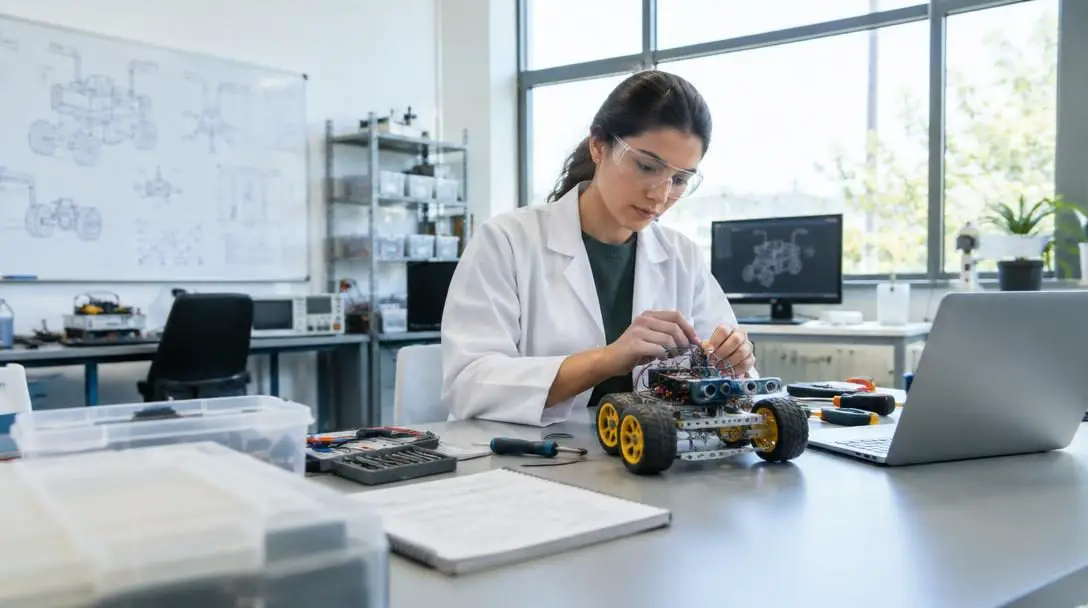
Stepping into the disciplines of science, technology, engineering, and mathematics means entering one of the most intellectually demanding landscapes in the modern economy. Professionals across these sectors confront complex problem-solving, high-difficulty challenges, and long hours of sustained concentration on a regular basis. Yet despite these rigorous demands, vast numbers of ambitious workers pursue careers in these disciplines because they offer the rare opportunity to earn high wages while making a tangible, lasting difference in the world.
Succeeding over the long arc of a technical career requires far more than raw cognitive talent or specialized mathematical aptitude. Navigating shifts in technology, research methodologies, and organizational structures demands a deliberate framework of professional habits. Whether you are preparing to enter the field, establishing your footing in your first position, or elevating an existing role, five foundational practices govern long-term career resilience and impact.
Key takeaways
- Technical education must function as a daily commitment rather than concluding with a diploma.
- Acknowledging errors without ego turns inevitable technical setbacks into durable institutional knowledge.
- Interpersonal communication and collaborative teamwork are essential prerequisites for solving modern engineering and scientific challenges.
- Proactively taking notes and shadowing top-performing colleagues prevents costly errors before they happen.
- Embracing continuous procedural adaptation preserves professional relevance as technical sectors evolve daily.
The five core pillars of a sustainable STEM career
Regardless of whether your work centers on laboratory research, digital software infrastructure, mechanical systems design, or complex mathematical modeling, the underlying conditions for lasting achievement remain remarkably consistent. The following five principles represent the essential requirements for building a productive, rewarding, and sustainable career.
Continue learning
In many conventional occupations, workers operate under the assumption that structured education ends the day they receive their diploma. Within technical disciplines, adopting that outlook creates an immediate barrier to advancement. True longevity requires treating education as a continuous, everyday obligation rather than a temporary milestone. Expanding your expertise demands deliberate engagement through both formal avenues—such as traditional university classrooms or specialized online coursework—and self-directed exploration.
A substantial portion of your professional development occurs through practical, on-the-job training. During daily operations, you will inevitably confront obstacles that lie outside your current expertise. When you encounter a technical barrier, seeking out a valid solution independently or asking colleagues for assistance creates an authentic learning opportunity that produces actionable knowledge for future projects. Furthermore, proactive professionals should examine company benefits to identify what tuition assistance or continuing education programs their employers are willing to finance, ensuring continuous upskilling without personal financial strain.
Accept mistakes
Humility serves as an indispensable asset in complex technical environments. Entering a STEM occupation requires leaving all narcissism and defensive pride at the door. Because the work is inherently experimental and technically intricate, mistakes occur with far greater frequency than in less volatile professions. How a practitioner responds to failure determines whether that error builds future capability or destroys career momentum.
When an error occurs, professionals invariably choose between two divergent paths: openly acknowledging the failure to extract actionable insights, or deflecting blame onto external factors and teammates. Choosing deflection damages personal credibility and halts learning. History demonstrates that even the most gifted minds in science and engineering made countless errors throughout their tenures. What elevated their careers was their steadfast willingness to accept responsibility, analyze root causes, and use those lessons to refine their subsequent work.
Learn people skills
A persistent stereotype portrays technical disciplines as the exclusive domain of solitary thinkers operating in complete isolation. While many practitioners might personally prefer to work independently without presenting concepts, debating methods, or navigating group reviews, modern technical problems are too vast for isolated execution. Sustained progress requires knowing how to operate as a cohesive part of cross-functional teams.

Unless an individual possesses insight completely unmatched by anyone else on the planet, collaborative teamwork represents the only viable path to meaningful innovation. Cultivating interpersonal capability often presents a challenge for analytical minds accustomed to independent study. A dependable way to begin is by initiating informal conversations with colleagues regarding non-work topics during breaks. Building rapport on a human level establishes psychological safety and mutual trust, which proves invaluable when teams face high-pressure deadlines. In fact, your interpersonal communication during technical interviews offers hiring teams a direct forecast of how effectively you will contribute to collective efforts.
Unless an individual is thinking on an entirely different level from every other person on the planet, collaborative teamwork is the only practical way to generate real advancements.
Take notes
While learning from your own missteps is necessary, skilled professionals understand that countless setbacks can be avoided simply by observing the environment around them. Systematically recording observations and gathering proven techniques from colleagues builds a structured path toward success before errors materialize. A core strategy involves directly consulting peers and requesting permission to shadow experienced team members during their regular routines.
Every organization features distinct top-tier performers who consistently deliver reliable results under difficult conditions. Identifying these individuals and studying their daily habits provides unmatched professional insight. Observe how they organize complex workflows, communicate with stakeholders, and approach ambiguous dilemmas. Documenting these observations in written notes enables you to assimilate the best practices of seasoned experts into your personal routine.
Adapt
The commitment to lifelong education aligns directly with another unavoidable reality of technical work: the constant necessity of adaptability. Technical fields do not remain stationary over years or months; their operational foundations, software tooling, and industry standards shift on a daily basis. Those who willingly adapt to evolving procedures quickly become indispensable to their organizations, securing long, resilient careers.
Conversely, workers who cling rigidly to outdated methodologies or insist on executing tasks solely according to past personal preferences inevitably find their skill sets obsolete. Longevity demands absorbing technical updates at every opportunity and immediately applying newly acquired knowledge to active operational workflows. Remaining flexible in your processes guarantees that your contributions align with modern organizational priorities.
The five keys at a glance
Balancing these core principles ensures that your technical proficiency is supported by strong operational and interpersonal habits. The table below outlines how each key functions within a sustainable career strategy.
| Career Key | Primary Objective | Practical Application | Primary Risk Avoided |
|---|---|---|---|
| Continue Learning | Maintain technical currency | Enroll in online coursework and leverage employer tuition benefits | Skill obsolescence |
| Accept Mistakes | Build technical resilience | Acknowledge errors openly and examine root causes without ego | Erosion of professional credibility |
| Learn People Skills | Facilitate team collaboration | Engage in informal dialogue and participate actively in group debates | Siloed and ineffective workflows |
| Take Notes | Capture proven best practices | Shadow high-performing colleagues and document successful procedures | Repeating preventable operational errors |
| Adapt | Navigate systemic evolution | Align workflows with updated operational standards and tools | Inflexibility and operational stagnation |
How these principles reinforce one another
While each of these five practices delivers individual benefits, their greatest impact occurs when they operate as an integrated system within your everyday routine. Continuous learning supplies the fresh insights necessary to understand modern industry developments, yet that theoretical understanding remains dormant without an active willingness to adapt to new operational mandates.
When you willingly embrace organizational and procedural change, you invariably encounter unfamiliar tools and unmapped territory. This increases your exposure to operational errors. At that pivotal juncture, accepting mistakes without defensiveness transforms a technical failure into an educational breakthrough rather than an exercise in finger-pointing. This transparent approach to error resolution signals emotional maturity and integrity to your peers, strengthening your interpersonal relationships and establishing genuine collaborative trust.
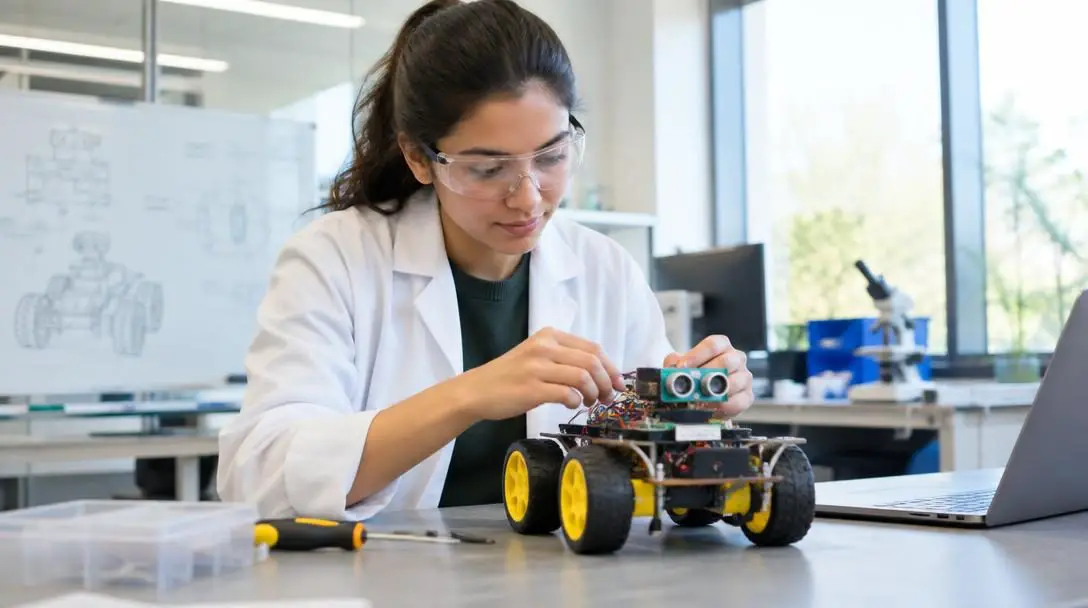
As colleagues witness your professional humility and solution-oriented mindset, they become far more receptive to sharing their insights and permitting you to observe their personal workflows. By taking meticulous notes during these shadowing sessions, you identify high-leverage habits and advanced problem-solving methodologies. Those recorded insights flow directly back into your personal knowledge base, fueling your ongoing educational cycle.
Actionable steps to implement these strategies
Translating overarching career philosophy into sustainable, everyday habits requires a deliberate framework. Use the following structured sequence to weave these foundational principles into your daily working life.
- Audit your educational commitments: Schedule a recurring block of time each week dedicated entirely to technical skill acquisition. Investigate your company's benefits policy to identify employer-funded education, training budgets, or certificate sponsorships that match your career focus.
- Establish an error-logging protocol: Whenever a task encounters failure or an analytical error surfaces in your work, immediately communicate the issue to impacted stakeholders. Record the sequence of events that produced the fault, document the corrective steps taken, and store the summary for recurring review.
- Initiate regular social touchpoints: Make a conscious effort to engage team members in informal conversations during project transitions, lunch breaks, or pre-meeting intervals. Understanding your colleagues' working habits and perspectives eases communication during high-stress operational deadlines.
- Arrange structured shadowing sessions: Identify the most consistent, high-performing individuals in your operational group. Request formal permission to observe their planning sessions or technical workflows, taking thorough notes on how they approach complex problems and structure their daily priorities.
- Conduct periodic workflow reviews: Schedule a monthly review of your personal technical practices against the latest standards adopted by your organization. When an operating procedure shifts, immediately revise your personal habits to reflect the updated guidance rather than relying on legacy methods.
Common traps that derail technical careers
Even highly dedicated technical professionals can fall victim to behavioral patterns that undermine their professional advancement. Remaining vigilant against these common missteps preserves career momentum and protects professional relationships:
- Treating graduation as the finish line: Assuming that a formal degree provides sufficient knowledge for a multi-decade career guarantees rapid obsolescence in fast-evolving sectors.
- Blaming tools or teammates: Deflecting accountability when an experiment or technical implementation fails destroys peer trust and closes off critical learning opportunities.
- Retreating into complete isolation: Convincing yourself that technical brilliance eliminates the need for clear communication causes project friction and restricts your organizational impact.
- Relying entirely on memory: Neglecting to take comprehensive notes during operational briefings or training forces you to ask baseline questions repeatedly, signaling a lack of engagement.
- Clinging to obsolete procedures: Refusing to adopt newly introduced organizational software or operational workflows out of comfort isolates you from collaborative company initiatives.
Evaluating your career trajectory
Sustaining a successful journey across technical sectors requires periodic self-examination. Take time to assess your current performance across each of the core areas outlined above. Determine whether your interpersonal strengths match your technical abilities, or whether you tend to withdraw into independent isolation whenever analytical pressure rises. Reflecting candidly on your most recent performance evaluation or job interview will provide valuable perspective on how your communication style is experienced by colleagues.
Next, examine the educational culture of your current employer. Investigate whether your company provides financial reimbursement for graduate coursework, technical certifications, or conference attendance. Taking advantage of these resources enables you to expand your capabilities on your employer's balance sheet, keeping your technical edge razor-sharp.
Finally, identify the top performers in your immediate professional orbit. Determine respectful, constructive ways to observe their work and learn from their execution. By committing to ongoing education, accepting accountability for errors, prioritizing team collaboration, capturing procedural details, and adapting to daily changes, you establish a resilient foundation for long-term achievement across the STEM landscape.
Frequently asked questions
Why are technical skills alone insufficient for a successful STEM career?
Modern technical problems are far too complex for any single worker to resolve in isolation. Without interpersonal skills, adaptability, and the humility to learn from errors, a professional cannot collaborate effectively or adjust to the rapid daily evolution of technical tools and methodologies.
How should a professional respond when a technical error occurs?
The most effective response is to immediately acknowledge the error to affected stakeholders without deflecting blame onto tools or colleagues. Document the root cause, identify the corrective solution, and use the incident as a learning moment to inform future engineering or scientific decisions.
How can introverted professionals develop necessary workplace people skills?
Introverted workers can start small by initiating brief, informal conversations with colleagues about non-work topics during breaks or before meetings. Building personal rapport during low-stakes moments establishes trust and eases communication during intense technical collaborations.
What is the best way to approach top performers to learn from them?
Identify the high-performing individuals in your department and politely ask for permission to shadow them or observe their workflow during planning sessions. Take structured notes on their daily routines, organizational methods, and communication habits without interrupting their work.
How frequently do procedures and tools change in technical disciplines?
Procedures, tools, and technical best practices undergo continuous revision that can occur on a daily basis. Professionals who regularly review their personal workflows and adopt emerging standards remain valuable and protect their careers against obsolescence.
The bottom line
A rewarding career in science, technology, engineering, or mathematics requires a deliberate balance of analytical competence and professional emotional intelligence. Technical disciplines offer substantial financial rewards and the profound satisfaction of solving tangible global challenges, but they require enduring intellectual resilience. By embracing continuous daily learning, owning your mistakes with humility, communicating proactively with teammates, documenting proven practices from top performers, and maintaining operational adaptability, you build a durable career capable of weathering any industry transformation.