5 Math Activities That Make Learning Fun For Kids
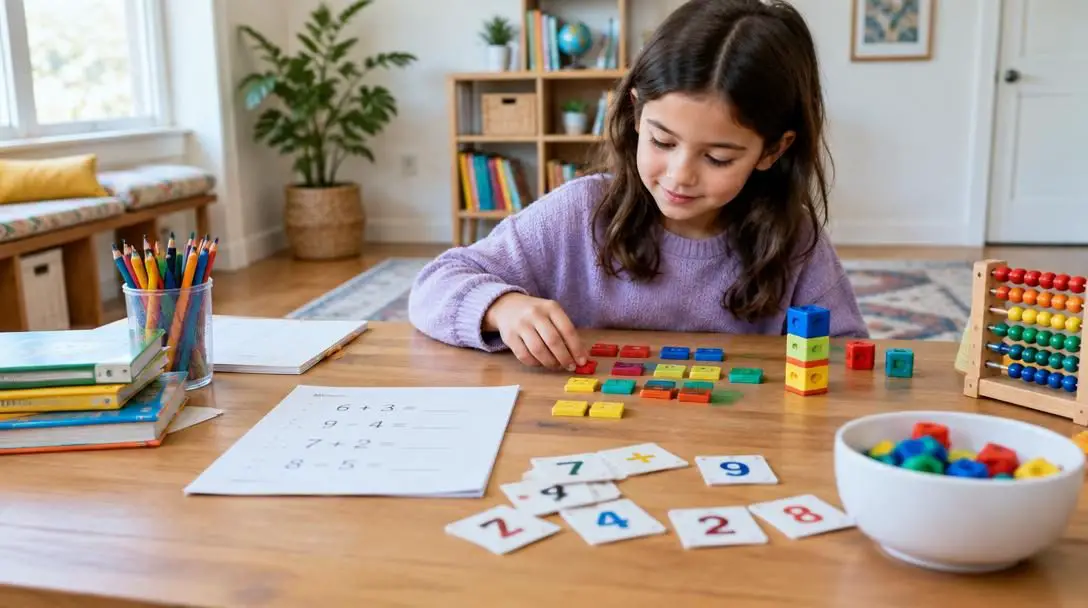
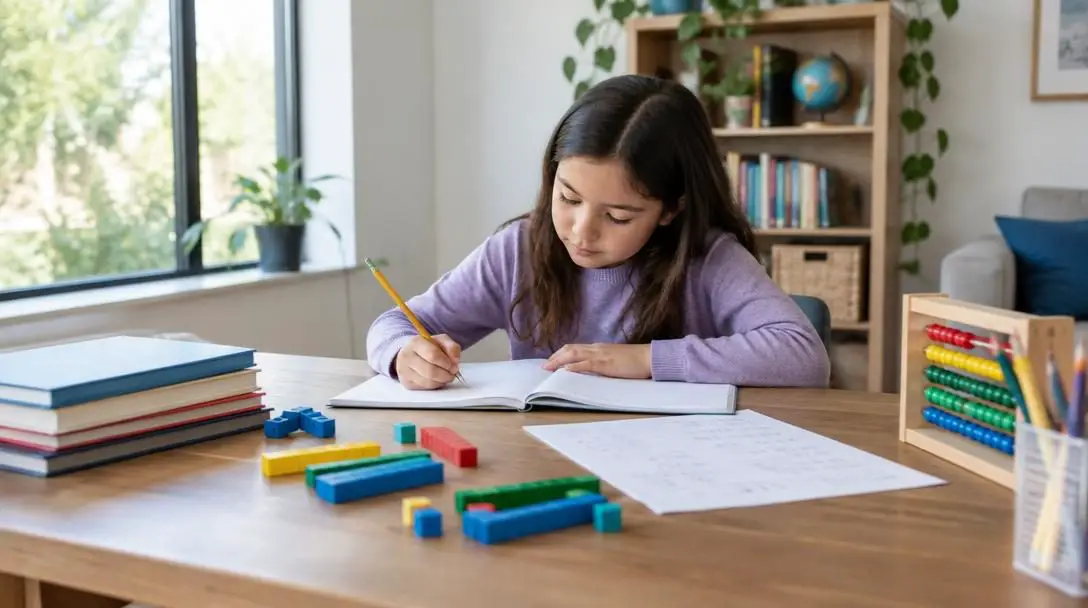
Mathematics can feel intimidating when it is introduced solely through worksheets, repetitive drills, and abstract formulas. For many children, working with pencil and paper makes numbers appear distant from daily life, leading to frustration, disengagement, and math anxiety. When learning shifts from passive memorization to dynamic, active exploration, children discover that numbers are practical tools for solving real problems.
By turning foundational math concepts into experiential activities—ranging from family tabletop games and culinary projects to outdoor quests and creative crafts—parents and educators can demystify mathematics. Engaging children in hands-on tasks builds confidence, reinforces spatial and numerical reasoning, and cultivates an enduring love of learning that supports classroom performance and long-term academic success.
Key takeaways
- Experiential math activities replace stressful pencil-and-paper drills with tangible, low-pressure problem-solving.
- Common household routines like cooking, baking, and paper crafts provide natural opportunities to practice fractions, measurement, and geometry.
- Both classic tabletop games and digital platforms reinforce fundamental operations, probability, and strategic thinking.
- Active scavenger hunts pair cooperative physical movement with arithmetic and algebraic reasoning.
- Prioritizing conceptual understanding and cooperation over speed prevents math anxiety and keeps learning fun.
The benefits of active, experiential math
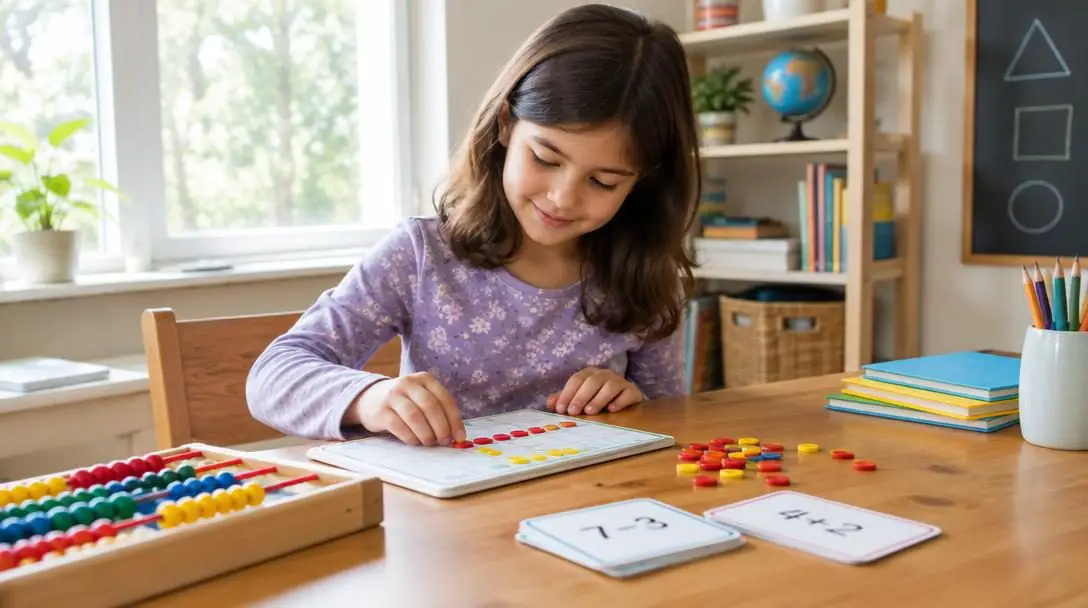
Traditional instruction often requires young learners to manipulate numbers on paper before they fully grasp what those numbers represent in the physical world. Experiential math bridges this gap by grounding abstract theories in concrete, sensory experiences. When children manipulate physical measuring spoons, roll dice, or map out geometric cutouts, they develop an intuitive mental model of numerical relationships.
Furthermore, playful learning alters a child's psychological relationship with challenge. Instead of viewing an error as a red mark on an assignment, mistakes in a game or a recipe are simply puzzles to work through. This shift transforms math from an evaluative test into a collaborative adventure, instilling a resilient growth mindset.
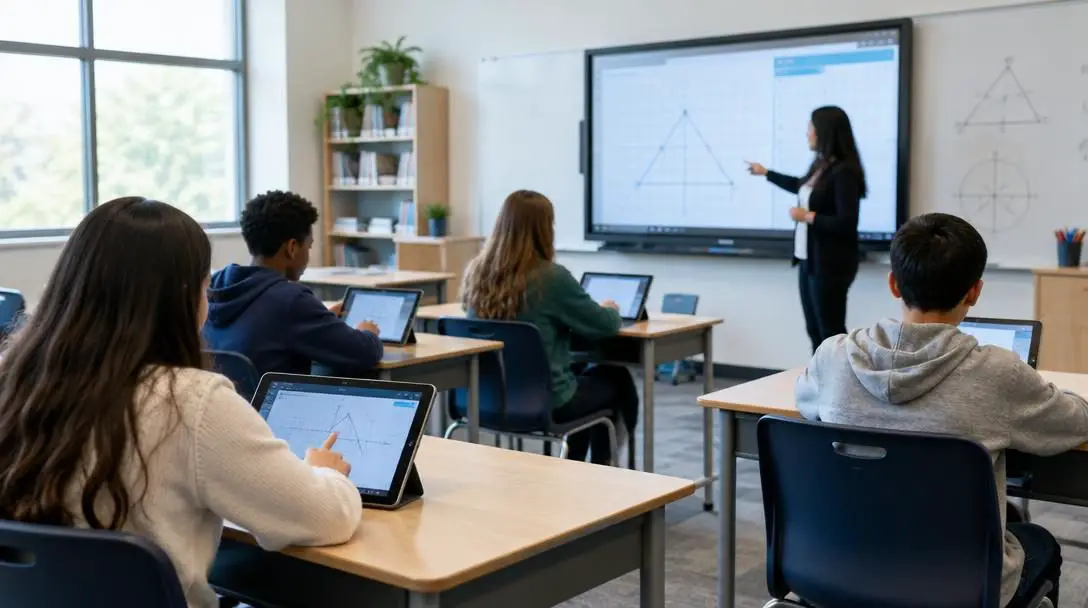
When numbers feel like cold symbols on a page rather than dynamic tools for solving problems, kids can easily become disengaged.
| Activity | Primary Math Skills | Ideal Setting | Key Tools and Examples |
|---|---|---|---|
| Board Games | Counting, addition, subtraction, probability | Living room or classroom table | Monopoly, Settlers of Catan, Prime Climb, Math Dice |
| Online Games | Curriculum-aligned arithmetic, logic, progression | Computer, tablet, or mobile device | Math Blaster, Coolmath Games, Prodigy Math Game |
| Cooking and Baking | Fractions, volume measurement, elapsed time, unit cost | Kitchen counter and oven | Measuring cups, spoons, timers, family recipes |
| Math Scavenger Hunt | Arithmetic, algebraic equations, spatial navigation | Backyard, living room, or outdoor park | Hidden answer cards, clue sheets, clipboard |
| Math Crafts | Geometry, spatial reasoning, patterns, sequencing | Craft table or desk | Colored paper, scissors, rulers, glue, paper chains |
5 interactive math activities for children
Transforming math education does not require expensive curricula. The following five activities draw on common household items, digital resources, and everyday routines to make mathematics tangible, approachable, and entertaining.
Board Games
Board games seamlessly integrate mathematical operations into engaging social play. Classic titles like Monopoly teach children how to handle paper money, calculate change, and track property values, turning basic addition and subtraction into necessary survival skills on the board. In strategy games such as Settlers of Catan, players regularly roll dice, trade resources, and evaluate the statistical likelihood of specific number combinations rolling on two six-sided dice, introducing basic principles of probability and resource allocation.
In addition to mainstream titles, specialized educational games target specific arithmetic milestones. Prime Climb uses color-coded visual mechanics to teach multiplication, division, and prime numbers, while Math Dice challenges players to construct mental equations using randomly rolled integers. Because the mechanics require frequent calculations to determine movement or win conditions, children practice mental arithmetic repeatedly without the fatigue associated with flashcards.
Online Games
In today's digital landscape, educational software transforms abstract mathematics into immersive interactive adventures. High-energy platforms like Math Blaster challenge players to solve rapid-fire equations to navigate intergalactic obstacles, blending arcade-style play with arithmetic fluency. Similarly, casual gaming hubs such as Coolmath Games offer a vast library of puzzles, spatial logic problems, and numbers-based challenges that encourage creative thinking without the formal pressure of timed classroom tests.
For a deeper, narrative-driven experience, role-playing platforms like Prodigy Math Game weave grade-level math problems directly into fantasy quests. Players cast spells and unlock new territories by correctly answering questions adapted to their learning level. By wrapping standard educational material in reward loops, visual storytelling, and character progression, online platforms motivate children to tackle challenging problems on their own initiative.
Cooking and Baking
The kitchen is one of the most practical environments for demonstrating applied mathematics. Cooking and baking transform abstract numbers into edible reality, demonstrating how fractions, volumes, and time operate in real-world contexts. Preparing a batch of cookies or bread requires children to interact directly with fractional values, whether measuring out a half-cup of sugar, a quarter-teaspoon of salt, or three-quarters of a cup of milk.
Kitchen sessions also offer natural opportunities to scale recipes up or down. Asking a child to double a batch or cut an existing recipe in half demands immediate mental manipulation of fractions, such as calculating half of one-third cup. Beyond measuring ingredients, parents can ask children to calculate the total cooking time by combining preparation steps, or even calculate the grocery cost of individual ingredients, reinforcing practical budgeting skills.
Math Scavenger Hunt
A math scavenger hunt combines physical activity with analytical problem-solving. In this setup, an adult writes down a series of math problems on a master sheet and hides the corresponding solutions on index cards throughout the house, yard, or park. Children must solve each equation on their sheet and then search the physical environment to find the card showing that exact answer, linking physical exploration with cognitive effort.
The flexibility of a scavenger hunt allows parents to tailor the difficulty precisely to a child's needs. Younger learners can work through fundamental addition and subtraction clues, while older children can tackle multi-step word problems or basic algebraic equations. Running, crawling, and hunting for answers releases energy, lowers classroom-related anxiety, and fosters natural teamwork when siblings or friends work through the clues together.
Math Crafts
Crafting offers a hands-on way to explore geometric principles, symmetry, and sequencing without formal textbooks. By working with colored paper, rulers, and scissors, children physically create two-dimensional and three-dimensional geometric shapes, observing how sides, angles, and vertices fit together. Constructing complex patterns from alternating colors and cutouts reinforces early predictive thinking and algebraic sequence recognition.
A classic, accessible craft project is building a paper chain to count down the days until a special event, such as a holiday or a birthday. Each link represents a single day, giving young children a physical, visual representation of time, counting, and subtraction as they remove one link each morning. Translating abstract numbers into tangible paper constructions helps learners develop crucial spatial reasoning skills that benefit higher-level geometry later on.
How to set up interactive math activities at home
Integrating hands-on math into a household routine does not require advanced teaching credentials or expensive gear. Following a methodical, low-stress setup ensures that each activity runs smoothly and stays focused on fun.
- Select the right medium for the moment: Match the activity to your schedule and your child's energy level. Choose a high-movement scavenger hunt when kids need to run, a culinary task around mealtime, or a quiet craft project on a rainy afternoon.
- Prepare supplies and clarify rules in advance: Whether gathering colored construction paper and glue or laying out the board and dice, establish the framework before inviting your child to start. Clear, simple instructions prevent early frustration.
- Delegate authentic responsibilities: Let children hold the measuring spoons, distribute paper money, roll the target dice, or manage the clue checklist. Hands-on ownership keeps them invested.
- Encourage verbal explanations: Ask open-ended questions like "How did you figure that total out?" or "What should our next step be?" Discussing mathematical choices reinforces reasoning and language skills.
- Review outcomes collaboratively: When a game concludes, a meal is served, or a scavenger hunt wraps up, take time to celebrate the effort. Review interesting equations together in a lighthearted, supportive manner.
Common mistakes to avoid during math play
Even well-intentioned math activities can backfire if they begin to resemble strict classroom evaluations. Avoiding these common traps keeps the environment encouraging and productive.
- Emphasizing speed over understanding: Forcing children to shout out answers instantly induces stress. Allow plenty of processing time whether they are working through Coolmath Games or rolling numbers in Math Dice.
- Overcomplicating the rules: Introducing too many rules at once can derail the excitement. When playing games like Settlers of Catan or Monopoly, stick to core rules and essential arithmetic rather than obscure technicalities.
- Taking over the physical tasks: Adults often take the measuring cup or scissors to avoid messes or uneven cuts. Doing so deprives children of the chance to handle fractions and physical shapes directly.
- Turning games into formal tests: If an adult hovers over an online session in Prodigy Math Game and treats wrong answers as academic failures, the child will lose interest. Frame mistakes as regular parts of discovery.
- Fostering cutthroat competition: Pitting siblings or peers against each other during scavenger hunts can discourage slower processors. Encourage cooperative teams where everyone contributes their strengths.
Advancing math skills as children grow
As children develop greater numerical fluency, their activities should progress alongside them. Sustaining an interest in math means introducing new complexities gradually while letting children take greater ownership of the process.
Start by observing your child's natural interests. A child fascinated by the virtual questing of Math Blaster or Prodigy Math Game might thrive when introduced to complex puzzle games that require multi-step logic. Conversely, a child drawn to the tactile nature of baking and paper crafts may enjoy advanced architectural modeling kits, origami, or complex culinary recipes requiring intricate scaling and unit conversions.
You can also gradually adjust the mathematical difficulty of existing games. If your child has mastered basic addition in scavenger hunts, introduce clues featuring multi-digit multiplication, simple division, or introductory algebraic variables where they must solve for x to locate the next room. On game night, shift the conversation during Settlers of Catan toward probability distributions across different dice totals, or use Prime Climb to analyze how prime factors underpin the structure of whole numbers.
Finally, empower your child to step into the role of game designer. Invite them to write the math problems for the family's next scavenger hunt, create customized rules for a dice game, or design an elaborate holiday countdown chain from scratch. When children transition from players to creators, they solidify their mathematical intuition and build lasting confidence in their analytical capabilities.
Frequently asked questions
Which board games are best for practicing basic addition and subtraction?
Classic titles like Monopoly offer consistent practice with addition, subtraction, and money management. Dedicated learning games such as Math Dice and Prime Climb also provide focused arithmetic practice using dice rolls and color-coded mathematical operations.
How does baking help children understand fractions?
Baking requires precise volume measurements using fractional tools such as half-cups, quarter-cups, and third-teaspoons. When children pour, combine, or halve recipes, they physically see and feel how fractional parts fit together to form whole units.
What are some reliable online platforms for interactive math learning?
Widely used platforms include Math Blaster for fast-paced arcade challenges, Coolmath Games for puzzle-based spatial and logic practice, and Prodigy Math Game for role-playing fantasy adventures that adapt curriculum-aligned problems to a child's skill level.
Can a math scavenger hunt be adapted for older children?
Yes. While younger children can hunt for solutions to simple addition and subtraction problems, you can adapt the hunt for older students by writing clues that require solving multi-step word problems, fractions, or algebraic equations to identify the hidden card.
What math concepts can kids learn from simple paper crafts?
Paper crafts reinforce geometry and spatial awareness as children cut and identify shapes, count sides and vertices, and build repeating patterns. Projects like paper countdown chains provide a tangible, visual representation of counting, subtraction, and sequencing over time.
The bottom line
Mathematics does not have to be an intimidating chore confined to lined paper and timed worksheets. By weaving numbers into beloved board games, engaging online platforms, kitchen measurements, cooperative scavenger hunts, and creative paper crafts, parents and educators can transform learning into an active adventure. These interactive experiences demystify complex principles, foster meaningful collaboration, and help children build the confidence they need to succeed in school and appreciate math throughout their lives.