5 Most Ethical Tech Companies

Modern consumers, enterprise leaders, and institutional investors are increasingly confronting a difficult question: can a commercial technology company truly operate ethically? For decades, the digital economy rewarded aggressive market capture, continuous hardware turnover, and closed proprietary ecosystems above almost all else. Today, that dynamic is shifting under intense regulatory scrutiny, heightened public awareness, and mounting climate risks. Sustainable practices and corporate accountability are no longer optional marketing garnishes; they have become operational imperatives.
A genuinely ethical technology enterprise must tackle challenges across three interconnected fronts: environmental stewardship, human and social equity, and principled corporate governance. From curbing the staggering energy demands of modern data centers to eliminating forced labor and hazardous waste from global supply chains, ethical tech firms embed measurable accountability into everyday operations. While many organizations struggle to align business growth with social good, several leaders and startups are demonstrating that technical innovation and moral responsibility can reinforce one another.
Key takeaways
- Corporate ethics in technology requires balancing environmental life-cycle management, internal social equity, and strict compliance governance.
- Established giants like Apple, Microsoft, and Dell prove that sustainability and compliance can be enforced at massive international scale.
- Emerging platforms like EcoCart and Bluebird Climate leverage software, browser integrations, and data modeling to empower everyday consumers and consumer brands.
- Rigorous evaluation of tech firms demands checking third-party certifications, examining extended supplier networks, and verifying time-bound targets over superficial marketing claims.
Leading tech companies advancing ethical business practices
Balancing profitable hardware manufacturing, software deployment, and enterprise services with social and environmental accountability is notoriously difficult. The following five organizations stand out for embedding ethical codes, deep sustainability measures, and transparent operational systems into their core business strategies.
Apple, Inc.

- Green Bond Funding: 4.7 billion dollars committed to low-carbon technologies
- Operational Power: 100 percent renewable energy across global facilities
- Factory Certification: Assembly locations certified Zero Waste to Landfill
- Materials Innovation: Direct sourcing of commercial carbon-free aluminum
As one of the world's most influential consumer hardware and digital services corporations, Apple, Inc. has systematically fused its focus on industrial design with strict environmental benchmarks and compliance oversight. The company operates a comprehensive ethics and compliance framework that covers global political engagement, human rights, sustainable manufacturing, and labor practices across its worldwide supply chain.
To reduce its massive environmental footprint, Apple has committed $4.7 billion in Green Bonds, using the capital to fund clean energy projects and low-carbon manufacturing technologies. The enterprise has transitioned its global offices, retail stores, and data centers to run entirely on renewable energy. In physical product manufacturing, Apple has helped pioneer the commercial use of direct carbon-free aluminum, significantly curbed toxic chemicals, and redesigned product packaging to eliminate single-use plastics. Crucially, its final assembly sites have earned Zero Waste to Landfill status, showing that intricate consumer electronics can be assembled at vast volume without overloading municipal waste systems.
Microsoft
- Carbon Neutrality: Achieved 100 percent carbon neutrality in 2012
- Compliance Pillars: Prevention, detection, and remediation
- Data Integration: Advanced predictive analytics for anti-corruption oversight
- Enforcement Scope: Unified standard applied to all staff and global suppliers
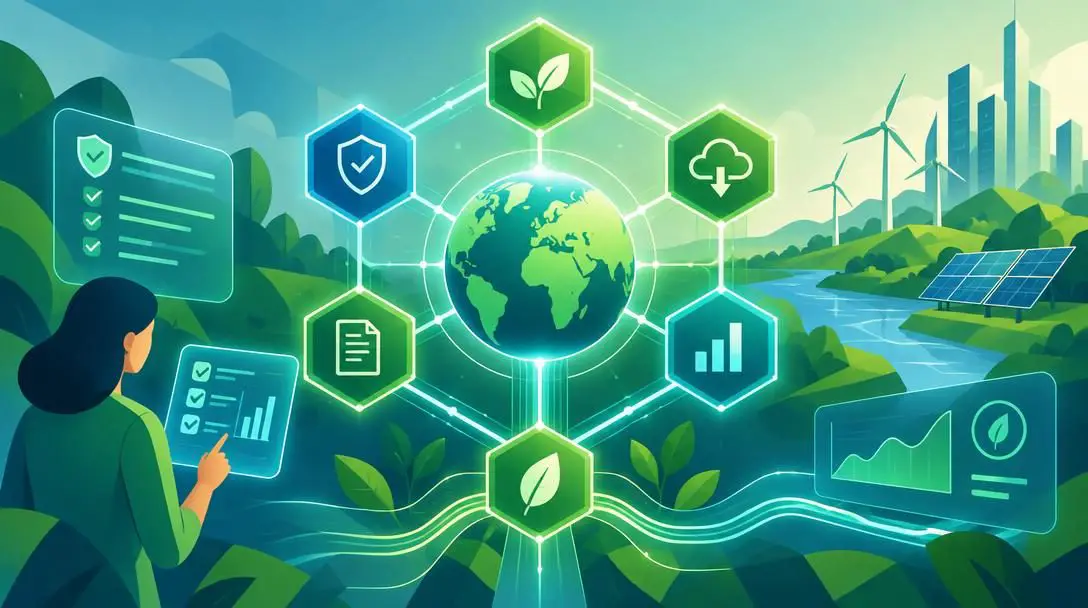
Few technology corporations have sustained an environmental and governance program as long as Microsoft, which reached 100 percent carbon neutrality across its direct operations back in 2012. Rather than resting on early carbon offsetting milestones, Microsoft has maintained an aggressive focus on energy efficiency and environmental remediation across its rapidly expanding cloud computing and software operations.
In addition to climate initiatives, Microsoft has constructed an advanced compliance architecture designed to eliminate organizational vulnerabilities, conflicts of interest, and corrupt practices. This corporate compliance framework is powered by advanced data analytics focused on three primary mandates: prevention, detection, and remediation of misconduct. The enterprise ensures that these standards do not merely serve as executive guidelines; they are contractually binding across its global employee base and extended supplier ecosystem. By enforcing a single, unified standard of conduct on external vendors, Microsoft helps curb bribery, labor abuses, and ethical lapses across its enterprise relationships.

Dell Technologies

- Governance Framework: Formalized employee and leadership Culture Code
- Community Target: Deliver digital inclusion support to over 1 billion people by 2030
- Social Initiatives: Expanding technology hardware access for underrepresented groups
- Core Pillars: Workforce diversity, digital equity, and circular sustainability
Dell Technologies addresses corporate responsibility through a balanced strategy that pairs internal workplace standards with targeted community development programs. Internally, the computer hardware enterprise guides day-to-day employee behavior, executive decision-making, and organizational accountability through its formalized Culture Code. This internal framework emphasizes high moral standards, inclusive hiring, and proactive efforts to solve complex e-waste and sustainability challenges throughout the product lifecycle.
Beyond internal company culture, Dell has committed substantial resources toward closing the digital divide through philanthropic and educational partnerships. These initiatives supply computing hardware, connectivity tools, and technical training to communities that lack modern technology infrastructure, focusing specifically on children living in low-income neighborhoods and members of historically underrepresented groups. Dell has codified this vision into a measurable, time-bound objective: harnessing its corporate scale to deliver digital inclusion and social impact to more than one billion people by the year 2030.
EcoCart

- Founding Year: 2019
- Co-Founders: Peter Twomey and Dane Baker
- Retail Network: Over 10,000 merchant partners, including Glossier and American Eagle
- Environmental Impact: 4 million pounds of CO2 offset, over 8,000 trees saved, energy for 700+ homes
Founded in 2019 by Peter Twomey and Dane Baker, EcoCart is a climate-focused technology firm that uses software to tackle the environmental consequences of global e-commerce. Developed primarily as an intuitive browser extension and direct checkout integration, EcoCart allows everyday online shoppers to offset the carbon footprint of their purchases at no individual cost, with the offset expenses funded through participating commercial business partnerships.
With an expanding merchant network exceeding 10,000 retail partners—including prominent lifestyle brands like Glossier and American Eagle—EcoCart has achieved notable ecological milestones. The platform has successfully offset more than 4 million pounds of carbon dioxide emissions, preserved over 8,000 trees, and generated enough clean energy to power more than 700 households. To keep shoppers actively engaged, the platform awards users EcoPoints for offsetting their shopping emissions. These points can be redeemed for consumer rewards or directed into charitable initiatives that plant trees and provide clean drinking water to communities in need worldwide.
Bluebird Climate
- Platform Type: Enterprise sustainability software and carbon accounting
- Target Market: Consumer packaged goods and consumer product brands
- Analytical Focus: Life-cycle carbon emissions, waste footprints, and competitor benchmarking
- Core Benefit: Lowering brand operating expenses while reducing product carbon footprints
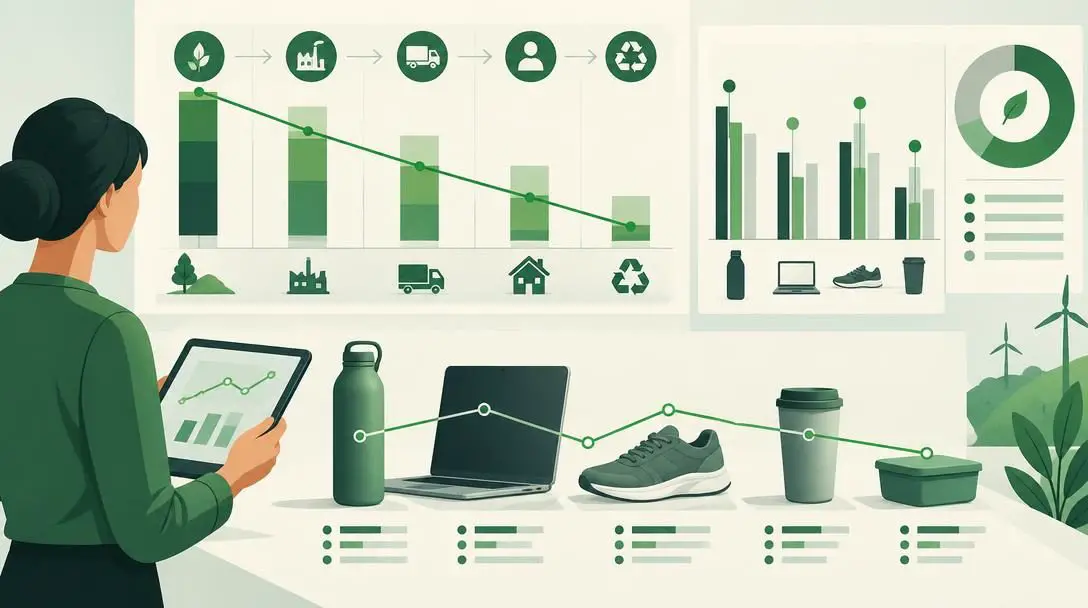
Recognizing that consumer packaged goods represent a massive share of worldwide greenhouse gas emissions, Bluebird Climate operates as an environmental software platform built to help brands build sustainable products and communicate their impact honestly. Bluebird provides consumer brands with granular analytical models that measure their exact carbon emissions and material waste footprints across the entire life cycle of a product, comparing these figures against direct industry competitors.
By transforming raw environmental data, material sourcing choices, and supply chain logistics into actionable product insights, Bluebird enables manufacturers to identify high-emission bottlenecks in their supply chains. This analytical clarity allows brands to lower overhead expenses, eliminate unnecessary packaging, and engineer products with minimal or net-zero carbon footprints. Bluebird bridges the gap between high-level corporate sustainability pledges and the engineering decisions required to manufacture low-impact consumer goods.

True corporate ethics requires technology firms to weave compliance, fair labor, and ecological auditing into the day-to-day rhythm of their core business operations.
Comparing ethical tech leaders at a glance
Ethical operations can take multiple forms, ranging from multi-billion-dollar supply chain overhauls to nimble software tools that empower sustainable consumer choices. The table below outlines how these five highlighted organizations approach social, environmental, and corporate governance responsibilities.
| Company | Primary Ethical Focus | Key Initiative or Product | Notable Metric or Target |
|---|---|---|---|
| Apple, Inc. | Clean manufacturing and renewable operations | Green Bonds and carbon-free aluminum sourcing | $4.7B Green Bonds; Zero Waste assembly |
| Microsoft | Corporate compliance and early decarbonization | Data-driven anti-corruption compliance system | 100% carbon neutral since 2012 |
| Dell Technologies | Digital inclusion and internal culture | Dell Culture Code and digital access programs | Support 1B people with tech access by 2030 |
| EcoCart | Consumer e-commerce emissions offsetting | Browser extension and merchant checkout plugin | 4M lbs CO2 offset; 10,000+ brand partners |
| Bluebird Climate | Supply chain modeling and waste accounting | Life-cycle analysis software for consumer brands | Benchmarking emissions against industry rivals |
How ethical systems operate in the technology industry
Developing an ethical technology business requires translating broad philosophical ideals into verifiable operational mechanics. Companies cannot rely on informal intentions; they must build administrative structures, monitoring software, and auditing protocols to catch violations and track ecological impacts across four primary dimensions:
- Programmatic Compliance and Governance: Formal codes of conduct—such as Dell’s Culture Code and Microsoft’s supplier accountability policies—establish institutional baselines. Modern enterprises use data analytics to monitor commercial transactions, flagging irregularities, supply chain vulnerabilities, and potential bribery before legal violations occur.
- Life-Cycle Carbon and Resource Management: Hardware manufacturers review materials from mine to scrap heap. This process includes securing 100 percent renewable power for corporate facilities, transitioning to direct carbon-free aluminum, and securing Zero Waste to Landfill certifications across assembly plants.
- Algorithmic Footprint Modeling: Specialized enterprise software like Bluebird Climate breaks complex physical products down into packaging layers, chemical compositions, and freight routes. By matching these components against industry emissions baselines, algorithms show product designers exactly where to strip out excess carbon.
- Consumer-Facing Offsetting Integrations: Platforms like EcoCart embed algorithmic emission estimators into the online checkout process. When a shopper adds goods to a digital cart, the software calculates freight and manufacturing emissions, allowing participating merchants to purchase verified carbon offsets automatically.
How to evaluate the ethics of any technology company
Whether evaluating a tech enterprise as a prospective employee, purchasing hardware for an enterprise fleet, or shopping as a conscious consumer, verifying ethical standards requires looking past polished promotional campaigns. Follow these sequential steps to audit a company's real-world practices:
- Inspect third-party certifications: Look for independent validations, such as certified Zero Waste to Landfill assembly facilities, verified renewable energy procurement audits, and published corporate compliance declarations.
- Audit extended supply chain policies: Confirm whether the organization enforces strict behavioral and labor standards on third-party suppliers, component manufacturers, and raw-material vendors, rather than policing only corporate headquarters.
- Review internal governance and culture codes: Examine published employee codes of conduct to verify that the firm maintains clear rules regarding non-retaliation for whistleblowers, internal pay equity, and measurable workplace diversity initiatives.
- Identify measurable, time-bound milestones: Disregard vague promises of general sustainability. Look for specific, verifiable commitments with firm deadlines, such as Dell's target of bringing technology access to one billion people by 2030.
- Analyze core business revenue models: Examine how the company generates its primary revenue. Ensure the core product does not profit from exploitative practices, and check if software tools actively help decarbonize other business sectors.
Mistakes to avoid when assessing corporate ethics
Evaluating enterprise behavior is filled with pitfalls. Many corporate claims are crafted by skilled public relations departments designed to divert attention from structural shortcomings. Watch out for these common errors:
- Falling for greenwashing and surface-level marketing: A company highlighting a compostable retail box or a miniature eco-friendly accessory may still rely on high-emission manufacturing plants and fossil-fuel-powered data centers.
- Treating ethics as a single dimension: Assuming an organization is ethical simply because it uses clean energy ignores workplace diversity, employee treatment, anti-corruption policies, and fair vendor compensation.
- Confusing aspirational goals with verified milestones: A public announcement promising net-zero carbon operations by 2040 or 2050 is an ambition, not an accomplishment. Prioritize proven milestones, such as Microsoft's verified carbon neutrality since 2012.
- Overlooking community-level equity: Assessing an organization solely on shareholder returns or executive perks overlooks whether its products exacerbate the digital divide in low-income or historically marginalized communities.
- Expecting consumers to absorb all sustainability friction: Initiatives that require consumers to pay steep premiums or navigate cumbersome systems often fail. Effective platforms like EcoCart succeed because they remove cost friction through merchant funding and reward user participation with loyalty points.
Frequently asked questions
Can a large consumer electronics company really eliminate waste?
While totally eliminating every scrap of industrial waste remains challenging, large hardware makers can drastically reduce their impact. Apple has demonstrated this by achieving Zero Waste to Landfill certification across all of its final product assembly facilities, diverting manufacturing scrap into comprehensive recycling and reuse channels.
How does Microsoft enforce ethical standards across its global supply chain?
Microsoft relies on a comprehensive, data-driven compliance system focused on prevention, detection, and remediation. The company applies these operational rules not only to its internal corporate staff but also contractually to third-party suppliers, using data analytics to detect anomalies, corruption, and labor violations.
How does EcoCart offer carbon offsets to online shoppers for free?
EcoCart funds carbon offsets through commercial business partnerships with its network of more than 10,000 retail partners. Participating merchants, such as Glossier and American Eagle, cover the cost of the carbon offsets at checkout to provide shoppers with a sustainable, carbon-neutral buying experience.
What is the difference between carbon neutrality and net-zero emissions?
Carbon neutrality, achieved by Microsoft in 2012, typically involves balancing unavoidable operational emissions by funding equivalent carbon removal or verified offset projects. Net-zero focuses on directly eliminating direct and indirect greenhouse gas emissions across the entire supply chain down to the absolute minimum before offsetting any remaining residual emissions.
Why is software modeling critical for consumer product sustainability?
Platforms like Bluebird Climate use algorithmic modeling to measure the carbon emissions and waste footprints of consumer goods across every manufacturing step. By comparing materials and shipping methods against industry benchmarks, software helps brands identify low-carbon alternatives and cut operating expenses without relying on guesswork.
The bottom line
The standard for what makes a technology company ethical has permanently shifted. Superficial green marketing and token philanthropic gifts no longer shield organizations from the scrutiny of consumers, regulatory bodies, and modern employees. As demonstrated by enterprises ranging from global hardware manufacturers like Apple and Dell to specialized software innovators like EcoCart and Bluebird Climate, ethical leadership requires measurable policies, transparent compliance, and sustained capital investment.
Maintaining high ethical standards is not a one-time project, but a continuous operational discipline. As computing technologies demand more energy and global supply networks grow increasingly interconnected, holding technology firms accountable to independent certifications, time-bound social goals, and verified environmental metrics will remain essential for building an equitable, low-carbon digital economy.