5 Most Expensive Anime Series

For decades, animated entertainment has developed along distinct creative trajectories depending on geography. Television networks and animation studios across North America and Europe have increasingly adopted digital workflows to reduce operational overhead. While these digital pipelines have produced cost-effective programming, critics and longtime animation enthusiasts often observe that many contemporary Western productions have sacrificed the distinctive texture, nuance, and hand-crafted feel that characterized hand-drawn animation during earlier eras.
In Japan, the craft of commercial animation has retained a deep commitment to intensive manual artistry. Producing television anime involves meticulous line art, complex framing, and substantial hands-on effort across key frames, in-between drawings, background paintings, and digital compositing. Rather than cutting visual corners simply to compress schedules, major production teams frequently dedicate extensive labor to each installment. This approach requires immense organizational coordination and significant financial resources, pushing the budgets of flagship Japanese television productions well into six-figure numbers per episode.
Key takeaways
- High-profile television anime series frequently command per-episode budgets ranging between $110,000 and $160,000.
- Dragon Ball Super and Attack on Titan rank among the most expensive ongoing and modern adaptations ever produced for Japanese television.
- Per-episode expenses are distributed across multiple labor-intensive stages, including storyboarding, key animation, in-between drawings, background art, and sound engineering.
- A massive financial budget does not guarantee visual perfection without disciplined production management and realistic scheduling.
- Global streaming platforms and international distribution agreements are continuing to reshape how studios finance long-running anime projects.
At a glance: The costliest television anime
Because television anime typically airs as serialized programming consisting of dozens or even hundreds of episodes, sustaining high production budgets across full seasons represents an enormous financial commitment. The table below outlines how these premier adaptations compare in terms of their creators, premiere timelines, and average per-episode financial investments.
| Anime Title | Original Manga Creator | Television Debut | Estimated Cost Per Episode |
|---|---|---|---|
| My Hero Academia | Kōhei Horikoshi | 2016 | $110,000 |
| JoJo’s Bizarre Adventure | Hirohiko Araki | Serialized TV revival | $120,000 |
| Black Clover | Yūki Tabata | 2015 | $140,000 |
| Attack on Titan | Hajime Isayama | Modern serialized era | $150,000 |
| Dragon Ball Super | Akira Toriyama (franchise) | 2017 | $160,000 |
The 5 most expensive anime series per episode
Examining these landmark productions illustrates how creative popularity and high per-episode budgets intersect in the anime industry. From superhero training academies to battle-heavy shonen epics, these series highlight where production companies and animation committees are dedicating substantial financial capital to satisfy worldwide audiences.
My Hero Academia
- Original creator: Kōhei Horikoshi
- Debut year: 2016
- Estimated per-episode cost: $110,000
- Status: Ongoing television adaptation
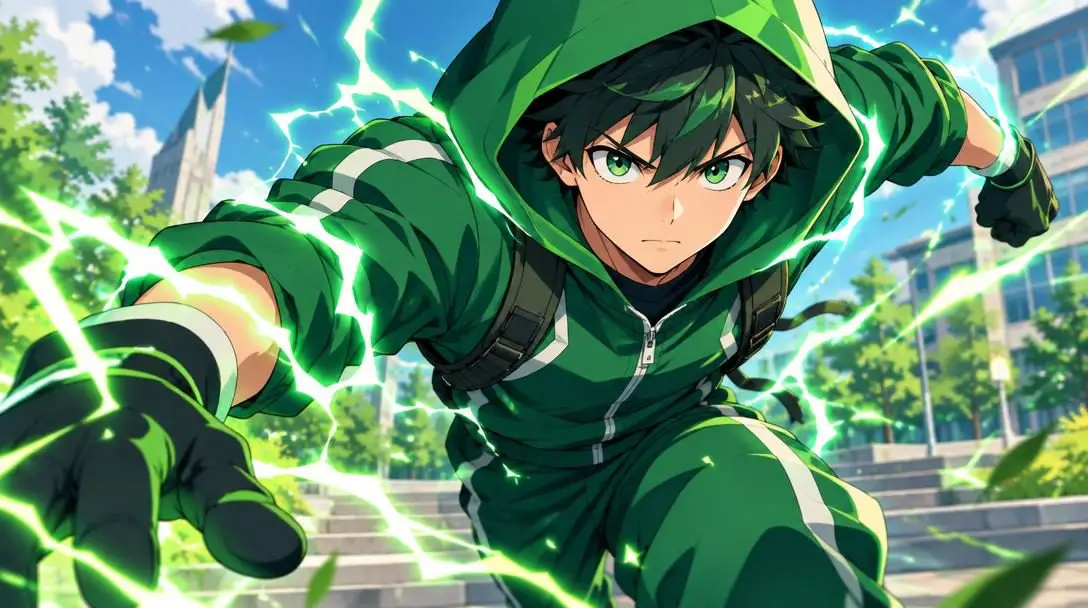
Originating as a popular manga written and illustrated by Kōhei Horikoshi, My Hero Academia rapidly secured an enormous following among youth demographics and cosplay communities worldwide after its animated debut in 2016. The story centers on Izuku Midoriya, an ambitious schoolboy born into a society where superpowers, known as Quirks, have become the standard biological reality. Unlike the vast majority of his peers, Izuku is born without any Quirk of his own, leaving him an isolated outsider in a civilization defined by heroic spectacle.
His fortunes shift dramatically following a fateful encounter with his personal idol, the world's premier champion All Might. Recognizing Izuku's inherent courage and self-sacrificing spirit, All Might directly transfers his own unique ability to the boy. Equipped with this borrowed power, Izuku enrolls in an elite high school dedicated to cultivating the next generation of professional heroes. As the series progresses, these students coordinate with official law enforcement agencies to confront dangerous villain syndicates that exploit their abilities for violent criminal aims. The adaptation requires continuous funding of roughly $110,000 per episode to maintain dynamic superpower clashes, distinct character uniforms, and expressive emotional acting across every seasonal arc.
JoJo’s Bizarre Adventure
- Original creator: Hirohiko Araki
- Source format: Long-running serialized manga
- Estimated per-episode cost: $120,000
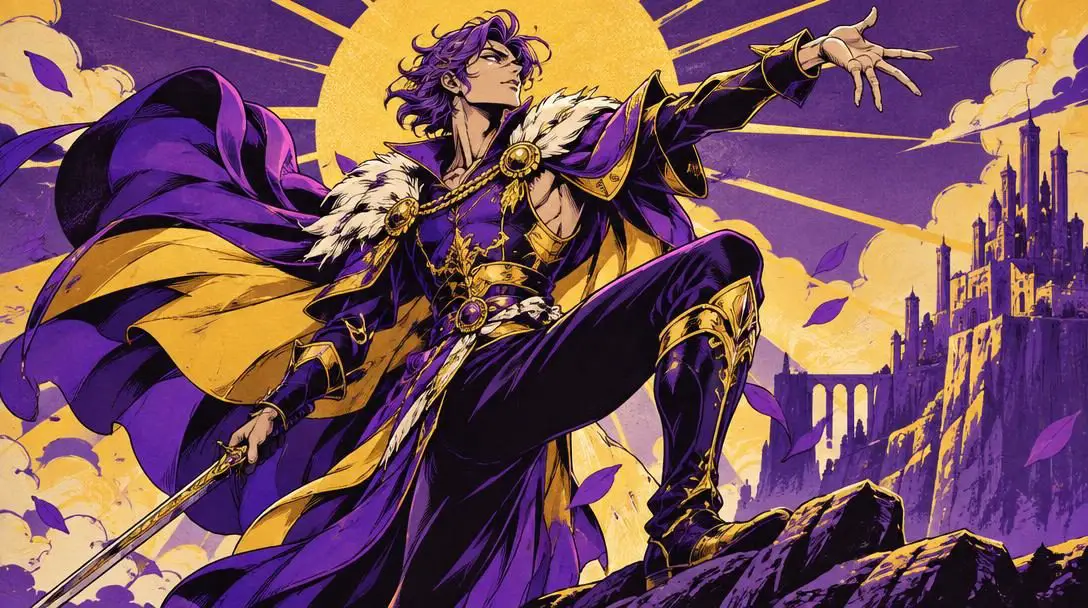
Celebrated for its theatrical visual aesthetic, flamboyant posing, and eccentric narrative turns, JoJo’s Bizarre Adventure is based on the legendary manga conceived and illustrated by Hirohiko Araki. While the source material has inspired numerous adaptations over several decades, the modern serialized television adaptation commands an estimated price tag of approximately $120,000 per episode. This investment is justified by an ever-expanding international fanbase that appreciates the property's boundary-pushing artistic direction.
Audiences return to the series for its volatile blend of paranormal phenomena, dramatic suspense, dark humor, and high-stakes strategic duels. Faithfully translating the idiosyncratic aesthetic of Hirohiko Araki onto the screen demands intense stylistic experimentation. Animators must balance shifting color palettes, heavy line work, custom typography effects, and intricate costume designs, turning every single twenty-minute installment into a technically demanding visual puzzle.
Black Clover
- Original creator: Yūki Tabata
- Debut year: 2015
- Estimated per-episode cost: $140,000
- Notable expansion: Netflix feature film release in 2023
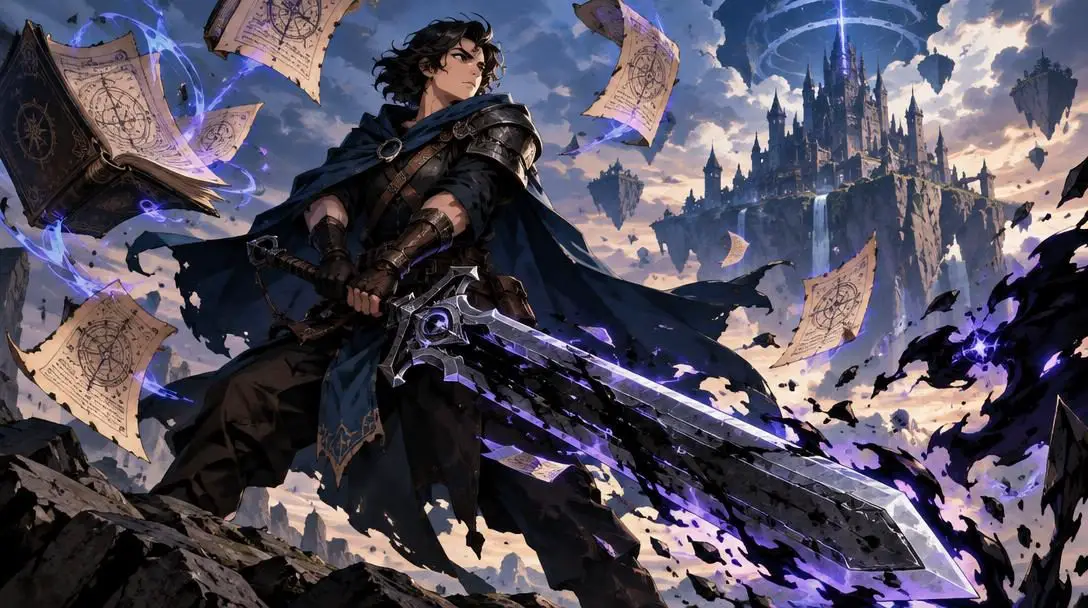
Based on the fantasy manga written and illustrated by Yūki Tabata, Black Clover entered the television animation space in early 2015 and grew into a recurring juggernaut, later broadening its universe with a feature film released on Netflix in 2023. Producing each broadcast installment requires an estimated investment of $140,000, placing it among the costliest recurring shonen fantasy productions in modern television animation.
The plot follows Asta and Yuno, two orphans abandoned together at a humble village church on the outskirts of the kingdom. While Yuno displays exceptional innate magical talent and immense reserve, Asta is born completely devoid of magic in a civilization where magical power dictates social standing and civic privilege. Despite this handicap, Asta acquires a mysterious anti-magic grimoire that grants him an unorthodox combat edge. Driven by a mutual rivalry, both boys compete to claim the coveted mantle of Wizard King, the kingdom's supreme magical authority. Their journey demands constant visual choreography, rapid spellcasting sequences, complex elemental particle effects, and multi-layered fantasy environments that continuously drive up the production expense.
Attack on Titan
- Original creator: Hajime Isayama
- Manga circulation: Over 110 million copies sold as of 2022
- Estimated per-episode cost: $150,000
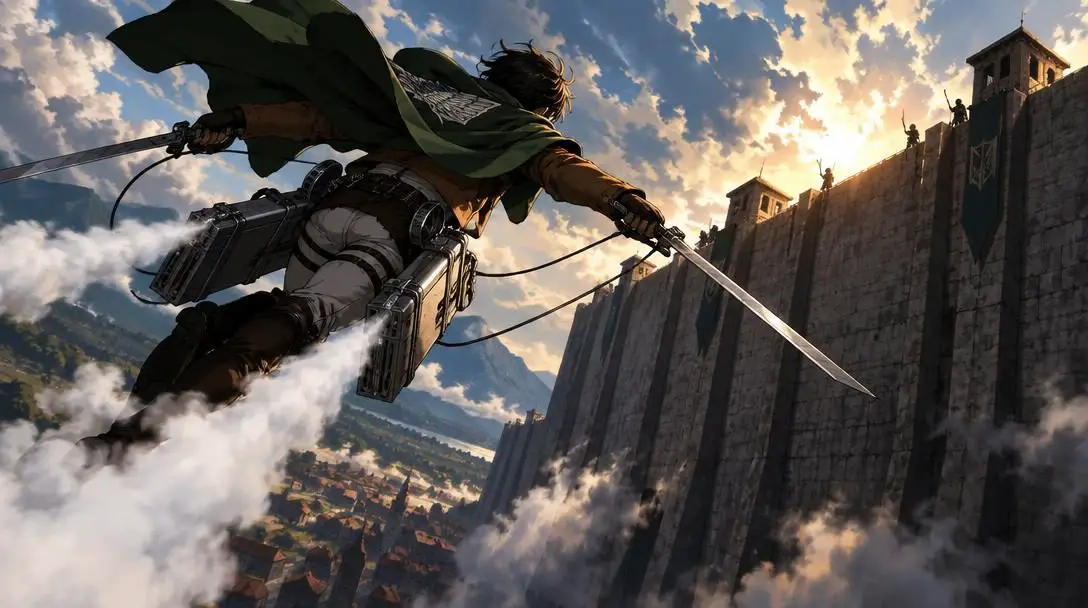
Adapted from the landmark manga created and illustrated by Hajime Isayama, Attack on Titan stands as one of the most widely recognized and critically decorated anime properties in modern entertainment history. Having secured major industry awards alongside more than 110 million manga copies sold worldwide as of 2022, the television adaptation required an elite production budget of roughly $150,000 per episode to match its monumental cultural footprint.
The grim narrative confines the remnants of humanity behind massive, concentric defensive stone walls built to repel monstrous, human-devouring humanoid giants known as Titans. The storyline explores desperate human resistance against these towering creatures, gradually peeling back intricate layers of political conspiracy, military history, and philosophical conflict over human freedom. To animate the franchise's signature combat, the production team developed complex camera tracking and kinetic visual choreography. Recreating the soldiers' three-dimensional maneuver gear as they soar through urban alleyways and dense forests requires meticulous integration of hand-drawn character frames, fast-moving hand-painted backgrounds, and digital spatial models.
Dragon Ball Super
- Debut year: 2017
- Estimated per-episode cost: $160,000
- Key narrative figures: Goku, Beerus the God of Destruction
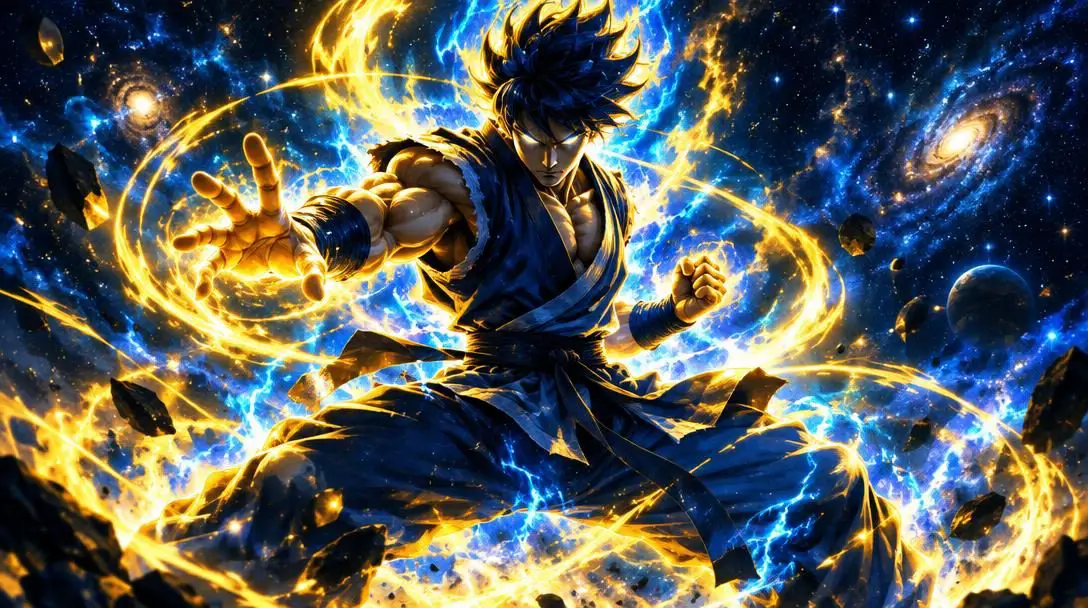
The Dragon Ball franchise is an enduring cultural powerhouse that has captivated multiple generations of viewers across the globe. Premiering on television screens in 2017, Dragon Ball Super continued this legacy by introducing high-stakes cosmic narratives designed to engage veteran fans and new audiences alike. Carrying an estimated production cost of $160,000 per episode, the series sits comfortably at the peak of standard television anime budgets.
The overarching narrative picks up with legendary martial artist Goku as he encounters divine cosmic powers, personified by Beerus, the God of Destruction. Searching for an adversary prophesied to match his strength, Beerus challenges Earth's champions to battle, explicitly threatening total planetary annihilation if they fail to entertain him. Animating planetary-scale martial arts brawls, multi-directional aura glows, and high-velocity energy beams requires continuous specialized labor to satisfy the lofty visual standards expected by a global, multi-generational audience.
A large per-episode budget does not automatically guarantee visual perfection if production teams face impossible scheduling deadlines.
Where the money goes: The television anime production pipeline
A six-figure episode budget is not merely spent on software licenses and drawing desks; it is dispersed across an intricate, multi-departmental production committee structure. Understanding how a project evolves from a manga page into broadcast-ready footage explains why production expenses routinely surpass $100,000 for twenty minutes of finished animation.
- Pre-production and scenario planning: Before artists touch drawing boards, directors, scriptwriters, and series composition coordinators outline episode pacing and narrative beats. Detailed storyboards are assembled to map out every camera angle, cut duration, and staging requirement.
- Character and environment design: Manga artwork cannot always be animated as drawn on the page. Specialized character designers create standardized model sheets showing characters from multiple angles with fixed proportional guidelines, allowing dozens of different animators to maintain visual consistency.
- Key animation (Genga): Senior animators draw the foundational frames that outline the core trajectory of an action, character expressions, and dynamic movement. These key drawings establish the overall fluidity and energy of critical scenes.
- In-between animation (Doga): Once key drawings are approved, junior animators and affiliated partner studios fill in the intermediate frames between those key poses. Demanding action sequences require thousands of additional drawings, directly increasing manual labor hours.
- Background painting: Separate specialized background studios construct the physical settings, from post-apocalyptic walled cities to fantastical fantasy landscapes, ensuring the mood and perspective align with the moving character layers.
- Digital coloring and compositing: After physical or digital line art is finalized, colorists apply predetermined palettes. Compositors then blend character layers, painted backgrounds, digital camera filters, and visual effects like fire, smoke, and magical sparks into a unified shot.
- Audio engineering and voice acting: The final stage involves booking sound stages for ensemble voice recording sessions, composing original orchestral tracks, and mixing nuanced sound effects to balance dialogue cleanly against explosive battle noise.
How to evaluate production values when watching anime
Viewers who wish to look beyond surface-level aesthetics and critically assess whether a high per-episode budget translates into tangible artistic value on the screen can apply a systematic viewing routine.
- Compare the adaptation directly to the source manga: Pick a pivotal confrontation from works like Hajime Isayama's Attack on Titan, Kōhei Horikoshi's My Hero Academia, or Yūki Tabata's Black Clover. Examine how the animated version adapts static black-and-white panels into dynamic motion, directional lighting, and paced storytelling cuts.
- Scrutinize high-speed kinetic combat sequences: Pay close attention to scenes involving complex physics, such as aerial grappling maneuvers or multi-character spell exchanges. Note whether the animation maintains full-body motion and dynamic camera movement or resorts to static still frames with shaking screen filters.
- Evaluate environmental lighting and compositing depth: Check whether character models feel naturally grounded within their painted backgrounds. Well-funded productions employ sophisticated compositing that casts accurate ambient light, cast shadows, and atmospheric haze over the character linework.
- Listen to the complexity of the audio mix: High-tier adaptations invest heavily in custom musical compositions, orchestral arrangements, and precise Foley sound design. Assess whether sound effects carry distinct weight or if generic sound libraries are repeated during combat sequences.
- Track visual consistency across entire seasons: Compare the visual fidelity of early episodes against middle and late-season installments. Productions with well-managed budgets maintain character proportions and movement fluidity steadily, rather than showing steep drops outside of climactic episodes.
Common misconceptions about anime budgets
Analyzing the economics of Japanese animation often generates confusion among viewers due to internet rumors and differing international entertainment models. Navigating these common pitfalls ensures a clearer understanding of how the industry functions.
- Assuming budget directly dictates visual quality: A high budget cannot compensate for a collapsed production schedule. Visual polish is heavily reliant on project management, lead times, and the talent of available animation supervisors. Shows with modest funding can look exceptional with generous schedules, while expensive shows can look uneven under intense time pressure.
- Directly comparing Japanese budgets to Hollywood costs: While $160,000 per episode represents significant spending in Tokyo, prime-time American animated television shows often cost over $1,000,000 per episode. Attempting to measure Japanese production realities against Western corporate metrics misunderstands local economic conditions and labor structures.
- Confusing single-episode peaks with full-series averages: Internet discussions often attribute the budget of a visually dazzling finale to every single installment. In practice, long-running productions strategically budget their resources, allowing conversational episodes to operate with lower drawing counts so that climactic confrontations receive surplus attention.
- Overlooking the constraints of manga adaptations: Adapting a preexisting comic introduces unique artistic boundaries. Animators are not inventing designs from scratch; they are tasked with maintaining fidelity to the idiosyncratic drawing styles of creators like Hirohiko Araki or Kōhei Horikoshi while forcing those detailed drawings to move thirty times per second.
The future of high-budget anime production
The financial scale of anime production continues to expand as worldwide streaming distribution alters the commercial landscape. Previously, television anime relied primarily on domestic broadcast advertising slots, merchandise sales, and expensive home video releases to recoup expenses. Today, international streaming platforms license series for worldwide simultaneous release, providing substantial upfront funding to production committees.
A prime example of this model was the international distribution of the Black Clover feature film on Netflix in 2023, illustrating how global streaming networks can finance and distribute major anime projects directly to worldwide subscriber bases. As global demand increases, production committees are increasingly incentivized to approve higher per-episode budgets to compete on an international stage. The ongoing challenge for animation studios remains balancing these escalating budgets and visual demands with sustainable working schedules for the skilled artists who bring these hand-drawn worlds to life.
Frequently asked questions
Which anime series has the highest per-episode budget on this list?
Dragon Ball Super holds the highest estimated production budget on this list, costing approximately $160,000 per episode to animate its high-stakes martial arts and cosmic battles.
Why does Attack on Titan require such a substantial budget?
Attack on Titan costs roughly $150,000 per episode due to the visual complexity of its action scenes. Animating characters using three-dimensional maneuver gear requires rapid camera tracking, kinetic movement through detailed urban and forest environments, and large-scale monster choreography.
How do Japanese anime costs compare to Western animated series?
Television anime budgets are substantially lower than prime-time Western animated series, which often cost over $1,000,000 per episode in the United States. In Japan, $100,000 to $160,000 represents an elite investment level for standard commercial television animation.
Does a higher episode budget always mean better animation quality?
No. Budget alone does not guarantee superior visual quality. Production scheduling, director planning, and the availability of skilled key animators play equally decisive roles in determining whether an episode appears visually polished on screen.
How has international streaming affected anime production budgets?
International streaming platforms have broadened the funding base for Japanese animation by licensing shows directly for global audiences. This global reach has encouraged production committees to invest higher amounts per episode rather than relying solely on domestic Japanese television broadcast revenues.
The bottom line
Producing modern television anime is an intensive, high-risk economic enterprise that balances traditional hand-drawn craftsmanship with modern digital workflows. Flagship titles like Dragon Ball Super, Attack on Titan, Black Clover, JoJo’s Bizarre Adventure, and My Hero Academia demonstrate that bringing ambitious manga worlds to life requires six-figure per-episode budgets. As worldwide audiences continue to grow and international distribution models mature, the financial commitments behind commercial anime will remain a pivotal factor in shaping the future of global animated entertainment.