
5 Most Impressive Memory Feats Ever Performed
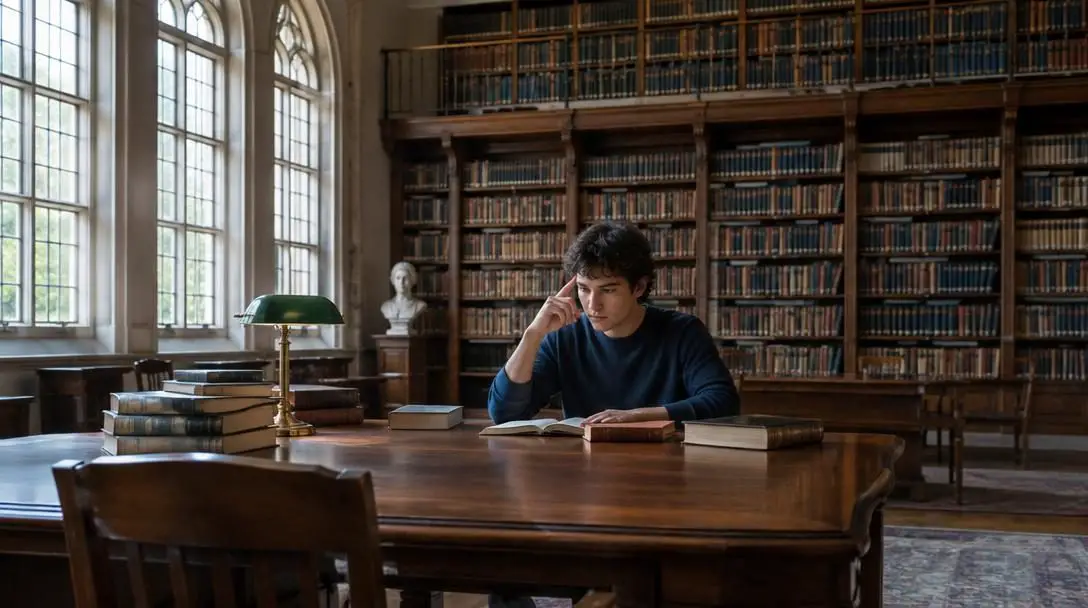
Human memory exists along an astonishing spectrum, ranging from everyday absentmindedness to feats of retention so precise they seem almost supernatural. While most people occasionally struggle to recall what they ate for breakfast, others can recount intimate personal milestones dating back to toddlerhood. Photographic and highly developed memory systems provide clear advantages in both daily routines and demanding careers, yet everyday recall represents only the shallow surface of human mental potential.
Across history, a select group of individuals has shattered conventional scientific assumptions regarding the brain's limits. These record-setters and savants demonstrate that the human mind can internalize, organize, and accurately reproduce vast oceans of information, including tens of thousands of mathematical digits, entire institutional archives, sprawling urban landscapes, and hundreds of unfamiliar faces learned in mere minutes.
Key takeaways
- Astonishing memory feats span diverse domains, including mathematical constants, lost corporate records, entire libraries, architectural drawings, and rapid facial recognition.
- Extreme retention arises through distinct pathways, ranging from natural neurodivergent profiles like savant syndrome to structured mental systems developed through rigorous training.
- Mnemonic champions rely on core cognitive strategies such as sensory visualization, spatial navigation through mental routes, and spaced repetition to encode abstract information.
- Modern dependence on digital storage tools makes deliberate memory training a valuable practice for preserving mental focus and cognitive autonomy.
At a glance: Legendary memory performances
| Individual | Primary domain | Key achievement | Method or cognitive profile |
|---|---|---|---|
| Rajveer Meena | Mathematical constants | Recited 70,000 decimal places of Pi blindfolded | Structured memorization and intense focus |
| Bartholomew Parker Bidder | Corporate archives | Reconstructed an entire company's destroyed records | Deep thematic organization and mental filing |
| Kim Peek | Literary and factual recall | Memorized over 12,000 books and public library archives | Megasavant with FG syndrome |
| Stephen Wiltshire | Architectural and visual art | Drew accurate panoramic cityscapes from brief viewings | Autistic savant with high visual retention |
| Boris Konrad | Speed memorization | Memorized over 200 names and faces in 15 minutes | Neuroscientific mnemonic training techniques |
5 most impressive memory feats ever recorded
The following individuals achieved demonstrations of cognitive retention that pushed the recognized boundaries of human capability, leaving indelible marks on medical science, corporate history, and international record books.
Rajveer Meena
- Achievement: Recited 70,000 decimal places of Pi from memory
- Date of record: March 21, 2015
- Verification: Guinness Book of World Records
- Duration: Nearly 10 hours
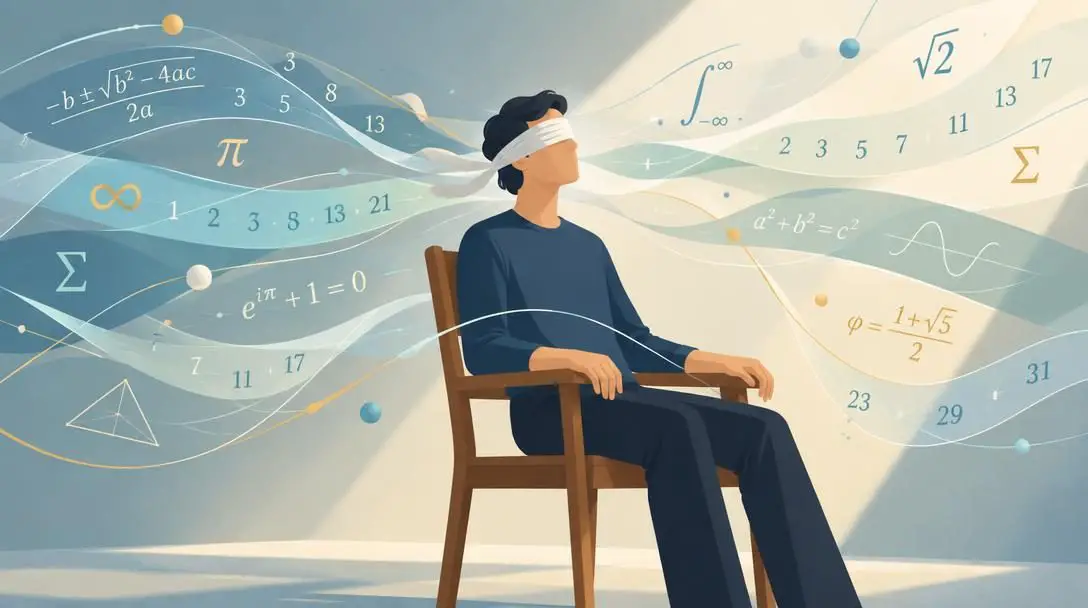
While most people can recite the mathematical constant Pi only as far as 3.14 before trailing off, Indian native Rajveer Meena achieved a level of numerical recall that stunned observers worldwide. On March 21, 2015, Meena gathered official witnesses from the Guinness Book of World Records to verify an extraordinary demonstration of mental endurance.
Seated in a chair and completely blindfolded to prevent any visual prompting or external interference, Meena began reciting the infinite, non-repeating sequence of digits. Officials carefully logged his speech and checked every single number against the established mathematical sequence. Rather than stopping at several hundred or several thousand numbers, Meena successfully recited Pi to an astonishing 70,000 decimal places. The entire ordeal required nearly ten continuous hours of mental stamina and intense concentration, setting a world record that remains a high-water mark in numerical memorization.
Bartholomew Parker Bidder

- Organization: The Royal Exchange Assurance Company
- Year of incident: 1838
- Task: Complete mental retrieval of corporate paperwork
- Recovery timeframe: Six months
Modern enterprises protect their records through automated cloud backups and distributed servers, but nineteenth-century operations relied entirely on handwritten ledgers and physical paper files. In 1838, disaster struck the Royal Exchange Assurance Company when a catastrophic fire swept through its offices, reducing its complete physical paper repository to ashes and leaving the business facing administrative ruin.
Fortunately, the enterprise employed an actuary named Bartholomew Parker Bidder, whose mind served as an impenetrable filing cabinet. Bidder possessed an encyclopedic familiarity with the company's financial transactions, policies, and ledger entries. In the wake of the fire, he undertook the monumental task of manually reconstructing the company's vanished paperwork entirely from his personal memory banks. Working systematically over a span of six months, Bidder successfully reproduced the destroyed archives, saving the firm from insolvency. No corporation of comparable magnitude has ever had its financial and operational records resurrected purely from human memory.

Kim Peek

- Condition: Megasavant, diagnosed with FG syndrome
- Literary retention: Memorized over 12,000 books
- Cultural impact: Direct inspiration for the screenplay of "Rain Man"
- Institutional recall: Retained nearly the entire Salt Lake City Public Library
At the 1989 Academy Awards, actor Dustin Hoffman earned the Best Actor Oscar for his portrayal of the fictional character Raymond Babbitt in the hit film Rain Man. Babbitt was not a real historical figure, but the inspiration behind screenwriter Barry Morrow's script was genuine: an American man named Kim Peek, whom Morrow met before drafting the movie.
Medical professionals classified the late Kim Peek as a megasavant, an individual exhibiting profound cognitive abilities alongside developmental challenges associated with FG syndrome. While Peek experienced motor skill limitations in daily tasks, his capacity for reading and information retrieval was unparalleled. Peek could read both pages of an open book simultaneously—one with each eye—and retain visual media after examining it only once. By the time of his death, he had committed more than 12,000 books to memory and possessed an encyclopedic mastery of historical dates, classical music, zip codes, and virtually the entire contents of the Salt Lake City Public Library.
Stephen Wiltshire
- Origin: London, United Kingdom
- Honors: Member of the Most Excellent Order of the British Empire
- Specialization: Panoramic architectural illustration from memory
- Diagnosis: Diagnosed with autism at age three
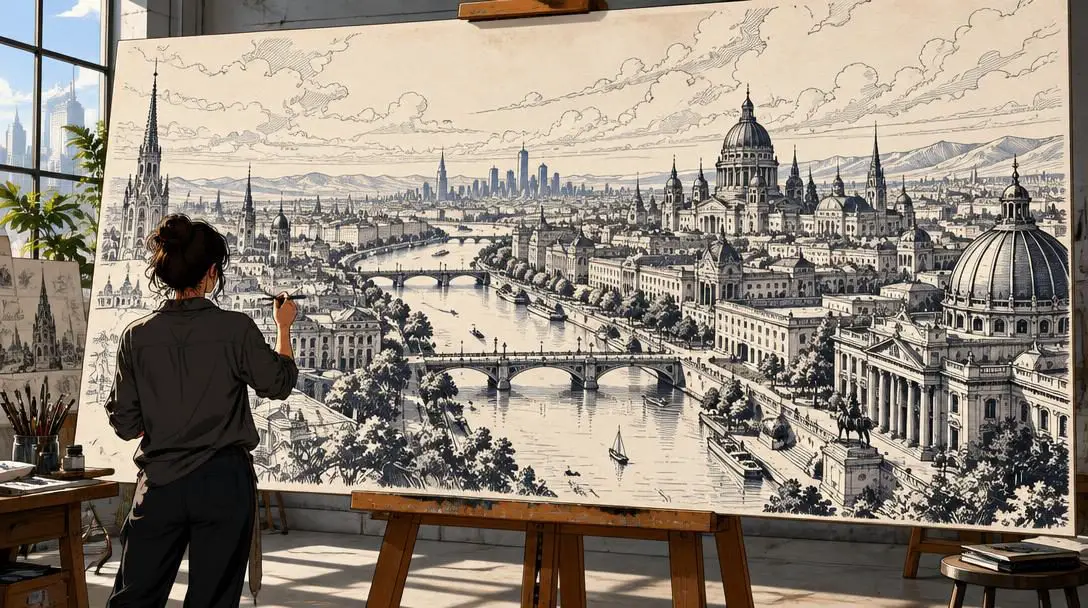
For most travelers, navigating an unfamiliar metropolitan area requires maps, GPS navigation, and distinct landmarks. For British architectural artist Stephen Wiltshire, an entire city can be stored visually in mind after a single glance. Wiltshire was diagnosed with autism at the age of three and experienced early personal adversity, including growing up without his father. Unable to speak as a young boy, he found his voice through sketching, starting with local buildings around London.
As Wiltshire's talents developed, his visual retention expanded from individual buildings to expansive urban panoramas. Evaluators tested his abilities by taking him on brief helicopter flights over foreign capitals or showing him reference photographs for only short intervals. Without taking preparatory notes, Wiltshire would then position himself before expansive blank canvases and draw intricate, perspective-perfect cityscapes entirely from recall, including the exact count of windows and structural columns on landmark buildings. His artistic genius and neurological capabilities earned him international acclaim and an appointment to the Most Excellent Order of the British Empire.
Boris Konrad
- Profession: Neuroscientist and memory speaker
- World records: Four Guinness World Records titles
- Notable feat: Memorized over 200 names and faces in 15 minutes
- Field of expertise: Cognitive training and recall optimization
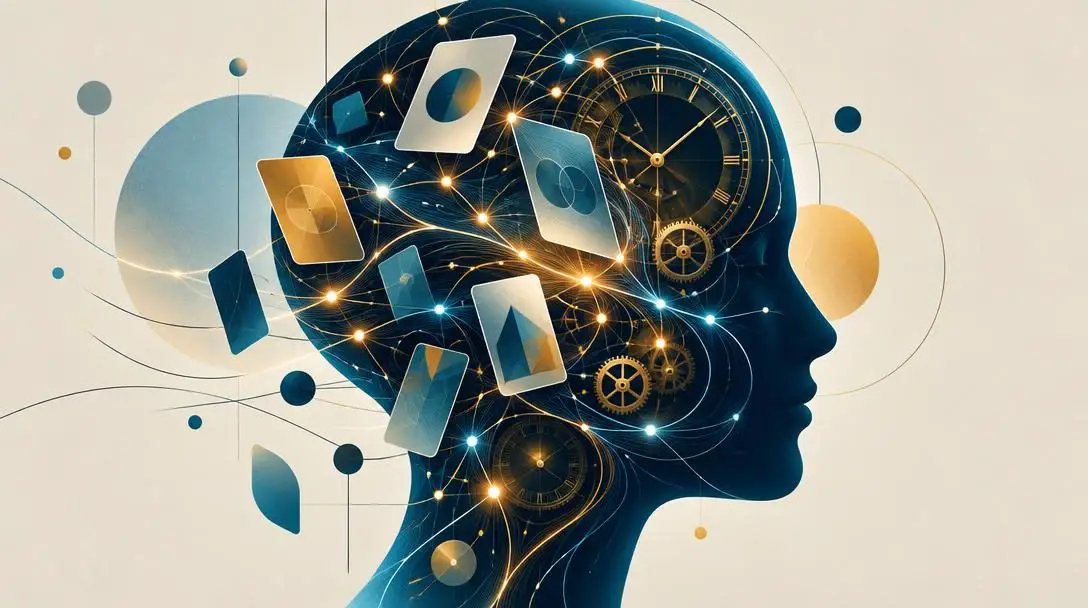
Unlike savants whose abilities stem from innate neurological variations, German neuroscientist Boris Konrad represents the pinnacle of systematic, trained memory athleticism. Konrad has dedicated his professional career to researching cognitive efficiency while competing in memory championships across the globe, earning four distinct Guinness World Records titles in the memory category.
Konrad's capabilities are characterized by blistering speed and precision. In one of his most celebrated public demonstrations, Konrad was presented with the unfamiliar names and faces of more than 200 individuals. Given a strict time window of just 15 minutes, he processed the photographs, paired every face with its correct identity, and reproduced the entire roster with complete accuracy. Konrad frequently delivers public lectures and educational workshops worldwide, using his scientific background to demonstrate that deliberate mnemonic strategies can dramatically elevate memory in ordinary brains.

True feats of memory demonstrate that the human brain can convert abstract facts into vivid internal architecture that never fades.
The cognitive mechanics behind extreme recall
The human brain handles everyday facts through three fundamental stages: encoding, storage, and retrieval. Everyday memory lapses typically occur during the initial encoding stage, where information is observed passively without creating durable neurological traces. Record-setting individuals bypass this flaw through both specialized neurobiology and deliberate mental frameworks.
For trained memory competitors like Boris Konrad and Rajveer Meena, successful recall depends upon translating dry, abstract information into rich sensory representations. The human brain evolved to prioritize visual and spatial inputs over abstract figures, strings of text, or corporate balance sheets. When numbers or names are converted into concrete visual markers and mentally positioned within an imagined spatial environment, the brain engages its powerful spatial mapping systems.
In historical scenarios like that of Bartholomew Parker Bidder, memory relies heavily on deep contextual schemas. Bidder did not memorize numbers in isolation; he understood the systemic relationships underlying the insurance firm's ledger accounts. When one record was brought forward, its logical connection to adjacent policies, claims, and premiums allowed his memory to systematically reconstruct the entire accounting ecosystem.
How to build everyday recall step by step
While memorizing dozens of books or thousands of digits is unnecessary for daily life, anyone can apply the core methods of memory champions to retain names, appointments, professional presentations, and study materials. The following steps provide a practical foundation for strengthening your retention.
- Construct a reliable mental palace: Select an environment you know intimately, such as your home or your daily commute. Identify specific, sequential anchor points along that route, such as the front door, the hallway table, the kitchen counter, and the sofa.
- Translate abstract data into exaggerated imagery: Convert names, lists, or numbers into vivid, sensory-rich mental objects. To remember a colleague named Miller, picture a flour-dusted wind turbine; to remember a financial total, pair each digit with an animated character or colorful object.
- Deposit items along the mental path: Mentally walk through your chosen route, placing one exaggerated image at each designated anchor point. Make the interaction between the object and the anchor location dynamic, surprising, or humorous to strengthen encoding.
- Implement structured spaced review: Consolidate your memory trace by recalling the mental journey at deliberate intervals: immediately after learning, two hours later, the following morning, and again after a week.
- Verbalize and teach the material: Speak your recalled facts out loud or explain the concepts to another person. Verbal articulation exposes hidden gaps in your mental map and solidifies long-term storage.
Common memory training pitfalls to avoid
Adopting new cognitive habits requires patience and structured practice. Beginners often stumble by adopting inefficient learning strategies that cause mental fatigue and premature discouragement.
- Over-reliance on rote repetition: Chanting a phone number or reading a textbook page repeatedly without visual cues creates weak, short-lived neurological connections.
- Overwhelming your initial capacity: Attempting to memorize hundreds of items on your first day creates cognitive overload; start with ten to fifteen items to master the technique first.
- Neglecting restful sleep: Memory consolidation occurs during deep sleep stages, meaning chronic sleep deprivation actively undermines the brain's ability to retain recently learned material.
- Failing to organize your data: Storing disorganized facts without clear categories or spatial anchors leads to retrieval failure when attempting to recall items under pressure.
Frequently asked questions
Can anyone develop an exceptional memory through practice?
Yes. While savant conditions like those of Kim Peek or Stephen Wiltshire stem from unique neurological profiles, memory athletes like Boris Konrad rely on systematic mnemonic techniques that can be learned and practiced by anyone with a typical brain.
How many digits of Pi did Rajveer Meena memorize?
Rajveer Meena successfully memorized and recited 70,000 decimal places of Pi while blindfolded on March 21, 2015, in an official Guinness World Records demonstration that lasted nearly ten hours.
Is photographic memory a medically recognized phenomenon?
True photographic memory, often termed eidetic memory, is rarely documented in adults. Most extraordinary feats of recall are achieved either through specialized savant abilities or well-rehearsed mnemonic strategies like the Method of Loci.
How did Bartholomew Parker Bidder restore the lost insurance files?
Bidder possessed an encyclopedic mental grasp of the Royal Exchange Assurance Company's operations. Following an 1838 fire that destroyed all physical documents, he spent six months manually reconstructing the ledgers and records entirely from memory.
What was the connection between Kim Peek and the movie Rain Man?
Screenwriter Barry Morrow met Kim Peek in person and used his extraordinary savant recall and life story as the primary inspiration for the fictional character Raymond Babbitt, played by Dustin Hoffman in the 1988 film.
The bottom line
The achievements of Rajveer Meena, Bartholomew Parker Bidder, Kim Peek, Stephen Wiltshire, and Boris Konrad illustrate the magnificent depth of human cognition. Whether rooted in neurodivergent gifts or refined through disciplined mnemonic training, these feats prove that the mind can store and retrieve vastly more information than everyday routines demand. In an era where digital devices and automated search engines handle our day-to-day data, understanding and practicing mental recall remains a powerful way to preserve cognitive independence, sharpen concentration, and appreciate the latent potential within every human brain.