
How To Get Promoted in the Marines
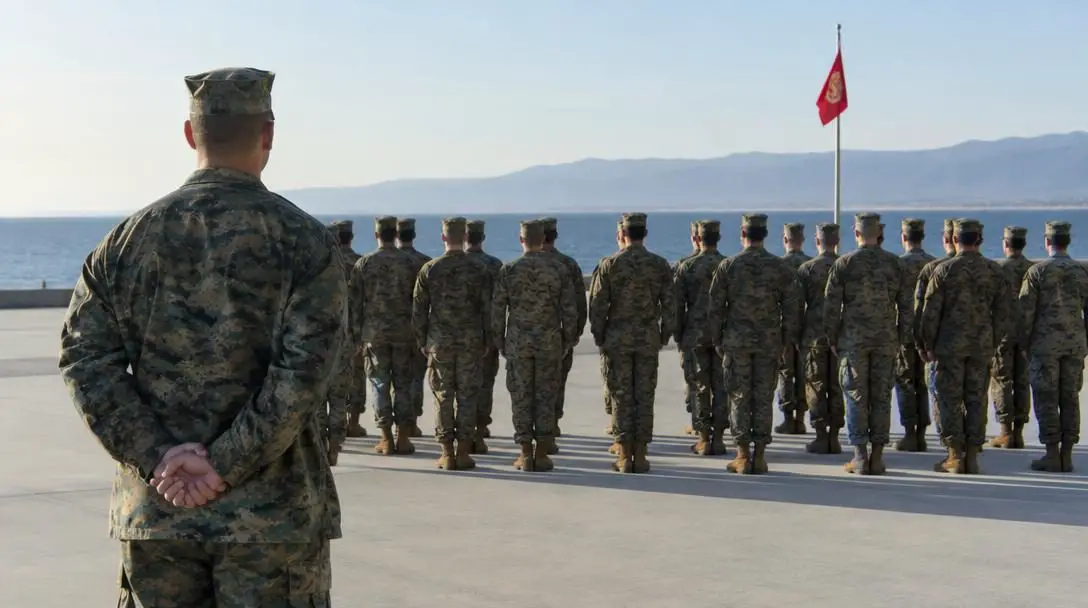
Advancement within the United States Marine Corps is a deliberate, highly structured process designed to develop both technical capability and command responsibility. Across a rigorous hierarchy consisting of 27 distinct grades shared between enlisted service members and commissioned officers, Marines are evaluated on their physical conditioning, institutional knowledge, intellectual curiosity, and character under pressure. While the journey begins for most recruits at the entry-level grade of Private, upward mobility is an institutional expectation, with every Marine evaluated on a regular quarterly basis for promotion eligibility.
Reaching the highest echelons of military leadership—such as the rare pinnacle of Four-Star General, achieved only a few dozen times across the entire history of the branch—demands decades of relentless commitment. Yet even for junior personnel seeking their first non-commissioned officer stripes, promotion is never an automatic consequence of simply waiting out an enlistment contract. Earning higher rank requires service members to actively understand the mechanics of quarterly reviews, outperform their peers in physical and tactical testing, continuously pursue off-duty education, and model selfless leadership within their units.
Key takeaways
- The Marine Corps reviews all eligible personnel for promotion every quarter based on demonstrated technical proficiency and leadership maturity.
- Maximizing physical test scores by placing in the top five of your company across running, obstacle courses, marksmanship, and the PFT is critical for early advancement.
- Pursuing off-duty college education alongside mandatory Marine Corps Institute (MCI) distance courses distinguishes ambitious service members from their peers.
- Promotion timelines expand significantly over time, transitioning from early promotions measured in months to senior staff ranks requiring a decade or more of continuous service.
The Core Pillars of Marine Corps Advancement
Promotion in the Marine Corps is built upon two complementary foundations: technical proficiency and leadership maturity. Unlike civilian workplaces where performance reviews may occur sporadically, the Marine Corps tracks member qualifications continuously, presenting quarterly opportunities for Marines to prove they are ready for greater operational authority. To stand out during these evaluations, a candidate must present an undeniable record of excellence across physical, academic, and behavioral metrics.
In the junior ranks, objective evaluations drive upward movement. The branch places immense institutional weight on the Physical Fitness Test (PFT), which evaluates three primary markers of functional endurance: upper-body strength measured through pull-ups or push-ups, abdominal stamina tested via crunches or planks, and aerobic conditioning demonstrated in a timed three-mile run. Beyond the baseline PFT, field readiness is measured through general running events, obstacle course navigation, and combat marksmanship on the rifle range. Marines who routinely finish within the top five of their company across these disciplines immediately signal their mental toughness and physical capability to company commanders.
As service members advance, physical output alone ceases to be sufficient. The service places substantial value on intellectual development and institutional expertise. Completing self-paced distance learning modules through Marine Corps Institute (MCI) courses indicates that an individual possesses a serious appetite for professional mastery. Concurrently, pursuing civilian higher education demonstrates exceptional discipline. Managing accredited college coursework around unpredictable field rotations and demanding duty schedules proves that a Marine possesses the time-management skills, analytical capacity, and strategic mindset required for advanced command positions.
True leadership in the Marine Corps requires composure under stress, unyielding respect for peers and subordinates, and personal accountability.
Finally, character acts as the definitive filter for senior promotions. Being a skilled tactician or superior athlete does not automatically qualify a service member to guide others through adversity. Command leadership closely observes how individuals conduct themselves when plans unravel, tasks become exhausting, or collective discipline is enforced. Marines who remain composed under extreme stress, treat subordinates with genuine respect, and step forward to absorb responsibility on behalf of their unit demonstrate the fundamental qualities of servant leadership.
Step-by-Step Guide to Maximizing Promotion Potential
Achieving competitive positioning for each quarterly evaluation requires daily intentionality. Rather than leaving career progression to chance, Marines should follow a structured sequence of professional development:
- Maximize physical evaluation metrics: Tailor your daily physical training to the specific scoring criteria of the PFT. Focus on building upper-body repetition stamina for pull-ups or push-ups, train core stability to achieve maximum points on planks or crunches, and refine your endurance pacing to lower your three-mile run time. Maintain consistent practice on the obstacle course and the shooting range to guarantee top-tier standing within your company.
- Enroll in accredited off-duty college courses: Engage with your unit’s educational service officers to identify accredited higher education programs. Register for undergraduate courses that accommodate operational tempos. Earning college credits while fulfilling military commitments sends an undeniable signal of intellectual dedication to evaluation boards.
- Complete self-paced MCIs continuously: Do not wait for promotion deadlines or unit mandates to begin professional military education. Regularly order and finish MCIs during personal downtime, building an extensive portfolio of completed courses that illustrate comprehensive doctrine knowledge and technical mastery of your occupational specialty.
- Seek active mentorship from seasoned superiors: Identify respected non-commissioned officers and commissioned leaders who model operational brilliance and personal integrity. Approach them to ask targeted questions about career development, doctrine, and unit leadership, integrating their insights into your daily routine.
- Exercise extreme accountability during unit setbacks: When operational mistakes happen or training standards are missed, refrain from blaming peers. Step forward, accept personal or collective responsibility, and volunteer to carry out corrective actions, showcasing the selfless reliability required of command personnel.
- Audit your administrative training jacket regularly: Keep track of your time in service and time in grade requirements ahead of each quarterly cycle. Verify that all PFT scores, shooting qualifications, college transcripts, and completed MCIs are recorded accurately within your official service records.
Common Missteps That Stall Marine Career Progression
Even highly motivated Marines frequently see their career progression stall because they fall into avoidable career traps. Avoiding these common mistakes preserves upward momentum and protects professional reputation:
- Overemphasizing strength at the expense of endurance: Spending countless hours weightlifting while neglecting cardiovascular conditioning, obstacle negotiation, and marksmanship lowers overall company standing and diminishes PFT scoring potential.
- Embracing an anti-intellectual mentality: Assuming that raw physical toughness can substitute for formal education is a critical career limiter. High-ranking billets demand strategic planning, and dismissing college education or MCI courses closes doors to advanced ranks.
- Confusing rank authority with true leadership: Using intimidation, aggressive shouting, or authoritarian behavior toward junior personnel creates resentment and breaks unit cohesion. Senior leadership rewards those who inspire performance through composure and mutual respect.
- Procrastinating on distance education: Leaving career MCIs unfinished until promotion eligibility is immediately threatened demonstrates a lack of initiative and poor self-discipline.
- Displaying emotional volatility under stress: Complaining, showing frustration, or shifting blame during difficult field evolutions or collective punishments reveals an inability to maintain emotional composure in high-stakes environments.
- Succumbing to impatience during natural slowdowns: Becoming disillusioned when the rapid promotion velocity of early enlistment inevitably slows down causes some service members to let their performance decline, permanently damaging their long-term potential.
Marine Corps Promotion Timelines and Rank Progression
Advancement velocity changes dramatically across an individual's career. The early junior grades are structured to move relatively fast, allowing capable recruits to transition out of entry-level status within their first two years. However, moving into the non-commissioned officer (NCO) and staff non-commissioned officer (SNCO) tiers introduces intense competition against an increasingly experienced peer group.
The transition from Private to Private First Class typically takes approximately six months of honorable service. Reaching Lance Corporal generally requires roughly 14 months of total time in service. By the 26-month mark, high-performing Marines frequently achieve the rank of Corporal, officially entering the non-commissioned officer corps. At this point, the advancement ladder shifts from standard progression to highly competitive merit selection.
Advancing from Corporal to Sergeant demands significantly broader operational experience, averaging nearly five years of total service. Crossing into the staff non-commissioned officer tier as a Staff Sergeant typically requires more than ten years of continuous, high-level dedication. At the ultimate peak of the enlisted structure, earning the rank of Master Gunnery Sergeant or Sergeant Major requires an average of 22 years of sustained military excellence.

| Rank Title | Leadership Tier | Average Time in Service | Primary Evaluation Focus |
|---|---|---|---|
| Private First Class | Junior Enlisted | 6 months | Initial qualification, basic discipline, entry physical fitness |
| Lance Corporal | Junior Enlisted | 14 months | Technical job performance, PFT scoring, marksmanship |
| Corporal | Non-Commissioned Officer | 26 months | Small-unit leadership, tactical proficiency, completed MCIs |
| Sergeant | Non-Commissioned Officer | Nearly 5 years | Operational maturity, peer leadership, off-duty education |
| Staff Sergeant | Staff Non-Commissioned Officer | Over 10 years | Strategic leadership, technical mastery, administrative record |
| Master Gunnery Sgt / Sgt Major | Senior Staff NCO | 22 years | Branch-wide policy impact, senior advisory capabilities |
Planning a Long-Term Military and Educational Trajectory
Navigating a decades-long career in the armed forces requires strategic foresight. Service members who aspire to reach the highest tiers of the Marine Corps—whether that involves becoming a senior enlisted advisor or pursuing commissioning paths toward Four-Star General—must construct a deliberate multi-decade roadmap.
Higher education serves as the primary bridge between mid-level leadership and senior command. While enlisting requires only a high school diploma or equivalent, completing an undergraduate degree while balancing active fleet operations makes an individual exceptionally competitive for advancement boards. For those targeting senior officer grades or aspiring to reach the rank of Four-Star General—a rank awarded only a few dozen times in Marine Corps history—a bachelor's degree is merely the starting line. Many of the most respected strategic leaders in the service hold master's degrees in disciplines that enhance national defense, strategic planning, and operational logistics.
To sustain progress over a 20-year career, establish distinct five-, ten-, and twenty-year professional milestones. Track your cumulative college credits, target specific completion dates for advanced MCIs, and consistently assess your leadership style based on feedback from unit mentors. By focusing on continual personal growth, maintaining peak physical readiness, and cultivating an unshakeable reputation for selfless accountability, Marines can successfully navigate every evaluation board and advance through the ranks of the nation's premier expeditionary force.
Frequently asked questions
How often are Marines considered for promotion?
Marines are eligible for evaluation and new ranking every quarter, provided they have met the required time in grade, completed necessary qualifications, and demonstrated value to their command.
What specific events are scored on the Marine Corps PFT?
The Physical Fitness Test evaluates three specific disciplines: upper-body strength through pull-ups or push-ups, core endurance through abdominal crunches or planks, and cardiovascular conditioning through a timed three-mile run.
How long does it take on average to reach the rank of Sergeant?
Advancing from Corporal to Sergeant is a competitive process that requires an average wait time of nearly five years of total continuous military service.
What are MCIs and why are they necessary for advancement?
MCIs are specialized distance education courses provided by the Marine Corps Institute covering occupational specialties and military subjects. Completing them demonstrates self-motivation, doctrine mastery, and readiness for higher responsibility.
Can enlisted Marines achieve higher ranks without college degrees?
While an enlisted Marine can achieve junior promotions without higher education, earning a bachelor's or master's degree significantly improves promotion competitiveness and is common among the highest-ranking leaders in the service.
The bottom line
Advancing through the 27 grades of the United States Marine Corps is a deliberate journey that tests physical stamina, mental agility, and moral character. Promotions are neither guaranteed nor arbitrary; they are awarded to service members who systematically align their daily actions with institutional standards. By dominating the physical metrics of the PFT and company obstacle courses, relentlessly pursuing college education and MCI modules, and leading peers with humble accountability, any dedicated Marine can build an exceptional, upwardly mobile military career.