5 Most Memorable Jeopardy Contestants
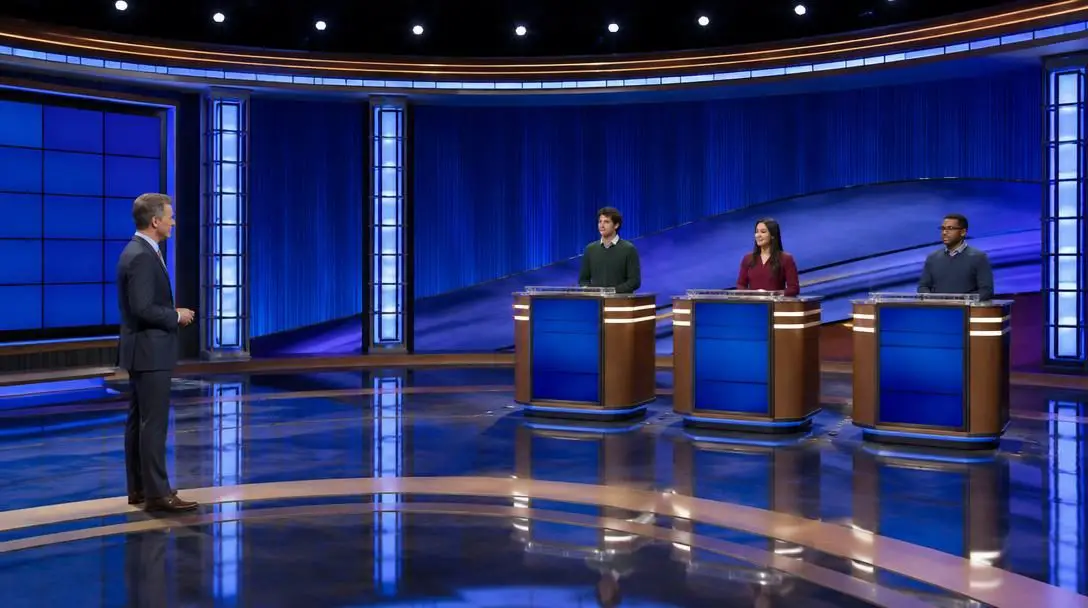
Since premiering in syndication, Jeopardy! has welcomed thousands of hopeful trivia buffs to its iconic studio stage. While countless players have managed to capture a victory or two, only an elite handful have achieved true legendary status by racking up victory after victory while showcasing unforgettable charisma. Because winning champions earn a daily interview segment with the host, extended runs allow their personalities to shine through on television night after night, occasionally challenging them to dig deep into their personal lives for fresh anecdotes as the appearances mount.
The contestants who stand out the most are remembered not only for their remarkable intellects, but also for their innovative game strategies, electric wagering, and dynamic rapport with long-time host Alex Trebek. A select group of players managed to fundamentally alter how the game is played, viewed, and analyzed by the public. From record-shattering winning streaks to million-dollar tournament crowns, these five players represent the most memorable competitors in the history of the quiz show.
Key takeaways
- Ken Jennings maintains the untouchable record for regular-season longevity with an unprecedented 74-game winning streak.
- Brad Rutter stands as the top money earner in quiz show history, amassing more than $5 million across dominant tournament runs.
- James Holzhauer revolutionized gameplay mechanics through fearless, mathematical Daily Double wagering and sports bettor instincts.
- Amy Schneider made television history as the first transgender champion in the Tournament of Champions, earning 40 consecutive victories.
- Austin Rogers captured the hearts of fans worldwide by combining fast-paced board clearing with exuberant, theatrical stage presence.
At a glance: comparing the all-time greats
While each player brought a unique style and personality to the studio, looking at their accomplishments side by side highlights how differently dominance can manifest on the game board.
| Contestant | Consecutive regular wins | Regular season earnings | Overall career winnings | Signature achievement |
|---|---|---|---|---|
| James Holzhauer | 32 | Just under $3 million (all-time #3) | Just under $3 million | Swept all top 10 single-game score records |
| Ken Jennings | 74 | $2,520,700 | Over $2.5 million | All-time consecutive win streak record |
| Austin Rogers | 12 | $445,000 | $445,000 | Multiple top-ten single-game scoring days |
| Brad Rutter | 5 (capped) | Undefeated 5-day champion | $5,053,436 | All-time highest cumulative earnings |
| Amy Schneider | 40 | $1,382,800 | $1,382,800 (4th all-time) | Second-longest win streak in show history |
The 5 most memorable Jeopardy! contestants
Each of the following five contestants left a permanent mark on the program, transforming how subsequent generations approached the buzzer, the board, and the game itself.
James Holzhauer

- Hometown: Las Vegas, Nevada
- Consecutive wins: 32
- Single-game high score: $131,127
- Total career winnings: Just under $3 million
Many viewers mistakenly assume that James Holzhauer held the record for the longest winning streak due to the astronomical sums of money he accumulated in a remarkably short time. In reality, Holzhauer ranks fourth in all-time consecutive regular-season victories with 32 wins. However, his run in 2019 completely dismantled how people thought the game could be played. As a professional sports bettor based in Las Vegas, Holzhauer applied quantitative probability and fearless aggression to every board he encountered.
Rather than working categories sequentially from top to bottom, Holzhauer hunted relentlessly for Daily Doubles at the bottom of the board where values are highest. When he uncovered them, he routinely wagered his entire bankroll, or significant portions of it, building insurmountable leads long before Final Jeopardy arrived. Holzhauer's calculated audacity enabled him to take every single spot in the top 10 single-game earnings record books. He crossed the six-figure mark in a single match on six separate occasions, highlighted by his astonishing record of $131,127 on April 17, 2019. Amassing just under $3 million, he finished third all-time in career earnings and firmly established himself as one of the most exciting players to ever wield a signaling device.
Ken Jennings

- Hometown: Seattle, Washington
- Consecutive wins: 74
- Regular season earnings: $2,520,700
- All-time win streak rank: 1st
It is impossible to discuss the history of television game shows without focusing on Ken Jennings, whose 2004 performance set a record that may never be eclipsed. Before Jennings began his historic march, the show enforced a strict five-game retirement rule. Once producers eliminated that limitation, Jennings demonstrated what sustained brilliance looks like over an entire summer and fall, maintaining focus through 74 consecutive victories. To this day, no other human player in the show's history has won more than 40 consecutive games, illustrating the yawning gap between Jennings and standard competitive excellence.
Jennings racked up $2,520,700 in non-tournament winnings, retaining the all-time regular season cash record just ahead of Holzhauer. What endeared Jennings to millions of households was not merely his encyclopedic knowledge of geography, literature, and pop culture, but his humble demeanor, quick wit, and natural banter with Alex Trebek. Jennings later competed in multiple all-star tournaments and, following Trebek's passing, completed an unprecedented journey by stepping behind the podium to become an official host of the show.
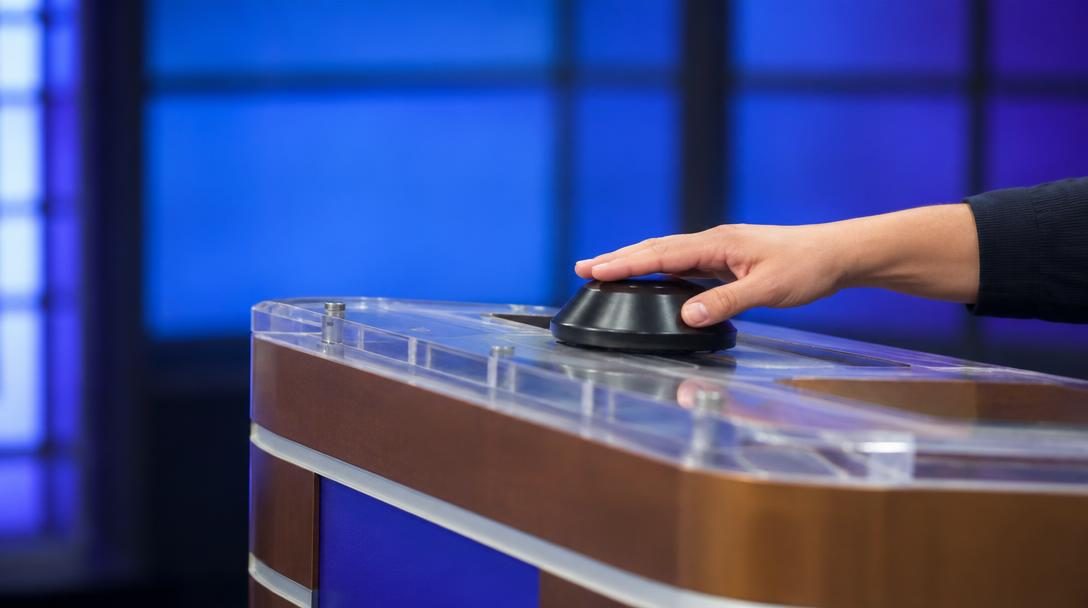
Jennings demonstrated what sustained brilliance looks like over an entire summer and fall, maintaining focus through 74 consecutive victories.
Austin Rogers

- Hometown: New York City, New York
- Consecutive wins: 12
- Regular season earnings: $445,000
- Single-game impact: Multiple entries in top-ten single-day totals
While New York City bartender Austin Rogers does not sit near the very top of the all-time games or money leaderboard, he holds a cherished place in the hearts of viewers. Rogers entered the studio with an electric, bohemian energy that shook the dignified quiet often associated with elite trivia. Before James Holzhauer reset the record books, Rogers had managed to land multiple entries in the top ten highest single-game earnings through rapid clue selection and aggressive wagering.
Beyond his sharp recall, Rogers became an overnight sensation thanks to his infectious showmanship. He treated his podium like a stage, reacting to clues with expressive miming, pantomime celebrations, and genuine, uninhibited enthusiasm. His spontaneous humor forged an instant connection with Alex Trebek, who visibly delighted in Rogers' unorthodox run. Rogers concluded his 12-game streak with $445,000 in regular winnings, proving that master-level trivia can be deeply entertaining and wildly eccentric.
Brad Rutter

- Hometown: Lancaster, Pennsylvania
- Initial regular season run: 5 wins (retired undefeated)
- Tournament record: Won all 5 major tournaments entered
- Total career winnings: $5,053,436
Hailing from Lancaster, Pennsylvania, Brad Rutter stands as the undisputed champion of the tournament format. Because Rutter made his debut in the era of the five-day retirement rule, he won all five of his regular-season appearances before being forced to step aside. Consequently, he never had the opportunity to build a massive multi-week regular streak like Jennings or Schneider. However, his performance on the tournament circuit remains completely unrivaled.
Rutter went on to compete in five separate invitational tournaments, winning every single one against elite fields composed entirely of fellow champions. For years, no human player was able to defeat him in a match, with the artificial intelligence supercomputer IBM Watson being the first entity to hand him a defeat. His unmatched poise under bright lights, lightning-fast buzzer thumb, and strategic composure pushed his total career earnings to $5,053,436—retaining the number-one spot on the show's all-time earnings list.
Amy Schneider

- Hometown: Oakland, California
- Consecutive wins: 40
- Regular season earnings: $1,382,800
- All-time win streak rank: 2nd
In late 2021 and early 2022, Oakland engineering manager Amy Schneider took the quiz world by storm with a commanding 40-game winning streak. Schneider's methodical run brought her past previous standout Matt Amodio's 38 games, securing second place on the all-time consecutive victories list behind Ken Jennings. Throughout her regular season run, she amassed $1,382,800, placing her fourth in both regular season and overall career earnings.
Schneider made cultural history by becoming the first openly transgender contestant to qualify for the prestigious Tournament of Champions. Her composed, unflappable style and polite focus earned her widespread praise. While recognizing the cultural milestone her run represented, she maintained a steadfast focus on playing top-tier trivia, stating: “I didn’t want to make too much about being trans, at least in the context of the show. I am a trans woman, and I’m proud of that fact, but I’m a lot of other things, too.”
The evolution of winning streaks: from five-day caps to marathons
To fully grasp the historic context of these players, it is vital to examine how the rules governing champions have changed over time. When the modern syndicated version of the show debuted in 1984, producers capped player runs at five consecutive games. Once a contestant secured a fifth victory, they were retired undefeated and invited back later for tournament competition. This rule preserved player turnover and prevented individual contestants from running away with production budgets.
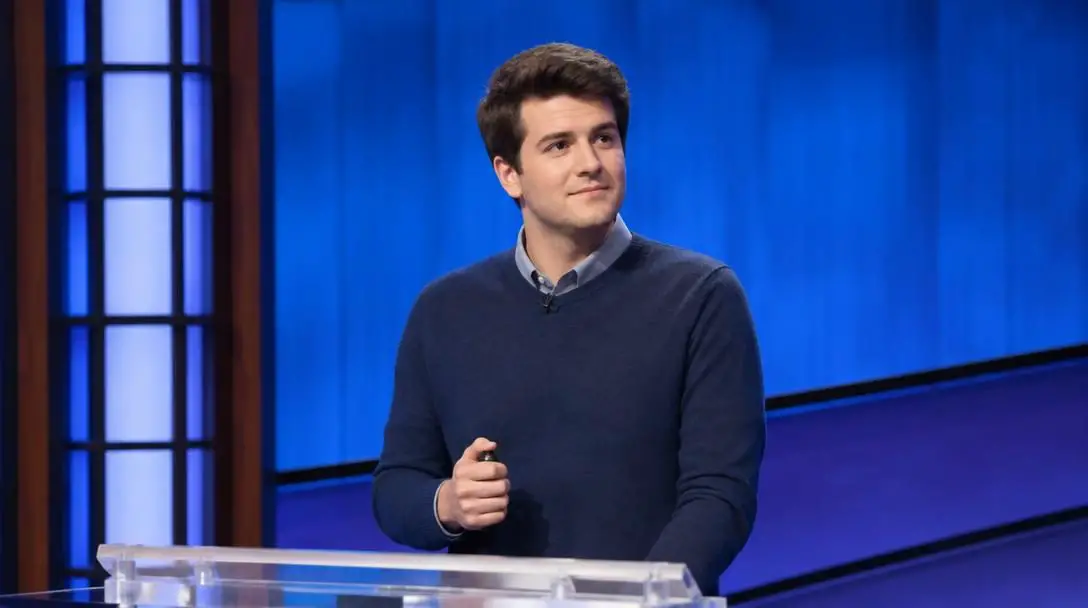
Because of this structure, foundational greats like Brad Rutter were cut off after five games, never getting the chance to chase dozens of regular-season wins. That all changed in the early 2000s when producers decided to lift the five-game limitation, allowing contestants to remain on the stage indefinitely as long as they kept winning. This monumental shift transformed the show from a steady rotation of contestants into a platform for genuine athletic-style marathons. It made Ken Jennings' 74-game run possible, generated massive television ratings, and laid the groundwork for modern icons like James Holzhauer and Amy Schneider to dominate the spotlight for months at a time.
How the game works: signaling devices, clues, and wagering
Achieving success at the highest level of competitive trivia requires far more than passive book smarts. The most dominant champions possess a master-level grasp of three distinct competitive disciplines: timing the signaling device, dynamic clue selection, and game-theory wagering.
The buzzer is widely considered the ultimate equalizer. Because virtually every contestant selected for the show knows a vast majority of the answers, victory often hinges on fractions of a second. Players are barred from buzzing in until the host finishes reading the clue and a strip of indicator lights flanking the board illuminates. Ringing in a millisecond too early locks the contestant's device out for a critical fraction of a second, opening the door for an opponent. Champions spend countless hours synchronizing their reflexes to the host's vocal cadence.
Clue selection has also undergone an analytical revolution. The traditional strategy of playing through a category top-to-bottom from lowest value to highest has largely been replaced by modern clue hunting. By hopping between categories and prioritizing bottom-row clues, elite competitors accumulate cash reserves early, keep their challengers mentally off-balance, and locate Daily Doubles before their opponents can uncover them.
Practical steps to prepare for Jeopardy!
If you are inspired by the iconic runs of these champions and want to test your mettle on television, deliberate and targeted preparation is essential.
- Take the online Anytime Test: Begin your journey by registering on the official website to complete the 50-clue timed screening exam, which provides eight seconds per response.
- Master recurring trivia staples: Concentrate your study efforts on core academic categories that appear in nearly every match, including U.S. presidents, world geography, world religions, Shakespeare, classic literature, and major performing arts awards.
- Adopt active spaced repetition: Move beyond passive reading by using flashcards or digital spaced-repetition tools to drill dates, capitals, authors, and historical events for instant recall.
- Practice buzzer timing with a click-top pen: Stand up while watching episodes at home and click a pen the exact moment the host reads the final syllable of the clue, training your hands not to trigger premature lockouts.
- Calculate Final Jeopardy wagering mathematics: Pause the broadcast prior to the final clue and calculate cover wagers, lock-tournament scores, and defensive bet sizes based on first, second, and third-place standings.
Common mistakes contestants make
Observing common strategic blunders highlights just how disciplined the greatest champions have to be during their runs.
- Buzzing in on vague intuition: Pressing the signaling button before knowing the actual answer frequently results in incorrect guesses, deducting clue values from your score and gifting opponents free opportunities.
- Timid Daily Double wagering: Wager amounts that are too small protect a modest bankroll but forfeit the mathematical advantage needed to turn close contests into unassailable runaways.
- Overlooking clue pins and category rules: Failing to note specific category stipulations—such as rhyming words, letter constraints, or embedded puns—leads to costly, unforced errors.
- Poor time management late in Double Jeopardy: Selecting low-dollar clues or hesitating when trailing near the end of the round can leave lucrative high-value clues unplayed when the warning chime sounds.
Frequently asked questions
Who has won the most consecutive games in Jeopardy! history?
Ken Jennings holds the all-time record with 74 consecutive regular-season victories, accomplished during his legendary 2004 streak.
Who has earned the most total prize money on the show?
Brad Rutter holds the all-time cumulative earnings record with $5,053,436, earned primarily through five consecutive invitational tournament victories.
What is the highest single-day score ever recorded?
James Holzhauer holds the record with a single-day total of $131,127, achieved on April 17, 2019. Holzhauer also occupies every spot in the top 10 single-game earnings records.
Why did Brad Rutter only win five regular season games?
When Brad Rutter first played, the show enforced a rule that retired champions after five consecutive victories. He retired undefeated and built the rest of his historic total across invitational tournaments.
How many consecutive games did Amy Schneider win?
Amy Schneider won 40 consecutive games, making her streak the second-longest in history behind Ken Jennings.
The bottom line
The enduring popularity of Jeopardy! relies not just on the trivia clues displayed on the game board, but on the compelling personalities who stand behind the lecterns. Players like Ken Jennings, Brad Rutter, James Holzhauer, Amy Schneider, and Austin Rogers redefined how the game is approached mathematically, strategically, and culturally. Whether through jaw-dropping streaks, theatrical flair, or historic tournament supremacy, these five competitors proved that great players do not just answer trivia questions—they create unforgettable moments of television history.