5 Murder Cases That Were Solved By Citizens
When a serious crime occurs, the public relies on sworn detectives and forensic specialists to collect evidence, identify suspects, and deliver justice. Yet some of the most harrowing murder cases baffle seasoned investigators, stalling for years or even decades. Over time, physical evidence can degrade, witness memories slip away, and leads grow cold as department resources are diverted toward pressing, active emergencies. When official channels reach an apparent impasse, these unresolved homicides risk remaining permanently shelved in dusty archives.
In response to these dead ends, determined civilian sleuths have stepped forward to re-examine dormant files. Driven by empathy for grieving families, an appetite for puzzle-solving, and a refusal to let victims be forgotten, independent researchers spend countless hours sifting through public records, comparing disparate databases, and generating renewed media visibility. Their dedication has repeatedly breached investigative stalemates, leading to arrests, formal convictions, and closure for communities that spent decades in painful uncertainty.
Key takeaways
- Civilian researchers frequently solve cold cases by connecting public databases, missing persons files, and forensic facial reconstructions that official agencies overlooked.
- Independent media initiatives, such as true crime investigative podcasts and dedicated non-fiction writing, can generate fresh tips and force dormant investigations back into active status.
- Breakthroughs achieved by amateur genealogists and sleuths have led directly to landmark arrests and the creation of formal organizations like the DNA Doe Project.
- Amateur investigations carry significant legal and ethical risks, requiring strict boundaries to avoid contaminating evidence, accusing innocent parties, or compromising official prosecutions.
At a glance: civilian-assisted murder breakthroughs
The following overview summarizes five prominent cases where independent researchers, writers, and community advocates provided the critical insights required to identify unknown victims and bring long-elusive killers to justice.
| Victim or Subject | Key Civilian Contributor | Investigative Method | Legal Outcome |
|---|---|---|---|
| Dana Lynn Dodd | Lori Gaff, Kevin Lord, Missy Koski | Online genealogical research | Perpetrator received three consecutive 50-year sentences |
| Gregory May | Ellen Leach | Cross-referencing missing persons and forensic models | Suspect apprehended in Arizona and convicted |
| Jessica Currin | Susan Galbreath | Grassroots neighborhood interviews and inquiry | Perpetrator sentenced to life in prison |
| Joseph James DeAngelo | Michelle McNamara | Investigative writing and public advocacy | Convicted and sentenced to 12 life terms |
| Tara Grinstead | Payne Lindsey | Investigative podcasting and witness interviews | Perpetrator convicted and sentenced to 10 years |
Five cold cases cracked with the help of everyday citizens
Each of the following cases demonstrates how ordinary individuals, working outside the boundaries of official police departments, dismantled barriers that professional detectives could not overcome.
Dana Lynn Dodd
- Discovery Date: October 29, 2006
- Location: Kilgore, Texas
- Perpetrator: Joseph Wayne Burnette
- Key Sleuths: Lori Gaff, Kevin Lord, and Missy Koski
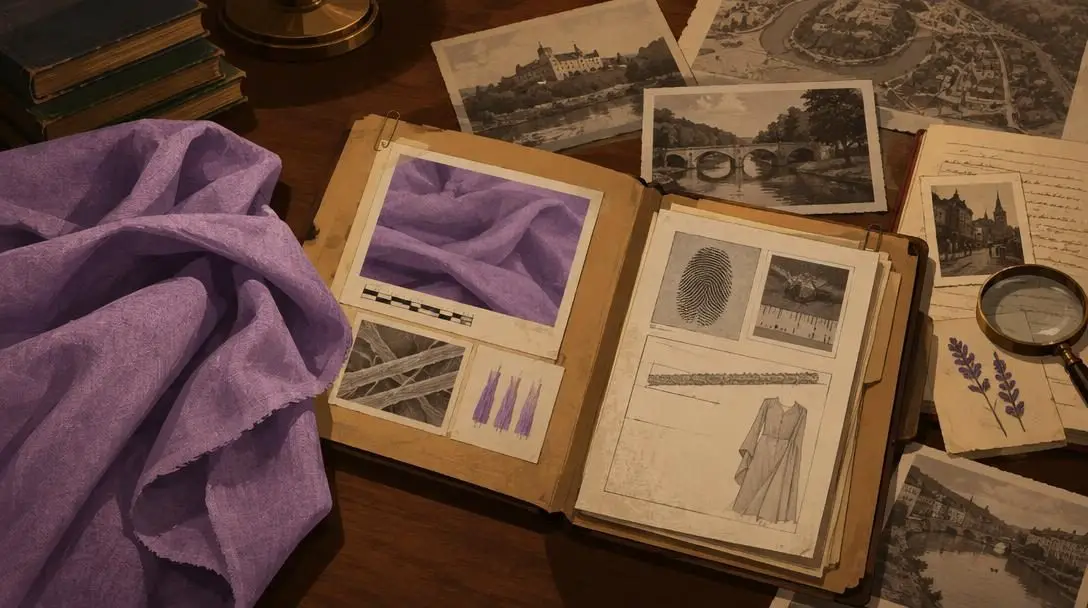
On the late evening of October 29, 2006, two passersby walking near a wooded area in Kilgore, Texas, stumbled upon the burning remains of an unidentified young woman. Investigators determined that she had been murdered shortly before her body was intentionally set on fire to destroy evidence. Because detectives had no immediate leads, missing persons matches, or personal effects to identify her, she became known across the region as Lavender Doe, named after the color of the shirt she was wearing at the time of her death.
For twelve years, the case remained utterly cold. The pivotal breakthrough arrived when three dedicated civilian researchers—Lori Gaff, Kevin Lord, and Missy Koski—took on the challenge of determining her identity through extensive online sleuthing and genetic records. Their painstaking efforts conclusively proved that the victim was Dana Lynn Dodd. Once her identity was restored, law enforcement re-interrogated a prime suspect, Joseph Wayne Burnette. Burnette subsequently confessed to Dodd's murder, as well as the killing of another woman sharing his residence. Burnette was convicted and handed three consecutive 50-year prison sentences. The triumph of identifying Dodd also served as a catalyst for the establishment of the DNA Doe Project, a specialized initiative that continues to identify unknown decedents nationwide.
Gregory May

- Disappearance Year: 2001
- Origin: Bellevue, Iowa
- Perpetrator: Douglas DeBruin
- Key Sleuth: Ellen Leach
Gregory May, a passionate collector of rare antiquities and historic memorabilia, abruptly disappeared from his Iowa apartment in 2001. May shared the residence with his friend Douglas DeBruin and DeBruin’s girlfriend, Julie. Following May's sudden absence, valuable items from his antique collection began surfacing in distinct regional markets, yet there was no physical crime scene or body in Iowa to confirm foul play. That same year, hundreds of miles away at a highway truck stop in Missouri, maintenance personnel discovered a human skull that had been decapitated and entombed within a bucket of hardened concrete. For four years, Missouri authorities treated the discovery as an isolated, unidentified John Doe case, completely unaware of the missing collector in Iowa.
In 2005, an amateur web sleuth named Ellen Leach, who regularly reviewed missing persons bulletins and forensic reconstructions, noticed striking anatomical similarities between the photograph of missing Gregory May and the clay facial reconstruction created from the skull in Missouri. Leach brought the potential match directly to the attention of law enforcement agencies in both states. Forensic testing corroborated her suspicion, providing detectives with the definitive physical evidence they needed. Armed with proof of May's death, authorities tracked Douglas DeBruin to Arizona, where he was apprehended, tried, and convicted for the murder.
Jessica Currin

- Discovery Date: Summer 2000
- Location: Mayfield, Kentucky
- Perpetrator: Quincy Cross
- Key Sleuth: Susan Galbreath
In the summer of 2000, the body of Jessica Currin, a young mother with an infant son, was discovered near a local middle school in Mayfield, Kentucky. She had endured horrific brutality: she was sexually assaulted, bludgeoned to death, and set on fire. Initial police inquiries focused heavily on the father of her child, but the investigation quickly fell apart due to severe mismanagement, procedural missteps, and general inaction by the local police department. The case ground to an agonizing standstill, leaving Currin’s family without answers or protection.
Disturbed by the lack of progress, Susan Galbreath, a local amateur investigator who dedicated her personal time to cold case research, launched an independent inquiry into Currin’s death. Galbreath walked the town's neighborhoods, documented rumors, conducted personal interviews with residents who were afraid to speak to uniformed officers, and even confronted the primary suspect. Her unrelenting presence kept the community talking and applied continuous public scrutiny to the stalled official case. Galbreath's persistence paid off when a witness finally came forward to deliver an official statement implicating Quincy Cross, the man Galbreath had long suspected. Cross was subsequently prosecuted, convicted, and sentenced to life behind bars.
Civilian researchers succeed by asking the persistent, uncomfortable questions that bureaucratic agencies often lack the time or community trust to pursue.
Joseph James DeAngelo
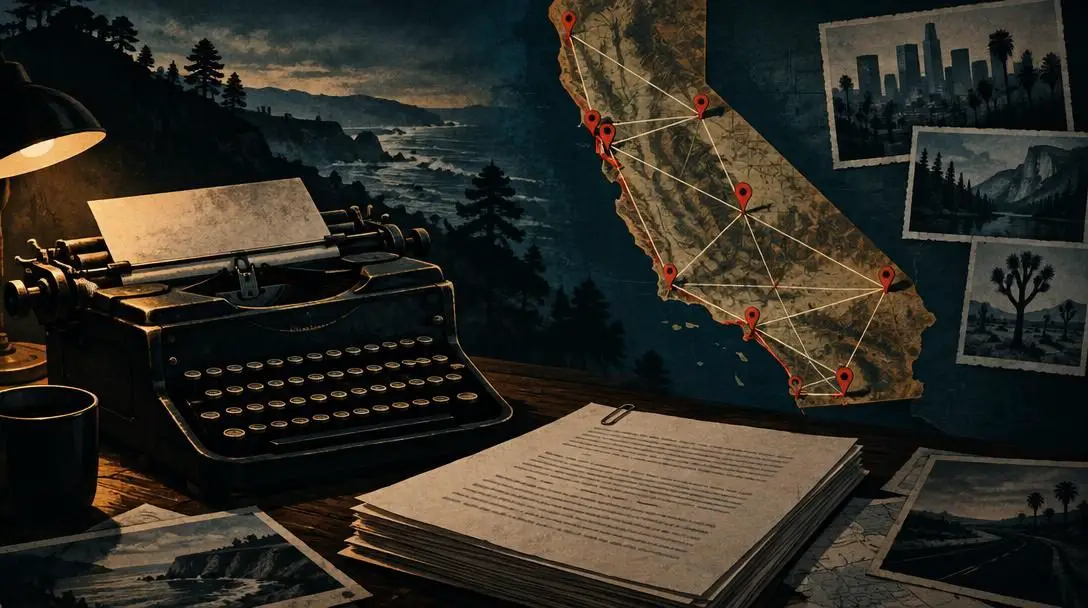
- Crime Spree: 1974–1986
- Location: California
- Convicted Offender: Joseph James DeAngelo
- Key Sleuth: Michelle McNamara
Between 1974 and 1986, a violent serial offender terrorized various regions of California, perpetrating 13 homicides, 51 sexual assaults, and upwards of 120 residential burglaries. Over several decades, law enforcement treated these regional offenses as separate sprees, assigning different monikers to the perpetrator, including the East Area Rapist and the Original Night Stalker. Because the crimes occurred across multiple jurisdictions during an era preceding modern digital databases, the case grew completely cold, and the perpetrator vanished into normal society.
Author and civilian researcher Michelle McNamara developed a meticulous, investigative fascination with the unsolved crimes. McNamara unified the disparate sprees under a single, iconic name: The Golden State Killer. She spent years analyzing police reports, tracking survivor testimonies, and compiling a comprehensive psychological and behavioral profile of the perpetrator, which she developed into a widely publicized book. McNamara’s work brought unprecedented national attention back to the dormant investigation. Her public advocacy galvanized forensic investigators to embrace innovative investigative genetic genealogy. In 2018, authorities utilized familial DNA matching to arrest Joseph James DeAngelo, who subsequently pleaded guilty and received 12 consecutive life sentences without the possibility of parole.
Tara Grinstead
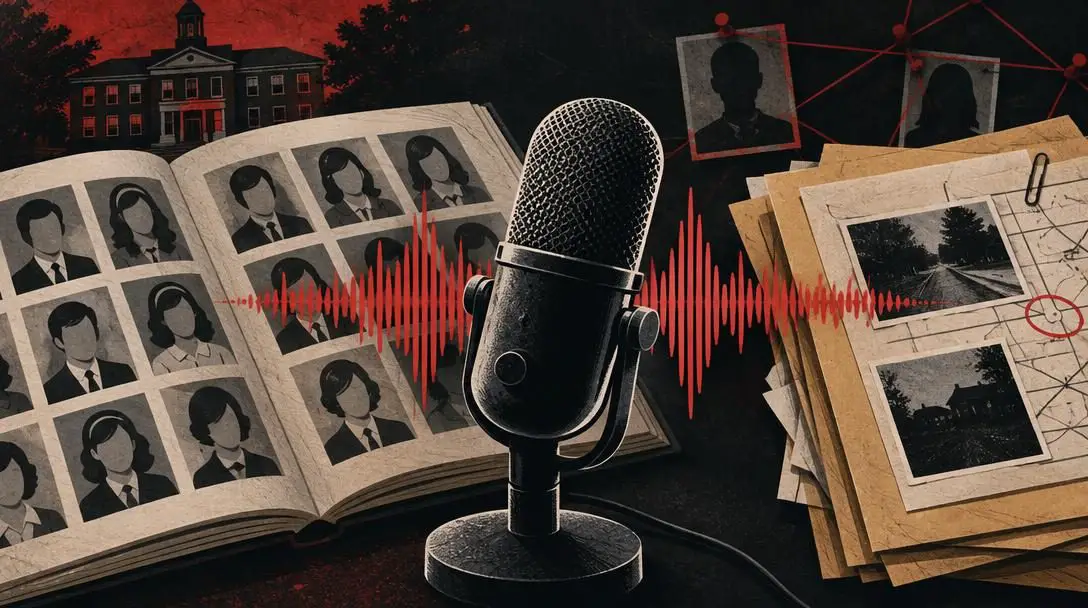
- Disappearance Date: October 2005
- Location: Ocilla, Georgia
- Perpetrator: Ryan Duke
- Key Sleuth: Payne Lindsey
Tara Grinstead, a popular high school history teacher and former beauty queen, vanished from her home in Ocilla, Georgia, in October 2005. Despite extensive ground searches, national media broadcasts, and community rallies, investigators uncovered virtually no physical clues explaining her disappearance. By 2010, after five years of dead ends and zero identifiable suspects, Grinstead was legally declared dead, and the case file joined the ranks of unsolved Georgia mysteries.
Years later, documentary filmmaker and independent podcaster Payne Lindsey launched Up and Vanished, an investigative podcast specifically dedicated to dissecting Grinstead's cold case. Lindsey traveled to Ocilla, interviewed former students, questioned local figures, and methodically reviewed old evidence on a weekly public platform. The podcast went viral, creating intense public discussion that pressured individuals with latent knowledge to step forward. Within months of the renewed attention, critical tips flooded into the Georgia Bureau of Investigation, leading to the arrest of Ryan Duke. Investigators revealed that Duke had broken into Grinstead's home to commit a burglary and strangled her when she confronted him. In 2022, Duke was formally convicted and sentenced to 10 years in prison for his role in the crime.
The core investigative methods of civilian sleuths
The success of everyday citizens in resolving high-profile cold cases reflects a major shift in modern crime investigation. While civilian researchers lack statutory power and forensic laboratory access, they leverage several distinct investigative pathways to crack open unresolved files:
- Cross-indexing public records: Amateur sleuths frequently compare disjointed registries, matching missing persons reports with unidentified decedent files across state lines that have never been reconciled by local jurisdictions.
- Digital genetic genealogy: By building family trees from public census data, newspaper obituaries, and voluntary genealogical archives, citizen researchers assist in narrowing unidentified DNA profiles down to specific family clusters.
- Grassroots community reporting: Operating outside official law enforcement frameworks allows civilian researchers to gather rumors, unverified accounts, and local perspectives from community members who might hesitate to talk to armed officers.
- Media production and public mobilization: Independent podcasters, writers, and digital creators utilize narrative storytelling to bring public scrutiny back to forgotten victims, prompting guilty parties or reluctant witnesses to finally speak.
How to investigate cold cases safely and responsibly
Engaging with cold case files requires exceptional ethical restraint, methodical organization, and absolute respect for victims and their families. Those interested in researching unsolved cases should follow a disciplined process:
- Compile verified primary documentation: Begin by collecting public records, verified missing persons bulletins, court filings, and archived news publications rather than relying on internet forums or speculative gossip.
- Build a precise, chronological timeline: Document dates, travel routes, alibis, and geographic coordinates into a centralized database to identify inconsistencies that earlier investigators might have missed.
- Maintain investigative objectivity: Avoid forming an emotional attachment to a single theory or suspect, evaluating every piece of discovered data against alternative explanations to prevent confirmation bias.
- Respect the privacy of surviving loved ones: Never harass, interrogate, or publish invasive personal details regarding the surviving family members of victims who are already managing traumatic grief.
- Submit all viable leads directly to authorities: Package any credible matches, potential witness information, or newly discovered records into a coherent summary and deliver it directly to the law enforcement agency handling the case.
Frequent mistakes made by amateur researchers
While public enthusiasm has cracked historical mysteries, irresponsible sleuthing can inflict catastrophic harm on living individuals and permanently derail criminal prosecutions. Amateur detectives must avoid several pervasive errors:
- Publicly naming unverified suspects: Accusing an individual without lawful evidence ruins reputations, invites community vigilantism, and exposes the amateur researcher to severe civil defamation lawsuits.
- Tampering with physical evidence: Attempting to search private property or retrieve real-world items can compromise chain of custody protocols, making physical evidence inadmissible in court.
- Directly confronting dangerous individuals: Approaching suspected violent felons without tactical training or backup places both the civilian researcher and innocent bystanders in immediate physical peril.
- Amplifying unsubstantiated rumors: Treating internet speculation as confirmed fact clutters police tip lines, distracts investigators from viable leads, and wastes limited municipal resources.
- Prematurely publicizing sensitive details: Releasing critical case breakthroughs before detectives can obtain search warrants gives suspects ample time to destroy evidence or flee the jurisdiction.
Frequently asked questions
Do amateur sleuths have legal authority to interrogate suspects?
No. Private citizens have no legal authority to interrogate individuals, execute search warrants, or make official arrests. All legitimate leads and evidence must be transferred directly to sworn law enforcement agencies for formal investigation.
What is the DNA Doe Project and how did it start?
The DNA Doe Project is a non-profit organization founded to identify John and Jane Does through genetic genealogy. It was established following the successful civilian-assisted identification of Dana Lynn Dodd, formerly known as Lavender Doe, in Texas.
Can podcast investigations actually help solve cold cases?
Yes. Investigative podcasts generate widespread public awareness that often reaches witnesses who previously remained silent. In the Tara Grinstead case, the podcast Up and Vanished generated the critical momentum and public tips that led to Ryan Duke's arrest.
How can civilian researchers avoid contaminating evidence?
Researchers should restrict their work to open-source public records, archival cross-referencing, and digital genealogy. They must never visit active crime scenes, touch potential physical evidence, or interfere with ongoing police operations.
The bottom line
The tragic deaths of Dana Lynn Dodd, Gregory May, Jessica Currin, Tara Grinstead, and the victims of Joseph James DeAngelo underscore an enduring truth: justice does not always flow exclusively from traditional official hierarchies. When dedicated, analytical citizens apply their time and resources to forgotten cases, they can breathe life into frozen inquiries and restore dignity to victims who have waited decades to be named. However, the future of crowdsourced justice depends upon rigorous ethics, careful evidence management, and constructive partnerships with professional law enforcement agencies.