5 Paintball Tactics To Win Your Next Team Building Session
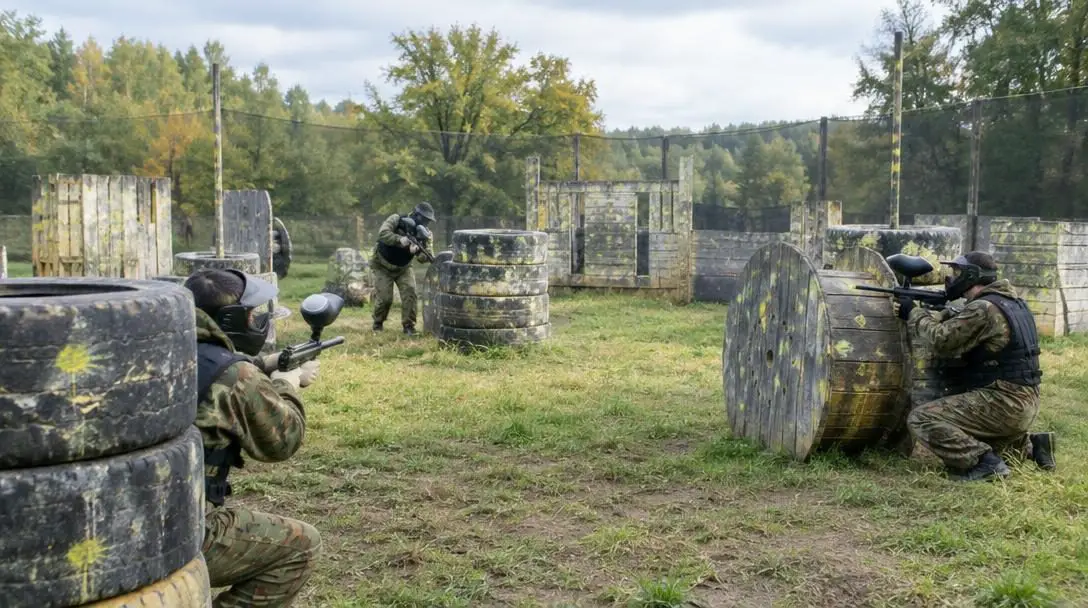
Corporate team building exercises frequently struggle to find the right balance between real engagement, genuine collaboration, and actual entertainment. Traditional office icebreakers and boardroom seminars often feel artificial and uninspired, leaving coworkers disengaged. Paintball offers an active alternative by dropping participants into a dynamic, fast-paced environment where winning requires coordinated teamwork, reliable communication, and mutual trust under pressure.
While firing paint at coworkers is inherently entertaining, winning makes the experience far more memorable—especially when company bragging rights are on the line. Success on the paintball field does not depend on lone-wolf heroics or superior athletic fitness. Just like projects in the workplace, a paintball squad is only as resilient as its least experienced member. A disciplined group that communicates constantly and follows an organized plan will consistently defeat uncoordinated opponents.
Key takeaways
- Paintball matches are decided by team-wide coordination and communication rather than individual athletic ability.
- Practicing equipment handling and reloading beforehand prevents costly jams and fumbles during high-intensity exchanges.
- Walking the field before a match allows teams to map out cover, assign lanes, and establish clear movement plans.
- Staying mobile and executing disciplined snap shooting keeps your squad from being pinned down and eliminated.
How tactical mechanics dictate paintball matches
Paintball strategy is fundamentally an exercise in resource management. On the field, teams must balance four critical assets: physical space, sightlines, paint ammunition, and personnel. The core mechanics are simple—mark opponents with paintballs to eliminate them while securing match objectives, such as claiming high-value territory or capturing an opposing flag. However, achieving those goals requires understanding how geometry, gear, and positioning interact once the referee signals the start.
Marker handling serves as the technical baseline for any tactical plan. Different tiers of play utilize different styles of paintball markers, and knowing how your specific equipment behaves is critical. While operating a marker is straightforward, varying trigger pull speed and gas pressure directly affects firing rates. Developing reliable muscle memory prevents catastrophic errors during firefights, such as dry-firing, marker jams, or struggling to reload hoppers from harness pods when under heavy incoming fire.
On the turf, geometry governs survival. Squads that spread out across the field gain an immediate structural advantage over groups that bunch together. Fanning wide creates crossfires and acute firing angles that trap opposing players behind their bunkers, choke off key transit pathways, and expose advancing flankers. Conversely, hiding in a single bunker surrenders map control. The longer a player stays pinned in one position, the easier it becomes for the opposing squad to determine their exact location, advance along the blind spots, and eliminate them.
A cohesive unit that communicates effectively and executes a clear plan will consistently defeat a group of individually talented players who lack organization.
Five core tactics to dominate your team building session
Turning an informal group of office colleagues into an organized squad requires practical, actionable habits. Applying these five foundational tactics will help your team outmaneuver opponents, maintain tactical awareness, and seize control of every match.
| Tactic | Primary focus | Key operational benefit | Critical mistake avoided |
|---|---|---|---|
| Equipment mastery | Gear mechanics and muscle memory | Smooth firing rates and rapid reloads | Jams, dry-firing, and fumbling with pods |
| Strategic planning | Pre-game layout analysis | Clear lane assignments and aligned goals | Winging it and disoriented teammates |
| Teammate utilization | Suppression and coded callouts | Safe movement under covering fire | Telegraphing moves to the opposing team |
| Aggressive mobility | Field positioning and continuous scanning | Dominant angles and wide map control | Tunnel vision and getting trapped in cover |
| Snap shooting | Quick-peek marksmanship | Accurate paint delivery with minimal exposure | Prairie-dogging predictable bunker positions |
Get to know your equipment
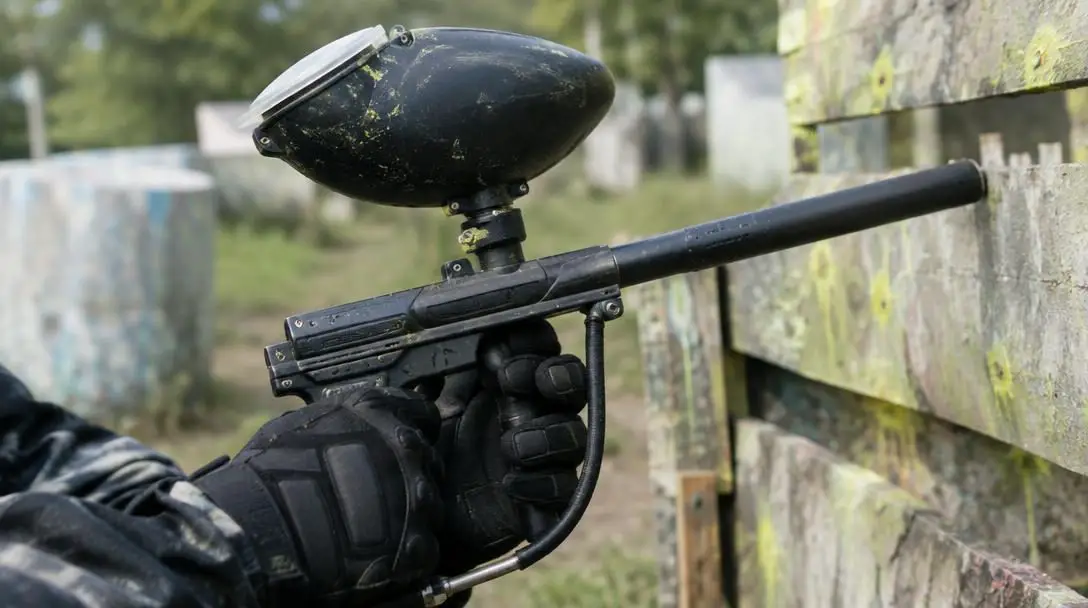
Unfamiliar gear breeds hesitation, and hesitation on the paintball field leads straight to the elimination box. Before the first whistle blows, make sure that your protective mask, marker, and hopper feel comfortable and intuitive. Adjust your mask strap to ensure a snug fit that will not shift while running, and check that your hopper feeds smoothly into the marker breech.
Familiarity with your marker builds the tactile reflexes needed to regulate your rate of fire and manage reloads entirely by feel. If you have to look down at your hands to flip a hopper lid, clear a feed neck, or seat a pod, you take your eyes off the game at the exact moment an opponent makes an aggressive push. Developing mechanical competence ensures that equipment becomes an asset rather than a liability during intense exchanges.
Have a plan
Entering a paintball match without a collective strategy is an invitation to quick elimination. Just as military forces rely on detailed operational orders, a paintball squad must examine the field layout before the opening whistle. Walk the perimeter of the field together to inspect bunker arrangements, spot high-ground advantages, and locate reliable primary and secondary cover positions.
Use your pre-game walkthrough to set transparent expectations for every player on the roster. Determine which teammates will sprint to establish wide perimeter pins, who will anchor central bunkers to track the opponent's movements, and who will serve as mobile support. When every coworker knows where they are expected to go and what their specific lane responsibility entails, the squad acts with unified purpose rather than scattered hesitation.
Use your teammates
In a team building match, your peers are your greatest tactical asset—provided your group maintains proactive communication. A lone player cannot monitor 360 degrees of the field. When your paint runs low or you need to advance to an aggressive forward bunker, you must rely on your teammates to lay down continuous suppression fire to keep opponent heads tucked behind cover.
Effective coordination requires disciplined delivery. Shouting explicit instructions like "I'm running to the center pyramid" gives the other side advance notice of your move. Instead, rely on concise code words, short hand signals, or quiet lateral relays across the bunker line. Communicating clearly without surrendering tactical surprise lets your squad maneuver smoothly across the turf.
Keep moving
Securing territory dictates the outcome of virtually every paintball format, whether the goal is total team elimination or securing a central objective flag. Casual players often fall into the trap of crouching inside their starting bunkers, hoping to outlast the competition. In practice, staying passive surrenders field positioning and lets aggressive squads box you in from multiple angles.
Mobility also applies directly to your field awareness. Constantly scan the arena with your eyes rather than locking onto a single bunker. Fixating on one visible opponent causes tunnel vision, blinding you to flanking maneuvers developing along the sidelines. Paintball is intensely physical, and sitting comfortably at a desk will not condition you for short sprints across wet turf. Practicing tactical sprints, low crouches, and rapid transitions between bunkers during practice drills ensures that your body is physically prepared for the demands of the match.
Learn how to snap shoot
Once you are comfortable operating your marker while on the move, mastering the snap shot is the single most valuable shooting mechanic you can develop. Inexperienced players often "prairie dog," repeatedly popping their heads out from the exact same position above or beside a bunker. Opposing shooters will simply pre-aim at that specific edge and hit you the second you re-emerge.
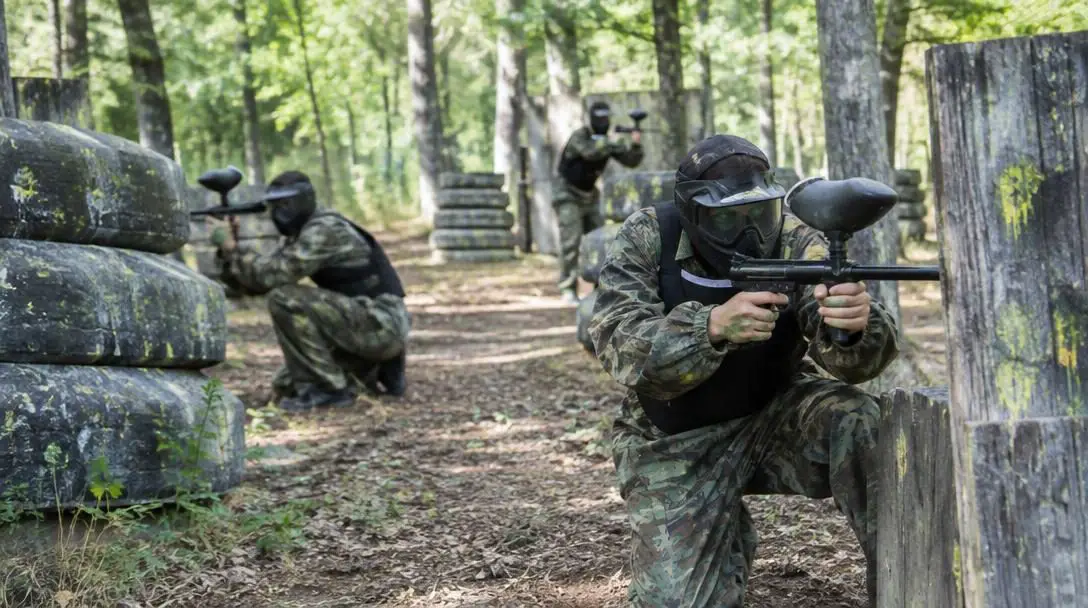
Snap shooting replaces predictable peeking with rapid, unpredictable marksmanship. To execute the technique, tuck your body tightly behind your bunker, quickly lean out just far enough to clear your barrel and mask, release a tight burst of paint toward the target zone, and instantly snap back behind cover. Do not linger outside cover to watch where your paint lands. To maximize effectiveness, continually vary your shooting height, alternate leaning from the left and right sides of your bunker, and change the cadence of your peeks so defensive shooters cannot anticipate your rhythm.
Step-by-step preparation for your workplace squad
Executing sound paintball tactics requires deliberate preparation before you step through the safety netting. Follow this sequential routine to ensure your group arrives organized, confident, and tactically aligned.
- Convene a short strategy meeting before your play session to outline core objectives, clarify field rules, and align expectations.
- Inspect your rental or personal equipment, verifying proper mask tension, barrel plug fitment, and consistent hopper feeding.
- Conduct physical handling drills on solid ground, practicing quick reloads and switching the marker between shoulders while standing and kneeling.
- Walk the playing field together to map out primary cover bunkers, fallback positions, and key fields of fire across the layout.
- Assign specific roles to each squad member, matching defensive anchors, pushers, and wing cover to personal comfort levels.
- Establish simple hand signals and short code words so players can call for covering fire and alert peers to flankers without shouting plans to opponents.
- Rehearse the mechanics of snap shooting behind practice cover, reminding players to tuck their elbows and avoid lingering outside the bunker.
Costly paintball mistakes to avoid
Casual and first-time players frequently fall into instinctive habits that undermine their team's position. Recognizing and eliminating these common tactical blunders will dramatically increase your survival rate:
- Remaining stationary: Freezing behind starting bunkers out of fear of getting marked surrenders ground control and allows opponents to encircle your squad.
- Developing tunnel vision: Staring down a single opposing player behind an opposite bunker while losing track of broader perimeter movements.
- Prairie-dogging cover: Peeking your head over the top of a bunker at steady, predictable intervals instead of shifting your lean angles.
- Yelling plans aloud: Broadcasting movements, empty hopper alerts, or bunker assignments loudly enough for opposing players to anticipate your actions.
- Neglecting weapon handling: Failing to practice reloading and pod manipulation beforehand, resulting in fumbling during rapid firefights.
- Moving without suppression: Breaking cover for an open sprint without first confirming that a teammate is laying down covering paint on the opposing bunker.
- Leaving teammates isolated: Abandoning inexperienced players on a flank without covering fire or tactical direction, breaking the team's cohesion.
Translating field performance back to the office
The true corporate value of a paintball session emerges after the gear is returned to the staging area. Once the paint washes off, the tactical dynamics of the game provide valuable parallels to daily workplace performance. A dedicated after-action debrief back at the office provides a neutral, engaging framework to analyze how your team operates under sudden pressure.
Examine how communication functioned when plans broke down on the turf. Discuss whether instructions were clear, how team members responded when caught off guard, and whether frontline players felt supported by their anchors. In many cases, quieter coworkers demonstrate exceptional positional awareness and calm decision-making during high-stakes games, providing managers with fresh insight into their team's problem-solving capabilities.
As your group gains experience, consider experimenting with scenario-driven game formats during future outings. Moving beyond simple team elimination matches into objective-based games—such as capture the flag, VIP escort, or asymmetrical attack-and-defend modes—requires deeper strategic planning and resource allocation. Fostering an environment where experienced players mentor newcomers ensures your entire department builds lasting trust, sharper communication habits, and a stronger collective identity.
Frequently asked questions
Why is paintball an effective team building activity for companies?
Paintball replaces contrived seminar exercises with a fast-paced, low-stakes tactical environment where success requires mutual trust, rapid communication, and collaborative planning. It provides immediate, objective feedback: uncoordinated teams face rapid elimination, while squads with disciplined cooperation consistently win.
How can our team communicate on the field without giving away our positions?
Avoid shouting your direct plans across the turf. Instead, establish quiet code words, simple hand signals, and lateral relays along the bunker line during your pre-match walkthrough to coordinate covering fire and movement without alerting your opponents.
What is snap shooting and why is it important?
Snap shooting is an advanced shooting technique where a player rapidly leans out from behind cover, delivers a brief burst of paintballs toward a target, and immediately returns to safety. It prevents "prairie-dogging," minimizing the player's physical exposure and keeping opponents from predicting peek timing.
What should we do if our team gets pinned down behind cover?
Do not remain stationary, as staying put allows opponents to encircle your position. Communicate with your squad using code words to coordinate covering fire, scan the perimeter to avoid tunnel vision, and maneuver out toward wider angles to reclaim control of the field.
How should roles be assigned for an inexperienced office group?
Match roles to individual comfort levels during a pre-game field walkthrough. Position confident, mobile runners on the outer flanks to secure territory, place communicative players in central anchor bunkers to track opponents, and assign support roles to provide steady covering fire for advancing teammates.
The bottom line
Dominating a corporate paintball outing does not require professional athletic talent or advanced military training. It demands clear communication, shared accountability, and disciplined execution of foundational field tactics. By preparing your gear, walking the terrain in advance, utilizing covering fire, and remaining mobile, your office group can outmaneuver the competition and turn an entertaining company outing into a genuine masterclass in teamwork.