5 Reasons To Invest In Solar Panels
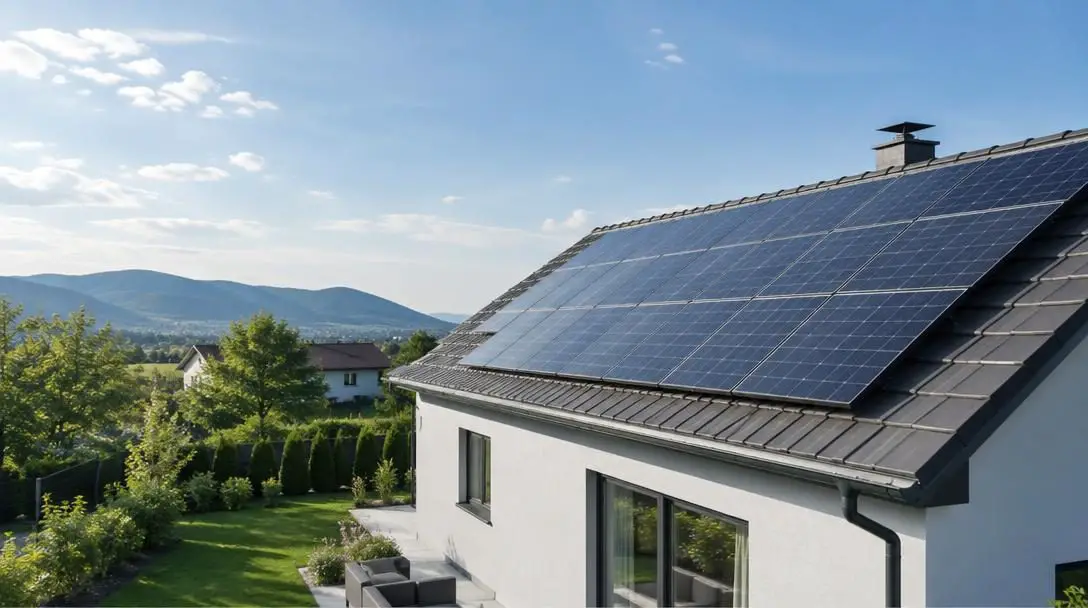
Sustainable power generation has long sparked spirited discussions among property owners, financial planners, and environmental advocates. In past decades, critics frequently argued that residential solar arrays rarely paid for themselves, pointing to steep hardware price tags, complex installation demands, and decades-long waiting periods before owners could recoup their capital. Conversely, proponents championed personal energy autonomy, decentralized infrastructure, and the environmental benefits of generating power free from fossil fuels.
However, modern solar equipment bears little resemblance to early experimental setups. Rapid advances in semiconductor engineering, streamlined manufacturing lines, and refined mounting hardware have fundamentally rewritten the economics of home energy generation. With hardware costs plummeting and system lifespans consistently exceeding a quarter of a century, solar panels have transformed from an ideological choice into a practical, long-term financial strategy.
Key takeaways
- Average hardware and installation costs have fallen sharply from $7.53 per watt in 2010 to approximately $2.65 per watt today.
- Modern residential systems can pay for themselves within 5 to 10 years in moderately sunny regions while operating reliably for 25 years or more.
- Incentives such as federal and state tax credits can cover as much as 26% of upfront equipment and labor expenses in the United States.
- Excess energy generation can be sold back to local utility providers, converting an ongoing household liability into an active revenue source.
The shifting economics of residential solar
Historically, early residential solar technology was largely an experimental or strictly ethical pursuit. Decades ago, manufacturing solar cells required resource-intensive processes that yielded modest electrical conversion rates. In 2010, property owners faced an average price of USD $7.53 per watt produced. At that rate, the amortized cost per watt exceeded what commercial utility companies charged for standard grid power, making broad adoption mathematically difficult for ordinary households.
Over the past decade, standardized industrial production and engineering breakthroughs pushed expenses downward while elevating cell reliability. Today, homeowners pay around $2.65 per watt produced—a rate roughly half of what traditional utilities typically charge for retail power. Because modern hardware retains productive efficiency across 25+ years, installing solar is now widely viewed as a capital investment rather than an unrecoverable expense.
| Metric | 2010 Benchmark | Modern Benchmark | Primary Market Impact |
|---|---|---|---|
| Cost per Watt Produced | USD $7.53 | USD $2.65 | Over 60% decline in hardware and deployment expenses |
| Utility Cost Comparison | Higher than grid power | Roughly half of retail grid rates | Direct month-over-month operational savings |
| System Lifespan | Varies by early components | 25+ years expected operation | Extended utility post-amortization |
| Typical Breakeven Window | Extended or non-viable | 5 to 10 years in sunny regions | Predictable return on invested capital |
5 core reasons to invest in solar panels
To understand the rapid acceleration of rooftop solar adoption, property owners must evaluate both operational advantages and long-term financial mechanics. Modern installations deliver distinct lifestyle, ecological, and economic returns.
Become More Self-Sufficient
Achieving energy self-sufficiency safeguards your household when regional utility grids encounter unexpected disruptions. During severe natural disasters, winter storms, or human-caused equipment failures, centralized grid networks can remain offline for days or even weeks. These outages interrupt crucial household functions, including food refrigeration, water pumping, indoor climate regulation, and medical device operation.
Generating your own power provides immediate physical security and operational independence. While nearby homes remain dark, a properly configured onsite setup keeps vital appliances functional without interruption. Furthermore, having independent power generation places you in a position to assist neighbors with emergency charging and communications, reinforcing community resilience while providing the peace of mind that comes with resource independence.
Lower Your Energy Bills
As long as your property receives adequate solar radiation, an onsite array can easily pay for itself across its 25+ year operating life. By generating kilowatt-hours on your roof, you directly reduce the volume of retail energy you must purchase from the local grid. Over a quarter-century, the cumulative cash savings on utility bills routinely surpass the initial purchase and setup expenses by a substantial margin.
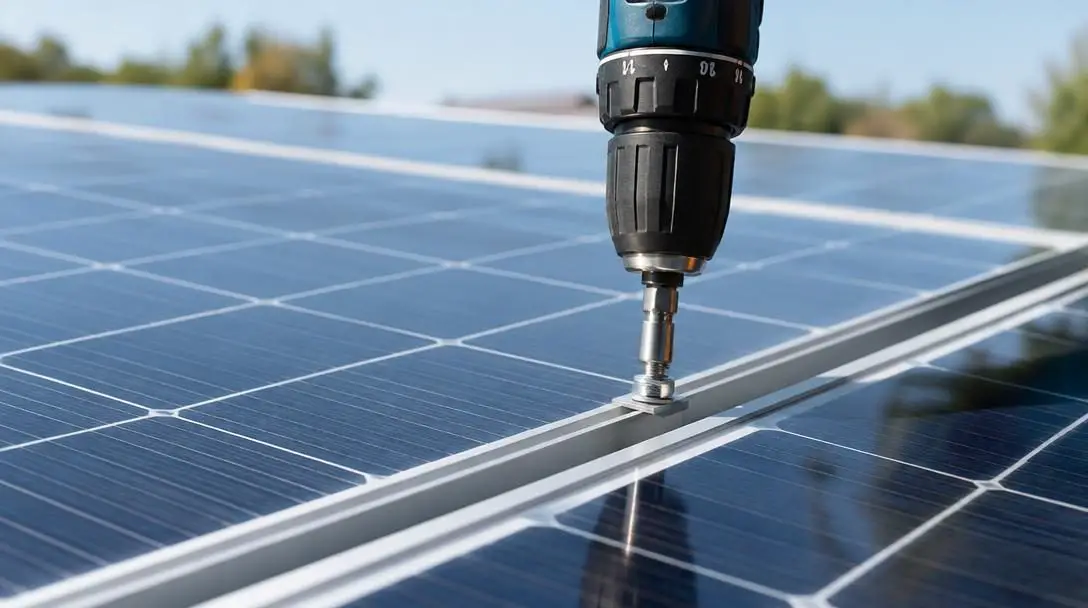
Even in less sunny climates, meaningful financial savings remain achievable through careful planning. Homeowners in cloudier regions simply need an upfront energy analysis to calculate expected kilowatt-hour generation per panel before selecting hardware. Roof orientation plays a crucial role in determining overall efficiency: south-facing roof planes capture the highest levels of solar radiation in the Northern Hemisphere, whereas north-facing roofs capture optimal sunlight south of the Equator. Properties with favorable orientations require fewer total panels to satisfy their baseline electrical demands.
Prices Are Going Down
While the recurring cost of conventional municipal services, fossil fuels, and household consumables climbs steadily, the baseline cost of generating solar power continues to drop. This deflationary dynamic is driven by streamlined assembly pipelines, automated wafer manufacturing, and steady gains in photovoltaic conversion efficiency.
Paying roughly half of what you would pay the utility company per watt makes solar an attractive alternative for property owners wanting predictability in their recurring expenses.
Falling from USD $7.53 per watt in 2010 to roughly $2.65 per watt today fundamentally shifts the household ledger. Locking in a predictable, onsite cost per watt protects your family against volatile utility tariff increases, fuel surcharges, and municipal grid modernization fees for decades to come.
Support Clean Energy
Solar radiation represents an inexhaustible, zero-emission resource. Centralized electrical grids worldwide still rely heavily on combustion power plants fueled by coal, natural gas, and oil. Every kilowatt-hour harvested directly from your roof avoids burning fossil fuels at distant generation facilities, directly reducing airborne particulate emissions, water usage, and carbon output.
Decentralized solar generation actively chips away at the demand placed on vulnerable infrastructure while shrinking your household carbon footprint. Adopting renewable generation allows property owners to participate directly in broader climate transition initiatives, supporting ecological sustainability and leaving a healthier environment for subsequent generations.
You Could Make Money
Beyond lowering recurring expenses, solar arrays can serve as active revenue-generating assets. In the United States, eligible homeowners can capitalize on federal and state tax credits that cover up to 26% of total equipment and installation costs. While tax incentives are claimed during tax filing rather than discounted upfront at the register, they significantly compress the net capital outlay required to complete the installation.
These incentives, paired with falling hardware expenses, enable systems in moderately sunny regions to reach full financial breakeven within 5 to 10 years. Once hardware costs are fully amortized, the energy produced is effectively free, leaving cash in your pocket every month. Additionally, many municipalities and utility operators offer buyback or net metering programs. When your system generates more electricity than your home consumes during peak daylight hours, the utility company credits your account or purchases that surplus energy, turning a conventional utility bill into a net credit.
How solar photovoltaic systems work
Evaluating an investment in solar energy requires a clear understanding of the mechanical and electrical principles that transform sunlight into usable household electricity. Modern systems operate seamlessly through four integrated stages:
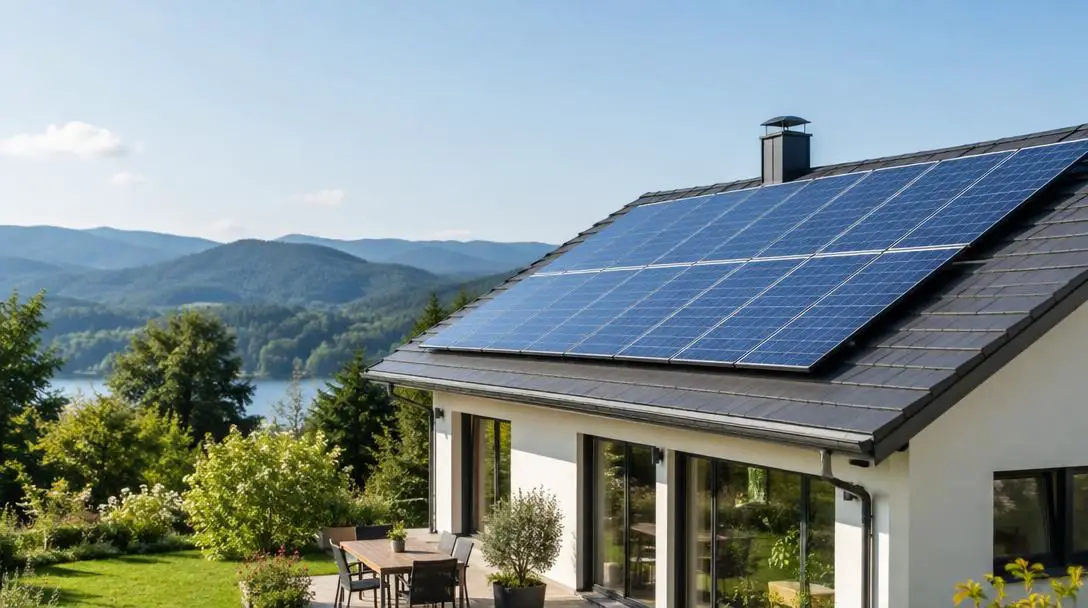
At the center of every array are photovoltaic (PV) cells, typically built from specialized semiconductor materials like silicon. When daylight strikes the surface of these cells, photons energize electrons within the semiconductor. This reaction generates direct current (DC) electricity, which is collected by micro-conductors and routed along insulated exterior cabling.
Because residential lighting, refrigeration, and modern electronics require alternating current (AC) power, that raw direct current must be converted. This is the responsibility of the system's inverter. Systems utilize either a centralized string inverter mounted near the main service panel or modular microinverters attached directly behind each individual solar module. The inverter translates DC voltage into clean AC voltage synchronized with grid specifications.
Once converted, the AC power flows directly into your home's main breaker panel. From this distribution point, solar-generated electricity powers active household loads—such as cooling systems, laundry machines, and computers. If your array generates more electricity than your appliances consume during peak afternoon hours, the surplus electricity travels backward through your bi-directional utility meter and out into the local grid, registering credits or buyback disbursements depending on municipal policies.
Step-by-step guide to going solar
Transitioning a residential property to clean energy requires systematic evaluation to ensure equipment sizing aligns with physical roof conditions, household demand, and local regulations. Follow these organized steps to optimize your installation:
- Review past electricity bills: Assemble at least twelve months of consecutive utility statements to determine total annual kilowatt-hour usage, peak consumption months, and average daily baseload demand.
- Conduct a roof and property assessment: Inspect the structural integrity, remaining lifespan, and slope of your roof. Confirm whether your roof faces south (Northern Hemisphere) or north (Southern Hemisphere), and identify potential shading from tall trees or neighboring buildings.
- Run an energy analysis: Calculate realistic per-panel generation yields based on your specific regional sunlight patterns, local weather tendencies, and roof pitch before committing to hardware sizes.
- Research financial incentives: Identify federal programs—such as the 26% United States tax credit—alongside state rebates, performance payments, and local tax exemptions to determine your actual net investment cost.
- Verify utility buyback rules: Contact your local electrical utility to clarify interconnection requirements, meter upgrade fees, and specific payout structures for surplus generation fed back to the grid.
- Collect and compare installer quotes: Solicit detailed proposals from licensed contractors. Ensure their quoted pricing per watt reflects current competitive rates near $2.65 per watt and confirm labor, racking, and panel warranties.
- Secure necessary permits: Obtain all municipal structural, building, and electrical permits alongside the formal utility interconnection approval prior to beginning physical construction.
- Complete installation and final inspection: Have licensed professionals mount the racking, secure modules, connect inverters, and coordinate the final municipal and utility sign-offs to energize the array.
Common mistakes to avoid when installing solar
While modern solar panels are durable, reliable, and accessible, poorly planned projects can undercut your financial returns. Avoiding these common mistakes ensures your system operates at peak efficiency:
- Ignoring roof orientation and shading: Installing panels on north-facing pitches in the Northern Hemisphere or ignoring shade cast by trees and chimneys severely suppresses electrical production.
- Neglecting existing roof condition: Photovoltaic modules last for 25+ years. Installing new panels over an aging roof scheduled for replacement in two or three years results in steep fees to dismantle and reinstall the hardware during reroofing.
- Overlooking regional climate analysis: Assuming production numbers from sunny desert regions apply equally to cloud-prone areas leads to mismatched system sizing. Always calculate generation rates against regional sunlight averages.
- Failing to check utility buyback terms: Assuming the utility will credit surplus electricity at full retail rates can distort financial forecasts. Confirm your provider's specific buyback formulas and net billing structures beforehand.
- Assuming solar automatically works during blackouts: Standard grid-tied inverters automatically disconnect during power outages to protect line workers from backfed electricity. True blackout resilience requires dedicated battery banks or islanding switches.
- Paying outdated installation rates: Because hardware and installation costs dropped from $7.53 per watt in 2010 to around $2.65 today, accepting inflated quotes extends your payback period unnecessarily.
Frequently asked questions
How long do modern solar panels last?
Modern residential solar panels are engineered to last 25 years or more. Most top-tier manufacturers offer 25-year performance warranties that guarantee the panels will continue producing electricity at a substantial percentage of their original rated capacity throughout that timeframe.
How many years does it take for a solar system to pay for itself?
In moderately sunny regions, solar systems typically reach their breakeven point within 5 to 10 years. This timeframe is driven by lower equipment costs—currently around $2.65 per watt—alongside federal and state tax incentives that can offset up to 26% of setup costs.
Do solar panels produce power on cloudy days?
Yes, solar panels generate electricity on overcast days because ambient daylight penetrates through clouds. However, total electrical output will be lower than on bright, cloudless days. Completing an energy analysis helps you determine expected seasonal generation in less sunny climates.
What roof direction is best for solar panels?
In the Northern Hemisphere, south-facing roof planes receive the most sunlight throughout the year and offer optimal efficiency. Conversely, in the Southern Hemisphere, north-facing roofs capture the most solar exposure.
Will my solar panels work during a power outage?
Standard grid-tied solar systems automatically disconnect during outages to prevent dangerous electrical backfeeding into the utility lines. To maintain power during grid blackouts, systems must be configured with battery storage systems or specialized islanding equipment.
The bottom line
Investing in residential solar power is no longer an experimental hobby or an exclusively ethical statement. With per-watt installation rates plummeting from $7.53 in 2010 to roughly $2.65 today, the financial mechanics of home generation have permanently shifted in favor of the consumer. When paired with tax credits that can absorb up to 26% of gross system costs, residential systems frequently achieve full financial payback within 5 to 10 years.
For the remainder of their 25+ year operational lifespan, properly installed panels produce reliable, low-cost electricity that buffers your household against utility rate increases, cuts reliance on fossil fuels, and offers pathways to generate revenue through utility buybacks. By evaluating your roof orientation, conducting a thorough local energy analysis, and avoiding inflated contractor quotes, you can turn your rooftop into an efficient, long-term power plant that delivers real financial autonomy and environmental impact.