The Magic of Mexico City – 5 Unique Attractions in This Amazing City
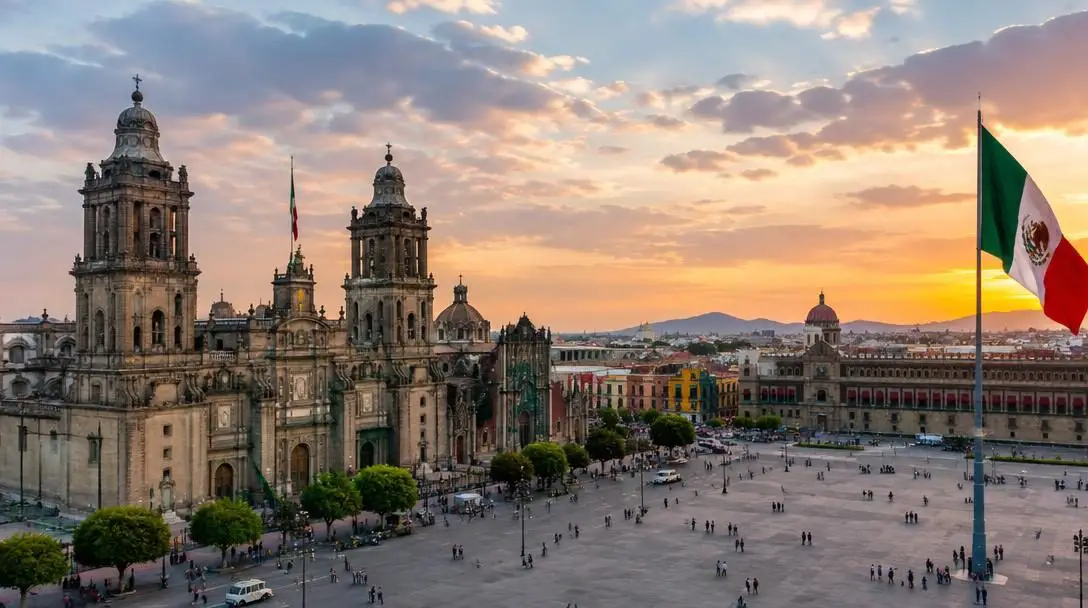
Mexico City stands as one of the earliest and most multifaceted metropolises in North America, functioning as a vibrant epicenter where pre-Hispanic archaeology, viceregal history, and bold twentieth-century civic expression converge. Spanning the high-altitude Valley of Mexico, the capital offers visitors an urban landscape shaped by centuries of cultural transformation, political shifts, and architectural innovation.
Because the metropolis is so expansive and layered with history, navigating its streets can easily overwhelm first-time visitors trying to choose an itinerary. Prioritizing five signature landmarks—the Palacio Nacional, the Fuente de Tláloc in Chapultepec Park, the ancient ruins of the Templo Mayor, the floating waterways of Xochimilco, and Chapultepec Castle—provides a well-rounded foundation for understanding how this dynamic capital honors its indigenous Aztec roots, colonial era, and modern identity.
Key takeaways
- Mexico City was established directly over the foundations and ancient canal grid of Tenochtitlan, the capital of the Aztec Empire.
- Five signature destinations showcase the metropolis across its Aztec, colonial, eighteenth-century royal, and twentieth-century civic eras.
- Public masterworks by muralist Diego Rivera link national identity to municipal water systems and federal administrative halls.
- Organizing sightseeing geographically between the Centro Histórico, the Bosque de Chapultepec, and the southern canals prevents travel burnout.
From Aztec Island to Modern Capital: Historical Layers of the Valley
To fully grasp the character of Mexico City's landmarks, one must understand how the capital took shape over the past seven centuries. Long before Spanish ships arrived on the continent, the Aztec civilization developed Tenochtitlan, a monumental ceremonial city constructed on an island in Lake Texcoco. The Aztecs engineered an elaborate system of dikes, bridges, causeways, and agricultural canals that allowed their population to thrive within the watery lakebed environment.
Following the Spanish conquest in the sixteenth century, the ceremonial core of Tenochtitlan was dismantled. Conquistadors and colonial authorities erected viceregal administrative buildings, grand residences, and Catholic religious structures directly atop the razed temples, frequently reusing the original carved volcanic stones for construction materials. Over the centuries that followed, the surrounding lake network was drained or filled in to permit continuous urban sprawl, though vital traces of the ancient hydrology remained preserved in outlying districts such as Xochimilco.
In the twentieth century, Mexico experienced an era of post-revolutionary renewal that placed indigenous heritage and public civic works at the center of the national consciousness. Celebrated artists like Diego Rivera received government commissions to create immense murals and public sculptures. These works integrated profound artistic symbolism directly into federal palaces and everyday municipal infrastructure, ensuring that ancient legends and modern working-class identities remained visible throughout the bustling capital.
Five Unique Attractions Across Mexico City
These five highlights illustrate how politics, monumental art, archaeological remains, and natural waterways intersect across different eras of Mexican history.
Palacio Nacional
- Location: Centro Histórico
- Primary function: Seat of federal government, presidential office, and Federal Treasury
- Key artistic highlight: Biblioteca Miguel Lerdo de Tejada with murals by Diego Rivera
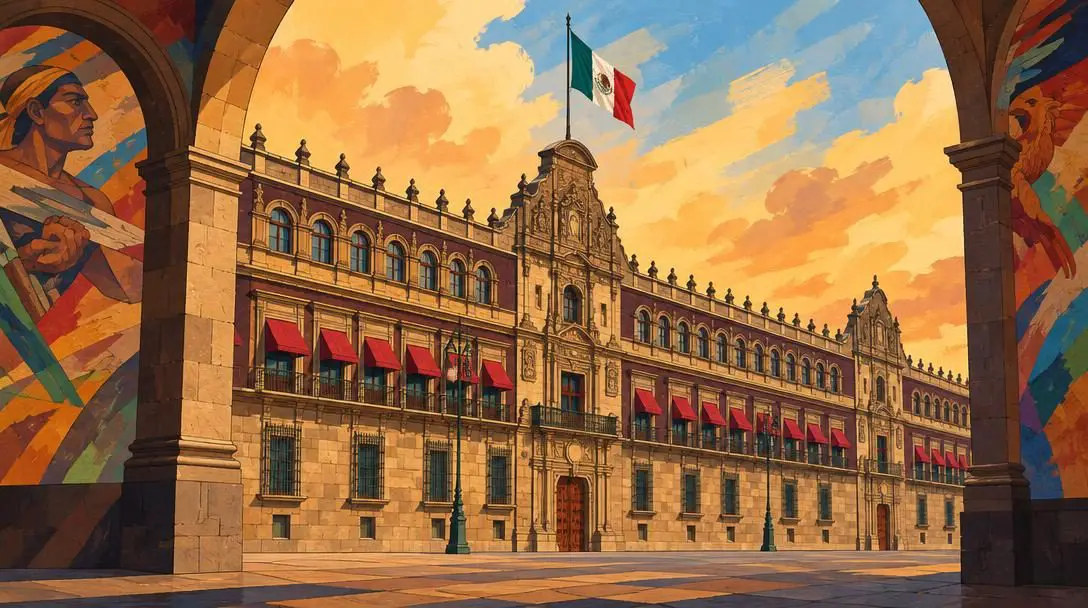
Occupying the eastern side of the capital's central square, the Palacio Nacional functions as the operational core of Mexico's federal government. The vast complex houses executive facilities, including the president's office and the Federal Treasury, continuing a centuries-old administrative tradition on grounds once occupied by Aztec rulers.
Beyond its governmental responsibilities, the site serves as a vital cultural treasury. Within its perimeter sits the Biblioteca Miguel Lerdo de Tejada, recognized as one of the most prominent libraries in Mexico. The interior walls of the library are covered in dramatic, colorful murals executed by Diego Rivera. These expansive artworks depict critical chapters of Mexican history, indigenous resilience, and the labor movements that formed modern Mexican identity.
Fuente de Tláloc in Chapultepec Park
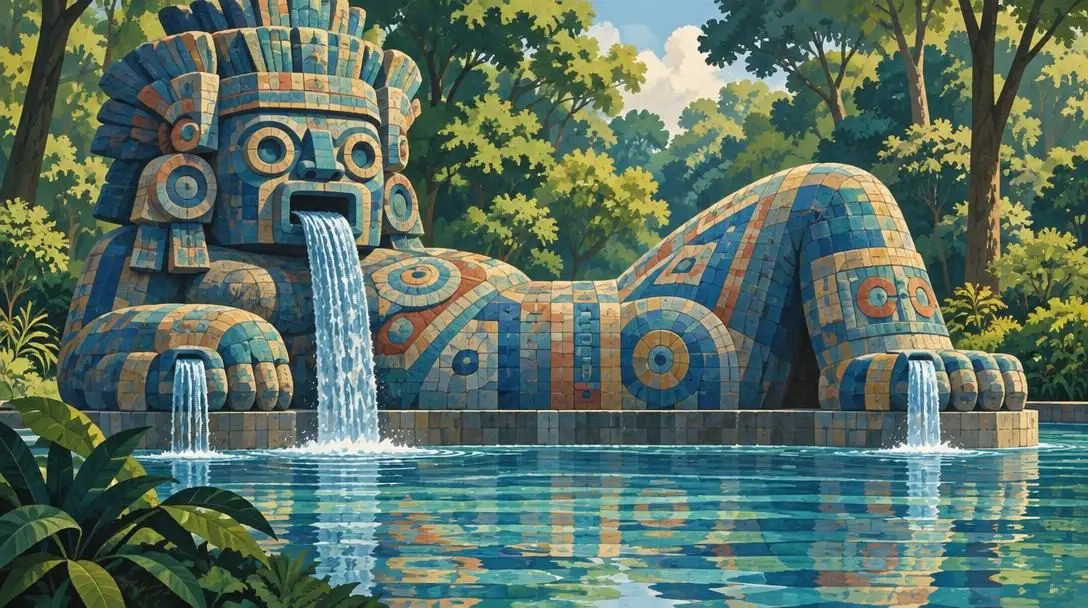
- Location: Bosque de Chapultepec (Chapultepec Forest)
- Artist: Diego Rivera
- Dedicated to: Tláloc, the Aztec god of rain
- Scale: Outdoor tiled installation spanning a 100-foot-wide pool
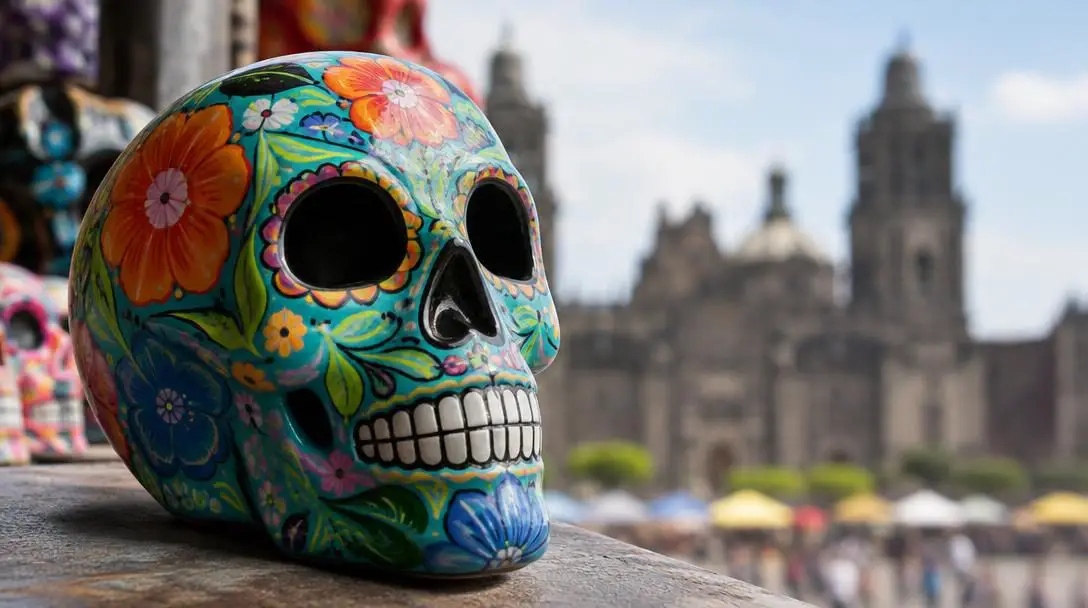
Tucked deep within the wooded grounds of the Bosque de Chapultepec, the Fuente de Tláloc is far more than a conventional decorative water fountain. This monumental tiled sculpture was conceived by Diego Rivera during his civic collaboration on Mexico City's municipal water system, illustrating the connection between modern civil engineering and ancient belief systems.
The outdoor installation depicts Tláloc, the Aztec deity of rain and water, lying across an open-air basin that spans 100 feet in width. Rivera assembled the work using thousands of colorful tiles, designing the sculpture so that water would flow directly over the divine figure. The piece serves as a striking tribute to the spirit of the Mexican people and the essential role water has played in the valley since pre-Hispanic times.
Templo Mayor
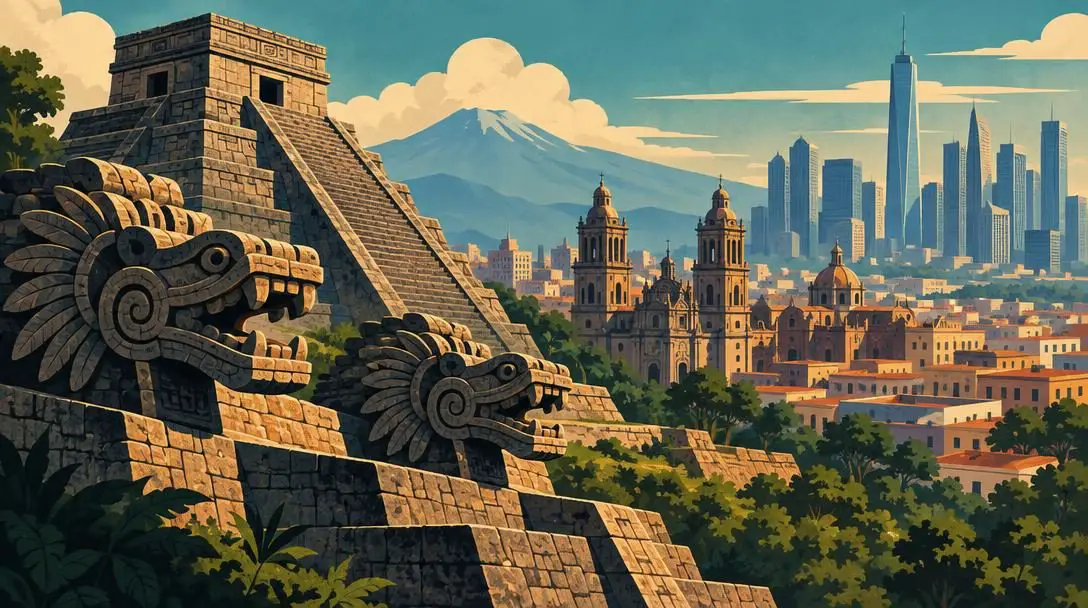
- Location: Centro Histórico
- Historic identity: Main temple and ceremonial heart of ancient Tenochtitlan
- Primary era: Pre-Hispanic Aztec Empire through the 16th-century conquest
- Current setup: Outdoor excavated ruins and multi-level indoor museum
Situated in the heart of the Centro Histórico and framed by bustling modern roadways, the Templo Mayor was once the twin-pyramid ceremonial core of Tenochtitlan. Here, Aztec priests conducted major religious rites honoring the deities of war and rain. During the Spanish conquest in the sixteenth century, the sacred complex was razed to the ground, and its materials were used to construct a grand colonial cathedral nearby.
Rediscovered during municipal excavations in the late twentieth century, the evocative ruins are open to visitors who can walk along raised platforms past stone serpent heads, altars, and layered building foundations. Adjacent to the archaeological dig, an extensive on-site museum displays excavated artifacts, offering vital context that helps travelers visualize the sheer scale and craftsmanship of the Aztec metropolis.
Xochimilco – The Floating Gardens
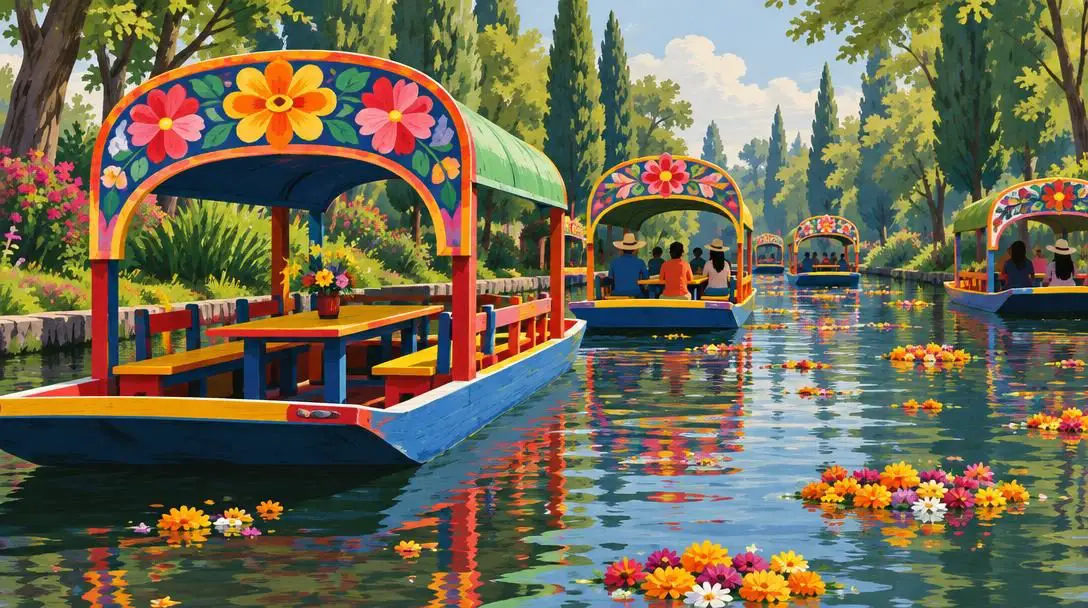
- Name meaning: "Place of the flowers" in the Aztec language
- Watercraft: Wooden flat-bottom boats called trajineras or chalupas
- Landscape: Ancient canal network, small islands, and organic agricultural plots
- Propulsion method: Hand-steered using long wooden poles pushed against the canal bed
For visitors eager to escape the metropolitan asphalt and experience living pre-Hispanic history, Xochimilco offers a distinctive window into ancient agricultural engineering. Translating to "place of the flowers" in the native Aztec tongue, this southern district preserves the final extensive network of canals and raised farming islands developed by ancient valley inhabitants.
Guests board brightly painted wooden vessels known as trajineras, or chalupas, which resemble Venetian gondolas. Local boatmen steer these craft through the winding waterways using long wooden poles braced against the shallow bed. While drifting along the forested canals, travelers can pull alongside floating vendors selling fresh food, local beverages, and handcrafted souvenirs, or disembark at small islands to inspect traditional organic farms.
Chapultepec Castle

- Distinction: The only royal castle located in North America
- Topography: Perched on a high hill within Bosque de Chapultepec
- Architectural style: 18th-century design with stained glass and checkered tile
- Visitor views: Panoramic viewpoints overlooking Mexico City and the Valley
Standing dramatically atop a rocky outcrop in the middle of the city's largest urban forest, Chapultepec Castle holds the rare distinction of being the sole royal castle situated on the North American continent. Begun in the late eighteenth century as a stately retreat, the fortress later served as an imperial residence and a presidential headquarters before opening its doors to the public.
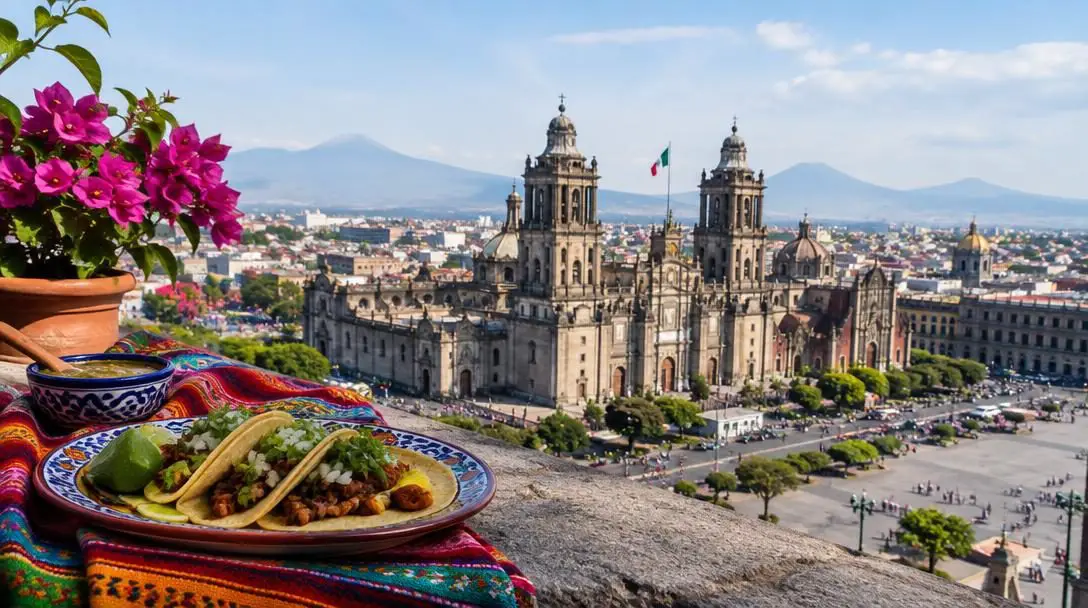
Visitors who make the uphill walk are treated to sweeping panoramic vistas of the surrounding valley and metropolitan skyline. Up close, the castle displays stately European-influenced architecture, lavishly preserved residential salons, luminous stained-glass corridors, and polished black-and-white tiled checkerboard terraces that document the nation's complex political shifts.
Across five signature landmarks, ancient stone ruins, royal halls, and mural-covered civic walls reveal how Mexico City continually rebuilds itself without ever erasing its past.
At a Glance: Comparing the Five Landmarks
The table below summarizes the architectural scope, geographic neighborhood, and historical focus of each essential site to assist with itinerary planning:
| Attraction | Neighborhood | Historical Era | Primary Feature |
|---|---|---|---|
| Palacio Nacional | Centro Histórico | Colonial to Modern | Diego Rivera murals in the Biblioteca Miguel Lerdo de Tejada |
| Fuente de Tláloc | Bosque de Chapultepec | Mid-20th Century | 100-foot tiled basin sculpture honoring the Aztec rain god |
| Templo Mayor | Centro Histórico | Pre-Hispanic (Aztec) | Excavated pyramid foundations and on-site artifact museum |
| Xochimilco | Xochimilco (South) | Pre-Hispanic to Present | Historic canal navigation aboard colorful wooden trajineras |
| Chapultepec Castle | Bosque de Chapultepec | 18th to 19th Century | North America's only royal palace with hilltop valley panoramas |
Strategic Planning: Structuring Your Sightseeing Itinerary
Because Mexico City is vast, attempting to visit attractions scattered across distant boroughs on the same day can lead to hours lost in transit. Follow these step-by-step guidelines to build an efficient schedule:
- Group your Centro Histórico destinations together: Schedule visits to the Palacio Nacional and the Templo Mayor on the same morning or afternoon. Because both sites sit within easy walking distance in the downtown historic core, pairing them eliminates traffic delays.
- Dedicate a separate day to Bosque de Chapultepec: Combine your ascent to Chapultepec Castle with a trek through the forest to see the Fuente de Tláloc. Both reside within the expansive park grounds, though you should expect a brisk walk between them.
- Reserve half a day for Xochimilco: Located in the southern sector of the valley, Xochimilco requires additional transit time from the urban center. Block out an entire morning or afternoon so you can enjoy a leisurely canal ride, browse floating markets, and explore small organic farms without feeling rushed.
- Allocate sufficient time for indoor exhibits: Budget at least one to two hours to tour the multi-level museum facility at the Templo Mayor following your walk through the exterior stone ruins. The recovered sculptures and ceremonial offerings provide necessary historical depth.
- Prepare for varied outdoor surfaces and weather: Several of these landmarks—including the stone paths of Templo Mayor, the hilltop climb to Chapultepec Castle, and the open canals of Xochimilco—require open-air walking across stones, hills, and forested tracks. Wear sturdy shoes and dress for sun exposure.
Pitfalls to Avoid When Navigating the Metropolis
Travelers exploring Mexico City for the first time often encounter common planning errors. Keeping the following advice in mind will keep your sightseeing smooth:
- Underestimating the scale of Chapultepec Forest: The Bosque de Chapultepec is massive. Assuming that Rivera's Fuente de Tláloc sits right beside Chapultepec Castle can cause confusion; the 100-foot fountain is situated deeper within the wooded park trails, requiring a substantial walk.
- Skipping the museum facility at Templo Mayor: Viewing the stone ruins from the perimeter street railings offers only a partial perspective. Bypassing the museum interior means missing out on the detailed artistic carvings, ceremonial knives, and preserved relics that explain the temple's function.
- Rushing past the Palacio Nacional's artistic holdings: Because it is an active seat of government with security protocols, visitors occasionally hurry through the grounds. Be sure to seek out the Biblioteca Miguel Lerdo de Tejada to examine its vibrant Diego Rivera murals up close.
- Expecting a quiet nature cruise at Xochimilco: The canals are an active, social waterway where families celebrate and vendors sell food, crafts, and music directly from wooden boats. Embrace the communal energy rather than anticipating a secluded ecological tour.
- Overloading single daily itineraries: Trying to cover southern canals, downtown ruins, and western forested hills in a single day is exhausting. Anchor your travel to one geographic neighborhood per outing.
Deeper Explorations: Broadening Your Cultural Journey
After visiting these five foundational landmarks, travelers can use their insights to explore related cultural, artistic, and historical avenues throughout the region:
- Follow Diego Rivera's public art trail: Having inspected Rivera's library murals in the Palacio Nacional and his 100-foot rain-god installation at the Fuente de Tláloc, seek out additional public murals and municipal projects created across the capital during the height of the Mexican muralism movement.
- Investigate regional Aztec archaeology: If the excavated stone platforms of the Templo Mayor sparked your curiosity regarding Tenochtitlan, explore complementary archaeological zones and regional exhibits across the Valley of Mexico to deepen your understanding of pre-conquest civilization.
- Study colonial architectural adaptations: The stark proximity between the dismantled Templo Mayor and the sixteenth-century cathedral erected nearby demonstrates how the Spanish conquest reshaped the city. Stroll through adjacent downtown streets to observe how viceregal palaces incorporated salvaged indigenous stonework.
- Trace the evolution of Mexican statecraft: Comparing the halls of Chapultepec Castle—once home to imperial rulers—with the presidential offices and Federal Treasury inside the Palacio Nacional offers a tangible look into the nation's transition from empire to constitutional federalism.
Frequently asked questions
Why is Chapultepec Castle considered unique in North America?
Chapultepec Castle is the only authentic royal castle situated on the North American continent. Perched atop a hill in the Bosque de Chapultepec, it served as an official imperial residence and executive seat before becoming a historic museum showcasing eighteenth-century architecture and valley panoramas.
What are the traditional wooden boats in Xochimilco called?
The brightly painted flat-bottomed wooden boats used to navigate the canals of Xochimilco are known as trajineras, and are also referred to as chalupas. They are steered along the shallow waterways by boatmen using long wooden poles pushed against the canal bed.
Where can you see Diego Rivera's art among these attractions?
Diego Rivera's work is prominently featured in two of these landmarks: inside the Palacio Nacional within the Biblioteca Miguel Lerdo de Tejada, which is covered in his vibrant murals, and at the Fuente de Tláloc in Chapultepec Park, a massive 100-foot-wide outdoor tiled sculpture dedicated to the Aztec rain god.
Why was the original Templo Mayor dismantled?
The Templo Mayor was razed during the sixteenth-century Spanish conquest of Tenochtitlan. Following the fall of the Aztec capital, Spanish conquerors tore down the sacred temple complex and used its stones to build a colonial cathedral and adjacent civic buildings in the Centro Histórico.
How should visitors divide their time when seeing these five sights?
It is best to group the Palacio Nacional and Templo Mayor together during one day in the Centro Histórico, spend a separate day exploring Chapultepec Castle and the Fuente de Tláloc inside the Bosque de Chapultepec, and dedicate a distinct morning or afternoon for visiting Xochimilco in the south.
The bottom line
Mexico City's magic lies in its ability to present multiple centuries of human achievement within the same urban horizon. By structuring your journey around the Palacio Nacional, the Fuente de Tláloc, the Templo Mayor, the floating gardens of Xochimilco, and Chapultepec Castle, you gain an authentic cross-section of the Valley of Mexico. From sacred Aztec ruins and ancestral waterways to royal salons and revolutionary murals, these five attractions provide an unforgettable gateway into one of the world's greatest cultural capitals.