5 Reasons To Start Learning Magic Tricks

Across generations and cultures, the art of illusion has captured the human imagination. Spectators lean in closely during a performance of sleight of hand, tracking every subtle gesture and attempting to dismantle the mystery unfolding before their eyes. Yet skilled performers rely on an enduring foundation of psychology, choreography, and physical discipline that leaves audiences questioning whether magic might actually be real. Rather than functioning as mere deception, the craft represents a shared experience of wonder between performer and observer.
Unlocking the secrets behind these illusions delivers benefits that extend far beyond simple amusement. Learning magic tricks sharpens everyday communication, builds manual control, and cultivates patience. Whether utilized in high-pressure professional environments or casual social gatherings, the craft provides practical tools for personal development and meaningful human connection.
Key takeaways
- Performing sleight of hand de-escalates tension in stressful environments by redirecting emotional focus.
- Mastering illusions enhances public speaking, body language awareness, and interpersonal confidence.
- The deliberate practice required to execute sequential routines exercises cognitive focus and working memory.
- Card manipulation and sleight-of-hand exercises build fine motor control, finger strength, and coordination.
- Simple illusions serve as universal icebreakers that spark spontaneous conversation across diverse social groups.
Core benefits of practicing the magic arts
Investing time in learning magic delivers tangible advantages that influence how individuals think, move, and interact with the people around them. By breaking down the craft into five core motivations, aspiring practitioners can see how physical rehearsal translates into broad social and cognitive strengths.
| Reason | Primary Skill Developed | Everyday Application | Example Scenario |
|---|---|---|---|
| 1. Providing levity | De-escalation and emotional redirection | Diffusing workplace stress or client frustration | Hospitality delays and long wait times |
| 2. Improving social skills | Audience awareness and public speaking | Group presentations and interpersonal rapport | Capturing and holding room attention |
| 3. Honing mental acuity | Sequential memory and deep concentration | Counteracting digital distractions | Executing multi-step procedural tasks |
| 4. Improving dexterity | Fine motor control and hand-eye coordination | Physical precision in manual tasks | Handling playing cards and small objects |
| 5. Acting as an icebreaker | Conversational catalyst | Uniting unfamiliar groups at gatherings | Reviving stalled party conversations |
Reason 1: Magic tricks provide levity in tense situations
Moments of unexpected stress happen in every workplace and personal environment, frequently demanding creative interventions to defuse rising anger. Magic offers an immediate, disarming distraction that can transform a room's atmosphere in a matter of seconds. In high-pressure commercial situations where standard polite gestures fall flat, an unexpected display of wonder changes the psychological momentum of the room.
Consider a documented reality in the hospitality industry: a restaurant owner faces an overwhelming Saturday dinner service after several kitchen employees fail to show up. As food orders back up, seated guests grow visibly antsy and irritable. Serving extra bread and butter fails to appease hungry patrons whose patience has run out. Fortunately, a server who works children's birthday parties performing magic tricks for extra cash steps forward. The owner pays the worker extra to visit frustrated tables and entertain the guests with card reveals and classic coin-behind-the-ear maneuvers. Diners immediately forget their irritation, applauding the unexpected table-side performance while the kitchen staff catches up. Sleight of hand resets emotional tension by replacing impatience with amusement, giving professionals an effective de-escalation tool.
Reason 2: Learning magic tricks improves social skills
Executing an illusion requires stepping straight into the spotlight. Aspiring magicians quickly discover that technical sleight of hand represents only half the craft; interpersonal connection represents the rest. Because an effect fails if the audience detects awkwardness, practitioners must learn to control physical spacing, use deliberate hand signals, and maintain direct eye contact.
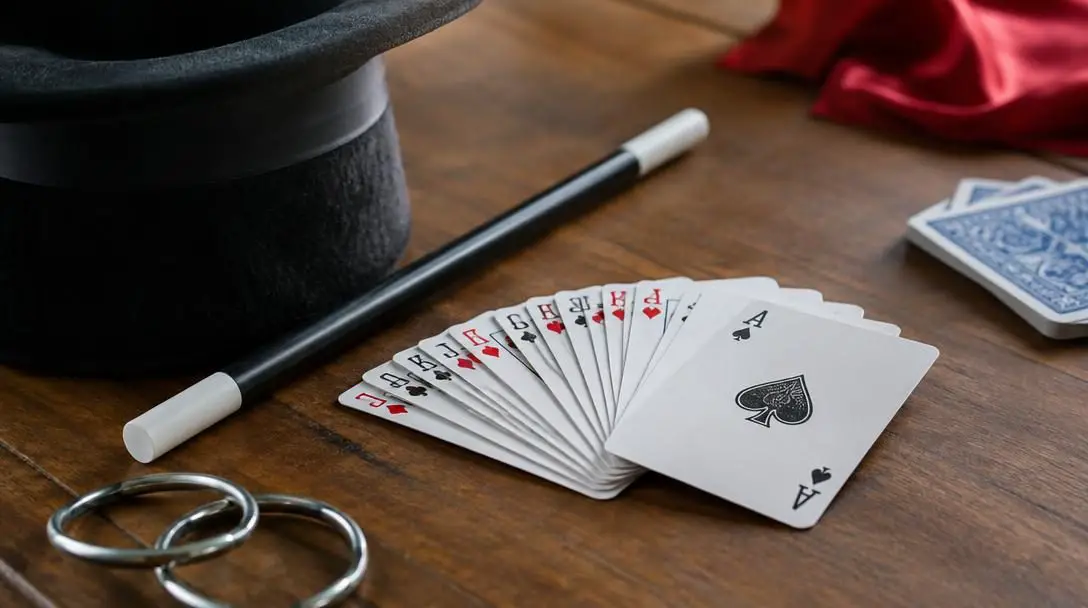
Performing magic functions as a specialized form of public speaking. A performer cannot merely execute finger movements in silence; they must construct an engaging narrative, weave humor, and shape how observers interpret what they see. Directing an audience's gaze with a subtle glance or a casual shift in body posture teaches performers how people process visual information. Because social communication consists of learned behaviors, practicing magic strengthens interpersonal confidence, reducing stage fright and making everyday conversation far more natural.
A magician engages people at an intimate level to help them see the world through a shared perspective of wonder.
Reason 3: Performing magic tricks hones mental acuity
Modern lifestyle habits present serious challenges to long-term attention spans. People of all ages are constantly exposed to rapid feeds of short-form digital media, brief text updates, and fleeting video snippets that encourage superficial browsing rather than sustained thought. Practicing magic acts as a powerful counterbalance against this creeping mental fragmentation.
Mastering an illusion requires total presence of mind and structured repetition. An illusionist cannot skim through an effect; every individual phase must be mastered before moving forward. Practicing an illusion calls for repeating a single action until it is flawless, integrating the subsequent phase, and repeating the expanded sequence again. This layered process builds mental endurance by challenging the brain to retain complex procedural sequences, maintain precise internal timing, and monitor audience psychology simultaneously. Coordinating subtle manual actions while thinking several steps ahead strengthens working memory and concentration.
Reason 4: Learning magic improves manual dexterity
While an audience watches the unfolding mystery, the performer's hands carry out a silent display of physical athletics. Learning sleight of hand involves rigorous finger routines designed to build hand strength, joint flexibility, and fine motor skills. In card magic—often described as cardistry—movements must be executed with flawless precision.
Handling a deck of cards naturally while secretly manipulating specific cards demands extraordinary control. Controlled cuts, false shuffles, and concealed palming look effortless on the surface, but underneath lies an intricate choreography of micro-movements. These routines engage small muscles across the palms and fingers that daily keyboard use and smartphone scrolling completely ignore. While an amateur might never reach the technical mastery of an elite cellist such as Yo-Yo Ma, working with cards and coins substantially sharpens the hand-eye coordination needed for intricate, high-precision manual tasks.
Reason 5: Magic tricks serve as the ultimate social icebreaker
Bringing unfamiliar people together frequently results in uncomfortable pauses and polite, defensive postures. When hosting a gathering where guests meet for the first time, identifying whether awkward lulls stem from shyness or social hesitation can be difficult. Attempting to repair the atmosphere by altering the background music often backfires, especially if guests hold conflicting musical tastes, leading to deeper silence as individuals withdraw to stare at their mobile phones.

Introducing a clean, well-rehearsed illusion resolves this social friction immediately. Magic possesses an innate appeal that cuts cleanly across age groups, personal backgrounds, and demographic divides. Presenting a single engaging trick provides a shared mystery, shifting the focus away from individual awkwardness and giving strangers an immediate topic to debate, dissect, and laugh about. By serving as an organic catalyst for group conversation, magic rescues social events from deteriorating into disconnected silence.
The mechanics behind the mystery
Understanding why magic consistently succeeds across diverse environments requires examining its underlying framework. An illusion is never an isolated technical trick; it operates at the exact intersection of physical execution and psychological choreography. When these core elements operate harmoniously, observers cannot distinguish the method from the effect.
- Misdirection and visual attention: Human visual attention cannot focus with equal intensity on multiple points at once. Performer gestures, clear vocal emphasis, and deliberate eye contact direct the audience's attention toward an overt action, granting the performer ample opportunity to carry out a covert maneuver without detection.
- Sleight of hand and physical technique: Precise manipulations, such as card palming, false cuts, and concealed coin retention, allow secret handling under close inspection. The objective is to make artificial, highly rehearsed movements appear relaxed, casual, and completely ordinary.
- Verbal framing and patter: The words chosen by the performer construct the narrative framework through which the audience evaluates what occurs. Clear framing guides assumptions, prompting the observer's brain to fill in logical gaps and assume standard physical laws are operating when they have already been bypassed.
Step-by-step approach to learning your first routines
Entering the magic arts does not require costly equipment or theatrical staging. Developing reliable skill begins by mastering everyday objects with deliberate, repeatable practice habits.
- Select accessible, familiar props: Begin your practice using standard poker-size playing cards or regular pocket change. Everyday objects avoid spectator suspicion and ensure you can perform anytime, anywhere without relying on elaborate preparation.
- Deconstruct and isolate mechanics: Divide each trick into its component physical actions. Rehearse an isolated cut, palm, or turnover hundreds of times until the mechanic feels comfortable before attempting to weave the pieces into a continuous sequence.
- Perform structured hand conditioning: Dedicate ten minutes daily to finger stretches, wrist rotations, and isolation exercises. Conditioning the minor muscles of the hands prevents cramping and ensures fluid card and coin manipulation.
- Integrate spoken patter and gaze direction: Once your hands can execute the mechanics automatically without looking down, practice delivering your presentation script aloud. Coordinate your eye movements so you look at your audience rather than monitoring your fingers.
- Rehearse before a trusted observer: Transition from practicing in front of a mirror to performing before a family member or friend. Track their reactions and note where their eyes wander to pinpoint gaps in your misdirection.
Common mistakes that derail beginner magicians
Newcomers to sleight of hand frequently fall into predictable performance traps. Recognizing these common errors early accelerates personal progress and prevents awkward exposure during live presentations.
- Rushing to perform before mastering the sequence: Attempting to showcase a newly discovered trick before the mechanics are embedded in muscle memory results in hesitation, erratic movements, and accidental exposure.
- Fixating on hand mechanics during performance: Staring downward at your own fingers telegraphs that secret handling is underway. Confident performers trust their manual muscle memory and keep their eyes locked on the spectator.
- Treating the performance as an intellectual puzzle: Magic is an entertaining interpersonal exchange, not an adversarial test of intelligence. Neglecting conversational charm, humor, or storytelling turns an engaging illusion into a cold, clinical demonstration.
- Choosing overly complicated routines too early: Complex, multi-phase effects introduce countless failure points. For high-stress situations or quick social icebreakers, brief and direct effects—such as clean coin vanishings or card locations—prove far more impactful.
Frequently asked questions
Do I need special props or expensive gimmick sets to learn magic?
No. High-impact magic can be performed using everyday items like ordinary pocket change, borrowed dollar bills, and standard decks of playing cards. Relying on familiar objects makes your magic seem more authentic and allows you to perform spontaneously without carrying specialized gear.
How much daily practice is required to become proficient at sleight of hand?
Consistency matters far more than long, irregular sessions. Spending fifteen to twenty minutes every day performing deliberate, isolated repetitions builds the necessary muscle memory and finger flexibility far better than practicing for several hours once a week.
Can learning magic tricks help with stage fright and social anxiety?
Yes. Magic functions as a structured form of public speaking where the performer controls the narrative, pacing, and visual focus. Because the interaction relies on prepared actions and practiced scripts, it provides a safe, reliable bridge for building confidence in front of groups.
What is cardistry, and how does it relate to traditional magic?
Cardistry focuses on the non-magical, expressive manipulation and display of playing cards, such as intricate cuts, flourishes, and shuffles. While distinct from magic, practicing cardistry builds the exceptional hand strength, dexterity, and fine motor precision required for advanced sleight of hand.
What should I do if an audience member figures out how a trick works?
Never argue or panic if an observer catches a glimpse of a method. Smile, acknowledge their sharp observation with humor, and transition effortlessly to another effect or change the topic of conversation. Maintaining poise preserves the lighthearted energy of the room.
The bottom line
Learning the art of illusion provides benefits that reach far beyond entertainment. Dedicating time to mastering sleight of hand sharpens personal concentration, improves fine motor precision, and provides a dependable toolkit for navigating social and professional environments. Whether utilized to defuse workplace stress, break the ice at an awkward social gathering, or simply exercise mental focus away from digital screens, magic transforms ordinary interactions into shared moments of delight.