5 Reasons Why Trains Are Key To The Future
When discussions turn toward the future of human mobility, public attention frequently gravitates toward high-tech novelties like autonomous electric vehicles and speculative vacuum-tube hyperloops. While these concepts dominate media headlines as potential panaceas for gridlock and urban emissions, relying primarily on road-based or experimental technology often bypasses the root causes of transit breakdown. Decades of urban planning demonstrate that expanding highway lanes inevitably produces induced demand, drawing more personal automobiles onto the road and locking cities into an endless cycle of congestion.
Rather than awaiting unproven engineering gambles or pouring billions into widening asphalt corridors, modern societies are increasingly turning back to established, modernized railway networks. Rail transit delivers a proven, scalable framework capable of moving vast volumes of passengers and cargo with unmatched efficiency. By shifting daily transit from private roads to comprehensive rail corridors, communities can shrink commute times, minimize environmental degradation, and lower economic burdens across the board.
Key takeaways
- Expanding road capacity creates induced demand that exacerbates traffic, whereas rail directly eliminates congestion by moving masses of people and cargo simultaneously.
- A single freight train can remove up to 300 heavy cargo trucks from regional highways, drastically reducing pavement wear and fossil fuel consumption.
- Rail systems achieve unmatched travel velocities, with dedicated routes like the Tokyo-to-Nagoya corridor designed for operational speeds of 500 kilometers per hour.
- Extensive regional rail networks ease metropolitan housing crunches by enabling swift, dependable commutes from more affordable outlying communities.
The Five Core Strengths of Modern Rail
Evaluating the mechanical, environmental, and geographic merits of railway networks shows why trains outshine individualized motor transit. By examining the structural advantages rail holds over private automobiles and long-haul trucking, city planners and citizens can understand how steel tracks continue to shape modern transportation.
Congestion Management
Traffic gridlock intensifies as urban areas grow denser, placing severe strains on surface streets and municipal thoroughfares. Rail infrastructure bypasses this bottleneck entirely by removing enormous volumes of daily commuters and freight from conventional highways. A single freight train can replace up to 300 heavy cargo trucks, instantly freeing up critical highway lanes and dramatically lowering road maintenance requirements. Simultaneously, high-capacity commuter passenger lines carry thousands of travelers during peak rush hours, eliminating the need for an equivalent number of private passenger vehicles on surface streets. Because trains carry passengers along an isolated, dedicated path, road traffic remains lighter and easier to navigate for essential services and local deliveries.
Greener Transportation
Rail travel represents one of the most ecologically sound transit models available today. Moving large numbers of people within a unified carriage structure requires substantially less energy per passenger-kilometer than transporting individuals in separate combustion-engine automobiles. In the logistics sector, hauling industrial freight along rail lines produces vastly lower carbon emissions per ton-mile than operating highway semi-trailers. Furthermore, modernization programs have accelerated the rollout of zero-emission trains powered by overhead electric lines, battery banks, or alternative clean propulsion. By weaning mass transit and freight distribution away from petroleum reliance, expanding train networks provides a direct, scalable pathway toward decarbonizing regional transportation sectors.
Superior Travel Convenience and Speed
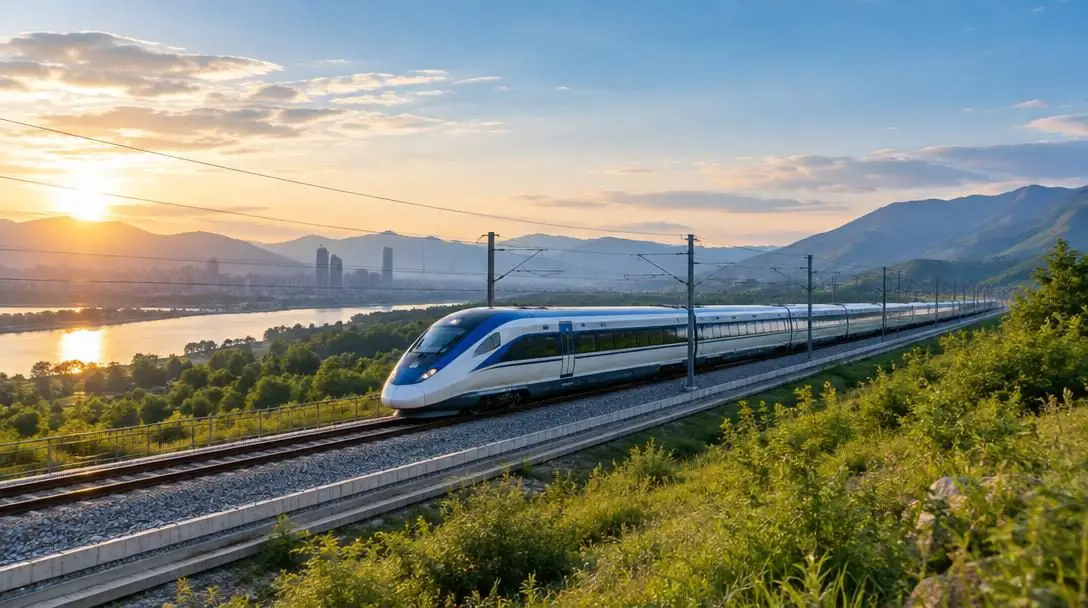
Automobiles navigating highways under ideal conditions rarely exceed sustained speeds between 60 and 70 miles per hour, and everyday traffic accidents, construction zones, or weather events routinely reduce those figures to a crawl. Rail systems operate in a completely different speed class. Modern high-speed passenger lines maintain continuous velocities that leave highway transit far behind. For example, the rail corridor engineered between Tokyo and Nagoya is planned to operate at blistering service speeds of 500 kilometers per hour, while the overall world speed record for modern rail exceeds 600 kilometers per hour. These extraordinary velocities turn multi-hour highway grinds into brief, comfortable hops, allowing passengers to work, read, or rest without the stress of steering through traffic.
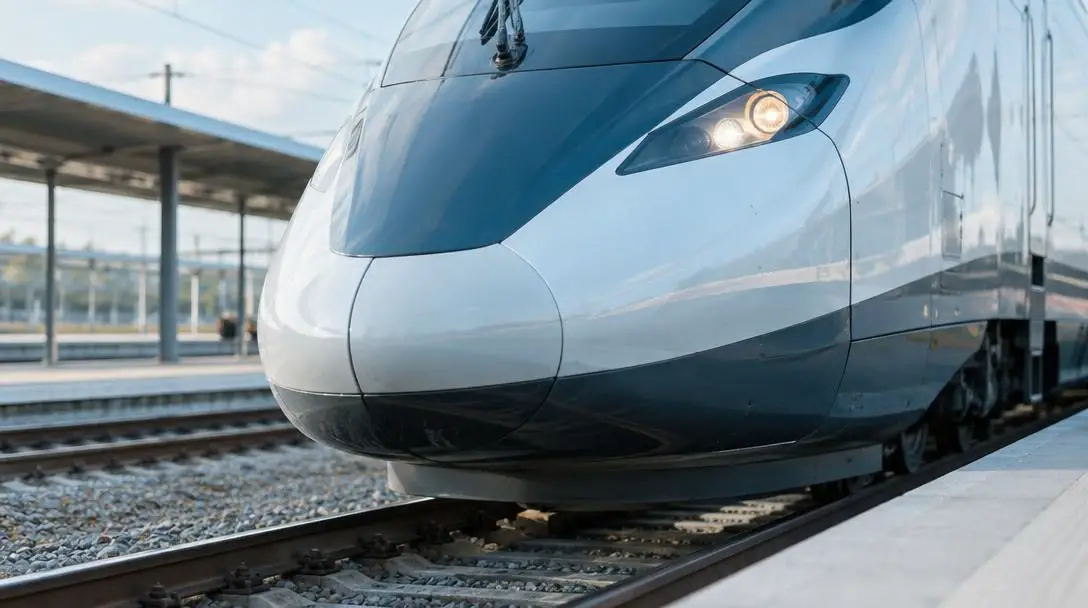
Rail systems deliver unmatched transit velocity and reliability by freeing passengers and freight from the chaotic friction of highway gridlock.
Intercity Connectivity
High-speed passenger rail bridges the gap between regional hubs situated hundreds of miles apart, compressing regional geography into manageable, same-day journeys. When intercity transit is reduced to a couple of hours, commercial links flourish and regional economies integrate without forcing businesses to rely on regional air flights or congested interstate freeways. Passengers board centrally located downtown stations, avoiding lengthy airport check-in lines, security gates, and remote runway tarmac transfers. This frictionless regional connection links diverse workforce pools, stimulates commercial partnerships, and ensures that secondary cities share in the economic vitality of major commercial metropolises.
Stabilizing the Cost of Living
High-speed, dependable passenger rail networks provide meaningful relief against runaway metropolitan living costs. When reliable trains make suburban and regional travel effortless, workers are no longer forced to rent or purchase housing adjacent to expensive commercial downtowns. Families can select neighborhoods that reflect their spatial preferences and financial budgets without sacrificing their careers to grueling highway drives. By dispersing residential demand across a far broader geographical perimeter, rail transit stabilizes urban housing markets, curtails localized real estate speculation, and preserves affordable living options across entire regions.
Comparing Transit Modes: Rail Versus Highway Systems
The operational mechanics of passenger and cargo transport reveal stark contrasts in efficiency, safety, and infrastructure performance. The physical characteristics of rail create natural efficiencies that personal vehicles and highway trucks cannot replicate.
| Transit Mode | Typical Operating Speed | Freight / Passenger Capacity | Primary Energy Source | Congestion Impact |
|---|---|---|---|---|
| High-Speed Passenger Rail | Up to 500 km/h (record >600 km/h) | Hundreds of passengers per trainset | Electric catenary or third rail | None (operates on dedicated right-of-way) |
| Freight Train Corridors | Moderate, continuous freight speeds | Replaces up to 300 cargo trucks | Diesel-electric / Electric catenary | Actively reduces highway truck traffic |
| Personal Motor Vehicles | 60–70 mph (free-flow highway) | 1 to 5 passengers per vehicle | Gasoline, diesel, or internal battery | Directly causes road and street gridlock |
| Long-Haul Commercial Trucks | 55–65 mph (regulated highway) | Single cargo container or trailer | Diesel fuel | Heavy contributor to highway bottlenecks |
Mechanical and Structural Foundations of Rail Efficiency
To understand why rail systems achieve such remarkable performance metrics, it is vital to examine the physics and engineering principles behind modern track infrastructure. Unlike street-level vehicles that depend on pneumatic rubber tires gripping rough asphalt, train networks operate on highly refined structural mechanics.
The foremost mechanical advantage is low rolling resistance. The interaction between smooth steel wheels and solid steel rails generates only a fraction of the friction produced by rubber tires on concrete. Because resistance is minimized, a locomotive requires far less kinetic energy to propel thousands of tons of cargo. This fundamental mechanical reality explains why heavy freight transport by rail consistently delivers exceptional fuel economy when compared to highway trucking fleets.
Equally critical is the dedicated right-of-way. Street traffic contends with a chaotic mixture of intersections, changing traffic signals, crosswalks, merging lanes, and sudden human driving errors. Rail lines run along isolated, grade-separated paths protected from external interference. Modern corridors employ advanced centralized dispatching protocols and automated in-cab signaling systems, enabling controllers to track every train's location with pinpoint precision. This level of system control permits dense train scheduling while maintaining generous safety margins.
Practical Steps for Developing Effective Rail Infrastructure
Transitioning from an automobile-dominated transit landscape toward a functioning, interconnected rail ecosystem requires meticulous, multi-phase execution. Regional planners, transportation agencies, and engineering teams must follow an organized path to build viable railway corridors.
- Identify Corridors and Analyze Travel Demand: Planners assess commuter travel patterns, commercial shipping lanes, and regional bottleneck zones between metropolitan centers and outlying communities to determine optimal high-speed and freight corridors.
- Secure and Modernize Dedicated Rights-of-Way: Agencies purchase or repurpose transport land, reinforce trackbeds to carry heavier loads at higher speeds, and eliminate dangerous grade-level street crossings.
- Construct Multimodal Transportation Hubs: Central stations must be designed as seamless transfer terminals, connecting regional train platforms directly to subway lines, local bus routes, bicycle parking facilities, and pedestrian corridors.
- Deploy Advanced Propulsion and Safety Systems: Operators acquire aerodynamic rolling stock, transition toward zero-emission drivetrains, and install computer-based communications control to safely maximize train frequency.
- Establish Integrated Tariffs and Predictable Schedules: Transit authorities implement transparent, affordable fare structures and frequent departure cadences so that riders can rely on public transit as their primary daily travel choice.
Common Planning Pitfalls and Strategic Missteps
Despite the undeniable benefits of rail transit, infrastructure initiatives frequently falter due to shortsighted municipal strategies and common misconceptions. Identifying and circumventing these pitfalls is necessary to safeguard public capital and maximize transit utility.
- Chasing Unproven Novelties: Prioritizing experimental, heavily marketed transport concepts—such as enclosed vacuum-tube capsules or autonomous driving pods—distracts resources from proven, high-capacity rail technologies that already operate successfully around the globe.
- Expanding Highway Corridors to Cure Gridlock: Adding auxiliary driving lanes to overstressed highways offers only fleeting traffic relief. It encourages greater private car dependence, locking governments into unsustainable road maintenance expenditures.
- Mixing High-Speed Passenger and Heavy Freight Lines: Routing high-velocity passenger trains along the same tracks utilized by lengthy, slow-moving industrial freight trains severely diminishes passenger transit speeds and compromises timetable accuracy.
- Confining Rail Strategies to Urban Cores: Failing to extend rail services outward into suburban and regional communities prevents outlying residents from accessing commercial hubs, blunting the cost-of-living benefits of rail development.
- Overlooking First-Mile and Last-Mile Access: If passengers have no straightforward, convenient way to reach a train station from their homes or to travel from a terminal to their workplace, they will continue using private automobiles despite high-speed rail options.
Frequently asked questions
Why do highway expansions fail to fix heavy traffic congestion?
Highway expansions fail because of induced demand. When cities construct additional driving lanes, the initial reduction in travel time attracts more drivers onto the road who previously avoided driving or took other routes. Within a short period, the new capacity is filled with private automobiles, restoring gridlock while increasing highway maintenance liabilities.
How does rail transport compare to commercial trucks in freight efficiency?
Rail freight is vastly more efficient because steel wheels riding on steel tracks create minimal rolling resistance. A single freight train can carry the cargo load of up to 300 commercial highway trucks while using substantially less fuel and emitting fewer pollutants per ton-mile.
How fast do modern high-speed trains actually travel?
Modern commercial high-speed rail lines achieve operational speeds between 200 and 500 kilometers per hour. For instance, the route linking Tokyo and Nagoya is engineered for 500 km/h operational speeds, while specialized experimental rail systems have established absolute world records topping 600 km/h.
How do regional rail lines help lower the cost of living for workers?
Regional passenger trains allow people to commute quickly and reliably from outlying towns and suburban centers into major urban job markets. This frees workers from having to purchase or rent high-priced real estate near central business districts, distributing housing demand across a larger geographic area and helping stabilize metropolitan housing prices.
What powers zero-emission trains?
Modern zero-emission trains typically draw electricity directly from continuous overhead catenary cables or electrified third-rail infrastructure. These systems eliminate the need for heavy onboard fossil fuel engines, facilitate regenerative braking, and can be powered entirely by renewable regional electrical grids.
The Bottom Line
The future of sustainable mobility does not hinge on speculative transit gimmicks or unceasing highway expansion projects. Rail networks offer a time-tested, technologically dynamic foundation capable of handling modern commuter demands and heavy industrial logistics with extraordinary energy efficiency. By embracing dedicated rights-of-way, zero-emission electric propulsion, and robust intercity links, communities can build resilient transportation systems that unclog highways, revitalize regional economies, and clean our shared air.