
5 Reasons Why DVDs Are Still Great in the Digital Age

The ways audiences experience motion pictures and television have undergone profound transformations over the decades. In the earliest days of personal and community exhibition, screening a film required obtaining original physical film reels and running them through a projector to cast flickering images onto a blank wall or a hanging white canvas. Through successive eras of home entertainment innovation, media evolved through various physical formats before arriving at the current digital landscape. Today, modern living rooms are dominated by connected smart televisions, streaming media players, and high-performance video game consoles capable of loading dozens of proprietary applications on demand.
Yet, despite the ubiquitous cultural drift toward cloud-based distribution, society remains remarkably close to the era when the optical disc was the undisputed king of home media. Although online distribution claims the largest market share, physical media is far from obsolete. A passionate, growing segment of consumers intentionally chooses to remain anchored to optical media, demonstrating that physical formats continue to offer unmatched utility, technical stability, and aesthetic pleasure alongside modern streaming subscriptions.
Key takeaways
- Physical optical discs operate completely independently of home internet bandwidth, data caps, and network outages.
- Dedicated disc formats like Blu-Ray deliver uncompressed, reference-quality visuals and studio-grade audio codecs like Dolby TrueHD and DTS-HD.
- Unlike digital licenses that can be revoked or altered remotely, physical media guarantees permanent, uncensored ownership of complete works.
- Physical collections retain real-world monetary value, offering opportunities to recoup costs or profit from rare, out-of-print releases.
Five core reasons DVDs remain essential in the digital era
Understanding why DVDs and their optical successors maintain enduring loyalty requires examining the real-world limitations of streaming platforms alongside the tactile and functional advantages of physical media. Here are the five primary reasons why discs continue to hold a vital place in modern home entertainment.
No internet connection needed
Streaming platforms rely entirely on a stable, high-speed internet pipeline from the host server to your local display. Unless a viewer takes the time to download a file in advance, any network hiccup interrupts the viewing experience. Even downloading video files presents logistical hurdles: in locations with low connection speeds, downloads can take hours, files risk data corruption during transmission, and large video files rapidly exhaust local hard drives and portable device memory.
Physical DVDs completely sidestep network reliance. Optical media requires zero bandwidth and consumes no internal device storage. Even on modern video game consoles that normally require online connectivity to authenticate or run games, internal optical disc drives can still read and play standard video discs without an active connection. This total offline autonomy makes optical players invaluable for portable setups, whether you are dealing with a severe neighborhood power and broadband outage or running a portable player on a camping trip where cellular signals cannot support online video feeds.
Superior audio and video quality
Because streaming providers transmit massive quantities of data over shared public infrastructure, they must aggressively compress video and audio streams to fit consumer bandwidth limits. When household usage spikes or network traffic fluctuates, streaming services dynamically reduce bitrates, causing jarring buffering wheels, compression artifacts, and muddy, pixelated pictures.
Standard DVDs provide clean, consistent audio playback that routinely outclasses heavily compressed digital streams. Taking a step further into high-definition formats, Blu-Ray discs and matching players unlock the ultimate home viewing experience. Blu-Ray hardware natively supports studio-master sound formats such as Dolby TrueHD and DTS-HD Master Audio, reproducing rich dynamic ranges that streaming services typically downmix or compress. Unless a physical disc suffers severe, deep surface scratches, optical media playing through a dedicated player yields the most stable, artifact-free presentation possible outside a commercial cinema.
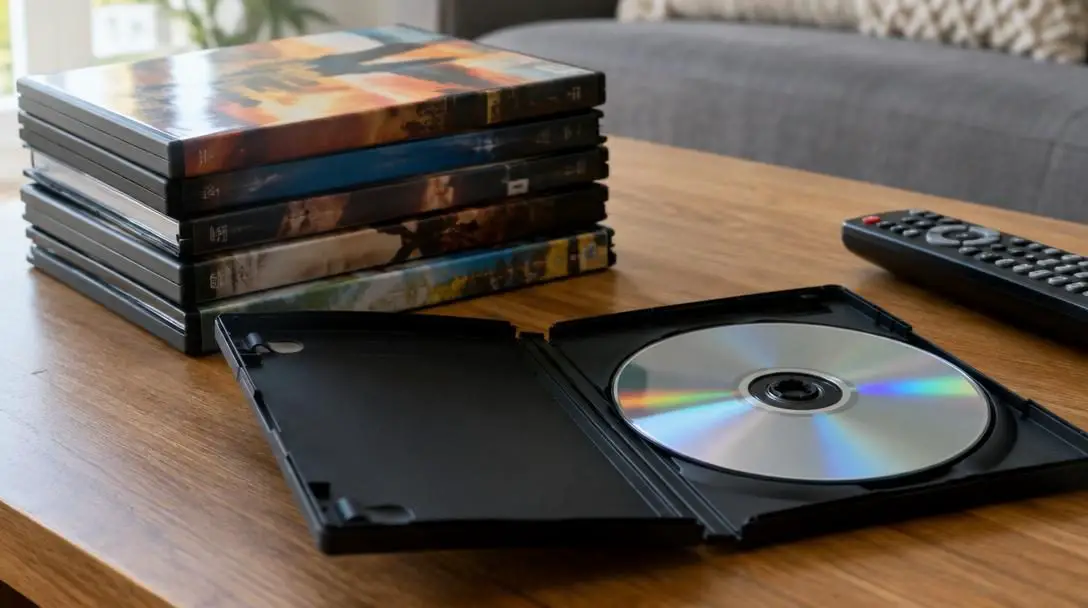
Physical media frees movie lovers from compression artifacts, buffering wheels, and unpredictable network slowdowns.
The art and aesthetic of collecting
Digital storefronts and subscription libraries have reduced home entertainment to interchangeable thumbnail grids on a user interface. For enthusiasts, collecting physical media represents a tangible connection to film history and material art that purely digital files cannot replicate. While critics occasionally frame physical disc collectors as obsolete hobbyists clinging to the past, culture widely celebrates those who collect vintage vinyl records or original framed movie posters.
Physical disc collecting functions under the exact same principle of cultural curation. A shelf lined with well-organized titles serves as a personal reflection of taste, nostalgia, and artistic preference. Many DVD and Blu-Ray releases feature bespoke slipcovers, reversible sleeve art, detailed liner notes, and original theatrical posters reproduced on the packaging, turning an ordinary living room entertainment center into a miniature, curated art gallery.
Resale value and financial recoupment
When you purchase a movie through a digital storefront, you do not purchase the movie itself; you buy a non-transferable, revocable license tied directly to a single platform account. If you lose interest in a digital title, or run out of digital space, your only option is to delete the file. The money spent is gone forever, leaving no secondary asset in your hands.
Physical media constitutes real personal property. If your shelves become crowded or your personal tastes shift, you can trade or resell your discs to other collectors to recoup a significant portion of your original purchase price. Under the right circumstances, rare or out-of-print physical releases appreciate considerably. Factory-sealed discs preserved in their original shrink wrap frequently command premium prices among collectors. The most famous example of physical media appreciation is the legendary, ultra-rare art film release The Cremaster Cycle, which stands as the most valuable DVD set in existence, commanding six-figure sums on the collector market because only 20 copies were ever manufactured.
Permanence and uncompromised ownership
Perhaps the most precarious aspect of modern streaming media is the ephemeral nature of online catalogs. Digital titles disappear constantly. Television episodes produced decades ago are frequently pulled from syndicated reruns and streaming catalogs due to shifting standards around sensitive content. Unpredictable broadcast anomalies have also caused complete episodes to be purged, such as the infamous Pokémon episode permanently pulled from global rotation after causing epileptic seizures in viewers.
When you own an original physical disc, your access to that complete, unedited piece of media is guaranteed. Furthermore, corporate licensing agreements between production studios and streaming platforms expire continually. A show available on one subscription platform today might vanish tomorrow or bounce between competing apps behind escalating paywalls. This perpetual licensing instability has driven fans of long-running sitcoms like The Office to invest in complete physical DVD box sets simply to guarantee uninterrupted access without recurring monthly subscription fees.

At a glance: Physical media vs. digital streaming
Evaluating physical optical discs alongside digital streaming across primary technical and ownership factors highlights why physical discs remain an enduring alternative for media preservation.
| Feature | Standard DVD | Blu-Ray Disc | Digital Streaming |
|---|---|---|---|
| Internet Requirement | None (fully offline) | None (fully offline) | Constant broadband connection |
| High-End Audio Codecs | Standard Dolby / DTS | Dolby TrueHD, DTS-HD | Heavily compressed streams |
| Ownership Nature | Tangible physical property | Tangible physical property | Revocable digital license |
| Risk of Catalog Removal | Zero (disc cannot be altered) | Zero (disc cannot be altered) | High (licensing and censorship edits) |
| Resale Capability | Yes (secondary market value) | Yes (secondary market value) | None (locked to user account) |
How optical disc playback works
To fully appreciate the stability and independence of optical media, it helps to look at the mechanical and optical engineering that allows these discs to deliver high-fidelity entertainment without touching an external network.
- Mechanical Data Storage: Unlike remote server farms that store video files as dynamic blocks on cloud servers, an optical disc encodes digital information physically. Data is pressed directly onto a tough polycarbonate substrate as microscopic pits (depressions) and lands (flat surfaces) arranged in a continuous spiral track extending outward from the center.
- Laser Reading Systems: When a disc spins inside a standalone player or console optical drive, a precise laser diode focuses through the transparent substrate. The optical pickup unit detects changes in the reflected light as the beam hits the microscopic variations on the disc surface, translating light pulses into a raw binary data stream.
- Uncompressed, Dedicated Playback: Because the disc player reads data directly through a direct, hardwired cable to your television or audio receiver, the stream does not suffer from network packet loss, bandwidth throttling, or Wi-Fi interference. Advanced audio tracks encoded in Dolby TrueHD or DTS-HD are unpacked and decoded locally, maintaining theater-grade audio dynamics without network-related compromises.
Practical steps for building and maintaining a collection
Whether you are starting from scratch or reviving an older collection, establishing a systematic approach ensures you get the most longevity and enjoyment out of your optical media.
- Audit your playback hardware: Check the electronic devices you already own. Most modern and legacy video game consoles include integrated optical drives that play standard DVDs and Blu-Rays seamlessly. If you travel frequently, consider picking up a dedicated portable disc player for off-grid entertainment.
- Prioritize vulnerable media: Identify television programs and films that face the highest risk of corporate editing or removal. Prioritize complete physical box sets of favorites like The Office, or seek out older television seasons that contain controversial episodes that have already been purged from digital rotation.
- Inspect disc condition before buying: When shopping for used titles at thrift stores, garage sales, or secondhand media shops, always open the case to inspect the readable underside. Look closely for deep gouges, cloudiness, or warping that could cause optical pickup lasers to skip or freeze during playback.
- Establish a safe, vertical storage setup: Store optical discs upright in their original protective cases rather than stacking them horizontally or keeping them loose in binders. Ensure storage shelving is positioned away from direct sunlight, radiators, and high-humidity areas to prevent heat-related disc warping and packaging decay over time.
Common physical media mistakes to avoid
While physical ownership insulates you from digital subscription pitfalls, poor handling and careless storage can prematurely damage your collection. Keep these common missteps in mind:
- Relying entirely on subscription availability: Assuming that your favorite movies will remain permanently accessible on streaming platforms is a recipe for disappointment. Corporate rights expire, distribution agreements flip, and platforms routinely delist classic catalog titles without advance notice.
- Touching the readable data surface: Holding optical discs by the flat reading surface transfers skin oils, moisture, and dust particles to the polycarbonate coating. Always hold discs securely by the outer edge or by placing an index finger through the central hub hole.
- Discarding original packaging and artwork: Tossing cases in favor of compact binders severely diminishes the monetary and aesthetic value of your collection. Original slipcovers, liner booklets, and intact shrink wrap represent significant portions of a title's secondary market value.
- Overlooking offline entertainment planning: Assuming that mobile data or campsite Wi-Fi will effortlessly stream video during outdoor vacations or cross-country road trips often leads to connection failures. Bringing physical media ensures guaranteed viewing anywhere you go.
Frequently asked questions
Can modern video game consoles play standard DVDs and Blu-Rays?
Yes. Most disc-equipped video game consoles feature built-in optical drives that read standard DVD and Blu-Ray discs natively. Even when the console is disconnected from the internet or undergoing network outages, the physical drive can read media directly without needing online authentication.
Why do streaming platforms remove episodes and movies from their catalogs?
Titles disappear primarily due to expiring corporate distribution licenses between production companies and platforms. Additionally, streaming services frequently remove older television episodes to comply with updated editorial standards, as seen with older syndicated series, or to address broadcast issues, such as the seizure-inducing Pokémon episode pulled from distribution.
What makes The Cremaster Cycle DVD set so valuable?
The Cremaster Cycle is widely recognized as the rarest and most valuable DVD set in the world because only 20 copies were ever produced. Due to its extreme rarity and status as a fine art piece, copies have fetched six-figure prices on the collector market.
How does audio on physical discs compare to streaming audio?
Streaming platforms compress audio signals significantly to conserve bandwidth, which limits dynamic range. In contrast, DVDs provide robust uncompressed standard sound, while Blu-Ray discs support lossless studio-master audio formats such as Dolby TrueHD and DTS-HD Master Audio for authentic, cinema-grade fidelity.
What is the best way to handle and clean optical discs?
Always hold discs by their outer edges or through the center spindle hole to avoid leaving oily fingerprints. If a disc accumulates dust or smudges, gently wipe it with a soft microfiber cloth in straight lines from the center hole outward to the edge, rather than wiping in circular motions.
The bottom line
Streaming services undeniably provide convenience, but convenience comes at the cost of true ownership, predictable quality, and permanent access. By preserving complete works on physical optical media, you protect your entertainment against arbitrary licensing disputes, platform censorship, and fluctuating broadband connections. Whether you are building an offline library for travel, chasing audiophile-grade sound, or curating a shelf of tangible cover art, DVDs and Blu-Rays remain an indispensable part of a complete home media setup.