5 Reasons Why Listening to the Radio is a Great Alternative to Streaming Music
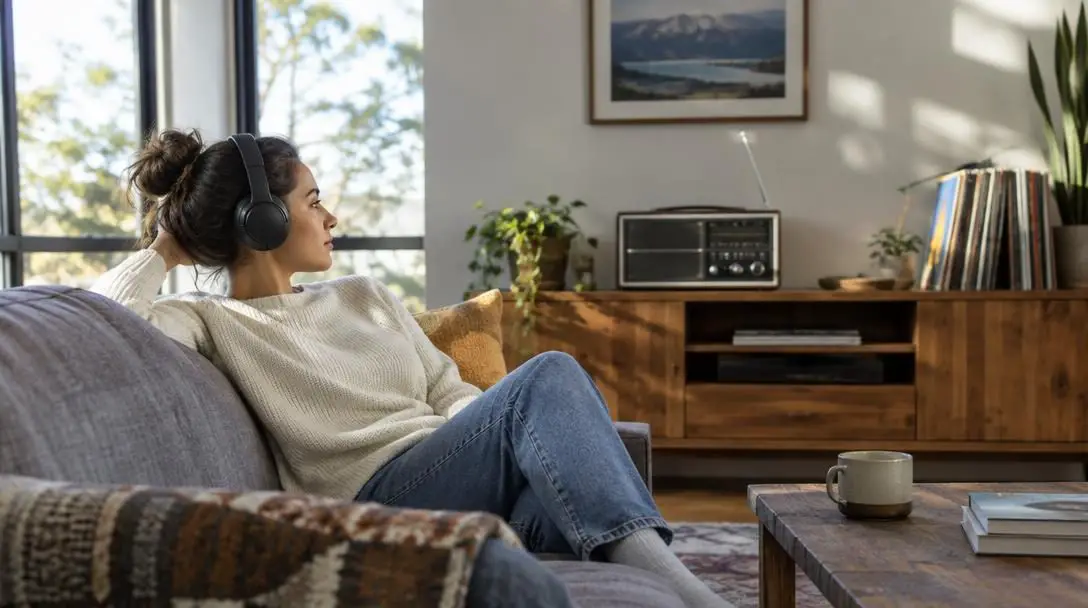
Modern audio consumption has undergone a massive transformation over the past decade. Digital streaming platforms such as Spotify and Apple Music have placed millions of songs at our fingertips, letting listeners build bespoke libraries and summon obscure tracks in an instant. Yet as on-demand streaming has become the default way to hear sound, it is remarkably easy to overlook traditional broadcast radio, the foundational medium that defined public audio culture long before algorithms and mobile broadband existed.
Broadcast radio has quietly survived every major entertainment disruption, from the dawn of television to the rise of portable cassettes, compact discs, and modern cloud-based audio files. Instead of fading into an obsolete relic, the airwaves remain a resilient, dynamic, and deeply human alternative to algorithmic streaming. Understanding radio's enduring power means rediscovering what makes the format uniquely special: real-time immediacy, localized shared experiences, and the spontaneous thrill of the unexpected.
Key takeaways
- Broadcast radio eliminates algorithmic echo chambers by relying on human music directors and hosts to curate unexpected tracks.
- Over-the-air signals provide real-time updates on local news, severe weather conditions, and community events that streaming apps ignore.
- Traditional receivers require zero mobile data, internet subscriptions, or Wi-Fi networks, making them reliable anywhere.
- Interactive call-in shows and localized programming cultivate a shared sense of place and personal connection.
- The tactile, spontaneous experience of tuning through the airwaves brings an authentic warmth and nostalgia that digital platforms cannot replicate.
How Broadcast Radio Operates
To understand why radio serves as such an effective counterpoint to streaming apps, it helps to examine its technical foundation. Traditional broadcast radio relies on electromagnetic signals traveling across standard frequency bands known as AM (amplitude modulation) and FM (frequency modulation). A land-based transmission tower broadcasts radio frequency waves across the surrounding landscape, moving freely through the atmosphere until an antenna on a receiver captures them.
Once caught by the antenna, internal circuitry inside your receiver converts those electromagnetic waves back into electrical audio signals. An amplifier then boosts the signal and pushes it out through speakers as audible sound. This entire physical transmission takes place instantaneously in real time. The audio is never broken down into compressed data packets, routed through distant internet server farms, or gated behind user logins and digital subscriptions.
On the production side, the heart of traditional radio is defined by human curation. Behind the microphone and control boards sit station managers, broadcast engineers, music directors, and live on-air talent. While streaming platforms deploy predictive software models that analyze your past clicks to serve up predictable songs, radio stations rely on living people. Programmers craft daily schedules, select new tracks, organize community interviews, and introduce personal context between songs, giving the broadcast a natural conversational rhythm.
Radio functions as a living, community-driven medium where human personality and real-time spontaneity replace the cold calculations of computer algorithms.
Comparing Broadcast Radio and Digital Streaming
While streaming offers unmatched control over individual songs, radio offers distinct advantages in accessibility, community relevance, and spontaneous discovery. The table below breaks down the key operational differences between traditional radio and on-demand streaming services.
| Feature | Broadcast Radio | Streaming Services |
|---|---|---|
| Data & Internet Requirement | None (operates entirely over the air) | Requires active Wi-Fi or cellular data |
| Music Curation | Human hosts and music directors | Computer algorithms and user playlists |
| Local Information | Live regional news, weather, and traffic | None (sound catalog only) |
| Cost to Access | Free to receive on any standard radio | Monthly subscription or ad-supported app |
| Listener Interactivity | Live call-in lines and community requests | Passive digital playlist interactions |
5 Reasons to Choose Radio Over Streaming Music
While on-demand applications are undeniably convenient when you want to hear an exact album, traditional radio fills a completely different need in your audio diet. Here are five core reasons why tuning into a broadcast is a rewarding alternative to modern streaming platforms.
Discover New Music Effortlessly
One of the primary frustrations of on-demand platforms is the paradox of choice. When you can pick from tens of millions of songs, you often default to tracks you already know, or you rely on automated recommendations that reinforce your existing listening habits. These algorithmic feedback loops keep you inside a narrow musical comfort zone, requiring deliberate, active research if you want to stumble across something genuinely unfamiliar.
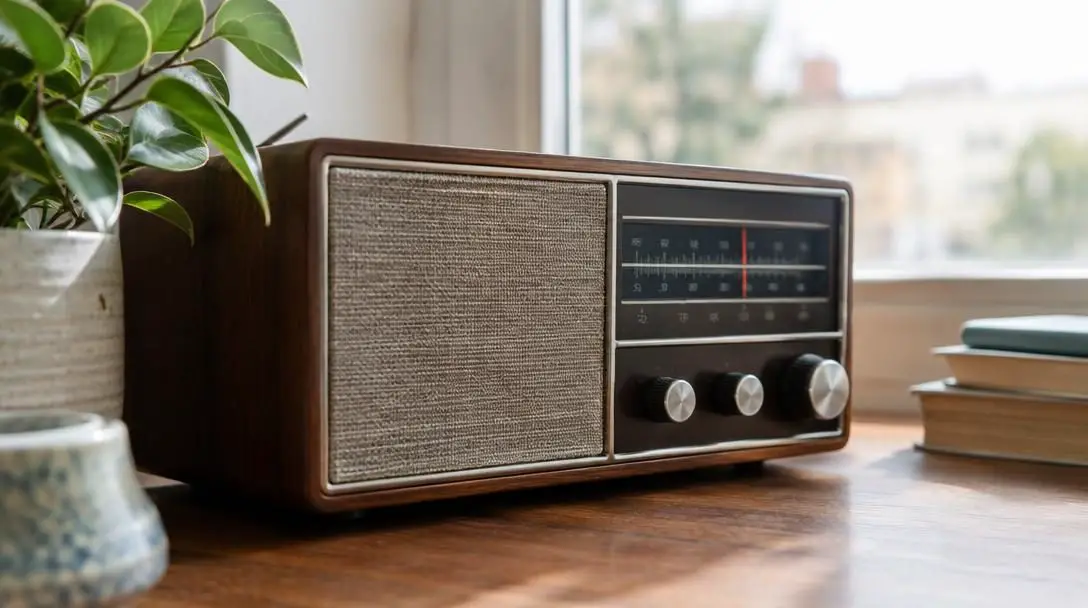
Traditional radio turns music discovery into an effortless passive experience. All you have to do is turn the dial and listen. Station music directors spend their careers evaluating new releases, exploring regional underground scenes, and weaving unexpected tracks into their airtime. Many stations also host dedicated specialty hours highlighting emerging indie bands, regional talent, or underrepresented genres. By surrendering control of the queue to knowledgeable human curators, you expand your musical tastes without lifting a finger.
Stay Up-to-Date With News and Events
Streaming applications exist inside a closed entertainment bubble. They play audio tracks continuously, but they are completely blind to the world happening around you. If a sudden thunderstorm rolls toward your town, an accident shuts down the commuter highway, or a major civic decision is announced, your digital playlist will continue playing unaware.
Radio broadcasts, on the other hand, act as an informative mirror of daily life. Stations weave regular updates into their programming, delivering regional news headlines, school closures, weather updates, and traffic reports between songs. Tuning into a broadcast during your daily commute or while cooking dinner ensures you remain informed about critical developments in your immediate area without needing to scroll through news feeds on a screen.
Connect With Your Community
Streaming music is fundamentally designed around solitary consumption. You plug in your earbuds, curate a private soundtrack, and insulate yourself from your surroundings. While this isolation is useful when focusing at a desk, it isolates you from the culture of your physical environment.
Broadcast radio does the exact opposite by anchoring listeners in a shared local culture. Radio hosts live in the same geographic region as their listeners, deal with the same weather patterns, and understand the unique quirks of local life. Furthermore, many stations feature interactive call-in segments, allowing community members to request songs, discuss neighborhood happenings, and share personal stories on the air. Listening to your local station reminds you that you belong to an active, living community of fellow listeners.
No Need for Wi-Fi or Data
Streaming high-resolution audio over a mobile device demands consistent network access. When traveling through remote rural areas, camping in national parks, or hiking along the coast, cellular reception often falters or vanishes entirely. Even in urban centers, streaming continuously over mobile connections consumes significant portions of your monthly cellular data allotment, potentially triggering carrier throttling or unexpected overage fees.
Broadcast radio has zero dependence on the internet. Because it operates through atmospheric radio waves, a standard receiver can pick up crystal-clear audio in remote dead zones where smartphones display no service. Inexpensive battery-powered radios or built-in vehicle receivers allow you to enjoy uninterrupted entertainment and critical safety bulletins without worrying about bandwidth limits, signal drops, or data caps.
Create a Sense of Nostalgia
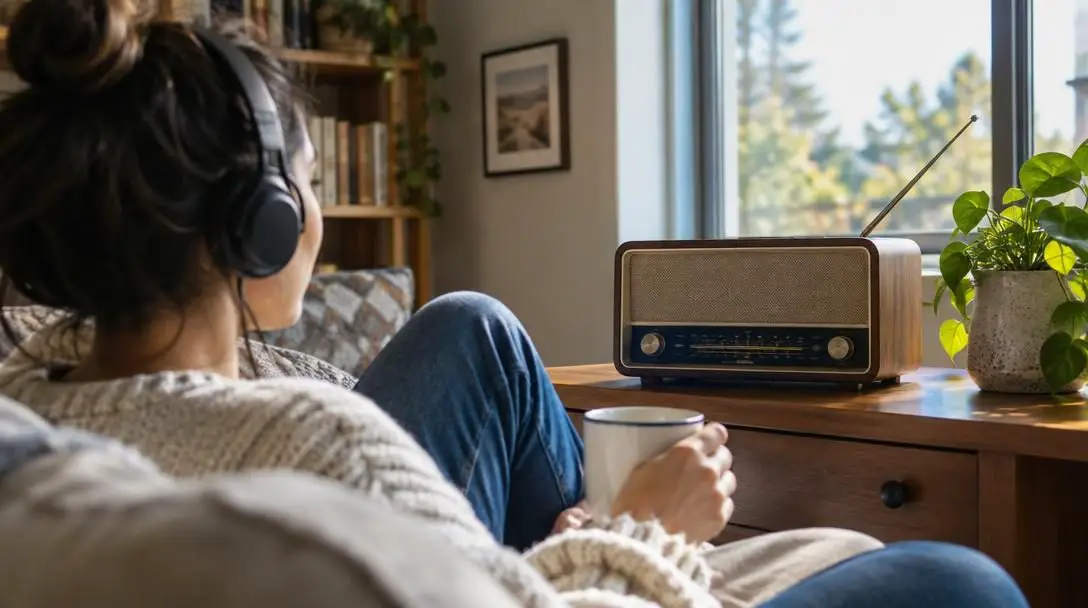
There is a tactile, human magic to analog broadcasting that a sterile glass touchscreen cannot match. Rotating an analog tuning knob, hearing the gentle crackle of frequency static resolve into clear sound, and listening to an impassioned disc jockey introduce a forgotten classic brings an emotional resonance missing from modern digital interfaces.
Listening to radio evokes a deep sense of nostalgic comfort. For many, it immediately recalls road trips with family, late-night teenage bedroom listening, or relaxed weekend afternoons in the garage with a small tabletop receiver. It provides a welcome escape from the constant bombardment of notifications, push alerts, and user accounts, reconnecting you to a simpler and more spontaneous way of experiencing sound.
Practical Steps: How to Reintegrate Radio into Daily Life
If you have spent the last few years relying exclusively on digital streaming platforms, rediscovering the airwaves is easy, accessible, and virtually cost-free. Follow these steps to build radio back into your daily routine:
- Explore your vehicle dashboard: Instead of plugging in your phone or connecting Bluetooth the moment you start your engine, press the AM or FM band buttons. Use the manual scan control to survey what is broadcasting locally as you commute.
- Pick up a portable receiver: Purchase a compact radio powered by standard batteries or a rechargeable pack. Place it in a high-traffic area of your home, such as the kitchen counter, workshop, or home office desk.
- Survey the entire frequency dial: Set aside an afternoon to slowly sweep through both the AM and FM spectrums. Take note of independent community broadcasts, college stations, public media outlets, jazz or classical formats, and local sports channels.
- Program your station presets: Choose four to six stations with distinct programming profiles—such as a morning news source, an indie music program, a community talk channel, and a classic format—and save them to your device presets for easy switching.
- Participate in live programming: Store the studio line of your favorite community station in your phone. When hosts host open discussion forums, run ticket giveaways, or ask for song requests, call in to become part of the broadcast.
Common Mistakes to Avoid When Listening to the Radio
Modern listeners accustomed to on-demand digital libraries often run into predictable frustrations when they first return to broadcast audio. Avoiding these common mistakes will ensure you get the most out of your receiver:
- Expecting on-demand control: Radio requires listeners to surrender control over the playlist. If you tune in expecting to hear a specific song immediately, you will feel frustrated; embrace the serendipity of letting curators choose for you.
- Remaining parked on a single commercial channel: Sticking solely to one commercial station often leads to fatigue from repetitive playlists and heavy advertising loads. Actively explore listener-supported, non-commercial, and collegiate radio stations for richer variety.
- Neglecting the AM band: Dismissing AM frequencies means missing out on rich localized talk shows, high school sports coverage, regional farm and weather forecasts, and niche historical formats.
- Abandoning a station over weak reception: Radio waves are susceptible to physical interference from metal roofs, concrete walls, and rolling terrain. Before giving up on a faint station, try extending the antenna, adjusting its angle, or moving the unit nearer to an outside window.
- Neglecting emergency battery readiness: A portable radio is an indispensable safety tool during severe storms and civic emergencies when mobile networks fail. Avoid leaving old batteries inside unused devices where they can leak and corrode contacts.
Frequently asked questions
Do I have to pay any subscription fees to listen to broadcast radio?
No. Traditional AM and FM broadcast radio is completely free to receive over the air. All you need is a standard radio receiver, which is already installed in most vehicles and widely available in inexpensive portable formats.
Why do streaming algorithms feel more repetitive than radio curation?
Streaming algorithms are designed to keep you listening by playing songs that closely match your historical habits, which can trap you in a predictable musical bubble. Radio stations are programmed by human music directors and on-air hosts who actively seek out diverse sounds, emerging talent, and forgotten tracks.
Can I listen to traditional broadcast radio without an internet connection?
Yes. Broadcast radio operates via over-the-air electromagnetic signals picked up directly by an antenna. It does not require Wi-Fi, cellular towers, broadband cables, or data packages, making it exceptionally reliable in remote locations or during internet blackouts.
What is the difference between AM and FM radio bands?
AM stands for amplitude modulation, which uses lower frequency waves that can travel long distances and bounce off the atmosphere, making it ideal for news, sports, and talk. FM stands for frequency modulation, which operates at higher frequencies that carry higher-fidelity stereo audio, making it the preferred band for music broadcasting.
Should I cancel my streaming subscription if I start listening to the radio?
Not necessarily. Radio and streaming services can easily complement one another. Streaming is ideal when you want to study a specific discography or assemble a dedicated workout playlist, while broadcast radio shines for passive discovery, local news, and human companionship.
The Bottom Line
Rediscovering broadcast radio is not about rejecting technological progress or abandoning digital convenience. Rather, it is about recognizing that on-demand streaming and live broadcasting serve fundamentally different needs. Streaming gives you an exhaustive catalog of recordings, but traditional radio offers companionship, local context, and human warmth that no predictive computer program can manufacture.
By keeping a radio receiver in your home or tuning into local stations during your daily travel, you preserve an irreplaceable medium of public culture. Stepping away from endless scrolling, screen interfaces, and algorithmic suggestions opens the door to genuine audio serendipity—reminding us that sometimes the best soundtrack is the one we never planned to hear.