5 Surprising Facts About the History of Medicine

The history of medicine is a winding record of brilliant observations, bizarre miscalculations, and unexpected discoveries. Long before clinical trials and sterile laboratories became the norm, societies attempted to ease suffering through whatever methods made sense within their prevailing worldviews, whether that meant prescribing leeches for fever or turning to sweet soda syrups to settle a sour stomach.
Looking back across thousands of years reveals how fluid human understanding of biology has always been. From legendary ancient builders who doubled as surgeons to eighteenth-century almshouses that grew into medical powerhouses, here are five surprising historical facts that illuminate the strange journey toward modern healthcare.
Key takeaways
- The world's first recorded physician was Imhotep, an ancient Egyptian polymath later deified as the god of healing.
- Virology only emerged in the late nineteenth century, long after early vaccines were already saving lives.
- Pepsi originated in 1893 as a medicinal tonic formulated by a pharmacist to aid digestion.
- Bellevue Hospital, founded in 1736, remains the oldest continuously operating hospital in the United States.
- Early attempts to treat alcohol dependency relied on substitute intoxicants like the hallucinogenic mushroom Amanita muscaria.
At a glance: Five surprising historical medical milestones
Medical developments often took centuries to evolve from intuitive folk practices or commercial experiments into formal clinical disciplines. The table below summarizes these five pivotal milestones, their origins, and their lasting significance.
| Milestone | Era / Origin | Key Figure or Originator | Historical Significance |
|---|---|---|---|
| Imhotep | Ancient Egypt | Imhotep | Recognized as history's first physician; treated appendicitis and gout. |
| The Birth of Virology | Late 19th Century | Dmitri Ivanovsky | Identified sub-bacterial pathogens through filtered tobacco plant sap. |
| Brad's Drink (Pepsi) | 1893 (North Carolina) | Caleb Bradham | Formulated as a therapeutic digestive aid named after the enzyme pepsin. |
| Bellevue Hospital | 1736 (New York City) | Colonial New York administrators | First hospital in what is now the United States, operating continuously today. |
| Amanita Muscaria Substitutes | Antiquity through early modern era | Pre-modern healers | Hallucinogenic fungus used as an ancient intervention for alcohol addiction. |
Five remarkable milestones from medical history
Every era relies on its own instruments and theories to confront illness. When we examine these five episodes, we see how spiritual beliefs, accidental lab results, and commercial drugstore counters all contributed to the tapestry of healthcare.
Imhotep of Ancient Egypt

- Historical distinction: First physician known to recorded history
- Origin: Ancient Egypt
- Known treatments: Appendicitis, gout, and early surgical interventions
- Cultural legacy: Deified centuries after death as the god of medicine and healing
While modern audiences often recognize the name Imhotep from cinema and adventure stories, he was a real, documented historical figure in Ancient Egypt. Rather than functioning exclusively as an early doctor, Imhotep was a genuine polymath. His expertise spanned sculpture, carpentry, religious priesthood, and magic, establishing him as an indispensable advisor and intellectual in early Egyptian court society.
Accounts documenting Imhotep's clinical accomplishments were not widely compiled until centuries after his death, elevating him from an admired court healer to an immortalized cultural hero. Historical analyses show that Imhotep diagnosed and treated serious conditions such as appendicitis and gout. He is also recorded as having conducted invasive surgical operations, though modern historians possess no records regarding his surgical survival rates. Eventually, Egyptian culture revered him so profoundly that he was formally deified as the god of medicine.
The Late Birth of Virology
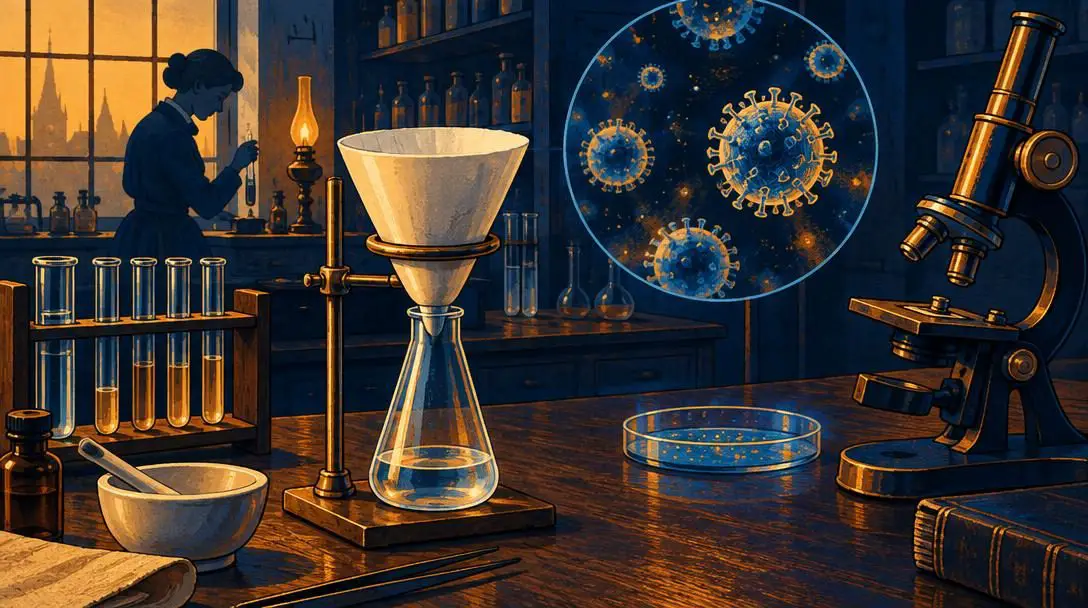
- Era established: Late nineteenth century
- Pioneering researcher: Dmitri Ivanovsky
- Key experiment: Passing fluid from infected tobacco plants through micro-filters
- Preceding breakthrough: Smallpox vaccination had already succeeded without virological knowledge
Plagues caused by viral agents have ravaged human societies across all of recorded history. Smallpox alone wiped out millions of people over the centuries, taking hundreds of thousands of lives each year during the seventeenth century. Despite the widespread devastation caused by these invisible pathogens, humanity did not identify what viruses were until the closing years of the nineteenth century.
The discipline of virology began when researcher Dmitri Ivanovsky investigated a disease damaging tobacco plants. Using a specialized porcelain filter known to catch all ordinary bacteria, Ivanovsky discovered that the infectious fluid passed right through the mesh while retaining its ability to transmit the disease. This demonstrated that something vastly smaller than bacteria was responsible. Strangely, societies had already deployed effective vaccines—most notably against smallpox—long before this discovery, proving that people could cultivate protective immunity without comprehending the physical structure of a virus.

Brad's Drink and the Origins of Pepsi

- Original name: Brad's Drink
- Invention date: 1893
- Inventor: Caleb Bradham, a North Carolina pharmacist
- Renamed: Pepsi-Cola in 1898, inspired by the digestive enzyme pepsin
The late nineteenth century was an era of profound scientific breakthroughs, but it also fostered peculiar commercial health fads. In 1893, North Carolina pharmacist Caleb Bradham invented a carbonated fountain beverage he called Brad's Drink. Bradham never envisioned his product as an ordinary confection; instead, he dispensed it straight from his drugstore counter as an explicit therapeutic treatment for dyspepsia and stomach discomfort.
Bradham guaranteed to his patrons that the sweet concoction would energize the body and settle an upset stomach. Five years later, in 1898, he renamed the drink Pepsi-Cola, choosing the moniker as an explicit tribute to pepsin, the vital digestive enzyme that breaks down proteins in the human gut. Although consumers and scientists soon recognized that the syrup possessed zero authentic clinical benefits, Bradham's digestive remedy blossomed into one of the most recognized consumer beverages on Earth.
Early pharmaceutical innovations often blended restorative claims with pleasant refreshments before modern regulations separated medicine from everyday beverages.
Bellevue Hospital
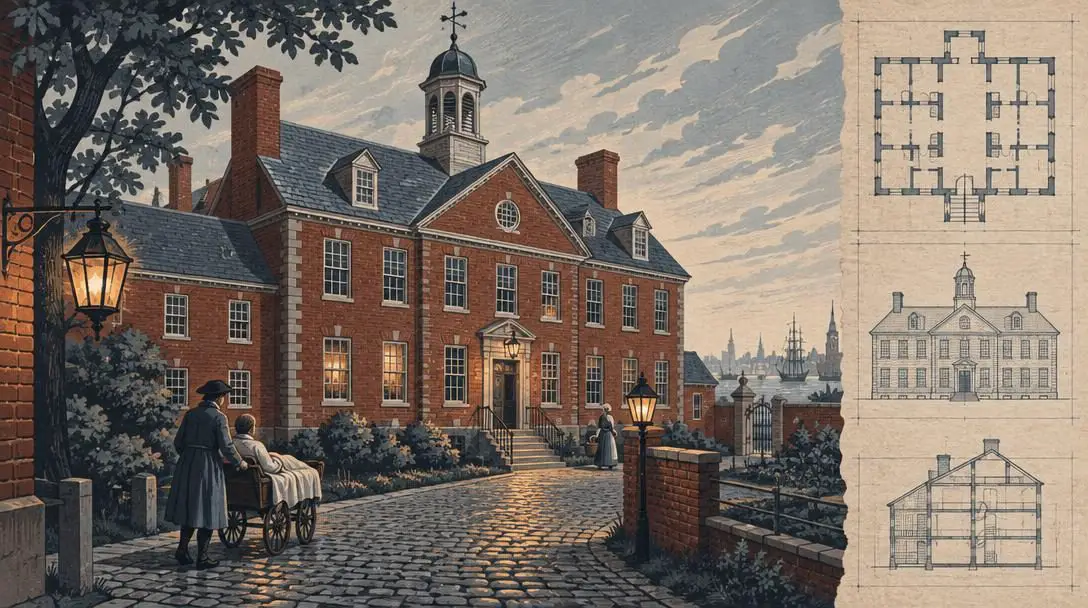
- Founding year: 1736
- Original location: Present-day City Hall Park, New York City
- Original structure: A two-story colonial brick building
- Current designation: NYC Health + Hospitals/Bellevue
Centralized hospitals trace their lineage far back into antiquity, with the earliest documented general hospital appearing in Baghdad in 805 CE. In North America, formal municipal medicine emerged nearly a millennium later. In 1736, colonial authorities in New York established a humble, two-story brick infirmary in what is now City Hall Park. That modest colonial facility gradually expanded into Bellevue Hospital.
While virtually all other early American medical houses were eventually abandoned, torn down, or repurposed, Bellevue persevered through centuries of urban growth, epidemics, and medical reform. Today, operating under the formal name NYC Health + Hospitals/Bellevue, it stands as the oldest continuously operating hospital in the United States. Although the facility gained widespread fame for its psychiatric wing, it has consistently provided full-spectrum emergency, surgical, and inpatient medical services to the public for nearly three centuries.
Amanita Muscaria and Addiction Substitutes

- Fungal substance: Amanita muscaria (fly agaric)
- Target ailment: Chronic alcohol dependency
- Subsequent historical substitutes: Lotus flowers, opium, hashish, and heroin
- Modern alternative: Evidence-based counseling, support, and non-intoxicating medications
Substance dependency has troubled communities throughout human history, crossing all socioeconomic boundaries from ancient aristocrats to everyday laborers. Among these addictions, alcoholism has represented the single most common dependency across millennia. For ages, healers struggled to design a lasting remedy, frequently attempting to cure alcoholism by introducing an alternate mind-altering substance.
For thousands of years, one of the primary historical interventions involved administering the hallucinogenic mushroom Amanita muscaria to replace the patient's urge to drink. As medical thought evolved, physicians continually rotated through different botanical and chemical substitutes. Ancient practices employed lotus flowers; later eras turned to opium and hashish to quiet nervous system cravings. In the late nineteenth and early twentieth centuries, even heroin was briefly regarded as an addiction therapy before its catastrophic risks were recognized.
How medical understanding actually evolves
Evaluating historical curiosities requires understanding the intellectual frameworks of their eras. In ancient societies, clinical healing was not isolated from spiritual devotion. When Imhotep practiced medicine in the Old Kingdom of Egypt, human biology was viewed through a combination of physical observation, surgical mechanics, and sacred invocations. Healing was seen as both a craft of the hands and an appeal to divine order, which naturally positioned early polymaths as both doctors and priests.

Similarly, the prolonged delay in the birth of virology illustrates how diagnostic tools dictate the boundaries of scientific knowledge. For centuries, illnesses were attributed to invisible vapors, unwashed environments, or unbalanced bodily humors. Even when early optical microscopes allowed scientists to see bacteria wriggling in water droplets, viruses remained entirely invisible. It required the invention of specialized porcelain filters and the targeted experimentation of Dmitri Ivanovsky to prove that an agent smaller than any known cell could cause disease.
In a similar vein, the story of Caleb Bradham's digestive soda exemplifies the era of the late-nineteenth-century pharmacist-inventor. Before modern drug standards were codified, local pharmacies served as community laboratories. Pharmacists regularly compounded their own flavored tonics, elixirs, and digestive stimulants. Because stomach complaints were widespread and unregulated formulas were standard practice, marketing a sweet carbonated beverage as a digestive remedy was a common, highly lucrative enterprise.
How to critically evaluate historic medical discoveries
When studying the strange therapies and claims of the past, historians follow structured evaluation techniques to explain why an idea took hold and how it was eventually corrected. You can apply these same analytical steps whenever evaluating historic or modern wellness assertions:
- Identify the available technology of the era: Assess what tools healers possessed. Imhotep lacked surgical monitors, and colonial doctors at Bellevue operated without blood labs or diagnostic imaging, forcing them to rely purely on macroscopic observations.
- Distinguish symptomatic relief from genuine cures: Recognize that many historic interventions simply dulled symptoms rather than addressing underlying pathology. Opium and hashish masked withdrawal distress, while sweet sodas temporarily soothed mild stomach acidity without curing digestive disease.
- Examine commercial and social motivations: Consider the financial incentives driving the creator. In the 1890s, drugstore soda fountains were competitive commercial hubs, creating an incentive for pharmacists to present ordinary refreshments as restorative tonics.
- Trace the path to falsification: Pinpoint the exact experiment or observation that overturned the older assumption. Ivanovsky's micro-filtered tobacco sap directly challenged the dogma that all infectious agents were standard bacteria, giving rise to virology.
Applying historical lessons to modern healthcare choices
The missteps and breakthroughs of earlier centuries offer valuable lessons for navigating modern health decisions. By understanding how past societies were misled by subjective impressions, consumers can cultivate a more discerning approach to their own care.
- Rely on evidence-based research: Do not trust a remedy merely because it is traditional or widely discussed. Just as leeches and digestive sodas were once accepted without clinical proof, unregulated modern supplements often make grand assertions that lack rigorous testing.
- Ask providers about biological mechanisms: Inquire how a prescribed medication or therapy functions inside your body. Early healers could not explain why their remedies worked, whereas modern healthcare relies on verifiable physiological pathways.
- Reject substitute dependencies: When managing chronic conditions or recovery, avoid unmonitored substances that mimic historical mistakes like using opium to treat alcoholism. Modern recovery emphasizes structured psychotherapy, mental health support, and validated medical protocols.
- Recognize that biology is continuously updating: Understand that medical knowledge is never static. Just as virology was entirely unknown two centuries ago, our understanding of genetics, immunology, and pharmacology continues to evolve with ongoing research.
Common mistakes when interpreting historical healthcare
Modern readers often commit errors when looking back at ancient or nineteenth-century medical customs. Avoiding these common cognitive traps ensures a fair and accurate view of medical progress:
- Equating age with efficacy: Assuming that because a botanical remedy, like Amanita muscaria or herbal tinctures, was used for thousands of years, it must be inherently safe, gentle, or superior to contemporary treatments.
- Judging historical figures without context: Dismissing early practitioners as naive or negligent because they lacked modern germ theory, ignoring the sophisticated observational skills they demonstrated within their technological limitations.
- Confusing correlation with causation: Believing that an ancient patient recovered because of a ritual or herbal concoction, when their body may have simply recovered on its own through natural immune defense.
- Romanticizing patent medicine eras: Viewing nineteenth-century tonics as innocent remedies rather than recognizing the predatory marketing and lack of quality control that characterized the patent medicine market.
Frequently asked questions
Who was the first documented physician in human history?
The first physician documented in history was Imhotep of Ancient Egypt. A true polymath, he worked as a doctor, architect, priest, and sculptor, treating ailments such as appendicitis and gout before being deified as a god of healing.
Why did vaccines exist before the science of virology began?
Early practitioners observed that individuals who contracted mild forms of an infection developed natural immunity against deadlier variants like smallpox. Because this observation was practical, successful vaccination methods were adopted long before Dmitri Ivanovsky identified the existence of sub-bacterial viral particles in the late nineteenth century.
Was Pepsi originally created as a genuine prescription medication?
Pepsi was invented in 1893 by pharmacist Caleb Bradham as "Brad's Drink" to serve as a therapeutic digestive remedy for stomach discomfort. Although named after the digestive enzyme pepsin, it was quickly recognized as an enjoyable soda rather than an effective medical cure.
What is the oldest continuously operating hospital in the United States?
Bellevue Hospital in New York City, founded in 1736 as a two-story brick institution, is the oldest continuously operating hospital in the United States. Today it is known as NYC Health + Hospitals/Bellevue.
How was Amanita muscaria used in ancient addiction medicine?
Ancient healers administered the hallucinogenic mushroom Amanita muscaria as a substitute intoxicant to curb cravings for alcohol. Modern medical science has discarded such substitute methods in favor of counseling, behavioral therapy, and evidence-based withdrawal care.
The bottom line
The progression of medicine is not a straight line of effortless triumphs; it is an enduring human effort marked by trial, error, and gradual refinement. From Imhotep's early surgeries and Bellevue's colonial beginnings to the birth of virology and the accidental legacy of Pepsi, medical history reminds us that knowledge must always be tested, questioned, and verified.