
5 Things To Know Before Buying a Tractor
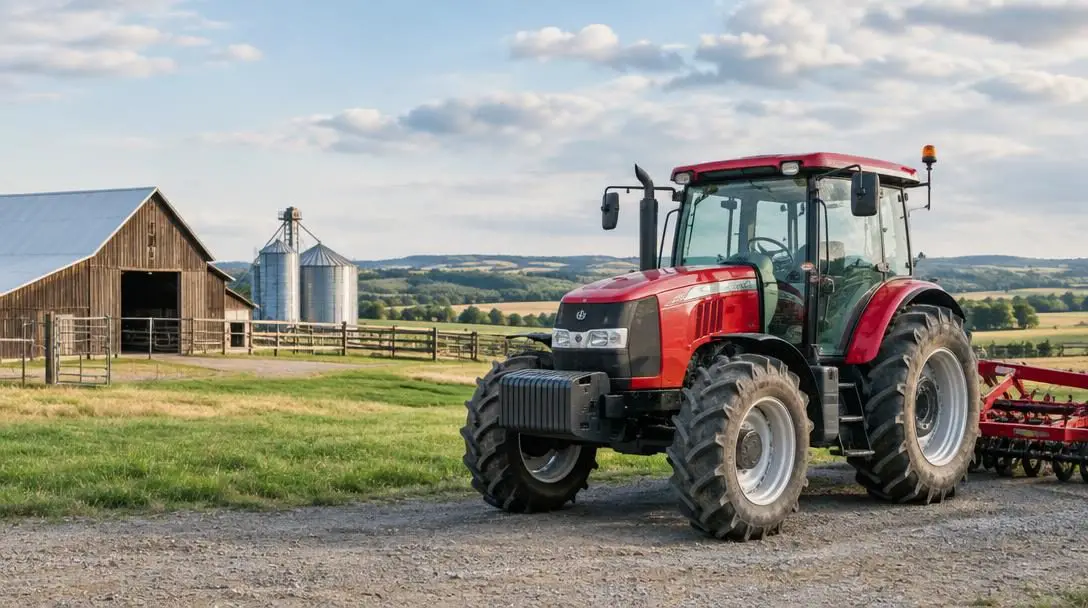
Purchasing a tractor represents a substantial financial commitment that routinely matches or exceeds the acquisition cost of an everyday passenger vehicle. While a baseline, entry-level utility model might start at around ten thousand dollars, top-tier commercial and agricultural workhorses can easily escalate into hundreds of thousands of dollars. Whether you are stepping onto heavy machinery for the very first time to manage acreage or an experienced property owner preparing for an operational upgrade, entering the modern machinery marketplace demands rigorous preparation and realistic goal setting.
Unlike standard consumer automobiles engineered primarily for passenger transit, tractors are specialized utility platforms built to endure punishing physical labor across demanding terrain and unpredictable weather. Entering a local dealership showroom or equipment auction without a detailed assessment of your land, financial boundaries, and mechanical requirements often leads to expensive buyer regret. By taking time to master core purchasing principles—including capital management, physical property requirements, transmission mechanics, brand ecosystems, and working speed—buyers can ensure their heavy equipment investment yields decades of dependable productivity.
Key takeaways
- Entry-level tractors start near ten thousand dollars, while full-scale commercial platforms easily reach hundreds of thousands of dollars.
- Matching machine dimensions and horsepower to your specific acreage prevents costly operational headaches in confined spaces.
- Transmission choice dictates both upfront acquisition cost and day-to-day operating fatigue during repetitive chores.
- Long-term ownership satisfaction depends heavily on the geographic proximity of qualified mechanics and replacement parts desks.
- Total project budgeting must account for essential attachments, dedicated storage, and ongoing maintenance schedules.
Five essential considerations before buying a tractor
Approaching equipment ownership requires balancing immediate property chores against long-term operational costs. Because agricultural machinery serves as a working investment rather than a luxury purchase, buyers must evaluate five foundational pillars before signing purchase agreements or submitting loan applications.
1. Establishing a budget and financing strategy
Before researching engine horsepower ratings, hydraulic flow capacities, or mechanical implements, you must establish unambiguous boundaries around your available capital. Tractors demand serious financial planning, and prospective buyers generally divide into two camps: purchasing used equipment outright with available cash, or acquiring newer machinery through structured commercial lending programs. If you choose to finance, you will encounter dedicated equipment lending arms from major manufacturers—such as John Deere and Kubota—alongside conventional commercial banks and credit unions.
Navigating machinery finance requires calculating three critical variables:
- Down payments: Most structured equipment loans require an upfront cash contribution. Committing a larger down payment reduces the overall loan principal, lowers mandatory monthly payments, and shields you from negative equity as the tractor depreciates over its initial operating seasons.
- Interest rates: Manufacturer financing programs frequently introduce competitive promotional interest rates to move inventory, while standard commercial equipment rates fluctuate based on personal credit scores, broader economic conditions, and loan duration. Borrowers must evaluate the total cumulative interest expense rather than focusing solely on the window sticker price.
- Loan duration: Equipment loan terms vary significantly in duration. Selecting an extended repayment term produces smaller recurring payments that ease monthly cash flow, but it substantially increases the total interest paid over the life of the machine. Conversely, compressed loan terms save significant borrowing costs while demanding higher monthly cash outlays.
2. Assessing practical operational needs and property limits
An emotional pitfall that ensnares many first-time machinery shoppers is purchasing equipment based on physical stature and visual prestige rather than realistic property requirements. In consumer automotive shopping, a motorist might have the financial means to purchase an exotic convertible, yet living along an unpaved road in a sub-zero winter climate makes an all-wheel-drive sport utility vehicle the only sensible choice. Equipment shopping requires identical practical discipline.
It is remarkably easy to fall in love with the largest, most powerful tractor parked on a dealer lot simply because your financing accommodates the monthly payment. However, oversized machinery often becomes an expensive liability on properties that lack the space to support it. To determine the right equipment footprint, evaluate these three spatial realities:
- Acreage size: Massive utility tractors engineered for broad-acre farming deliver virtually no benefit on small parcels where restricted turning radiuses, narrow access roads, and existing residential buildings make maneuvering impossible.
- Access and agility: Tight wooded boundaries, domestic farmyards, livestock pens, and standard gate openings demand agility. A broad, heavy tractor can quickly damage fragile lawns, compact delicate soil, and risk collisions with existing structures.
- Necessity of ownership: Depending on the size of your acreage, your land might not actually justify tractor ownership. Small plots of land can often be managed far more affordably with walk-behind equipment, heavy-duty ride-on lawn gear, or by hiring local agricultural contractors for periodic heavy chores.
3. Ergonomics, control, and transmission choice
The mechanical interface between the tractor operator and the machine directly dictates daily productivity, safety, and physical comfort. Modern tractor controls fall primarily into manual and automatic transmission platforms, and deciding between them depends on how actively engaged you wish to be while operating the machinery.
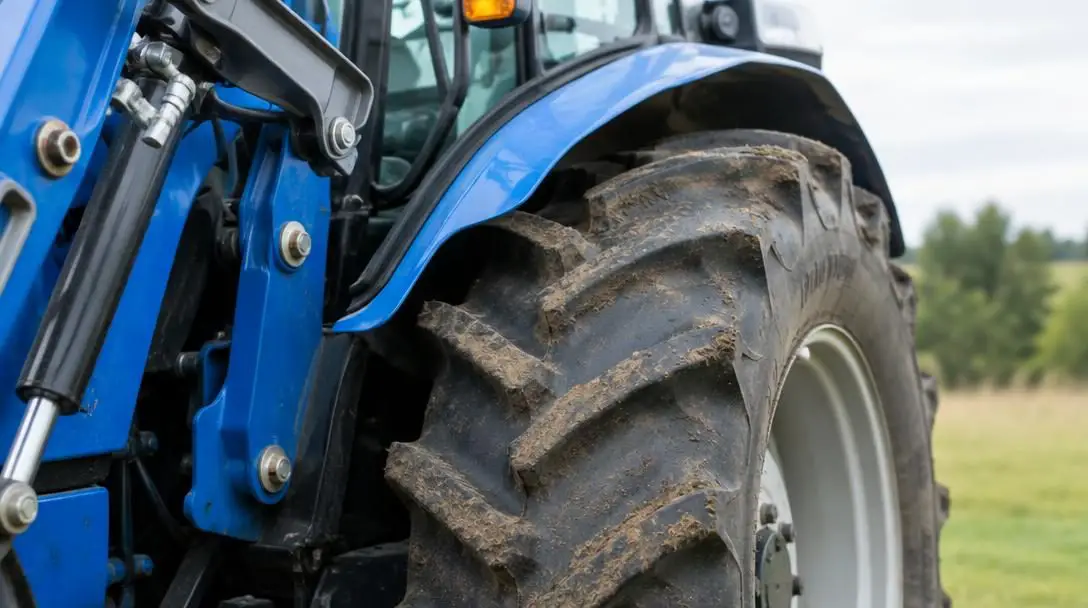
Manual transmissions require direct, continuous mechanical operation from the driver. Operators must manually depress the foot clutch, select gears based on immediate soil resistance and implement load, and coordinate throttle adjustments manually. The principal advantage of choosing a manual transmission is financial: manual tractors consistently enter the market at a significantly lower purchase price than their automatic counterparts. If you are comfortable shifting gears manually and do not mind continuous foot-clutch work, a manual gearbox delivers exceptional mechanical reliability and substantial cost savings.
Conversely, automatic transmissions deliver seamless, step-free operation that allows the driver to concentrate entirely on their surroundings and implement adjustments. When executing light property maintenance, finish mowing, trailer towing, or front-end loader work, a compact automatic tractor eliminates operational fatigue and provides an exceptionally smooth driving experience. Balancing your choice of transmission against your intended workloads—such as heavy ground cultivation versus repetitive yard maintenance—ensures you acquire the right operational tool without overspending.
4. Navigating the equipment brand landscape
The agricultural and commercial equipment landscape has evolved into an expansive, highly competitive international market. While past decades saw the industry dominated by a handful of domestic manufacturers, today's buyers choose among a wide selection of domestic and overseas builders, each presenting distinct mechanical philosophies, service schedules, and price structures. Because brand choice directly influences regional parts availability, certified repair access, and resale retention, brand research is paramount.
Real-world operational feedback from neighboring landowners reveals mechanical performance and dealer reliability that promotional sales brochures never disclose.
Established industry manufacturers include:
- John Deere: A globally recognized agricultural powerhouse providing machinery tiers ranging from sub-compact residential units to immense broad-acre production platforms, backed by dedicated financing divisions.
- Kubota: Widely celebrated for durable compact tractors, small utility machinery, and dependable engineering across lifestyle farms and light agricultural environments.
- New Holland: Known for versatile equipment ranges that effectively bridge the gap between lifestyle farming, estate upkeep, and commercial crop production.
- Case IH, Massey Ferguson, and Claas: Established domestic and international equipment manufacturers offering heavy-duty structural engineering, high-torque powertrains, and specialized implement compatibility.
- JCB: Renowned for manufacturing highly agile, specialized fast tractors capable of moving rapidly through demanding industrial and agricultural cycles.
5. The value of working speed and operational pace
When comparing tractor specifications, vehicle velocity and operational cycle times are vital productivity metrics. Tractors exist to accelerate labor-intensive chores that would otherwise demand exhausting physical effort or unmanageable hours. Purchasing a tractor represents an investment in personal efficiency; saving field hours translates directly into reduced operating overhead, lower engine hour accumulation, and improved property management.
There is no practical drawback to operating machinery capable of executing tasks swiftly. Equipment engineered for rapid ground transport and fast working cycles allows operators to complete material transfers, heavy towing, and field operations in a fraction of the time required by standard-speed units. While high-speed engineering commands an upfront pricing premium, that investment pays consistent dividends through rapid task completion across expansive properties.
Comparing major tractor equipment manufacturers
Evaluating major equipment brands side by side helps buyers identify which manufacturer aligns best with their property acreage, mechanical expectations, and financial strategy.
| Manufacturer | Primary Machinery Focus | Operational Environment | Key Market Distinctions |
|---|---|---|---|
| John Deere | Compact utility to broad-acre production units | Small residential plots to industrial agriculture | Broad equipment tiers and dedicated internal financing programs |
| Kubota | Compact utility and lifestyle farm machinery | Light agricultural plots and estate maintenance | Durable compact engineering with specialized equipment lending |
| New Holland | Mid-size utility and commercial production tractors | Lifestyle farms to commercial row-crop acreage | Versatile equipment lines accommodating mixed property tasks |
| JCB | High-speed industrial and agricultural tractors | Demanding industrial sites and high-capacity farms | Rapid operational travel speeds and high agility under load |
How primary tractor mechanical systems work together
To evaluate prospective machinery effectively, buyers must look beneath the sheet metal and understand how a tractor distributes mechanical energy. Unlike a consumer car, where the engine exists solely to propel the drive wheels down the pavement, a tractor operates as a mobile hydraulic and mechanical power station designed to operate various external implements simultaneously.
A tractor functions through four interconnected mechanical subsystems:
- Engine and drivetrain: Modern tractor diesel engines are specifically tuned to generate massive low-end torque at low engine RPM rather than high top-end speeds. This sustained low-speed torque is routed through heavy gearsets to provide relentless pulling power through thick mud, loose soil, and steep inclines without stalling the power plant.
- The Power Take-Off (PTO): The PTO is a splined drive shaft protruding from the rear or underside of the tractor. It transfers rotational energy directly from the diesel engine to unpowered mechanical implements, driving the spinning blades of rotary cutters, the augers of post-hole diggers, and the internal mechanisms of fertilizer spreaders.
- Hydraulic systems: High-pressure hydraulic pumps cycle fluid through internal valves and steel lines to power cylinders and hydraulic motors. This pressurized circuit raises and lowers front-end loader buckets, operates backhoes, lifts three-point linkages, and powers remote hydraulic implements.
- Three-point hitch: Located at the rear of the machine, this standardized triangular linkage provides a rigid structural coupling between the tractor frame and soil-engaging tools. The hydraulic system lifts and lowers the hitch, allowing the operator to set precise working depths for plows, box blades, and grading scrapers.
Step-by-step guide to purchasing a tractor
Following a systematic, step-by-step acquisition method prevents emotional impulse buys and ensures your chosen machine matches your property's daily workload.
- Audit property topography and dimensions: Carefully measure entry gate widths, barn doorway clearances, overhead tree lines, and total working acreage to establish non-negotiable physical dimensions for your machinery.
- Define primary work tasks: Draft a prioritized list of critical chores the tractor must perform, including earthmoving, lifting round hay bales, mowing overgrown brush, cultivating garden plots, or clearing heavy snow.
- Establish hard capital boundaries: Review your finances to define absolute maximum limits for upfront cash purchases, or specify exact ceilings for initial down payments and monthly loan installments.
- Research local dealership networks: Map out machinery dealerships located within a practical driving distance, confirming that they maintain fully staffed parts desks and certified service technicians.
- Conduct thorough physical inspections: Examine prospective machinery closely, inspecting frame welds for structural cracks, checking hydraulic lines and cylinders for leaks, and reviewing complete service histories on used inventory.
- Execute a working test operation: Drive the tractor across varied ground, cycling the transmission through every gear, engaging the PTO, actuating hydraulic loader controls under load, and verifying seat comfort and operational visibility.
- Finalize sales terms and ongoing support: Secure all equipment warranties, implement inclusion packages, scheduled service guarantees, and equipment delivery timelines in writing before authorizing payment.
Costly tractor buying mistakes to avoid
First-time machinery buyers routinely commit preventable errors that lead to substantial financial losses and operational frustration. Knowing these common traps in advance helps protect your machinery budget:
- Ignoring implement and attachment costs: A tractor without implements is simply a motorized power unit. Front-end loaders, rear rotary cutters, box scrapers, and tillers frequently must be purchased separately. Failing to budget for these critical attachments leaves you with an expensive machine unable to perform work.
- Underestimating overall machine weight: Heavy machinery weight provides the traction and stability necessary for safe lifting. Selecting an ultra-lightweight tractor for heavy loader work can cause the drive wheels to spin uselessly or cause dangerous tipping accidents on uneven terrain.
- Neglecting dealer proximity: Buying an unfamiliar or discontinued tractor brand at a heavy initial discount turns into a logistical nightmare if the nearest certified mechanic or replacement parts distributor is hundreds of miles away.
- Overlooking secure equipment storage: Leaving heavy machinery permanently exposed to ultraviolet sunlight, heavy rain, and freezing snow accelerates paint oxidation, degrades rubber seals, and causes premature hydraulic hose cracking. Adequate barn or shed space is essential.
- Buying for current acreage without anticipating expansion: If you plan to acquire adjacent land, clear additional timber, or take on commercial contracting work in the future, purchasing a machine that barely handles your current yard forces an expensive trade-in upgrade later.
Dealer visits, test drives, and next steps
Once you have defined your operational budget, spatial limits, desired transmission design, and preferred brand options, transition from theoretical research into active dealership visits. Schedule dedicated walk-arounds across multiple regional equipment dealerships to evaluate competing models within your target horsepower class.
During physical walk-arounds, assess operator station ergonomics firsthand. Step up onto the operator platform to check the ease of mounting and dismounting, verify sightlines to the front loader bucket and rear drawbar, and ensure all control levers sit within intuitive reach. Furthermore, open the engine hood to inspect routine daily maintenance points; oil dipsticks, fuel filters, radiator screens, and grease zerks must be easily accessible to ensure long-term maintenance compliance. Gathering written quotes and financing estimates across multiple dealers gives you the bargaining leverage necessary to secure competitive pricing.
Frequently asked questions
How much should I expect to spend on an entry-level tractor?
A baseline, entry-level utility tractor typically starts around ten thousand dollars. However, adding essential working implements, choosing automatic transmissions, or stepping up into commercial agricultural classes can rapidly elevate equipment costs into the tens or hundreds of thousands of dollars.
Should I choose a manual or an automatic tractor transmission?
Manual transmissions cost significantly less upfront and provide direct mechanical control, making them ideal for budget-conscious buyers comfortable with clutching. Automatic transmissions offer smooth, effortless operation that reduces physical fatigue during repetitive loader chores and mowing.
Why is dealership proximity so critical when selecting a brand?
Tractors require ongoing preventative servicing, fluid changes, and occasional mechanical repairs. Choosing a brand with an established local dealership guarantees immediate access to certified technicians and on-shelf replacement parts, avoiding costly operational downtime.
What is the difference between tractor horsepower and PTO horsepower?
Engine horsepower measures the total power produced by the diesel engine, while PTO (Power Take-Off) horsepower measures the actual mechanical power transferred to external implements through the rear drive shaft. PTO horsepower is consistently lower due to internal drivetrain friction.
Do I need to store my tractor inside an enclosed building?
While tractors are engineered for rugged outdoor operation, permanent outdoor storage accelerates rubber hydraulic hose cracking, degrades electrical wiring harnesses, oxidizes exterior paint, and hardens hydraulic seals. Sheltering equipment inside a shed or barn significantly extends machine lifespan.
The bottom line
Acquiring a tractor is an empowering investment that fundamentally transforms how you maintain, develop, and manage your property. The key to long-term ownership satisfaction lies in resisting the urge to overbuy based on showroom aesthetics or pure engine size, focusing instead on the precise spatial dimensions and mechanical demands of your land. By planning a clear financing strategy, selecting the right transmission for your working style, and choosing a reputable brand supported by a nearby dealership network, you will secure a dependable machine that delivers exceptional performance and value for years to come.





