5 Timeless Classics From 50s Hollywood
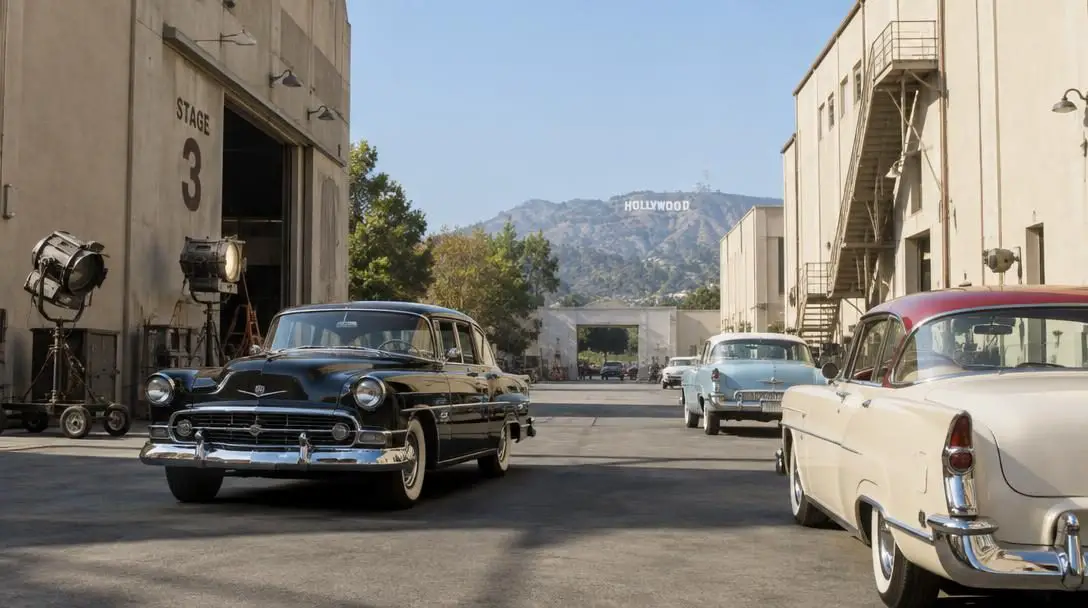
The 1950s hold an exceptional and complex place in American film history. While many historians and film lovers view the broader Golden Age of Hollywood as the historical peak of cinematic artistry, the years spanning 1950 to 1959 are frequently defined by the structural decline of the traditional studio system. Facing mounting pressures from the rapid spread of home television broadcasting and changing leisure habits, the film industry underwent a seismic transformation. During the middle of that turbulent period, Life Magazine famously went so far as to brand the era the "horrible decade," predicting an irreversible artistic slide.
Viewed from a modern vantage point, that gloomy dismissal feels remarkably detached from reality. Far from suffering a creative drought, mid-century Hollywood produced an extraordinary roster of innovative, emotionally intricate, and visually striking films that established enduring narrative techniques. From dizzying psychological thrillers and self-reflective industry satires to kinetic dance musicals, tightly staged courtroom dramas, and sweeping wartime epics, the decade generated some of the most influential screen entertainment in cinema history.
Key takeaways
- Despite contemporary industry anxieties and the label of a "horrible decade," the 1950s delivered foundational cinematic masterpieces that continue to shape modern screenwriting and directing.
- Storytellers responded to new commercial competition from broadcast television by pushing boundaries in psychological depth, narrative economy, and grand physical production.
- Box-office receipts during initial theatrical runs did not always measure a picture's true legacy, with works like Singin' in the Rain finding their iconic status through television broadcasts and home video.
- Collaborations between legendary directors like Alfred Hitchcock, Billy Wilder, and David Lean and magnetic stars like Jimmy Stewart, Gloria Swanson, and William Holden defined the era's artistic peak.
The shifting tides of 1950s Hollywood
To fully grasp the artistic achievements of mid-century cinema, it is necessary to consider the industrial landscape of the time. The 1950s marked the dissolution of the old studio model, an era where major production houses exercised near-total control over talent, production schedules, and exhibition networks. At the same time, the sudden emergence of broadcast television fundamentally altered consumer entertainment habits, forcing cinema executives to rethink how they attracted viewers into movie houses.
Rather than collapsing under these challenges, filmmakers seized the opportunity to test new narrative boundaries. Writers, directors, and cinematographers experimented with darker psychological subject matter, razor-sharp dialogue, and expansive practical settings that television screens simply could not replicate. The resulting pictures were varied and daring, offering audiences everything from claustrophobic character studies to vast international dramas that justified the price of admission.
Five essential 1950s film classics
The breadth of cinematic invention during this transitional decade is best understood through five definitive titles. Each project highlights a different genre, showcasing how masters of the craft used narrative, staging, and acting to build experiences that remain powerful decades later.
Vertigo
- Director: Alfred Hitchcock
- Starring: Jimmy Stewart, Kim Novak
- Core Themes: Fear, compulsion, obsession, psychological trauma
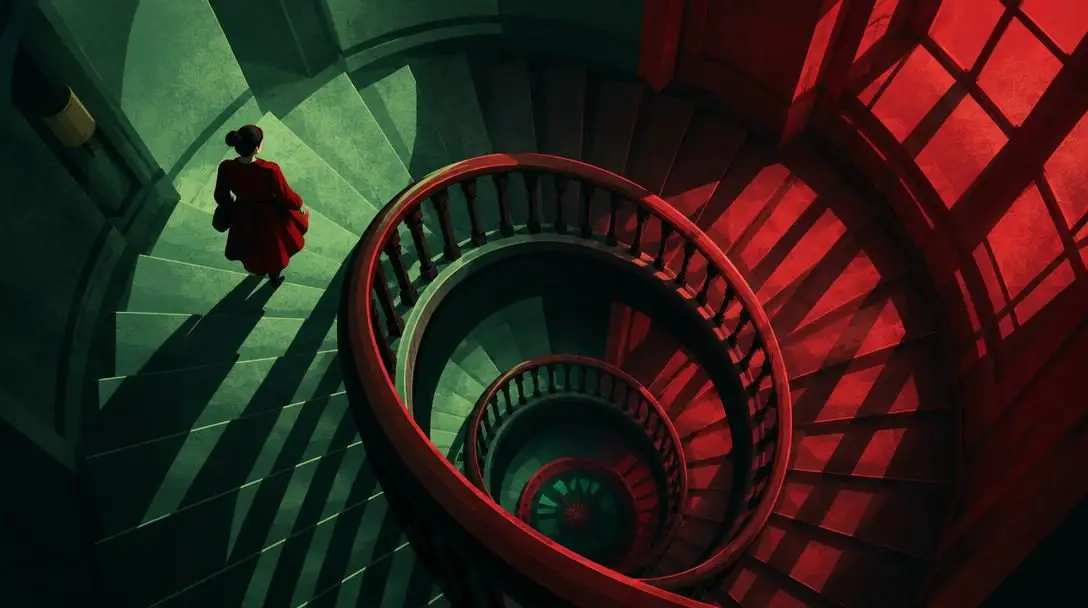
Widely regarded as one of the peak artistic collaborations between director Alfred Hitchcock and actor Jimmy Stewart, Vertigo stands out for its deep psychological complexity and hypnotic atmosphere. Stewart, who reigned as perhaps the biggest star in Hollywood during this period, joined forces with Hitchcock on four separate film projects across their legendary careers. While critical debates persist over whether this picture or their celebrated thriller Rear Window represents their crowning achievement, this film holds a unique status due to its raw emotional resonance.
The story follows former police detective John "Scottie" Ferguson, played by Stewart, who leaves the force after an incident on a rooftop leaves a fellow officer dead and causes Scottie to develop an incapacitating fear of heights. When he is hired to follow an acquaintance's wife, Scottie becomes entangled in an escalating labyrinth of desire and mental fragility. Hitchcock meticulously deconstructs the fragile human psyche, using visual cues and an ominous mood to guide viewers through Scottie's descent. Elevated by a haunting and enigmatic performance from actress Kim Novak, the production moves inexorably toward one of the most chilling and memorable final sequences in classic cinema.
Singin' in the Rain

- Lead Performers: Gene Kelly, Debbie Reynolds, Donald O'Connor
- Key Musical Tracks: "Singin' in the Rain," "Good Morning," "Make 'Em Laugh," "Moses Supposes"
- Cultural Resurgence: Gained widespread iconic status via television broadcasts and VHS releases
During the 1950s, the Hollywood musical was not merely a popular genre; it was an absolute cultural obsession. Among the scores of vibrant song-and-dance productions mounted throughout the era, Singin' in the Rain has outlasted nearly all of its peers to stand as an enduring crowd-pleaser. Anchored by the peerless physical charisma and athletic choreography of Gene Kelly, the movie also features star-making turns from Debbie Reynolds and Donald O'Connor, whose comedic energy provides the picture with effortless momentum.
Curiously, the musical did not generate astronomical ticket sales upon its initial release in movie houses. Its status as an undisputed masterpiece grew gradually over subsequent decades, propelled by recurring holiday television broadcasts and the explosion of the home video market on VHS. Audiences across the globe internalized its joyful soundtrack, singing along to beloved set pieces including "Good Morning," "Make 'Em Laugh," "Moses Supposes," and the title track. Gene Kelly's joyful puddle-splashing routine remains so universally recognized that rainy days routinely prompt modern moviegoers to parody his iconic umbrella-twirling stroll.
12 Angry Men
- Screenwriter: Reginald Rose
- Leading Actor and Producer: Henry Fonda
- Primary Setting: A single, enclosed jury deliberation room
First conceived as a production for the television medium, 12 Angry Men was so compelling that leading actor Henry Fonda and writer Reginald Rose chose to bring the narrative to theatrical screens. Fonda took on the central role in a story that remains a benchmark in cinematic pacing, spatial economy, and character-driven dramatic tension. The entire narrative unfolds almost entirely within the cramped confines of a single room, where twelve male jurors must decide the legal fate of an impoverished teenage boy accused of murder.
At the start of the deliberation, Fonda's character is the lone juror to raise his hand for a verdict of "not guilty," defying eleven peers who are eager to deliver a swift conviction. Rather than attacking his fellow jurors, he calmly challenges casual assumptions, demonstrates procedural oversights, and methodically forces the room to scrutinize the trial evidence. Through powerful acting and tightly structured dialogue, the picture offers an enduring examination of how patience, reason, and an insistence on reasonable doubt can push back against an impatient mob mentality.
Sunset Boulevard
- Director: Billy Wilder
- Release Year: 1950
- Starring: Gloria Swanson
Directed by Billy Wilder and arriving right at the start of the decade in 1950, Sunset Boulevard is an acid-tongued drama that turns its gaze directly upon the machinery of Hollywood itself. The film remains famous for offering an unsparing, behind-the-curtain inspection of studio fame, vanity, and the tragic isolation that often follows performers once the spotlight shifts away. At its center is an unforgettable performance by Gloria Swanson as Norma Desmond, an aging former celebrity of the silent-film era living in crumbling grandeur.
Desperate to manufacture a triumphant return to an industry that has transitioned completely to sound and spoken dialogue, Norma lives inside a cocoon of self-serving delusions. Convinced that the public is clamoring for her comeback, she directs her frantic ambitions toward legendary filmmaker Cecil B. DeMille. Wilder balances dark humor with tragedy, guiding the narrative to an indelible, dramatic finale punctuated by Norma's immortal declaration: "All right, Mr. DeMille, I'm ready for my close-up."
The Bridge on the River Kwai

- Director: David Lean
- Leading Cast: William Holden, Jack Hawkins, Alec Guinness
- Financial Return: Produced for nearly $3 million; earned well over $30 million theatrically
Alongside musicals, the war drama dominated commercial movie theaters throughout the decade, and David Lean's The Bridge on the River Kwai stands as one of the genre's finest milestones. The production paired established Hollywood star William Holden with British acting heavyweights Jack Hawkins and Alec Guinness, the latter of whom would later introduce his artistry to an entirely new generation of worldwide viewers as Obi-Wan Kenobi in the original Star Wars trilogy.
Set during the early 1940s in a Southeast Asian prisoner-of-war camp, the film explores the severe isolation, moral compromises, and psychological helplessness endured by Allied soldiers during World War II. Unlike smaller, dialogue-centric dramas of the decade, Lean's epic was an enormous box-office phenomenon right out of the gate. Made on an ambitious production budget of nearly $3 million, the film went on to gross well over $30 million during its theatrical run—a financial return comparable to a $30 million modern budget delivering $325 million in global ticket receipts.
Far from being a creative desert, the 1950s produced an enduring library of cinematic masterworks that continue to define standards of dramatic storytelling.
1950s Hollywood classics at a glance
To see how these landmark titles contrast with one another in tone, production style, and thematic focus, explore the comparison table below.

| Film Title | Key Talent | Primary Genre | Setting and Scale | Signature Distinction |
|---|---|---|---|---|
| Vertigo | Alfred Hitchcock, Jimmy Stewart, Kim Novak | Psychological thriller | Atmospheric Northern California locations | Deep exploration of obsession, guilt, and vertigo-induced trauma |
| Singin' in the Rain | Gene Kelly, Debbie Reynolds, Donald O'Connor | Musical comedy | Vibrant soundstages and period backlots | Legendary song-and-dance routines that grew in stature via television and VHS |
| 12 Angry Men | Henry Fonda, Reginald Rose | Legal drama | Enclosed, single-room jury suite | Masterclass in pacing, dialogue, and resisting group pressure |
| Sunset Boulevard | Billy Wilder, Gloria Swanson | Noir drama / Industry satire | Decaying Beverly Hills mansion and studio lots | Unflinching look at Hollywood fame and the shift from silent to sound cinema |
| The Bridge on the River Kwai | David Lean, William Holden, Alec Guinness | Wartime epic | Expansive outdoor jungle environments | Massive box-office smash turning a $3 million budget into over $30 million |
The mechanics of 1950s storytelling
The staying power of these five pictures is not an accident of nostalgia; it is the direct outcome of specific artistic methods developed by filmmakers during an era of profound industrial disruption. By understanding these storytelling pillars, audiences can better appreciate how mid-century filmmakers achieved such lasting dramatic power.
- Psychological character studies: Rather than relying on constant, kinetic physical spectacle, narratives like Vertigo and Sunset Boulevard build suspense around the internal instability, compulsions, and vanity of their protagonists.
- Dialogue and spatial economy: In films such as 12 Angry Men, tension does not come from shifting locations, but from camera blocking, rhythmic script delivery, and the psychological friction between conflicting personalities confined to a single room.
- Balancing athletic artistry with popular comedy: Musicals such as Singin' in the Rain united physically demanding, complex dance routines with witty, accessible humor, producing works that functioned simultaneously as high art and effortless entertainment.
- Grand scale grounded in practical realism: Rather than using artificial sets or backdrops exclusively, epics like The Bridge on the River Kwai captured authentic physical environments, using large ensembles and authentic locations to ground themes of military duty and survival.
Practical steps for exploring 1950s cinema
Approaching vintage Hollywood films can occasionally feel daunting for modern viewers raised on brisk digital editing, rapid scene changes, and contemporary sound design. Using a systematic viewing strategy ensures that you absorb the craft and intention behind these classic productions.
- Select an accessible starting point: Match your initial selection to your personal taste. If you gravitate toward fast-moving, high-stakes dialogue, begin with 12 Angry Men; if you prefer vibrant physical comedy and energetic musical numbers, start with Singin' in the Rain.
- Watch in an undistracted viewing environment: Classic movies often rely on deliberate pauses, physical blocking, and subtle facial acting. Turn down the lights, put away smartphones, and give the screen your undivided focus to catch vital narrative details.
- Trace recurring creative partnerships: Follow creative pairings across multiple projects. Examining Jimmy Stewart's four collaborations with director Alfred Hitchcock, for instance, provides exceptional insight into how a star's on-screen image can be modulated between various suspense narratives.
- Examine the broader media context: Keep in mind the real-world transformations happening during the decade, such as Hollywood's adaptation of early television teleplays or the historic transition from silent films to synchronized dialogue highlighted in Sunset Boulevard.
- Separate initial box office from cultural value: Avoid assuming that a film's box-office receipts upon release define its ultimate worth. Masterpieces often gain their greatest critical standing years later through television broadcasts, critical reappraisals, and home media formats.
Common mistakes when viewing mid-century films
When contemporary audiences dive into 1950s cinema for the first time, minor misunderstandings about historical film conventions can lead to premature dismissals. Steering clear of these frequent mistakes will dramatically enhance your viewing enjoyment.
- Judging pacing through modern editing standards: Expecting rapid-fire camera cuts will cause frustration. Titles like Vertigo move at a deliberate pace to let psychological dread and character obsession settle naturally over the viewer.
- Confusing stylized theatrical delivery with poor acting: Many actors in the 1950s utilized performance techniques rooted in theatrical stage traditions. Understanding this convention helps you appreciate the dramatic control of performers like Gloria Swanson and Henry Fonda.
- Assuming financial receipts equal artistic quality: Assuming that a picture was subpar simply because it did not generate record-breaking theatrical revenue ignores how platforms like broadcast television and home VHS releases reshaped the canon over time.
- Dismissing single-location staging as uncinematic: Audiences unfamiliar with stage adaptations might initially view 12 Angry Men as visually limited, overlooking the brilliant camera positioning, pacing, and claustrophobic framing that turn a simple jury room into a pressure cooker.
Expanding your classic film journey
Experiencing these five foundational works represents only the first step in discovering mid-century Hollywood. Once you have seen them, you can branch out into related avenues of classic cinema to deepen your appreciation.
One rewarding path involves exploring alternate masterworks by the same creative figures. Viewers fascinated by the psychological obsession of Vertigo can evaluate the longstanding critical debate between that picture and Hitchcock's Rear Window, seeing how Stewart operated within a different mystery format. Similarly, those impressed by Reginald Rose's sharp writing in 12 Angry Men can seek out other golden-era television scripts adapted for cinematic release.
Another compelling option is to follow the broader career arcs of the era's performers. You might trace William Holden's diverse dramatic work, study Gloria Swanson's authentic background in silent pictures to better appreciate her performance as Norma Desmond, or follow Alec Guinness's career from his complex wartime roles under David Lean all the way to his famous performance as Obi-Wan Kenobi in the original Star Wars trilogy. Exploring how studios responded to the competitive rise of broadcast television provides a deeper understanding of one of the most innovative periods in cinema history.
Frequently asked questions
Why did Life Magazine call the 1950s a "horrible decade" for Hollywood?
The magazine used the label because the studio system was breaking down while broadcast television emerged as a major commercial rival, causing industry commentators to fear an irreversible collapse in cinematic quality and theatrical attendance.
How many movies did Jimmy Stewart make with Alfred Hitchcock?
Jimmy Stewart and Alfred Hitchcock collaborated on four feature films throughout their careers, with critical debates often centering on whether Vertigo or Rear Window represents their finest artistic achievement.
Was Singin' in the Rain an instant box-office hit when it was first released?
No, the movie did not generate astronomical profits during its initial run in movie theaters. Instead, its untouchable reputation developed over subsequent decades through repeated holiday television airings and home video releases on VHS.
What was the original medium for 12 Angry Men before it became a movie?
The story was originally written by Reginald Rose for the television medium. Actor Henry Fonda and Rose found the narrative so gripping that they chose to adapt and produce it as a full-length theatrical feature.
How successful was The Bridge on the River Kwai financially?
The production was a massive financial hit. Made on a budget of nearly $3 million, it earned well over $30 million in theatrical receipts, which translates roughly to a $30 million investment earning $325 million in modern box-office figures.
The bottom line
While the 1950s began amidst deep economic panic for the American movie industry, the decade ended up leaving an extraordinary artistic legacy. When faced with the existential threat of broadcast television and the collapse of the studio system, filmmakers responded by sharpening their scripts, trusting the psychological depth of their actors, and embracing scale that demanded the big screen. The resulting works—from the dizzying suspense of Vertigo to the triumphant choreography of Singin' in the Rain—remain foundational masterworks that every cinema enthusiast should experience.