
5 Tips For Making The Most Of Your Business Trips

Work-related travel remains a fundamental part of doing business across many corporate sectors. While not every position demands regular transit, employees tasked with meeting distant clients, collaborating with remote branches, or representing their firm at off-site conferences often find themselves packing a suitcase on short notice. When travel requests receive manager approval and corporate funding, the journey brings distinct opportunities alongside real logistical hurdles. Navigating unfamiliar transit terminals, solitary hotel stays, and demanding meeting agendas can make corporate journeys feel more like an endurance test than an engaging career milestone.
Traveling alone frequently amplifies feelings of isolation, especially when you are separated from familiar daily routines and support systems at home. Yet, leaving headquarters for an assignment does not have to result in mental fatigue and physical exhaustion. With deliberate planning, financial awareness, and an openness to exploring new surroundings, business trips can provide valuable work accomplishments while serving as refreshing personal journeys. Shifting your approach transforms routine business travel into an efficient, restorative, and professionally enriching endeavor.
Key takeaways
- Working during transit using airport and in-flight Wi-Fi clears your post-arrival schedule for rest and exploration.
- Scheduling corporate meetings for Thursday or Friday makes it seamless to extend your stay into a weekend mini-vacation.
- Paying for business expenses on a personal credit card allows you to resolve billing disputes quickly while pocketing cash back and rewards points.
- Skipping hotel room service in favor of local neighborhood dining recommended by the concierge enriches your travel experience and breaks up work monotony.
Understanding the Dynamics of Corporate Travel
Corporate travel operates within structured employer guidelines, allocated departmental budgets, and firm scheduling windows. When leadership sends an employee into the field, the itinerary generally encompasses booking commercial airline tickets, reserving accommodations in standard business hotels, arranging ground transit, and balancing on-the-ground tasks against transit hours. For many professionals, these assignments are conducted completely solo, which can create a unique set of psychological and physical challenges if days are spent moving only between sterile conference rooms and quiet hotel suites.
The financial side of work travel typically runs along one of two administrative paths: upfront corporate billing or direct employee reimbursement. While companies are obligated to cover legitimate business costs, internal policies often allow employees to pay for their flights, hotel rooms, and daily meals with their own payment methods before filing an expense report. Deciding how to navigate these financial systems, manage transit time, and select lodging directly dictates how smooth and enjoyable your itinerary will be.
At a Glance: 5 Strategies for Better Business Trips
| Strategy | Primary Focus | Key Benefit | Actionable Step |
|---|---|---|---|
| 1. Take Advantage of Air Amenities | Flight & Transit Time | Clears post-flight schedule | Purchase in-flight Wi-Fi and concentrate flights with one carrier |
| 2. Don't Be Confined to the Hotel | Physical Wellbeing | Reduces isolation and fatigue | Pack walking shoes and explore city streets on foot |
| 3. End the Week Right | Trip Scheduling | Creates a low-cost mini-vacation | Book meetings on Thursday or Friday and stay through the weekend |
| 4. Use Your Credit Card | Expense Management | Earns points and simplifies billing | Charge expenses personally and submit expense reports for reimbursement |
| 5. Room Service Not Needed | Dining & Immersion | Connects you to local culture | Ask the concierge for neighborhood dining recommendations |
5 Essential Strategies for Maximizing Your Business Travel
Transforming corporate travel from a stressful chore into a productive, rewarding experience requires proactive choices. These five core strategies address how you work in the air, how you spend your evenings, how you schedule your itinerary, and how you manage company expenses.
1. Take Advantage of Air Amenities
Because commercial aviation is the backbone of long-distance business travel, your experience aboard an aircraft dramatically influences the pace of your entire trip. Flying consistently with a single airline or alliance allows you to accumulate substantial loyalty points and status over time, unlocking valuable upgrades that make frequent transit easier to handle. Beyond loyalty status, investing in onboard amenities can significantly enhance your workflow.
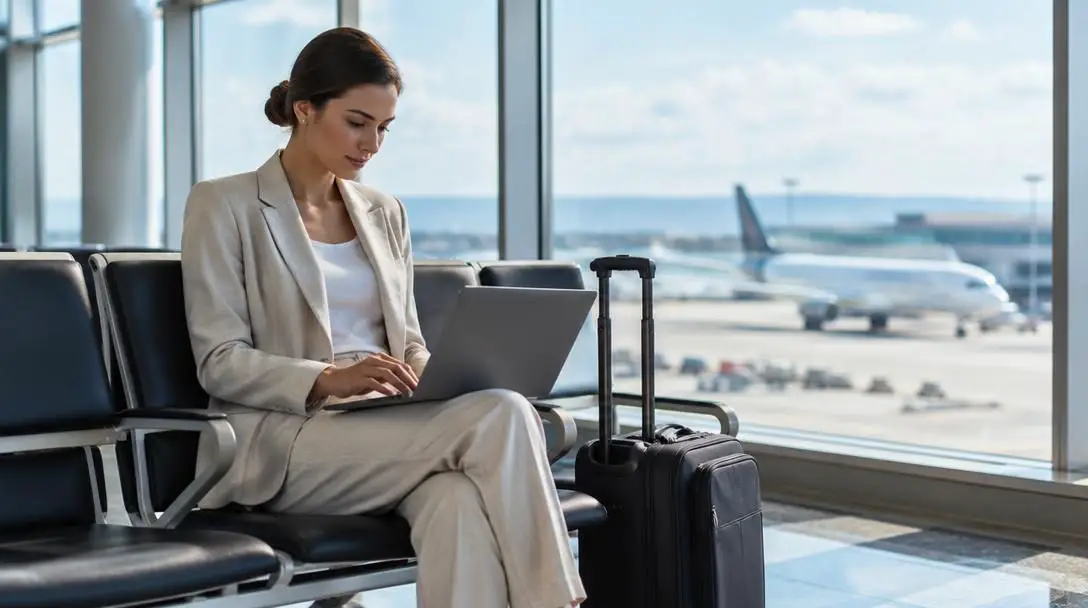
Purchasing wireless internet access—both while waiting in the airport terminal and while cruising at 30,000 feet—allows you to convert unproductive transit intervals into active work hours. Reviewing presentations, answering communications, and finishing reports while airborne ensures that you step off the plane with a clear desk. Instead of spending your first evening sequestered in your hotel room finishing overdue tasks, you land with your obligations complete, freeing up valuable evening hours to rest, dine out, or explore your destination.
Completing key assignments during flight transit clears your evening calendar, turning arrival night into personal downtime rather than another overtime shift.
2. Don't Be Confined to the Hotel
One of the most frequent mistakes business travelers make is treating their hotel room as an all-in-one bunker for sleeping, working, and eating. Spending entire days moving exclusively between enclosed presentation halls and hotel rooms deepens feelings of isolation and turns the assignment into a monotonous grind. Breaking out of this indoor pattern changes the entire character of your business journey.

An effortless way to step into the destination is combining light physical exercise with local sightseeing. Packing comfortable casual clothes and supportive walking shoes makes it easy to embark on a brisk walk through surrounding city streets between work commitments. Getting outside exposes you to the fresh air, architecture, and daily rhythm of an unfamiliar community, simultaneously supporting your physical health and mental clarity. In many cases, engaging directly with your surroundings leads to unexpected conversations and casual networking opportunities that would never occur inside a hotel corridor.
3. End the Week Right
While meeting corporate objectives remains the clear priority of any trip, thoughtful calendar planning allows you to convert a mandatory company itinerary into a refreshing personal getaway. Instead of scheduling client appointments on a Tuesday or Wednesday, deliberately aim to position your official business duties near the end of the working week.
If you schedule required meetings for Thursday or Friday, you can arrange to spend Friday night and Saturday enjoying the local sights, dining scenes, and cultural landmarks before taking a return flight home on Sunday. Because the corporate travel budget has already funded your round-trip airfare, extending your stay requires only covering your leisure lodging and weekend meals. This extra time allows you to unwind, experience the destination without corporate pressures, and dramatically reduce the travel fatigue typically caused by immediate turn-around flights.
4. Use Your Credit Card
Handling work expenditures through a personal credit card rather than upfront company billing offers notable financial and administrative advantages. When reimbursement policies permit, paying out of pocket initially gives the traveler direct oversight of every transaction associated with their name.
Having your personal name directly linked to hotel folios, rental car deposits, and airline tickets makes resolving administrative snarls, incorrect charges, and security holds much faster on site. More importantly, charging business flights, lodging, and client meals to your personal payment card lets you accumulate valuable rewards, including tier points, airline miles, and cash back bonuses. Allowing your employer to pay service providers directly leaves those benefits on the table, whereas employee reimbursement lets you capture those perks for your future personal vacations.
5. Room Service Not Needed
After a grueling series of meetings, collapsing onto a hotel bed and ordering dinner from the room service menu is a tempting path of least resistance. However, relying on hotel room service keeps you tethered to the same four walls where you answer emails and sleep, extending your working day and cutting you off from the city outside.
To give your trip genuine local flavor, commit to bypassing in-room dining menus entirely. Stepping out into the surrounding neighborhood lets you sample local culinary traditions and observe the local culture firsthand. If you are unsure where to begin or feel overwhelmed by online review sites, consult the hotel concierge. A knowledgeable concierge can offer immediate, vetted recommendations that align with your dietary preferences, budget, and desired ambiance, ensuring an authentic dining experience without the guesswork.
Practical Steps for Organizing Your Business Trip
Executing an efficient, enjoyable business trip requires structured organization across every phase of the journey. Following a disciplined preparation checklist ensures that nothing slips through the cracks while balancing corporate duties with personal wellbeing.
- Review corporate expense policies: Consult your organization's formal travel guidelines to verify daily per diem allowances, approved spending caps, non-reimbursable items, and required receipt documentation formats.
- Align airline loyalty profiles: Consolidate your flight bookings under a chosen commercial carrier or partner network to concentrate loyalty miles and accelerate qualifying status upgrades.
- Prepare transit connectivity: Test your laptops, mobile hotspots, portable charging packs, and remote access systems ahead of time so you can begin working seamlessly during terminal layovers and aboard the aircraft.
- Pack dual-purpose attire: Assemble a versatile suitcase containing required professional attire alongside comfortable casual wear and dedicated walking shoes suited for evening exploration on foot.
- Survey the local neighborhood: Review map layouts around your booked hotel to identify nearby public parks, walkable districts, cultural sites, and transit hubs before arriving at your destination.
- Consult the concierge upon arrival: Introduce yourself to the front desk or concierge team early in your stay to ask for recommended local dinner spots, bypassing the hotel room service menu.
- Maintain a rolling expense log: Save physical receipts and log all digital credit card transactions throughout each day to streamline your expense report submission the moment you return.
Common Mistakes to Avoid on Company Trips
Even seasoned business travelers can fall into routines that add needless friction, expenses, and boredom to an assignment. Avoiding these common mistakes preserves your physical energy, budget, and morale:
- Confining yourself entirely to the hotel room: Staying sequestered in your room during off-hours worsens travel-related isolation and prevents you from experiencing anything new.
- Ignoring available in-flight Wi-Fi amenities: Leaving laptop tasks untouched while flying forces you to catch up on assignments late at night in your hotel, eating into valuable rest time.
- Spreading flights across multiple disconnected carriers: Booking tickets haphazardly across numerous airlines fragments your frequent flyer points and delays qualifying for loyalty rewards.
- Defaulting to direct corporate payment methods: Letting the company pay providers directly forfeits the significant personal cash back and travel reward points earned through employee reimbursement.
- Relying on room service out of convenience: Ordering expensive, generic in-room food denies you the chance to unwind in authentic neighborhood restaurants recommended by local experts.
- Booking midweek return flights: Leaving immediately after Wednesday or Thursday meetings skips the opportunity to extend your stay across the weekend for low-cost personal travel.
Post-Trip Follow-Up and Expense Management
Maximizing the benefits of a business assignment does not end when your flight lands back home. Carrying out a few prompt post-trip administrative tasks guarantees that your finances stay healthy and your future itineraries run even smoother.
Your immediate priority upon return should be compiling all receipts and filing your corporate expense paperwork without delay. Fast reimbursement ensures that your employer transfers the necessary funds into your account before your personal credit card payment comes due, preventing any interest charges from eroding the value of your earned rewards points. This is also the ideal time to review your statements for unauthorized charges or billing errors from hotel incidentals, resolving them while the transaction details remain fresh.
Finally, check your loyalty accounts with your airline and hotel providers to confirm that points from completed flights and overnight stays have been accurately credited. Take a brief moment to evaluate the rhythm of your schedule: if extending your trip through Friday and Saturday helped lower your stress, note that strategy so you can request similar end-of-the-week scheduling on your upcoming corporate assignments.
Frequently asked questions
Why should I use my personal credit card instead of a corporate booking account?
Using your own credit card links your name directly to lodging and transit reservations, which simplifies resolving billing errors and incidental authorizations on the spot. Furthermore, paying out of pocket and submitting receipts for reimbursement allows you to earn personal credit card rewards, travel miles, and cash back that would otherwise belong to the company.
How can I turn transit time into productive working hours?
By purchasing wireless internet access in the airport terminal and aboard your commercial flights, you can draft emails, review presentations, and finish assigned reports while in the air. Completing this work during transit frees up your evening after landing, allowing you to rest or explore your destination instead of working late in your room.
What is the benefit of scheduling business meetings on a Thursday or Friday?
Scheduling meetings near the end of the workweek lets you turn a mandatory work trip into a low-cost mini-vacation. Because the company covers your round-trip airfare, you can extend your visit through Friday night and Saturday to explore the destination, flying home on Sunday feeling rested rather than worn out.
Why should I avoid ordering hotel room service after a busy day?
Ordering room service keeps you isolated in your hotel room, reinforcing a work-focused atmosphere and extending your professional day. Leaving the hotel to dine at authentic local restaurants recommended by the concierge enriches your trip, connects you to the community, and provides a genuine mental break from work tasks.
How do I prevent accumulating credit card interest on reimbursed travel expenses?
Submit your formal expense reports and transaction receipts immediately upon returning from your trip. Filing promptly guarantees that your corporate reimbursement arrives in your account before your credit card statement payment is due, keeping your earned points and cash back completely free of interest fees.
The Bottom Line
Corporate travel does not have to be an exhausting solo routine that drains your energy and separates you from healthy daily habits. By taking control of how you work in transit, how you manage your expenses, and how you spend your free hours, you can reclaim control over your corporate itineraries. Flying with a chosen carrier, paying personally to accrue card points, skipping the confines of room service, and booking end-of-week meetings allow you to blend job performance with genuine personal discovery. Approached with clear intention, every company-funded trip can become a productive work success and a rejuvenating journey.