The 5 Weirdest Art Mysteries
The global art world has long represented one of the most lucrative and culturally significant creative industries, yet it remains defined by profound enigmas. Because celebrated masterpieces, public monuments, and historical relics often predate modern digital archiving, telecommunications, and standardized recordkeeping, art historians frequently struggle to piece together the verifiable origins, physical journeys, and artistic intentions behind iconic works.
When legal contracts vanish, eyewitness accounts fade, and historical retellings merge into regional folklore, the resulting gaps challenge how society understands human culture. From multi-million-dollar museum thefts and forensic questions surrounding untimely deaths to cursed public sculptures and anonymous post-apocalyptic monuments, unresolved art mysteries highlight the complex intersection of history, forensics, and investigative research.
Key takeaways
- Major art mysteries often involve missing documentation, unverified models, and criminal conspiracies that span decades without resolution.
- Modern forensic science and archival analysis continue to challenge traditional narratives, such as the exact circumstances surrounding Vincent van Gogh's fatal gunshot wound.
- High financial stakes and extreme physical scale in artistic production can produce lasting urban legends, from high-value museum heists to tragic studio accidents.
- Investigating historical enigmas requires separating contemporary primary records from retrospective myths and internet folklore.
At a glance: Five legendary art enigmas
While art history contains countless unanswered questions, several cases stand out due to their cultural prominence, forensic complexity, and enduring public fascination. The table below outlines the essential details of five of the strangest art mysteries in modern history.
| Artwork or Event | Key Location | Date or Era | Primary Mystery |
|---|---|---|---|
| Statue of Liberty | New York Harbor | Dedicated in 1886 | Identity of the facial model |
| Death of Vincent van Gogh | France | July 28, 1890 | Suicide versus accidental shooting |
| Blue Mustang ("Blucifer") | Denver International Airport | Dedicated posthumously | Origins of the curse folklore after sculptor's death |
| Gardner Museum Heist | Boston, Massachusetts | March 1990 | Location of 13 works and identity of thieves |
| Georgia Guidestones | Elbert County, Georgia | Erected 1980, destroyed July 2022 | True identity of Robert C. Christian |
Five of the weirdest art mysteries in history
Each of the following cases demonstrates how missing paper trails, social taboos, workplace hazards, or criminal secrecy can create enduring puzzles that continue to confound researchers and the general public.
Statue of Liberty
- Sculptor: Frederic Auguste Bartholdi
- Dedication Date: 1886
- Subject: Libertas (Roman goddess of freedom)
- Location: New York Harbor
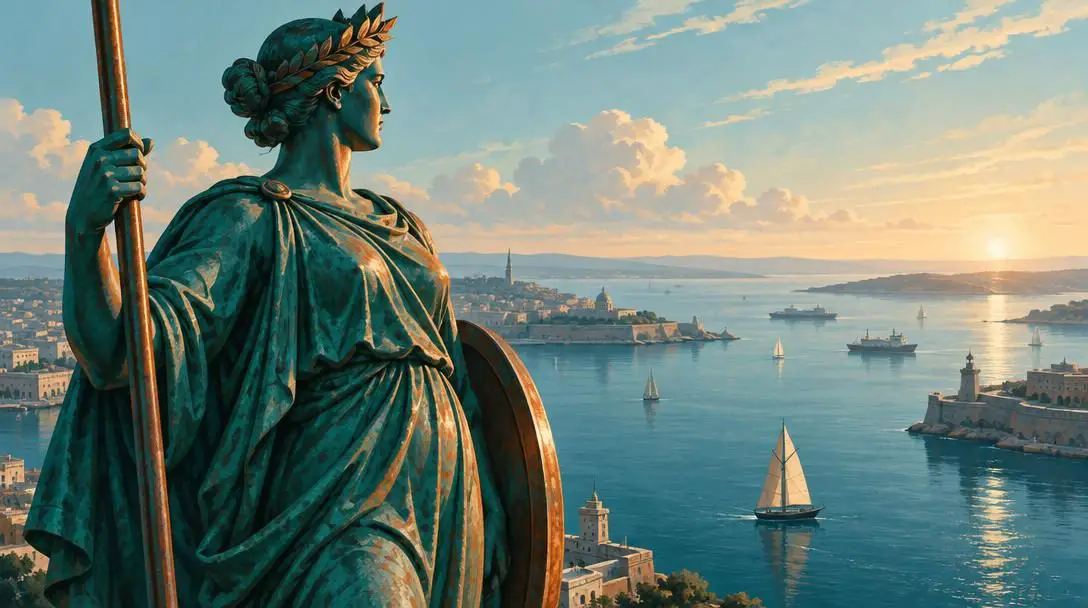
Very few monuments on the planet match the immediate recognizability of the colossal copper figure standing tall in New York Harbor. Dedicated in 1886 as an enduring gift from the people of France to the United States, the statue was sculpted by Frederic Auguste Bartholdi to represent Libertas, the ancient Roman goddess of freedom. Over the decades, Lady Liberty has evolved into an irreplaceable international symbol of liberty and democracy.
Despite its universal fame, the physical identity of the model whose facial features Bartholdi captured in metal remains entirely unproven. A persistent and widely cited rumor suggests that Bartholdi modeled the monument's stern, classical face after his own mother. However, art historians have never discovered definitive written correspondence, studio sketches, or personal journals from Bartholdi to verify this claim. The inspiration behind one of the most famous faces on Earth remains an open historical debate.
The Death of Vincent van Gogh
- Date of Death: July 28, 1890
- Cause: Fatal gunshot wound to the abdomen
- Movement: Post-Impressionism
Vincent van Gogh stands as one of the most celebrated post-impressionist painters in history, recognized across the globe for his vivid use of color and emotional brushwork. On July 28, 1890, van Gogh passed away after sustaining a fatal gunshot wound to his abdomen. For generations, the historical consensus held that the artist, who battled severe mental anguish throughout his life, died by his own hand in an intentional act of suicide.
In recent decades, modern historians and forensic investigators have closely re-examined the ballistics and physical evidence surrounding the incident. Because a self-inflicted shot to the lower abdomen presents an unusual trajectory, alternative theories suggest that van Gogh may have been accidentally shot by an acquaintance. Under this hypothesis, the painter chose to keep quiet about the incident to protect those involved from prosecution, casting doubt on the long-accepted suicide narrative.
Blue Mustang ("Blucifer")
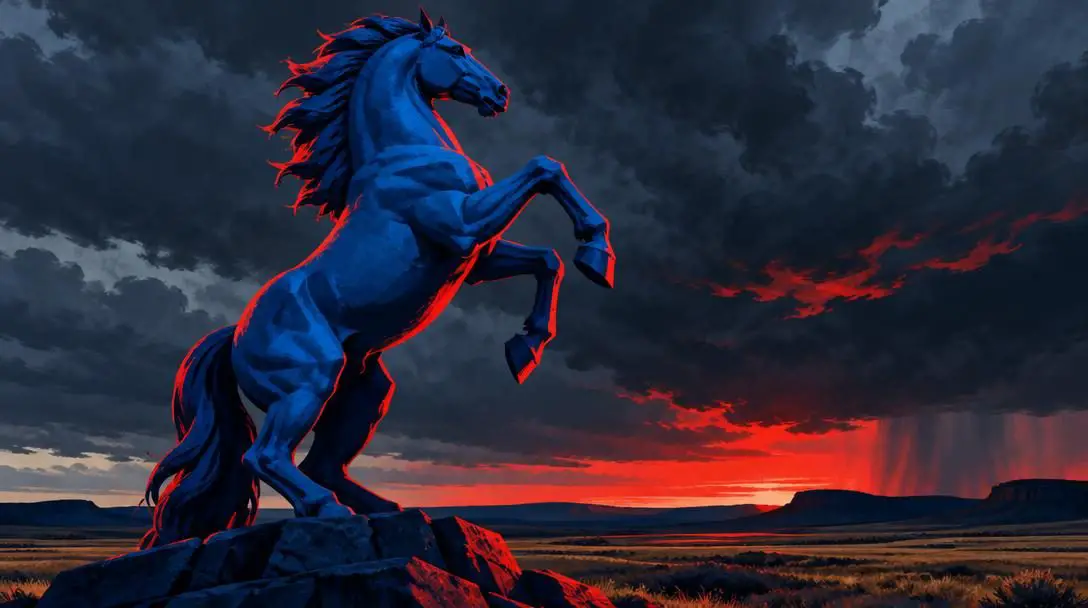
- Sculptor: Luis Jimenez
- Dimensions: Over 30 feet tall, approximately 9,000 pounds
- Location: Denver International Airport
Travelers navigating the grounds of the Denver International Airport are greeted by a massive, cobalt-blue rearing horse with glowing red eyes. Officially titled Blue Mustang, the imposing public art piece has been nicknamed Blucifer by local residents and intrigued travelers. Standing over 30 feet tall and weighing roughly 9,000 pounds, the sculpture is one of the most striking and visually polarizing public works in the United States.
The monument's reputation for being supernaturally cursed arose from a genuine tragedy during its fabrication. While the massive sculpture was being constructed in the artist's studio, a falling section struck sculptor Luis Jimenez, severing an artery and causing his untimely death. The piece was eventually completed and installed posthumously, but the deadly workplace accident firmly rooted the horse in modern airport urban legends.
Tragic workplace accidents and massive physical scale can transform an ambitious civic monument into a focal point of urban folklore.
The Isabella Stewart Gardner Museum Heist
- Date of Theft: March 1990
- Location: Boston, Massachusetts
- Missing Items: 13 works of art
- Estimated Value: $500 million
Boston remains one of America's cultural capitals, and the Isabella Stewart Gardner Museum represents a cornerstone of its fine arts heritage. In March 1990, the institution became the site of the largest unrecovered property theft in global history. Thieves disguised as law enforcement gained entry to the premises and stole 13 invaluable works of art, including historic masterpieces that today carry a combined estimated valuation of $500 million.
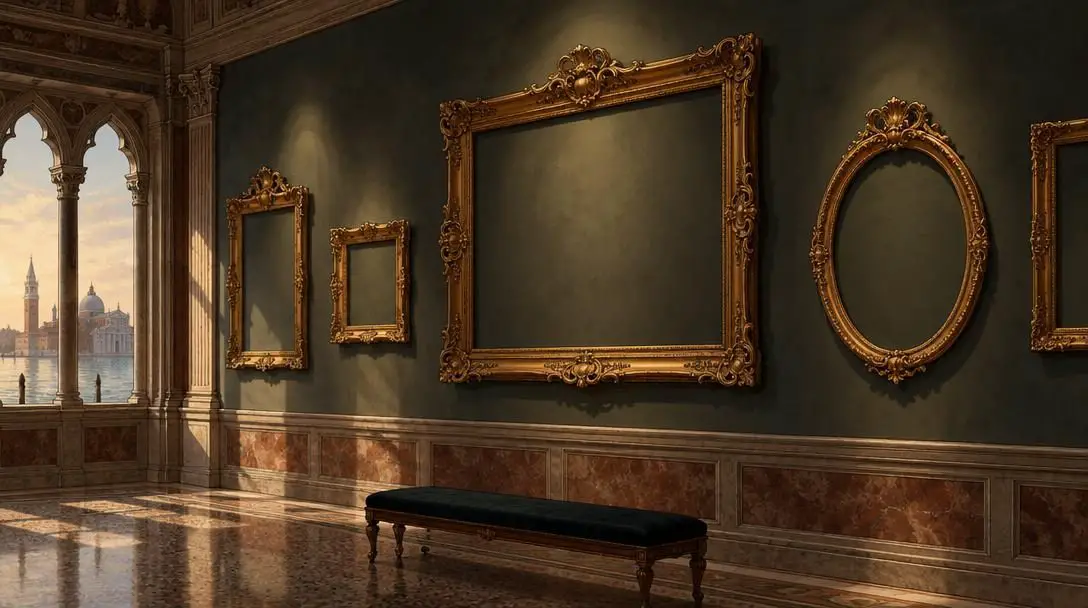
More than three decades after the crime occurred, the investigation conducted by the Federal Bureau of Investigation (FBI) has yet to produce an arrest or yield the recovery of a single missing frame. While the museum continues to display the empty frames on its walls as a haunting reminder of the loss, the reward for actionable information leading to the art's recovery has ballooned to $10 million, making it one of the most prominent open cold cases in the art world.
The Georgia Guidestones
- Date of Destruction: July 2022
- Location: Elbert County, Georgia
- Patron Pseudonym: Robert C. Christian
- Key Confidant: Wyatt Martin
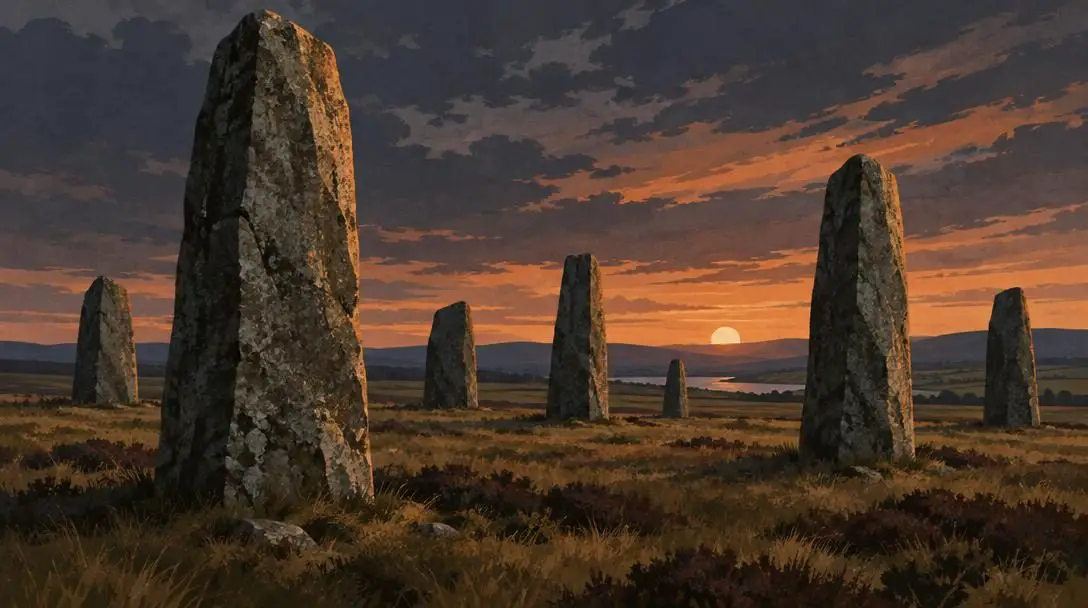
Until their dramatic destruction in July 2022, the Georgia Guidestones stood as a major tourist curiosity and a source of intense cultural friction. The granite installation featured multilingual inscriptions laying out explicit directives for humanity's governance and rebuilding following a potential apocalyptic catastrophe. Because of its strange instructions and monumental design, the site drew both intrigued travelers and fierce criticism.
Despite the immense publicity surrounding the site for more than forty years, the real identity of the client who funded and planned the project remains unknown to the general public. The patron organized the entire installation under the pseudonym Robert C. Christian, revealing only that he was inquiring about production costs on behalf of an anonymous group. The sole individual known to possess the true identity of Christian is banker Wyatt Martin, who has honored professional secrecy obligations and kept the name concealed.
How Historical Context Shapes Art Enigmas
Unsolved art mysteries rarely emerge in isolation. Instead, they are products of the social, physical, and technological circumstances of their respective eras. By examining the conditions surrounding a work's creation, historians can understand why certain questions remain stubbornly unresolved.
- Informal 19th-Century Studio Practices: When Frederic Auguste Bartholdi created the Statue of Liberty, sculptors routinely employed relatives, close acquaintances, or casual models without drafting legally binding attribution papers. Because studio notes were often informal, identifying specific facial inspirations is notoriously difficult today.
- Legal and Moral Censorship: In the late nineteenth century, both suicide and homicide carried overwhelming religious and criminal consequences. The circumstances surrounding Vincent van Gogh's final days in 1890 were recorded amidst a small community where protective silence may have been favored over legal scrutiny.
- The Dangers of Monumental Fabrication: Modern public commissions like Luis Jimenez's Blue Mustang require industrial manufacturing techniques involving overhead cranes, multi-ton casts, and volatile chemicals. Studio accidents, while rare, stem from real physical hazards rather than supernatural forces.
- Vulnerabilities in Historic Security: The 1990 heist at the Isabella Stewart Gardner Museum occurred during an era before advanced digital surveillance, biometrics, and integrated electronic perimeter security became standard museum practices, enabling thieves to exploit low-tech protocols.
- Deliberate Legal Shielding: When Robert C. Christian commissioned the Georgia Guidestones, he relied on structured financial arrangements and intermediary professionals like Wyatt Martin to intentionally maintain personal privacy.
How Investigators and Historians Unravel Art Mysteries
Investigating cold cases in the art world demands a combination of academic scholarship, physical engineering, and specialized detective work. Professionals use several rigorous methods to evaluate historical anomalies.
- Archival Cross-Referencing: Researchers scour historical letters, municipal registries, gallery receipts, and personal diaries to confirm whether statements attributed to artists match real contemporary records.
- Modern Ballistic and Forensic Re-examination: Forensic pathologists utilize modern trajectory analysis, powder-burn modeling, and anatomical records to determine whether historical injuries—such as van Gogh's abdominal wound—align with self-inflicted trauma or external gunfire.
- Criminal Asset and Informant Tracking: Law enforcement agencies, including the FBI, leverage global informant networks and offer substantial financial incentives, such as the $10 million reward in the Gardner case, to uncover illicit transactions within black-market art rings.
- Engineering and Failure Analysis: When large structures collapse or cause injury, structural engineers evaluate material tolerances, weld integrity, and center-of-gravity shifts to determine how manufacturing failures happen.
A Step-by-Step Approach to Researching Art Lore
For independent researchers, students, and curious art lovers, exploring mysterious cases requires an organized methodology to avoid mistaking rumor for verified history.
- Locate verified primary documentation: Begin your research by retrieving original records, such as police incident reports, municipal filings, artist letters, or contemporary exhibition catalogs.
- Trace the origins of popular rumors: Identify the specific date and publication where a rumor first appeared. Check whether claims—like Bartholdi modeling the Statue of Liberty after his mother—were documented during the artist's lifetime or invented decades later.
- Consult formal updates from holding institutions: When researching ongoing property crimes like the Gardner Museum theft, rely on verified bulletins published directly by museum curators or the FBI rather than speculative internet threads.
- Examine the broader local history: Ground the mystery in its geographic and cultural setting. Analyzing regional news from rural Georgia in 1980 or Boston in 1990 provides essential context that national headlines miss.
- Compare competing analytical theories: Place traditional historical narratives side by side with new forensic or archival theories, objectively evaluating what physical evidence supports or contradicts each stance.
Common Analytical Mistakes to Avoid
Because art history evokes deep emotional reactions and involves extraordinary financial values, misconceptions can spread quickly through popular culture. Avoid these common mistakes when evaluating art lore:
- Assuming massive financial value forces a quick resolution: Although the stolen Gardner Museum collection carries an estimated value of $500 million, high market value can actually incentivize thieves and fences to keep assets hidden deep within underground markets.
- Treating persistent folklore as verified truth: A story repeated across decades does not become factual through repetition alone. The theory regarding Bartholdi's mother remains an unverified rumor regardless of how often it appears in travel guides.
- Confusing industrial workplace accidents with curses: Attributing the death of Luis Jimenez to a supernatural curse on Blue Mustang ignores the serious engineering challenges and physical perils of large-scale sculpture fabrication.
- Failing to account for deliberate legal anonymity: Assuming that pseudonyms like Robert C. Christian can easily be uncovered through standard public records overlooks how legal contracts and intermediary trusts protect client identities.
- Dismissing evolving forensic science: Accepting century-old assumptions without factoring in modern ballistic, medical, and material testing can prevent researchers from discovering how events like van Gogh's death truly unfolded.
Frequently asked questions
Who was the actual model for the Statue of Liberty?
The true model for the Statue of Liberty remains unconfirmed. While long-standing historical rumors suggest that sculptor Frederic Auguste Bartholdi modeled the monument's face after his mother, no surviving personal letters or records from the artist definitively prove this claim.
Did Vincent van Gogh die by suicide or was he murdered?
For more than a century, Vincent van Gogh's death on July 28, 1890, from a gunshot wound to the abdomen was officially considered a suicide. In recent years, forensic analysis and modern historical evaluations have led several experts to suggest he may have been accidentally shot by an acquaintance, though the matter remains debated.
Why is the Denver Airport horse sculpture called Blucifer?
The public nicknamed the 30-foot sculpture Blucifer due to its imposing appearance, glowing red eyes, and the tragic studio accident that killed its creator, Luis Jimenez, when a piece of the 9,000-pound statue fell and severed an artery during its fabrication.
What is the current reward for the stolen Gardner Museum artwork?
The Isabella Stewart Gardner Museum offers an active reward of $10 million for information that directly leads to the recovery of the 13 stolen works, which were taken in March 1990 and carry a collective estimated value of $500 million.
Does anyone know the real name of Robert C. Christian?
Wyatt Martin, the banker who assisted Robert C. Christian in orchestrating the financing and construction of the Georgia Guidestones, is the only known individual who holds the patron's authentic legal identity, which he has kept secret under professional confidences.
The bottom line
Unsolved art mysteries endure because they exist at the meeting point of human ambition, cultural heritage, and forensic ambiguity. Whether examining centuries-old public monuments, tragic studio accidents, or multi-million-dollar museum heists, these enigmas remind us that even the most famous creations can harbor deep secrets. As forensic tools improve, archives continue to be digitized, and new generations of researchers re-examine cold cases, the art world will continue to balance documented historical facts against the enduring power of human curiosity.