5 Unique International Foods To Try Before You Die
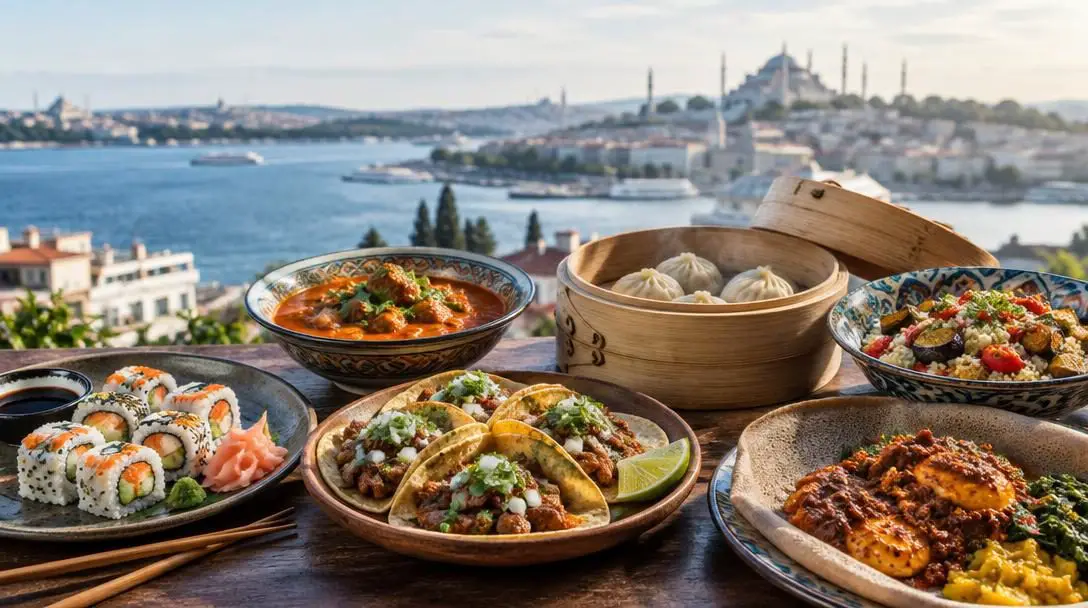
For dedicated food enthusiasts, travel is defined far more by local open-air markets, tucked-away side-street stalls, and regional kitchens than by typical tourist landmarks or relaxing on a beach. Venturing beyond familiar culinary borders offers an immediate window into different cultures, everyday routines, and distinct flavor pairings that defy conventional culinary expectations. Many of the world's most memorable meals are modern street-food inventions, cross-cultural fusion creations, or time-tested rustic staples that have evolved across generations.
Whether you find yourself joining late-night crowds in European city centers, exploring sprawling night markets across Southeast Asia, or experiencing coastal island fare in the South Pacific, seeking out distinct regional foods exposes you to unexpected textures and culinary techniques. From Ireland's legendary takeaway comfort food to the fragrant citrus-cured seafood of Fiji, these five international dishes offer unforgettable culinary experiences that deserve a spot on every traveler's bucket list.
Key takeaways
- Regional comfort foods offer direct insight into local social customs, nightlife traditions, and historical cooking methods.
- Iconic street snacks like the Irish spice bag and Mexican pambazo elevate simple starches and proteins through bold seasoning mixes and specialty chili sauces.
- Centuries-old recipes such as Fijian kokoda and Welsh rarebit highlight regional preservation techniques, balancing raw seafood acidity with rich fats or fortifying cheese with beer.
- Dessert boundaries blur in dishes like Indonesian martabak bangka, which pairs shredded cheddar cheese with sweet condensed milk and chocolate.
At a glance: Five iconic regional dishes
Each of these international specialties has earned a dedicated following in its home country by repurposing accessible ingredients into unique, highly craveable meals.
| Dish | Origin | Primary Ingredients | Flavor Profile | Culinary Style |
|---|---|---|---|---|
| Irish Spice Bag | Ireland | French fries, crispy fried chicken, bell peppers, chiles, spice blend | Salty, savory, and spicy | Late-night takeaway fast food |
| Mexican Pambazo | Mexico City, Mexico | Soft roll, potato, chorizo, red chili sauce | Smoky, spicy, and hearty | Griddled street sandwich |
| Indonesian Martabak Bangka | Indonesia | Flour-and-egg batter, peanuts, chocolate, condensed milk, cheddar | Sweet, buttery, and salty | Outdoor street dessert |
| Fijian Kokoda | Fiji | Fresh fish, citrus juice, coconut cream, chiles, green onions, coriander | Bright, creamy, and aromatic | Citrus-cured coastal seafood |
| Welsh Rarebit | Wales / British Isles | Crusty bread, cheddar cheese, beer, milk, English mustard | Sharp, tangy, and rich | Baked savory vegetarian comfort food |
Five unique international foods you need to experience
Understanding the balance of textures, cooking temperatures, and seasoning profiles is essential to appreciating why these five dishes hold such an enduring place in their respective food cultures.
Irish Spice Bag
- Country of origin: Ireland
- Primary setting: Late-night Chinese takeaways and fast-food shops
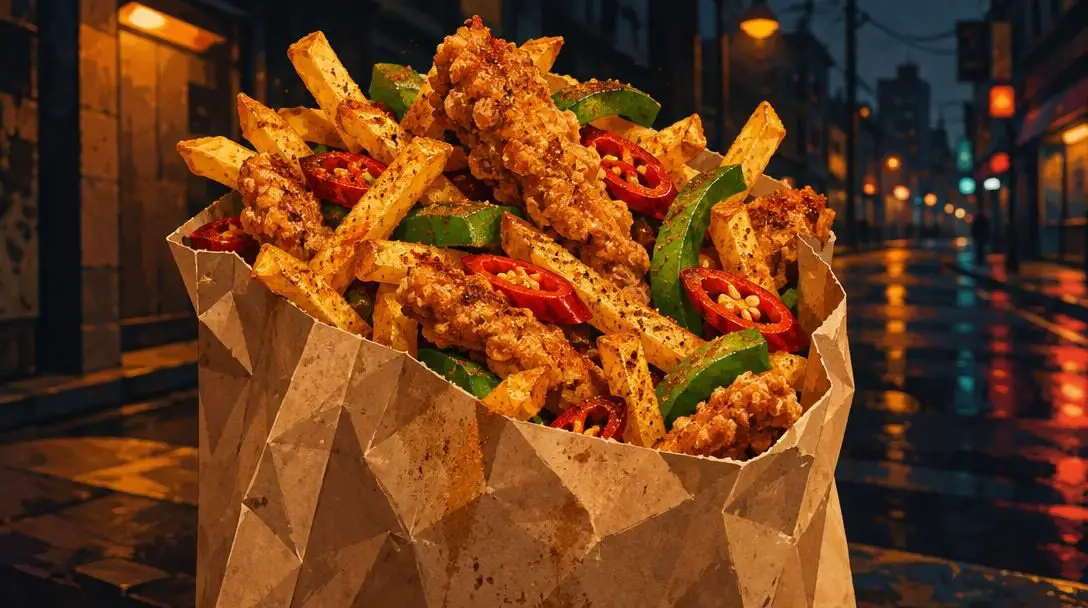
- Key components: French fries, crispy chicken strips, peppers, secret spices
The Irish spice bag is an iconic fast-food phenomenon across Ireland, deeply intertwined with the country's lively late-night dining scene. As music venues and pubs close their doors, long lines reliably assemble outside neighborhood takeaway counters. The spice bag represents the global tradition of late-night comfort food: it is piping hot, unapologetically salty and savory, and designed to satisfy hearty cravings after an evening out.
The dish is assembled by tossing together golden french fries, sliced crispy fried chicken strips, sauteed bell peppers, and fresh sliced chile peppers inside a paper bag or cardboard container. The entire mixture is then coated in a heavy dusting of a proprietary, savory seasoning blend. Takeaway shops treat their exact spice formulations as closely guarded commercial secrets, blending spicy, salty, and aromatic elements that cling to the crisp fried edges. Because the heat builds steadily with every bite, pairing the bag with a cold, refreshing beverage is considered essential.
Mexican Pambazo
- Country of origin: Mexico (Mexico City)
- Primary setting: Street-side griddles and neighborhood food stalls
- Key components: Soft white bread roll, potatoes, chorizo, red chili sauce
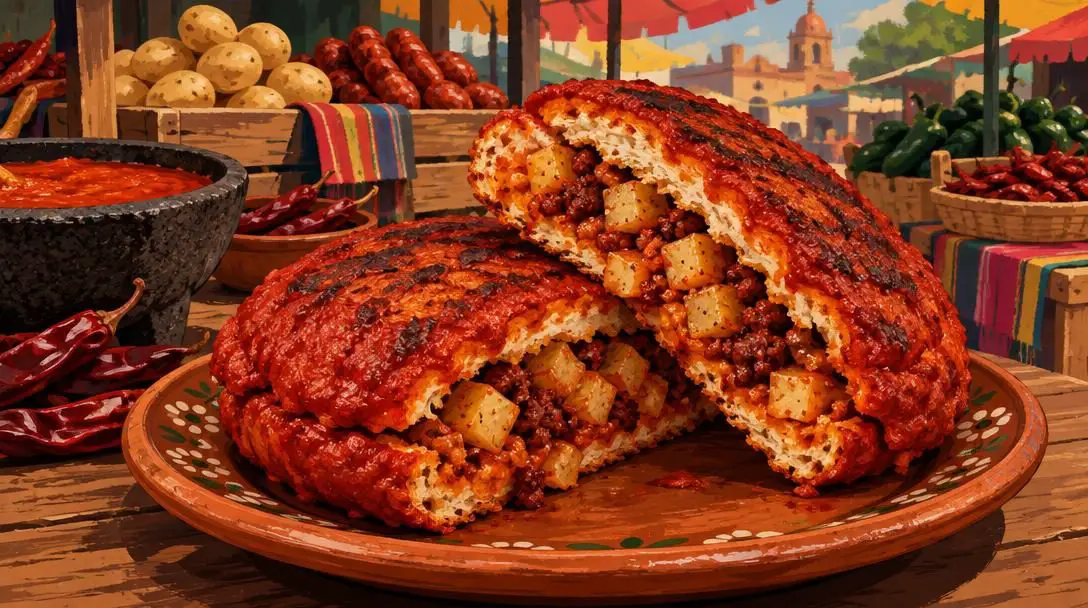
While international diners often associate Mexican cuisine exclusively with tacos and standard corn tortillas, the Mexican pambazo showcases the incredible diversity of Mexico City's street sandwiches. This hearty creation demonstrates how everyday pantry staples like sausage, starchy tubers, and dried chiles can be combined into a rich, layered handheld meal.
The core of a pambazo begins with a specific type of soft white bread roll stuffed with a flavorful mash of soft-cooked potatoes and seasoned chorizo sausage. What transforms the sandwich is its finishing technique: the entire assembled roll is briefly dipped into a warm, spicy red chili sauce until the exterior is completely saturated. The sauced roll is then transferred directly onto a scorching, lightly oiled griddle. Frying the wet bread creates a crisp outer crust that seals in the savory potato-chorizo filling while keeping the interior bread tender and moist.
Indonesian Martabak Bangka
- Country of origin: Indonesia
- Primary setting: Open-air evening markets and street vendors
- Key components: Flour-and-egg batter, sweet condensed milk, chocolate, peanuts, cheddar
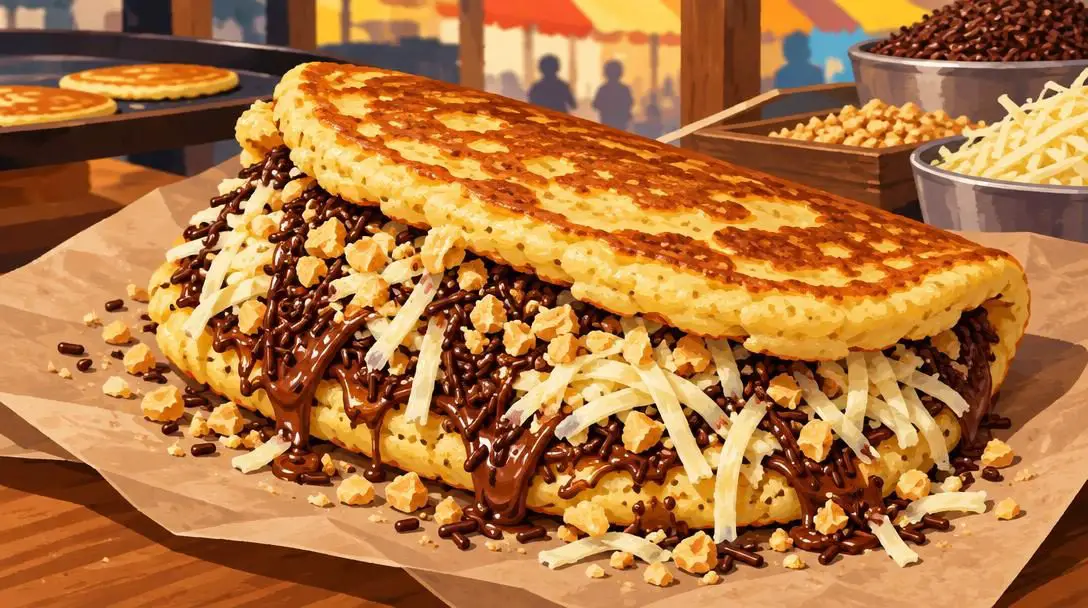
Hailing from Indonesia, martabak bangka is a legendary street food crafted for diners who crave deeply rich, comforting desserts. Cooked outdoors over specialized burners, this thick, griddled pancake draws crowds with its buttery aroma and theatrical assembly process, offering a window into the Southeast Asian love for unexpected sweet and savory combinations.
Vendors prepare a loose batter of flour and eggs, pouring it into a heavy, deep cast-iron pan so it cooks into a thick, spongy cake riddled with delicate air pockets. Once the base is cooked through and glistening with melted butter, the vendor dresses the surface with an abundant layer of toppings. Crushed roasted peanuts, chocolate sprinkles, and generous drizzles of thick, sweet condensed milk are scattered across the top, followed by a thick layer of finely shredded white cheddar cheese. The pancake is then folded in half, sliced into thick, bite-sized fingers, and served hot.
The unexpected marriage of sweet condensed milk and sharp white cheddar cheese gives this griddled street pancake its addictive flavor contrast.
Fijian Kokoda
- Country of origin: Fiji
- Primary setting: Coastal family gatherings and local island eateries
- Key components: Fresh mahi-mahi or red snapper, citrus juice, coconut cream, chilies
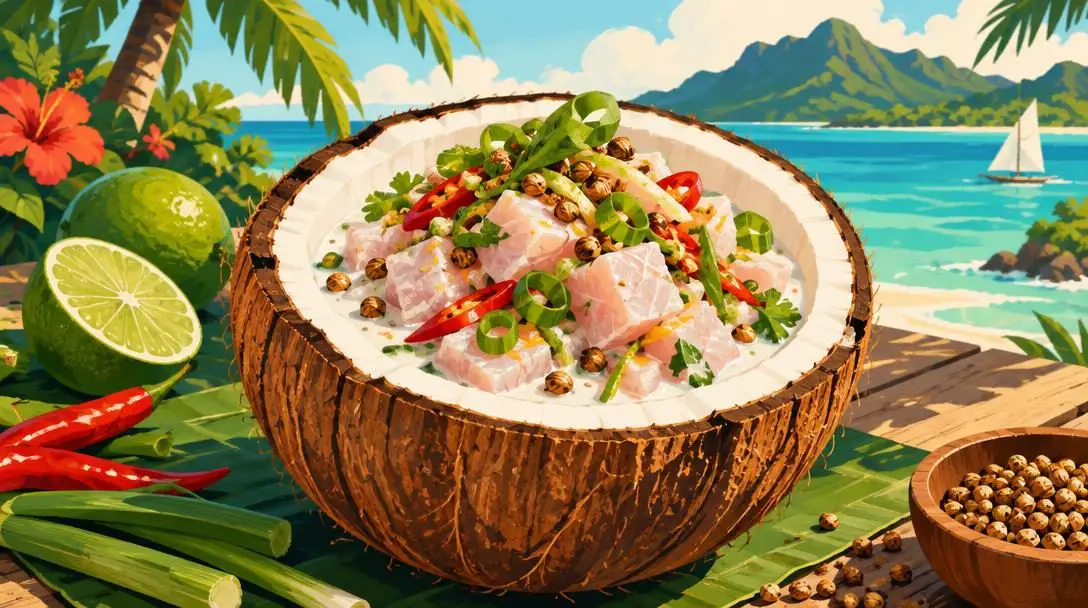
The South Pacific island nation of Fiji offers one of the world's most refreshing raw seafood traditions in Fijian kokoda. While casual observers might draw comparisons to Latin American ceviche, kokoda is distinctly grounded in the agricultural and oceanic bounty of the Pacific Islands, relying heavily on the soothing richness of fresh coconut cream to balance sharp tropical acid.
To make kokoda, cooks select pristine, ocean-fresh fish—most commonly mahi-mahi or red snapper. The raw fillets are diced into uniform small cubes and submerged in freshly squeezed citrus juice. The natural acid in the citrus juice marinates the fish, transforming its translucent flesh into an opaque, firm texture. Once the fish is cured, the acidic liquid is drained and replaced with silky coconut cream. The dish is seasoned with minced fresh chilies, coarse sea salt, finely shredded green onions, and toasted coriander seeds, producing a cool, aromatic dish that offers a balance of heat, cream, and clean seafood flavor.
Welsh Rarebit
- Country of origin: Wales / British Isles
- Primary setting: Traditional pubs, home kitchens, and tearooms
- Key components: Hearty crusty bread, sharp cheddar, beer, milk, English mustard
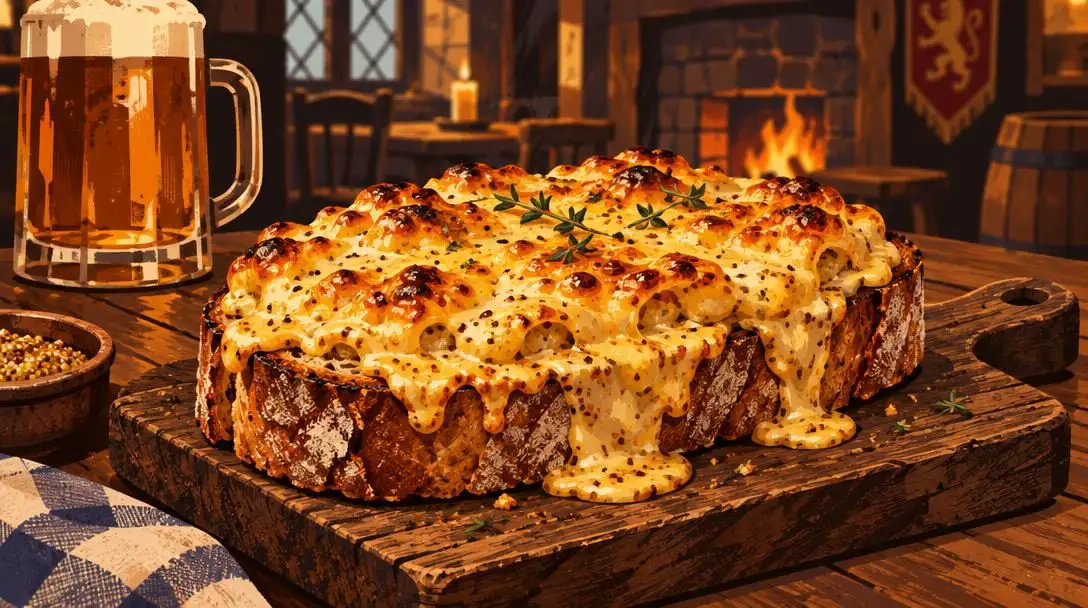
Dating back centuries, Welsh rarebit began as a modest, rustic tavern meal. Originally consisting of simple toasted bread topped with a melted slice of farmhouse cheese and a smear of mustard, the recipe has since evolved into a rich, sophisticated comfort classic that holds an esteemed position in British culinary heritage.
The modern dish replaces plain sliced cheese with a velvety, savory sauce. Chefs gently melt sharp cheddar cheese alongside beer, whole milk, and pungent English mustard, stirring the mixture until it forms a smooth, pourable sauce. Thick slices of crusty artisan bread are toasted, arranged on a baking sheet, and smothered in the warm cheese sauce. The toast is then placed under high broiling heat until the cheese topping forms browned, bubbling blisters. The resulting dish is rich, savory, and entirely vegetarian, despite historical name confusion.
Practical steps for tasting and preparing these regional specialties
Whether you are seeking out authentic international vendors or attempting to recreate these culinary classics in your home kitchen, following these practical steps ensures the best balance of texture and flavor.
- Pre-toast the bread for Welsh rarebit: Always choose thick slices of dense, crusty artisan loaf. Lightly toast the bread before ladling on the cheese, beer, milk, and mustard sauce so the slice can support the heavy sauce without turning mushy under the broiler.
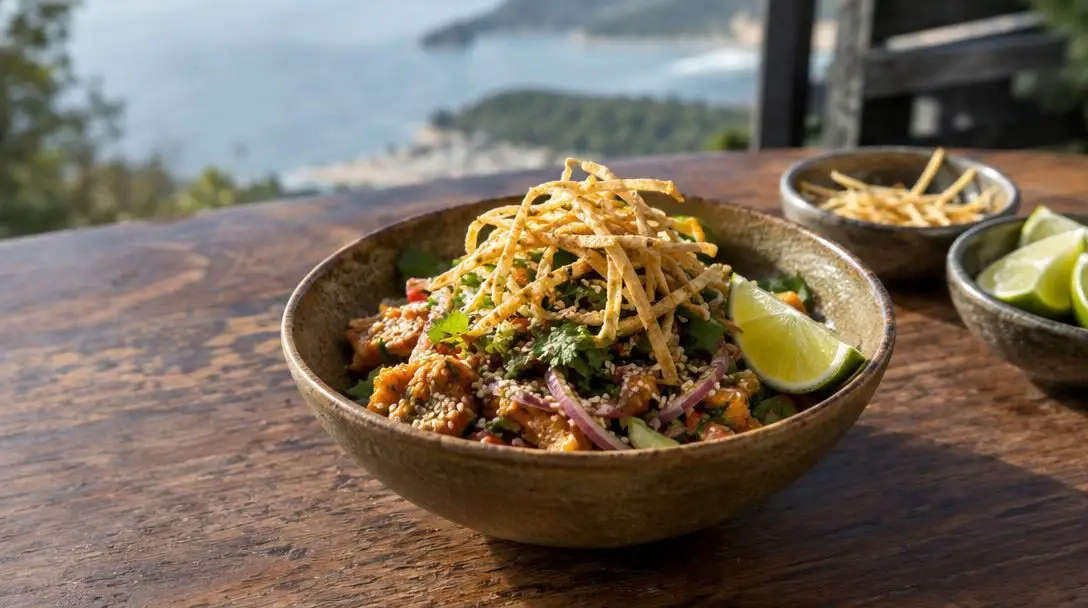
- Keep kokoda chilled throughout preparation: Keep your diced mahi-mahi or red snapper thoroughly chilled while it marinates in citrus juice. Fold in the rich coconut cream, minced fresh chilies, shredded green onions, and toasted coriander seeds immediately before serving over ice.
- Handle pambazo bread swiftly: Choose a firm roll that can withstand a rich filling of cooked potatoes and spiced chorizo. Dip the filled roll into the spicy red chili sauce for only a few seconds per side, transferring it straight to a hot griddle to form a crisp exterior.
- Distribute martabak toppings evenly: When cooking an Indonesian-style thick pancake, ensure the crushed peanuts, chocolate sprinkles, sweet condensed milk, and shredded white cheddar cheese are spread uniformly across the surface so every folded slice contains both sweet and salty elements.
- Balance the spice bag with sides: When ordering or tossing crispy chicken, french fries, bell peppers, and fresh chilies in the secret seasoning mix, balance the heavy, savory spices by serving the dish with a cool beverage to offset the building heat.
Common pitfalls to avoid when exploring regional dishes
Encountering unfamiliar cooking methods can occasionally lead to misconceptions or kitchen errors. Avoiding these common mistakes will ensure an authentic and enjoyable dining experience:
- Assuming Mexican cuisine is limited to tacos: Overlooking regional street specialties like the pambazo prevents travelers from experiencing Mexico City's wide variety of griddled sandwiches, braises, and chili-soaked street staples.
- Confusing Welsh rarebit with game meat: Because the dish was historically called "Welsh rabbit," diners frequently assume it contains game meat. Welsh rarebit contains no meat of any kind, making it an ideal choice for vegetarian diners seeking hearty pub food.
- Over-marinating the fish in kokoda: Leaving raw fish submerged in citrus juice for too long will break down the delicate muscle fibers completely, resulting in a mushy rather than firm, tender bite.
- Skipping the griddle step for pambazo: Simply pouring or spooning chili sauce over a filled roll without frying it yields a soggy sandwich; direct contact with a hot griddle is required to crisp the bread.
- Omitting the cheddar cheese on martabak bangka: Diners accustomed to Western desserts may feel inclined to leave off the white cheddar cheese. Skipping the cheese ruins the signature sweet-and-salty balance that makes this Indonesian night-market specialty famous.
Expanding your culinary perspective through street food
Setting out to explore unfamiliar culinary creations opens up fresh perspectives on how global cultures eat, gather, and celebrate. If you are designing a future travel itinerary or expanding your home cooking repertoire, consider how local environments shape regional flavors.
First, observe how regional nightlife influences eating habits. The Irish spice bag shows how takeaway shops adapt comfort food specifically for late-night crowds looking for fast, savory satisfaction. Seeking out the foods that locals eat after dark in any major city is often the quickest way to locate the most authentic casual cooking.
Second, investigate how coastal and island communities pair dairy, plant milks, and acid. Fijian kokoda demonstrates that rich coconut cream can tame sharp citrus acids while highlighting fresh, clean seafood. Comparing how different coastal cultures dress raw fish provides valuable insight into indigenous agricultural traditions.
Finally, embrace unexpected ingredient intersections. The inclusion of sharp cheese on sweet pancakes in Indonesia proves that strict divisions between savory dinner foods and sugary desserts are largely cultural conventions. Approaching unfamiliar menus with curiosity and an open palate remains the most rewarding path to culinary discovery.
Frequently asked questions
Does Welsh rarebit contain any rabbit meat?
No, Welsh rarebit contains no meat whatsoever. While historically referred to as "Welsh rabbit," the dish has always been an entirely vegetarian comfort food consisting of toasted crusty bread topped with a rich sauce made from melted cheddar cheese, beer, milk, and English mustard.
What makes a Mexican pambazo different from a standard torta?
Unlike a traditional torta, which is assembled on a dry, toasted roll, the bread for a pambazo is filled with potatoes and chorizo, completely submerged in a warm red chili sauce, and then fried on a hot griddle until the exterior turns crisp.
Why is cheddar cheese added to sweet martabak bangka?
In Indonesian street food culture, combining sweet and salty toppings is a cherished practice. Shredded white cheddar cheese provides a sharp, salty counterpoint that cuts through the intense sweetness of chocolate sprinkles and condensed milk.
What species of fish works best when making authentic Fijian kokoda?
Fijian cooks traditionally use ocean-fresh mahi-mahi or red snapper for kokoda. However, any freshly caught, high-quality white saltwater fish can be used, provided it is kept thoroughly cold and cured in citrus juice.
Where can you typically buy an authentic Irish spice bag?
Spice bags are sold throughout Ireland primarily at local Chinese takeaway shops and neighborhood fast-food counters, especially during late-night hours after pubs and clubs have closed.
The bottom line
Exploring regional foods like the Irish spice bag, Mexican pambazo, Indonesian martabak bangka, Fijian kokoda, and Welsh rarebit reveals the incredible ingenuity of everyday cooks across the globe. By using accessible pantry items—whether artisan bread, fresh ocean fish, soft sandwich rolls, or griddled pancake batter—these culinary traditions turn simple starches and local seasonings into iconic dishes. Broadening your food horizons by sampling these unique international meals will reward you with unexpected flavors, unforgettable textures, and a much richer appreciation for global gastronomy.