5 Unique Places In The World To Visit
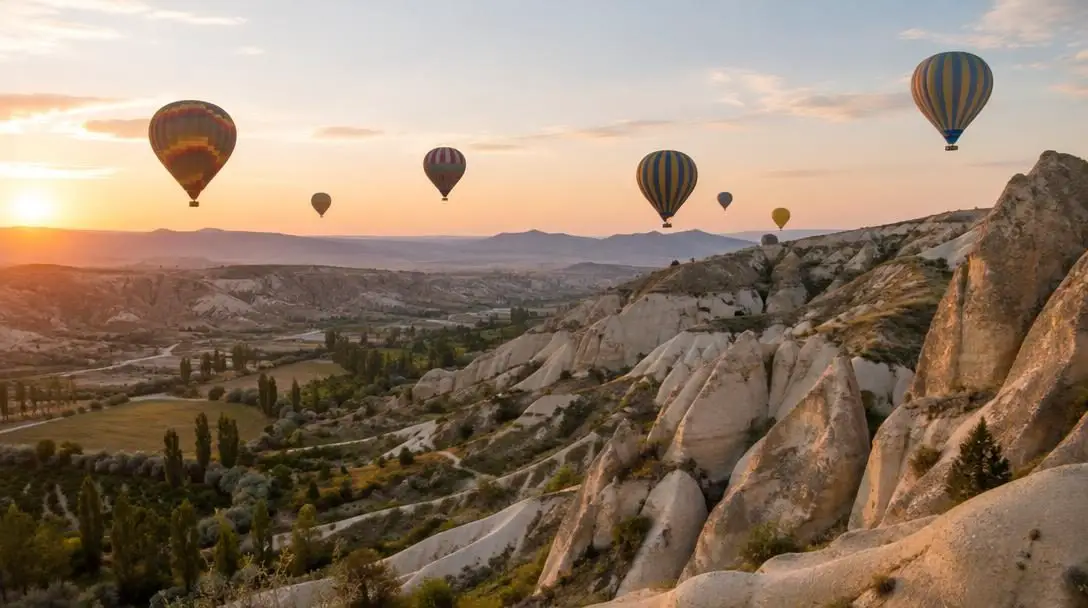
Standard vacation itineraries reliably lead travelers toward crowded capital cities, manicured coastal resorts, and famous art galleries. Yet a growing segment of global travelers seeks out sights that completely break away from everyday reality. Rather than relying on traditional sightseeing, these explorers gravitate toward strange geological anomalies, curious marine sinkholes, reclaimed industrial shorelines, and vibrant ecosystems driven by microscopic life.
From the fiery depths of Central Asian gas fissures to subterranean Caribbean caverns and hyper-saline African waters, our planet hosts an array of environments that seem to defy standard logic. Understanding how these surreal landscapes formed—and how human imagination or marine forces reshaped them—offers a deeper appreciation of the planet's diverse ecological and geological systems.
Key takeaways
- Natural gas fissures, extreme salinity, and marine erosion produce landscapes that look like science fiction.
- Oceanic wave energy can transform discarded municipal waste into jewel-like shorelines over decades of tidal polishing.
- Microscopic algae capable of surviving intense brine concentrations can turn entire bodies of water vibrant shades of pink.
- Experiencing these sensitive environments requires strict adherence to seasonal timing, depth certifications, and conservation rules.
At a glance: Five extraordinary destinations
Each of these unique sites showcases a distinct collision of natural forces, biological adaptations, or artistic engineering. The following overview details their geographic locations and foundational characteristics.
| Destination | Location | Primary Feature | Underlying Cause or Origin |
|---|---|---|---|
| Hobbiton | New Zealand | Earthen hillside village | Permanent cinematic set construction |
| Door to Hell | Karakum Desert, Turkmenistan | Continuously burning crater | Subterranean natural gas ignition |
| Great Blue Hole | Lighthouse Reef Atoll, Belize | Massive underwater sinkhole | Submerged cave collapse with mineral deposits |
| Glass Beach | Fort Bragg, California, USA | Glistening pebble-glass shoreline | Ocean wave erosion of historical landfill waste |
| Lake Retba | Senegal, West Africa | Vivid pink hypersaline lake | Carotenoid red pigments from Dunaliella salina algae |
Extraordinary sights shaped by geology, biology, and art
The allure of these destinations lies not merely in their visual oddity, but in the specific environmental mechanics that sustain them. Whether examining subterranean combustion or tidal friction, each site presents a masterclass in natural processes.
Hobbiton
- Location: New Zealand
- Notable Structure: The Green Dragon Inn
- Origin: Film set for Tolkien's Middle-earth
- Key Architectural Feature: Earthen hillside doorways
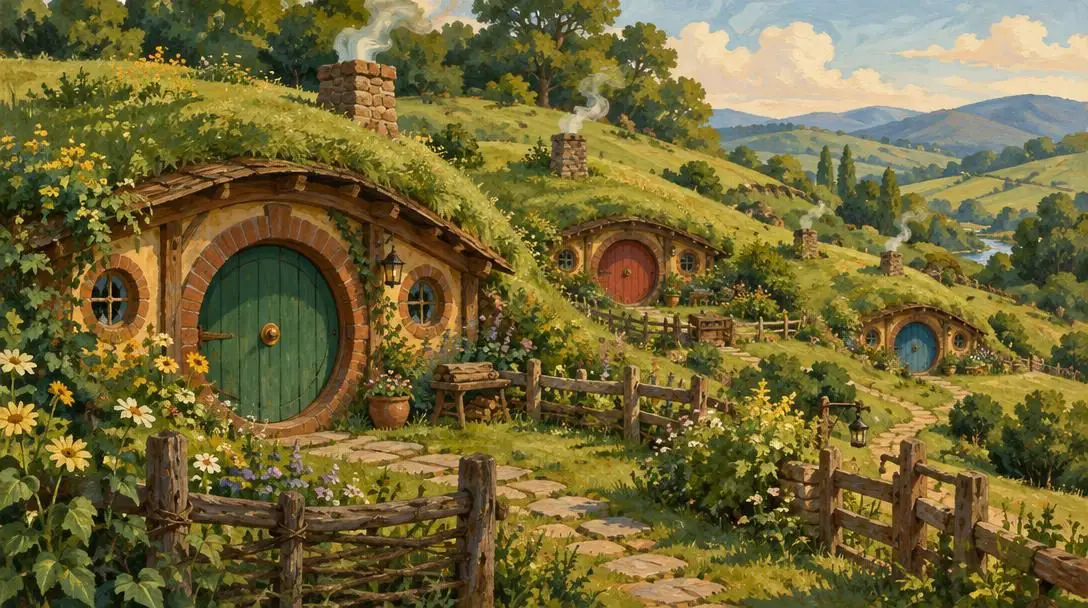
In the rolling countryside of New Zealand, the mythical realm imagined by J.R.R. Tolkien takes physical form at the Hobbiton film location. Known across the globe as the pastoral Shire where characters Frodo Baggins and Bilbo Baggins began their journeys, this destination departs from standard movie sets through its permanent, organic integration into the surrounding pastures.
Rather than using flimsy painted facades, the village relies on turf-roofed dwellings that disappear directly into the earth. The visible signs of life appear primarily as circular doorways built into the sides of the hills, framed by gardens, paths, and intricate wooden fencing. Crossing the threshold of one of these subterranean cottages reveals a fully realized interior, showcasing the comfortable domestic scale described in literature.
Travelers routinely conclude their tours of the grounds with a gathering at the Green Dragon Inn. Designed to reflect the sociable nature of hobbit life, the inn serves specialty craft ales in an authentic tavern setting, allowing visitors to experience the sensory atmosphere of the fantasy world firsthand.
Door to Hell
- Location: Karakum Desert, north-central Turkmenistan
- Depth: 98 feet deep
- Width: 226 feet across
- Fuel Source: Subterranean natural gas fissures
Located deep within the harsh expanses of the Karakum Desert in north-central Turkmenistan, the flaming depression known locally as the Door to Hell presents one of the world's most dramatic thermal sights. This giant crater measures 98 feet deep and spans 226 feet across, covering a surface area comparable to a standard football field.
The crater has been burning continuously for decades, sustained by vast reserves of natural gas resting beneath the desert bedrock. Gas seeps through thousands of cracks and crevices in the crater floor and walls, meeting the open air where it feeds a self-perpetuating inferno. The heat emitted from the depression is so overpowering that standing near certain sections of the rim is physically unbearable.
At dusk and throughout the night, the crater illuminates the surrounding dunes with an intense orange glow. The roaring acoustic presence of the burning gas creates an unsettling atmosphere, drawing intrepid desert adventurers eager to witness a landscape that feels wholly detached from ordinary planetary geography.
Great Blue Hole
- Location: Lighthouse Reef Atoll, Belize
- Discoverer: Jacques Cousteau
- Dimensions: Approximately 1,000 feet wide, 400 feet deep
- Internal Features: Massive stalactites, stalagmites, and skeletal remains
Positioned within the Caribbean waters of the Lighthouse Reef Atoll, offshore from Belize City, the Great Blue Hole is an iconic circular marine sinkhole. Brought to international fame by renowned marine conservationist Jacques Cousteau, this geological depression spans roughly 1,000 feet in diameter and plunges to depths of approximately 400 feet.
The site originated as an inland limestone cave system during previous glacial periods when sea levels were far lower. As oceanic waters rose, the cavern roof collapsed, submerging the subterranean chambers beneath the ocean surface. Inside the deep passages, divers encounter immense submerged stalactites and stalagmites formed over millennia by dripping mineral-laden water.
Because inland and coastal blue holes possess distinct water chemistry and low oxygen zones at depth, they act as natural vaults. Skeletal remains of both extinct and living marine species remain exceptionally preserved in the stillness of its deeper recesses, making it an invaluable repository for scientific study and an elite destination for technical scuba divers.
Nature possesses an unmatched capacity to reclaim discarded waste and reshape ancient caverns into unforgettable wonders.
Glass Beach
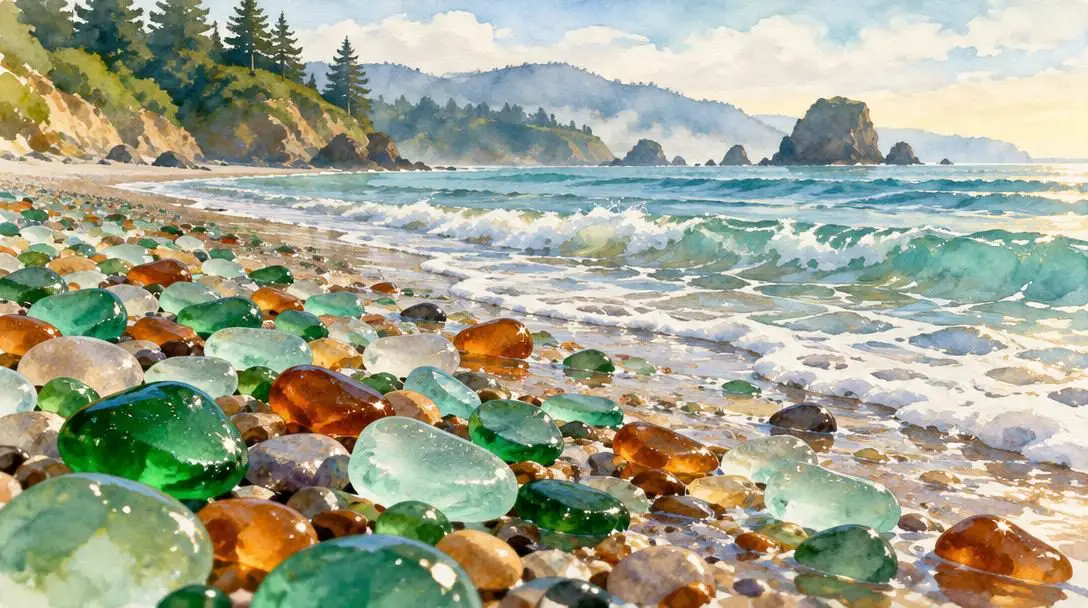
- Location: Mackerricher State Park, near Fort Bragg, California
- Historical Origin: Coastal municipal landfill
- Shoreline Composition: Tumbled, polished sea glass pebbles
- Notable Distinction: Largest glass beach formation in the world
Nestled along the rugged coastline of northern California in Mackerricher State Park, near the town of Fort Bragg, Glass Beach illustrates how natural oceanic energy can transform industrial refuse into a mesmerizing natural spectacle. For decades, the coastal area functioned as an active municipal dumping ground, receiving discarded household items, ceramics, and mountains of glass bottles.
After municipal dumping ceased, the relentless pounding of the Pacific surf went to work on the debris. Over multiple decades, waves battered, tumbled, and smoothed down the jagged fragments of broken glass, polishing away every razor-sharp edge. The resulting material was swept back onto the shore by incoming tides, coating miles of coastline in smooth, pebble-sized glass beads.
Today, visitors can safely walk upon the shore without protective footwear. In direct sunlight, the glistening shoreline sparkles with ruby, amber, emerald, and clear glass fragments, prompting frequent comparisons to a scattering of fine jewelry. It remains the largest and most ecologically compelling example of coastal glass reclamation found on earth.
Lake Retba
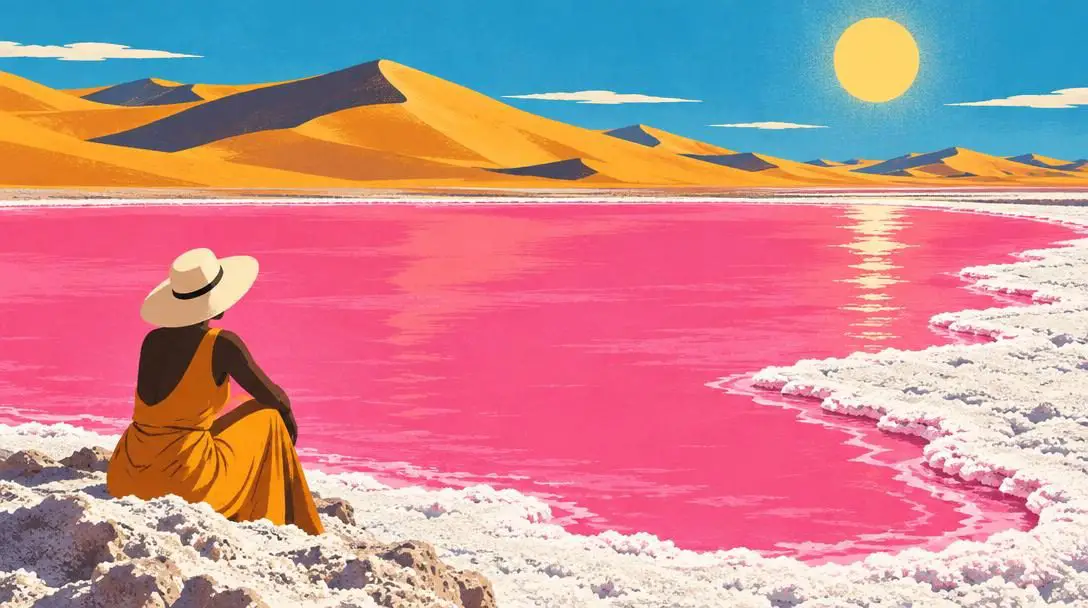
- Location: Senegal, West Africa
- Salinity: 40 percent salt concentration
- Color Mechanism: Dunaliella salina red pigment production
- Peak Color Season: November through June (dry season)
Situated in Senegal in West Africa, Lake Retba (often referred to as the Pink Lake) stands out as an extreme biological and chemical wonder. With an astounding salt concentration of 40 percent, it exceeds the salinity of the Dead Sea, which measures at approximately 34 percent. Under such hyper-saline conditions, virtually no conventional aquatic organisms can survive.
The lake's surreal pink coloration is caused by an extremophile microscopic organism: the halophilic green microalga Dunaliella salina. To endure the harsh, osmotic pressure generated by the dense brine, the algae produce protective carotenoid pigments that possess an intense reddish-pink hue. When billions of these micro-organisms flourish across the lake's surface, the entire body of water adopts an unmistakable shade of pink.
The intensity of the coloration shifts according to prevailing weather patterns. Between November and June, during West Africa's dry season, minimal rainfall and increased evaporation concentrate the algae, resulting in a dramatic, vivid pink surface. Conversely, during the rainy months of the year, incoming freshwater dilutes the lake, dampening the brilliance of the pigment until the dry cycle resumes.
Essential planning steps for visiting non-traditional destinations
Venturing to remote or environmentally sensitive sights requires more technical foresight than booking standard resort travel. Follow these structured steps to prepare for your journey:
- Coordinate travel dates with environmental cycles: For destinations influenced by seasonal chemistry like Senegal's Lake Retba, plan your visit strictly between November and June to witness the deepest pink coloration before rains dilute the brine.
- Verify personal safety credentials and dive limits: If venturing into underwater sinkholes like the Great Blue Hole, ensure you possess advanced deep-water certifications, as navigating 400-foot depths and complex stalactite fields demands specialized equipment and training.
- Organize reliable overland logistics for desert travel: Accessing remote regions such as the Karakum Desert in Turkmenistan demands all-terrain transportation, experienced local desert guides, and adequate self-sufficient provisions for heat exposure.
- Reserve permitted access for cultural and cinematic landmarks: Earthen preservation zones like Hobbiton in New Zealand require pre-booked guided tours to regulate foot traffic and preserve the structural integrity of the hillside sod roofs.
- Equip yourself with practical coastal footwear: While the tumbled sea glass at Mackerricher State Park can be walked upon safely, northern California's coastal weather patterns call for rugged, weather-resistant shoes suitable for navigating wet rocks and shifting gravel.
Travel pitfalls and environmental mistakes to avoid
Visiting places with delicate ecological systems or volatile thermal features introduces specific responsibilities. Avoiding these common mistakes protects both the traveler and the destination:
- Approaching crumbling thermal rims: The burning fissures at the Door to Hell produce suffocating heat and unstable soil edges. Leaning over the 98-foot drop or venturing off designated perimeter zones can lead to severe burns or ground collapse.
- Removing natural or transformed geological artifacts: Pocketing smoothed glass pebbles at Glass Beach directly strips the shoreline of its primary attraction. Conservation depends on leaving every fragment on the beach.
- Disregarding weather calendars: Arriving at Lake Retba during the peak rainy season often results in viewing ordinary murky water rather than the famous pink hues created by concentrated algae.
- Exceeding safe cavern penetration limits: The intricate stalactites and deep passages of the Great Blue Hole leave no room for error. Divers should never enter interior recesses without professional local oversight.
- Walking atop earthen architectural roofs: The sod-covered homes at Hobbiton are maintained through careful ground keeping; climbing onto hillside roofs damages the turf and accelerates soil erosion.
Frequently asked questions
Why does the Door to Hell in Turkmenistan burn without going out?
The crater burns continuously because vast subterranean natural gas deposits escape through thousands of cracks in the rock. The gas meets atmospheric oxygen at the surface, fueling sustained flames that have persisted across the depression for decades.
Is it safe to walk barefoot on Glass Beach in California?
Yes. Decades of relentless ocean wave action have battered and tumbled the glass fragments against sand and rock, wearing down all sharp edges into smooth, rounded pebbles that do not pose a risk of cutting the skin.
How does the salinity of Lake Retba compare to the Dead Sea?
Lake Retba has a saline concentration of 40 percent, making it noticeably saltier than the Dead Sea, which has a salinity level of approximately 34 percent. This extreme salt density supports specialized Dunaliella salina algae.
Can recreational snorkelers see the stalactites inside the Great Blue Hole?
Snorkelers can explore the surface perimeter of the sinkhole, but the famous stalactites and stalagmites are located deep within submerged cavern passages, requiring advanced open-water scuba diving skills to reach safely.
Are the hobbit houses in New Zealand actual structures or simple facades?
The dwellings at the Hobbiton set are actual earthen homes built directly into the rolling hillsides. Visitors can step through doorways set into the landscape into constructed interiors, as well as visit the functioning Green Dragon Inn.
The bottom line
Stepping off the beaten path reveals a planet shaped by astonishing variety. From the mechanical weathering of glass on California's coast to the ancient karst caverns submerged beneath Belize's turquoise seas, these unique destinations reward curiosity with unforgettable perspectives. By respecting seasonal environmental cycles, understanding geological hazards, and adhering to strict leave-no-trace ethics, modern travelers can experience these extraordinary phenomena while preserving their delicate conditions for generations to come.