
Birdwatching for Beginners: A Guide to Feathered Friends

Birdwatching, widely known as birding, is the observational practice of locating, watching, and identifying avian species within their natural habitats. In recent years, this outdoor pursuit has experienced a significant surge in global popularity as individuals seek accessible, grounded ways to spend meaningful time in nature. For many newcomers, birding serves as a quiet weekend escape, while for others it evolves into a lifelong passion oriented around tracking elusive species, cataloging seasonal migrations, and exploring diverse wilderness areas.
Much of this growing enthusiasm stems from the significant mental health and wellness benefits linked to focused time outdoors. Stepping away from screens, daily pressures, and noisy urban environments to concentrate on the movement of wild creatures provides profound stress relief and mental clarity. Engaging attentively with local wildlife also builds a lasting appreciation for environmental conservation, opening eyes to the vibrant ecological networks operating just outside our front doors.
Key takeaways
- Birdwatching combines quiet sensory observation with scientific deduction to identify species across diverse environments.
- Planning field outings around peak biological activity in the early morning and late afternoon dramatically increases bird sightings.
- Accurate field identification relies on analyzing four fundamental elements: size, body shape, color markings, and distinct behaviors.
- Ethical birders prioritize wildlife welfare by giving animals space, respecting active nests, and staying on marked trails.
Understanding the Natural Rhythms and Science of Birding
At its foundation, birdwatching is an exercise in patient scientific deduction powered by focused sensory awareness. Birds have adapted to virtually every habitat on earth, flourishing across suburban backyards, city parks, dense woodlands, coastal wetlands, and rugged alpine terrain. However, because birds are prey animals for many larger predators, they remain continuously vigilant. Sudden movements, loud noises, and erratic walking habits easily frighten them into hiding. To see birds consistently, observers must harmonize their movements with natural avian routines.
Timing plays a central role in bird activity. Because birds rely on the sun and ambient temperatures to regulate their metabolic needs, their daily routines follow predictable temporal cycles. Knowing when birds are driven to search for food versus when they seek sheltered roosts prevents the common beginner mistake of wandering through quiet landscapes at the wrong time of day.
| Observation Window | Avian Activity Level | Primary Behaviors | Field Observation Advantages |
|---|---|---|---|
| Early Morning | Peak Activity | Active foraging, territorial singing, dawn chorus vocalizations | High bird density, loud calling makes locating hidden species much easier |
| Midday | Low Activity | Resting in deep cover, preening, thermal regulation | Slower pace; permits prolonged views of resting raptors or soaring species |
| Late Afternoon to Dusk | Moderate to High Activity | Secondary foraging wave, flock gathering, roost preparation | Pleasant lighting, renewed feeding activity before nighttime roosting |
During the earliest hours of the day, songbirds leave their nighttime roosts with depleted energy stores, creating a rush to find seeds, nectar, and insects. This early period offers the highest likelihood of catching birds in open view while they belt out melodic vocalizations to claim territory. As the midday sun warms the environment, activity levels drop sharply as birds rest in shady, secluded spots. A secondary feeding period opens up in the late afternoon before sunset, offering another prime observation window.
Foundational Gear for New Birdwatchers
One of the most appealing features of birding is its gentle barrier to entry. You do not need an array of expensive technical apparatus to start discovering birds. Securing a handful of foundational tools ensures you can inspect wild birds closely without disturbing their natural routines.
Binoculars
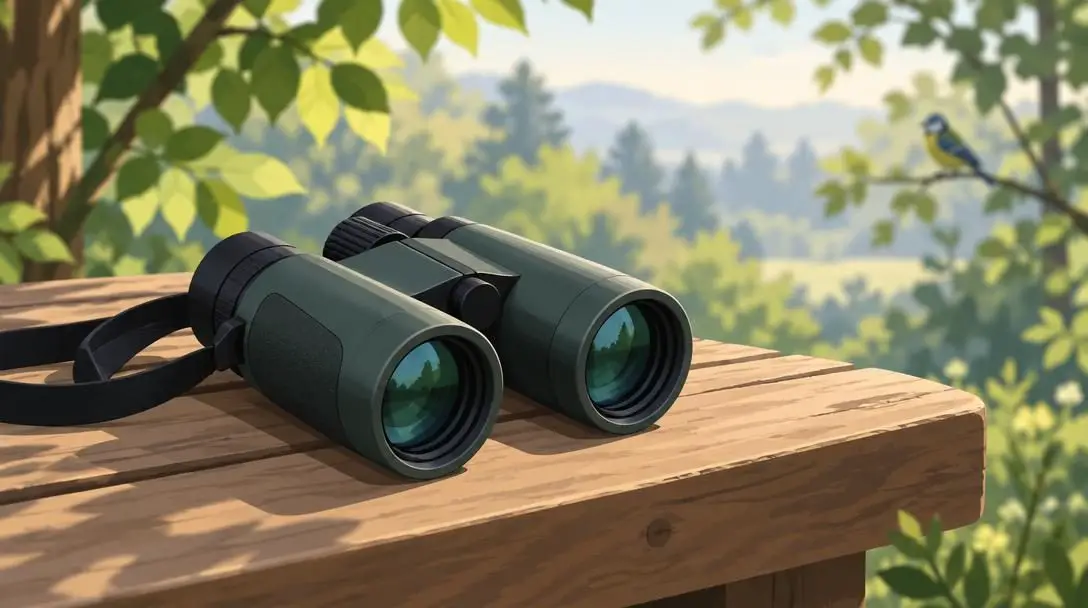
- Primary Role: Core optical magnification tool
- Key Advantage: Sharp focus on fine plumage and distant field marks
A reliable pair of binoculars represents the single most critical investment for any birdwatcher. Handheld binoculars bridge the physical distance between you and a timid bird, pulling tiny diagnostic details—such as subtle feather edgings, bill shapes, and eye rings—into sharp focus. Quality optics allow observers to remain completely stationary while enjoying an intimate view of an animal that would flee if approached on foot.
Spotting Scopes

- Primary Role: High-magnification distance viewing
- Best Use: Open fields, coastal wetlands, and wide lakes
While not strictly necessary for novices, spotting scopes mounted onto sturdy tripods serve as a valuable companion tool as your interests expand. Offering significantly greater magnification power than handheld binoculars, scopes are particularly useful when scanning across expansive open bodies of water for floating waterfowl, checking distant mudflats for shorebirds, or inspecting raptors perched atop tall utility towers.
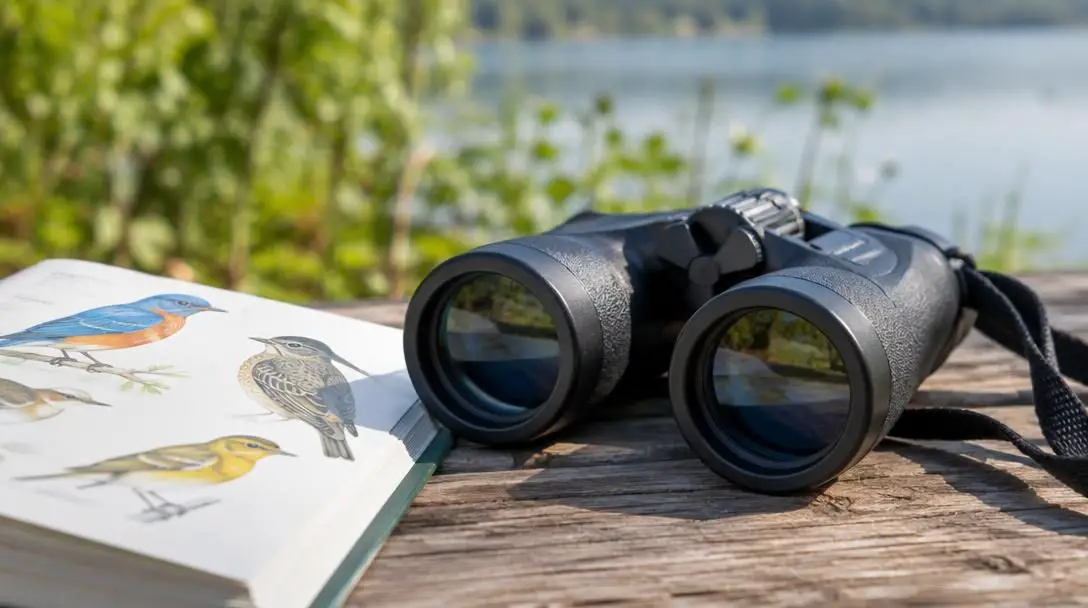
Comprehensive Field Guides

- Primary Role: Physical manual for species verification
- Core Features: Visual plates, seasonal range maps, behavioral descriptions
A printed field guide remains an irreplaceable resource in the field. These books organize avian families logically, allowing you to compare similar species side by side on illustrated plates. A comprehensive field guide provides thorough descriptions of plumages, breeding habits, call types, and geographic range maps that explain exactly where a bird is known to reside throughout different seasons of the year.
Smartphone Birding Apps
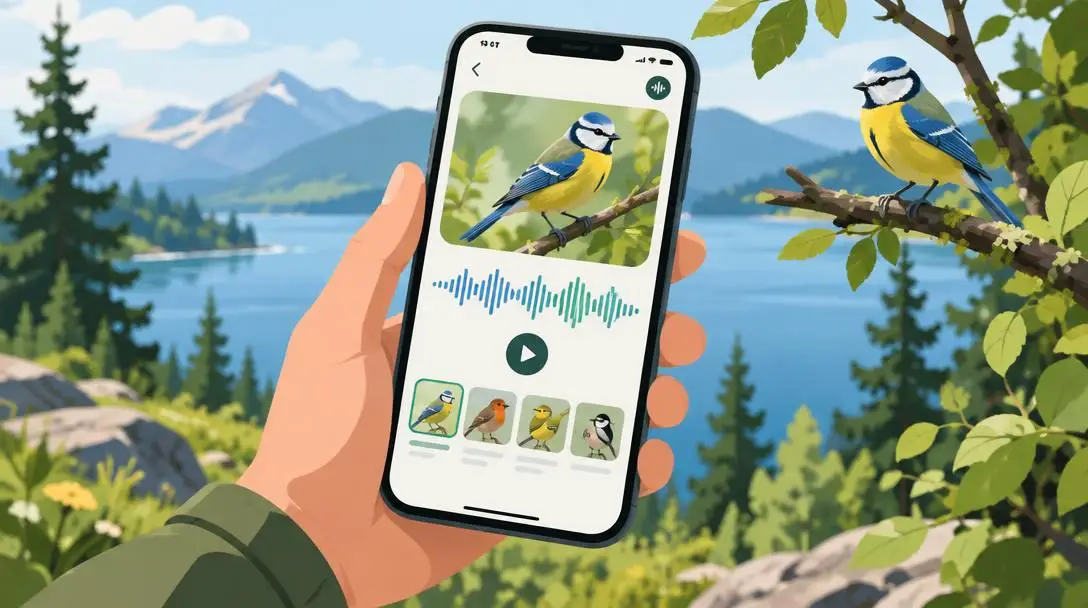
- Primary Role: Digital identification and call recognition
- Core Features: Audio playback, GPS location filters, instant photo matching
Modern mobile software has reshaped the learning curve for beginners. Dedicated birding applications can filter potential species lists based on your precise geographic location and the current month. Many apps can also analyze audio recordings of unfamiliar bird songs captured on your phone's microphone, helping you pinpoint birds tucked high inside a leafy tree canopy.
Outdoor Clothing and Footwear

- Primary Role: Personal comfort and environmental camouflage
- Recommended Style: Layered earth tones with durable walking soles
Staying comfortable outside requires practical apparel choices. Dressing in flexible layers ensures you remain comfortable as morning chills yield to afternoon heat. Neutral, earthy colors like greens, tans, grays, and browns prevent you from visually alarming timid birds. Sturdy, water-resistant footwear keeps your footing secure across slick mud, damp grass, and uneven woodland trails.
Step-by-Step Guide to Your First Outing
Venturing out on your initial birding excursion is smooth and rewarding when divided into deliberate steps. Preparing your mind and gear in advance prevents you from feeling overwhelmed in the field.
- Equip yourself properly before leaving: Adjust your binoculars to your specific interpupillary distance, set the diopter focus, verify that your smartphone apps are downloaded for offline use, and leaf through your field guide to understand how bird families are indexed.
- Select an accessible starting location: Choose a local municipal park, community nature center, or botanical garden. These environments offer well-maintained paths, diverse native plantings, and resident bird populations that are already comfortable with human presence.
- Schedule around peak biological activity: Plan your excursion to coincide with early morning hours or late afternoon light to maximize sightings when feeding and vocalizations are most vigorous.
- Practice methodical observation on the trail: Walk at an unhurried, measured pace. Pause every few yards to stand completely still, scanning the middle branches, forest floor, and open sky for telltale movements, fluttering leaves, or chirping calls.
- Record key physical and behavioral clues: When a bird appears, study the living creature before diving into a book or screen. Commit its bill shape, tail length, distinctive markings, feeding habits, and posture to memory.
- Consult your field guide or mobile app: Compare your mental notes and sketches against your identification resources, verifying that the candidate species matches both the physical traits you observed and the local seasonal range map.
Core Pillars of Accurate Bird Identification
Telling one bird species from another can seem intimidating given the staggering variety of avian life. However, veteran birders simplify the challenge by systematically breaking down every sighting into four core visual and behavioral criteria.
Accurately identifying wild birds relies on breaking down what you see into four foundational pillars: size, shape, color patterns, and specific behaviors.
Size and Proportions
The first step in diagnosing an unfamiliar bird is determining its overall scale. Rather than guessing exact inches, establish an intuitive benchmark by comparing the mysterious bird to common yardstick species you already know well, such as a sparrow, a robin, a pigeon, or a crow. Once you determine whether it is smaller or larger than your benchmark, examine the relative proportions of its body parts. Note whether the legs are exceptionally long and spindly or short and concealed, whether the tail is notched, rounded, or elongated, and whether the head appears crested or flattened.
Bill and Body Shape
A bird's silhouette provides an immediate window into its evolutionary specialization. In particular, bill shape reveals diet and lifestyle faster than almost any other physical trait. Heavy, thick, conical beaks belong to seed-eaters that must crack hard hulls, while slender, delicate, pointed bills belong to insect-eaters designed to pluck caterpillars and beetles from leaves. Predatory raptors feature sharp, hooked raptor beaks designed for tearing food, while waterfowl sport wide, flattened bills engineered to strain aquatic vegetation and small organisms from muddy water.
Color and Feather Patterns
While vibrant colors often catch the eye first, relying exclusively on hue can lead to misidentifications. Varying angles of sunlight, shadows, wet feathers, and molting cycles can radically alter how a color appears. Instead, search for specific architectural markings known as diagnostic field marks. Look for crisp eye lines, contrasting eye rings, bold white wing bars, distinct streaking on the breast, or bright patches on the rump that remain consistent regardless of how the light hits the plumage.
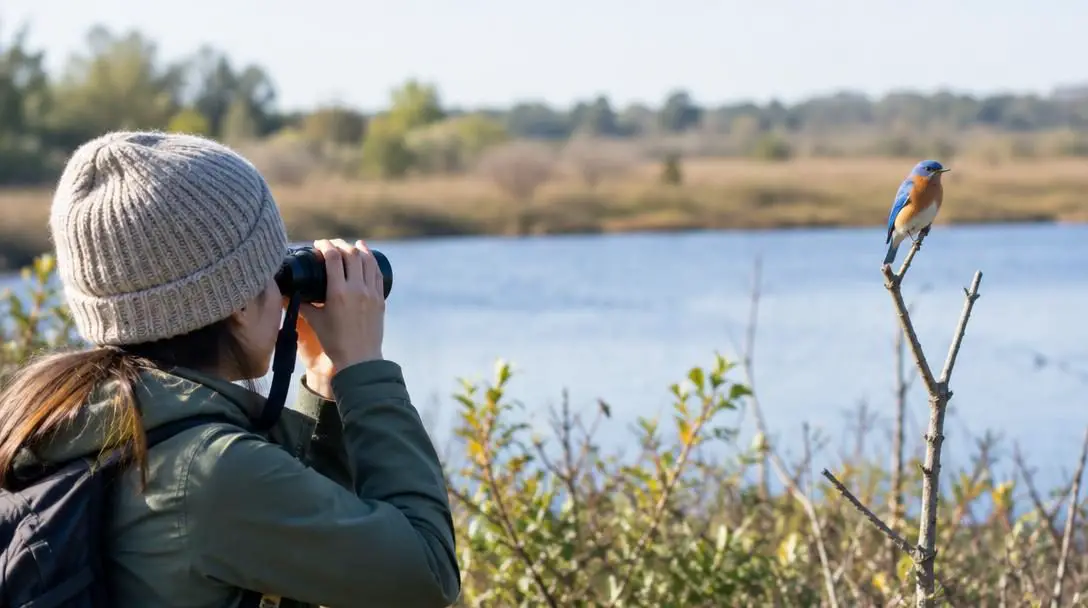
Behavior and Micro-Habitat
What a bird does is just as diagnostic as how it looks. Observe the animal's physical actions: does it hop briskly across open grass, creep vertically up a tree trunk, pump its tail constantly while perched, or skim gracefully over open water? Equally important is the micro-habitat. A small bird foraging in deep leaf litter on the forest floor belongs to a completely different ecological niche than an active bird flitting through the topmost sunlit leaves of an oak canopy.
Essential Field Observation Craft and Techniques
Developing good field craft transforms casual walking into productive wildlife watching. Birds possess acute eyesight and hearing; sudden movements or crunching footsteps will cause them to vanish long before you get close enough to study their plumage.
The most effective birding technique involves stillness over distance. Rather than hiking briskly along miles of trail to locate wildlife, find an intersection of two differing habitats—such as the edge where a mature forest borders an open meadow or a pond. Sit quietly on a bench or fallen log for fifteen to twenty minutes. As the initial disturbance of your arrival fades, resident birds will treat you as part of the natural scenery and resume their regular feeding, singing, and bathing activities within easy viewing range.
Equally critical is developing your auditory senses. Many woodland species spend their entire lives high inside dense leaf canopies where they remain visually shielded. By learning to recognize basic contact calls, territory songs, and alarm rattles, you will detect the presence of birds long before your eyes spot a fluttering wing.
Ethical Birding and Wildlife Conservation
Birdwatching carries an inherent duty of care. Our desire to see wildlife must never come at the expense of animal health, nesting success, or habitat stability. Ethical behavior keeps wildlife safe and ensures natural spaces remain pristine for fellow observers.
- Maintain a respectful viewing distance: Use your optics to observe wildlife from afar. If an animal stops foraging, flies nervously between branches, or issues persistent alarm calls, you have entered its personal space; quietly take several steps back.
- Protect nesting sites and fledglings: Never approach an active bird nest. Human presence near nests attracts ground predators, causes anxious parents to abandon vulnerable clutches, and exposes developing chicks to chilling winds or harsh heat.
- Stay strictly on marked paths: Veering off designated park trails damages sensitive root systems, promotes soil erosion, and crushes ground-nesting bird habitats.
- Limit audio lures and recorded playback: Using speaker playback of bird calls to draw animals into view causes stress and wastes energy the bird needs to defend territory, hunt, and feed its young.
Common Beginner Pitfalls to Avoid
Progressing in birdwatching requires learning how to bypass common missteps that can trigger frustration and identification mistakes.
- Fixating entirely on color: Beginners often assume a red or yellow bird can only belong to one specific species, ignoring that females, juveniles, and non-breeding males often look drastically different from brightly colored breeding males.
- Moving too quickly down the trail: Treating a birding walk as an athletic hike creates excess noise and commotion, ensuring that only the boldest urban birds stick around.
- Disregarding range maps: Novice birders frequently identify rare or exotic species in their guides without confirming whether that bird actually exists in their region or migrates through during that particular season.
- Neglecting ordinary backyard species: Overlooking common sparrows, starlings, or pigeons robs beginners of the chance to master the fundamental body shapes, flight styles, and bill proportions needed to identify rare species later on.
Frequently asked questions
What is the best time of day to go birdwatching?
The best time to observe birds is during the early morning hours, starting right around sunrise. Birds awaken hungry and actively forage, sing, and establish territory, creating the highest concentration of visual and vocal activity. Late afternoon before dusk offers a second, smaller peak in feeding activity.
Do I need expensive gear to start birding?
No. You can begin birdwatching with minimal investment. A basic, dependable pair of binoculars, comfortable walking shoes, weather-appropriate layered clothing, and either a pocket field guide or a free smartphone birding application are all you need to start finding and identifying local species.
Why is bill shape so important when identifying an unknown bird?
A bird's bill shape directly reflects what it eats and how it survives. Slender pointed bills belong to insect-eaters, thick conical bills belong to seed-crackers, sharp hooked beaks signify meat-eating raptors, and broad flat bills belong to aquatic strainers. Identifying the bill shape instantly narrows an unknown bird down to a specific family.
Where should a beginner go to practice finding birds?
Novices should start close to home in suburban backyards, community parks, urban wetlands, or local botanical gardens. Birds in these human-frequented settings are generally more accustomed to foot traffic, giving beginners longer, closer looks at resting and feeding behaviors.
How can I tell if I am standing too close to a bird?
If a bird ceases its normal activities—such as singing, preening, or hunting—and begins staring at you, shifting nervously, or giving sharp alarm calls, you have crossed its comfort threshold. Step back slowly until the bird resumes its natural behavior.
The bottom line
Birdwatching is an endlessly rewarding outdoor craft that marries physical relaxation with intellectual discovery. By mastering the core disciplines of patience, quiet movement, and structured visual analysis, anyone can unlock the vibrant world of wildlife thriving right in their neighborhood. With an ordinary pair of binoculars and an observant eye, your next walk in the park can become an unforgettable wildlife adventure.