Crossword Puzzle Controversies: A History of the Most Contested Clues and Answers
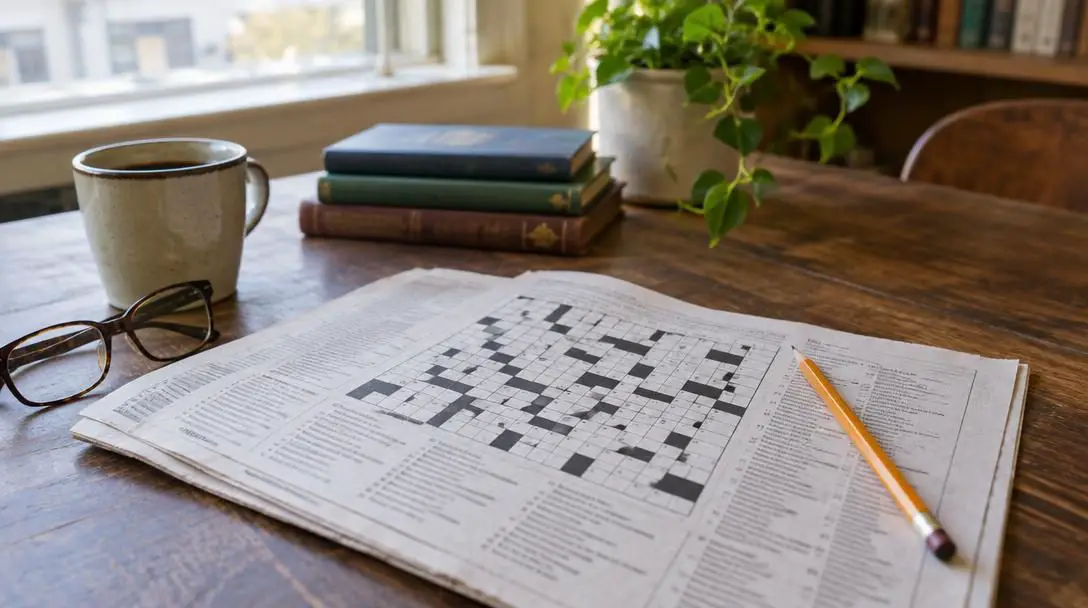
For more than a century, crossword puzzles have served as a cherished daily ritual for millions of solvers worldwide, offering a quiet, solitary arena for linguistic wit and mental exercise. Yet behind this seemingly tranquil diversion lies a vibrant, exacting community of enthusiasts who examine every square on the grid with microscopic precision. When a disputed answer, ambiguous phrasing, or factual error slips past the copy desk of a prominent newspaper, the reaction is swift and spirited.
To dedicated puzzlers, solving is governed by an unspoken contract between constructor, editor, and solver. The constructor's role is to invent a clever, satisfying challenge; the editor's job is to guarantee fairness, accuracy, and editorial balance; and the solver agrees to match wits within agreed-upon boundaries of knowledge and logic. When that contract is breached—whether through hyper-localized trivia, ambiguous proper nouns, or shifting scientific definitions—heated debates inevitably follow.
Key takeaways
- Crossword controversies typically erupt when clues violate solvers' expectations of fairness, factual precision, or unambiguous cluing.
- The 2008 "Natick" incident established a lasting puzzle-culture standard regarding obscure intersecting entries that cannot be deduced through fair play.
- Shifting scientific categorizations and colloquial definitions, such as disputes over eels and Pluto, present persistent challenges for puzzle editors.
- Editors like Will Shortz have occasionally acknowledged slip-ups and committed to tighter editorial standards when ambiguous clues cause solver outrage.
- A structured solving strategy—prioritizing crossing letters and remaining flexible about broad clues—helps navigate contentious grid entries.
Historic Clue Disputes That Shook the Crossword Grid
While minor editorial typos surface from time to time, certain puzzle clues have transcended everyday solving grumbles to become landmark disputes in crossword history. These moments underscore how deeply enthusiasts care about fair play, factual integrity, and the delicate mechanics of interlocking grids.
The "Natick" Controversy (2008)
- Year: 2008
- Publication: The New York Times
- Clue: "Town on the Massachusetts coast"
- Answer: Natick
In 2008, The New York Times published a crossword puzzle containing a five-letter geographical clue: “Town on the Massachusetts coast.” The solution was Natick. The clue triggered an immediate wave of outrage from solvers across the country who had never heard of the small Massachusetts municipality and felt that its inclusion was entirely unfair. The primary frustration stemmed from the fact that solvers living outside the immediate region had no reasonable cultural or linguistic pathway to deduce the letters. This controversy became so iconic that it gave rise to the widely cited “Natick Principle.” In modern crossword terminology, a "Natick" refers to an unguessable intersection where an obscure proper noun crosses another obscure entry, leaving solvers forced to guess a letter blindly rather than deducing it through skill.
The "Eel" Controversy (1999)
- Year: 1999
- Publication: The Los Angeles Times
- Clue: "Long fish"
- Answer: eel
Scientific taxonomy collided head-on with traditional clue-writing in 1999 when The Los Angeles Times printed the clue “Long fish.” The intended answer was eel, a staple of crossword grids for generations due to its convenient vowel-consonant structure. However, passionate solvers and biology enthusiasts pushed back forcefully, arguing that the clue was scientifically inaccurate because eels are properly classified as elongated fish-like creatures rather than ordinary fish under strict criteria. The debate became loud enough that the puzzle editor of The Los Angeles Times publicly responded to the controversy, promising solvers that future puzzles would exercise far greater scrutiny when phrasing clues touching on scientific classifications.
The "Esai Morales" Controversy (1999)
- Year: 1999
- Publication: The New York Times
- Clue: "Actor Morales"
- Answer: Esai Morales
Proper nouns represent one of the most perilous frontiers in crossword editing, as demonstrated by a 1999 puzzle in The New York Times. Solvers were faced with the clue “Actor Morales,” with the intended solution being the veteran performer Esai Morales. Frustrated puzzlers criticized the entry as unfairly ambiguous, noting that multiple notable actors share the last name Morales, meaning that a solver had no definitive way to verify the entry without waiting for intersecting letters. The backlash prompted a direct response from New York Times crossword editor Will Shortz, who openly admitted that the clue was a mistake and committed to exercising tighter care to avoid open-ended surname clues in future grids.
The "Pluto" Controversy (2006)
- Year: 2006
- Publication: The New York Times
- Clue Topic: Solar system planets
- Answer: Pluto
In August 2006, the International Astronomical Union officially demoted Pluto from full planetary status to a dwarf planet, reducing the recognized count of major planets in our solar system from nine to eight. Later that same year, however, a New York Times crossword puzzle continued to reference Pluto as one of the solar system’s nine planets. The anachronistic clue sparked confusion among everyday solvers and sharp condemnation from astronomy enthusiasts who expected national puzzle venues to keep pace with accepted scientific realignments. The incident illustrated the acute risk editors run when real-world reference frameworks change faster than the stockpile of accepted puzzle themes.
A crossword puzzle represents an unspoken contract among constructor, editor, and solver, where fairness hinges on every intersection.
Comparing Major Crossword Debates
The defining controversies of recent decades illustrate the diverse ways an entry can run afoul of the solving public. While some disputes originate in geographical obscurity, others stem from ambiguous language or changing scientific consensus.
| Controversy | Year | Publication | Disputed Entry or Subject | Primary Nature of Dispute |
|---|---|---|---|---|
| Natick | 2008 | The New York Times | Natick | Overly localized geography crossing obscure trivia |
| Eel | 1999 | The Los Angeles Times | eel | Colloquial definition conflicting with scientific classification |
| Esai Morales | 1999 | The New York Times | Esai Morales | Ambiguous proper noun with multiple valid real-world matches |
| Pluto | 2006 | The New York Times | Pluto | Failure to incorporate real-time astronomical reclassification |
The Mechanics of Crossword Construction and Editorial Review
To understand how contentious answers reach the printed page, one must explore the intricate pipeline that carries a puzzle from a blank grid to the breakfast table. An error or questionable judgment at any phase of this journey can spark widespread community debate.
Every standard puzzle passes through six sequential milestones before reaching publication:
- Grid Design and Theme Development: The constructor determines whether the puzzle will feature an overarching wordplay theme or run as a themeless challenge. If a theme is chosen, long theme entries are positioned symmetrically across the empty grid, establishing the physical skeleton around which all other words must fit.
- Fill Selection: The constructor populates the surrounding blank spaces with interlocking vocabulary. Because the letter arrangements are heavily constrained by the theme entries, constructors are often forced to choose between unusual proper nouns, minor geographical features, or awkward abbreviations to make the corners connect.
- Clue Writing: The constructor drafts custom clues for each entry, calibrating the tone, difficulty, and wordplay to fit the targeted day of the week. This is where subtle ambiguities can first take root.
- Editorial Review: The publication's editor reviews the submitted grid and frequently rewrites a significant portion of the clues. Editors must verify historical facts, evaluate cultural references, and adjust clue difficulty.
- Test Solving: Specialized test solvers and fact-checkers tackle the puzzle before it goes to press. Their primary responsibility is to flag obscure crossings, spot unintended duplicate entries, and verify that all definitions align with standard references.
- Publication and Reader Feedback: The completed grid is published in print and online syndication. Thousands of solvers solve it simultaneously, and any perceived unfairness is promptly debated on dedicated blogs, social forums, and in letters addressed directly to the editor.
Practical Strategies for Navigating Contested Clues
Every crossword enthusiast will eventually run into a clue that feels excessively obscure, poorly worded, or factually dubious. Rather than throwing down your pencil in defeat, applying a methodical approach can keep your solve moving forward smoothly.
- Rely on the Crossing Letters: When a clue points to a localized township or an unfamiliar proper name, do not guess blindly. Switch your focus to the perpendicular crossing clues, filling in confirmed consonants and vowels until the obscure word reveals itself automatically.
- Watch for Multiple Interpretations: If a clue consists solely of an unadorned surname or an open-ended role, avoid writing down an immediate assumption. Acknowledge that several notable figures may share that name and wait for crossing confirmation before committing.
- Consider the Publication Context: If you are solving an archival puzzle or an older syndicated release, remember that scientific taxonomies, geopolitical borders, and astronomical classifications reflect the accepted consensus of the year the puzzle was compiled.
- Identify Vague or Colloquial Definitions: Short animal descriptions or everyday items often rely on broad, conversational terminology rather than strict biological taxonomies. Approach simplified clues with an eye toward general usage rather than technical perfection.
- Pencil In Tentative Letters: When two unfamiliar words cross at a single square, leave a light mark or mental note and complete the remainder of the quadrant. Seeing the larger linguistic rhythm of the section often clarifies the missing letter.
Common Editorial and Solving Pitfalls
The missteps that fuel puzzle controversies are remarkably consistent. By examining the common errors made by both constructors and solvers, enthusiasts can better evaluate whether a clue is genuinely flawed or merely challenging.
- Assuming Universal Knowledge of Local Geography: Constructors and regional editors sometimes assume a local town or county is widely known, forgetting that solvers living hundreds or thousands of miles away have no frame of reference for the location.
- Underestimating Name Ambiguity: Providing a solitary surname without an identifying film title, date, historical event, or artistic medium turns a deductive word game into pure guesswork.
- Ignoring Updated Classifications: Crossword authorities who fail to update their reference databases when major scientific bodies alter definitions risk publishing obsolete information that frustrates attentive solvers.
- Over-Relying on Colloquialisms for Scientific Facts: Using loose, everyday phrasing to clue formal scientific or biological entities alienates players who prize factual precision in their daily puzzle.
- Fixating on a Single Interpretation: Solvers frequently make the mistake of anchoring onto their initial reading of a clue, refusing to consider double meanings or alternative spellings even when the crossing letters clearly point elsewhere.
Evaluating Fairness Versus Wordplay in Modern Grids
What separates a brilliantly difficult crossword clue from an outright unfair one? In modern crossword criticism, the answer almost always comes down to the integrity of the crossings. A clue may cite an exceedingly rare historical figure, an obsolete dialect, or a tiny geographical location, and it will still be considered fair game if every single crossing letter intersects a common, unambiguous word. Solvers may not recognize the target answer initially, but they can assemble it through deduction and experience the satisfaction of learning something new.
Conversely, when an editor permits two obscure proper nouns to intersect at a shared vowel—as occurred during the famous Natick incident—the puzzle ceases to be a test of vocabulary, trivia, or logic. It degenerates into a coin toss. As crossword constructors continue to experiment with contemporary slang, pop culture, and playful misdirection, navigating the boundary between clever wordplay and rigorous factual accuracy remains the ultimate balancing act of the editorial desk.
Frequently asked questions
What is the "Natick Principle" in crossword terminology?
The Natick Principle is a crossword design rule coined after the 2008 New York Times puzzle dispute involving Natick, Massachusetts. It states that an obscure proper noun or localized piece of trivia should never cross another obscure entry at an unguessable letter, ensuring that every square on the grid remains solvable through deductive reasoning.
Why did the clue "Long fish" for "eel" cause controversy in 1999?
The clue appeared in The Los Angeles Times and provoked criticism from solvers who argued that eels are scientifically classified as elongated fish-like creatures rather than true fish. The dispute prompted the paper's crossword editor to promise greater diligence regarding biological descriptions in future puzzles.
How did Will Shortz respond to the Esai Morales crossword clue?
After solvers complained that the 1999 New York Times clue "Actor Morales" was unfairly ambiguous due to multiple actors sharing that surname, editor Will Shortz publicly admitted the mistake and stated that he would exercise greater caution with ambiguous proper noun clues moving forward.
Why did Pluto's inclusion in a 2006 puzzle draw criticism?
In 2006, the International Astronomical Union officially reclassified Pluto as a dwarf planet. When a New York Times puzzle published later that year continued to refer to Pluto as one of the solar system's nine planets, astronomy enthusiasts criticized the clue for relying on outdated scientific classifications.
The bottom line
Crossword puzzles may be quiet pastimes, but the passions they ignite are anything but muted. From the coastal borders of Massachusetts to the outer reaches of our solar system, historical clue controversies reflect the fierce devotion of a worldwide solving community that expects fairness, accuracy, and mutual respect within the 225 squares of a daily grid. As editors and constructors push creative boundaries in the years ahead, lively debates will surely continue—and solvers will remain ready, pencil in hand, to keep them honest.