
Guide to Shaving: The 5 Types of Razor Blades
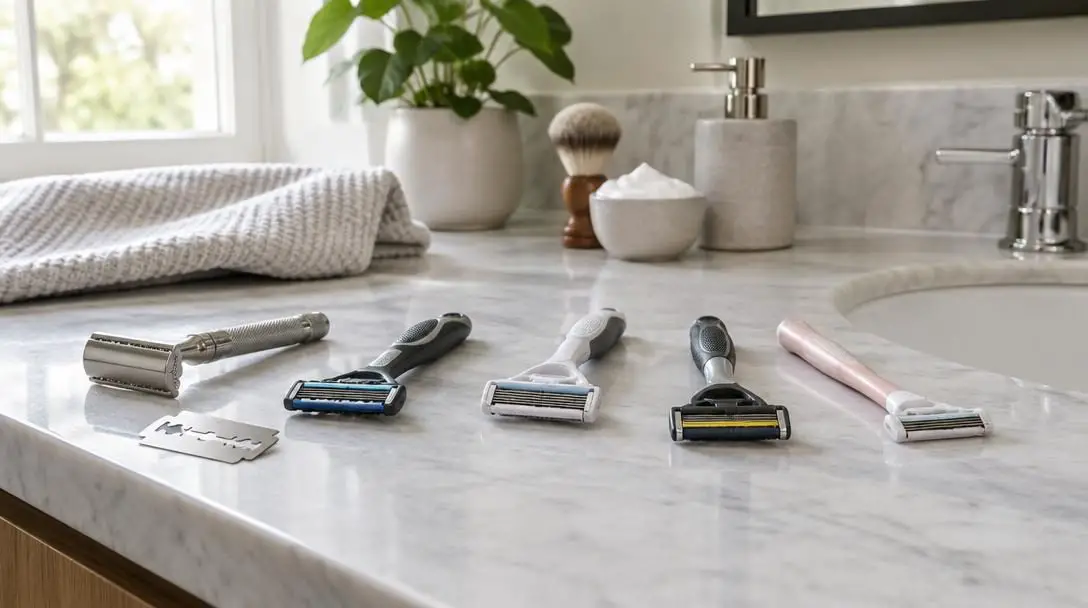
Shaving remains one of the most widespread personal care routines across the globe, serving as both a functional necessity and an intentional grooming ritual. In the United States alone, more than one-third of adults report picking up a razor every single day, while more than half of the population shaves at least once a week. Because these cutting tools occupy bathroom counters and shower caddies in almost every modern household, grooming implements have fueled a massive, enduring consumer industry.
The streamlined devices found on store shelves today reflect centuries of technical experimentation and material refinement. What began as an exacting craft requiring open steel and a practiced hand has transformed into a diverse ecosystem of tools built for speed, safety, and comfort. Whether your objective is a rapid morning cleanup or a classic barbershop experience, understanding how different blades function is the key to mastering your daily shave.
Key takeaways
- Shaving implements fall into five core categories: cartridge, disposable, straight, electric, and safety razors.
- Cartridge systems remain the most popular manual choice, preferred by roughly half of all daily shavers.
- Straight razors and safety razors rely on traditional single-edge mechanics that demand deliberate angles and minimal pressure.
- Electric razors provide a rapid, dry-grooming alternative that bypasses manual skin scraping entirely.
- Most grooming irritation stems from dull blades, dry skin preparation, and applying excessive downward pressure.
The evolution of modern shaving implements
Long before factory-engineered multi-blade systems existed, facial and body hair maintenance relied on rudimentary sharpened edges. Historical records trace the origins of folding blades back to ancient Egypt, where early artisans crafted edged metal tools capable of close personal grooming. For generations, variations of the folding razor served as the gold standard across the civilized world. However, it was not until the 17th century that straight razors entered widespread, organized manufacturing. While these tools were exceptionally sharp, an unsteady hand could inflict severe lacerations, earning the design its lasting moniker: the cut-throat razor.
The desire for a faster, less hazardous morning routine spurred significant mechanical breakthroughs during the 18th and 19th centuries. Inventors sought ways to shield bare skin from the unprotected edge of the blade, introducing the earliest iterations of the safety razor in the 18th century. The format achieved cultural dominance in the early 20th century, largely powered by the standardized, replaceable-blade designs championed by King Camp Gillette. Suddenly, everyday consumers could obtain a close shave at home without visiting a professional barber or risking deep cuts.
Centuries of razor design have turned an intimidating ritual with open steel into an accessible, everyday convenience.
Technological diversification accelerated by the mid-20th century. The electric razor, which received its earliest patents in 1898, achieved fully operational mechanics by 1915 and experienced an explosive consumer boom in the decades following World War II. Around the same time, single-piece disposable units—often associated with the lightweight shavette style—surged in popularity. By the 1970s, modern safety principles had evolved into the foundational architecture for both multi-blade cartridges and molded plastic disposables, solidifying the five primary razor categories recognized today.
The 5 types of razor blades and how they work
Every razor category approaches the physics of hair removal differently. While some prioritize cutting efficiency at the direct surface of the epidermis, others rely on mechanical shields or motorized shears to eliminate friction. Choosing the ideal implement requires balancing closeness, speed, skin sensitivity, and ongoing maintenance.
Cartridge razors
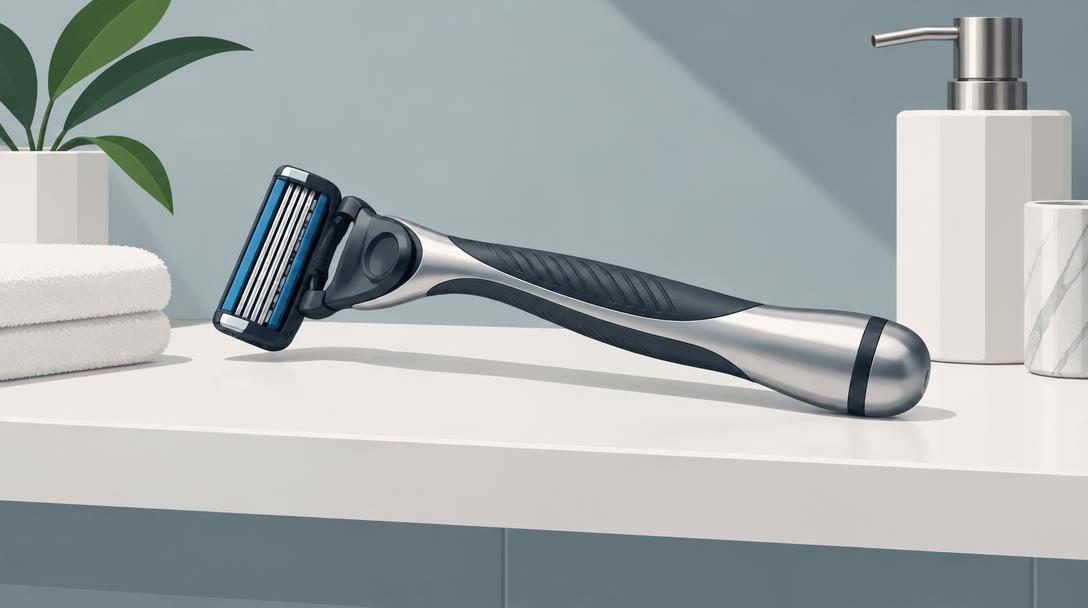
- Handle design: Permanent, ergonomically weighted reusable handle
- Blade format: Detachable cartridge head housing one to multiple blades
- Market share: Preferred by approximately half of daily razor users
- Primary appeal: Consistent replacement availability and high everyday convenience
Cartridge razors represent the dominant market force in contemporary wet shaving. The system is split into two components: a durable, ergonomic handle that the user retains indefinitely, and a detachable head containing one or more parallel blades encased in plastic. When the internal cutting edges lose their sharpness or become clogged, the user depresses an ejection button, discards the spent cartridge, and snaps a fresh unit into place.
The enduring popularity of cartridge systems rests on their predictable performance. The blades are mounted at factory-calibrated angles, eliminating the need for the user to gauge the tilt of the razor manually. Many heads also feature pivoting hinges that track the natural contours of the chin, jawline, and neck. While replacement cartridges carry ongoing costs, the combination of speed, safety, and widespread retail availability makes this format the default choice for millions.
Disposable razors

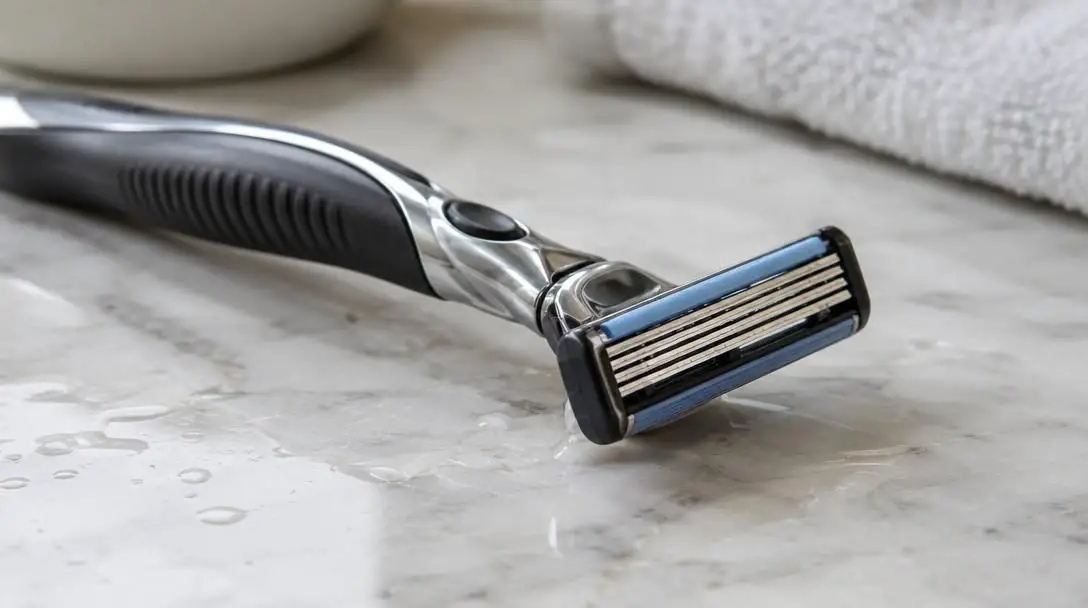
- Handle design: Hollow, lightweight plastic molded directly to the blade housing
- Lifespan: Fully discarded after a limited number of shaving sessions
- Historical surge: Gained widespread consumer popularity in the mid-20th century
- Primary appeal: Lowest upfront cost and ideal portability for travel
Disposable razors are single-piece units designed from the outset for limited service lifespans. Unlike cartridge formats, the blade head and handle cannot be separated; once the cutting edge dulls, the entire plastic implement is discarded in its entirety. This product category expanded rapidly during the mid-20th century alongside other single-use consumer conveniences, offering an ultra-cheap grooming alternative that required zero maintenance.
While disposables are generally not equipped with the sharpest steel or the most refined pivot mechanisms, their low price point keeps them relevant. They serve as a practical, lightweight solution for gym bags, hotel stays, camping trips, or guest bathrooms. However, because their ultra-light plastic construction lacks balance, users often instinctively press down too hard, which can lead to razor burn if used as an everyday primary razor.
Straight razors
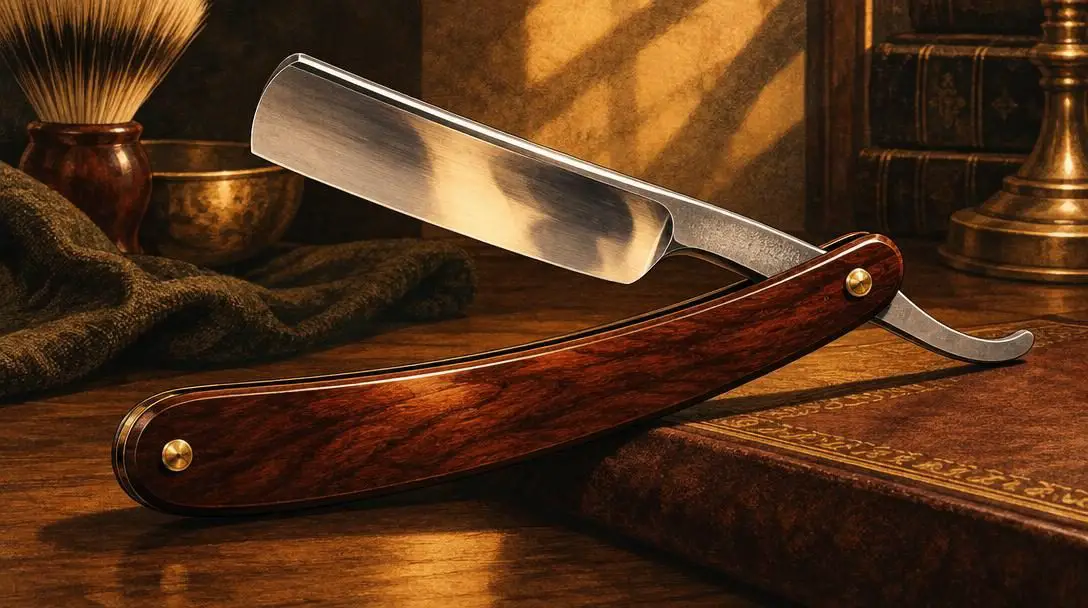
- Design: Extended open blade pivoting on a pin to fold into its handle
- Origins: Traced back to ancient Egypt; mass manufacturing began in the 17th century
- Traditional nickname: The cut-throat razor
- Alternative applications: Frequently utilized in manual arts like pottery and leathercraft
The straight razor represents the pinnacle of traditional, artisanal grooming. Its mechanical design is deceptively simple: a long, tempered steel blade swings on a pivot pin, folding neatly into protective handle scales when not in use. Because there is no guard, comb, or wire separating the naked steel from the human face, it requires unwavering focus, a steady hand, and practiced manual dexterity.
Despite being intimidating to novices, the straight razor remains celebrated as the single most effective tool for achieving an exquisitely smooth shave. With no plastic cartridge housing to collect debris, the open blade passes flush against the skin, severing coarse hair in a single fluid stroke. Beyond personal grooming, the precise edge of a straight razor is often repurposed by craftsmen in pottery studios and leatherworking shops for delicate skiving and trimming. Maintaining a straight razor requires periodic stropping on leather and honing on wet stones to keep the steel true.
Electric razors
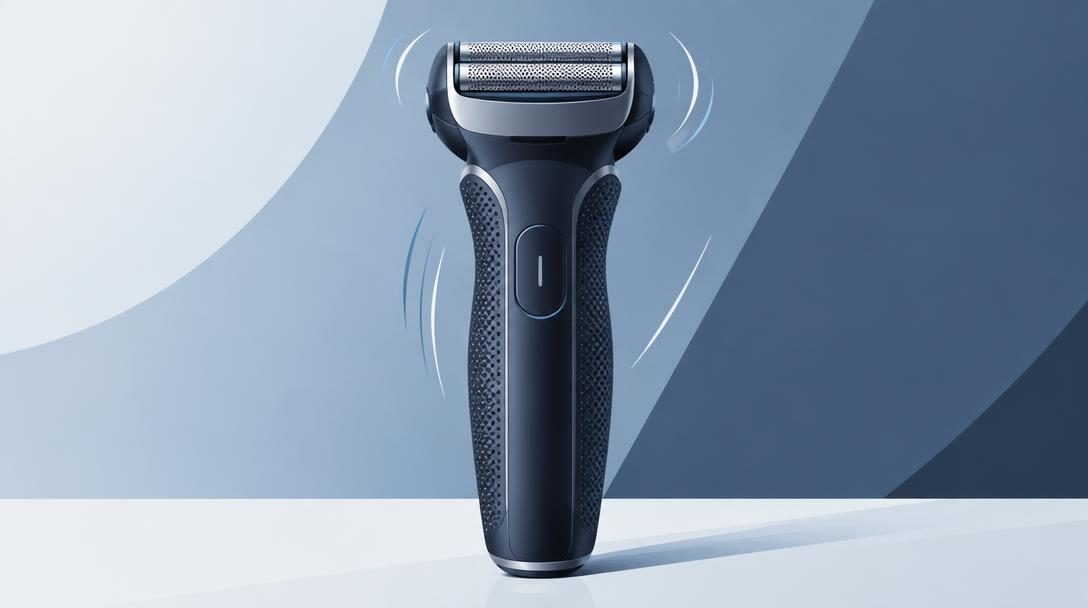
- Mechanism: Motorized rotary blades or reciprocating foil screen cutters
- Development timeline: Earliest patent granted in 1898; fully functional by 1915
- Adoption rate: Relied upon daily by more than one-third of men
- Versatility: Adapted for facial shaving, nose hair trimming, and head buzzcuts
Electric razors discard the wet-shaving paradigm entirely by replacing exposed manual blades with enclosed motorized cutters. Most units feature either flexible rotary discs that spin behind circular perforated metal covers or foil systems where high-speed cutters oscillate horizontally behind micro-thin, slotted screens. In both designs, the metal guard lifts and feeds the hair into the moving blades, cutting hair cleanly without ever dragging an exposed edge across the epidermis.
The electric platform emerged at the turn of the 20th century, with initial patents granted in 1898 and reliable working models appearing by 1915. Following a massive consumer surge in the middle of the century, electric shavers became a cornerstone of modern grooming. Today, more than one-third of men use an electric razor every day. The device is particularly prized by those with sensitive skin prone to razor bumps, as well as busy professionals who want to trim their beard, head, or neck without the mess of water and shaving cream.
Safety razors
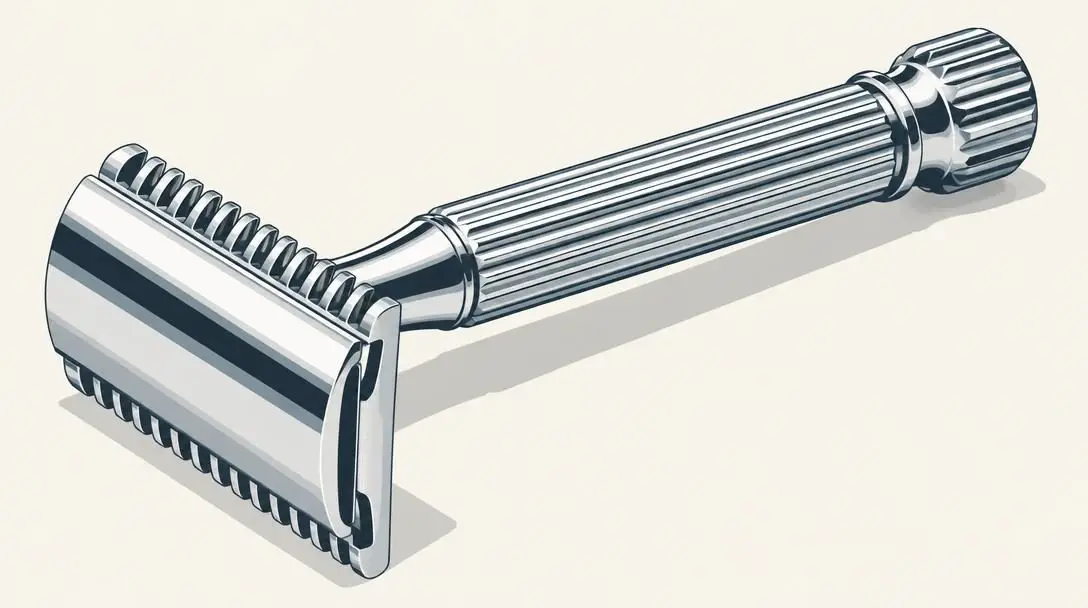
- Origin: First conceptualized in the 18th century; popularized in the early 20th century
- Key pioneer: Standardized and popularized by King Camp Gillette
- Core design: Built-in protective guard bar between the double-edge blade and skin
- Modern impact: Served as the baseline standard for 1970s cartridge innovations
Safety razors were invented to solve the inherent dangers of the straight razor. By placing a protective metal bar or comb between the sharp edge of the blade and the skin, the safety razor allows close cutting while preventing the deep nicks that plagued early barbershop patrons. The format reached peak ubiquity during the early 1900s through King Camp Gillette's double-edge system, transforming domestic shaving from a high-stakes chore into a fast, manageable routine.
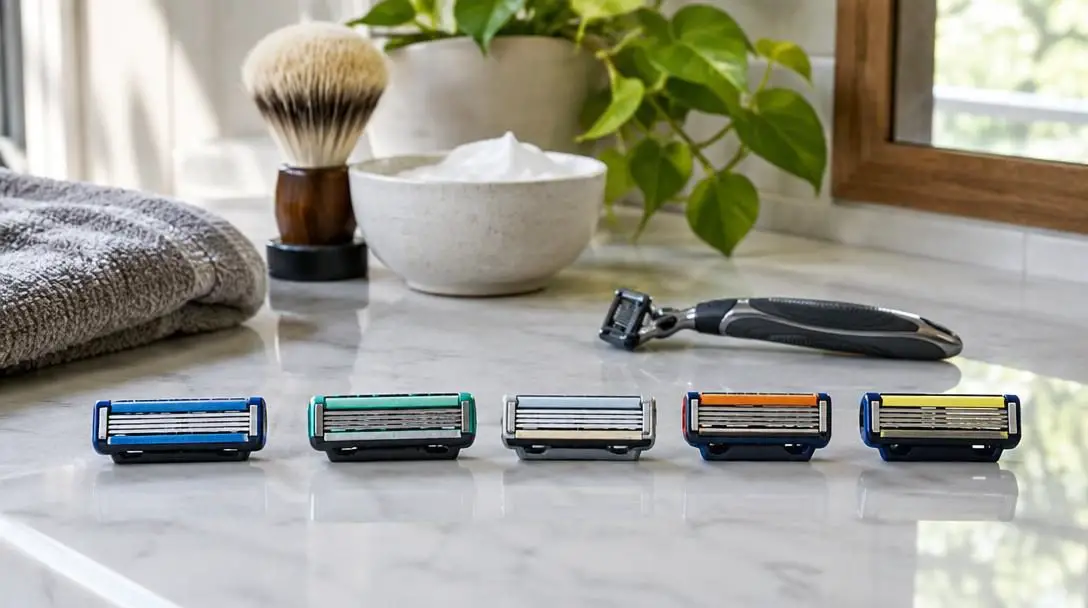
Modern safety razors typically feature a solid, weighted metal handle paired with an all-metal head that screws apart to house a standardized, ultra-thin double-edge blade. Because replacement double-edge blades cost pennies and create no plastic waste, safety razors have experienced a major modern revival among eco-conscious consumers and wet-shaving purists. By holding the razor at a shallow angle, users can achieve the closeness of a straight razor with the peace of mind provided by a mechanical guard.
At a glance: Comparing the 5 razor types
Selecting the right grooming tool depends on how you weigh upfront equipment costs against long-term maintenance, cutting closeness, and routine convenience. The table below outlines how all five shaving formats compare across their operational traits.
| Razor type | Handle construction | Blade replacement method | Primary advantage | Historical emergence |
|---|---|---|---|---|
| Cartridge razor | Permanent reusable handle | Click-on multi-blade cartridge heads | Contour-following convenience | Refined in the 1970s |
| Disposable razor | One-piece molded plastic | Discard entire unit when dull | Inexpensive and travel-friendly | Mid-20th century boom |
| Straight razor | Folding scales with pivot pin | Manual stropping and stone honing | Unmatched closeness and control | Ancient Egypt / 17th century |
| Electric razor | Battery or corded motor housing | Replace internal foils/cutters periodically | Fast dry shaving without lather | Patented 1898; functional 1915 |
| Safety razor | Heavyweight reusable metal | Replaceable steel double-edge blades | Close single-edge cut with guard | 18th c. / early 20th c. boom |
Practical steps for a successful shave
Regardless of whether you choose a high-tech electric shaver, a weighted safety razor, or an everyday cartridge, following a deliberate, methodical sequence shields your skin barrier and maximizes blade performance.
- Hydrate and warm the skin: Softening hair fibers is the most critical preparatory step. Wash the shaving area with warm water or hold a damp, warm towel to your face for several minutes. Warm moisture relaxes the follicles and dramatically decreases the physical force needed to cut through coarse hair strands.
- Apply a rich protective lather: Unless you are performing a dry shave with an electric razor, coat the area thoroughly with quality shaving cream, soap, or gel. Lather provides a slick lubricating cushion that enables the metal edge to glide seamlessly across facial peaks and hollows.
- Set the proper cutting angle: When using manual safety razors or straight razors, manual blade angling is vital. Maintain a shallow tilt of approximately thirty degrees between the blade and your skin surface. Tilting the razor too steeply turns a clean slice into an irritating scraping motion.
- Shave using light, short strokes: Let the physical weight of the razor handle provide the necessary cutting force. Shave with short, deliberate strokes in the direction that your hair naturally grows. Shaving across or against the grain should only be attempted after a smooth first pass.
- Rinse the cutting head frequently: Hair stubble, skin cells, and thick lather accumulate rapidly between blades. Rinse your cutting head beneath warm running water after every two or three strokes to maintain clean metal-to-hair contact.
- Cleanse, cool, and moisturize: Conclude your routine by splashing the skin with cool water to rinse away lather residue and calm surface blood vessels. Gently pat the skin dry with a clean towel and apply an alcohol-free balm or moisturizer to restore lost hydration.
Common shaving mistakes to avoid
Grooming discomfort is rarely caused by poor blade engineering alone; more often, it is the result of improper handling, rushed technique, or poor hygiene. Keeping these widespread missteps in mind will preserve your skin health over the long run.
- Using dull cutting edges: Dragging a degraded blade across delicate facial tissue is the leading cause of razor burn. When steel edges lose their micro-alignment, they yank on follicles rather than severing them cleanly. Replace cartridges, swap safety blades, or hone straight razors at the first sign of tugging.
- Applying excessive downward pressure: Modern razors are engineered to cut cleanly under their own weight. Forcing the blade firmly against your face creates uneven skin bulging, dramatically increasing the odds of painful nicks and cuts.
- Dry shaving with manual blades: Running any manual blade over dry, unconditioned skin removes protective surface lipids alongside the hair, guaranteeing immediate redness and irritation. Reserve dry passes solely for electric shavers designed for that function.
- Over-shaving a single spot: Passing a sharp razor repeatedly over the same strip of skin without reapplying lubricating lather strips away moisture and causes severe chafing. If a patch needs touching up, re-lather the area before taking another stroke.
- Neglecting blade cleaning and storage: Storing damp razors inside a humid shower stall or failing to clear hair clippings from electric foils accelerates blade oxidation and bacterial growth. Always rinse your shaving tools thoroughly and store them in an upright, dry position where air circulates freely.
Frequently asked questions
Why are straight razors referred to as cut-throat razors?
Straight razors earned the name cut-throat razor because their long, open steel blades have no protective guard or barrier. If used carelessly or with an unsteady hand, the exposed cutting edge can cause severe lacerations.
How often should I replace my cartridge razor head?
Cartridge heads should be replaced whenever you feel the razor pulling or tugging on your hair rather than cutting effortlessly. Continuing to shave with dull blades causes razor burn, micro-tears in the skin, and ingrown hairs.
Can electric razors provide as close a shave as manual razors?
Electric razors generally do not shave quite as close as manual straight, safety, or cartridge razors. Because electric units use perforated metal screens or rotary foils to shield the skin, hair is clipped fractionally above the surface rather than flush with the epidermis.
What is the main difference between a safety razor and a disposable razor?
A safety razor features a durable, reusable metal handle with a protective guard that accepts low-cost, double-edge steel replacement blades. A disposable razor is an inexpensive, single-piece unit molded from plastic that is entirely discarded once the integrated blades grow dull.
Who popularized the modern safety razor?
While safety razor concepts first appeared in the 18th century, King Camp Gillette popularized the design during the early 20th century by introducing thin, inexpensive, replaceable steel blades paired with a protective handle assembly.
The bottom line
Every shaving tool available today is the product of centuries of metallurgical refinement, originating with ancient Egyptian folding blades and culminating in modern multi-blade cartridges and mechanized electric cutters. No single razor is universally superior for every individual; the best choice depends entirely on how you balance your budget, skin sensitivity, available time, and grooming priorities.
If rapid convenience and low maintenance are your chief objectives, electric razors and cartridge systems offer seamless everyday reliability. If you value environmental sustainability, classic craftsmanship, or the closest possible finish, embracing the deliberate art of a traditional safety or straight razor can transform a mundane chore into a rewarding self-care ritual. By mastering proper prep work, holding shallow blade angles, and respecting your skin barrier, you can achieve a smooth, comfortable shave every time.