5 Best Razor Blade Brands
Personal grooming habits have evolved significantly over the centuries, shifting away from routine barber visits toward independent, convenient home rituals. Today, personal hygiene and hair removal are practiced across nearly every demographic, making the global razor industry a massive commercial powerhouse that generates well over $4 billion in yearly revenue. Because almost every household owns at least one razor and millions of people shave daily or weekly, manufacturers invest heavily in materials science, precision engineering, and ergonomic styling to compete for consumer loyalty.
The modern grooming market balances century-old manufacturing houses that have refined metalworking over generations alongside nimble upstarts engineered for contemporary lifestyle preferences. From legacy producers boasting billions in global sales to eco-friendly innovators championing plastic-free designs, today's marketplace offers an impressive variety of shaving tools. Navigating this vast selection requires understanding how different blade systems perform and what sets the leading manufacturers apart.
Key takeaways
- The competitive worldwide razor industry commands well over $4 billion in annual revenue as shaving remains a near-universal personal care routine.
- Gillette and Schick represent the dominant historic powerhouses of the market, holding commanding sales positions across North America, Japan, and worldwide.
- Specialty German engineering from Merkur brings over 120 years of cutlery expertise to traditional, high-end safety razor hardware.
- Direct-to-consumer and retail innovator Harry's established manufacturing autonomy by acquiring the century-old Feintechnik factory for $100 million.
- Boutique brands such as Leaf Razors prioritize sustainability with all-metal, plastic-free designs versatile enough for comprehensive head-to-toe grooming.
Top razor blade brands compared
To help you evaluate your choices quickly, the table below outlines the core characteristics, origins, and operational models of the industry's five most notable razor manufacturers.
| Brand | Headquarters / Origin | Heritage / Milestone | Primary Availability |
|---|---|---|---|
| Gillette | Boston, Massachusetts | Founded early 1900s; merged with Procter & Gamble in 2005 | Mass retail, supermarkets, global distribution |
| Schick | United States | Founded mid-1900s by Lt. Col. Jacob Schick; #1 brand in Japan | Mass retail, drugstores, international distributors |
| Merkur | Solingen, Germany | Subsidiary of DOVO Steelware with over 120 years in operation | Specialty shaving shops, premium online retailers |
| Harry's | New York, New York | Founded 2012; acquired Feintechnik factory in 2014 for $100 million | Target, Walmart, direct-to-consumer subscription |
| Leaf Razors | United States | Independent venture founded by two partners named Adam | Direct online retail, specialized eco-boutiques |
The 5 best razor blade brands on the market
While dozens of razor manufacturers generate millions of dollars annually, only a select group consistently sets the standard for reliability, cutting performance, and design excellence. Here is an in-depth look at the five best razor blade brands available today.
Gillette
- Headquarters: Boston, Massachusetts
- Founded: Early 1900s
- Parent Company: Procter & Gamble (merged 2005)
- Annual Revenue: Over $10 billion
Few names in personal care carry the historical weight of Gillette. Established in Boston in the early 1900s, the company fundamentally altered how the world approaches daily personal grooming by popularizing practical, replaceable safety blades. In 2005, The Gillette Company joined consumer goods titan Procter & Gamble in a landmark merger, further cementing its international dominance. Across its vast catalog of personal care products, the brand now pulls in more than $10 billion in annual revenue.
Gillette has consistently earned top honors from major grooming publications as an exceptional choice for everyday shavers. The company strikes an uncommon balance, producing relatively inexpensive options that refuse to skimp on quality. Whether a customer is seeking entry-level safety razors or advanced multi-blade cartridges, Gillette delivers an exceptionally close shave supported by decades of industrial research and global manufacturing consistency.
Schick
- Founder: Lieutenant Colonel Jacob Schick
- Founded: Mid-1900s
- Market Standing: Second in sales behind Gillette; top seller in Japan
Holding the position of Gillette’s primary legacy competitor, Schick was established in the mid-1900s by U.S. Army Lieutenant Colonel Jacob Schick. The inspiration for the brand arrived out of necessity: after sustaining an injury that made conventional shaving difficult, Jacob Schick utilized his recovery time to invent a streamlined razor design that simplified the entire morning routine. Today, Schick ranks second in global sales behind Gillette and commands the top sales spot in the competitive Japanese market.
Much like its chief rival, Schick focuses primarily on high-performing safety razors sold at an accessible price point. Consumers consistently praise Schick blades for their smooth glide, bolstered by integrated lubricating strips that reduce friction against vulnerable skin. For individuals seeking a comfortable, efficient morning shave that gets the job done without fuss, Schick remains an enduring, dependable fixture on drugstore shelves.
Merkur
- Origin: Solingen, Germany
- Parent Company: DOVO Steelware
- Heritage: Over 120 years of metalworking
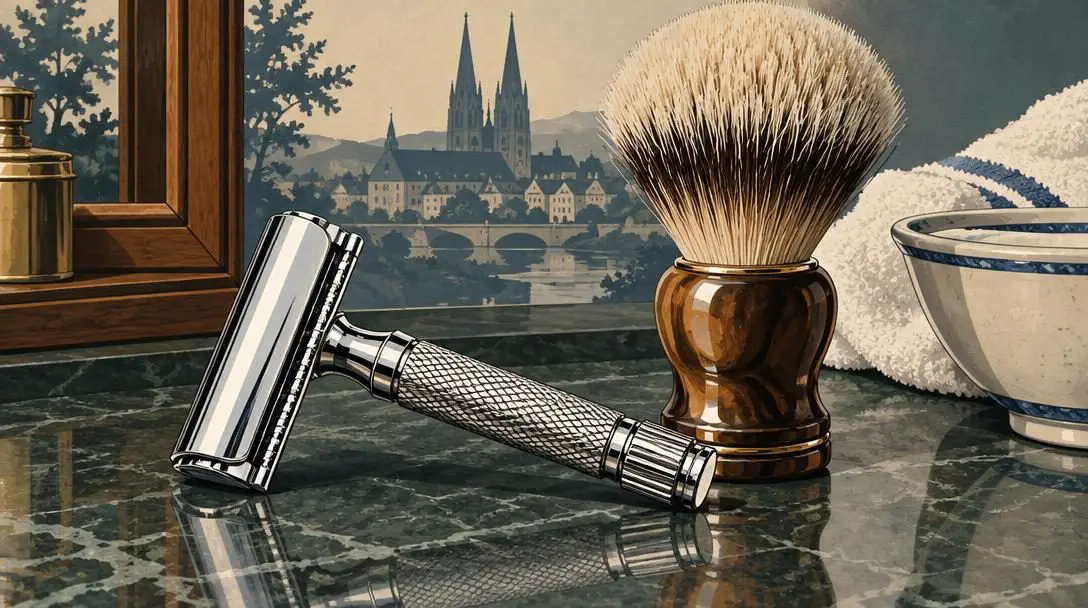
For purists who appreciate old-world craftsmanship, Merkur represents the pinnacle of German metalworking. Based in Solingen—a region internationally renowned for exceptional cutlery—Merkur operates as a subsidiary of DOVO Steelware, an enterprise celebrated for producing fine scissors, straight razors, and manicure instruments. With an institutional history stretching back more than 120 years, Merkur relies on highly trained craftspeople who inspect and assemble razors with meticulous attention to detail.
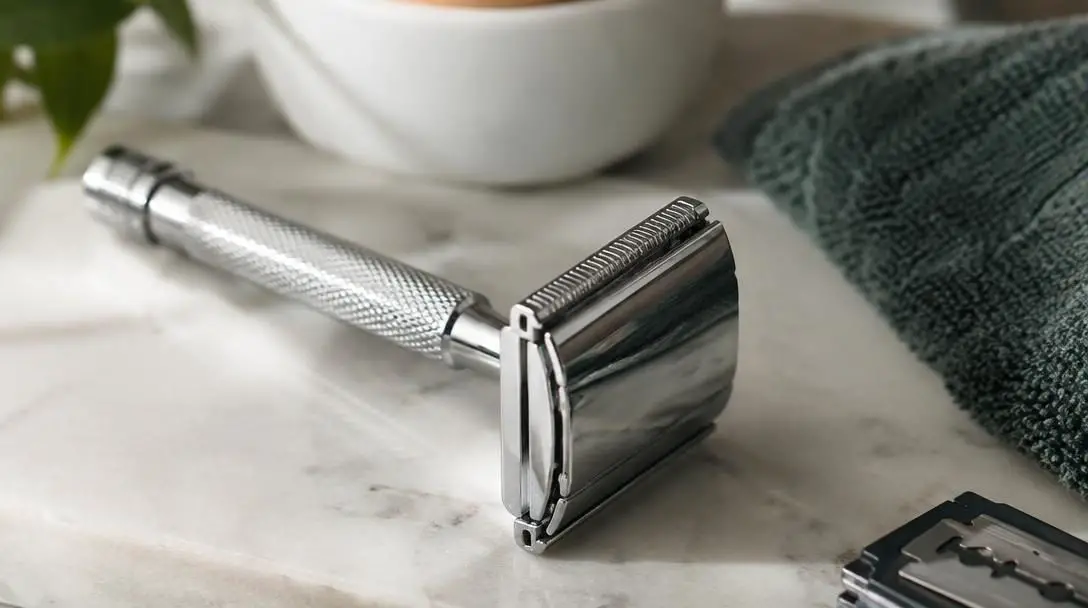
Unlike mass-market plastic cartridges, Merkur tools feature classic, sleek metal silhouettes that evoke a bygone era of wet shaving. While they carry a higher upfront cost than standard American straight razors or disposable handles, the precision manufacturing and enduring build quality easily justify the investment. Merkur products can be acquired through dedicated cutlery and shaving supply shops across the United States or ordered via specialized traditional grooming merchants online.
Harry's
- Headquarters: New York, New York
- Founded: 2012 by Jeff Raider and Andy Katz-Mayfield
- Key Acquisition: Feintechnik factory (2014, $100 million)
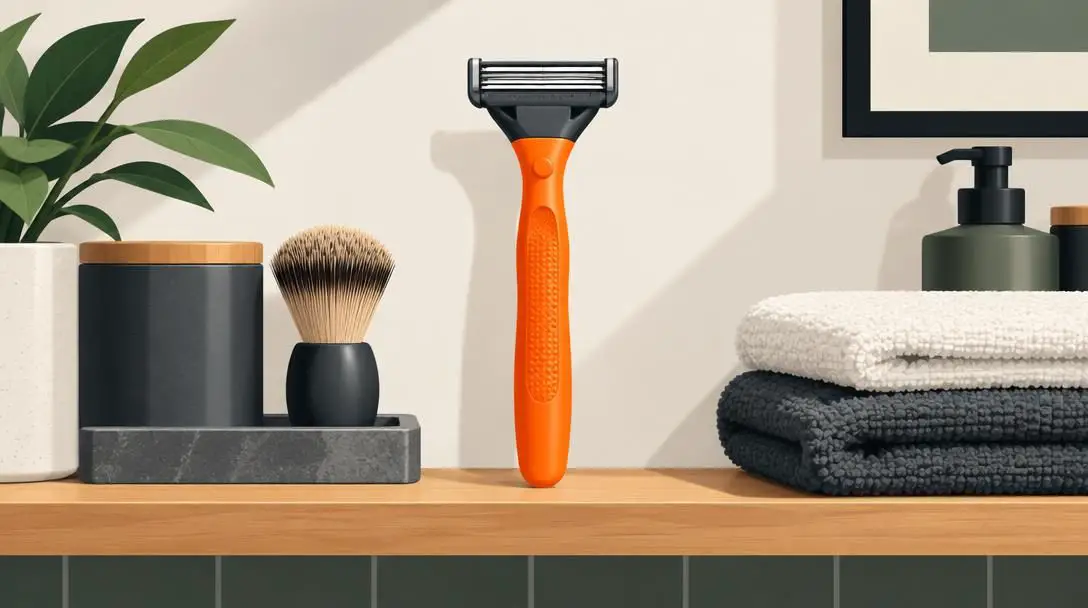
Bursting onto the scene as a digital disrupter in 2012, Harry's was founded in New York by entrepreneurs Jeff Raider and Andy Katz-Mayfield. Recognizing that controlling blade production was crucial to competing against legacy brands, the founders made a bold move in 2014 by purchasing Germany's Feintechnik razor factory for $100 million. This acquisition gave Harry's end-to-end command over its steel processing, edge grinding, and ergonomic handle assembly.
While Harry’s established its presence via a convenient online subscription model—delivering fresh blades to doorsteps every two, three, or five months—it has since transitioned into an omnichannel juggernaut. Today, customers can find Harry’s full suite of face care, body wash, hair care, and deodorant alongside their signature razors in major retail outlets like Target and Walmart. The brand delivers sharp design and reliable edge geometry tailored to the modern consumer.
Leaf Razors
- Leadership: Founded and operated by two entrepreneurs named Adam
- Core Focus: Plastic-free, zero-waste sustainable shaving
- Design Application: Full-body grooming utility
Addressing the growing environmental toll of disposable plastic cartridges, Leaf Razors was created by two founders named Adam who set out to reinvent the safety razor for modern lifestyles. The company is built on an unwavering commitment to sustainability, creating durable, plastic-free metal hardware intended to last a lifetime. Despite being an independent operation, the founders personally oversee packaging and customer service, providing an authentic, transparent buying experience that sets them apart from corporate conglomerates.
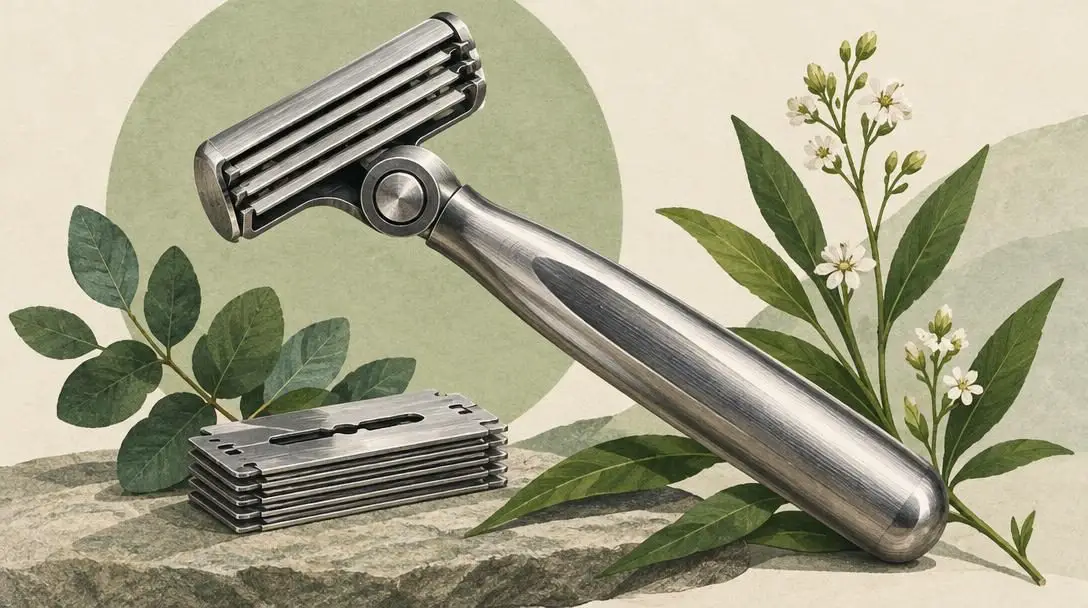
Leaf Razors demand a higher upfront financial investment than mass-market drugstore tools, but they repay the owner through long-term durability and zero plastic waste. Uniquely engineered with a pivoting multi-blade head that accepts standard snap-in steel blades, Leaf's flagship tools offer full-body versatility. They are just as adept at gliding smoothly over sensitive body contours as they are at cleaning up facial stubble, making them an ideal pick for comprehensive body grooming.
Advanced metallurgy and protective safety guards ensure that modern razors cut tough hair cleanly at skin level without damaging delicate tissue.
How razor blades and safety guards work
Understanding the mechanical physics behind a razor clarifies why well-engineered brands easily outperform cheap disposable alternatives. At its fundamental level, shaving involves a razor edge shearing through hair follicles at or slightly above the skin line. However, facial and body hair is remarkably resilient, possessing a tough structural protein called keratin that offers notable physical resistance when struck by a cutting edge.
When an inferior or blunt blade meets a hair strand, it fails to slice cleanly. Instead, it catches against the follicle, pulling the hair root upward and creating micro-trauma inside the pore before tearing through the shaft. Top-tier brands counter this issue by applying microscopic grinding techniques to hardened surgical steel. They also coat edges with specialized materials such as platinum, chromium, or polytetrafluoroethylene (PTFE) to reduce frictional drag against wet skin and hair.
Furthermore, safety razors and modern cartridge heads incorporate a mechanical guard bar positioned directly ahead of the cutting edge. As you move the razor forward, this guard bar pulls the skin taut, leveling tiny wrinkles and microscopic dermal elevations before the metal passes over them. In multi-blade cartridges, a progressive geometry is employed: the first blade lifts the hair strand slightly, the secondary blades slice through it progressively lower, and an integrated lubricating strip deposits moisture to soothe the newly cut area.
Step-by-step guide to a clean, comfortable shave
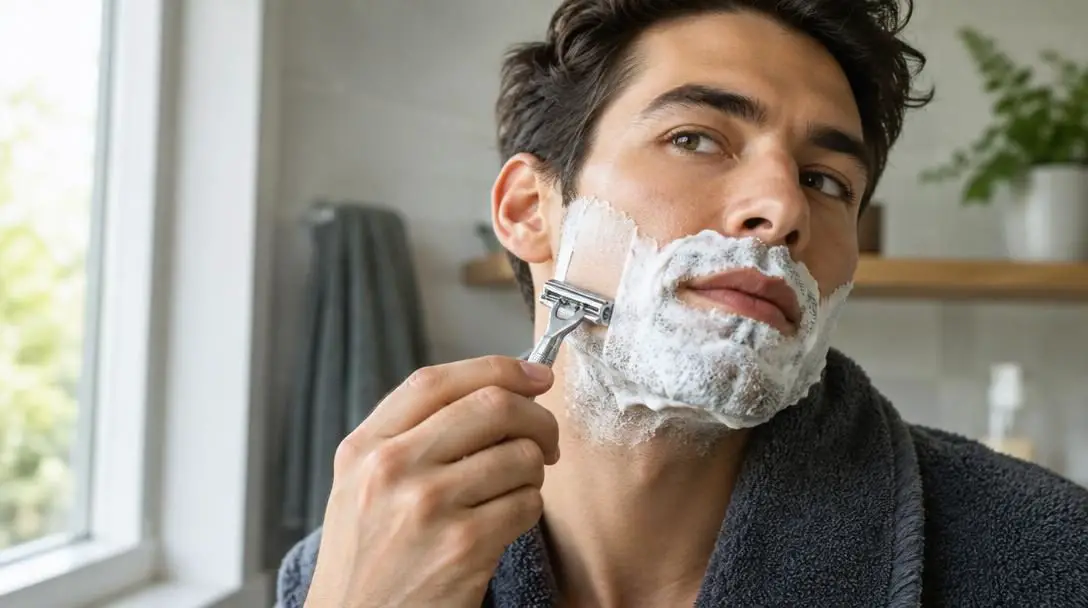
Even the finest engineering from Gillette, Merkur, or Harry’s cannot compensate for careless shaving mechanics. By practicing a disciplined, methodical shaving technique, you can eliminate post-shave redness, prevent painful ingrown hairs, and extend the usable life of your cutting edges.
- Prepare the skin and soften the hair: Wash the target area with warm water and a mild face or body cleanser. Warm water hydrates the tough keratin proteins inside each hair follicle, reducing the mechanical cutting force required by up to sixty percent. Shaving immediately after taking a warm shower is the easiest way to ensure proper preparation.
- Apply an even shaving medium: Coat the skin with an ample layer of quality shaving lather, cream, or gel. This medium creates a slippery physical barrier between the steel blade and the epidermis, ensuring that the razor glides across the skin without sticking or scraping away dermal layers.
- Set the proper cutting angle: If shaving with a traditional double-edge safety razor like a Merkur, position the razor handle so the blade meets your skin at approximately a thirty-degree angle. If utilizing an automated pivoting system like Gillette, Harry's, or Leaf, rest the head flat against your skin and let the spring-loaded pivot follow your natural curves.
- Take short, deliberate strokes: Avoid the temptation to take sweeping, continuous passes from jawline to collarbone. Instead, employ controlled, short strokes roughly one to two inches in length, allowing the natural balance and weight of the razor handle to drive the cutting action without applying excessive downward force.
- Shave with the direction of hair growth: For your initial pass, always direct the razor with the grain—the direction in which your hair naturally lies. Cutting against the grain on a first pass catches follicles at an unnatural angle, sharply elevating the risk of razor burn and painful ingrown hairs.
- Rinse the cutting head frequently: Swish the razor head under warm running water every two or three strokes. Clearing out cut hair, dead skin cells, and spent lather ensures that the steel cutting edge remains fully exposed to cut cleanly on every single pass.
- Rinse cold and restore hydration: Once finished, splash the freshly shaved skin with cool water to soothe the surface and remove any lingering soap residue. Gently pat the area dry with a clean towel, then immediately apply a hydrating, alcohol-free post-shave balm or moisturizer to rebuild the skin's moisture barrier.
Common shaving mistakes to avoid
When shavers experience cuts, irritation, or persistent discomfort, the issue typically traces back to simple technique errors rather than equipment defects. Keep these common missteps in mind to maintain clear, healthy skin.
- Overusing a dull blade: Steel razor edges degrade steadily with every stroke as microscopic teeth along the bevel roll over, nick, and dull. Continuing to shave with an exhausted blade requires you to use dangerous force, tearing at hair roots instead of slicing them cleanly. Replace blades at the very first sign of tugging.
- Applying aggressive downward pressure: Pushing the head deeply into your skin forces the tissue to bulge upward between and around the blade edges. This poor habit is the primary cause of painful nicks, bleeding, and severe razor burn. Let the sharp edge do the cutting without bearing down on the handle.
- Dry shaving without water or lather: Running dry metal directly across unlubricated skin strips away essential natural oils and abrades the upper layers of the epidermis. Always thoroughly saturate the area with warm water and an appropriate shave gel or cream before touching a blade to your skin.
- Improper razor storage and hygiene: Leaving your razor lying flat on a wet shower shelf exposes the steel to stagnant moisture, leading to premature edge oxidation, mineral deposits, and bacterial colonization. Shake off excess moisture after shaving and store the tool upright in a well-ventilated, dry environment.
- Rushing through the process: Quick, frantic strokes often cause the razor head to twist or skid sideways across the skin, which can produce painful slices and miss patches of hair. Take your time, pay close attention to contour changes around the jaw or joints, and treat grooming as an intentional personal ritual.
How to choose the right razor brand for your needs
Selecting your ideal grooming tool requires balancing personal anatomy, lifestyle preferences, and long-term operating costs. Different manufacturers focus on distinct strengths, so evaluating your grooming habits will guide you toward the right purchase.
First, evaluate your target shaving area. If you are exclusively detailing facial hair, traditional cartridge razors from Harry's or Gillette and fixed-head safety razors from Merkur offer exceptional dexterity for carving tight beard lines or cleaning the throat. If your goal is full-body grooming, legs, underarms, or head shaving, the flexible multi-blade contour design of Leaf Razors or the wide pivoting heads of Schick provide far greater coverage and protection around tricky contours.
Second, take your personal skin sensitivity into account. Shavers prone to chronic irritation, redness, or painful pseudofolliculitis barbae (ingrown hairs) often suffer from the multi-blade tug-and-cut phenomenon found in aggressive cartridge systems. For delicate skin, switching to a single-blade setup like Merkur or an adjustable three-blade gap like Leaf minimizes repetitive contact and leaves skin smooth without cutting hairs beneath the follicle surface.
Finally, weigh ongoing costs against convenience. Mass-market cartridge systems from Gillette, Schick, and Harry's provide immense upfront convenience: you can purchase replacement cartridges at almost any grocery store or have them shipped on automated subscriptions renewing every two, three, or five months. However, proprietary cartridges cost significantly more over time. Traditional safety razors like Merkur and sustainable systems like Leaf require a larger upfront investment for the handle, but their universal double-edge steel replacement blades cost only fractions of a dollar per unit, resulting in massive cumulative savings over years of use.
Frequently asked questions
How often should I replace my razor blades?
Blade lifespan depends on hair density, shaving frequency, and surface area, but a cutting edge typically provides five to ten comfortable shaves. You should replace the blade immediately whenever you feel tugging, resistance, or reduced cutting efficiency.
Are safety razors better for sensitive skin than multi-blade cartridges?
Yes, many dermatologists and wet shavers recommend safety razors for sensitive skin. Multi-blade cartridges use progressive edges that pull and cut hairs below skin level, which can cause ingrown hairs and razor burn. A single safety razor blade cleanly shears hair flush with the surface, minimizing epidermal irritation.
Can Leaf Razors be used on the body as well as the face?
Yes. Leaf Razors are specifically engineered with a pivoting head and full-body versatility in mind, making them suitable for facial detailing, leg shaving, underarm maintenance, and head grooming alike.
Why did Harry's acquire a factory in Germany?
Harry's purchased the historic Feintechnik razor factory in 2014 for $100 million to gain full control over its engineering, steel processing, and quality control, allowing them to compete directly with legacy giants like Gillette and Schick.
How does Schick compare in sales to Gillette?
Schick ranks second in global sales behind Gillette, though Schick holds the number one market sales position in Japan.
The bottom line
The modern shaving market offers superior choices tailored to every grooming style, aesthetic taste, and budget. Heritage brands such as Gillette and Schick continue to dominate the mass market by offering reliable, widely distributed cartridge systems that excel at rapid, everyday grooming. Meanwhile, newer direct-to-consumer powerhouses like Harry's combine German factory precision with the ease of doorstep delivery and expanded personal care catalogs.
If your priorities lean toward zero-waste living or classic artisanal ritual, alternatives like Merkur and Leaf offer compelling benefits over disposable plastic razors. Investing in a solid metal safety razor from Merkur delivers timeless European metalworking that lasts a lifetime, while Leaf’s innovative pivoting head brings plastic-free sustainability to modern full-body grooming. By matching your razor choice to your skin type, routine, and personal values, you can turn a mundane morning chore into an effortless, skin-friendly grooming ritual.