
How To Improve Your Reflexes
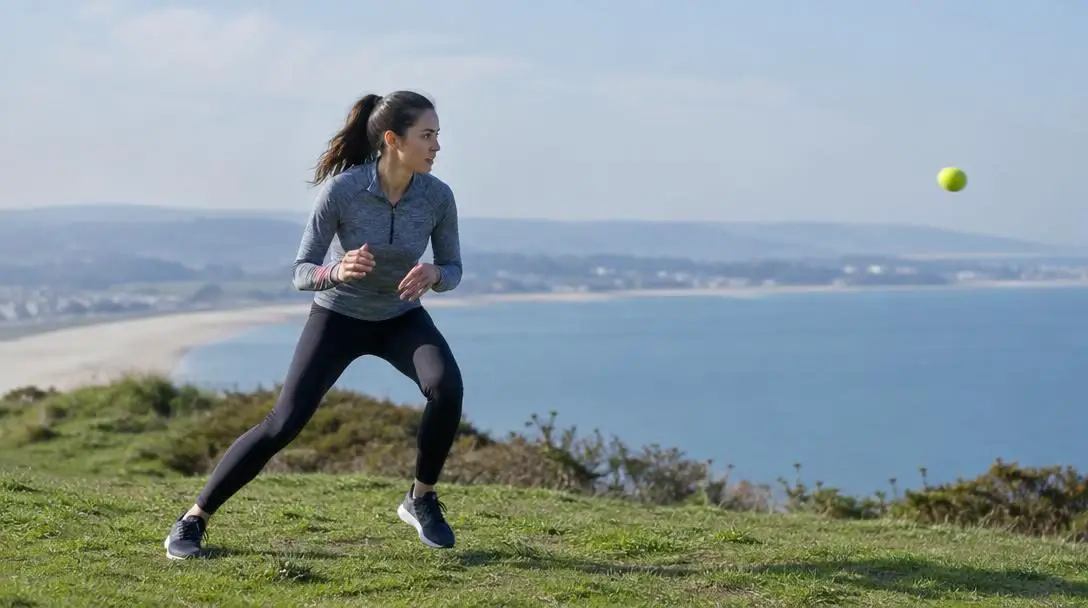
Reflexes influence almost every physical action we take, governing our ability to dodge sudden hazards, excel in fast-paced athletics, and navigate chaotic everyday environments. In human physiology, a reflex involves the transmission of a neural impulse from the brain in response to environmental stimuli, culminating in an immediate muscular contraction. From the instant your sensory organs detect an unexpected event, your nervous system must register the cue, process the visual or auditory data, and dispatch an electrical command along your nerves to contract the necessary muscle fibers. This biological relay typically requires at least a quarter of a second to unfold, yet that baseline varies dramatically depending on an individual's alertness, conditioning, and sensory habits.
Because reaction speed is not permanently fixed, targeted intervention can meaningfully sharpen neural pathways. Whether you are an athlete striving for peak performance or simply looking to enhance your everyday coordination, the mechanisms governing your response time can be systematically trained. By dividing your efforts across mental conditioning, unpredictable physical drills, and deliberate biological recovery, you can effectively shorten the delay between perception and action.
Key takeaways
- A standard neural reflex circuit requires at least a quarter of a second, but intentional practice can significantly reduce personal response lag.
- Fast-paced video games, neuro-linguistic programming, and daily mindfulness cultivate the split-second decision-making and situational awareness necessary for rapid reactions.
- Unpredictable physical training using multi-sided reaction balls and traditional games of jacks forces the nervous system to make real-time motor corrections.
- Sustained cognitive alertness relies on complex carbohydrates, leafy greens, nuts, fish, and consistent all-day hydration rather than quick sugar spikes.
- Achieving at least seven hours of nightly sleep ensures the brain completes four full sleep cycles between deep sleep and REM sleep to repair neural pathways.
The Neurological Mechanics of Human Reaction Speed
Every conscious physical reaction begins with sensory perception. When a stimulus appears—such as a falling cup, a moving opponent, or a brake light—the sensory receptors convert that physical event into electrical signals. These impulses travel through sensory nerves to the brain, where the central nervous system processes the information, formulates an appropriate physical response, and routes a command downward through motor neurons to trigger a muscular contraction. This entire biological circuit takes at least a quarter of a second to complete under normal circumstances.
Although a fraction of a second sounds remarkably brief, minute differences in processing efficiency create substantial variations in real-world performance. Two people exposed to the exact same external trigger will often register noticeably different response times. These discrepancies stem from physiological factors such as cognitive focus, the efficiency of neural signaling, and overall physical readiness. Enhancing your reaction time does not require altering your fundamental anatomy; rather, it involves conditioning your brain to interpret sensory data faster and eliminating the physical and biological bottlenecks that cause operational delay.
Introducing unpredictable physical objects forces genuine real-time processing and immediate muscular corrections rather than comfortable muscle memory.
Mental Conditioning Tools for Faster Cognitive Processing
Before a muscle can twitch, the brain must make sense of incoming information. Cognitive training for reflexes focuses on shortening the gap between initial sensory perception and the execution of physical movement. By subjecting your brain to dynamic, high-speed scenarios, you teach your neural pathways to rapidly transition from observation to decisive action.
First-Person Shooters and Fast-Paced Video Games
Digital environments offer a high-intensity platform for cognitive conditioning. Video games act as an effective training mechanism because they demand constant, rapid shifts from thought to physical input. Players navigate unpredictable visual stimuli, assess changing threats, and execute precise physical commands using a controller or keyboard within milliseconds. First-person shooters are widely regarded as the premier genre for reflex development because they impose exceptional demands on eye-hand coordination. Additionally, fast-paced role-playing games can be employed to refine your ability to parse visual cues and translate quick tactical choices into physical execution.
Neuro-Linguistic Programming (NLP)
Cognitive focus can also be altered through specialized psychological approaches such as neuro-linguistic programming. Operating as a targeted form of hypnosis, NLP helps individuals establish intense, laser-like awareness on an isolated target or object. This heightened mental state frequently generates the internal perception that time is slowing down around the observer, which makes incoming visual information easier to parse and dramatically reduces overall reaction time. Because of this powerful perceptual shift, competitive athletes routinely rely on neuro-linguistic programming to stay composed and reactive under intense competitive pressure.
Daily Mindfulness Practice
While targeted hypnosis focuses your attention on a single object, mindfulness works in a complementary yet distinct manner. Mindfulness training aims to broaden mental awareness across your entire surroundings rather than zeroing in on one isolated cue. By cultivating an ongoing awareness of ambient sounds, subtle peripheral shifts, and environmental changes from moment to moment, you develop robust situational awareness. This expansive perspective ensures that unexpected stimuli entering your peripheral field are caught and processed without hesitation.
Physical Drills to Sharpen Hand-Eye Coordination
While mental exercises prime the brain, physical training bridges the gap between neural commands and motor execution. Repetitive, predictable athletic movements allow the body to rely on automated muscle memory. While helpful for basic technique, muscle memory does not train true reflexes. To challenge your nervous system, you must introduce unpredictable trajectories that force your brain and hands to correct course in real time.
The Multi-Sided Reaction Ball
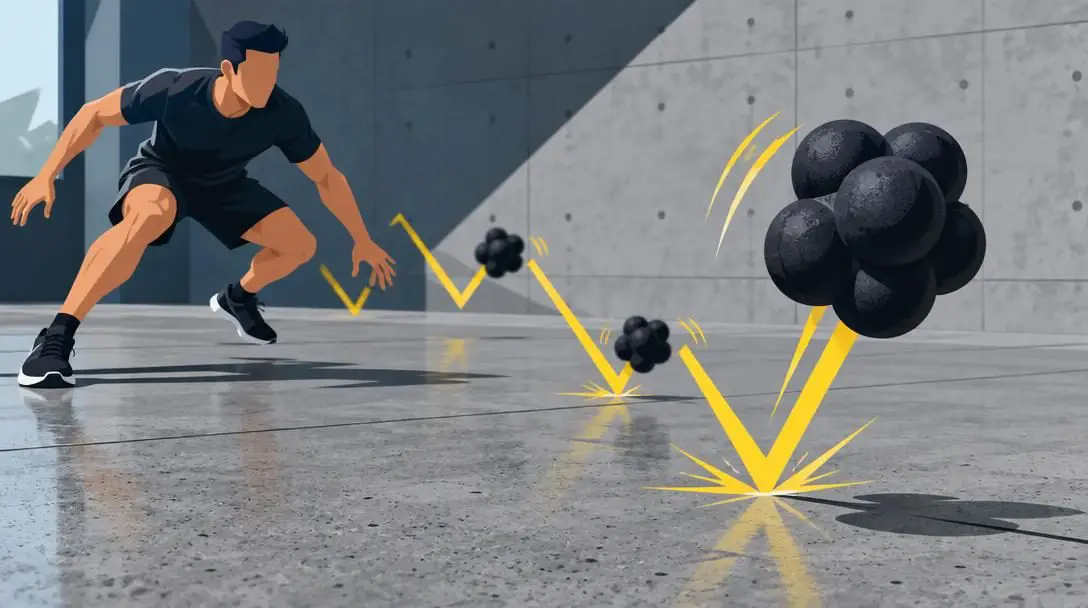
A standard spherical ball bounces along predictable geometric paths, allowing the brain to guess where it will land before it arrives. To bypass this predictive shortcut, athletes utilize a specialized reaction ball, which can be acquired at most sporting goods stores. These tools feature irregular, multi-lobed surfaces that cause the ball to bounce erratically in completely random directions whenever it strikes a hard surface. Tossing or dropping a reaction ball against a concrete floor or wall forces you to maintain absolute visual focus and make instantaneous adjustments to catch the rebounding object before it escapes your reach.
The Classic Game of Jacks
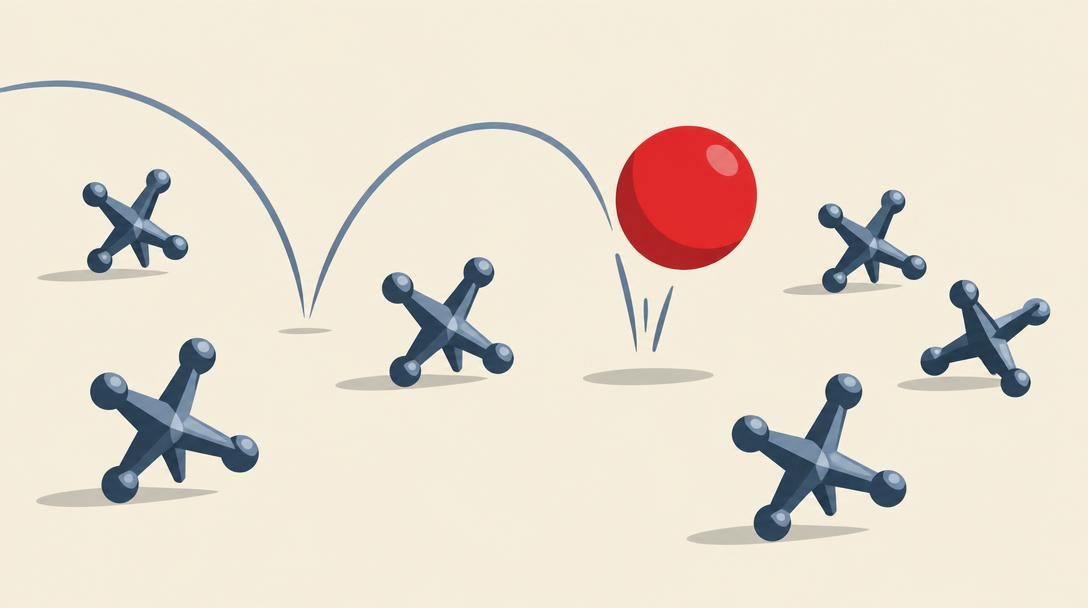
Refined eye-hand coordination requires not only speed, but also exceptional manual dexterity. The traditional game of jacks serves as an outstanding, accessible coordination drill. The exercise requires only a small rubber ball and 12 metal pieces, known as jacks. By bouncing the rubber ball onto the floor, sweeping up metal jacks from the surface, and catching the falling ball with the exact same hand before it bounces a second time, you train micro-adjustments in finger dexterity and spatial tracking.
- Equipment: Small rubber ball and 12 metal jacks
- Core mechanics: Bounce, gather pieces, catch with the same hand
- Primary benefit: Fine-tunes micro-dexterity and manual precision
As your baseline speed improves, you can progressively scale the difficulty of the game. Attempt gathering an increasing number of jacks during a single bounce, or scatter the 12 pieces across a wider perimeter on the floor. Spreading the jacks farther apart forces your catching arm to make wider, faster reaches while maintaining precise tracking of the descending rubber ball.
Step-by-Step Daily Reflex Training Regimen
Developing superior reaction speed requires an organized routine that targets both cognitive interpretation and muscular execution. Follow this structured progression to incorporate reflex drills into your weekly schedule.
- Establish situational awareness through mindfulness: Dedicate the opening minutes of your day to observing your environment without fixation, noting ambient sounds, peripheral movement, and immediate physical surroundings.
- Engage in targeted digital tracking: Spend focused sessions playing fast-paced first-person shooters or dynamic role-playing games to strengthen the direct neural link between visual inputs and finger inputs.
- Deploy erratic physical drills: Perform reaction ball exercises against a concrete wall or flat floor, completing multiple sets of catches to force rapid adjustments to unpredictable rebound angles.
- Incorporate micro-dexterity practice: Set up a game of jacks using 12 metal pieces and a small rubber ball, sweeping up pieces and catching the ball with a single hand before scaling to wider piece spreads.
- Refine single-target concentration: Practice neuro-linguistic programming techniques prior to high-demand activities to foster the subjective sensation of time dilation when tracking moving targets.
Dietary and Sleep Habits to Maximize Neural Alertness
Your reflexes are ultimately powered by a biological engine, and the speed of that engine relies directly on systemic alertness. The most dedicated physical and cognitive drills will fail to yield results if the central nervous system is depleted by poor nutrition, chronic dehydration, or inadequate rest.
Nutrition provides the biochemical fuel that supports nerve conduction. Relying on simple sugars creates rapid glucose spikes followed by sharp energy crashes, leaving you mentally sluggish and physically delayed. In contrast, complex carbohydrates digest steadily, delivering an even, sustained release of fuel to both the brain and the musculature over extended durations. Alongside complex carbs, a reflex-oriented diet should regularly incorporate whole foods known to support cognitive processing, specifically nutrient-dense fish, nuts, and leafy green vegetables.
Hydration plays an equally critical role. Because even subtle fluid deficits impair cognitive processing and slow motor outputs, maintaining consistent water consumption throughout the entire day is essential for peak neurological performance.
| Lifestyle Factor | Optimal Strategy | Impact on Reflexes |
|---|---|---|
| Carbohydrate Intake | Complex carbohydrates | Provides sustained, stable energy without sluggish post-sugar crashes |
| Whole Foods | Fish, nuts, leafy green vegetables | Supplies essential nutrients to maintain cognitive and neural health |
| Fluid Balance | Consistent water intake throughout the day | Sustains cognitive alertness and prevents dehydration-induced motor lag |
| Nightly Rest | At least 7 hours (4 full sleep cycles) | Restores the central nervous system through transitions between deep sleep and REM |
| Pre-Event Recovery | Strategic naps lasting a few hours | Recharges neural signaling pathways before demanding athletic or focus-heavy tasks |
Finally, your nervous system demands adequate sleep to restore damaged neural networks. You must target a minimum of seven hours of sleep each night. This seven-hour threshold allows the body to complete at least four full sleep cycles, cycling between restorative deep sleep and rapid eye movement (REM) sleep. During these cycles, the central nervous system resets and repairs itself. If you are preparing for a grueling athletic match or an intense cognitive test, consider adopting the habit used by many competitive athletes: schedule a strategic nap of a few hours prior to the event to give your nervous system a renewed burst of speed.
Critical Mistakes That Dull Reaction Speed
When working to accelerate reaction times, many individuals develop counterproductive habits that undermine their training. Avoiding these common mistakes will keep your neural pathways primed for improvement.
- Fueling with simple sugars: While sugary snacks yield an initial rush of energy, the subsequent crash leaves the nervous system sluggish, severely degrading split-second responses.
- Neglecting daily hydration: Inadequate water consumption dims cognitive sharpness and delays impulse transmission across motor nerves.
- Cutting sleep cycles short: Sleeping under seven hours prevents the completion of the necessary four sleep cycles between deep sleep and REM, leaving the central nervous system chronically exhausted.
- Limiting drills to predictable equipment: Using standard, round sports balls relies on muscle memory rather than forcing genuine, real-time visual tracking and rapid muscular corrections.
- Over-relying on narrow focal points: Fixating exclusively on a single target through NLP while ignoring general mindfulness blinds you to sudden peripheral cues in dynamic environments.
- Dismissing classic coordination games: Labeling games like jacks as mere children's play ignores their proven capacity to build exceptional manual dexterity and split-second single-handed catching speed.
Frequently asked questions
How long does a normal human reflex circuit take to complete?
The transmission of a neural impulse from sensory organs to the brain, followed by a motor command to initiate a muscular contraction, typically takes at least a quarter of a second under baseline conditions.
Why are first-person shooters recommended for reflex training?
First-person shooter video games demand the highest degree of eye-hand coordination, forcing players to interpret chaotic visual information, prioritize goals or threats, and execute precise physical controller or keyboard inputs instantaneously.
How does neuro-linguistic programming help improve reaction times?
Neuro-linguistic programming functions as a targeted form of hypnosis that helps you lock your attention onto a specific object, producing an internal perception that time has slowed down and allowing you to track and react to rapid motion more effectively.
What makes a reaction ball better for reflex training than a standard tennis ball?
Because reaction balls feature irregular, multi-lobed surfaces, they bounce unpredictably off hard surfaces like concrete, preventing your brain from relying on predictable muscle memory and forcing immediate visual and muscular corrections.
Why is sleeping at least seven hours critical for fast reflexes?
A minimum of seven hours of sleep gives your body the time needed to complete at least four full sleep cycles between deep sleep and rapid eye movement (REM), which restores the central nervous system and ensures rapid neural signaling.
The Bottom Line
Reflexes are not an unalterable genetic trait; they are dynamic physiological circuits that respond directly to deliberate training and proper systemic maintenance. By integrating digital visual tools and mindfulness into your mental routine, you train your brain to parse incoming data and execute decisions with exceptional speed. Simultaneously, introducing erratic physical tools like multi-sided reaction balls and traditional games of jacks challenges your visual and motor systems to make instantaneous, real-time physical adjustments.
Underpinning these physical and mental disciplines is the biochemical state of your body. Sustained mental alertness cannot exist without the steady fuel provided by complex carbohydrates, whole foods like fish, nuts, and leafy greens, and consistent hydration. Paired with at least seven hours of nightly rest to fulfill four complete sleep cycles, this multi-faceted approach ensures that your nervous system remains restored, primed, and capable of reacting in fractions of a second.