Knitting and Crocheting: A Beginner’s Guide to Creating Cozy Crafts
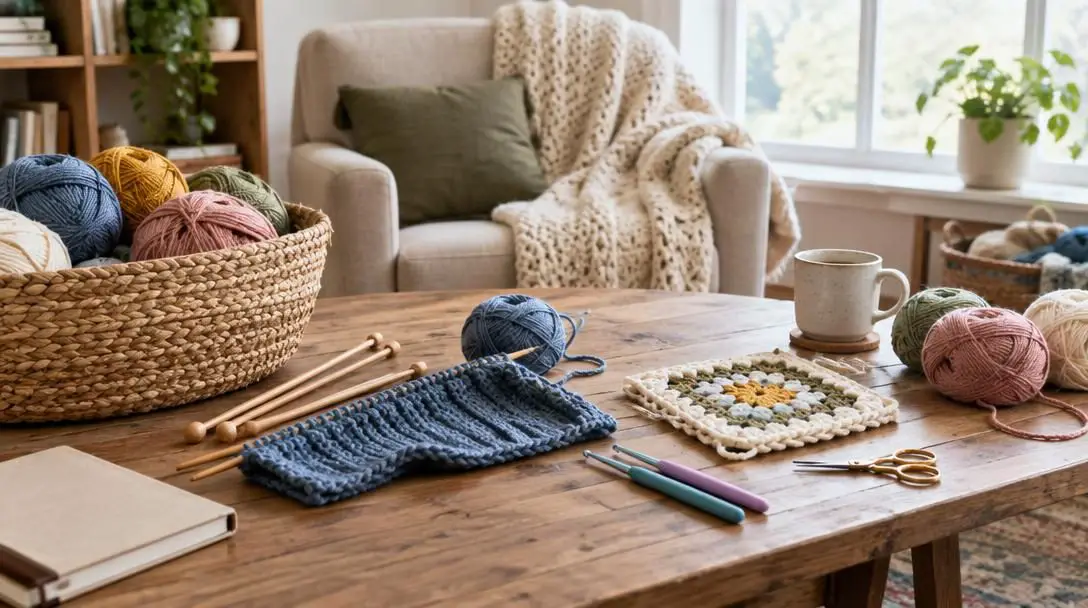
Knitting and crocheting are timeless fiber crafts that transform a simple, continuous strand of yarn into functional, textured textiles. Passed down through generations, both practices engage the hands and mind in rhythmic, tactile creation, yielding everything from cozy wearable garments to decorative home accessories. Beyond their practical utility, working with yarn provides a proven creative outlet that promotes focus, reduces everyday stress, and fosters deep satisfaction through handmade achievement.
While newcomers often conflate the two disciplines, knitting and crocheting rely on distinct mechanics, specialized implements, and contrasting structural principles. Whether your goal is to knit a stretchy winter beanie or crochet a sturdy structured basket, understanding the fundamentals—from selecting the right fibers to mastering core stitches—lays a dependable foundation for lifelong crafting success.
Key takeaways
- Knitting uses two needles to manage an entire row of live loops, yielding smooth, stretchy fabric ideal for fitted garments.
- Crocheting uses a single hook to finish stitches one by one, creating a dense, firm fabric suited for home accessories and toys.
- Medium or worsted-weight yarn paired with matching light-colored smooth tools provides the most forgiving starting point for novices.
- Consistent yarn tension determines fabric drape and prevents common beginner frustrations such as tight stitches and hand strain.
- Mastering foundational techniques like casting on, chaining, and basic stitches unlocks countless simple starter patterns.
Knitting vs. Crocheting: How the Two Crafts Compare
Before purchasing tools or choosing a starter pattern, every beginner benefits from understanding how knitting and crocheting differ in both structure and execution. The defining mechanical variance lies in how each discipline manages active loops of fiber. In knitting, an entire row of open loops rests simultaneously along one needle. The crafter inserts a second needle into each loop, drawing working yarn through to build new loops and transferring them across needles row by row. Because all active stitches remain open until bound off, knitted fabric possesses remarkable lateral elasticity, fluid drape, and a relatively lightweight profile. This flexibility makes knitting the preferred choice for sweaters, socks, scarves, and form-fitting hats.
In contrast, crocheting relies on a single handheld hook and typically maintains only one live loop at a time. Each stitch is constructed, drawn up, and completed in isolation before the crafter advances to the next stitch location. This single-point construction results in a fabric that is thicker, stiffer, and structurally more robust than knitted material. Consequently, crochet naturally excels at three-dimensional objects, amigurumi toys, decorative afghans, sturdy dishcloths, and tote bags that need to bear weight without excessive stretching.
While knitting maintains an entire row of open loops across needles, crocheting works by completing one single stitch at a time.
Essential Tools to Build Your Starter Craft Kit
Gathering the proper implements before starting ensures a smooth learning curve and prevents unnecessary hand fatigue. Investing in quality starter supplies allows you to concentrate fully on stitch mechanics rather than struggling with mismatched materials.
Knitting Needles
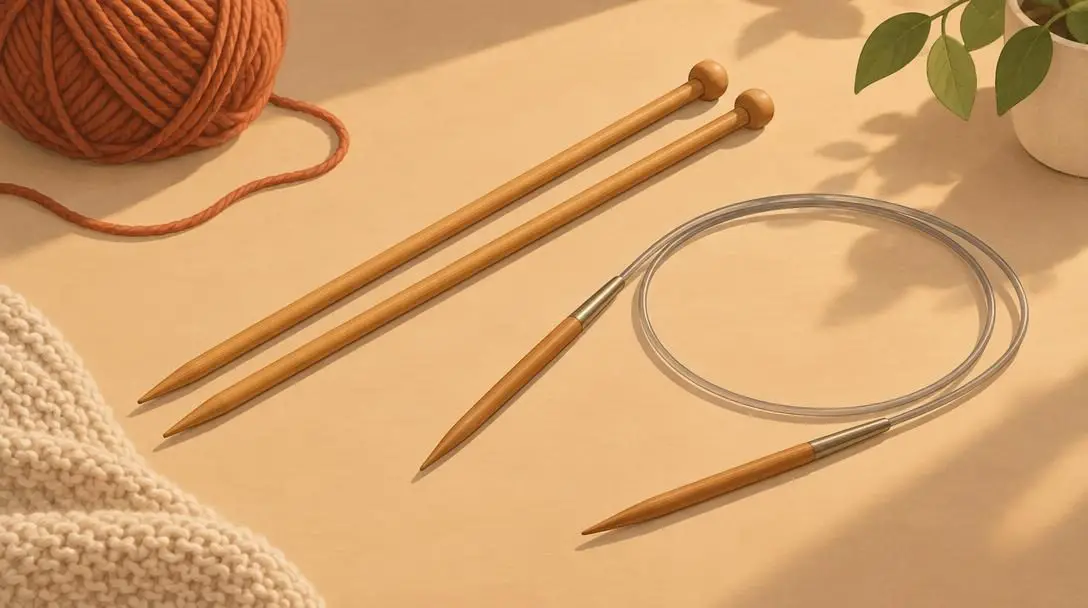
Knitting requires a pair of needles designed to hold live loops without snagging fibers. Beginners can choose straight needles for flat back-and-forth pieces, circular needles joined by a flexible cord for wider or tubular projects, or double-pointed sets designed for small circular items. Needle shafts are crafted from varied materials including smooth aluminum, lightweight plastic, warm bamboo, and polished hardwoods. Bamboo and wood needles provide gentle friction that prevents stitches from sliding off accidentally, making them ideal for novices.
Crochet Hooks
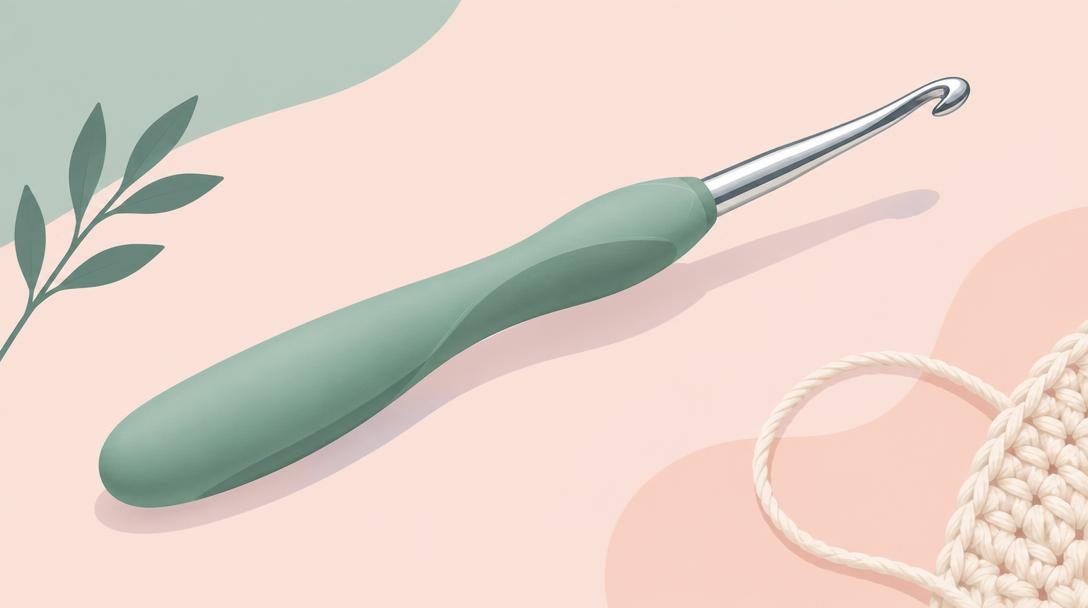
Crochet utilizes a single implement distinguished by a curved notch at its head, engineered to catch and pull yarn through working loops. Hooks are manufactured in aluminum, molded plastic, smooth wood, and ergonomic configurations with soft, cushioned silicone handles. Ergonomic grips are widely recommended for new crafters because they encourage a relaxed hold and minimize palm and wrist fatigue during extended practice sessions.
Tapestry Needles
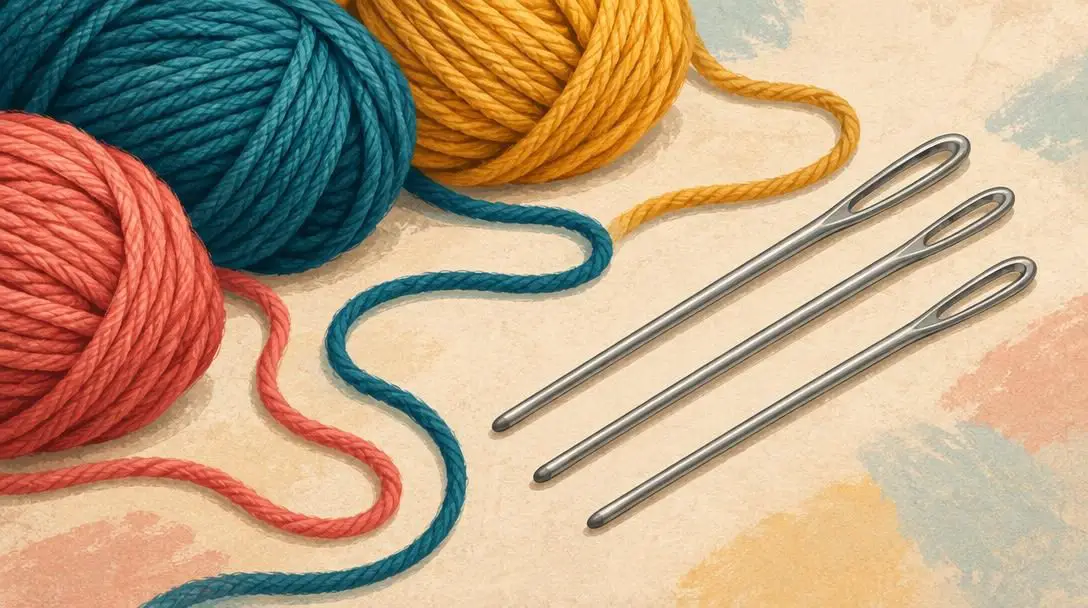
Often referred to as a darning needle or yarn needle, this tool features a blunt tip and an elongated eye designed to accommodate thick yarn strands. Unlike sharp sewing needles, a tapestry needle slides smoothly between woven fibers without splitting plies. It is indispensable for sewing project seams together and weaving loose yarn tails into the finished fabric to prevent unravelling.
Measuring Tape and Scissors
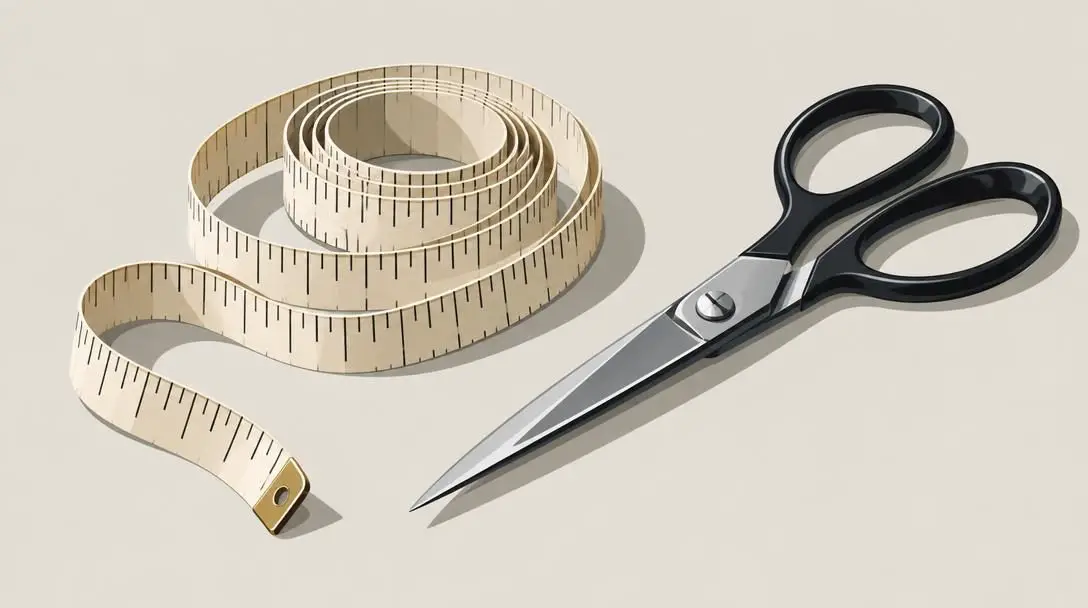
Precision tools complete any functional yarn kit. A flexible, soft vinyl tape measure is necessary to check stitch gauge, monitor project length, and confirm dimensions as you work. A dedicated, sharp pair of craft or fabric scissors ensures clean yarn cuts that do not fray, shred, or unravel individual fiber plies when binding off or fastening down working ends.
Decoding Yarn Weights and Fiber Varieties
Yarn selection profoundly affects the feel, appearance, and ease of completing your project. In craft terminology, yarn weight describes the strand's overall thickness rather than its mass on a physical scale. The crafting spectrum spans across multiple categories:
- Superfine yarns: Delicate, thin strands used primarily for lightweight shawls, lace trims, and intricate socks, requiring tiny needles or hooks.
- Medium and worsted weight yarns: The versatile middle tier of the fiber spectrum. Worsted weight is universally recommended for beginners because it sits comfortably in the hand, offers clear stitch definition, and works up at a moderate pace.
- Bulky and super bulky yarns: Thick, plush fibers that pair with oversized tools to produce rapid results, ideal for heavy winter blankets, chunky cowls, and rapid home accent projects.
Equally critical is fiber composition. The raw material dictates how an item drapes, breathes, and weathers laundering:
| Fiber Type | Material Origin | Primary Strengths | Best Project Applications |
|---|---|---|---|
| Wool | Natural animal fiber | Elastic, warm, resilient, and forgiving of tension variations | Winter sweaters, cozy beanies, and warm scarves |
| Acrylic | Synthetic polymer | Durable, budget-friendly, machine washable, and colorfast | Practice swatches, family blankets, and everyday accessories |
| Cotton | Natural plant fiber | Absorbent, sturdy, breathable, and lint-free | Dishcloths, washcloths, placemats, and summer totes |
| Fiber Blends | Combined natural and synthetic | Balances natural softness with synthetic durability and easy care | Everyday garments, throw blankets, and children's items |
Mastering Foundational Knitting Techniques
Every complex knitted heirloom is constructed from a small set of elemental actions. Learning these core movements empowers you to read patterns and execute hundreds of stitch textures.
The journey begins with casting on, the method used to establish the opening row of active loops on one needle. Once this foundation is anchored, the crafter works the knit stitch. To knit, the working needle is inserted from front to back through an existing loop, yarn is wound around the needle, and a fresh loop is pulled through to the front. Repeating the knit stitch across every row generates a reversible, ridged fabric known as garter stitch.
The companion to the knit stitch is the purl stitch, which creates a pebbled, horizontal bump. In purling, the needle enters from back to front with the yarn positioned in front of the work. When you alternate a full row of knit stitches with a full row of purl stitches, you produce stockinette stitch—distinguished by smooth, interlocking "V" patterns on the front and bumpy waves on the reverse. Alternating knit and purl stitches within a single row yields stretchy, ribbed trims often seen on hat brims and cuffs.
To alter fabric dimensions, crafters apply shaping techniques: increasing adds new stitches to widen the piece, while decreasing binds adjacent stitches together to narrow it. Finally, binding off interlocks the final row of loops so the fabric remains stable and intact when slipped free from the needles.
Mastering Foundational Crochet Techniques
Crochet construction relies on continuous chains and vertical post stitches anchored through existing fabric openings. The foundation of nearly all crochet work is the chain stitch. By catching the working yarn with your hook and drawing it through the loop on the shaft, you form an interconnected braided line that serves as the base for subsequent rows.
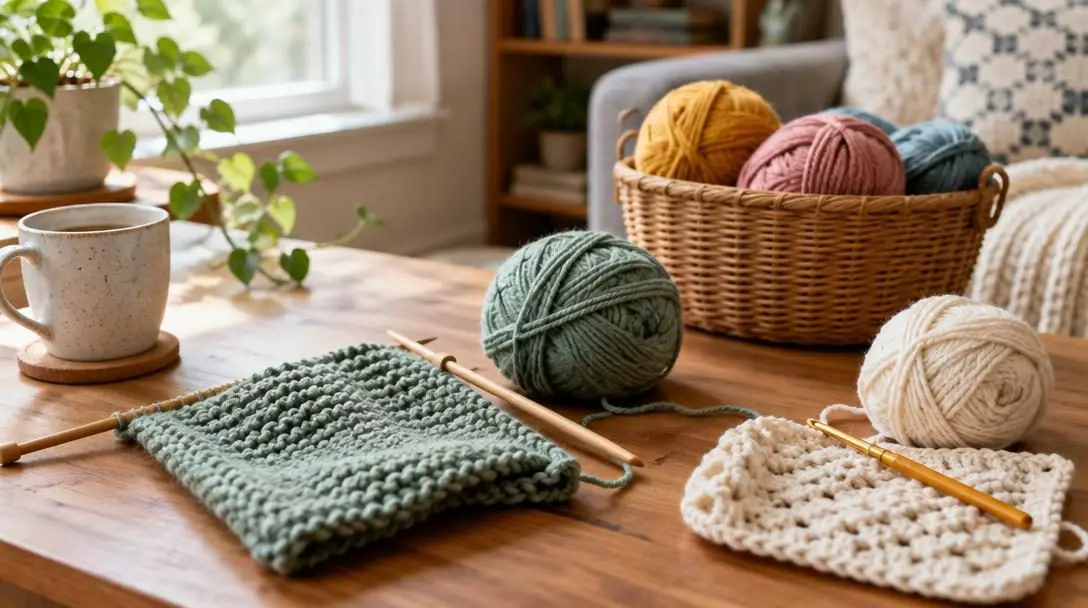
The workhorse of crochet is the single crochet stitch. To execute it, insert your hook into an existing chain or loop, hook the working strand, and draw it through so two loops remain on your tool. Yarn over again and pull through both loops simultaneously. Single crochet builds a dense, firm, and opaque weave that resists stretching, making it the premier choice for amigurumi figures, coasters, and structured hot pads.
When greater drape and speed are desired, crafters turn to the double crochet stitch. This stitch begins with a yarn-over before the hook enters the fabric, adding vertical height to the finished post. Because it leaves open space between posts, double crochet produces softer, more flexible fabric that progresses at roughly twice the rate of single crochet. As with knitting, crochet shapes fabric via increases (working multiple stitches into a single base loop) and decreases (merging adjacent stitches into one), concluding by cutting the yarn and fastening off the solitary live loop.
Step-by-Step Guide to Completing Your First Project
Transforming raw yarn into a finished item requires methodically moving through preparation, stitch execution, and proper finishing. For your initial project, choose a basic geometric shape, such as a rectangular winter scarf or a square cotton dishcloth, to avoid complex shaping while building muscle memory.
- Select a medium-weight (worsted) yarn in a solid, light color alongside the needle or hook size specified on the yarn label.
- Assemble supporting accessories—your flexible tape measure, sharp craft scissors, and a blunt tapestry needle—in a clear, well-lit workspace.
- Build the foundation row by casting on stitches onto your knitting needle or producing a straight, evenly spaced starting chain with your crochet hook.
- Work back and forth across consecutive rows using your chosen basic movement, such as all-knit garter stitch or uniform single crochet.
- Maintain an even, relaxed grip on the fiber, pausing every few rows to count the active stitches across the width to verify your count has not shifted.
- Measure progress periodically with your tape measure along the center of the piece to confirm it matches the target dimensions.
- Bind off all knitting loops or fasten off your final crochet loop once target measurements are achieved, leaving an 8- to 10-inch yarn tail.
- Snip the yarn from the skein and thread the working tail onto your blunt tapestry needle.
- Weave the yarn tail securely back and forth through the interior channels of adjacent stitches along the outer edge, then trim the remaining end flush against the fabric.
Troubleshooting Common Tension and Stitch Errors
Encountering irregularities is a universal stage of learning yarn crafts. Developing the diagnostic skills to identify and remedy mistakes is what turns a tentative beginner into a confident crafter.
The single most prevalent beginner challenge involves tension control—the degree of friction and pull maintained on the working strand. Crafters with tight tension produce stiff, rigid fabric, fight to force tools into constrictive loops, and suffer from cramp-prone fingers. Conversely, excessively loose tension generates sloppy, gaping stitches with irregular silhouettes. To resolve tension issues, do not pull or yank the yarn after completing a stitch. Allow the natural diameter of the needle or hook shaft to dictate loop size, and rest the yarn gently over your non-dominant fingers to establish uniform resistance.
Other frequent challenges include dropped stitches in knitting, skipped stitches in crochet, and drifting stitch counts that turn straight margins into slanted edges. Prevent these setbacks by watching out for typical beginner traps:
- Using dark or textured novelty yarn: Bouclé, fur, or near-black fibers hide stitch openings, turning simple rows into guesswork.
- Twisting foundation rows: Ensure starting chains or cast-on edges lie completely straight before joining rounds or working secondary rows.
- Splitting the yarn plies: Piercing through the interior strands of the yarn rather than entering the open loop compromises tensile strength and mars fabric appearance.
- Neglecting regular stitch counts: Failing to count stitches at the end of each row allows accidental increases or dropped stitches to go unnoticed until several inches later.
Frequently asked questions
Is knitting or crocheting easier for an absolute beginner?
Crochet is often considered easier to learn initially because it involves only one live loop on a single hook, meaning mistakes can be easily unraveled and repaired without losing an entire row. However, knitting uses two balanced hands in repetitive, symmetric motions that many crafters find more intuitive once the initial muscle memory is established.
Can I substitute any yarn weight in a beginner pattern?
No, yarn weights are not interchangeable without adjusting hook or needle size and stitch counts. Using a bulky yarn for a pattern written for superfine yarn will produce a substantially larger, stiffer, and heavier item than intended.
What should I do if I drop a stitch while knitting?
Do not panic or pull the work off the needles. Secure the live loops on your needles, locate the dropped loop that is running downward, and use a small crochet hook or tapestry needle to draw the horizontal ladder strands back up through the loop until it reaches the working needle.
Why are the edges of my square project becoming narrower?
A narrowing project is almost always caused by accidentally skipping the first or last stitch of a row, which gradually reduces your total stitch count. Counting your stitches at the conclusion of every single row helps you detect and fix missing stitches immediately.
What is the best fiber choice for washable household items?
One hundred percent cotton yarn is the optimal choice for washcloths, dishcloths, and pot holders because it is durable, highly absorbent, handles hot water washing, and does not melt when exposed to high temperatures.
The bottom line
Knitting and crocheting are accessible, lifelong fiber arts that offer endless creative expression alongside tangible physical benefits. By starting with medium-weight yarn, quality tools, and simple square designs, any beginner can master the basic stitches, troubleshoot minor tension variations, and produce cozy, functional crafts to cherish or share.