Rainy Day Activities: 5 Best Ideas to Have Fun With Your Child Indoors
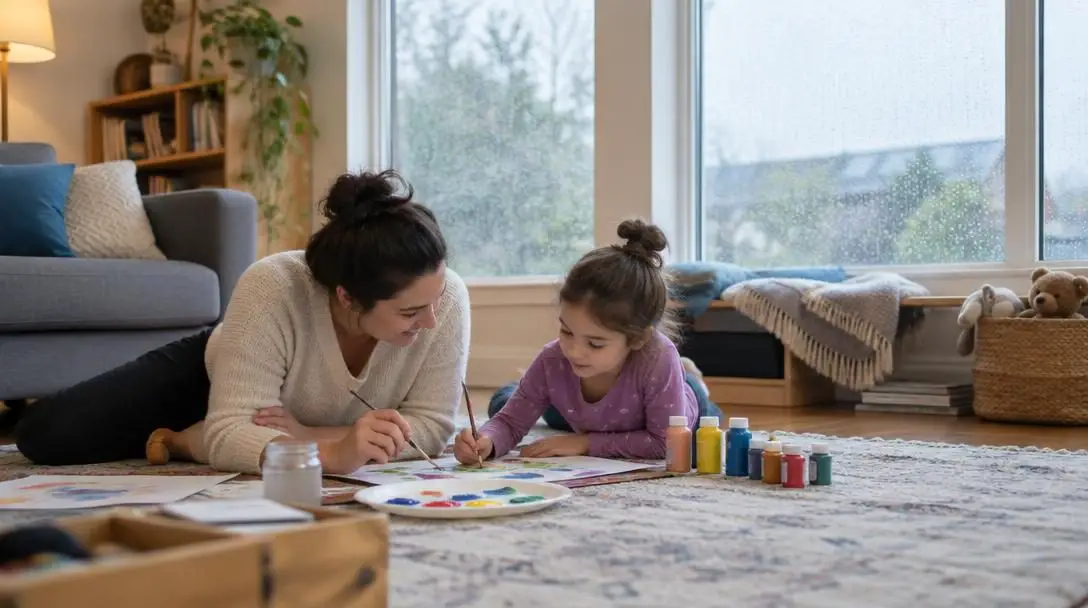
Rainy days present an immediate challenge for households with young children. When foul weather cancels outdoor play, families find themselves suddenly confined within the walls of their living space. Without the open expanse of playgrounds, neighborhood sidewalks, or backyards, children often experience an accumulation of restless physical energy, while parents shoulder the burden of inventing constructive pastimes on short notice.
Inclement weather does not have to mean hours of mounting friction, screen exhaustion, or domestic chaos. With deliberate planning and interactive activities, an unexpected day inside can become an enriching opportunity for cognitive development, physical movement, and meaningful family bonding.
Key takeaways
- Indoor activities offer targeted developmental benefits ranging from fine motor refinement to complex deductive problem-solving.
- Matching activity complexity to a child's developmental readiness prevents boredom and cognitive fatigue.
- Involving children in the full process of tasks like cooking or game setup fosters genuine autonomy and pride.
- A structured daily flow that alternates between high-energy movement and calming projects preserves household peace.
Indoor activities at a glance
To help you choose the right project for your child's current mood and developmental stage, use this quick comparison of the top indoor pastimes.
| Activity | Key Developmental Benefits | Target Age Range | Essential Materials |
|---|---|---|---|
| Board Games and Card Games | Turn-taking, strategic thinking, impulse control | Early childhood to teens | Age-appropriate board or card games |
| Cooking and Baking Together | Measurement, sensory exploration, nutrition literacy | Toddlers through adolescents | Baking staples, recipe ingredients, mixing utensils |
| Indoor Treasure Hunt | Deductive reasoning, gross motor navigation | Preschool to middle school | Paper clue slips, household items, small treats |
| Arts and Crafts | Fine motor dexterity, emotional expression | Toddlers through teens | Paints, playdough, origami paper, craft supplies |
| Movie Marathon and Popcorn Party | Narrative analysis, emotional empathy, rest | All age groups | Curated film selection, blankets, popcorn |
The developmental mechanics of indoor play
Rather than functioning merely as convenient time-fillers, intentional home pastimes stimulate critical facets of childhood growth. Understanding the mechanics of indoor play enables caregivers to select experiences that support intellectual, motor, and psychological maturity.
Tabletop pastimes introduce children to micro-societies governed by explicit regulations. When playing cards or moving markers across a board, youngsters encounter structured boundaries where they must observe turn sequences, restrain impulsive moves, and tolerate setbacks. These interactions sharpen operational reasoning and instill sportsmanship.
Culinary engagements transform the kitchen into a practical science laboratory. Manipulating measuring spoons, pouring liquids, and folding dough translate abstract mathematical ideas into tangible experiences. Furthermore, handling raw ingredients invites discussions around nourishment and human health.
Active domestic exploration, such as an indoor treasure hunt, satisfies a child's physiological need for movement while exercising deductive comprehension. Children mentally map their household floor plan, decode riddles, and translate abstract linguistic directions into physical actions.
Manipulative art forms strengthen the musculoskeletal systems of the fingers and hands. Cutting with scissors, kneading pliable clay, and guiding paintbrushes build fine motor coordination required for handwriting and manual tasks, while offering an outlet for nonverbal emotional processing.
Shared cinematic viewing cultivates social empathy. Watching characters navigate moral choices and emotional conflicts provides an accessible gateway for children to evaluate varied perspectives and articulate subjective thoughts.
The 5 best indoor rainy day activities
Board Games and Card Games
Board and card games remain perennial favorites for stormy afternoons because they foster deep, screen-free engagement. Sitting down across a shared surface establishes an environment dedicated to reciprocal focus and conversation. These pastimes enhance executive functions, requiring participants to plan sequences of actions, weigh tradeoffs, and observe established protocols.
Selecting titles that correspond to a child's developmental capacity is critical for sustained interest. Young children who are just learning game rules thrive on straightforward titles with minimal text, such as Candy Land and Chutes and Ladders. These foundational games teach children how to spin dials, advance their tokens step by step, celebrate peer successes, and handle minor disappointments without walking away.
Older children who have mastered linear game mechanics require deeper challenges. Strategic titles such as Monopoly and Risk demand complex cognitive processing. Players must manage artificial capital, negotiate asset trades with competitors, and calculate risks several rounds in advance.

Throughout these sessions, parents should observe behavioral cues. Protracted games can produce mental exhaustion, particularly in early learners. Offering consistent affirmation for deliberate choices and highlighting creative problem-solving reinforces the value of cooperative engagement over purely winning.
Cooking and Baking Together
Transforming the family kitchen into an educational culinary workspace is an exceptional way to spend an afternoon. Culinary preparation engages sight, touch, smell, sound, and taste, grounding high-energy children in real-world tasks that yield edible results.
Working alongside an adult in the kitchen teaches practical applications of volume, mass, and counting. Measuring out cups of flour, leveling teaspoons of baking powder, and monitoring oven timers translate dry numerical concepts into immediate physical actions. Moreover, handling fresh food demystifies meal production and encourages children to sample ingredients they might otherwise decline at dinner.
Opt for accessible, interactive recipes that invite hands-on participation. Making homemade pizza dough allows children to knead elasticity into flour and water, select their own toppings, and observe yeast fermentation in real time. Baking batches of fresh cookies or muffins offers opportunities to crack eggs, whisk batters, and portion out servings.
To deepen the learning potential, integrate children into the organizational phase. Encourage them to help draft grocery lists, locate pantry items, and clean up preparation counters. Sharing the finished product fosters genuine agency and establishes warm traditions centered around shared meals.
Indoor Treasure Hunt
When weather conditions prevent outdoor athletics, an indoor treasure hunt supplies an effective medium for burning pent-up energy. By uniting cognitive deduction with whole-body locomotion, a well-planned hunt invites children to explore their home from an investigative perspective.
A successful indoor hunt requires neither complex infrastructure nor extravagant rewards. The ultimate prize can be a familiar, comforting household item, such as a beloved storybook, a small toy, or a healthy afternoon snack. The primary enjoyment comes from unraveling the mystery behind each sequential clue.
Parents should write or draw clues that match their child's intellectual development:
- Pictorial clues: Simple hand-drawn sketches of household appliances or furniture pieces for non-reading preschoolers.
- Rhyming couplets: Accessible verses that hint at specific rooms or objects for early readers.
- Conceptual riddles: Multi-step intellectual puzzles or mirror-writing challenges for older children.
While children hunt, parents should act as supportive guides, offering gentle prompts when an explorer reaches a logical dead end. Keeping momentum alive protects the child from discouragement and maintains the joyful thrill of discovery.
Arts and Crafts
Creative art sessions offer an essential indoor refuge, granting children room to externalize their imaginative impulses and inner thoughts. The tactile acts of sketching, cutting, gluing, and sculpting exercise finger dexterity and wrist stability, directly reinforcing fine motor coordination.
Maintaining age-appropriate crafting activities prevents artistic tasks from becoming overly stressful. Younger children and toddlers benefit most from low-structure, sensory-rich materials. Simple coloring books, tactile modeling playdough, and washable finger painting allow early learners to explore spatial forms and color combinations without feeling constrained by rigid design criteria.
Older children often prefer projects that demand patient manipulation and produce refined items. Providing supplies for intricate origami paper folding or handmade jewelry making satisfies their desire for precise craftwork and personal craftsmanship.

Emphasizing the creative process over an adult standard of perfection grants children the freedom to take genuine artistic risks.
When organizing a home art studio, arrange a diverse assortment of textures, patterns, and tools. Parents should consciously avoid correcting children's work to fit an idealized standard. Celebrating individual artistic choices builds resilient creative confidence.
Movie Marathon and Popcorn Party
As daylight fades and physical energy winds down, shifting into a living room cinema party provides a peaceful, restorative conclusion to an indoor day. Communal viewing offers a setting where children can relax alongside their family while being exposed to thought-provoking narratives and diverse character motivations.
Elevating screen time into a memorable event relies on thoughtful staging. Construct an inviting viewing nest using plush floor pillows, duvets, and warm blankets. Lower the overhead light fixtures and prepare a generous bowl of warm popcorn to replicate the ambiance of a theatrical screening.
Select films that align with your child's maturity level, prioritizing stories with rich thematic depth and captivating visual artistry. The primary developmental value of family movie viewing emerges after the story concludes.
Initiate an interactive conversation about the plot once the credits roll. Ask open-ended questions about why characters made particular choices, how conflicts were resolved, and what lessons apply to real life. These conversations transform passive viewing into a lesson in media literacy and critical analysis.
How to organize a seamless indoor schedule
A well-sequenced day prevents restless boredom from setting in. Follow this step-by-step framework to establish a balanced, engaging flow from morning to evening.
- Assess morning energy levels: Evaluate your child's temperament early in the day. If physical energy is running high, launch with an active indoor treasure hunt. If the mood is contemplative, start with a board game or craft table.
- Verify and gather supplies: Assemble all necessary materials before pitching an idea. Ensure complete piece sets for games like Candy Land, check pantry staples for muffins or pizza dough, and retrieve art materials from storage.
- Designate distinct activity zones: Allocate specific areas of the house to match the project requirements. Keep culinary endeavors on easy-to-wipe kitchen counters, reserve open floors for card games, and line worktables with protective coverings for painting.
- Prepare clue routes in advance: If hosting a treasure hunt, write clue cards and place target items—such as books, snacks, or small toys—in safe locations before briefing the children.
- Integrate scheduled rest pauses: Monitor children for early signs of mental fatigue during rule-heavy games like Monopoly. Call for hydration and stretching breaks to sustain a lighthearted, collaborative mood.
- Transition to evening calm: As late afternoon arrives, reduce environmental stimuli. Dim room lighting, arrange floor cushions, pop fresh popcorn, and select an engaging, age-appropriate family film.
- Conclude with reflective conversation: Wrap up the day by discussing the day's projects. Review the craft projects made earlier or talk through the themes of the evening film to reinforce critical thinking.
Common mistakes to avoid during indoor play
Even well-intentioned indoor plans can unravel without careful execution. Keep these common parental oversights in mind to preserve household harmony:
- Selecting overly complex games: Introducing rules-heavy titles like Monopoly or Risk to children lacking prerequisite cognitive maturity causes swift frustration. Rely on foundational titles like Chutes and Ladders until basic mechanics are understood.
- Pushing through cognitive exhaustion: Forcing young children to finish lengthy game sessions without pauses invites emotional outbursts. Build in brief breaks to stretch, snack, and reset.
- Drafting overly difficult riddles: Constructing treasure hunt clues that demand advanced reasoning causes confusion. Keep clues clear, and supply hints promptly when an impasse occurs.
- Prioritizing aesthetic perfection over creative play: Stepping in to correct an art project stifles exploration. Let the child direct their own creative vision without adult interference.
- Relegating children to passive observers in the kitchen: Keeping young helpers away from the actual cooking removes the educational value. Let them measure, pour, mix, and knead.
- Omitting follow-up discussions after media viewing: Letting a film end without a debriefing misses an opportunity to exercise critical analysis and emotional empathy.
Planning a rainy day supply kit
Inclement weather often arrives unexpectedly. Maintaining a dedicated indoor survival reserve guarantees that you can pivot to engaging activities without stressful last-minute store runs.
Dedicate a storage tote to creative supplies, stocking it with items like drawing pads, washable finger paints, modeling playdough, origami paper, and beads for jewelry making. Store these items out of regular reach so they retain a sense of novelty when bad weather strikes.
Similarly, keep foundational baking staples like flour, yeast, sugar, and baking powder consistently stocked in the pantry. Having basic ingredients on hand ensures you can prepare homemade pizza dough, fresh cookies, or warm muffins whenever an indoor day demands a fun kitchen project.
Frequently asked questions
How can I keep an indoor treasure hunt fun for different age groups?
Color-code your clue envelopes so each child hunts for their own customized trail. Provide simple picture clues or rhyming verses for younger children, while offering descriptive riddles or multi-step logic puzzles for older siblings.
What are the best baking recipes for young children to make?
Homemade pizza dough, drop cookies, and breakfast muffins work exceptionally well. These recipes offer tactile tasks like kneading dough, pouring ingredients, and sprinkling toppings without requiring dangerous kitchen tools.
How do I prevent my child from becoming frustrated by board games?
Select games matched to their developmental stage, such as Candy Land for younger children before moving to strategy titles like Monopoly. Offer praise for effort and thoughtful decisions rather than focusing purely on winning.
What should I do if my child loses interest during an art project?
Avoid forcing them to complete the piece. Art should serve as a relaxing outlet rather than a chore. Simply preserve their unfinished work, set the supplies aside, and switch to a more dynamic activity.
How do open-ended questions improve a movie afternoon?
Discussing the plot, characters' choices, and narrative resolutions transforms passive screen time into a meaningful exercise in moral reasoning, empathy, and critical thinking.
The bottom line
A rainy day indoors does not have to be an exercise in endurance. By approaching household confinement as a rare opening for deliberate play, parents can guide their children through enriching experiences that sharpen minds and soothe restless energy. With a balanced mix of board games, culinary projects, treasure hunts, art sessions, and family cinema, an unexpected day inside can easily become a cherished family memory.